Continuums, Data, Being: Mists and Shadows · RMIT · Semester 1, 2025
Tide House:
Gathering of Waters
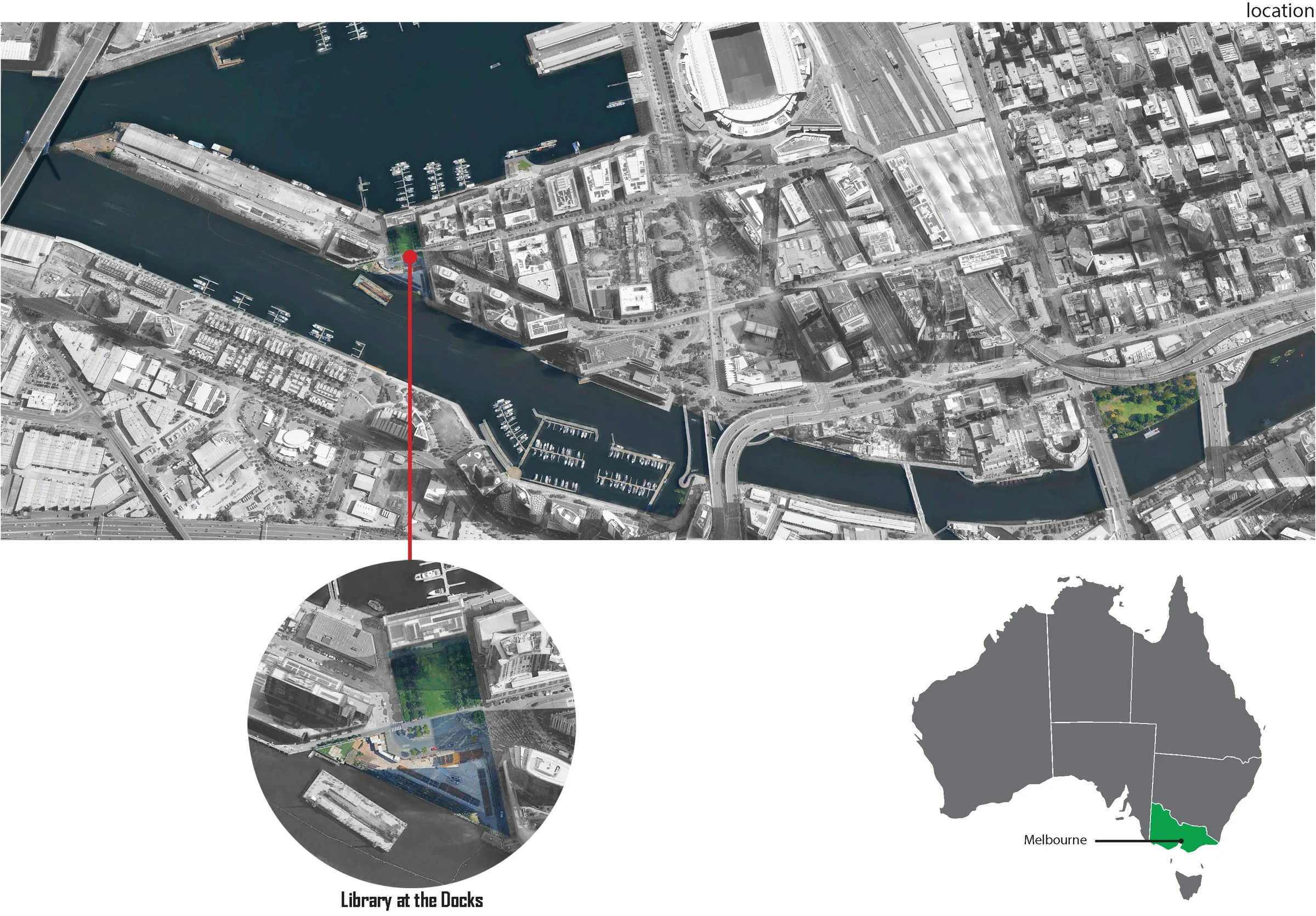
Tide House is a ritual bathhouse on the banks of the Birrarung, conceived as the final project of the Continuums, Data, Being: Mists and Shadows studio. It begins from a civic provocation: the city has grown smart but sterile, immersed in digital rivers yet emotionally parched. Melbourne, the so-called most liveable city, faces its own quiet crisis as technology embeds deeper into daily life and the cultural rhythms of the Wurundjeri people are drowned beneath a wave of technological alienation.
The building responds by being two things at once: a piece of public infrastructure that cleans the river, and a sanctum that cleans the self. Polluted water from the Birrarung enters a floating wetland of Water Hyacinth, Common Rush, Water Ribbons, Salt Marsh Rush, Native Azolla and Jointed Twigrush. Heavy metals and nitrates are absorbed by the roots. The water passes through layered gravel beds, is heated by solar collectors, and delivered into the pools. The infrastructure is not hidden in basements. It is the spatial sequence.
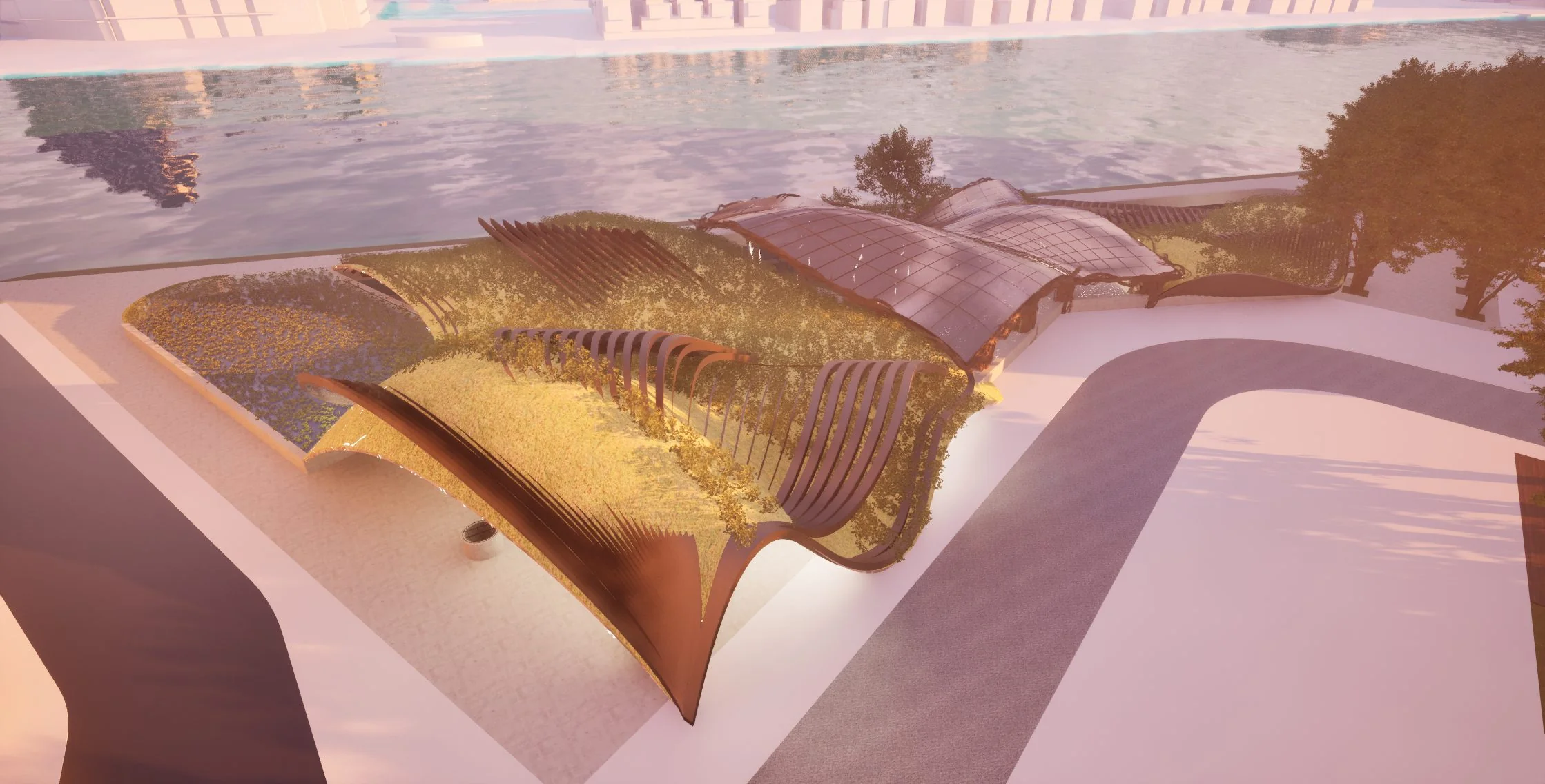
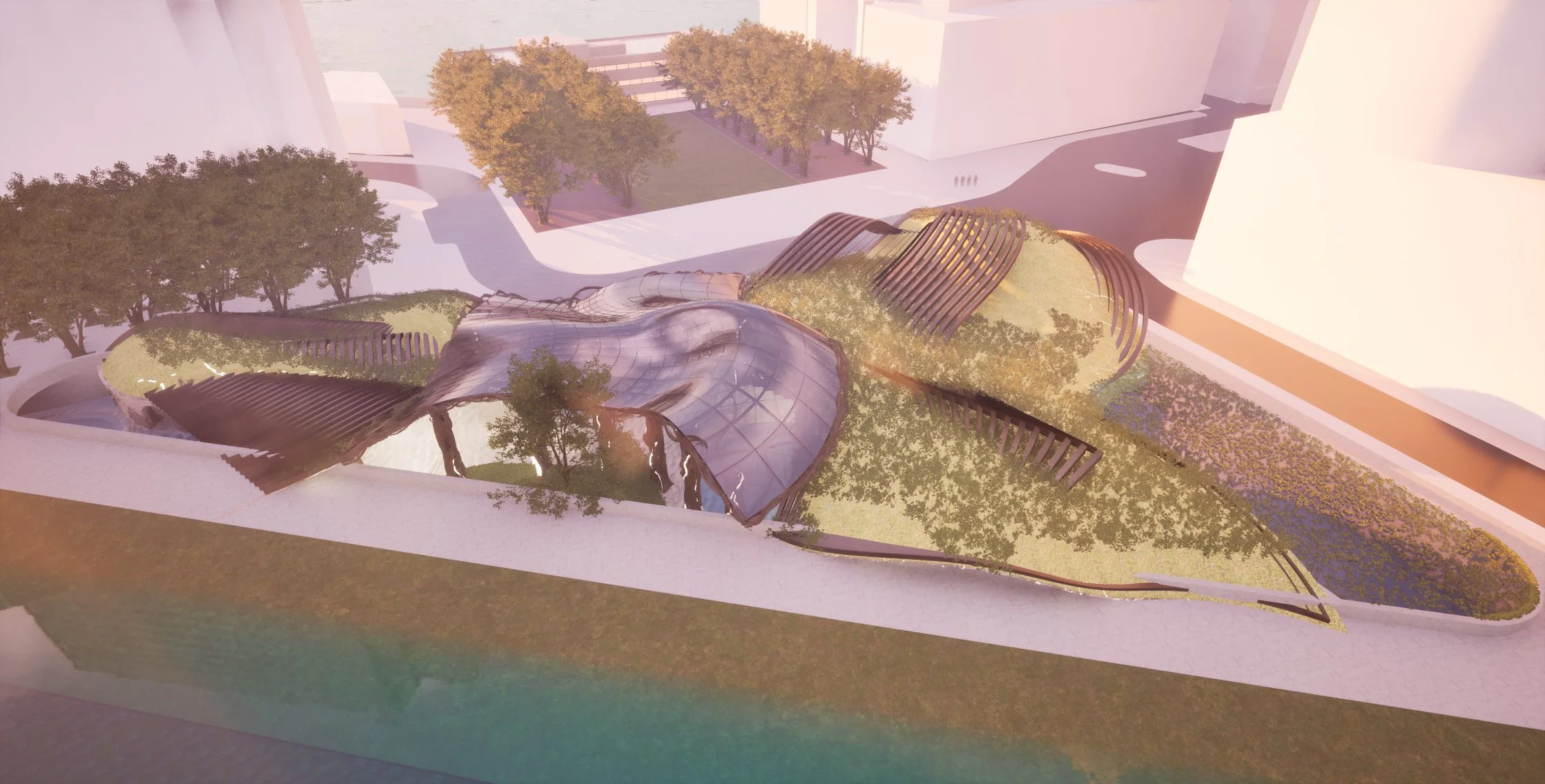
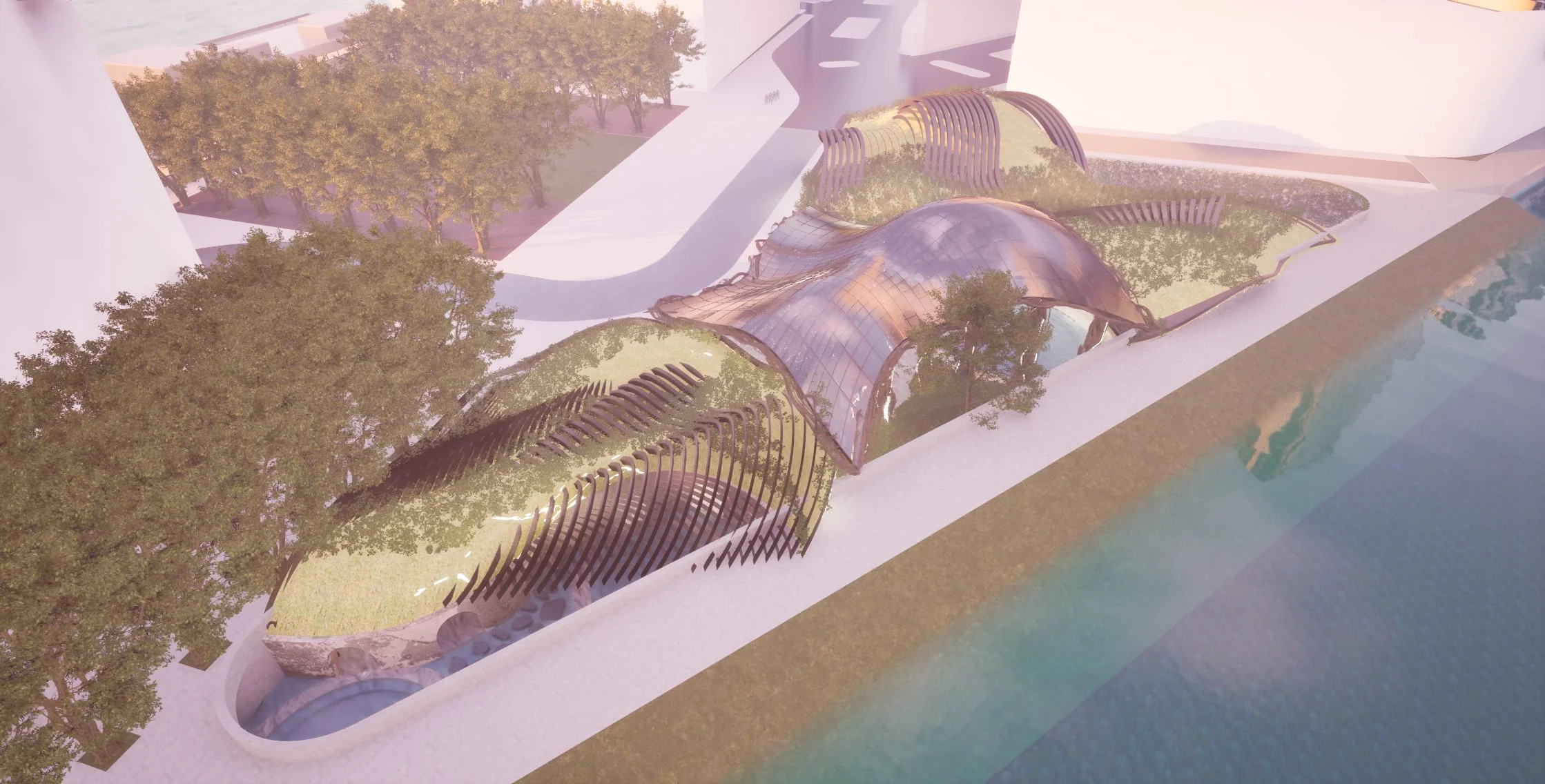
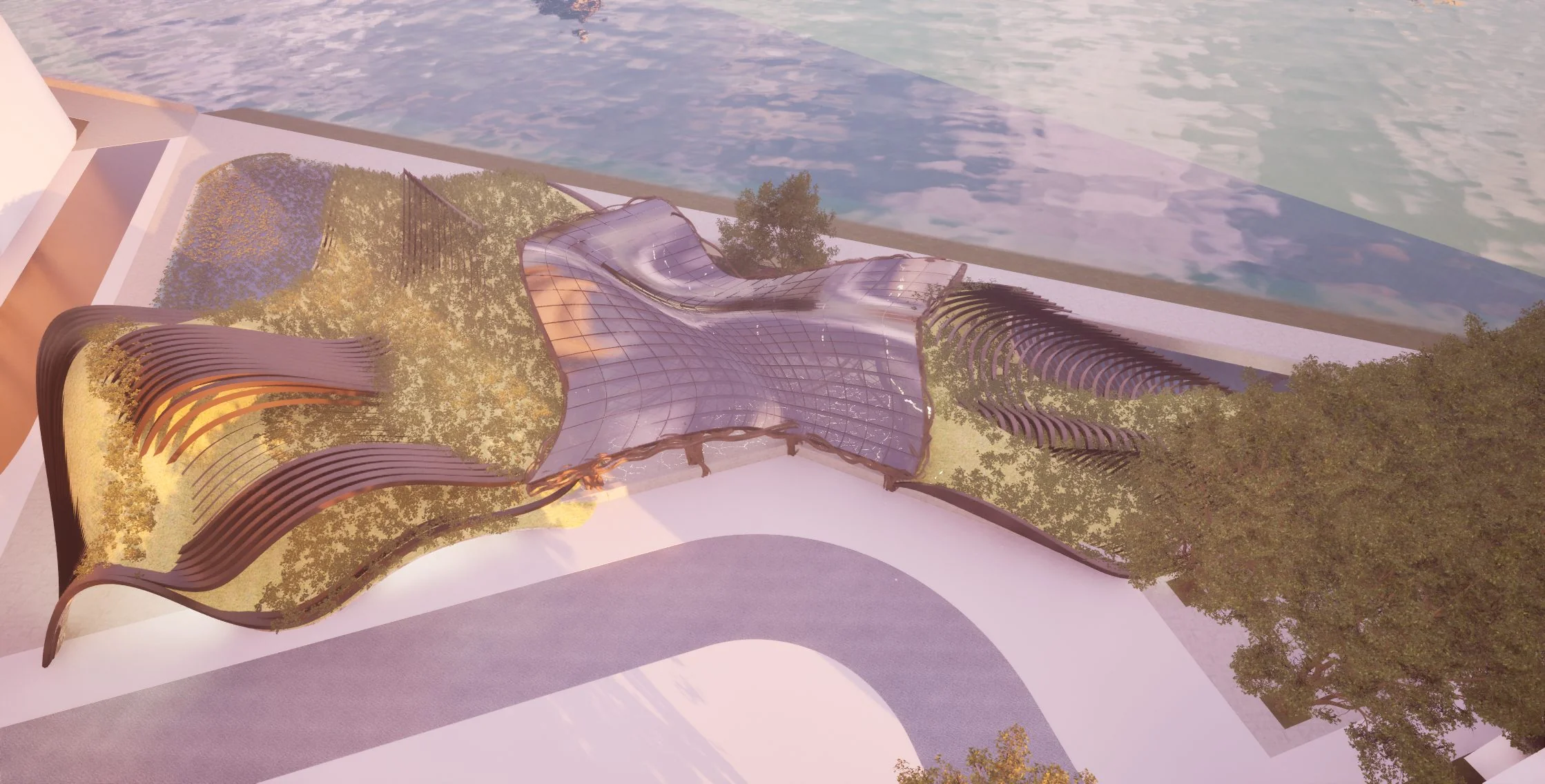
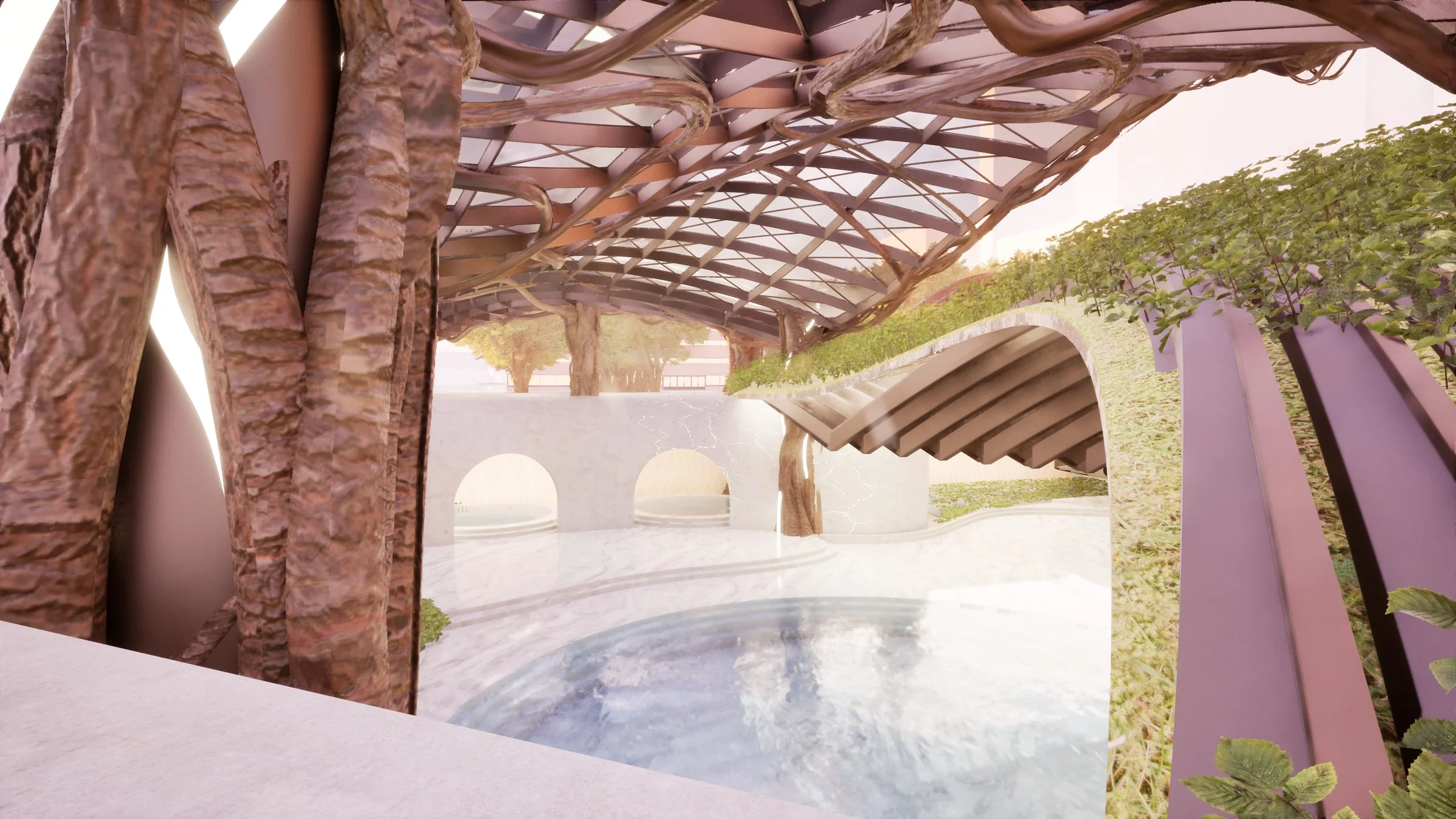
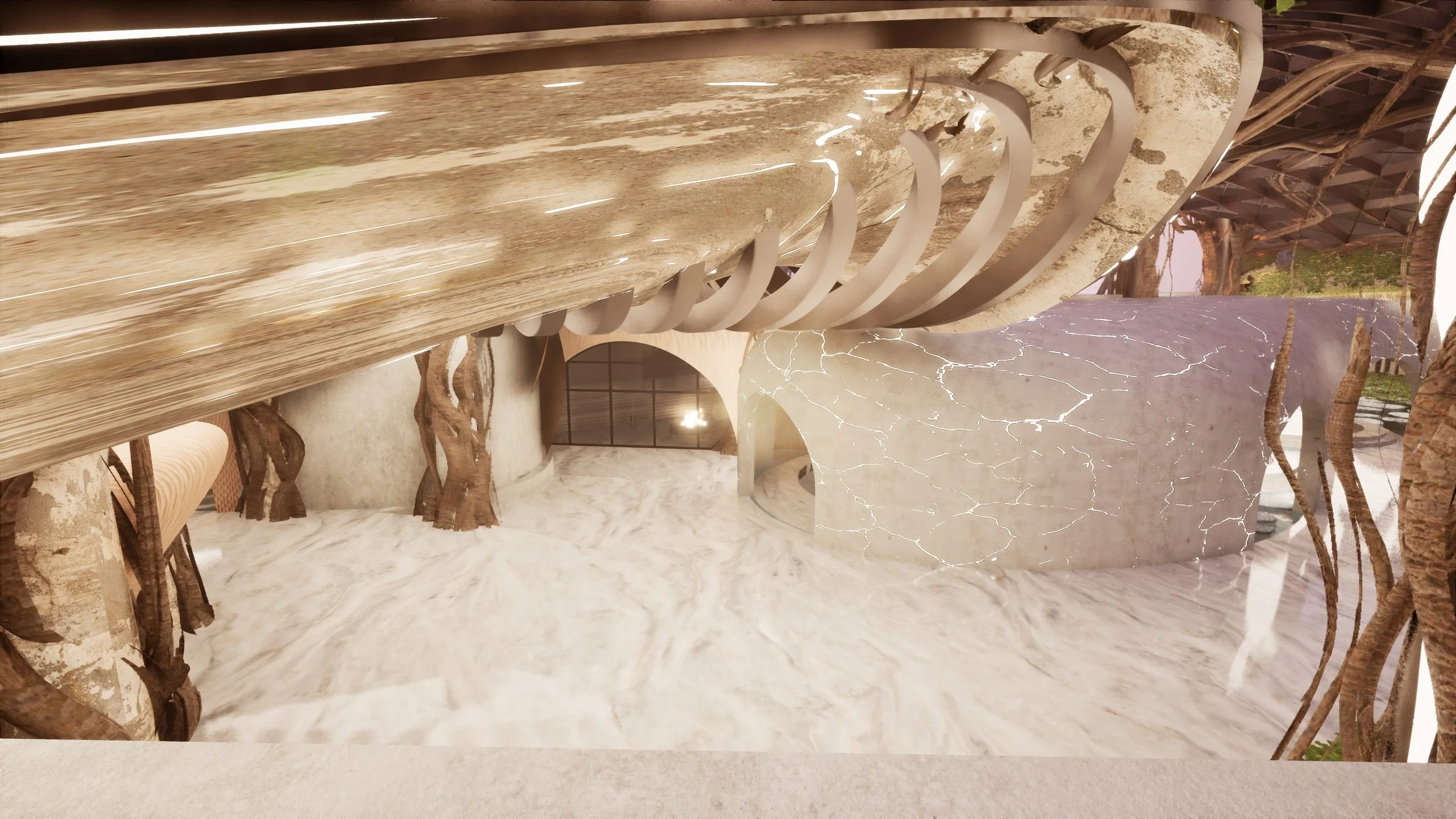
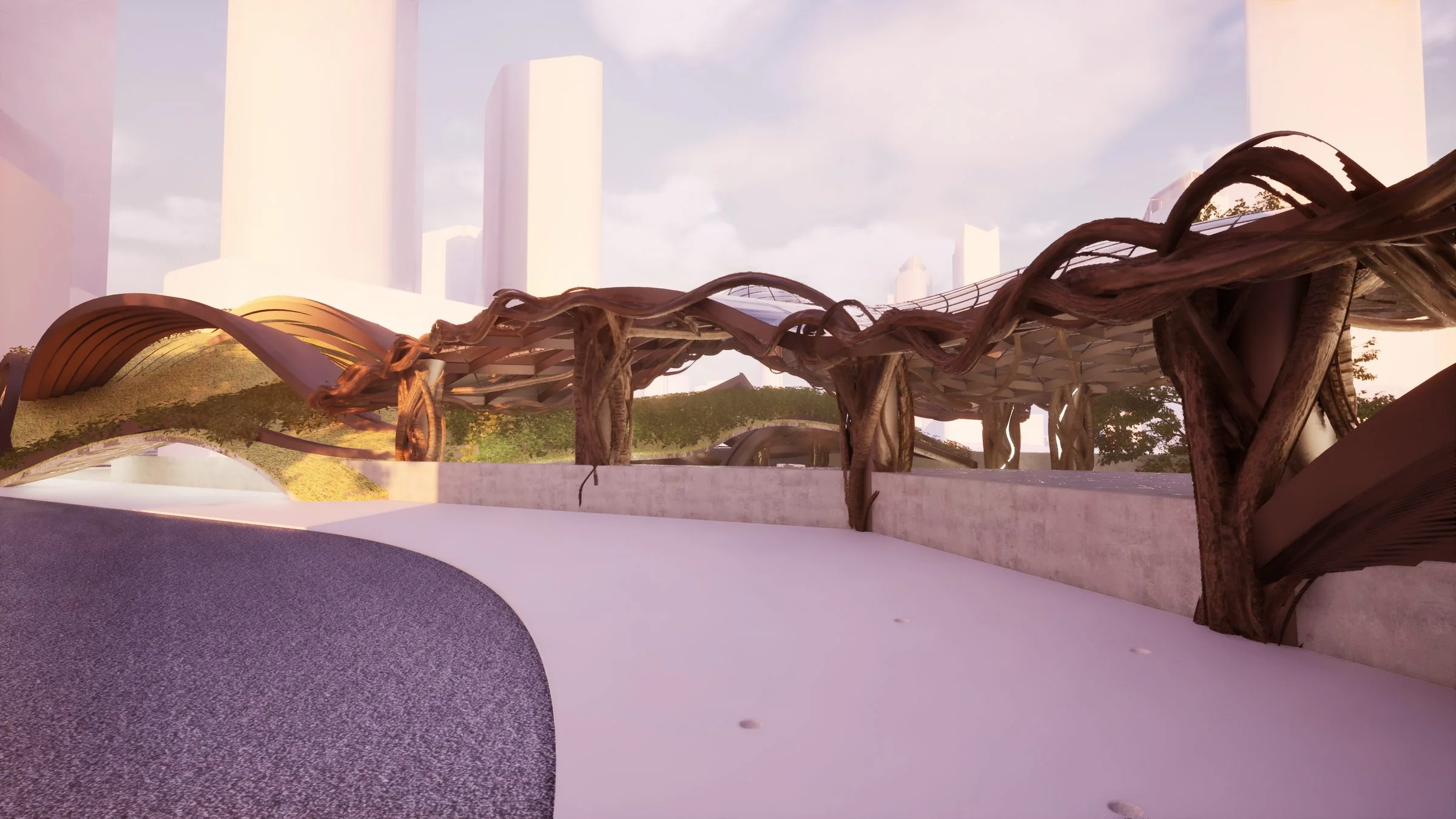
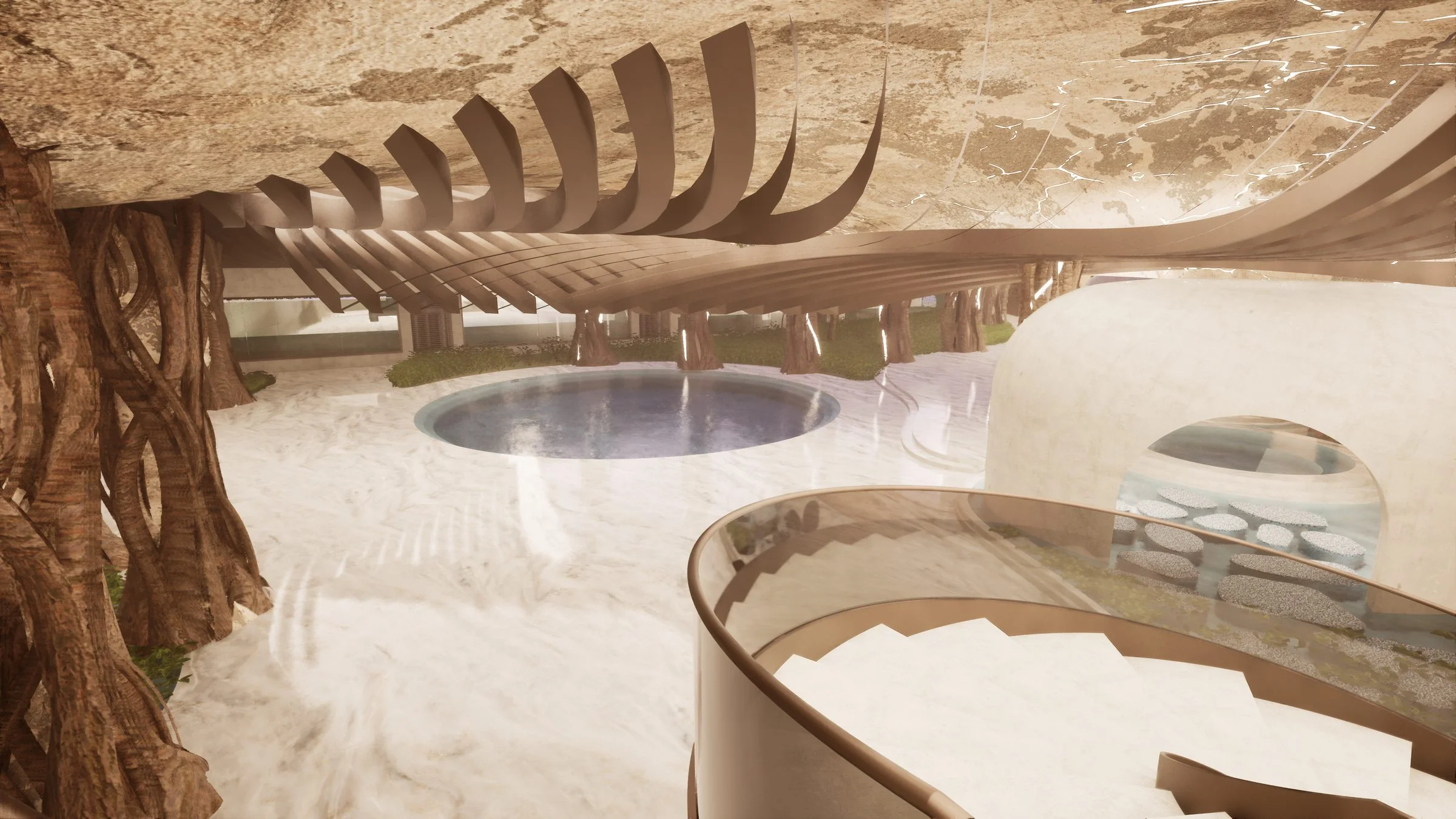
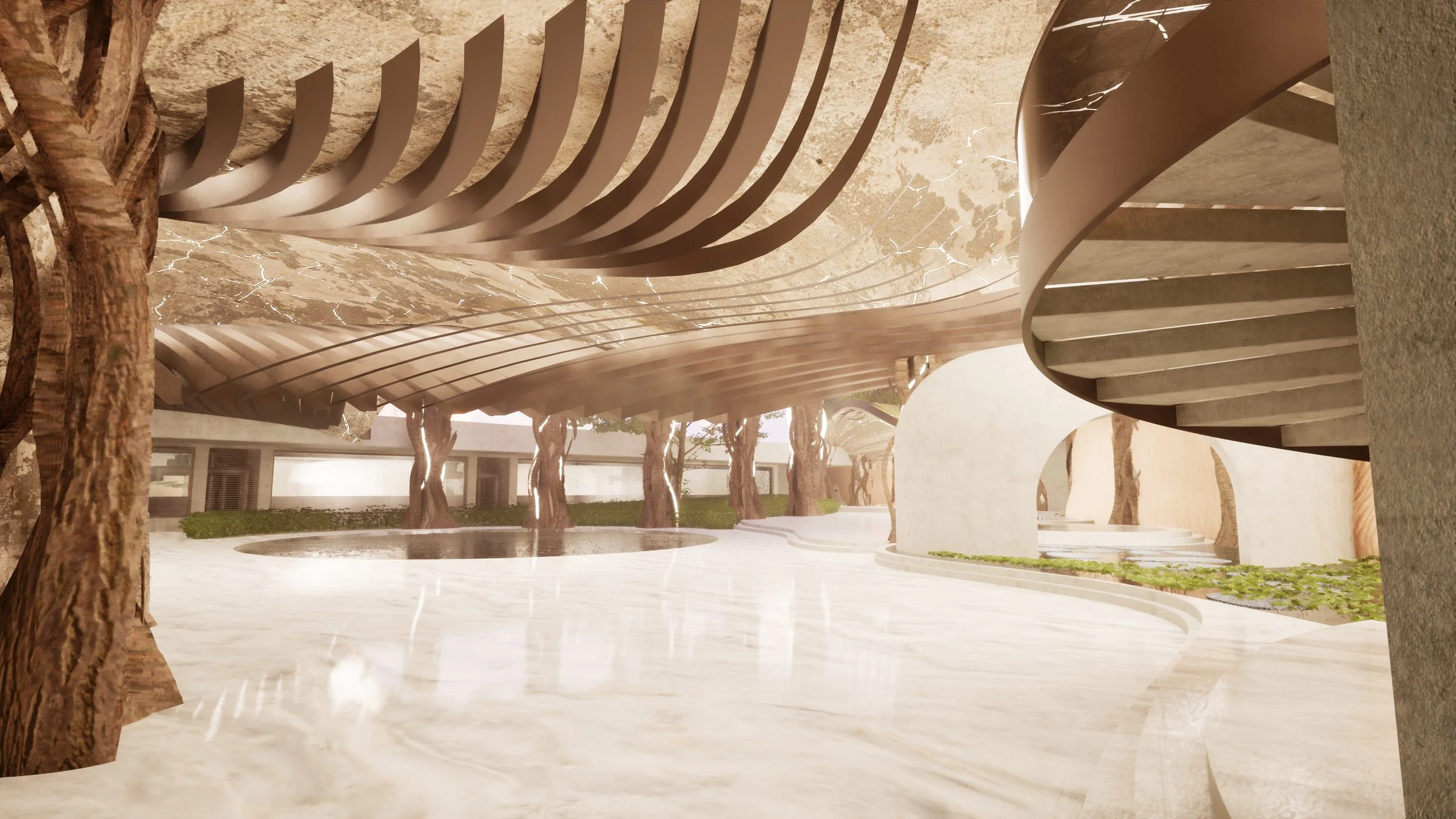
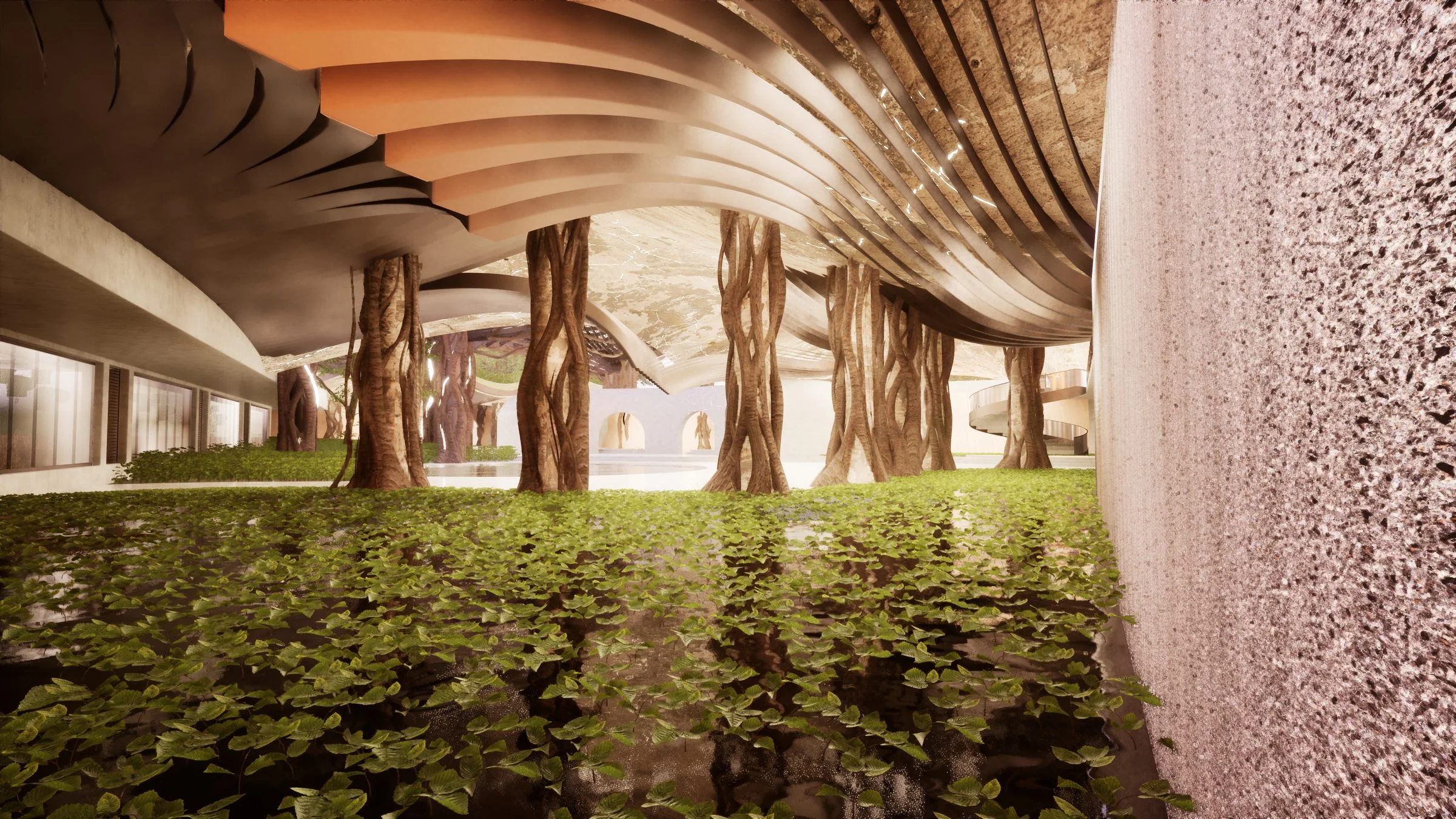
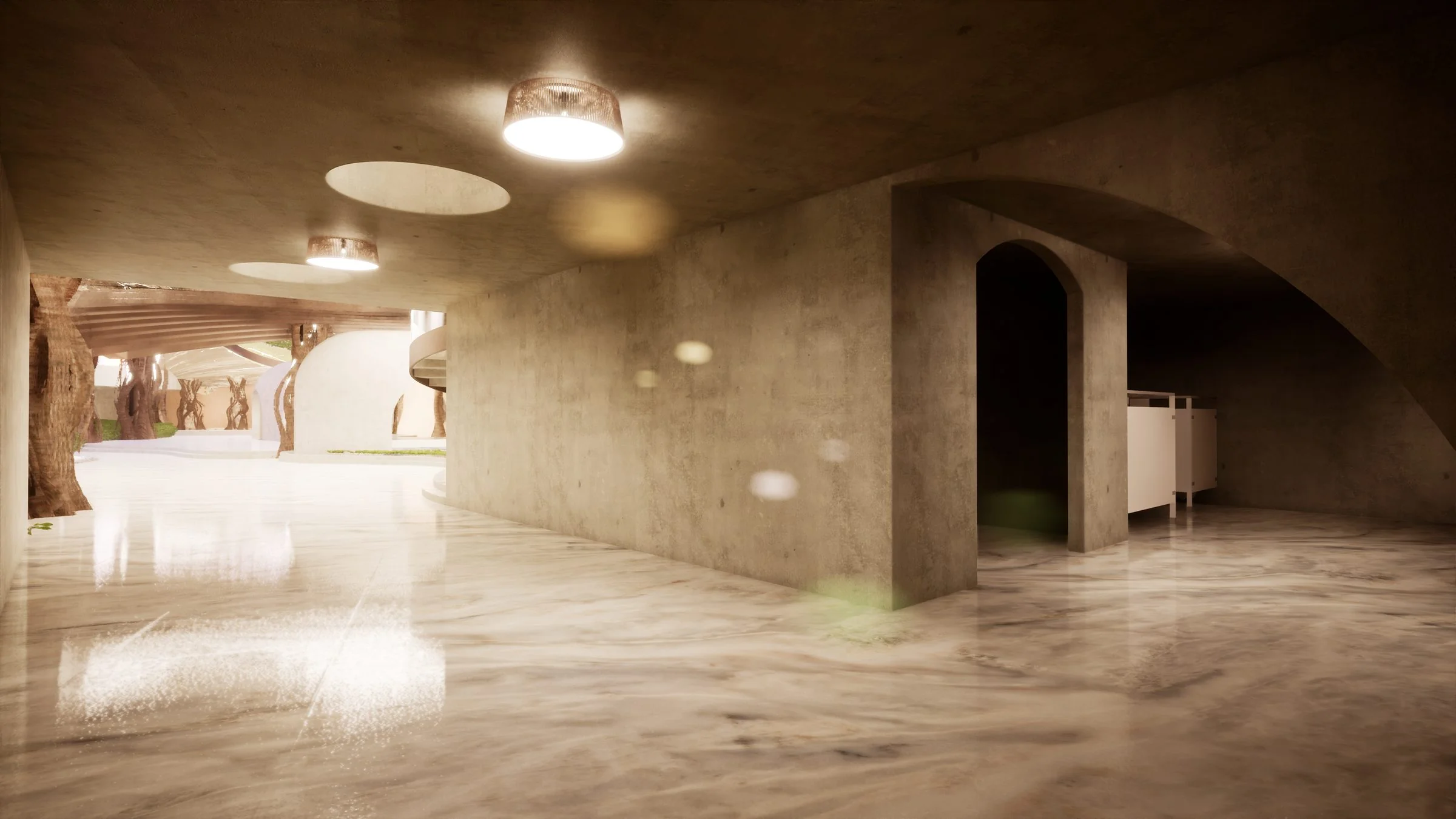
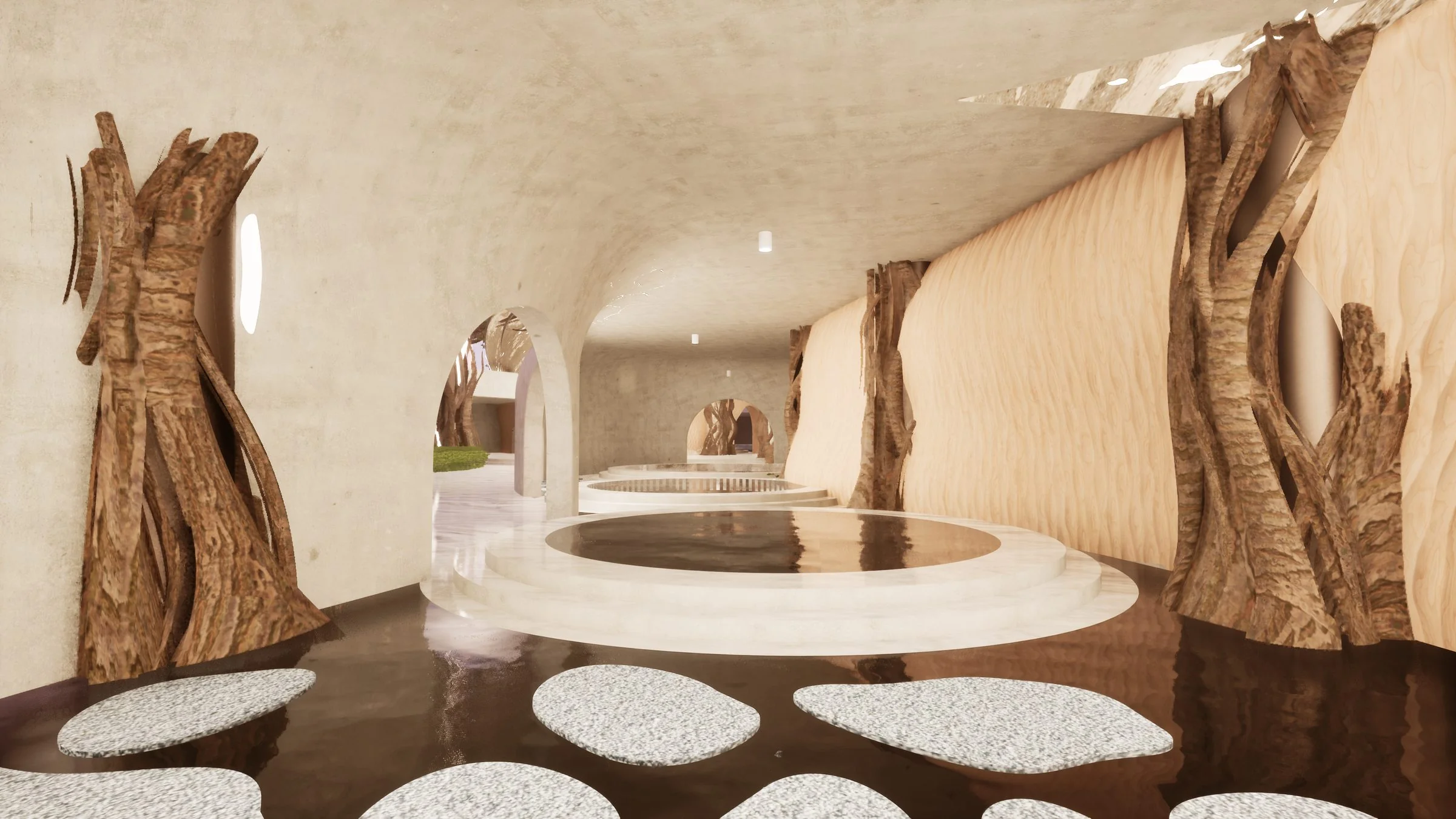
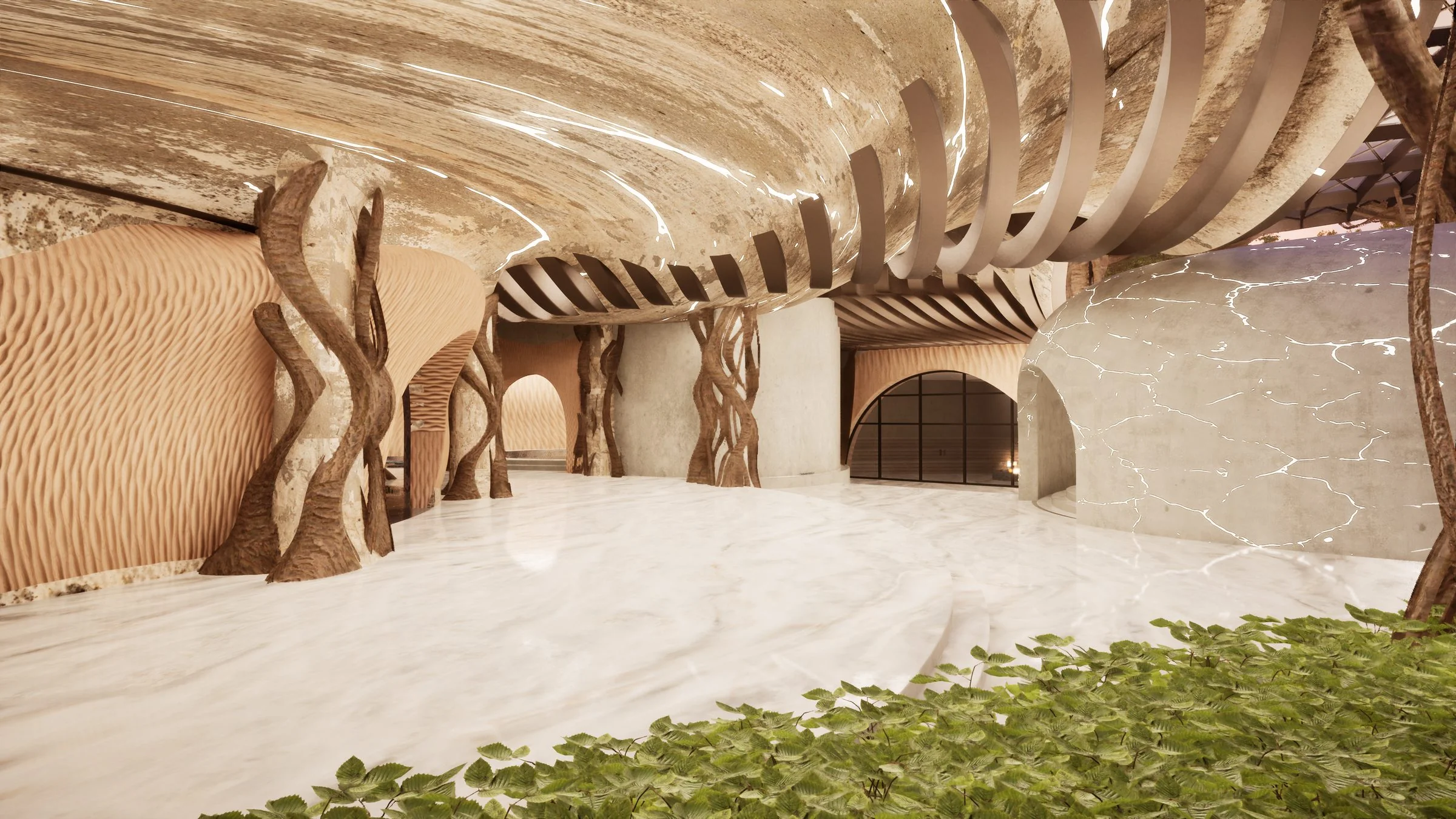
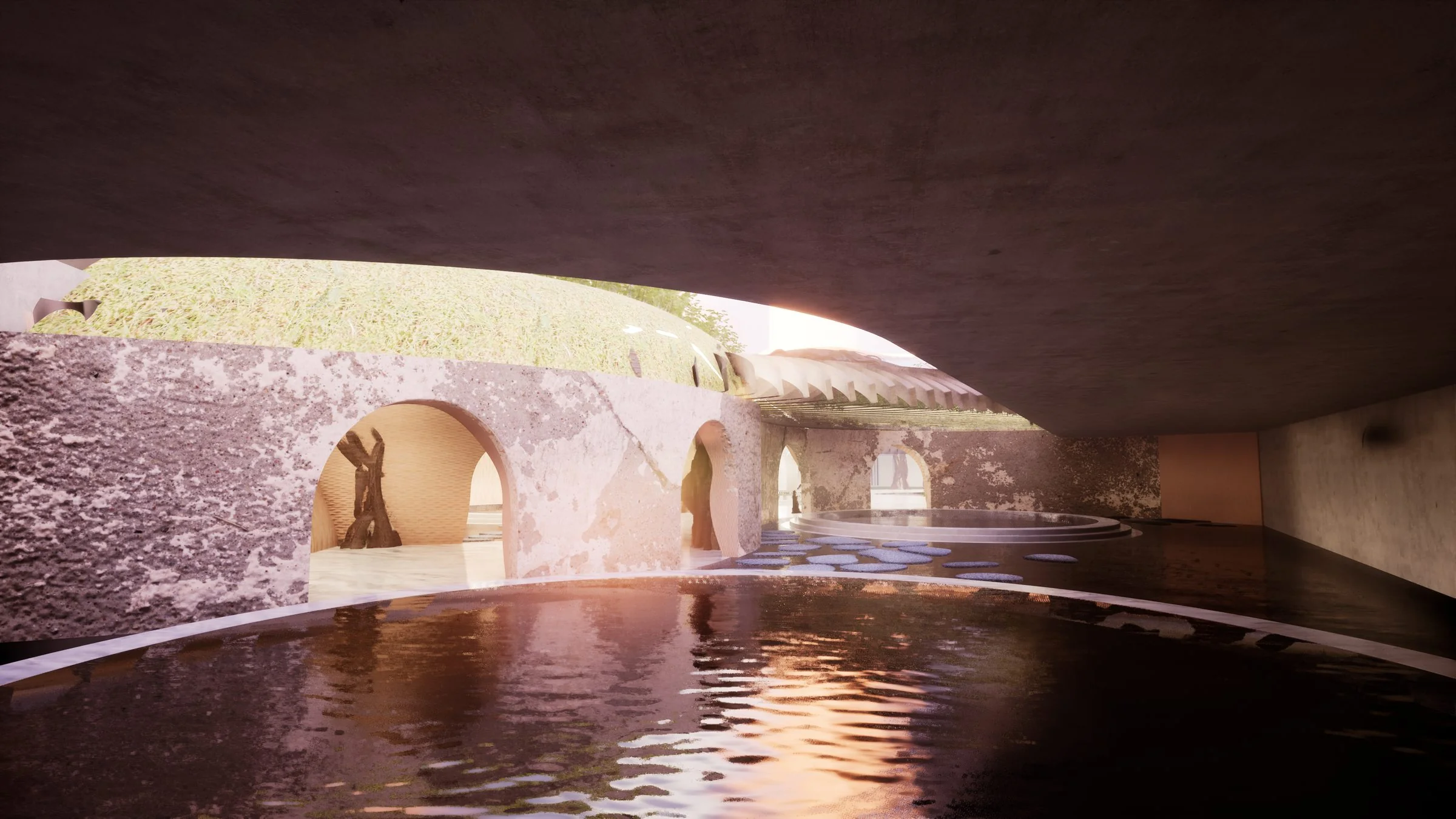
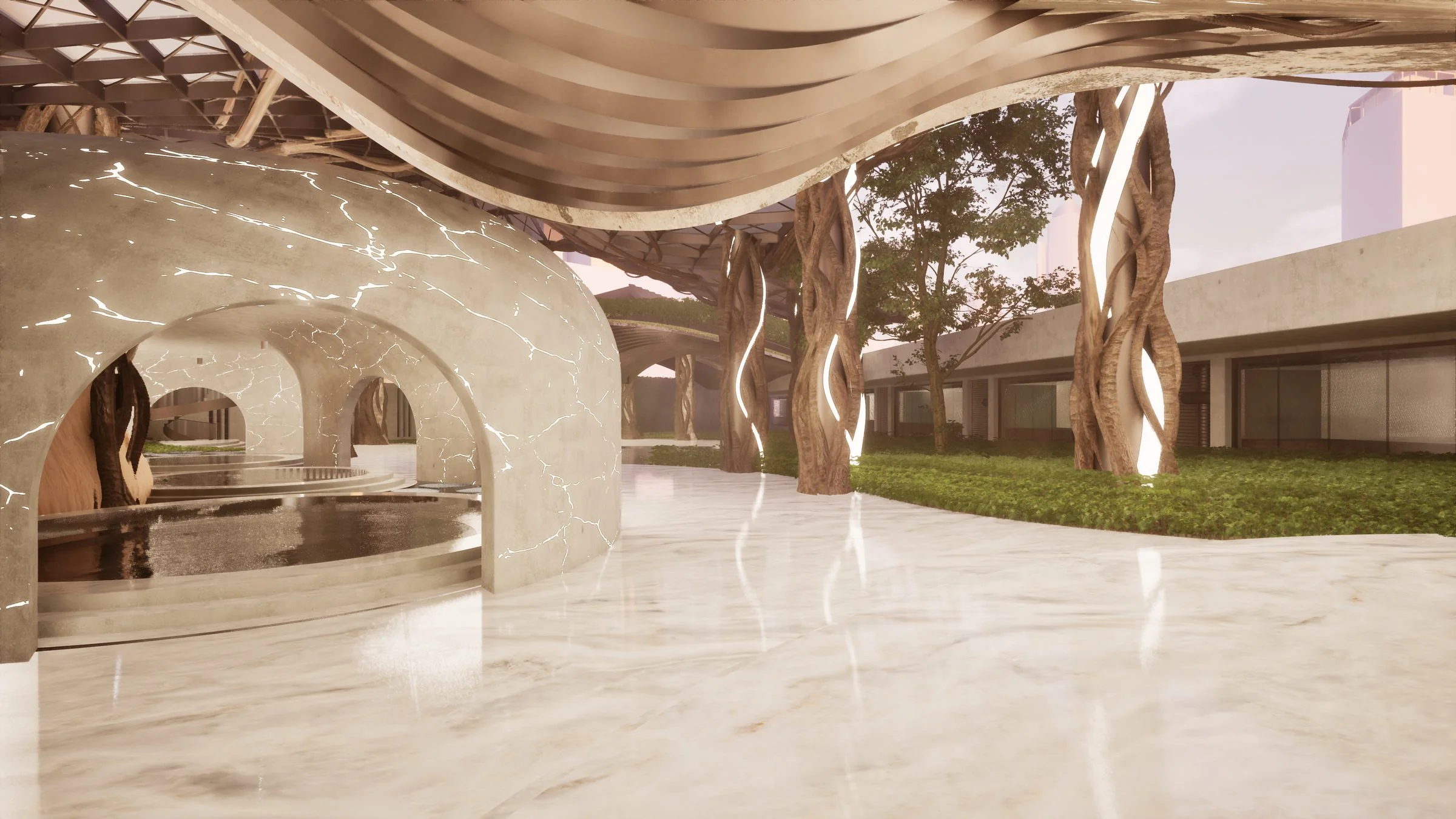
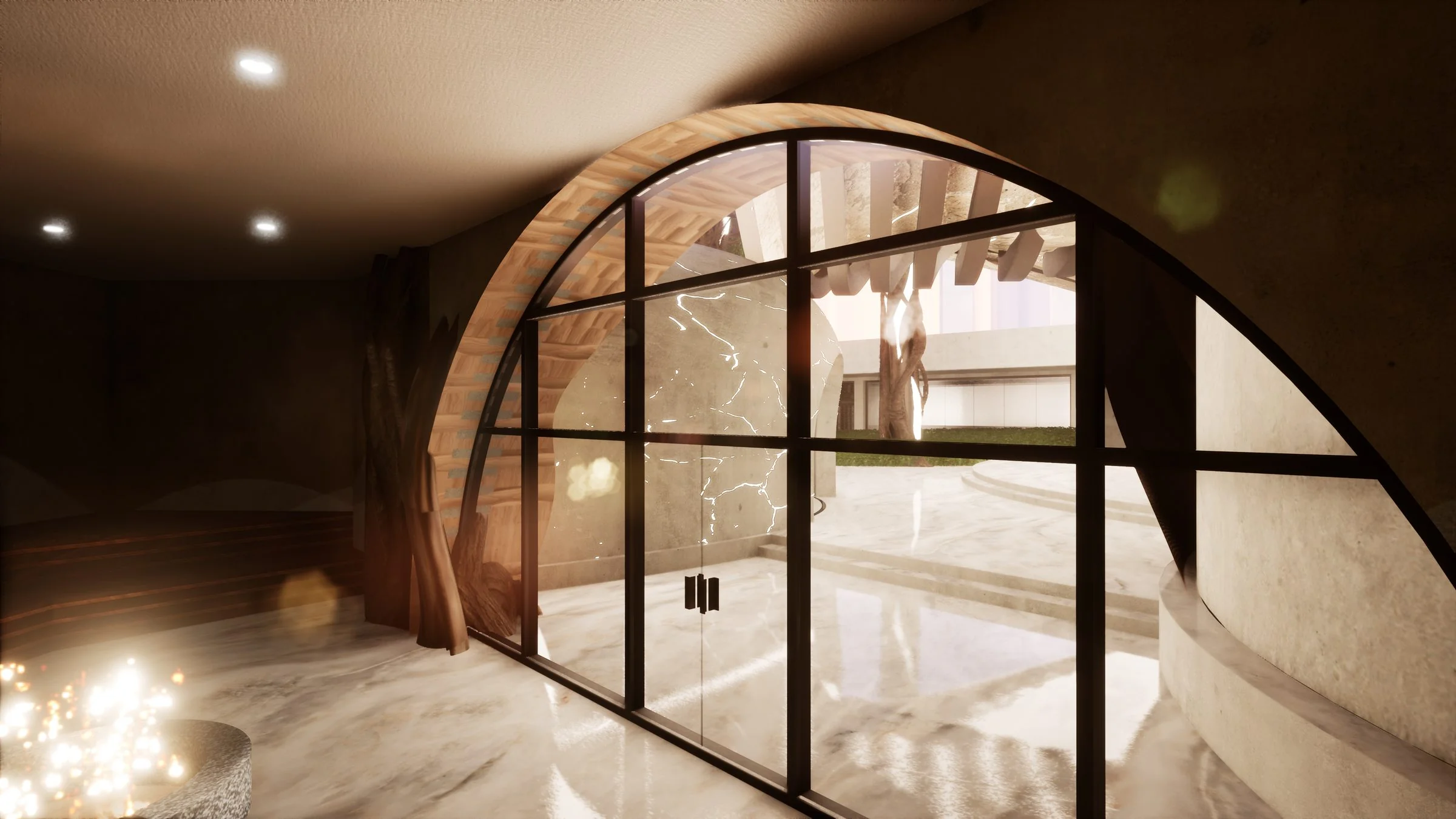
The roof moves overhead as a three-layered wave, resting on a grove of tree-form columns. Beneath it: three communal baths, a sauna, a swimming pool, the hyacinth reserve, the gravel filtration field, changing rooms. Water is visible at every step. So is the cycle of ceremony, gathering, and release that gave the project its subtitle.
Hyacinth Echoes
The project takes its narrative from a short manifesto we wrote titled Hyacinth Echoes: Reclaiming Yarra through Ritual and Regeneration. Its argument: data streams endlessly while cultural memory falters. Urban expansion has frayed the connection between community and Country. The bathhouse is a rejection of urban homogeneity, technological numbness and ecological neglect. It repositions the river not as a resource to exploit but as a living partner in communal and cultural renewal.
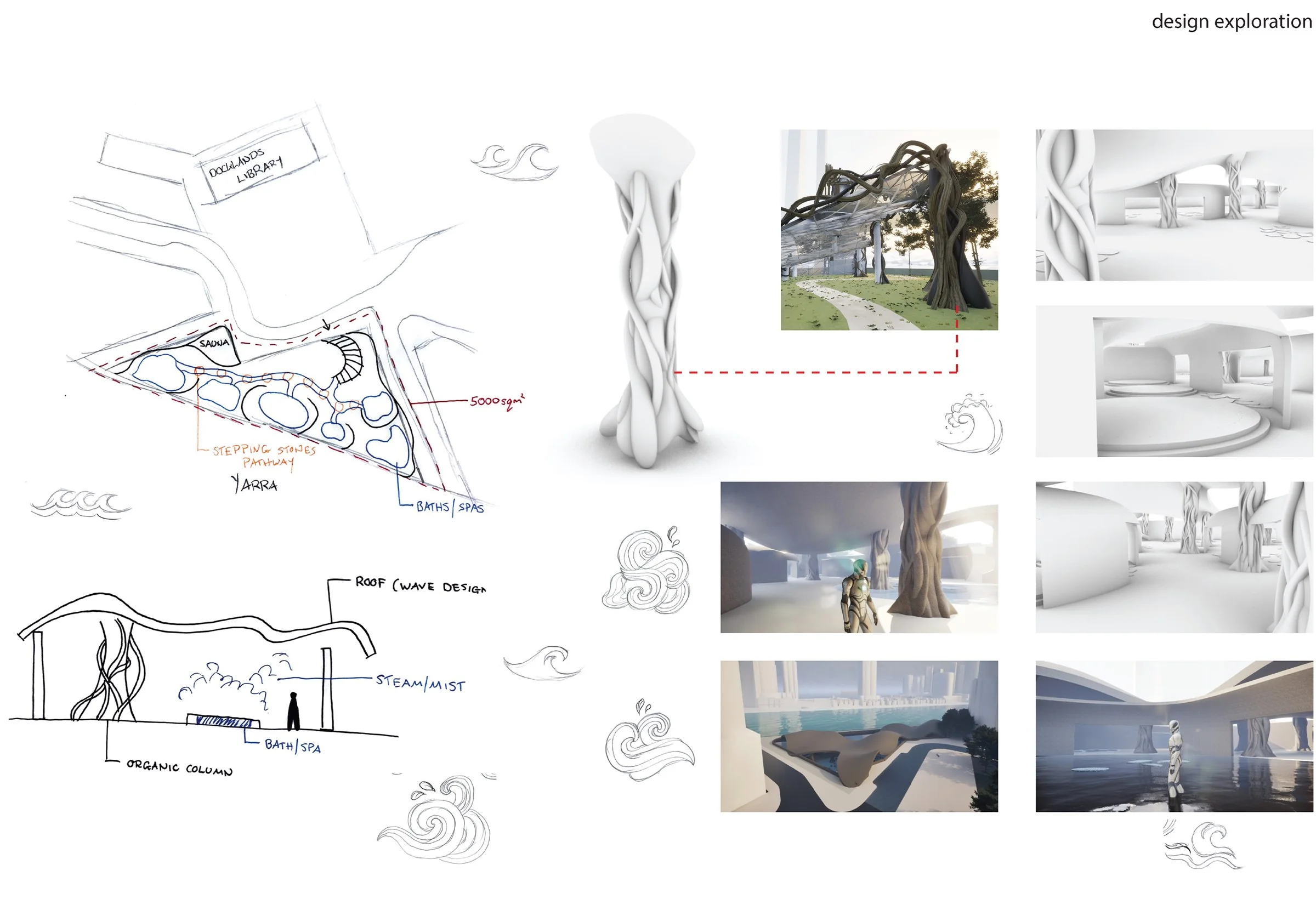
Tradition here is structural, not ornamental. Circular pools echo the geometry of Yarning Circles. Corridors hold the rhythm of ceremonial pathways. Indigenous plant species drive the filtration cycle. The building does not sit on Country; it tries to be of it.
The Water System
Water Hyacinth (Eichhornia crassipes) is one of the most effective aquatic phytoremediators known. It absorbs lead, cadmium, mercury, nitrates and phosphates through roots and leaves, stimulates rhizospheric microbes that degrade organic pollutants, and when pyrolysed produces biochar that can be used for further water purification. A floating wetland of hyacinth sits at the river edge of the site, paired with common rush, water ribbons, salt marsh rush and native azolla across layered stages.
Yarra River water enters the filtration chain, passes through the hyacinth wetland, flows through six gravel filtration beds, and is stored in a solar-heated tank before being released into the baths at varying temperatures. Harvested hyacinth biomass becomes biochar, fertilizer, animal feed, briquette fuel, or raw material for handicraft and paper. Nothing is discarded. The building is a loop.
Primary phytoremediator. Floating mat absorbs dissolved metals and nutrients; pyrolysable into biochar.
Native emergent. Dense root mat stabilises substrate and supports rhizospheric microbes.
Submerged native macrophyte. Oxygenates the water column and traps fine sediment.
Brackish-tolerant buffer for the tidal zone where river salinity spikes during low flow.
Nitrogen-fixing floating fern. Symbiosis with cyanobacteria adds bioavailable nitrogen to the wetland.
Vigorous sedge for the final polishing stage. Forms a mechanical filter at the wetland outflow.
Form Study + Design Exploration
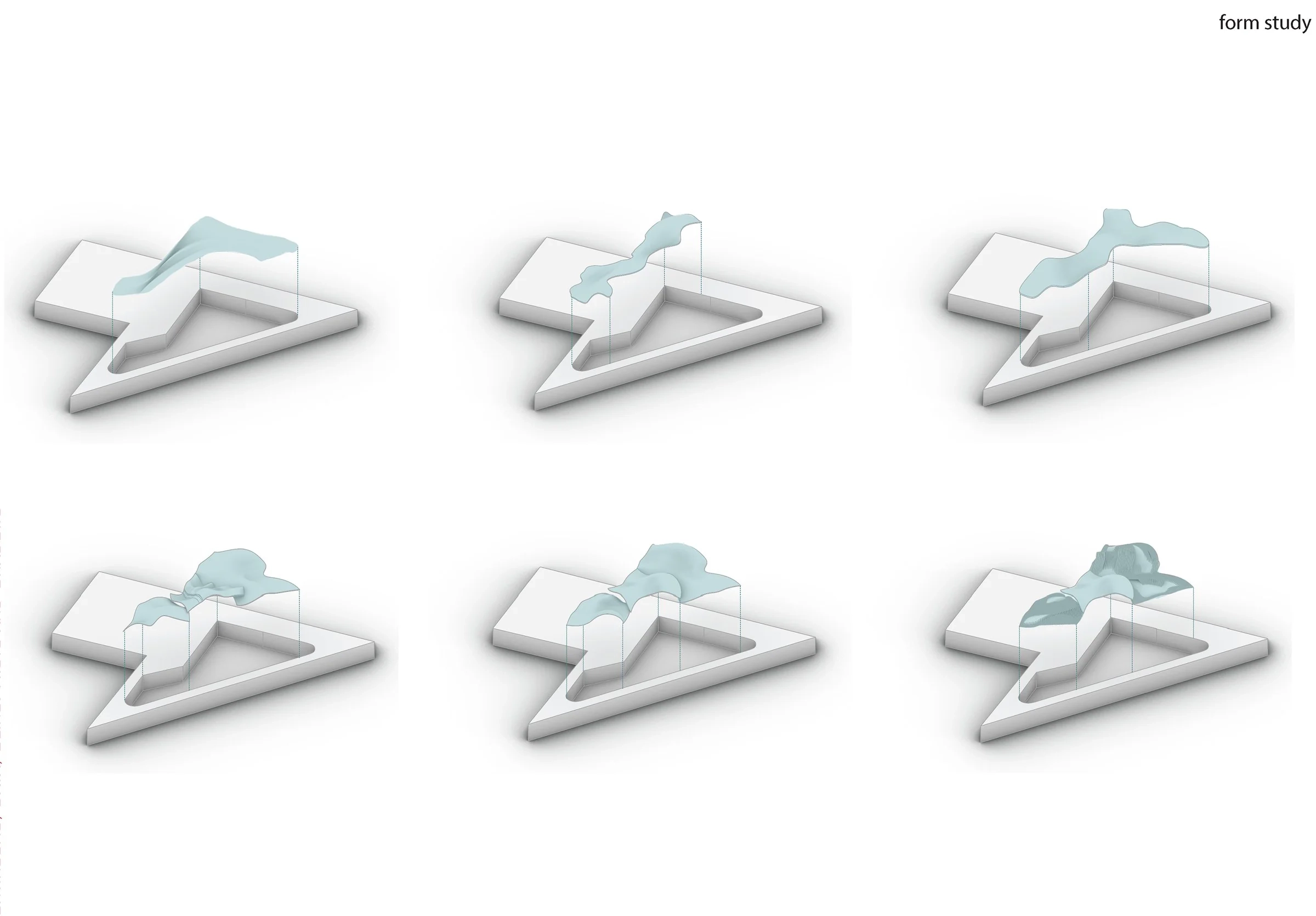
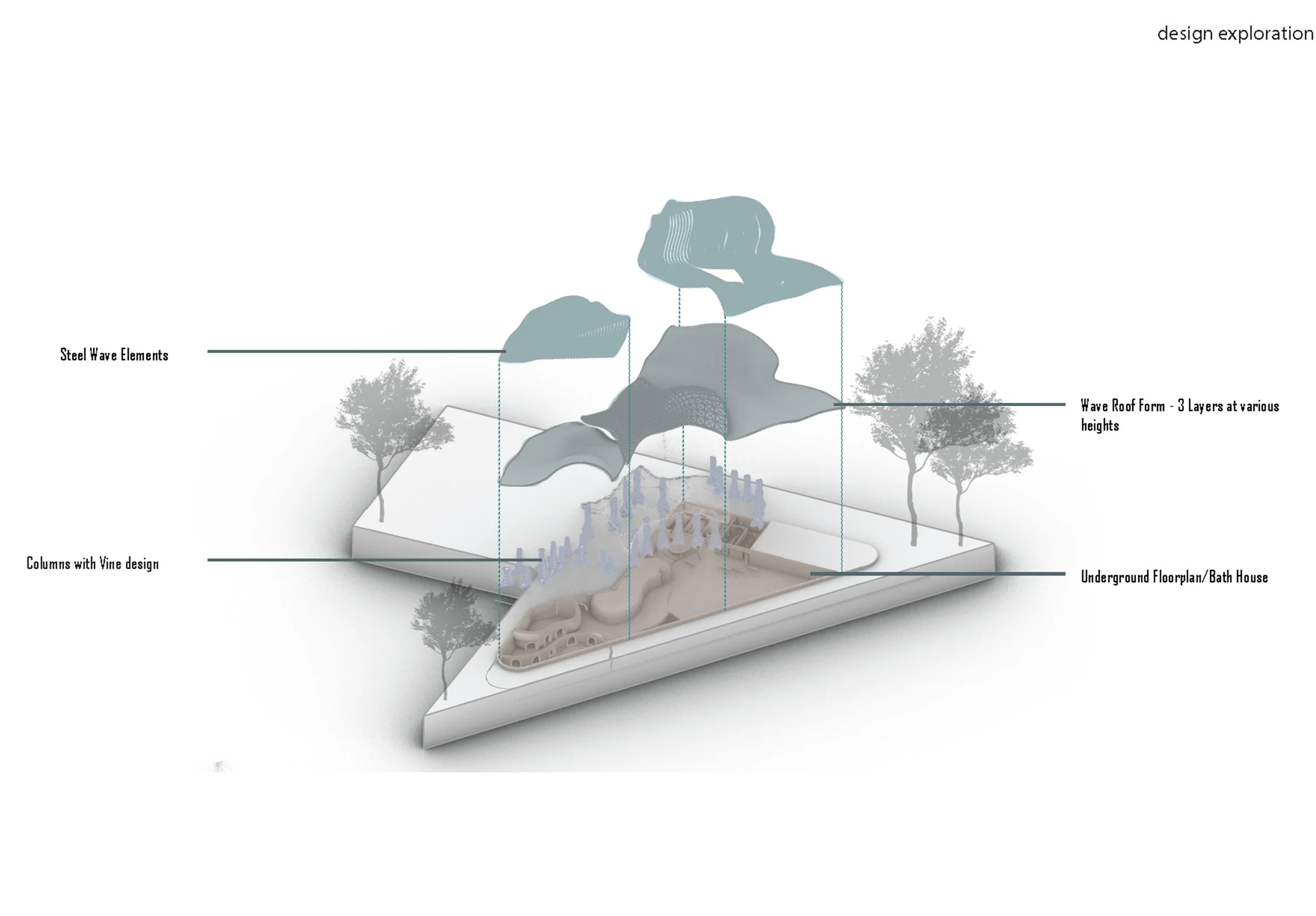
The form began with a single move: a wave, drawn from the river it tends. The gesture is then disciplined. The scheme organises around four core experiences: water purification, emotional transition, ritual bathing, and communal gathering. The wave compacts into three overlapping strata at varying heights, resting on a field of tree-form columns drawn from vine geometries. Six iterative massing studies tested the roof's relationship to the triangular site boundary before the final form was locked.
Plan + Section
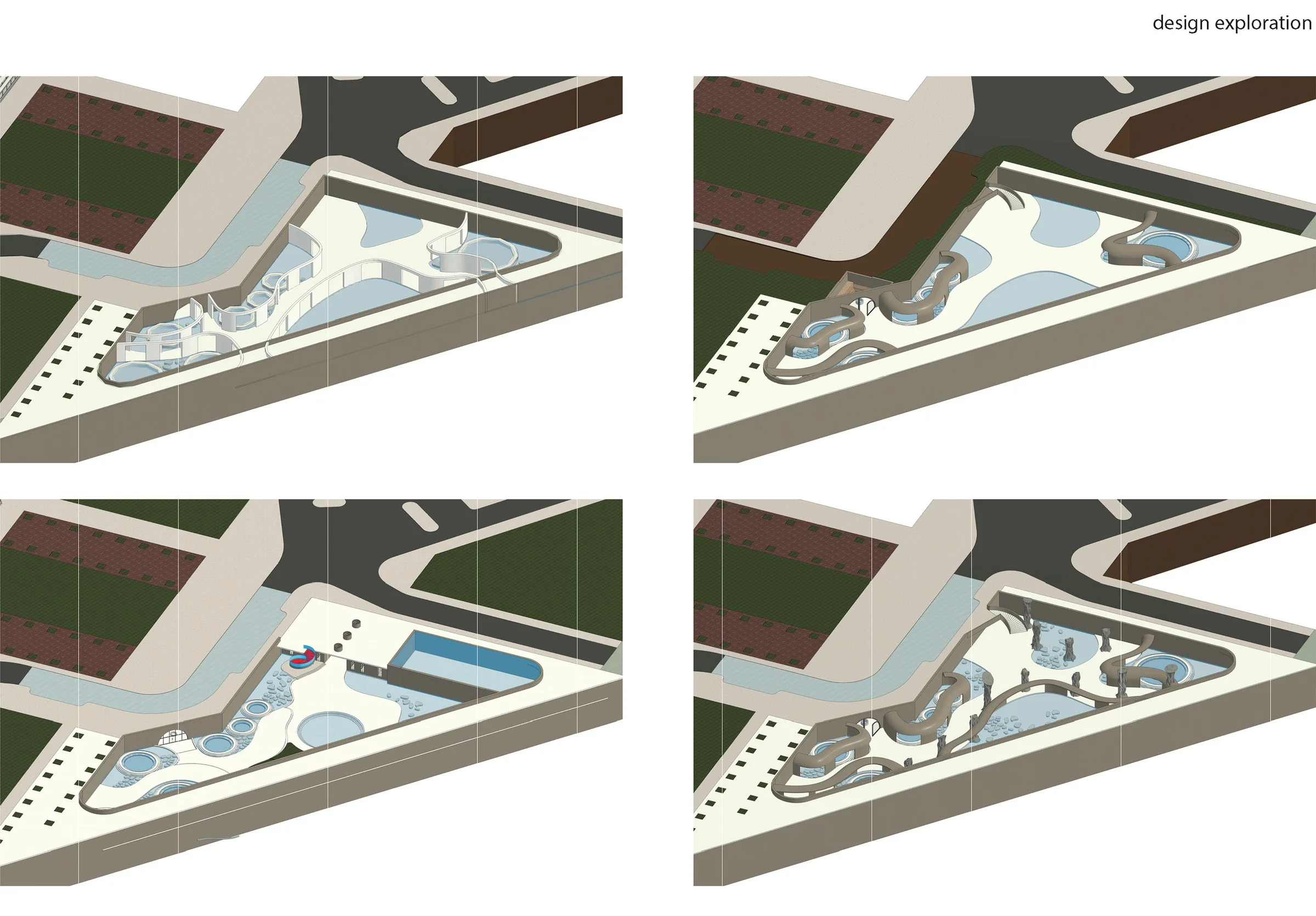
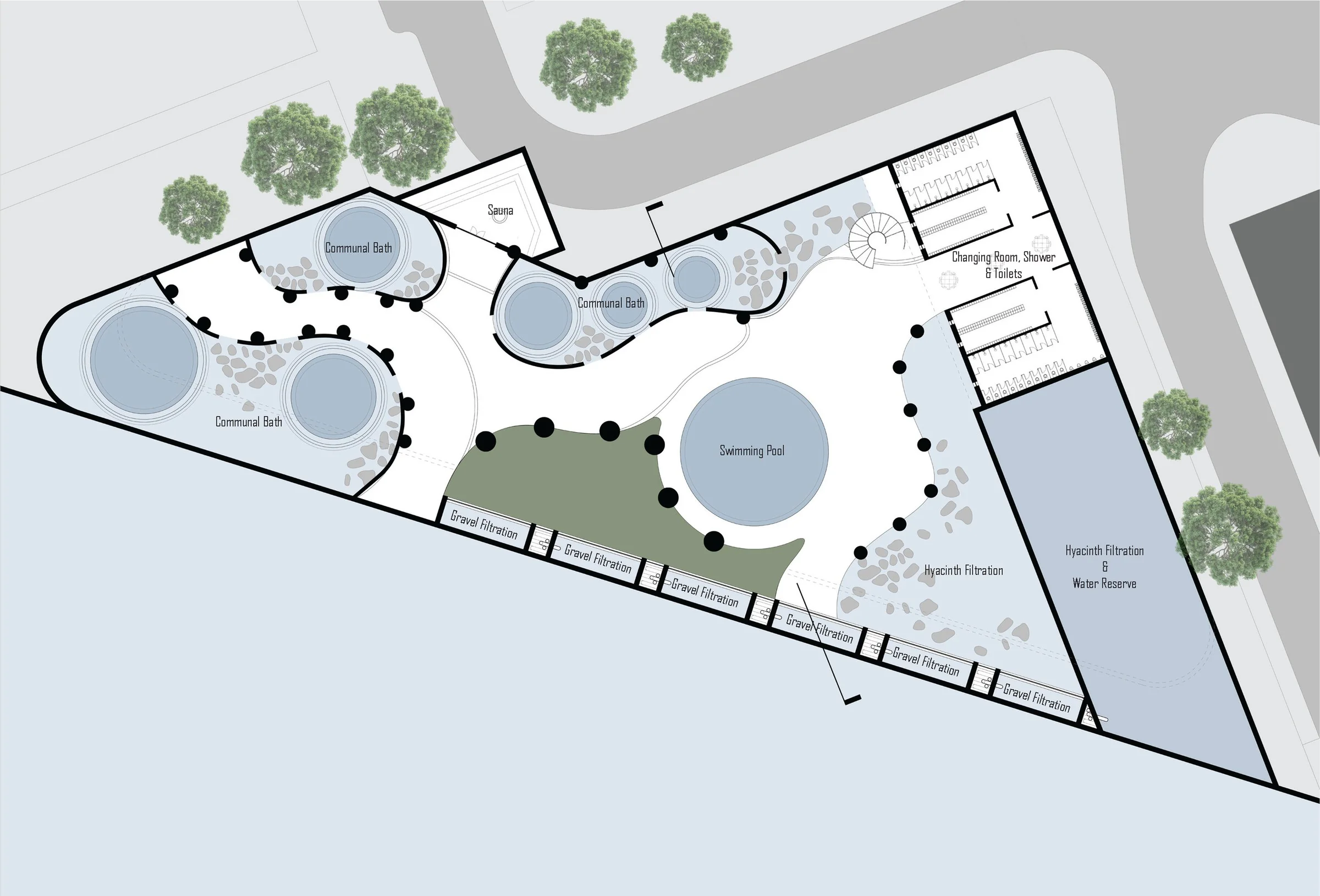
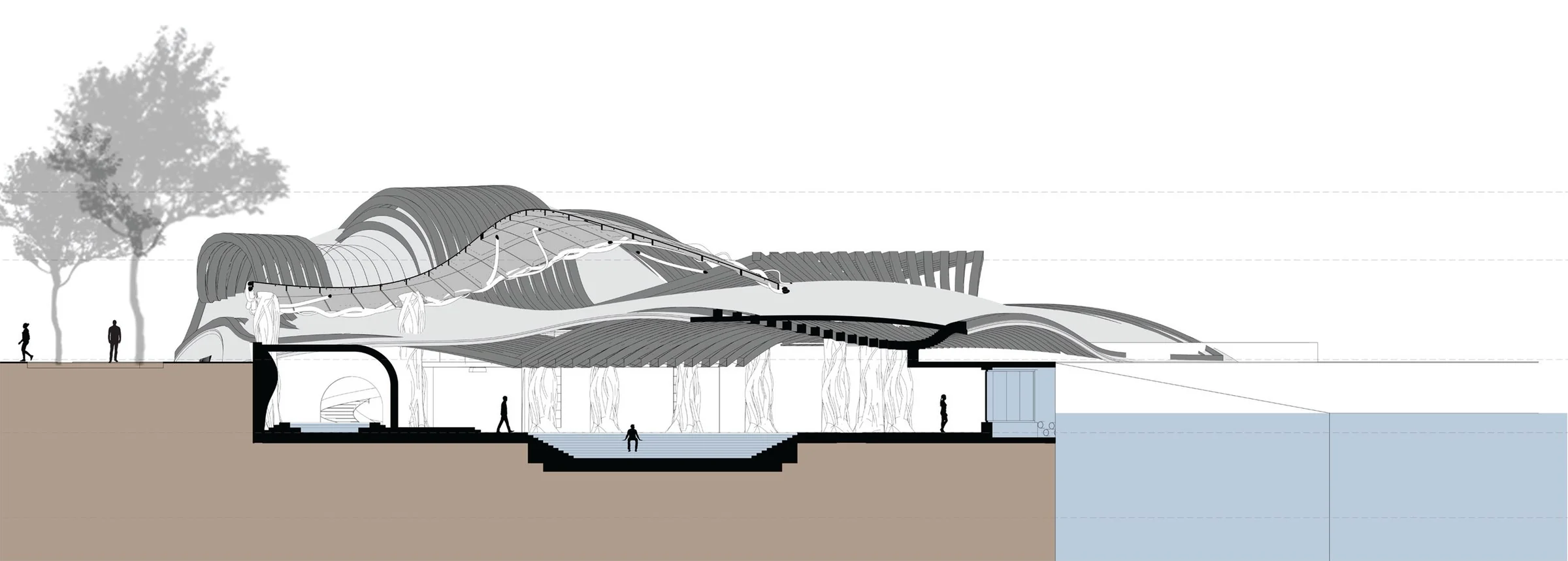
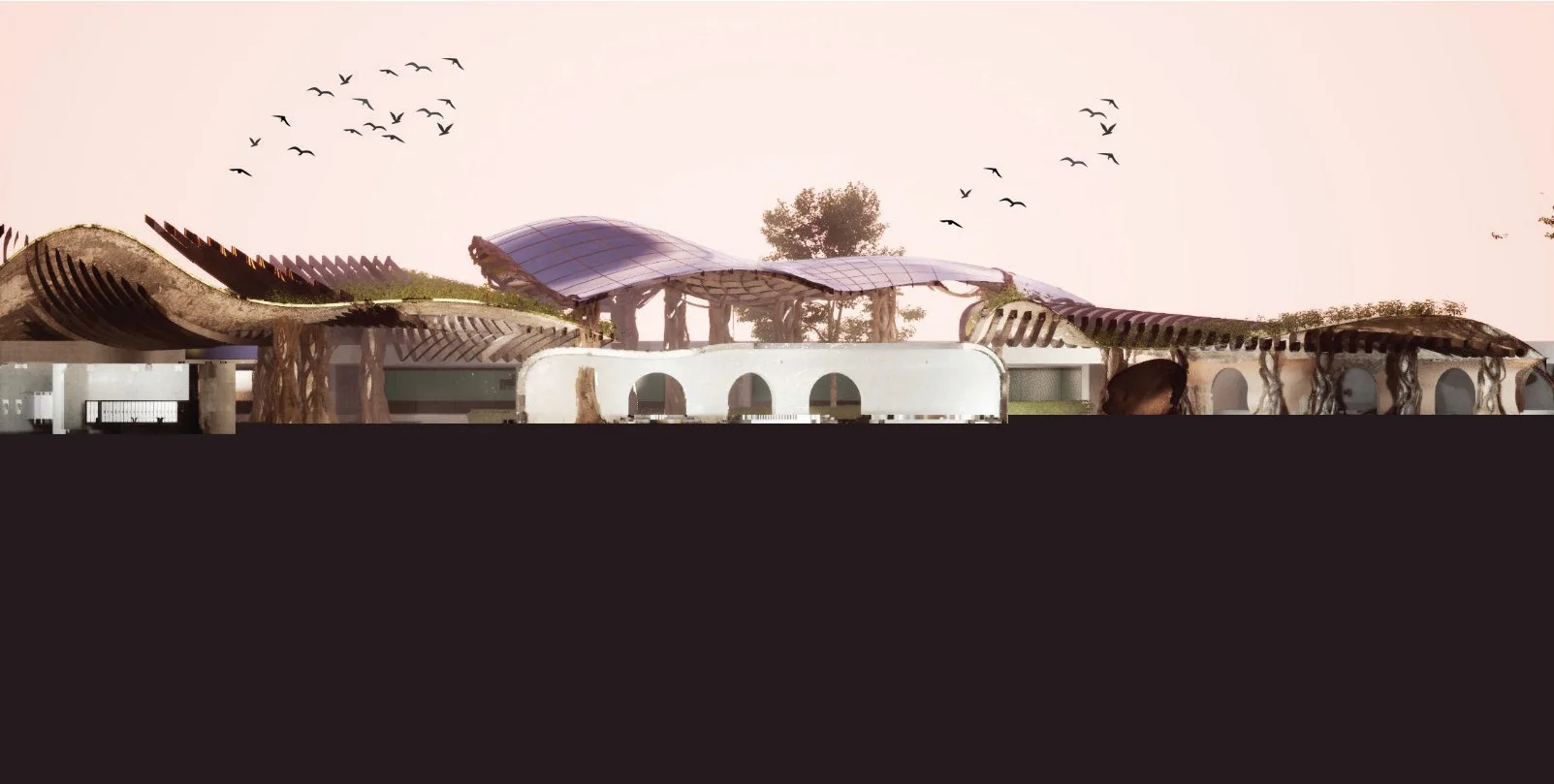
The plan reads from the river inward: hyacinth filtration and water reserve at the waterline, then gravel filtration beds, then the communal baths and swimming pool at the centre, with the sauna, changing rooms, showers and toilets tucked under the low edge of the roof. The section reveals how far the building is submerged, how the bathing hall sits below grade, and how the wave roof rides above it like a sheltering canopy.
Walkthrough
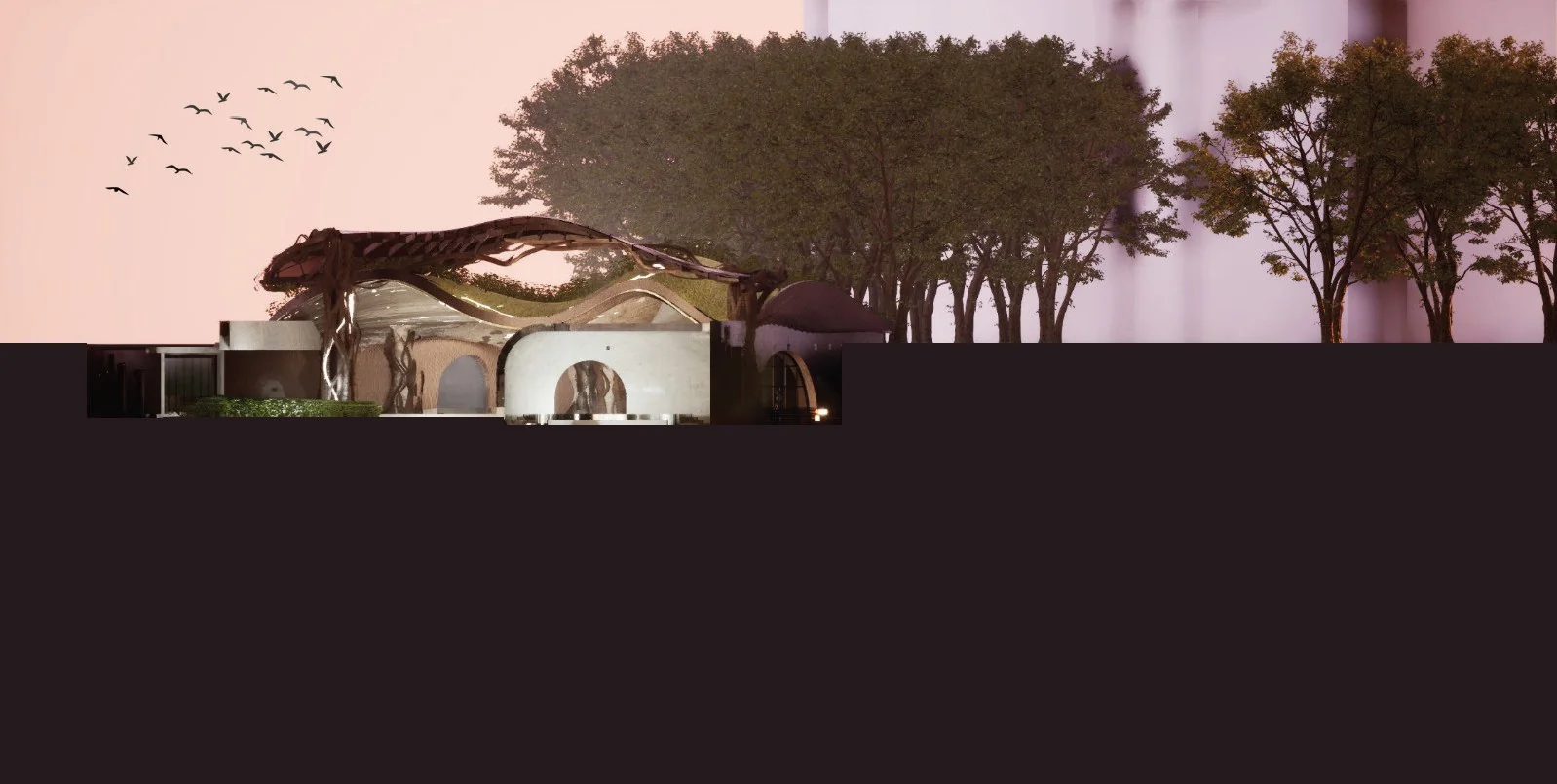
The building was modelled in Rhino + Grasshopper and staged in Unreal Engine 5 to test atmosphere at human scale. Three exhibition films, cut in Premiere, walk through the exterior approach, the interior ritual sequence, and the axonometric + section scroll.
Renders
Reflection
What emerges is not a spa. It is a civic-industrial typology: infrastructure as healing, architecture as empathy, technology as ally. The Tide House asks the city to slow down, to feel water as a living entity, and to restore relationships long severed between the Birrarung and the communities that depend on it.
This is architecture not of control, but of coexistence. A shift from extraction to reciprocity. A call to reimagine buildings as beings: alive, adaptive, and sacred.