Mongrel Materials · RMIT · Semester 2, 2024
A Banal Mongrel Exhibit
The construction industry saw a 23-fold increase in natural resource consumption over the 20th century. The Mongrel Materials studio begins from that number and asks a different question: what if the architect's role is not to create but to reconfigure? Not permanence, but reassembly, disassembly, and reimagining.
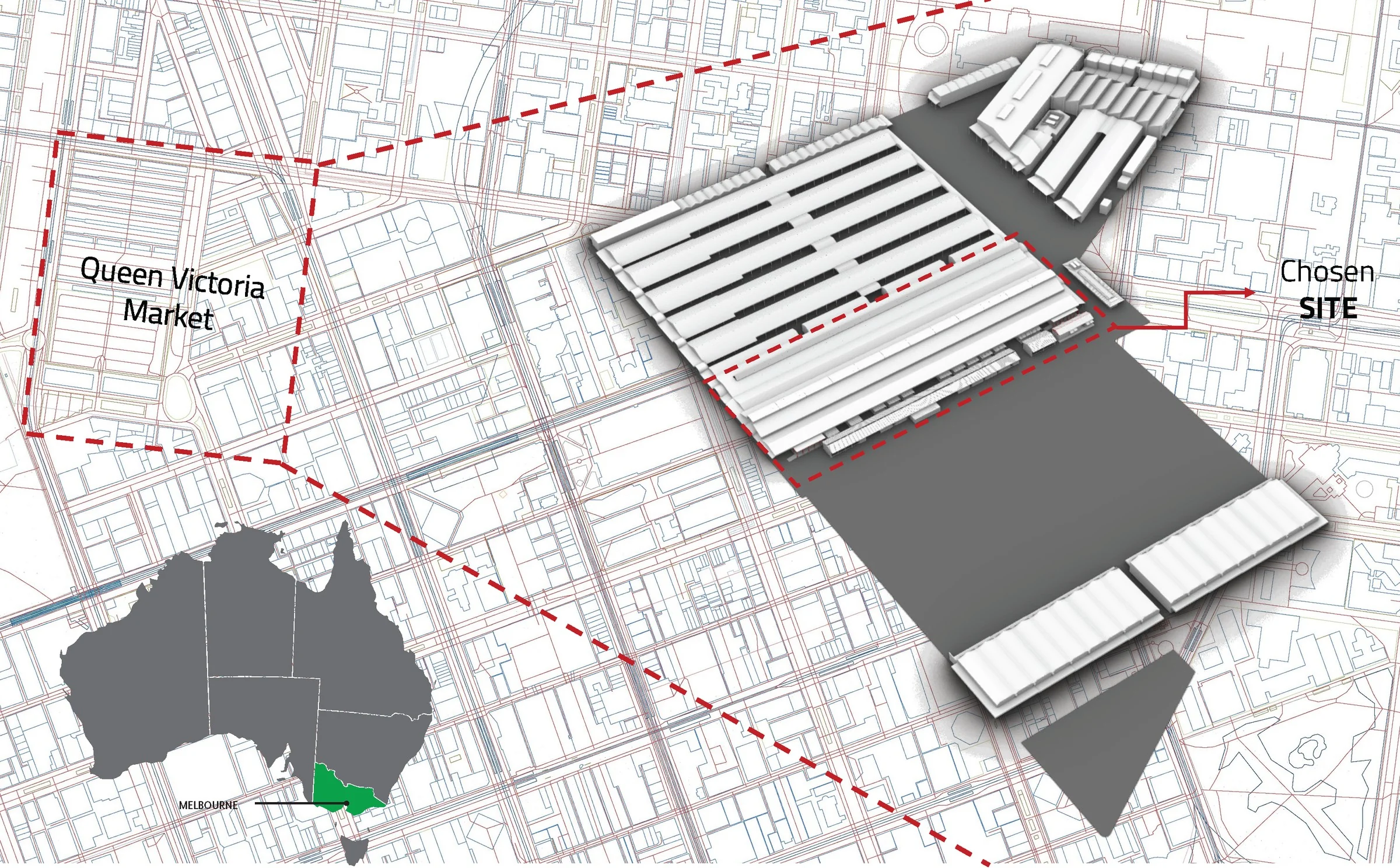
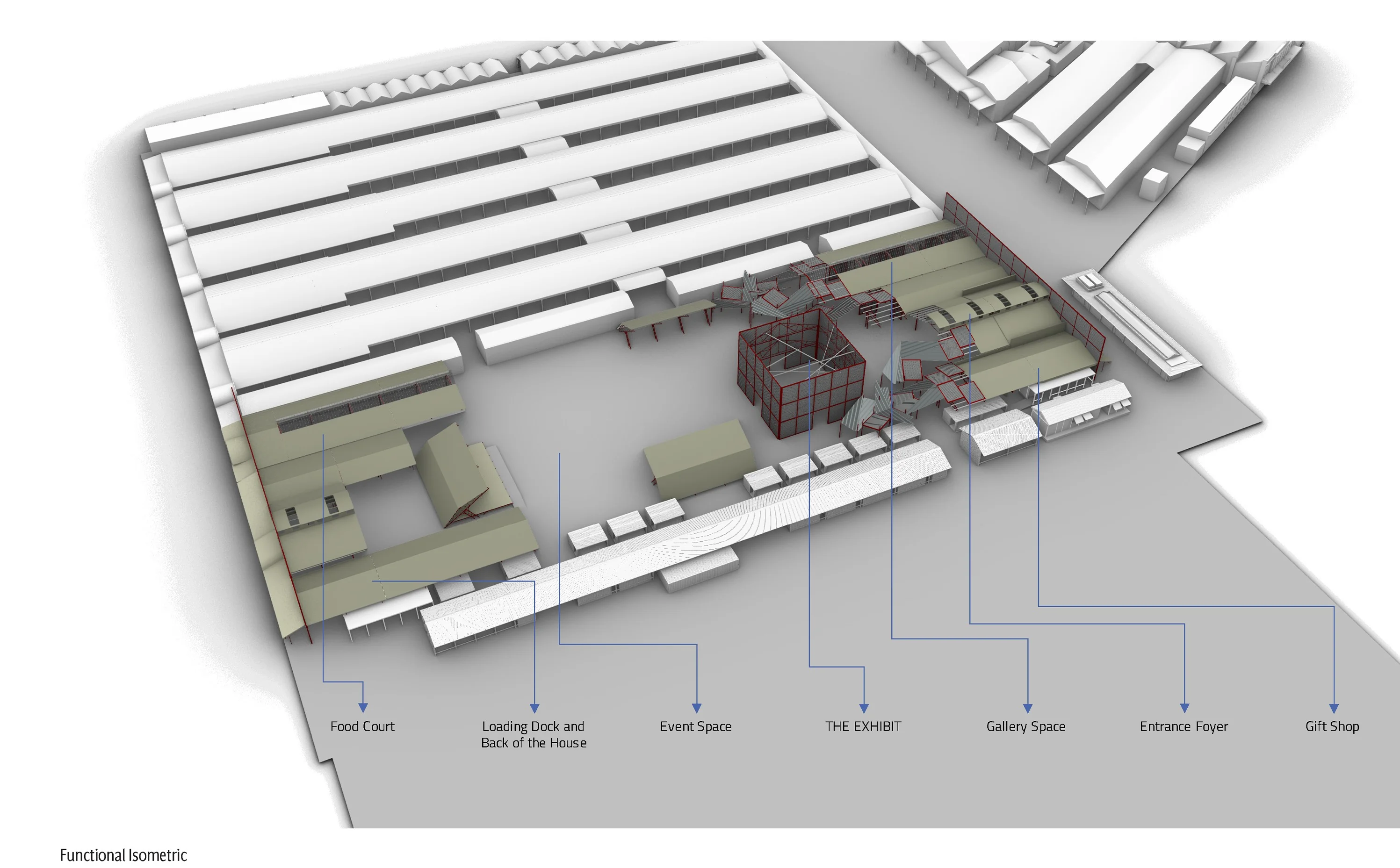
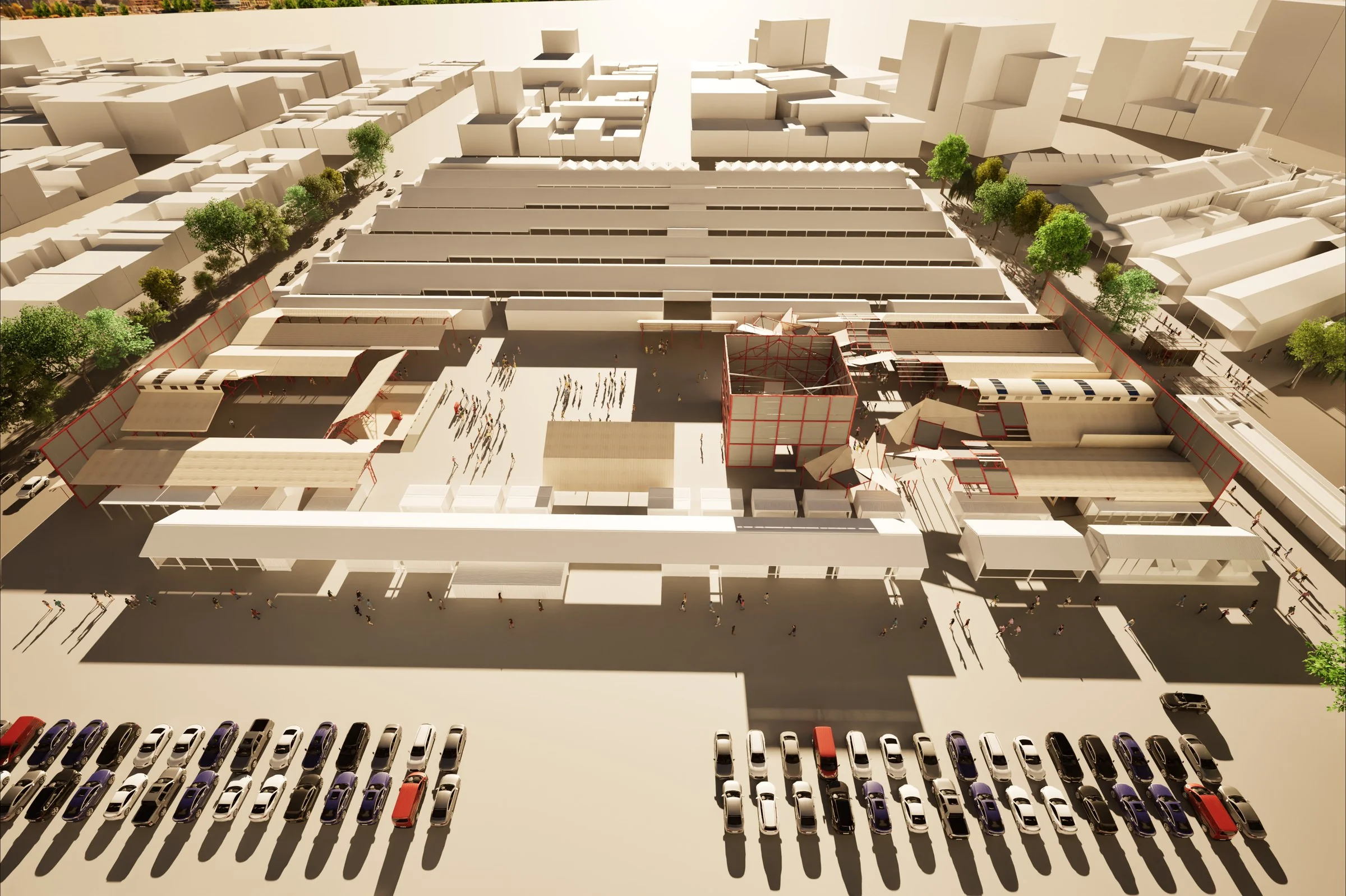
The project is a Museum to the Banal Architectural Element, sited on Queen Victoria Market, Melbourne. The brief: catalogue the existing material fabric of the market, then build from that catalogue alone. No new materials. The harvest becomes the brief. The inventory becomes the design constraint.
Two concepts drive the work. Mongrel Materials: the celebration of impure, reclaimed, mismatched elements as a virtue rather than a compromise. Reverse Futurism: speculative futures drawn not from new technologies but from the material language already embedded in the site. History as raw material. The ordinary as subject.
The Site
Queen Victoria Market was established in 1878 on what was once the Old Melbourne Cemetery. That origin is not incidental: the colonial history is literally buried beneath the ground the museum will stand on. Over nearly 150 years the market has grown into one of Melbourne's most vibrant communal hubs, a place of multicultural exchange, commerce, and the lively chaos of the Night Markets. The chosen site sits within the northern shed precinct: K, L, and M sheds whose Victorian-era iron trusses, timber rafters, and corrugated roof cladding form the primary material source for the project.
The Material Harvest
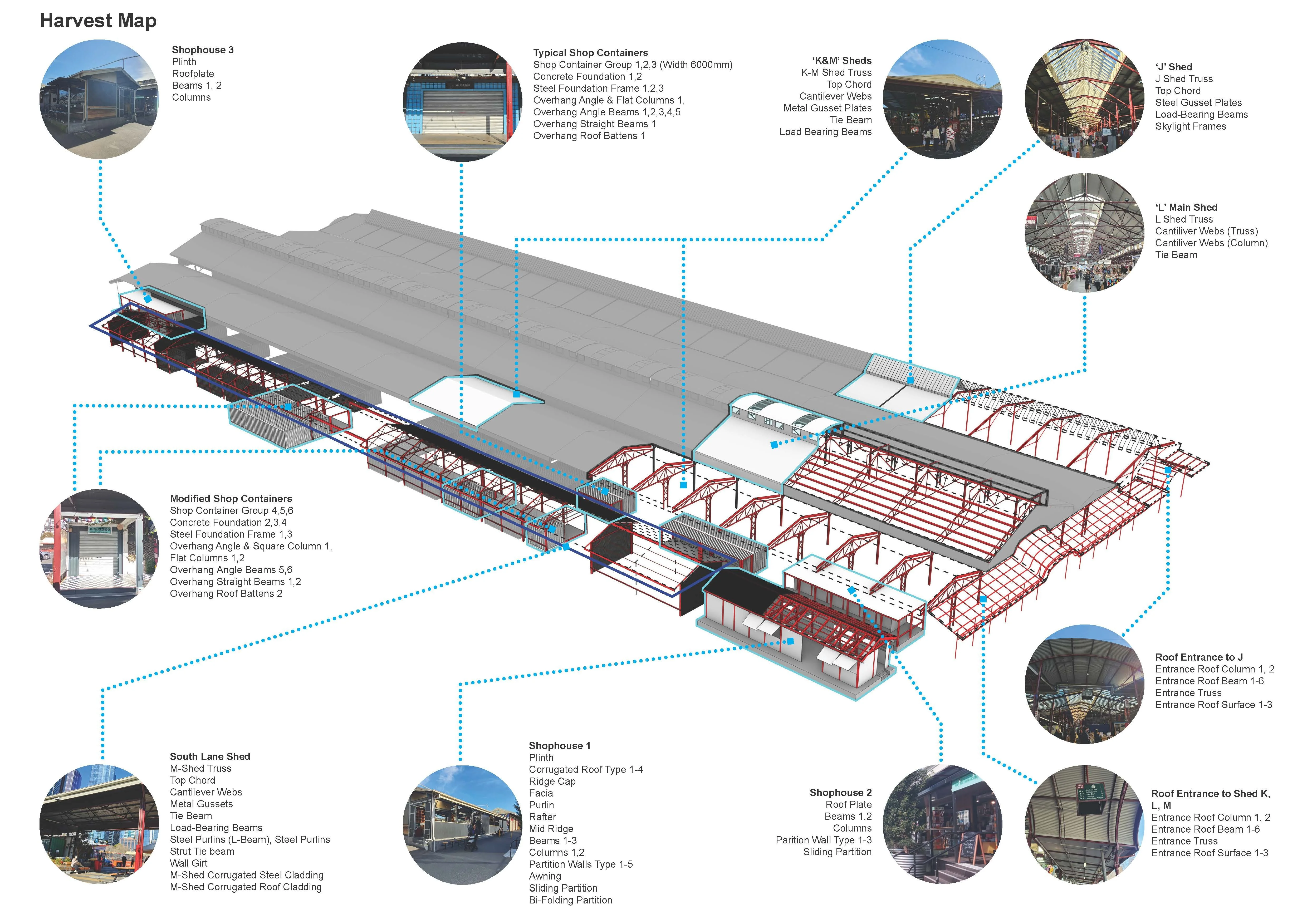
Before any design began, the existing fabric of Queen Victoria Market was catalogued: type, quantity, dimension. Shop house plinths, partition walls, rolling shutters, K-Shed and L-Shed and M-Shed trusses, I-section columns, cantilever webs, tie beams, gusset plates, steel purlins. The harvest became the brief.
Act 1: The Ticket Booth
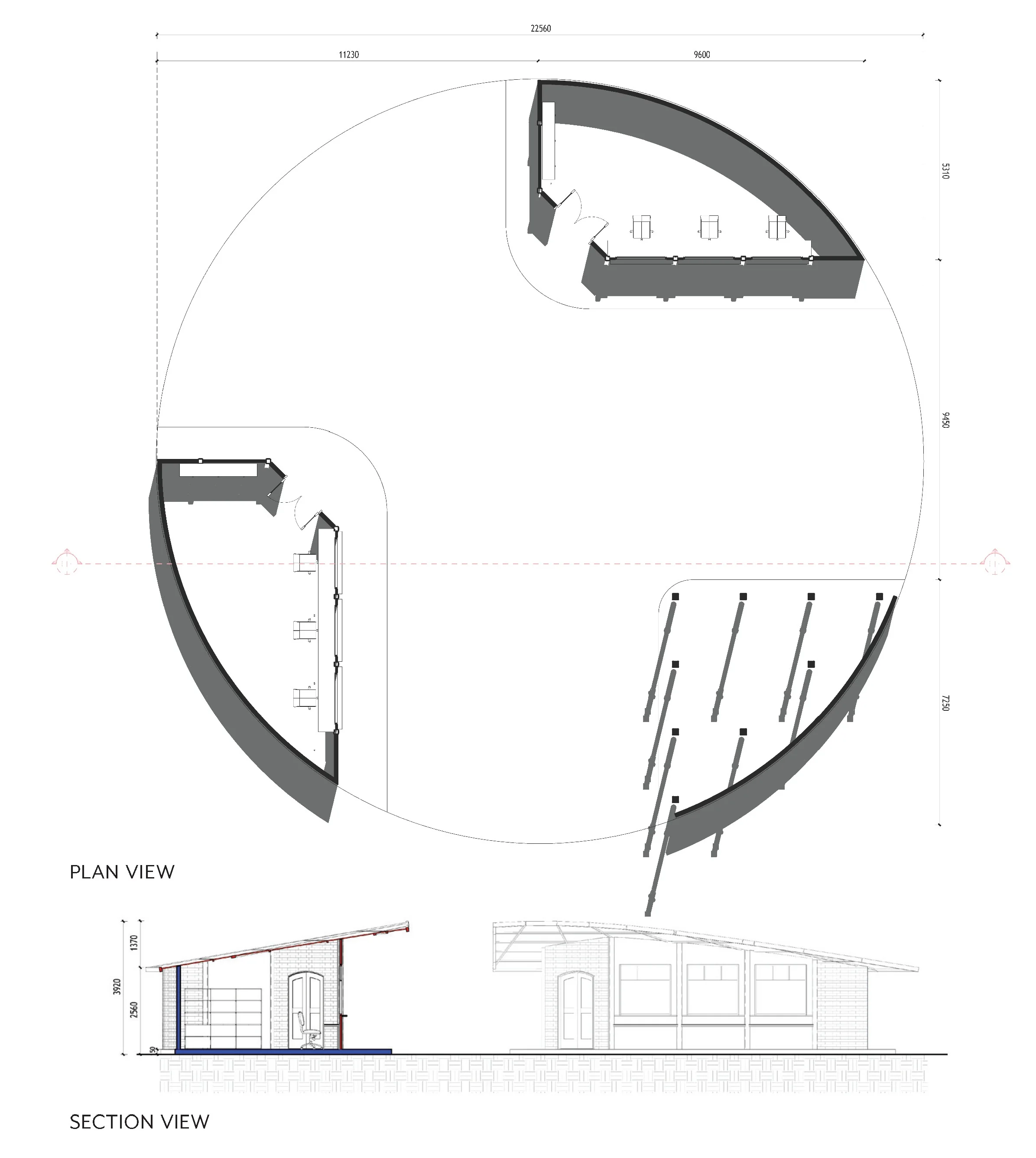
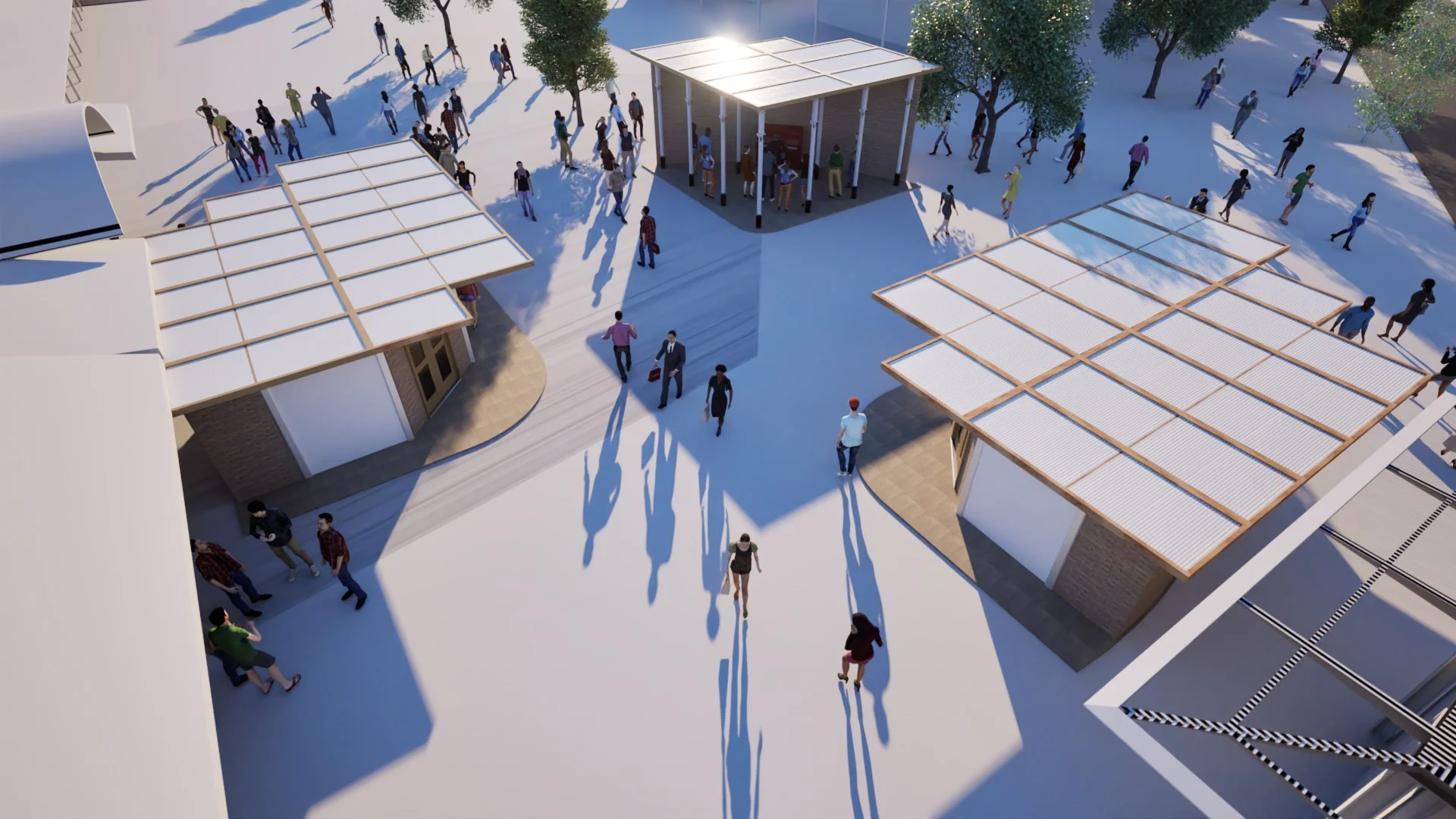
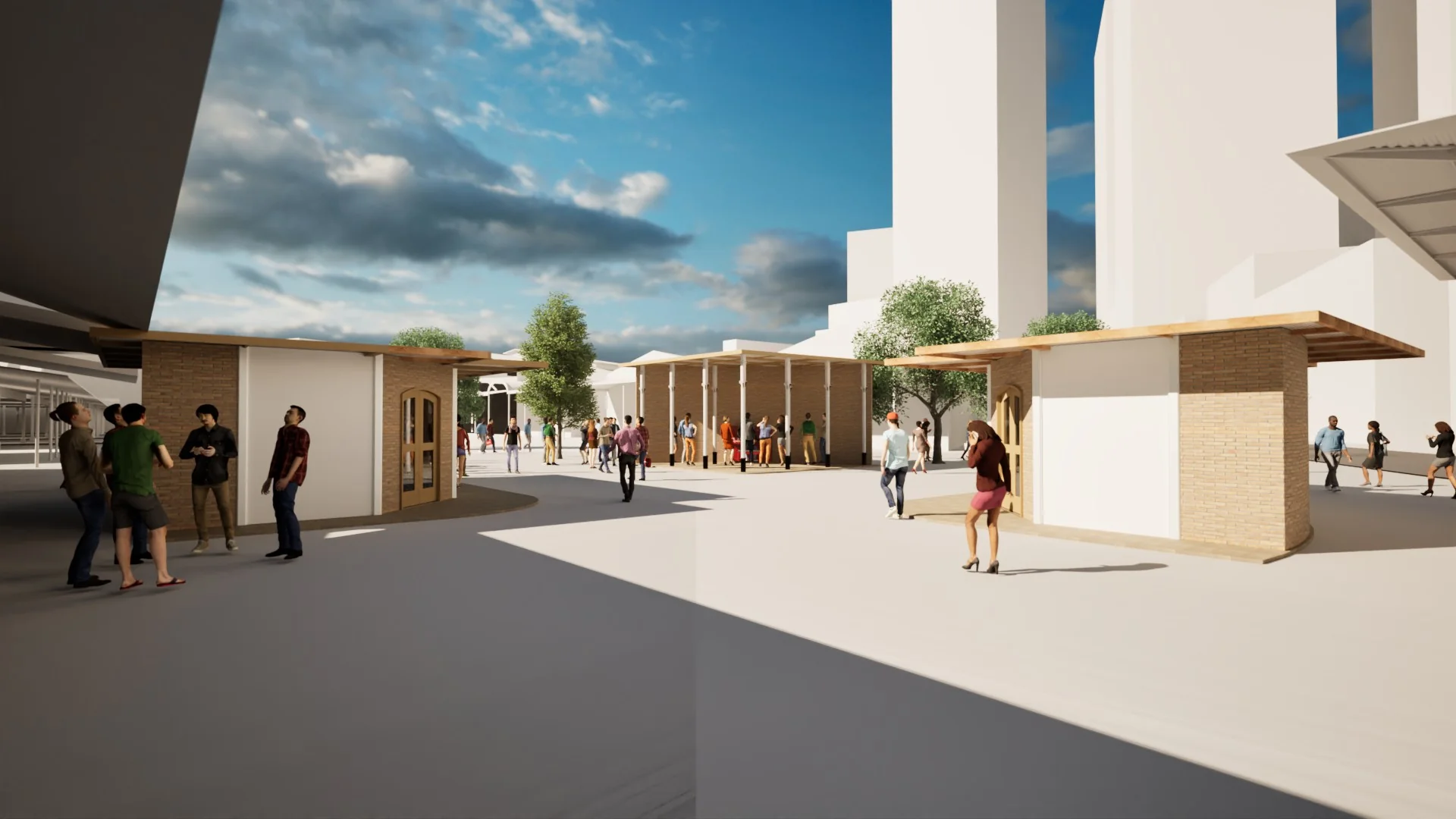
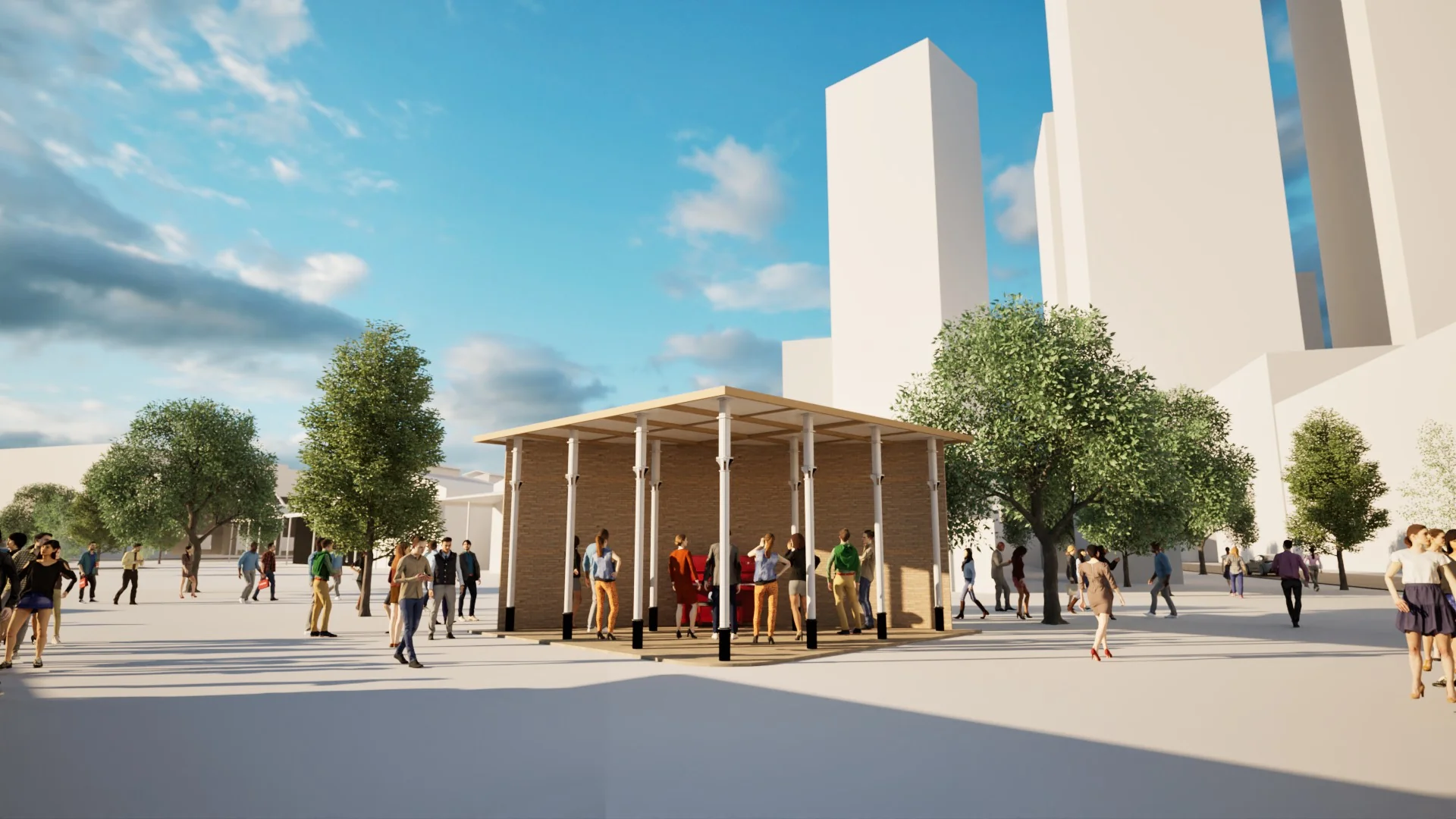
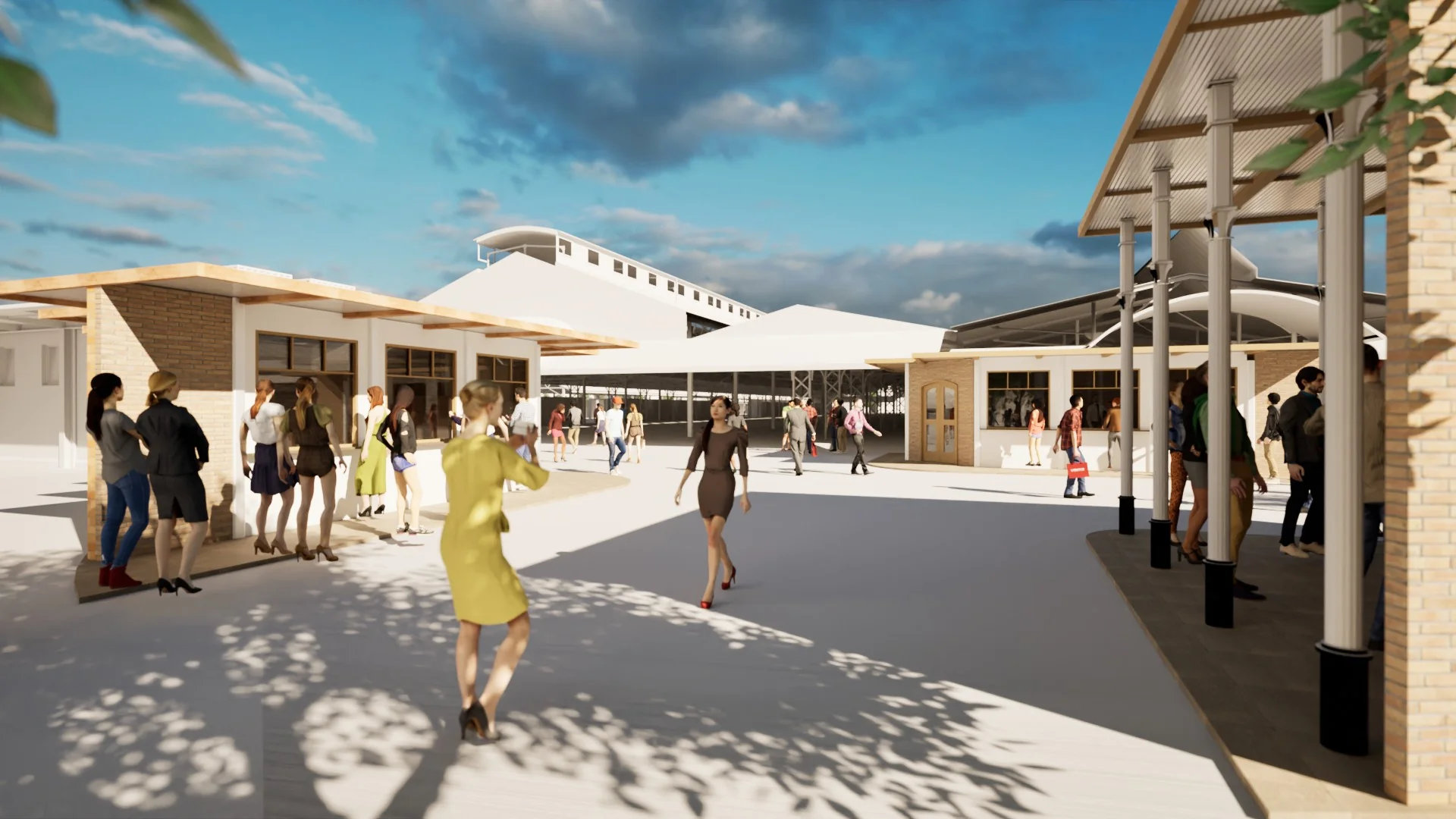
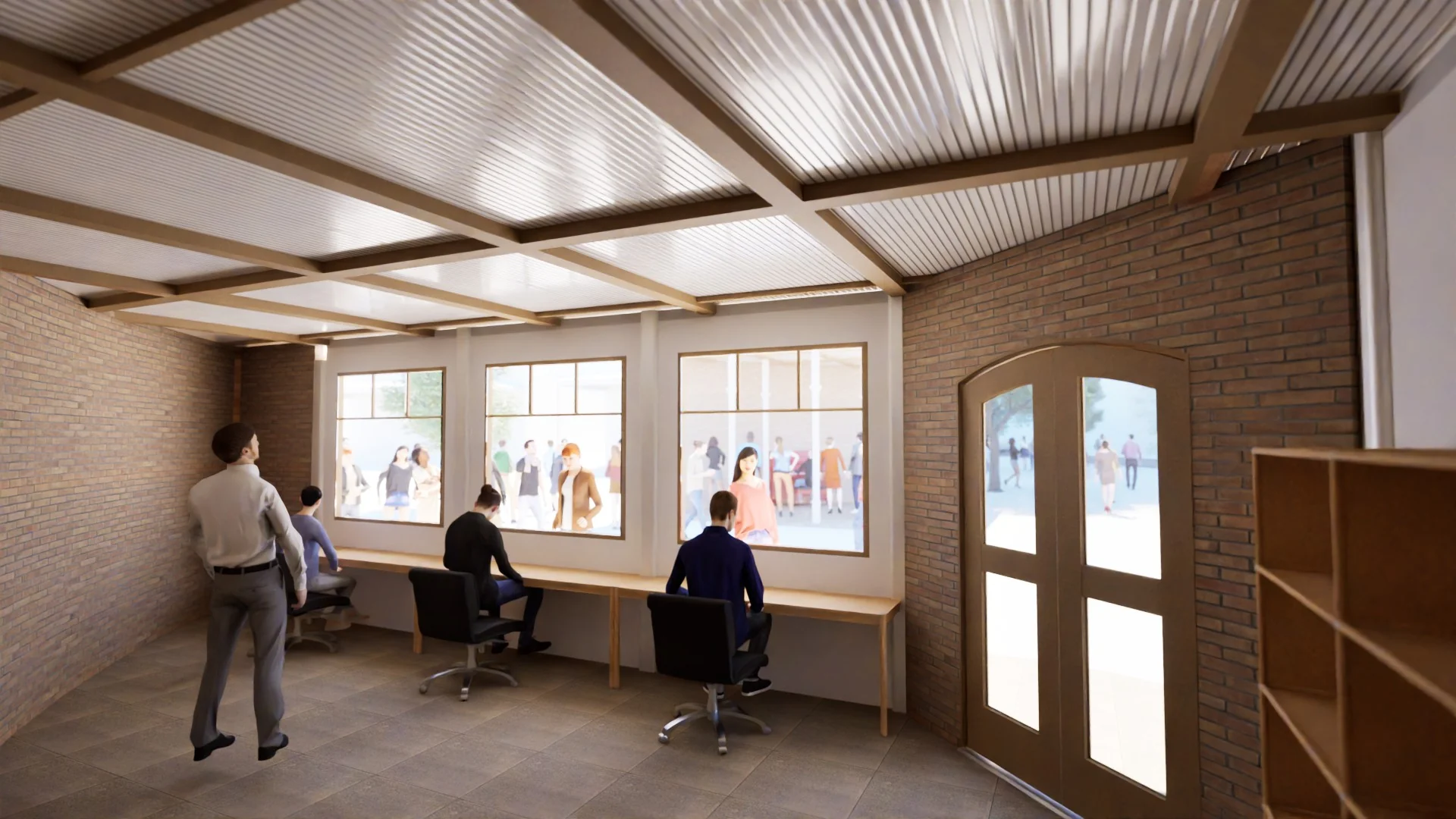
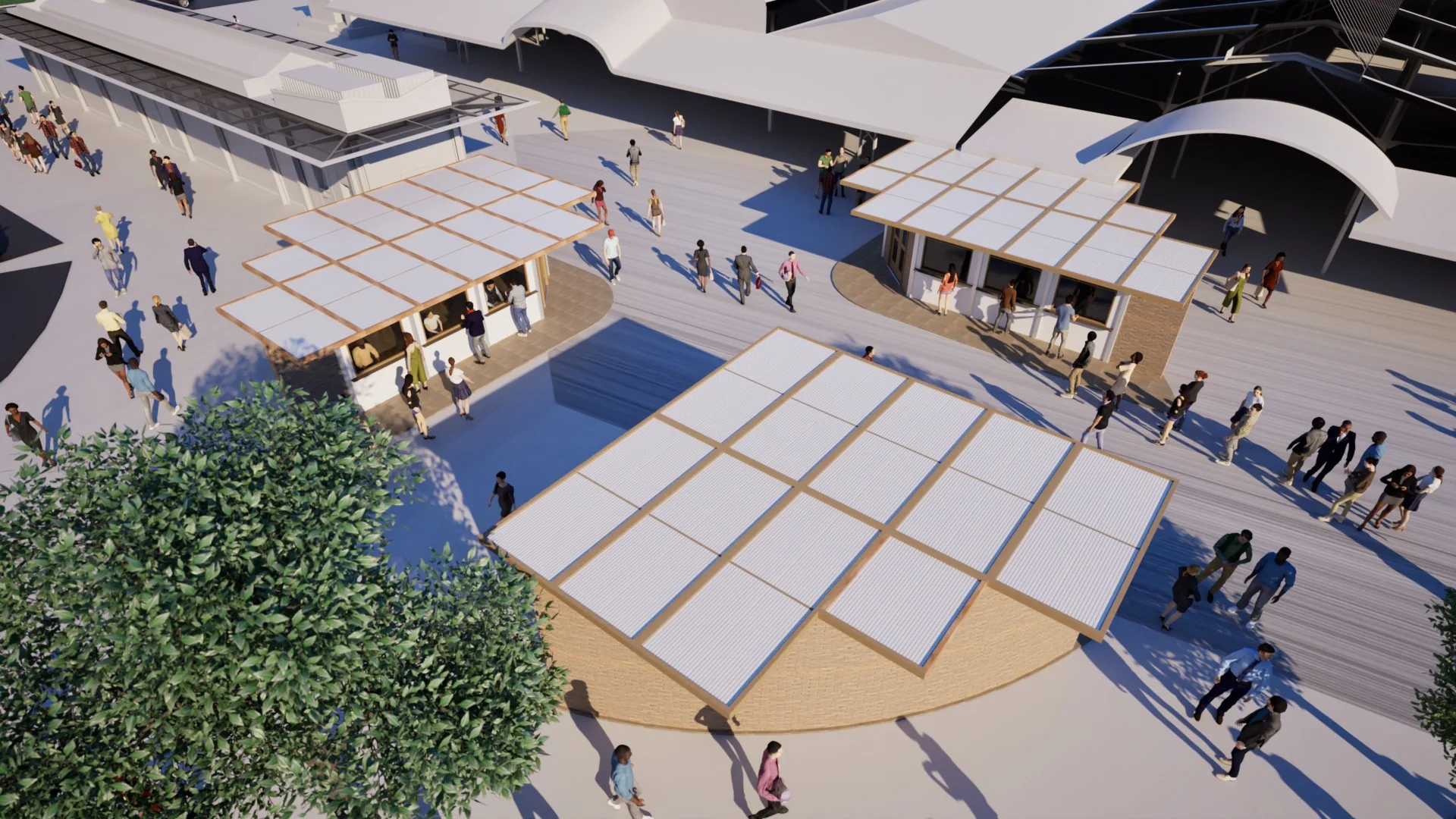
Before the museum, the ticket booth. The first brief was deliberately small: a threshold object at the market entry, built from the harvested catalogue and nothing else. It was an initiation into the core discipline of the studio: no new materials, no orders placed, no fresh stock. Only what the site already holds. Scaffold tubes, corrugated cladding, besser blocks, reclaimed timber.
The booth forced an early confrontation with the constraints that would govern the entire project. How do you join dissimilar elements? How does a scaffold tube meet a brick? How much can a truss cantilever before the logic collapses? Working at the scale of a single entry point made those questions concrete before the museum brief made them urgent. The material reuse logic was not assumed: it was practiced here first.
Renders
Act 2: The Exhibit
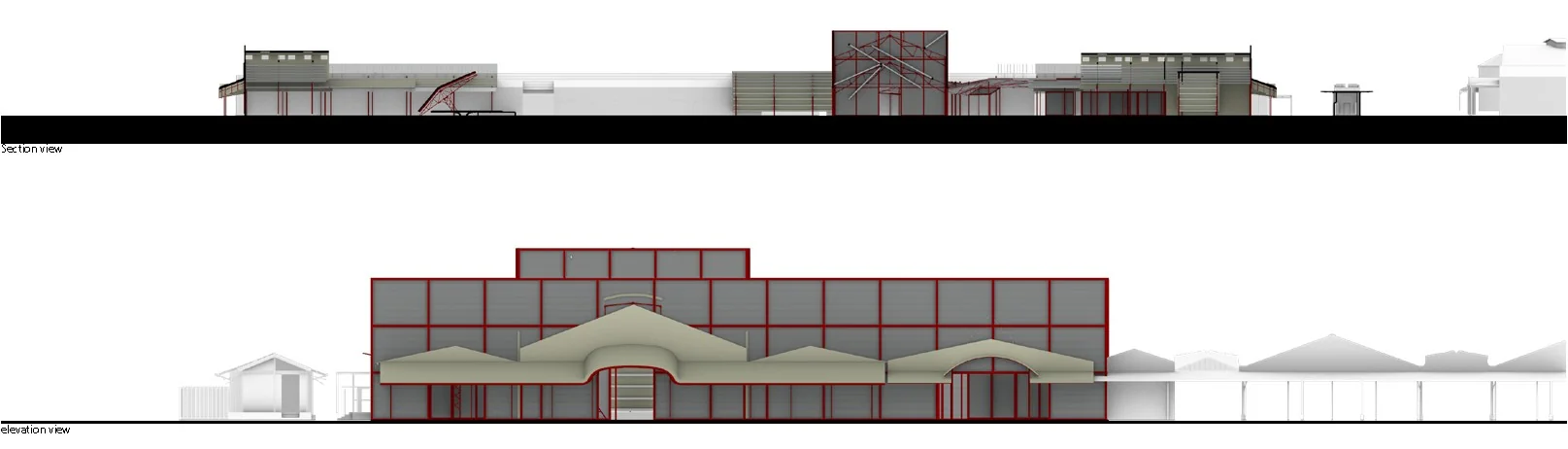
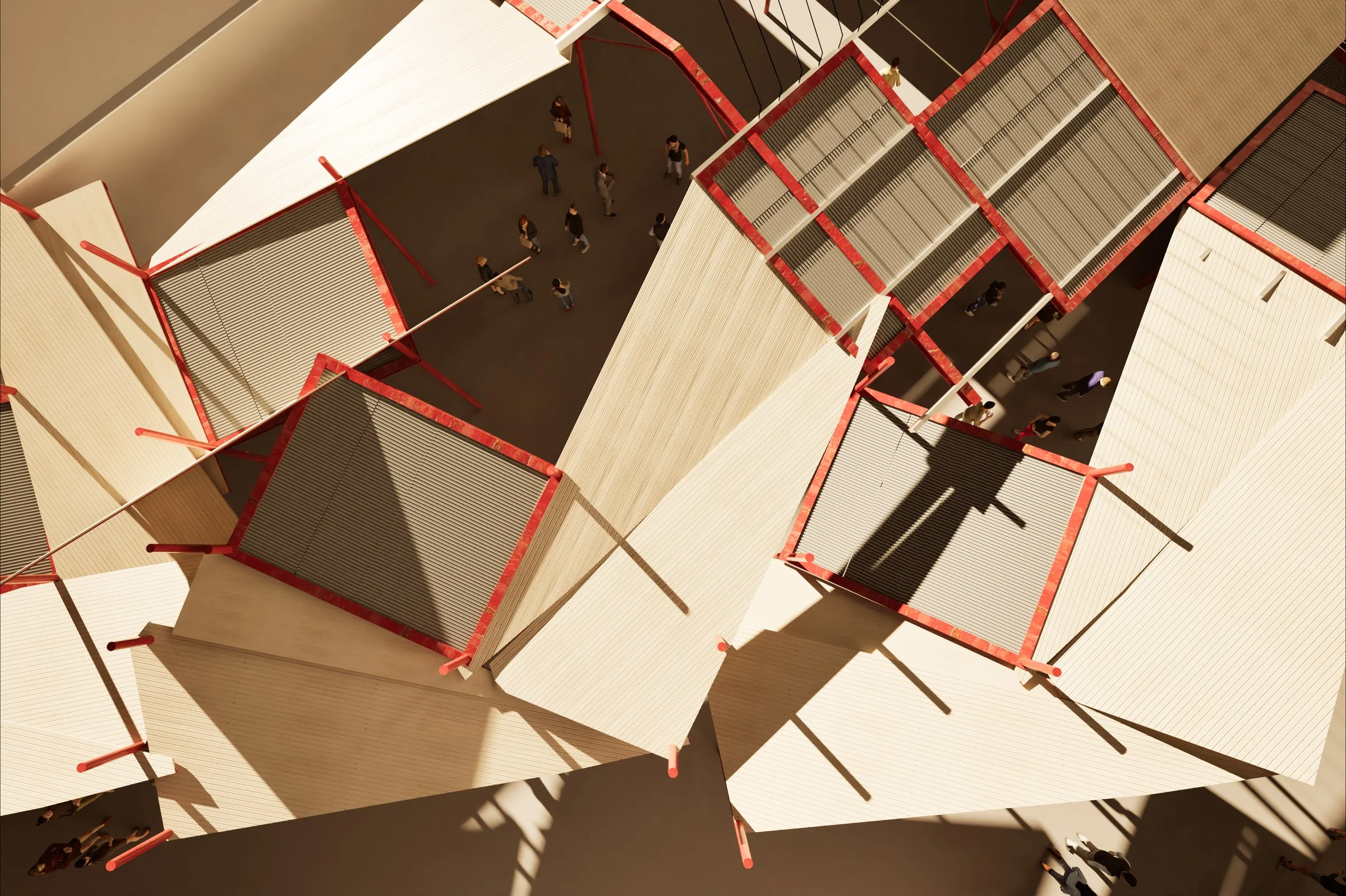
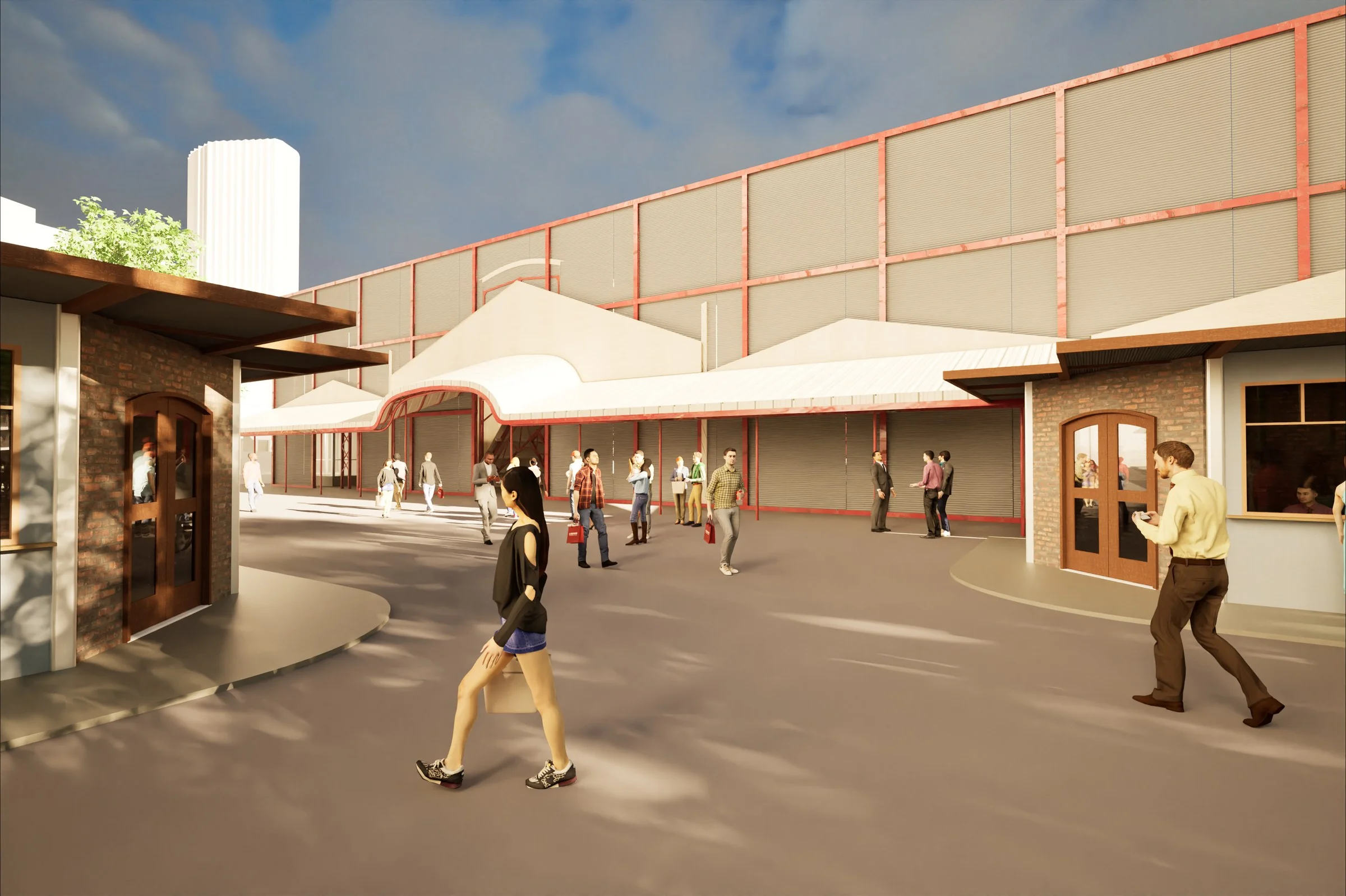
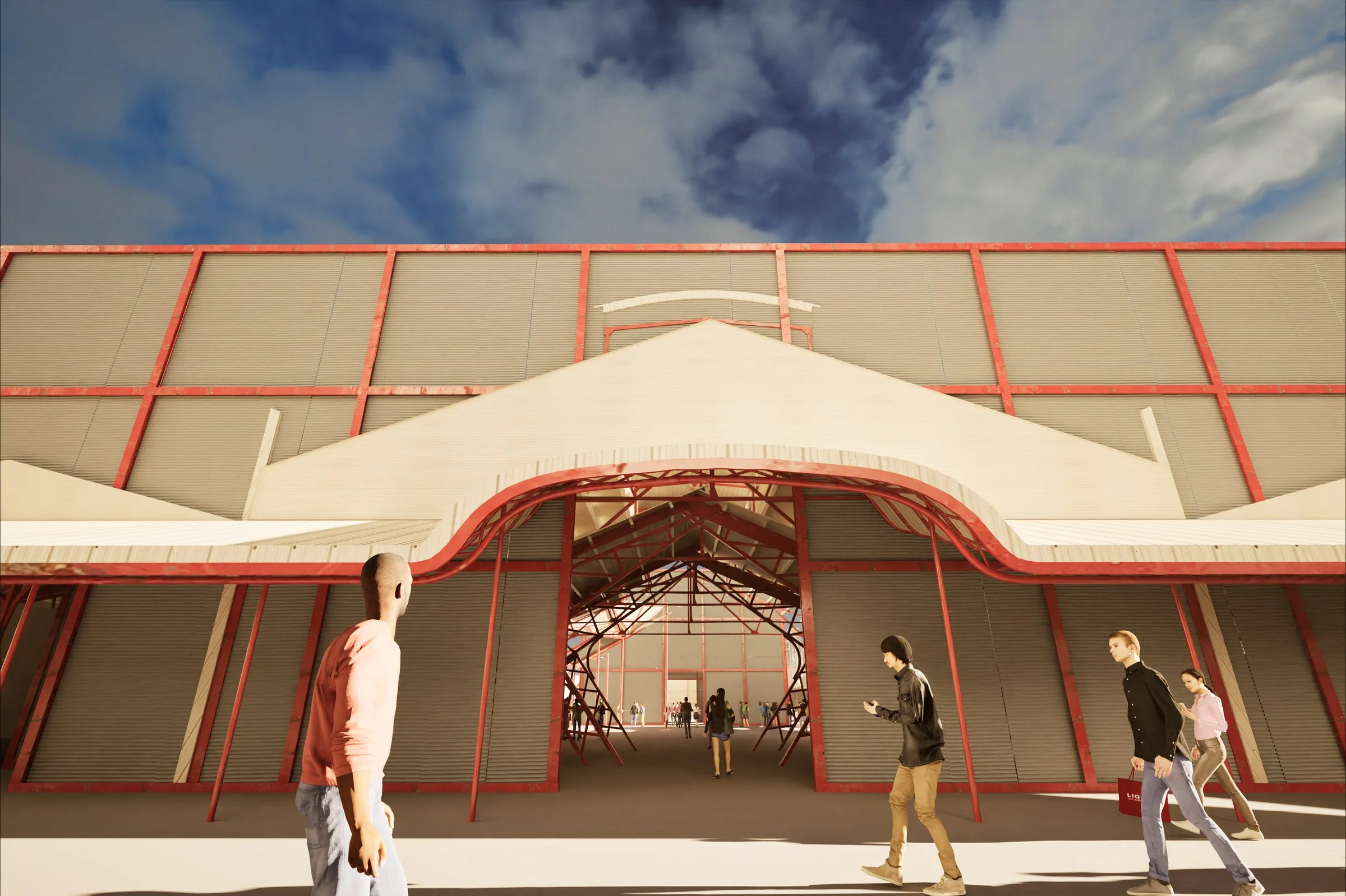
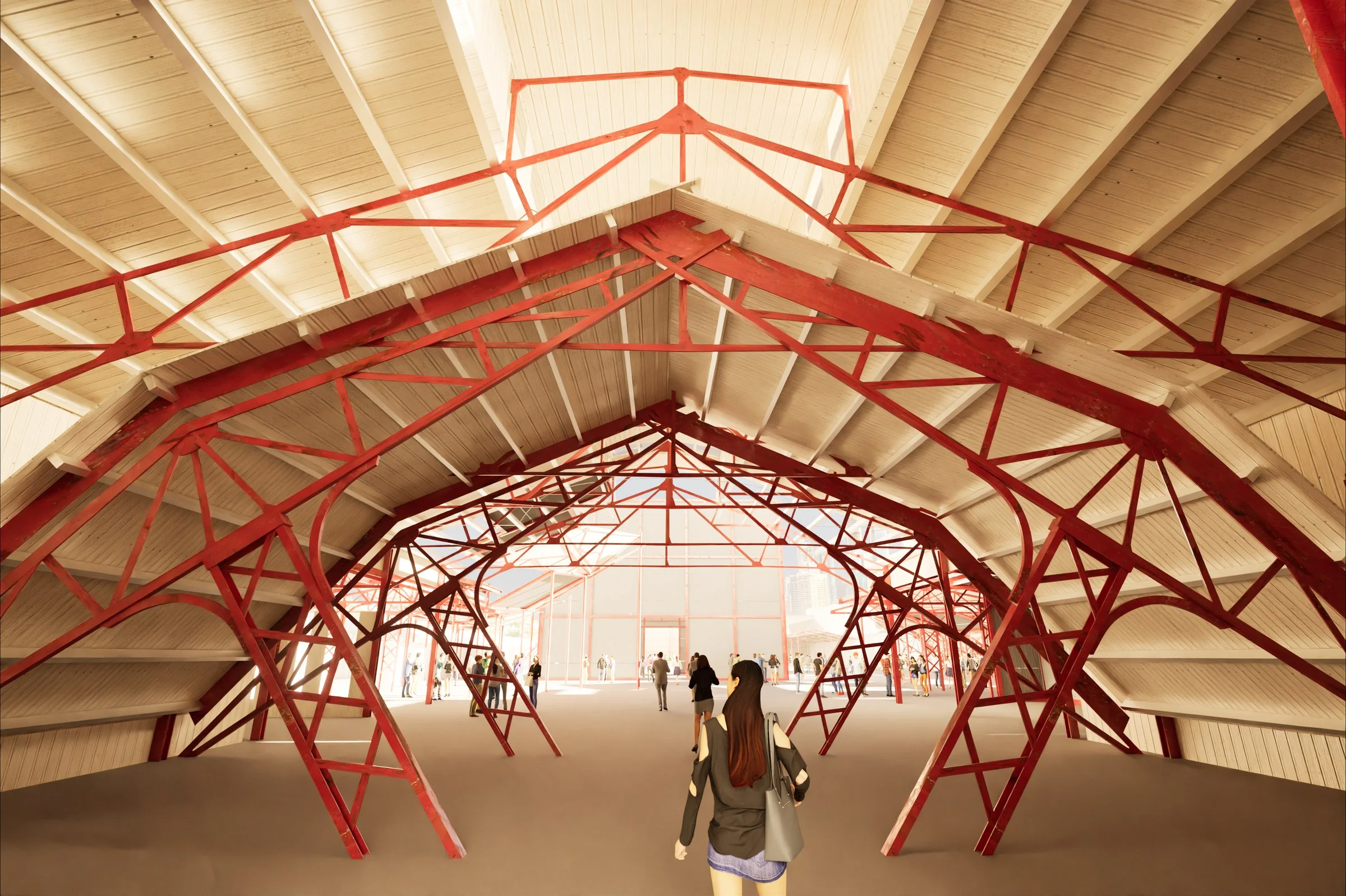
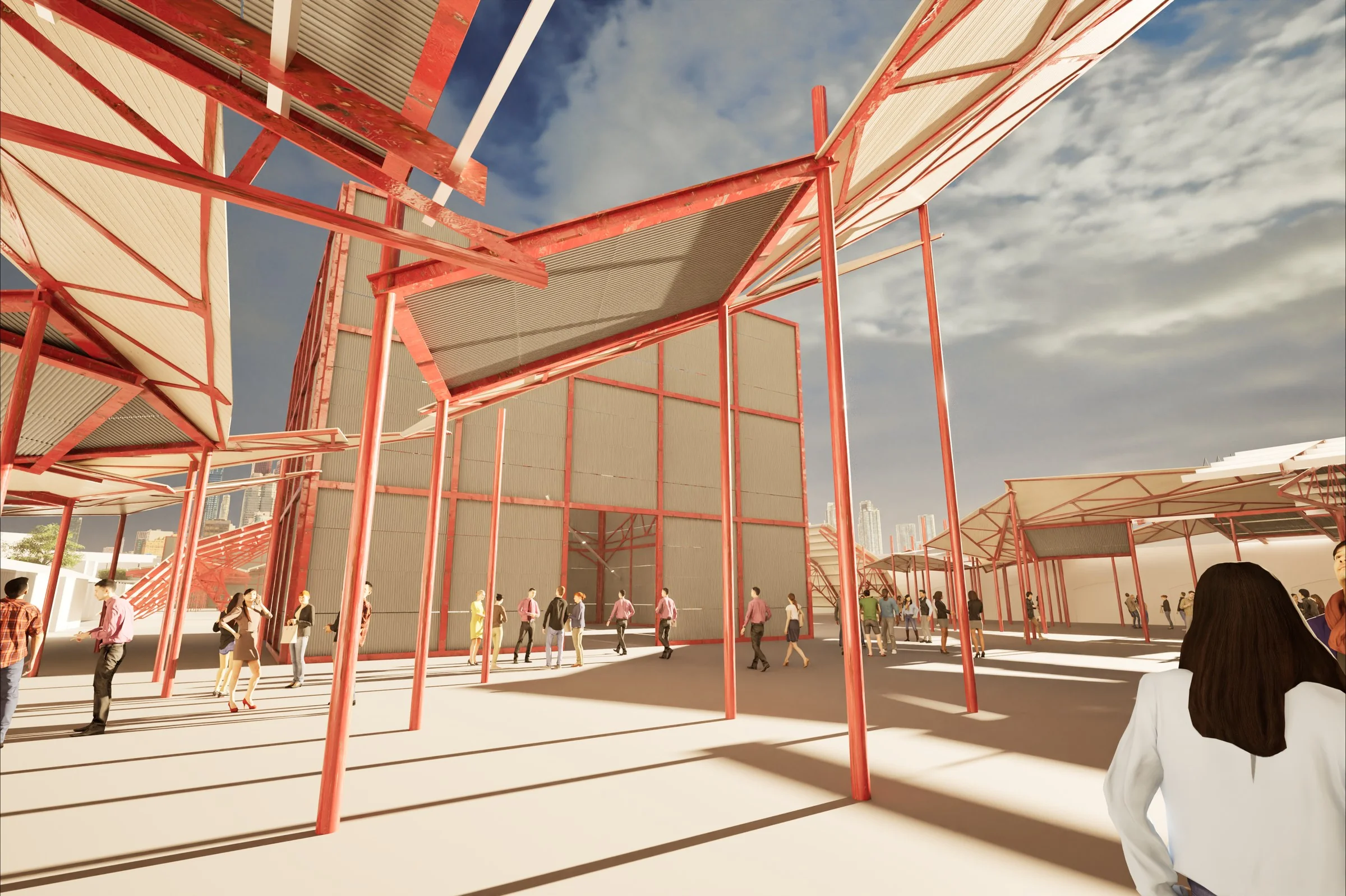
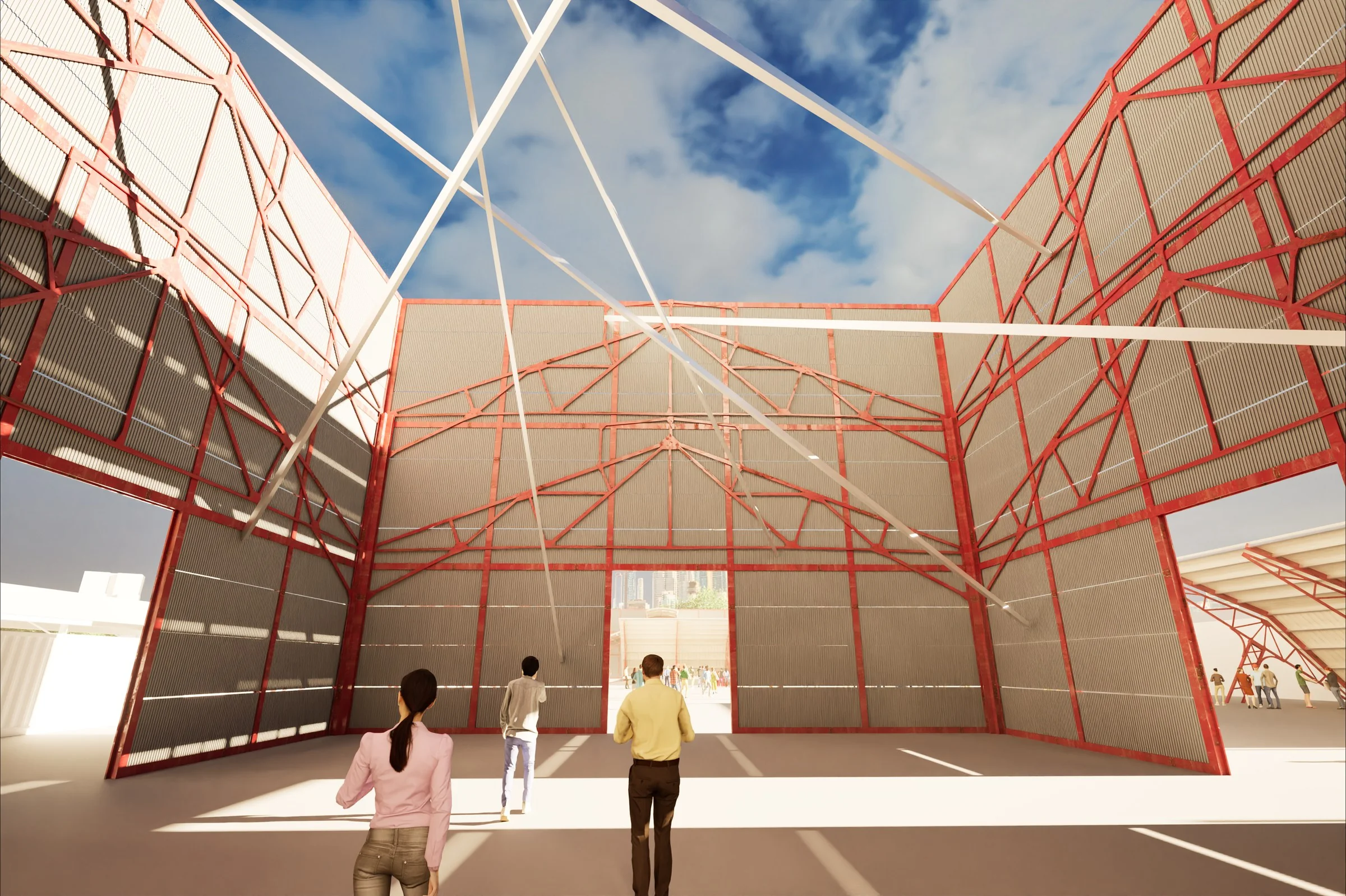
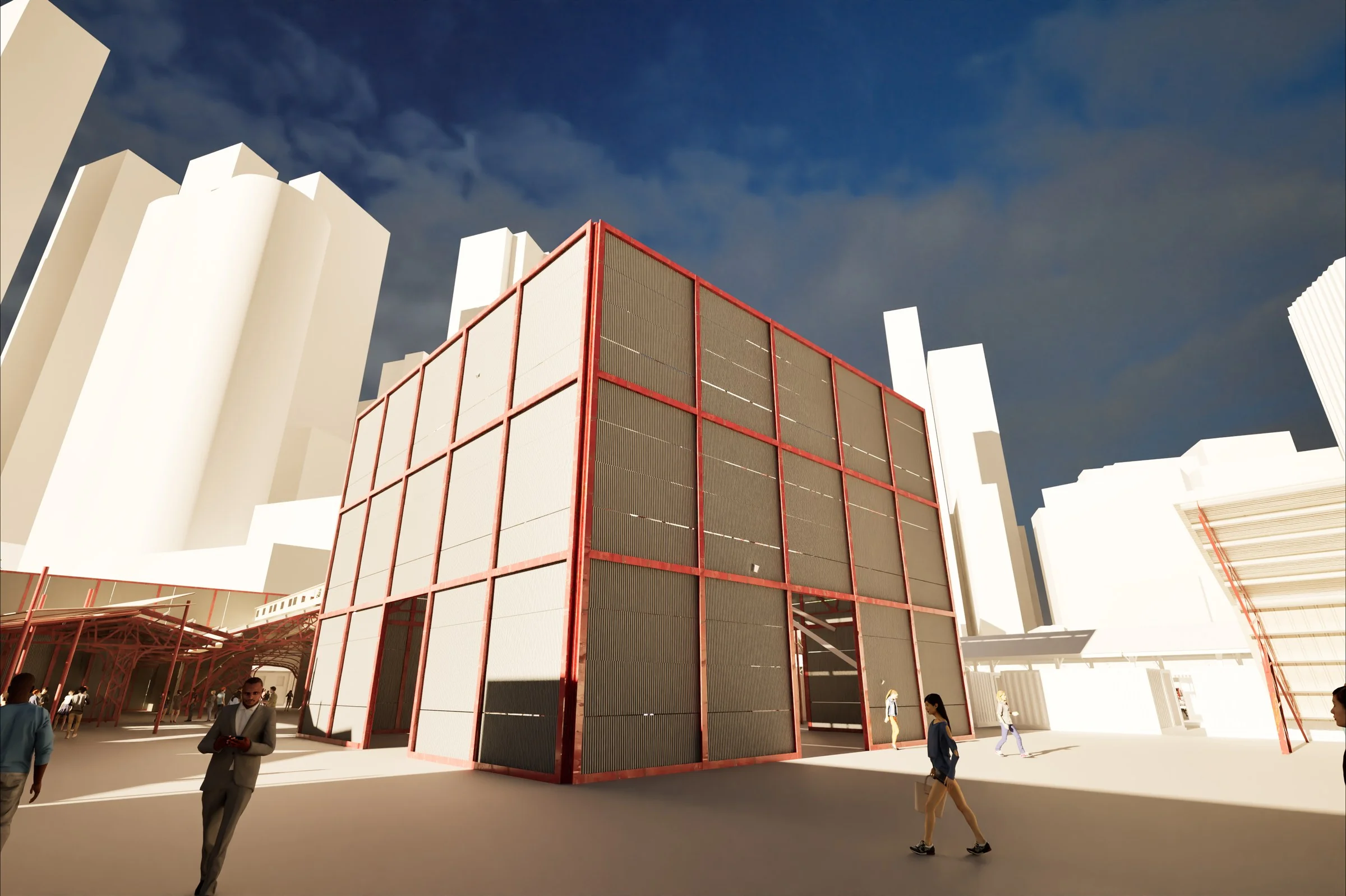
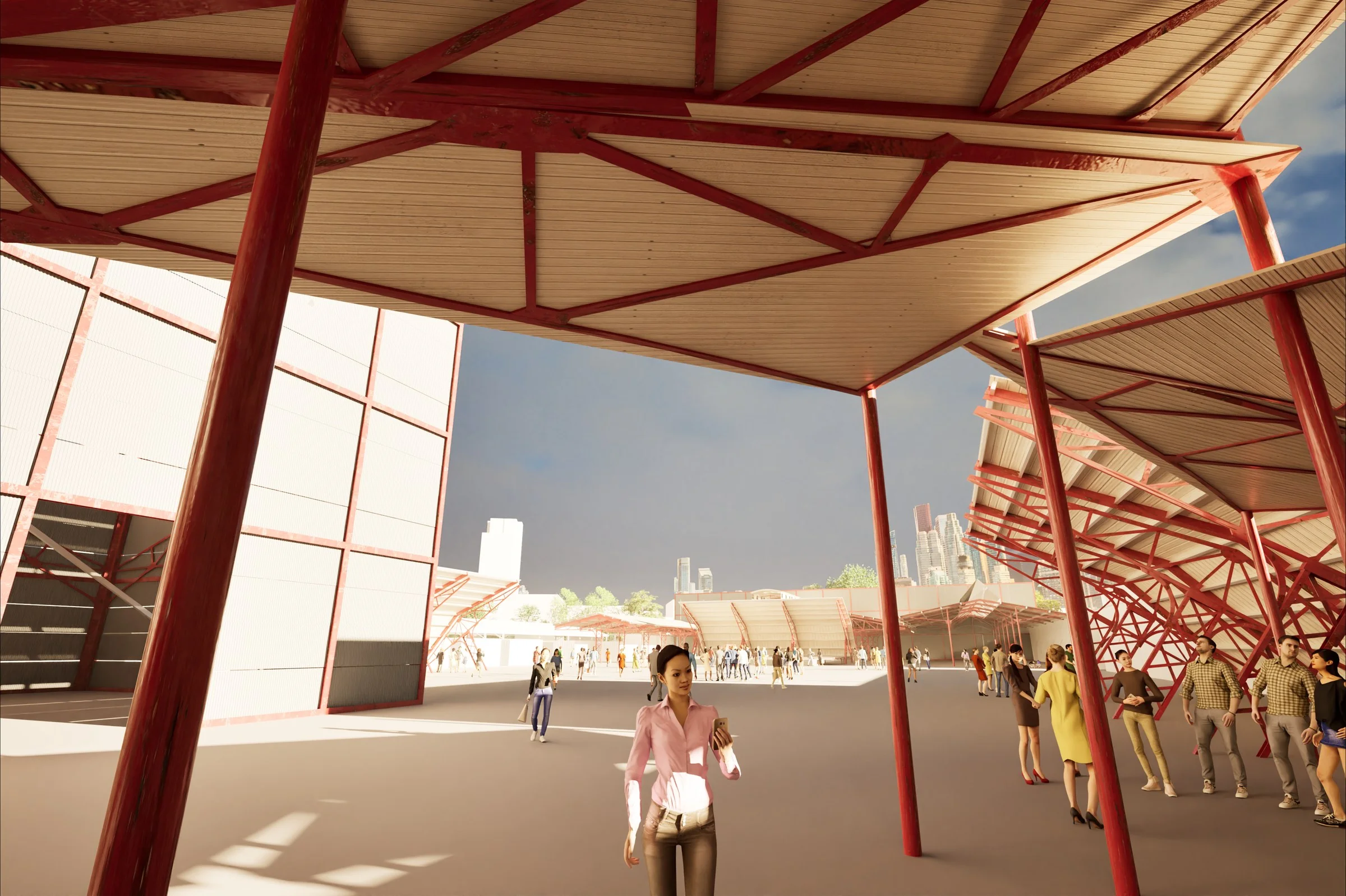
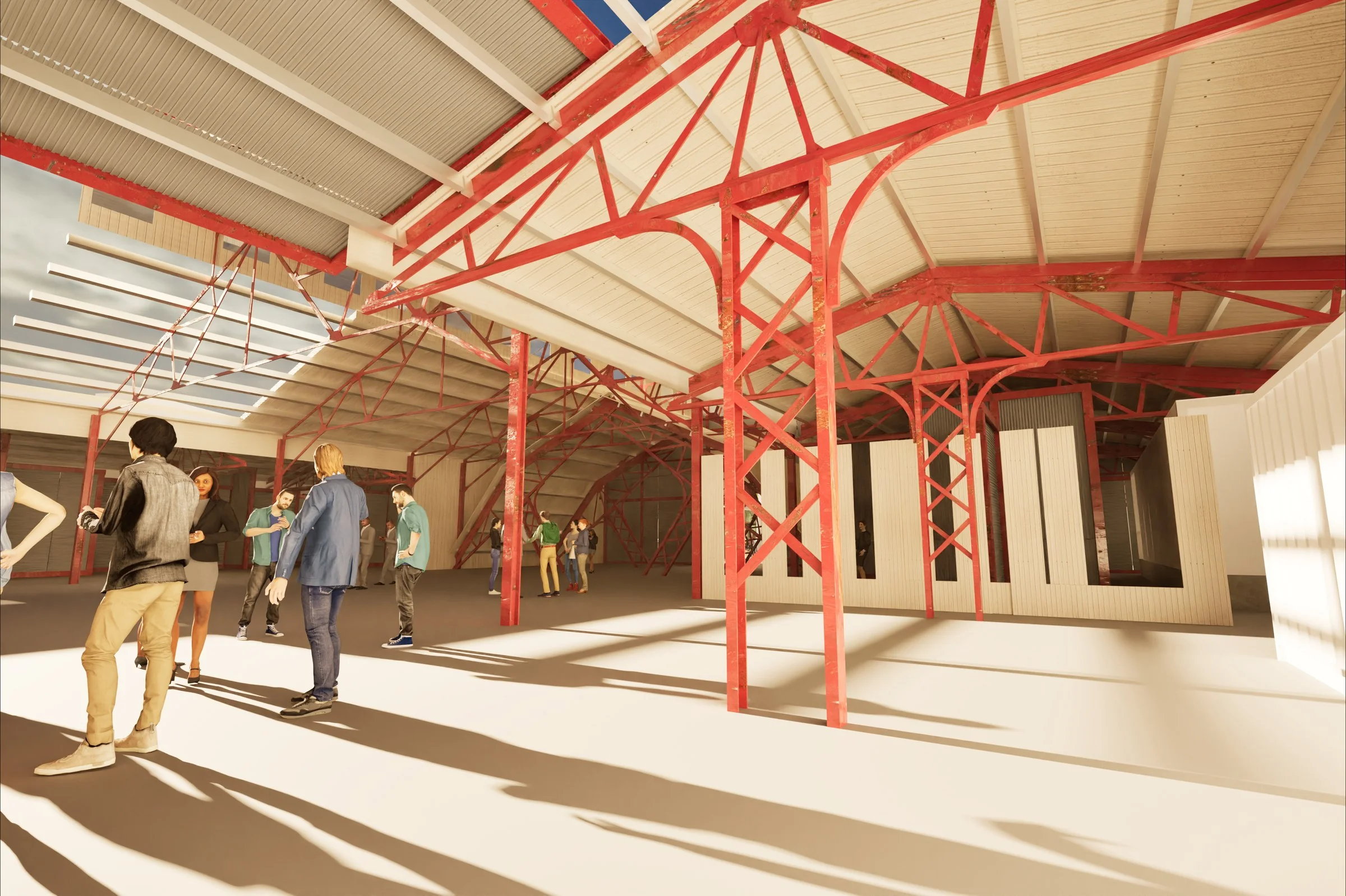
The exhibit is not a static display. It is a journey through textured space, where materials that are rough, industrial, and seemingly mundane are elevated and reinterpreted. Visitors can touch, lean on, and move through the elements directly, blurring the line between viewer and participant. Truss cantilevers overhead, scaffold thickets at the threshold, brick plinths grounding interior voids, corrugated sheet catching raking light. The sensory richness of the Night Market, reconstituted in reclaimed steel and timber.
Renders
Reflection
Architecture is not simply the practice of form-making; it is a dialogue with time, memory, and sustainability. Mongrel Materials taught me to see materials as dynamic storytellers, each carrying a history that, if respected, enriches the environments we create. The Banal Mongrel Exhibit pushed me to confront the urgency of reimagining architectural resources, shifting from the assumption of infinite availability to a mindset of resourceful innovation.
True sustainability lies in finding value in what already exists. Re-contextualising materials, viewing cast-off structures, neglected elements, and raw textures as the building blocks of a resilient, meaningful architecture: this is the working method the studio leaves behind. The mongrel is not a compromise. It is a position.