About Contact
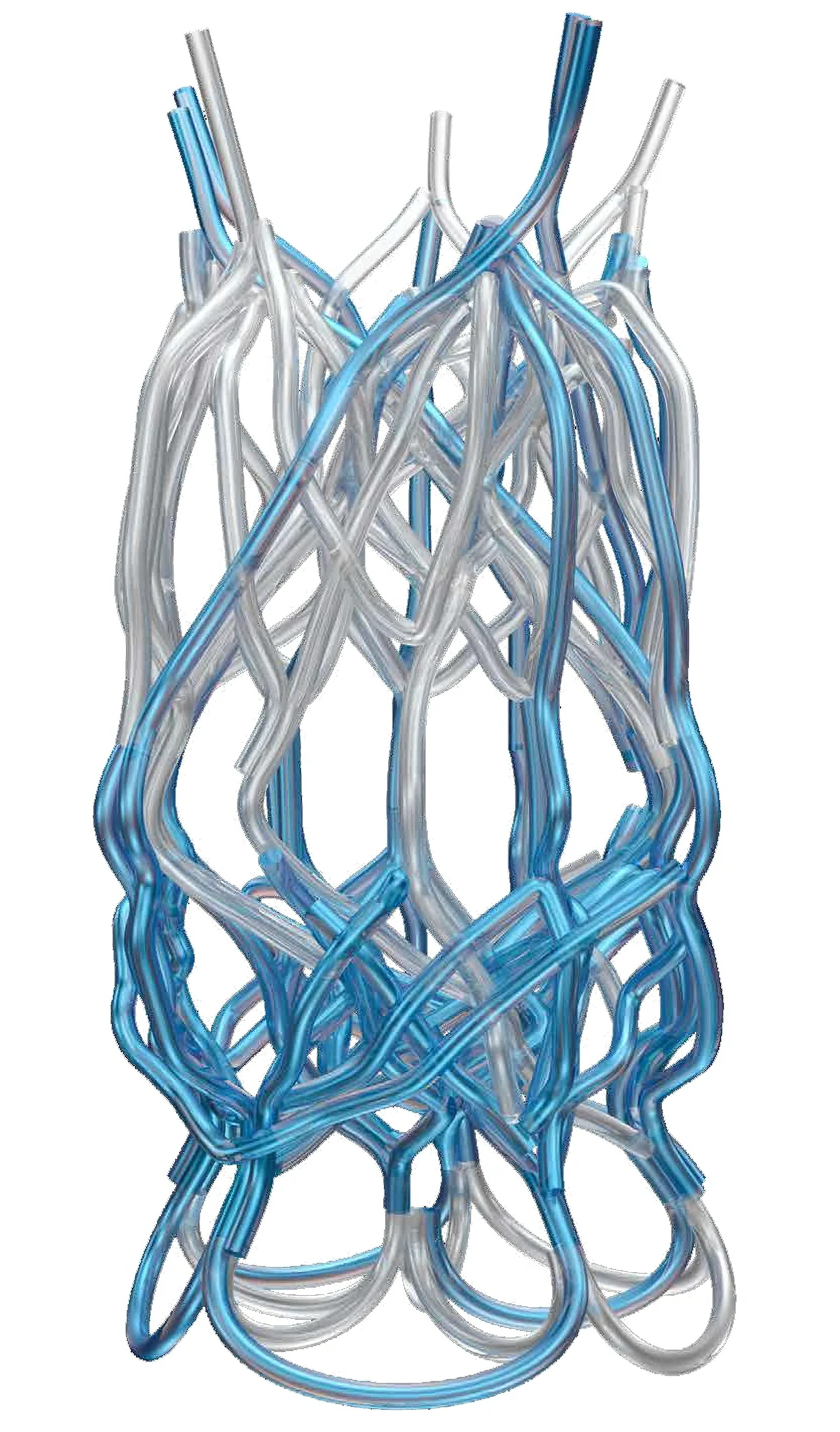
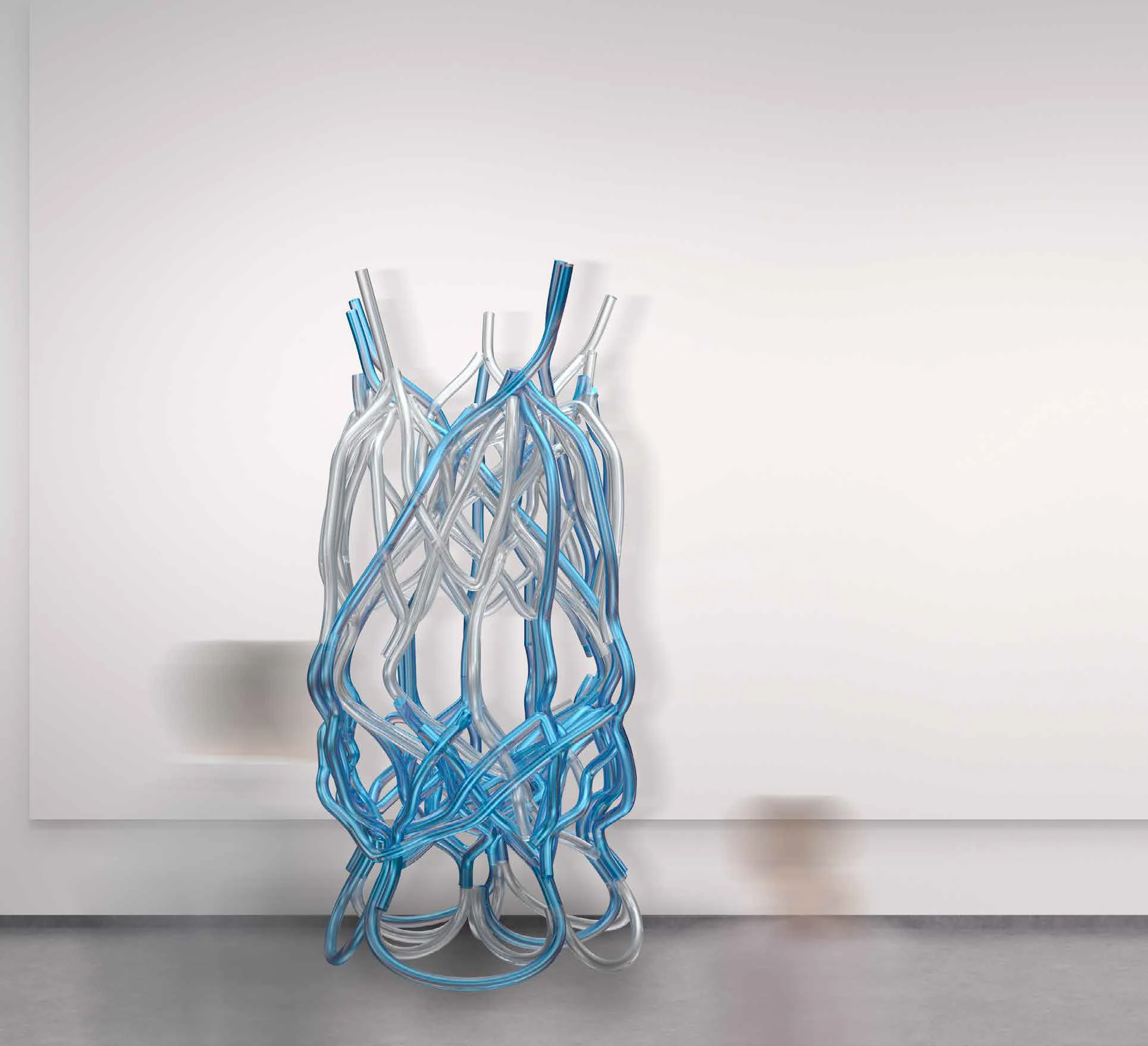
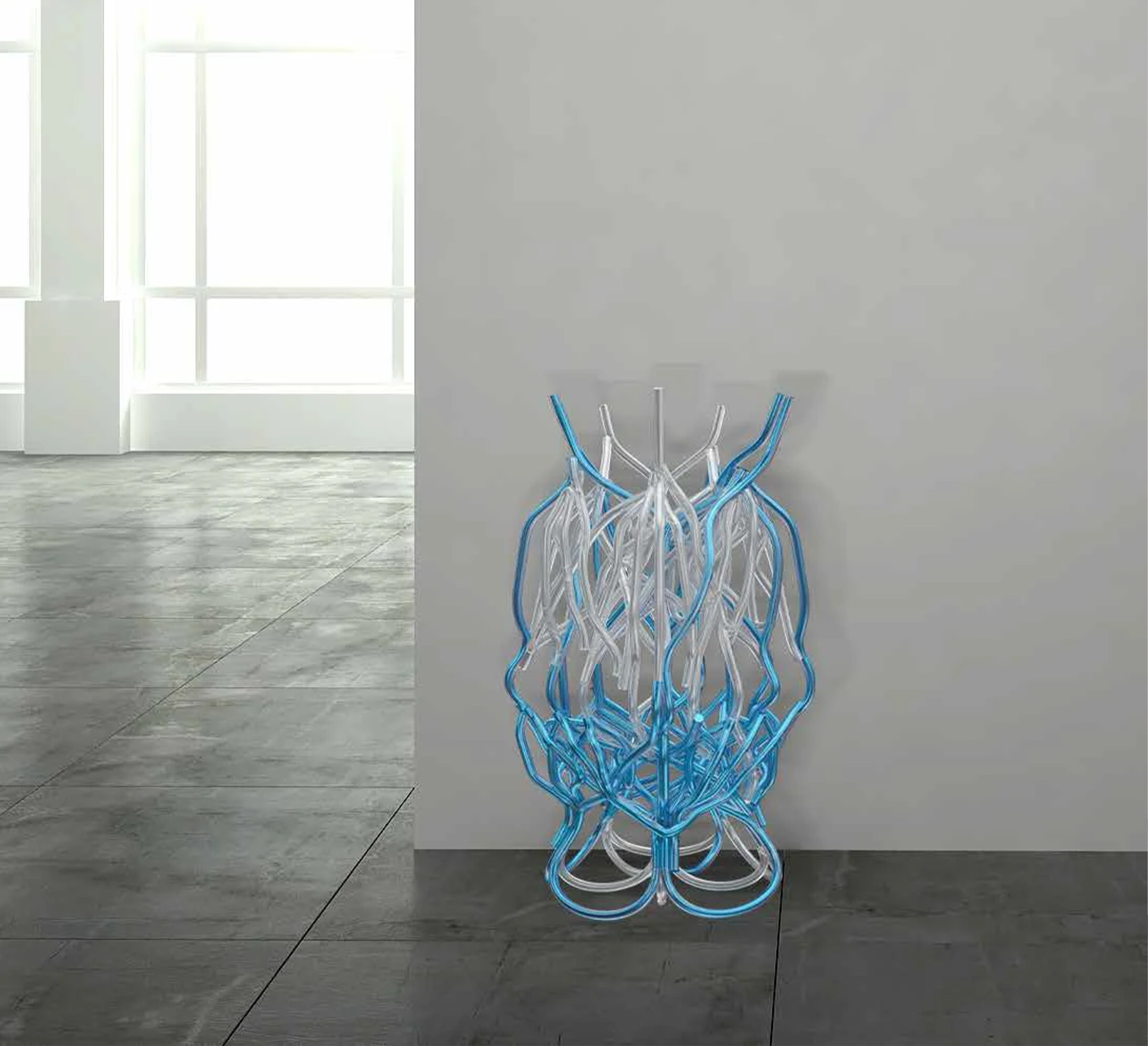
Tubythm — completed PETG tube structure, branching tubular form assembled with Mixed Reality guidance

Augmented Materiality · RMIT · Semester 2, 2025

Tubythm

Sound-to-Space Parametric Fabrication AR Assembly · HoloLens Grasshopper · Kangaroo · Rhino PETG Tube

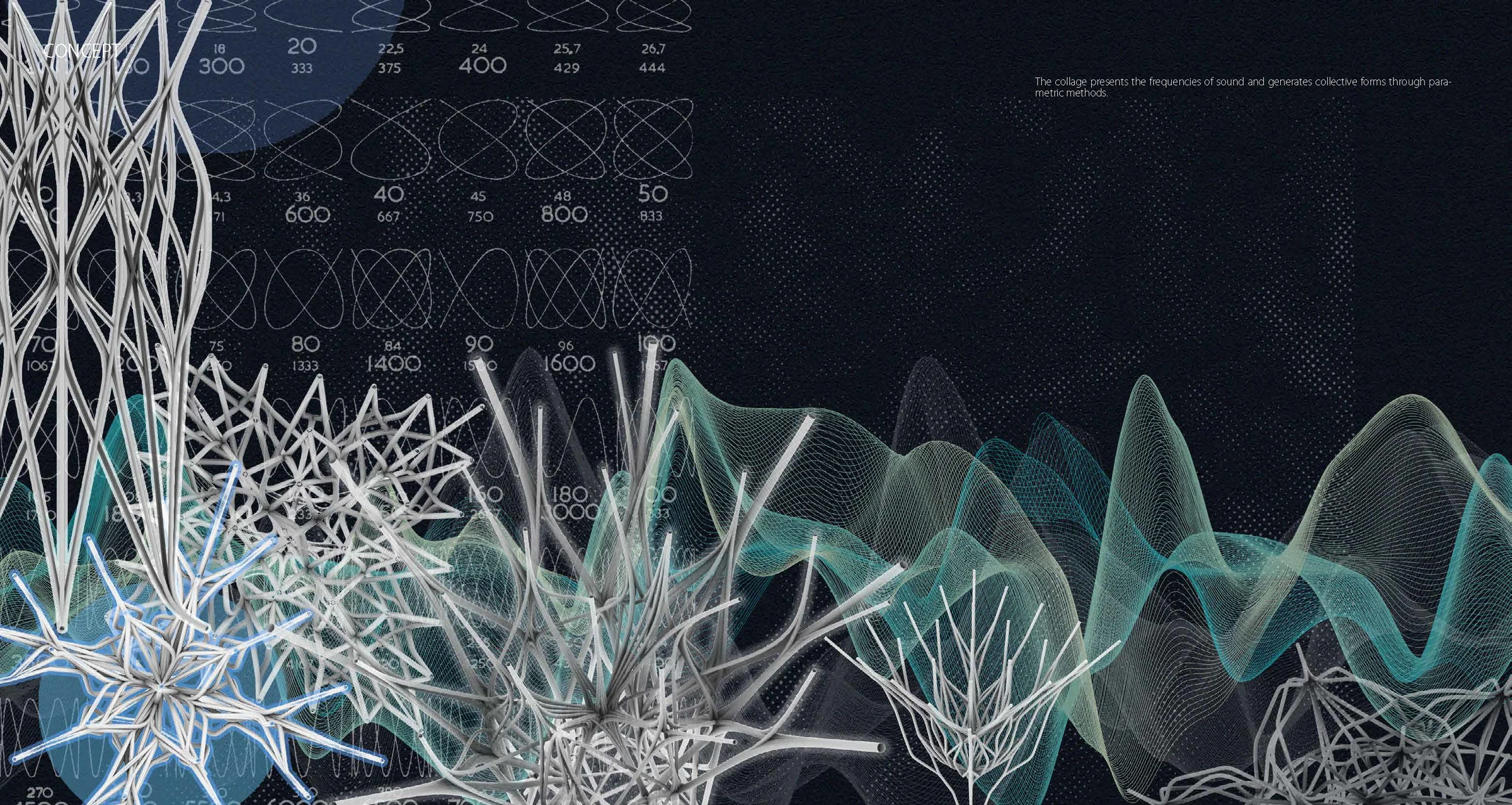
Sound frequency as generative logic. Rhythm, amplitude, and interference patterns translated into a spatial growth language: each frequency reinterpreted as structural tension and density, forming tubular systems that appear as if sound waves have solidified in space.

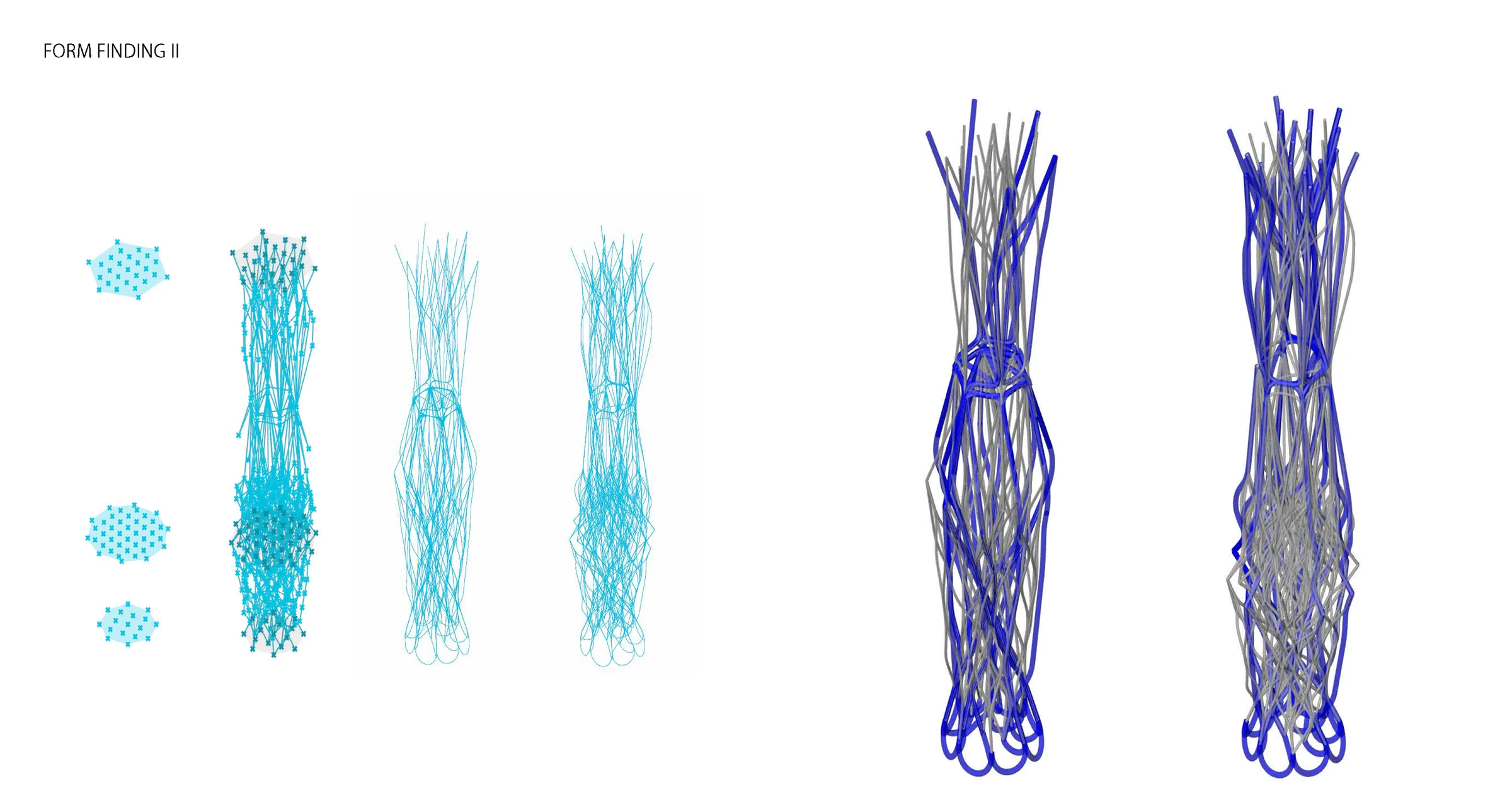
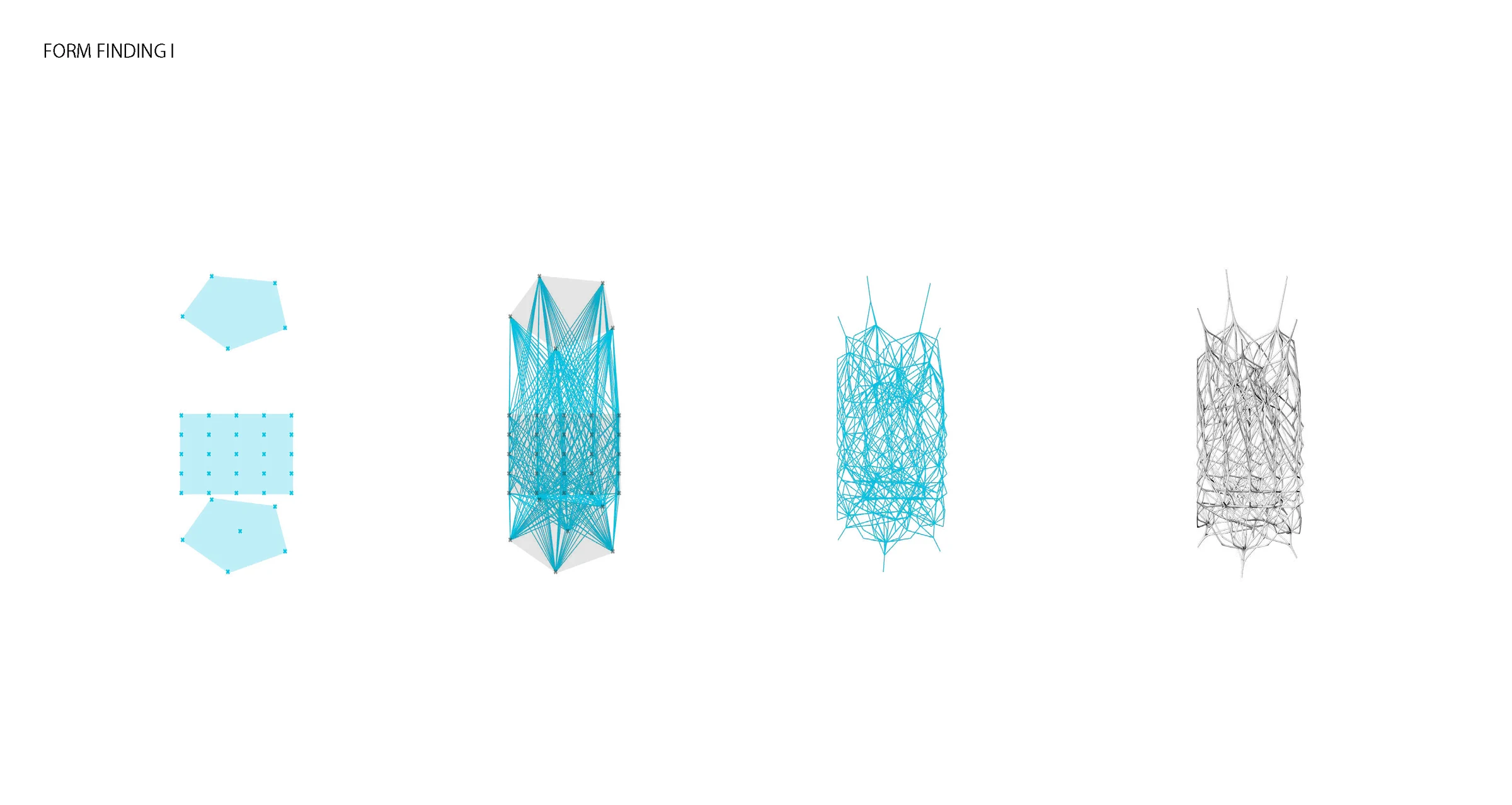
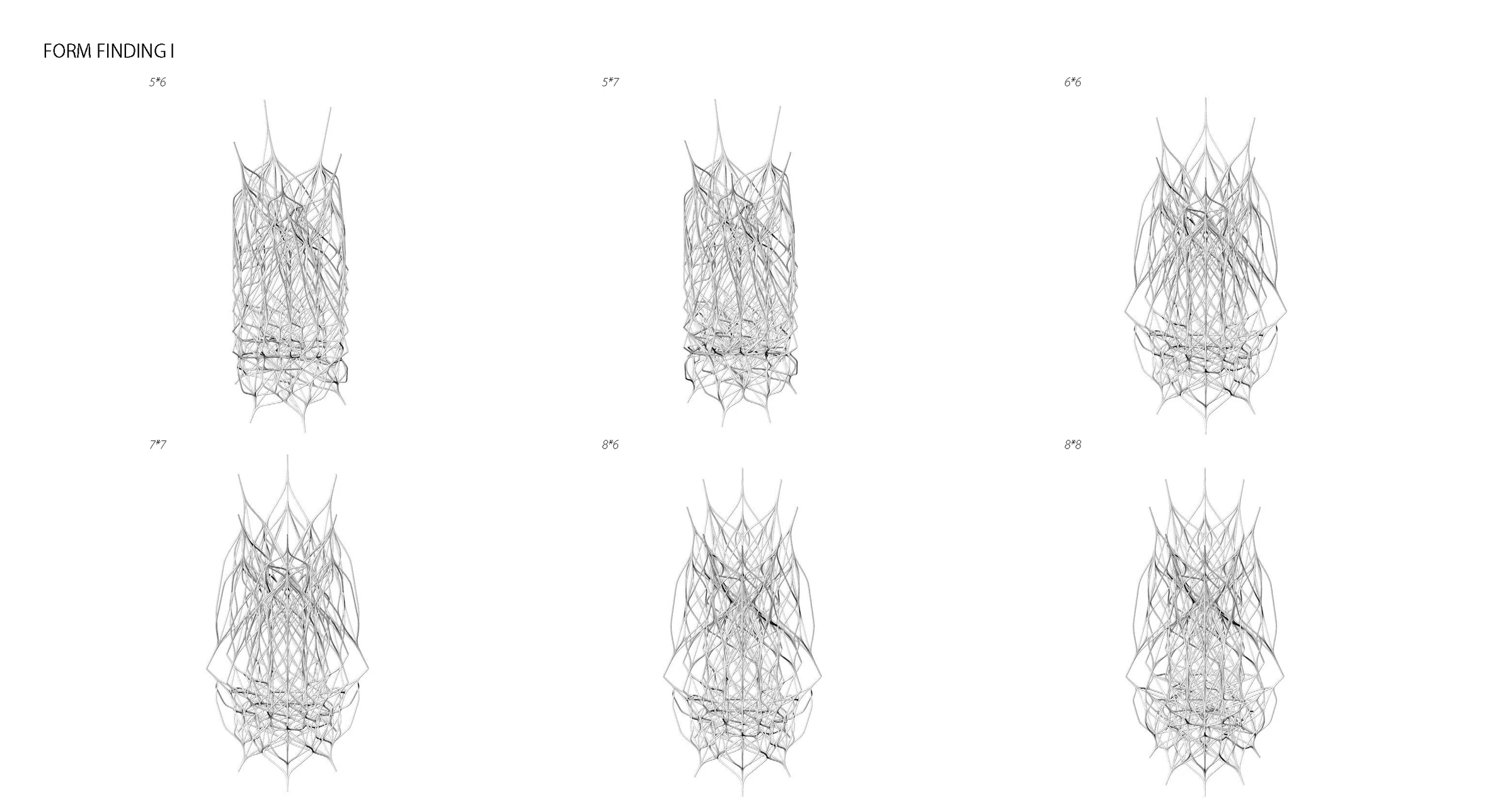
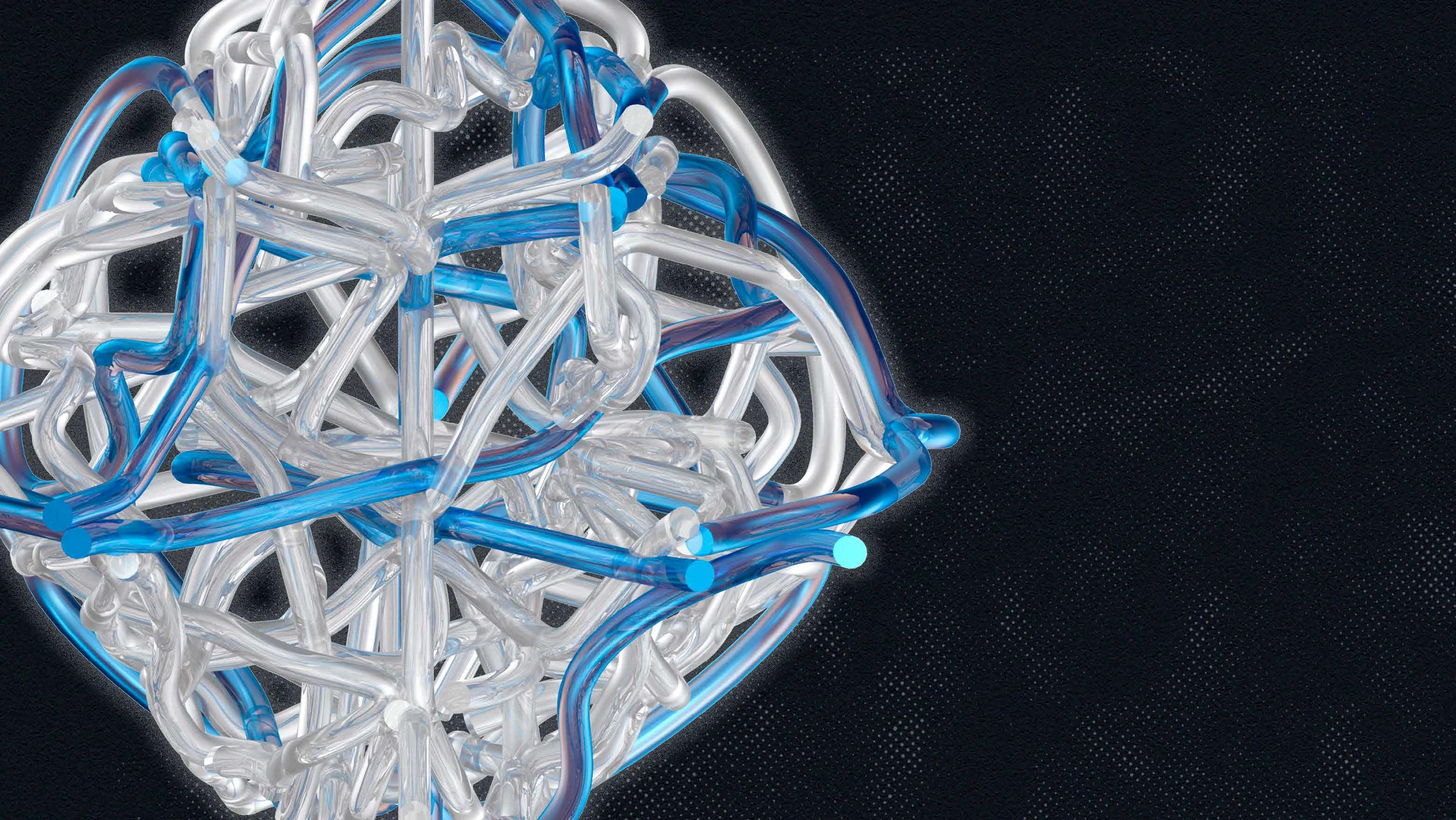
The project moves through four distinct computational methods — Grasshopper point grids, Kangaroo physics simulation, Rhino Multipipe, and 3D Voronoi tessellation — converging on a PETG tube skeleton derived from Voronoi wireframe curves and refined through iterative physical prototyping.

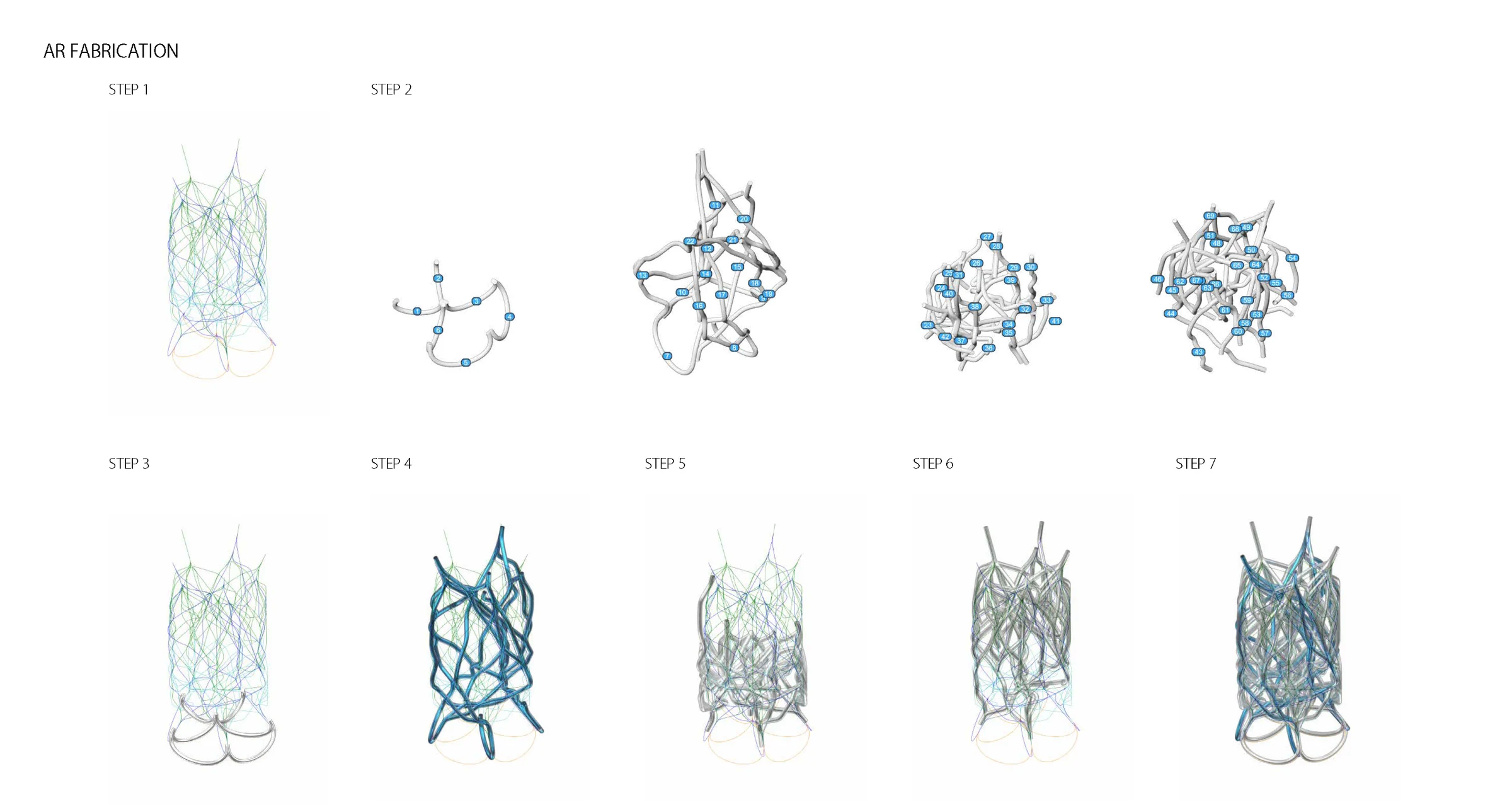
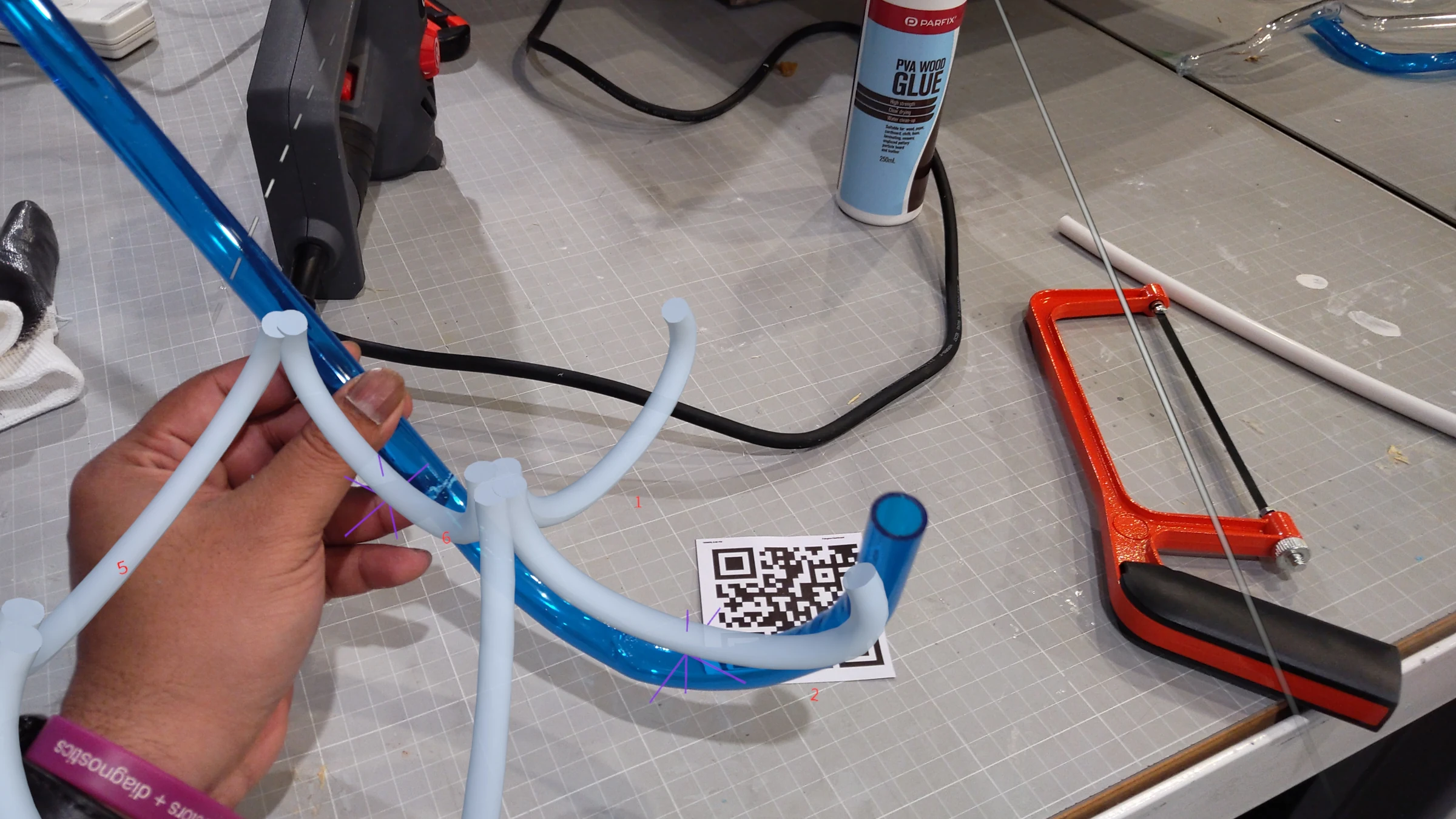
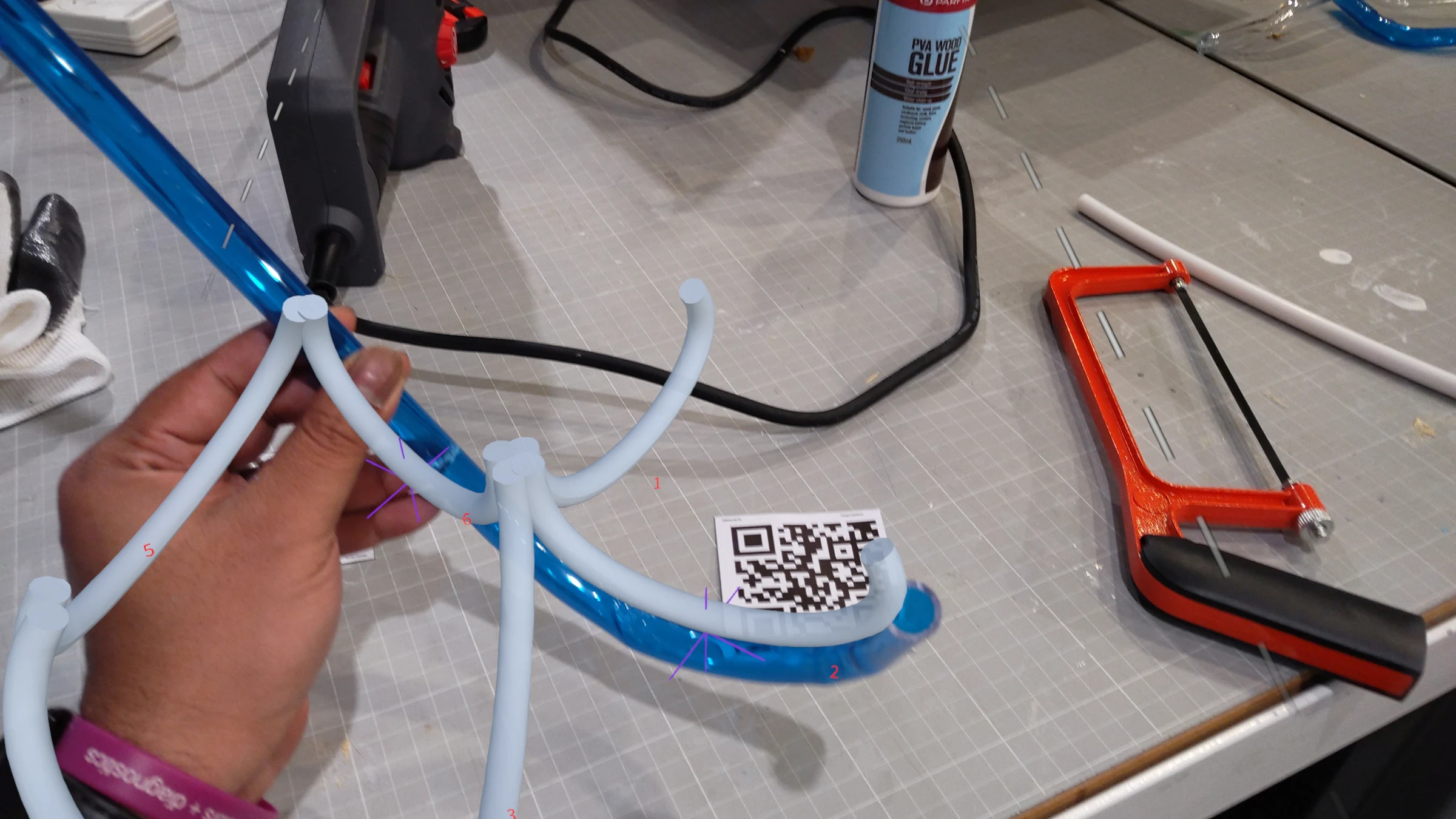
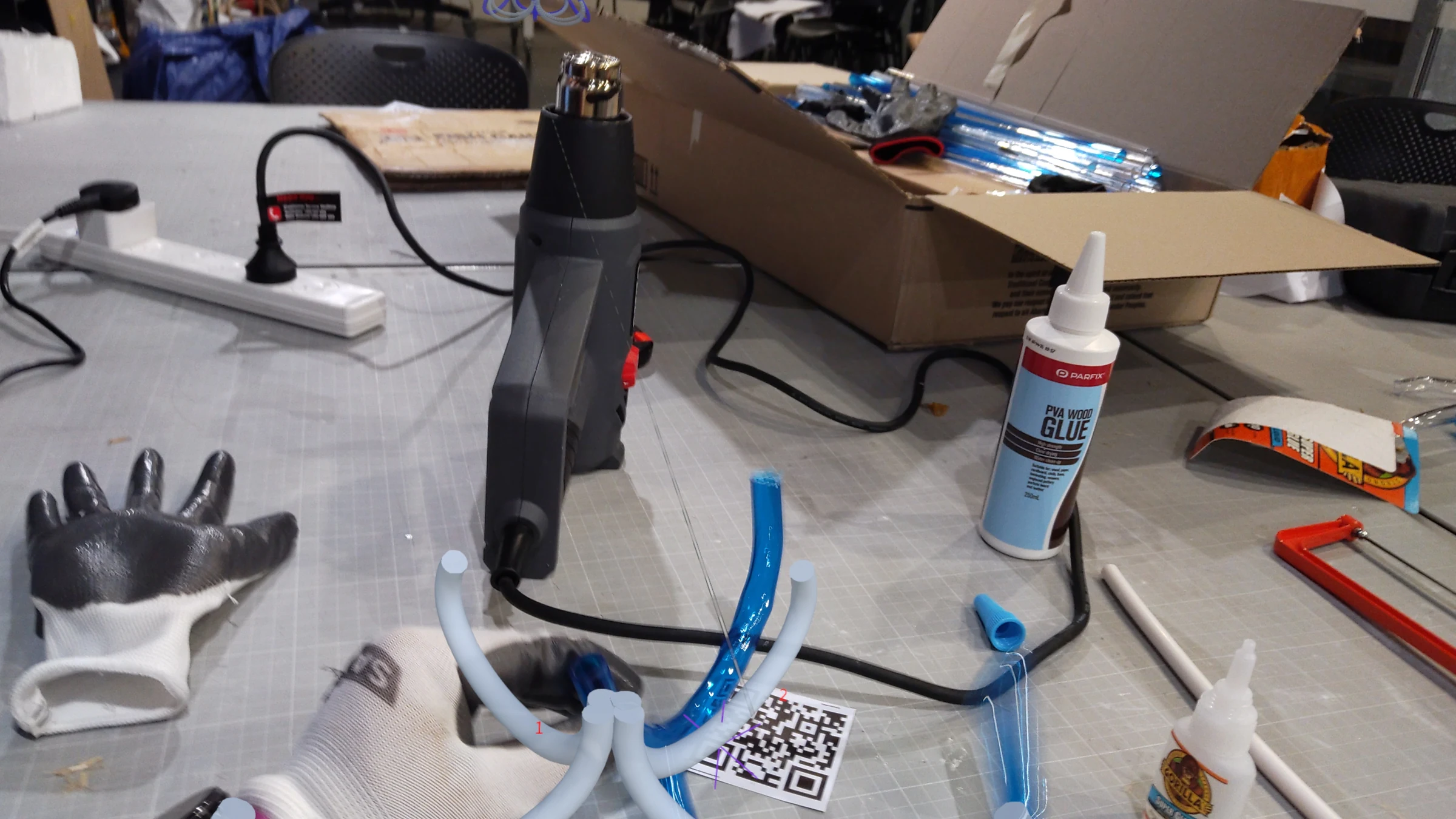
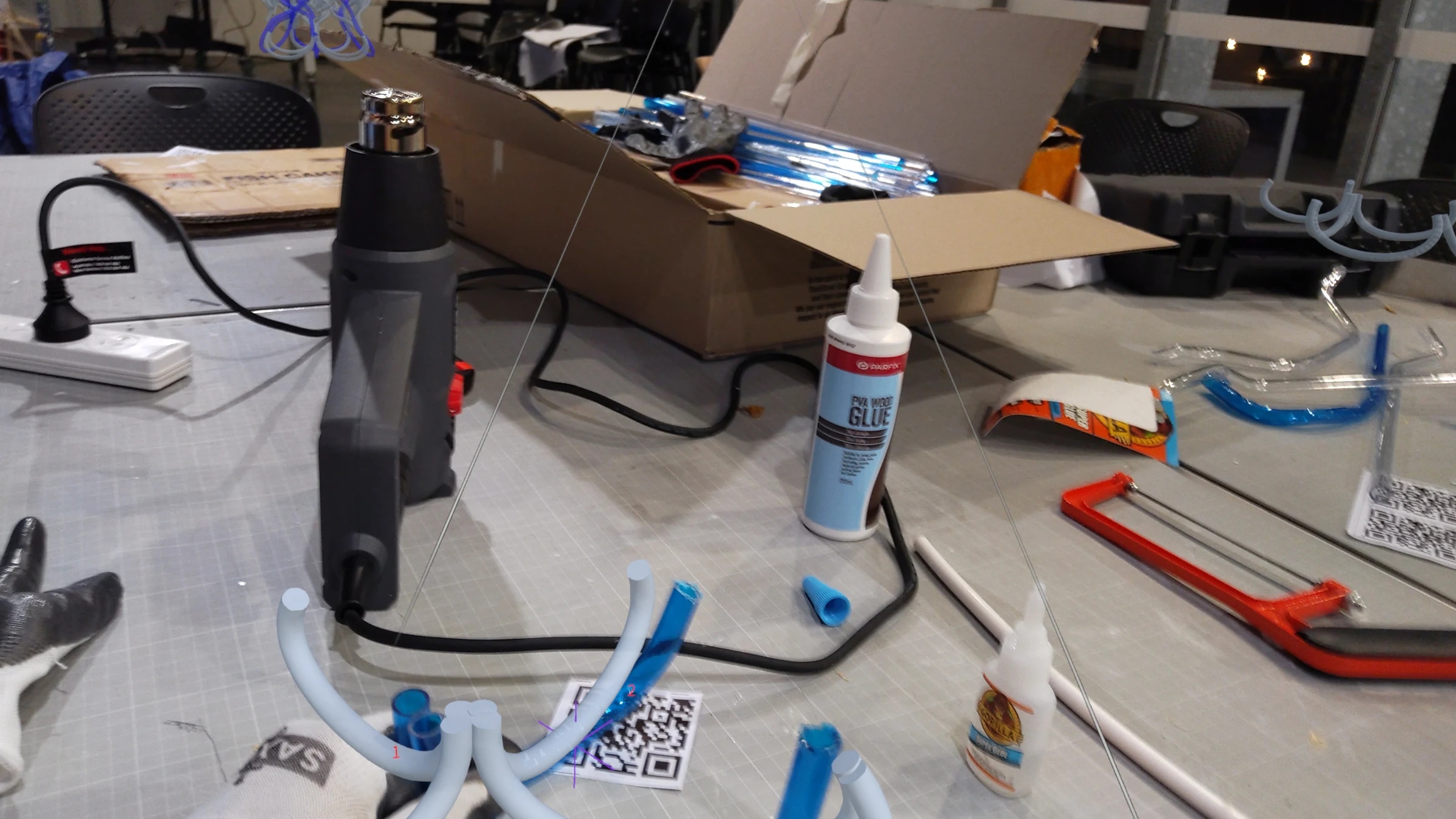
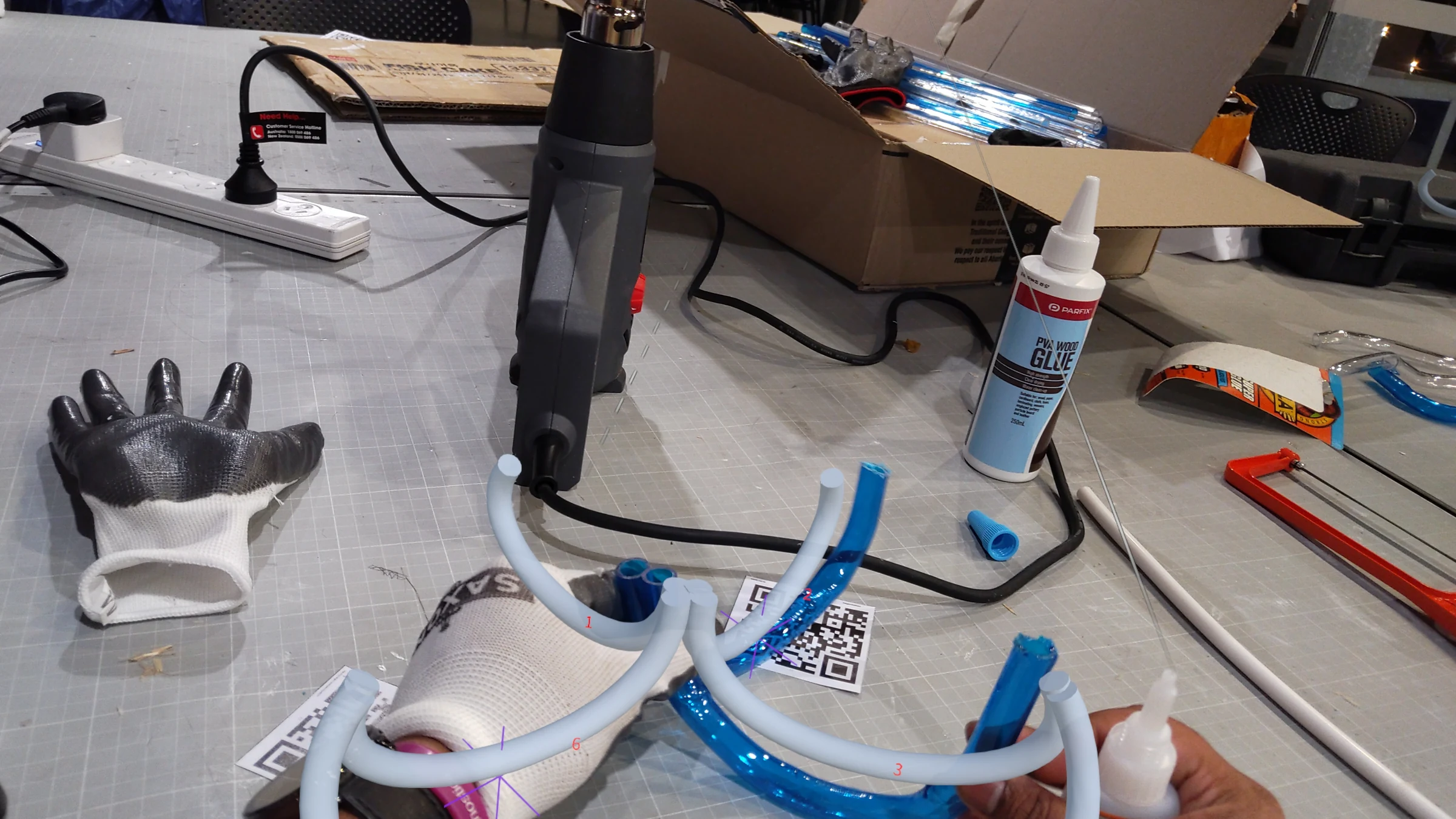
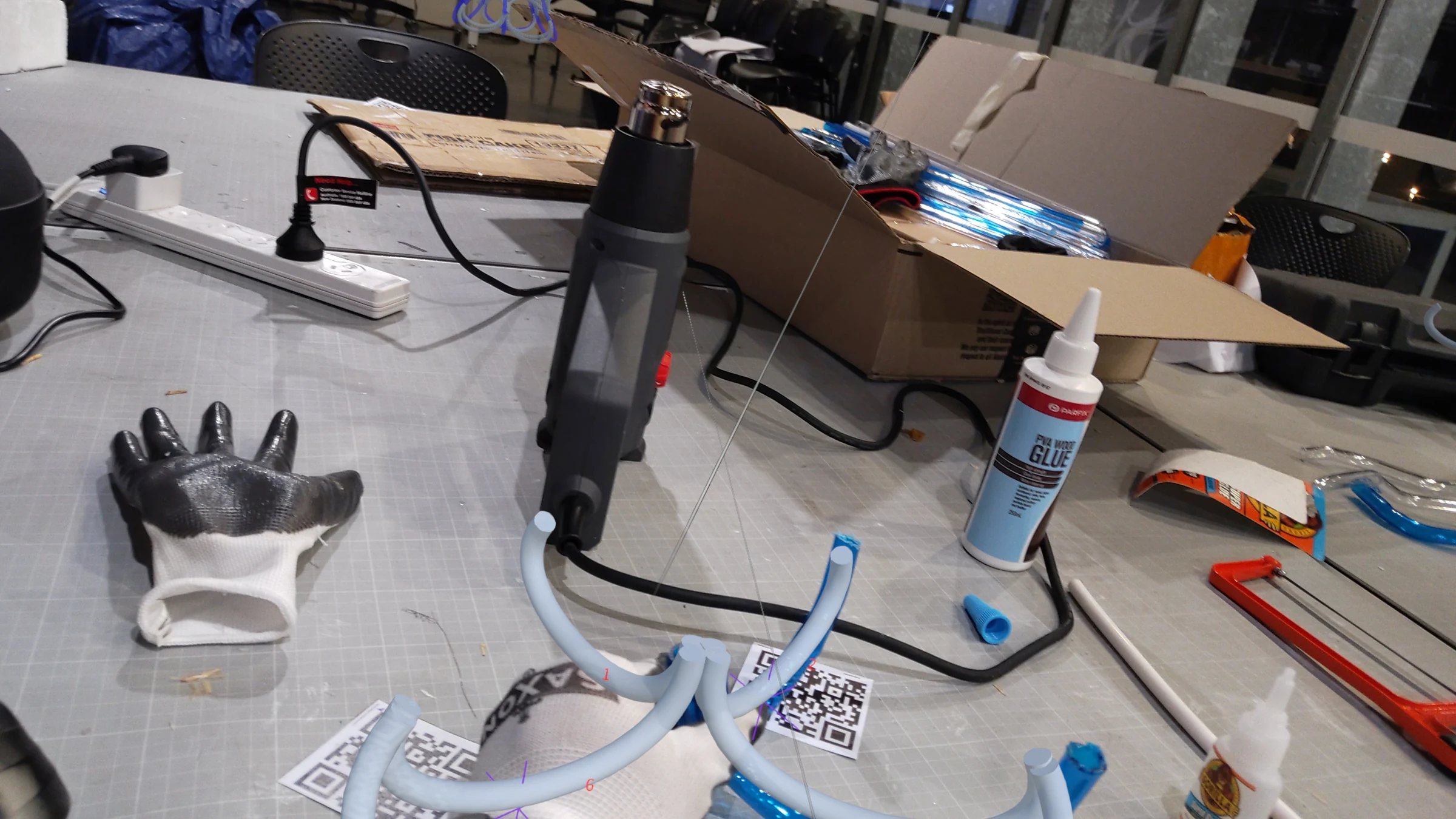
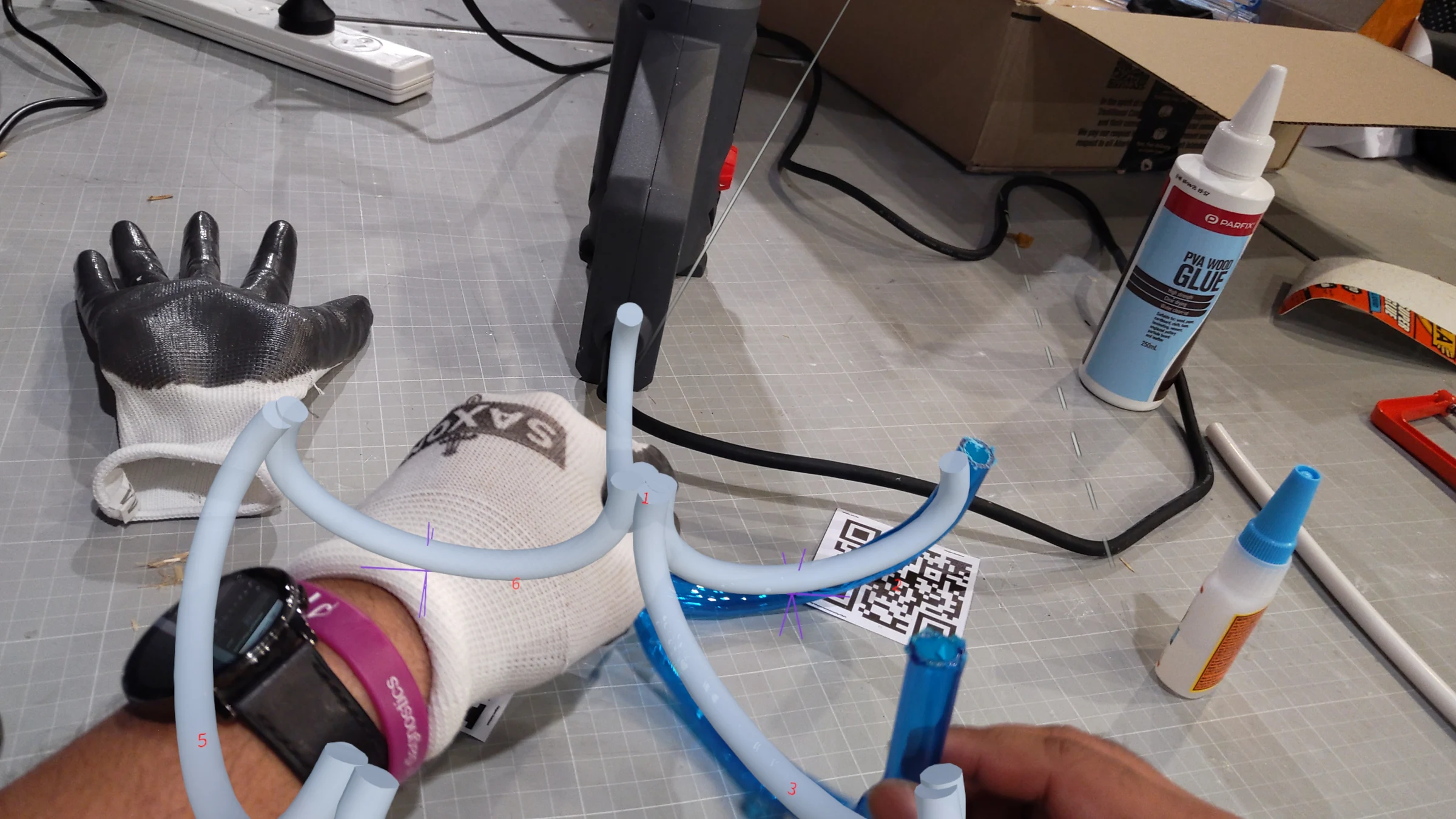
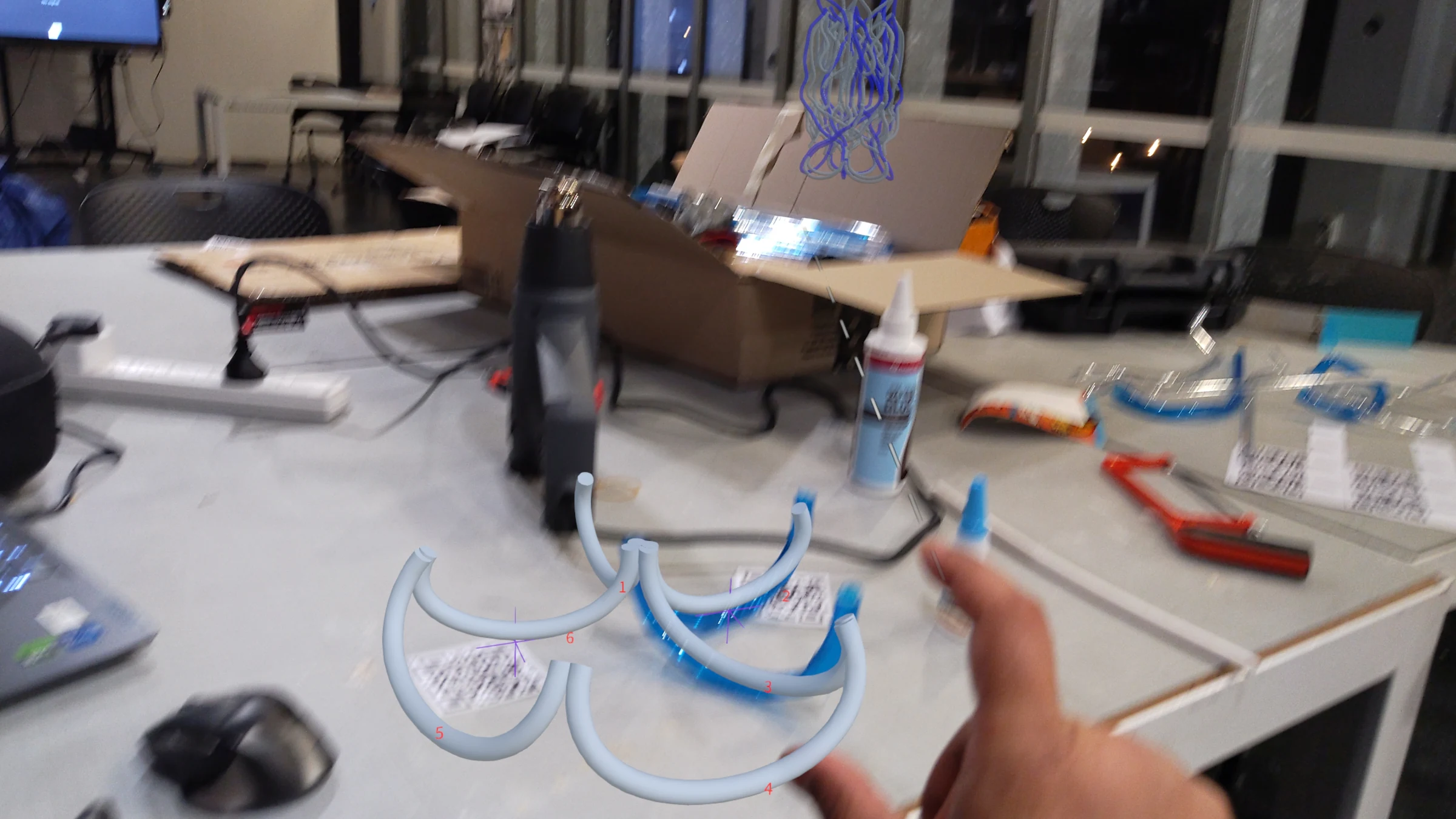
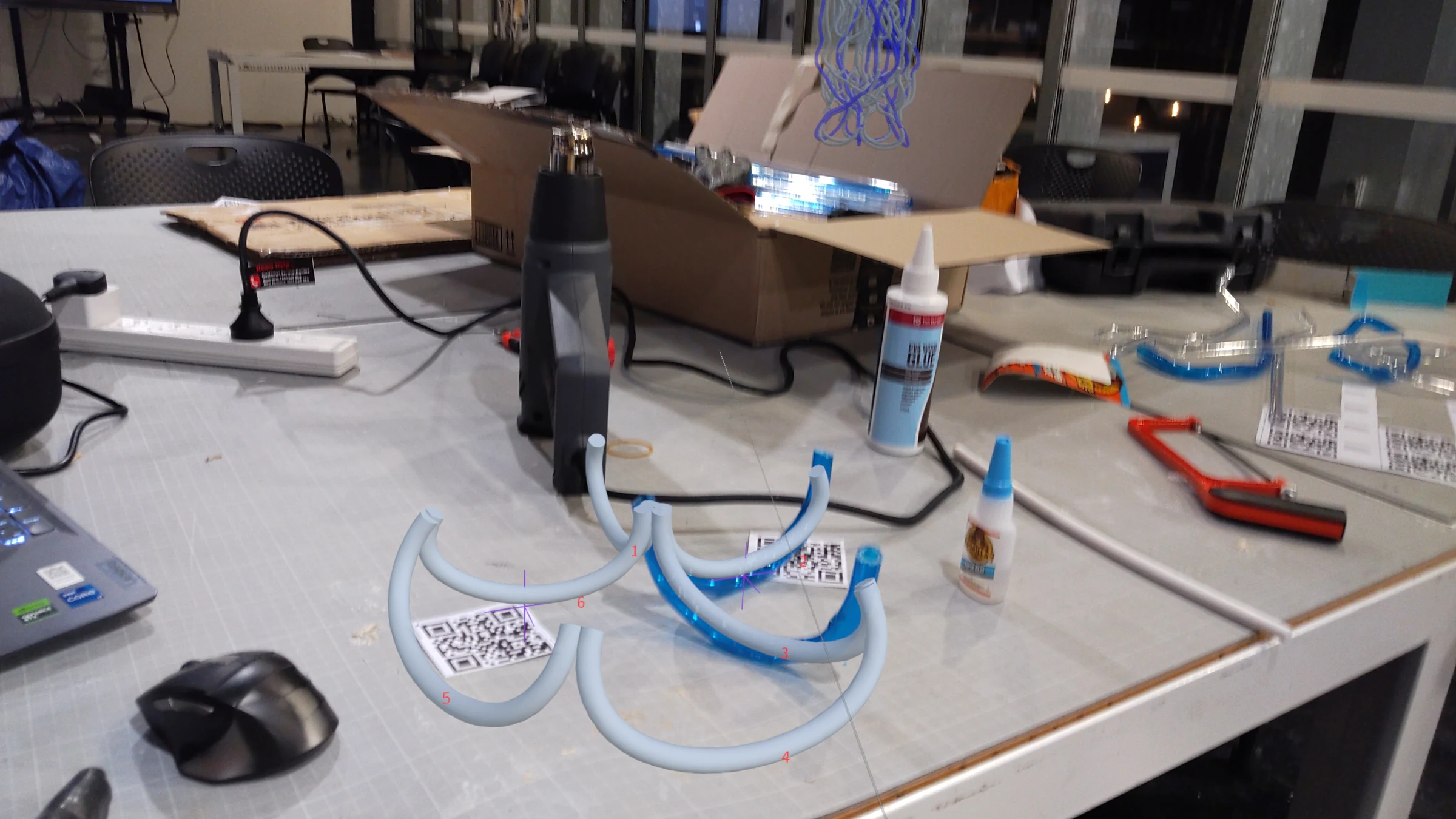
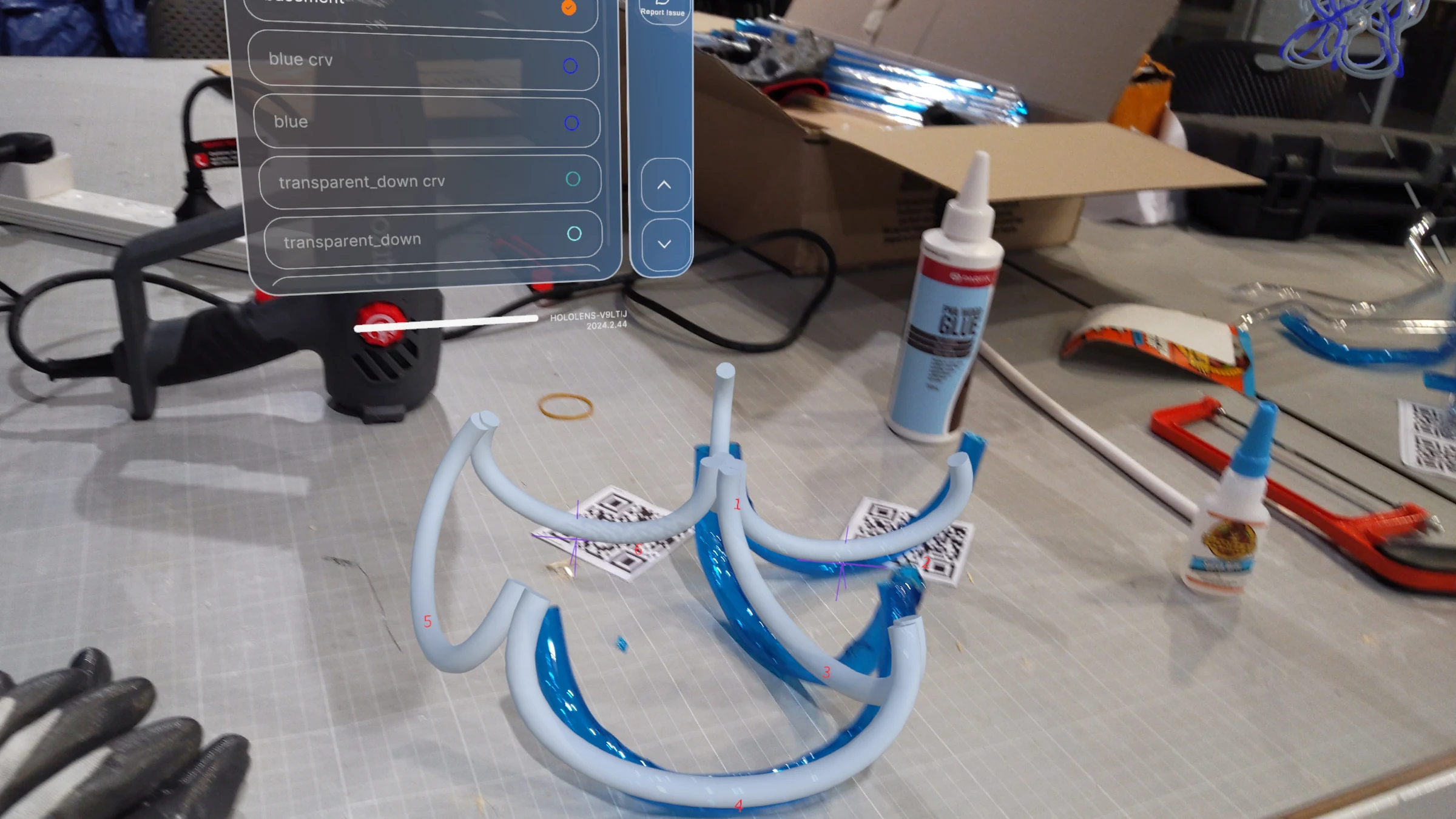
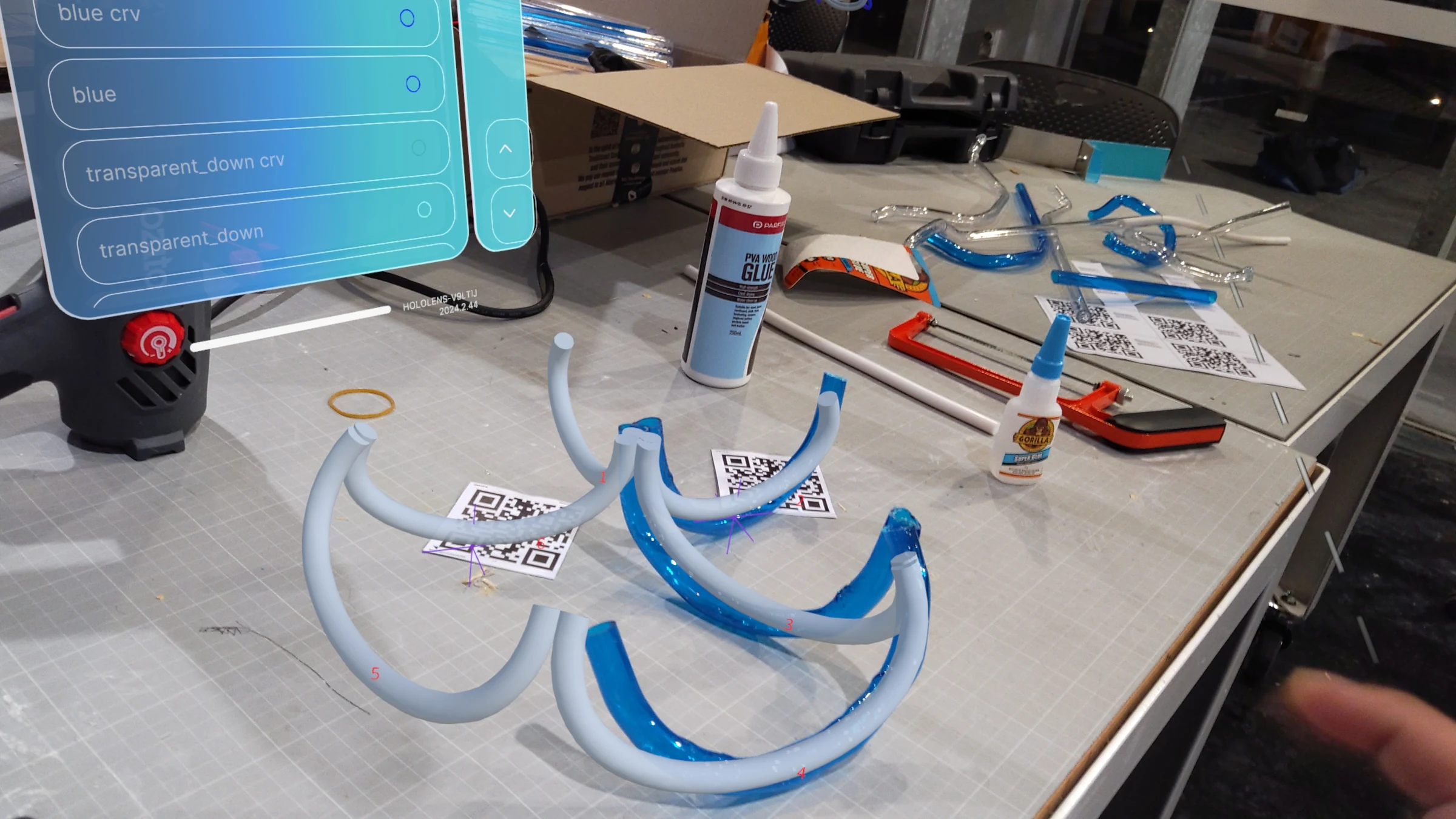
Fabrication used Mixed Reality overlays via HoloLens to guide the physical assembly: holographic cues for cutting positions and bend angles, step-by-step AR sequencing for insertion order, and MR tolerance overlays to verify joint spacing and overlap lengths in real time. Digital precision transferred directly to handcraft.

Elective Augmented Materiality
Tutor: Igor Pantic
Institution RMIT University
Melbourne, Australia
Team Shahriyar Ahmad
Huichun Zhao
Yingyi Tian
Material PETG tubes · 1000mm × 32mm OD
3mm wall · 30+ tubes
Tools Grasshopper · Kangaroo · Rhino Multipipe
Blender · HoloLens MR · Fologram
Year Semester 2, 2025

Material Research

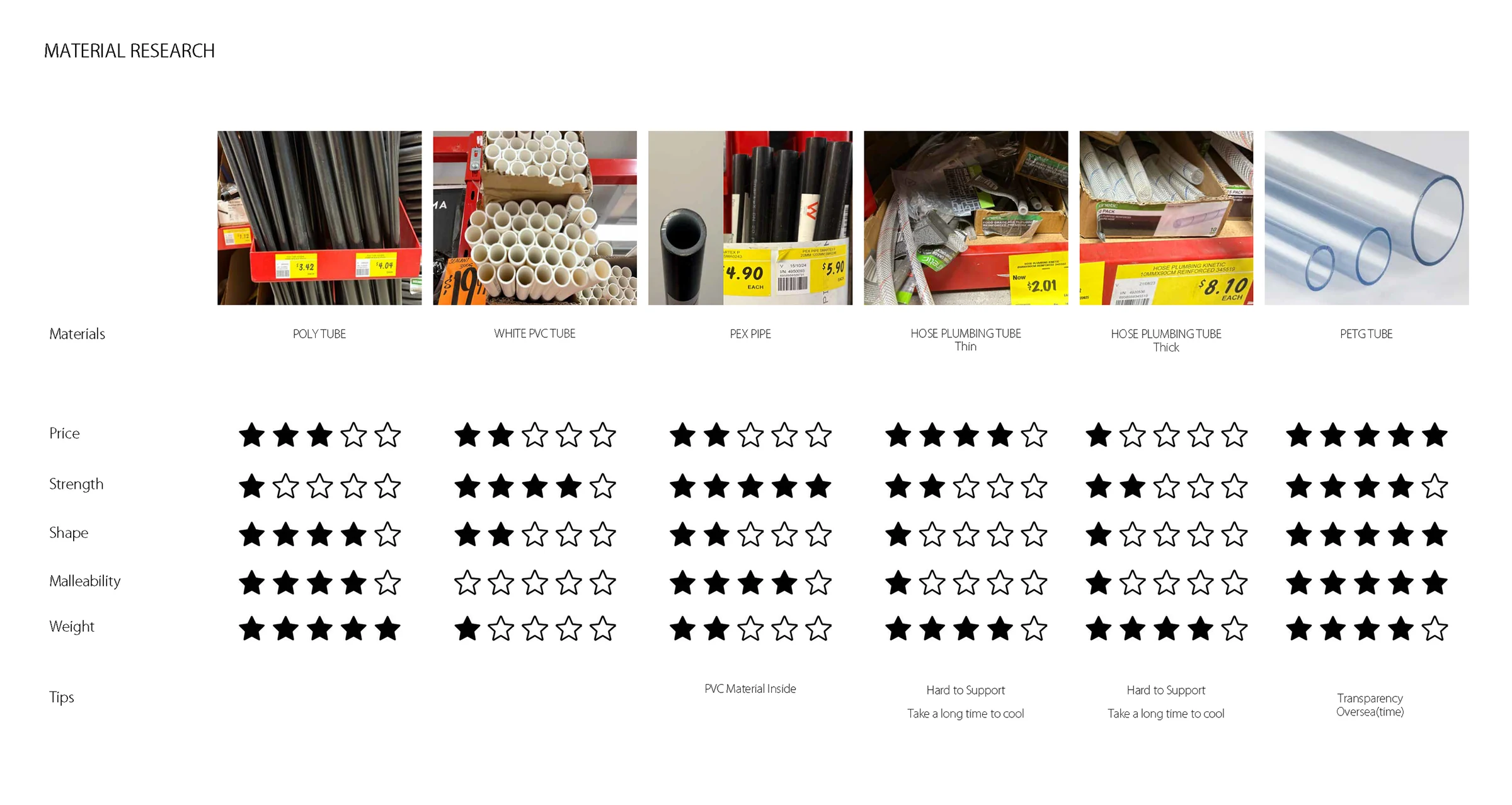
Material research overview: tube material matrix comparing PVC, PETG, PEX pipe, and hose plumbing tube across strength, shape, malleability, and cost
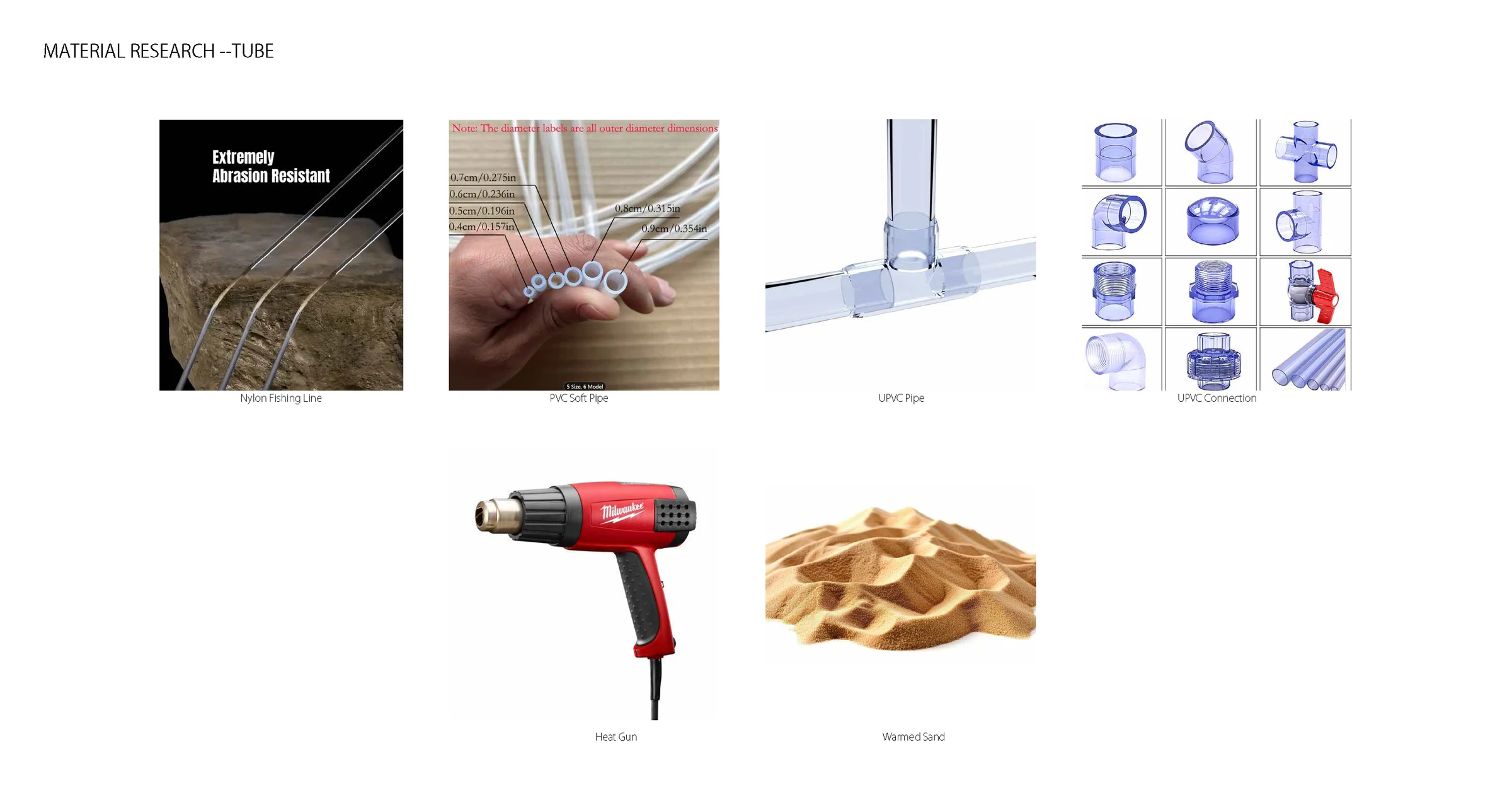
Material research: heat-forming techniques — heat gun, warmed sand, and nylon fishing line methods for bending PVC and UPVC pipes
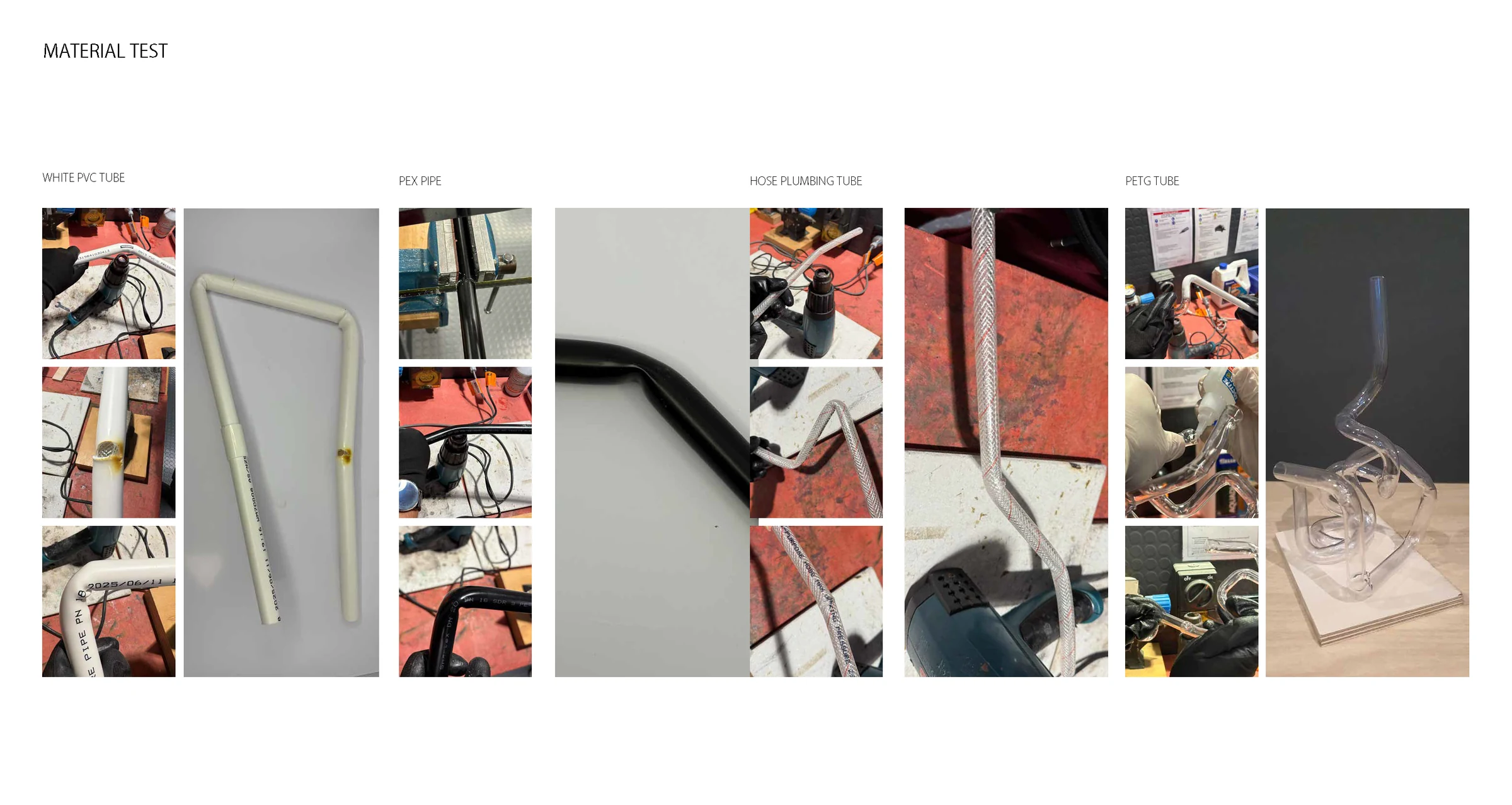
Material research: comparative material test results for white PVC tube, PEX pipe, hose plumbing tube, and PETG tube
Material test 01: PVC and PETG tube samples arranged for comparison — flexibility, wall thickness, and translucency assessed
Material test 02: heat-gun bending trials on PVC pipe sections over a timber former, testing controlled curvature
Material test 03: UPVC joint connections and nylon fishing line tension tests, evaluating structural rigidity at nodes
Material test 04: straw prototype assembly testing chunk geometry and structural self-support before scaling to PETG

Concept

Concept collage: sound frequency patterns translated into spatial form — waveforms, interference patterns, and resonance visualised as generative geometry
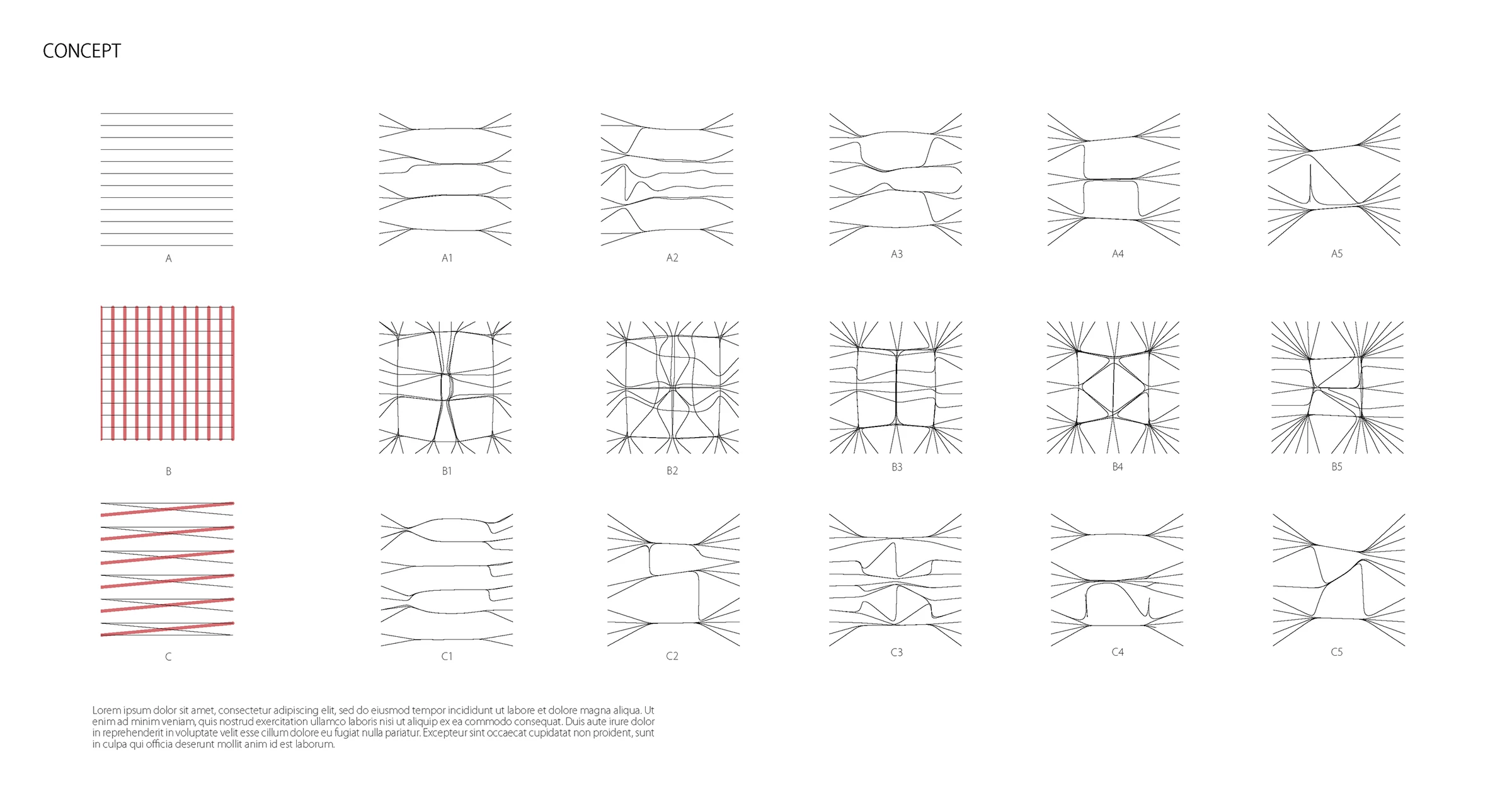
Concept matrix: parametric form variations A through C, series 1–5, derived from frequency-to-geometry translation logic

Form Finding

Form finding 01: straw prototype assemblies — eight geometric chunk configurations testing spatial branching and self-support
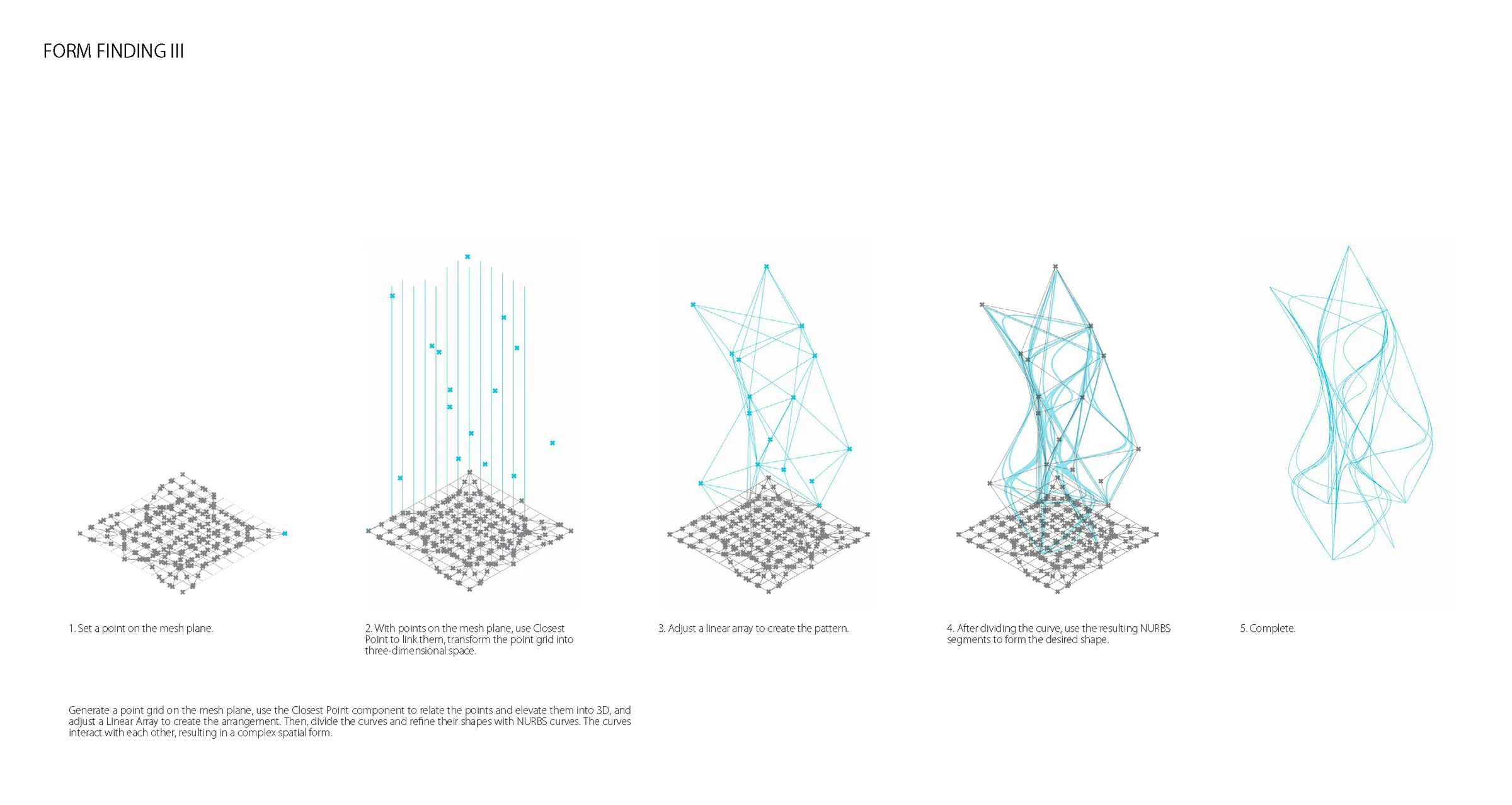
Form finding 02: Grasshopper point grid on mesh plane, ClosestPoint linkage, 3D elevation and linear array generating initial spatial curves
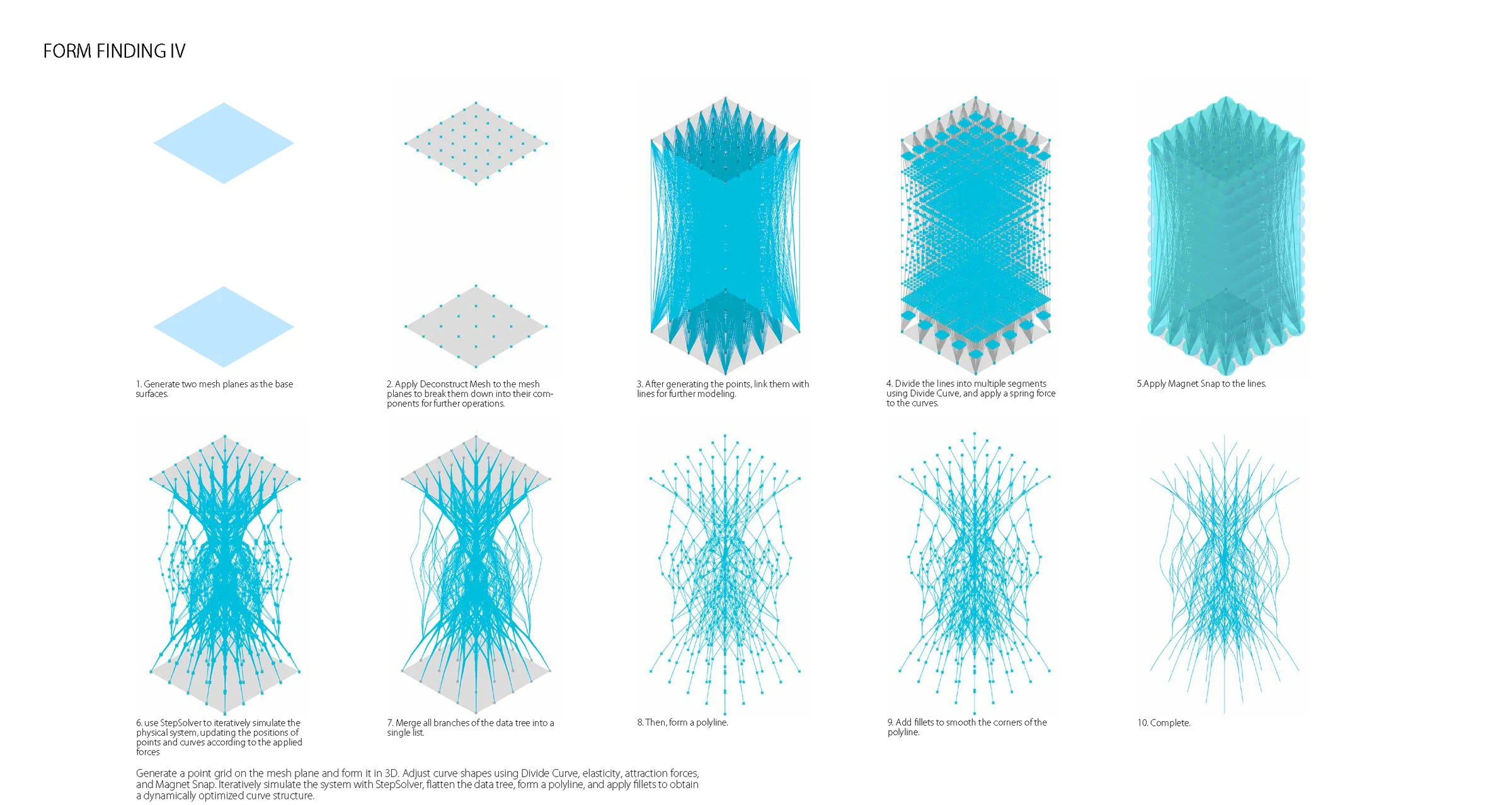
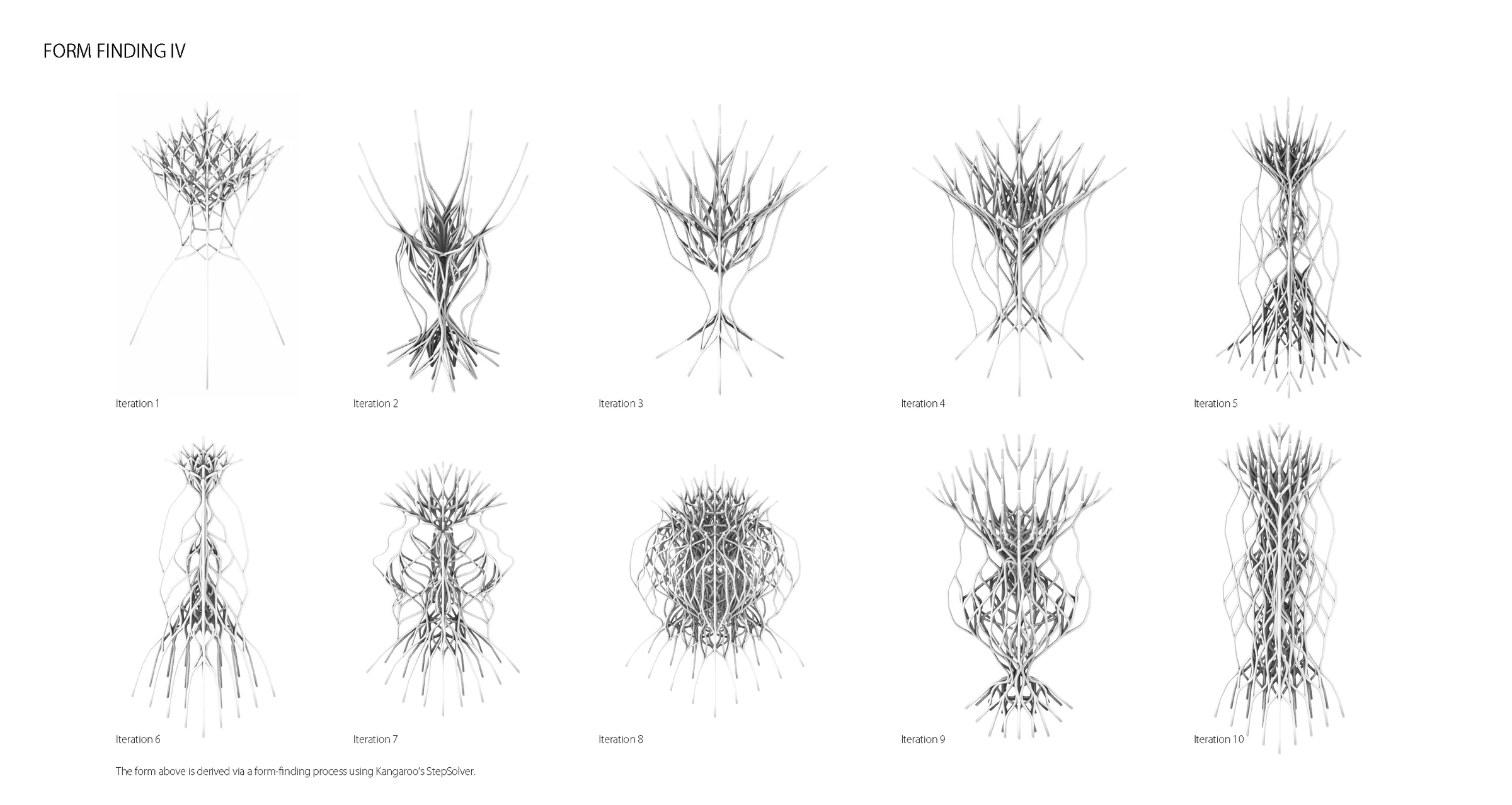
Form finding 03: Kangaroo StepSolver physics simulation — spring forces, Magnet Snap, and iterative structural optimisation across 10 iterations
Form finding 04: 3D Voronoi tessellation with Jitter randomisation, deconstructed into wireframe edges, converted to NURBS curves for tube skeleton
Form finding 05: chunk development — Voronoi-derived PETG tube framework assembled into bookshelf-scale chunks 1 and 2
Form finding 06: final curve optimisation — extracted NURBS segments refined and curve lengths tabulated per configuration before fabrication

Renderings

Perspective rendering: Tubythm structure in full, branching PETG tubular system rising from base, warm ambient light

AR Fabrication

Seven-step AR fabrication sequence: HoloLens overlays guiding direct forming, assembly sequencing, and tolerance verification at each stage of the PETG tube construction

Model Making

Model

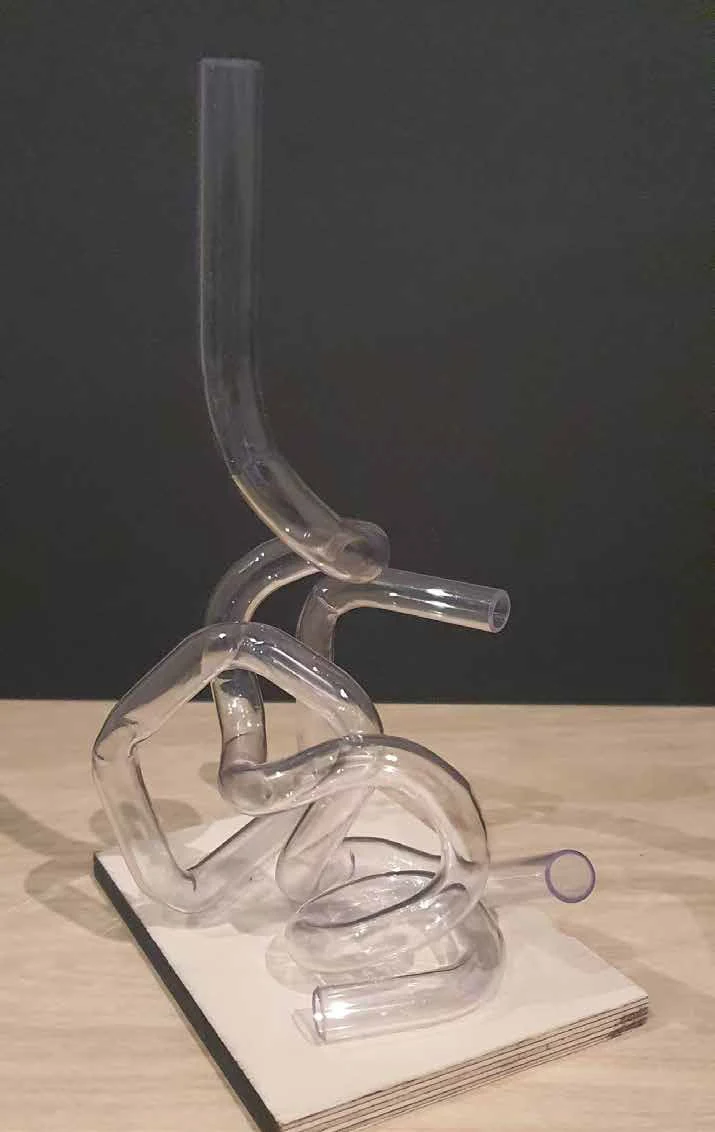
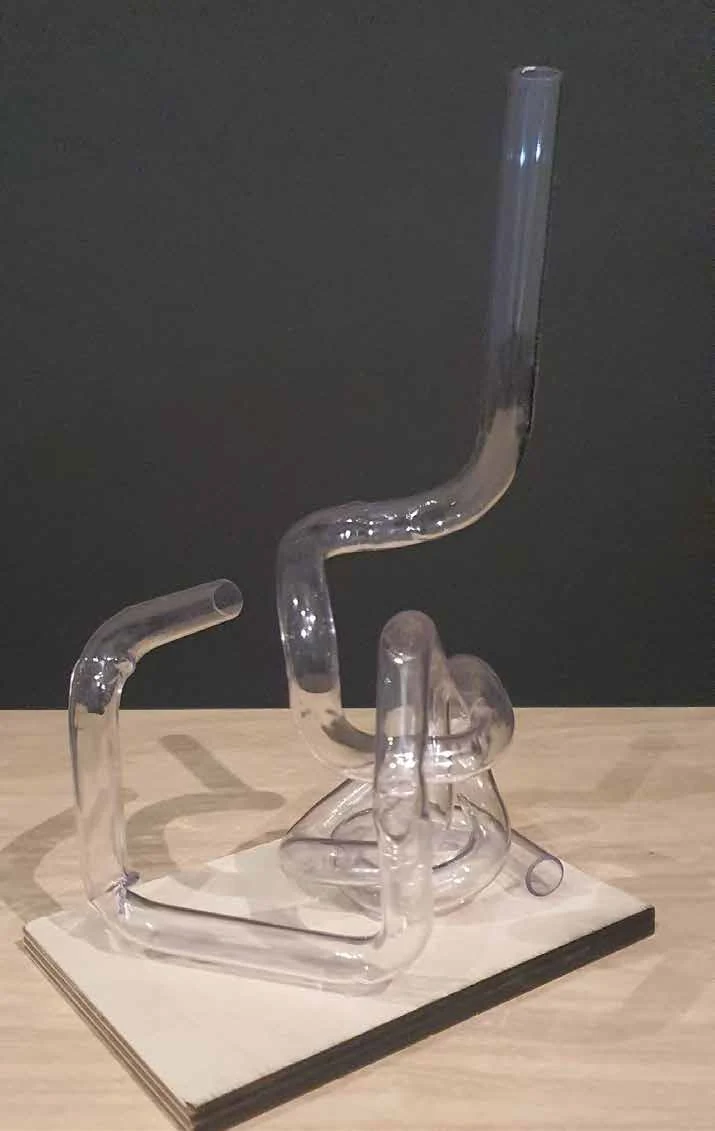
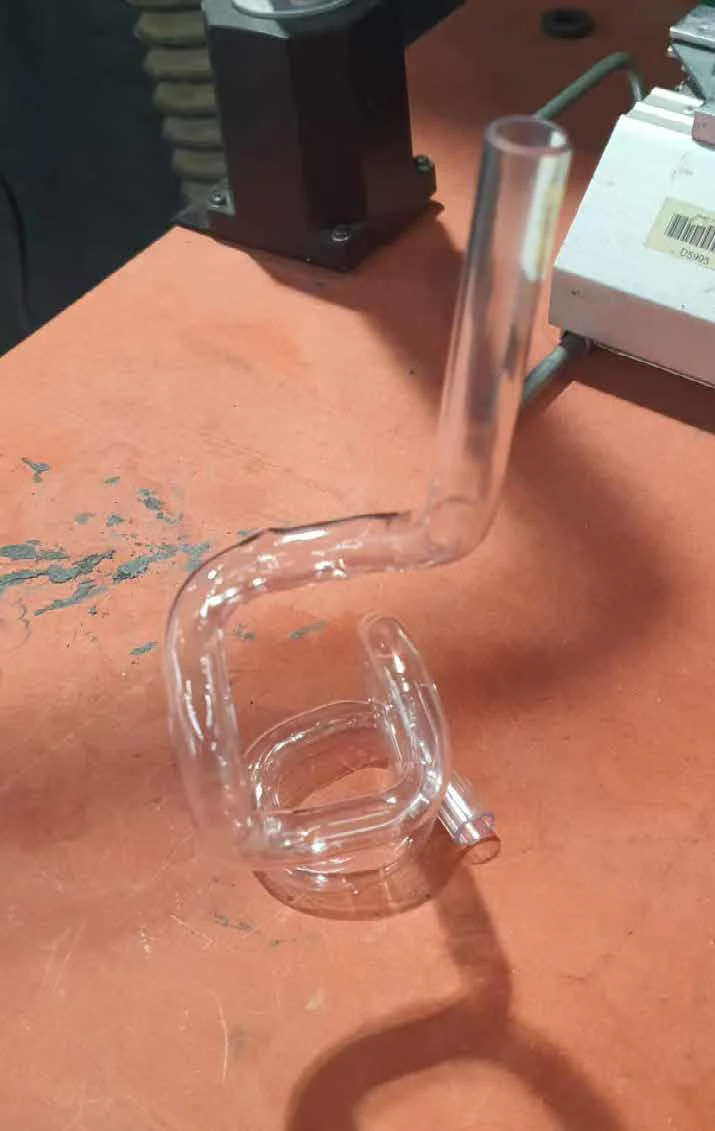
Completed Tubythm model: full PETG tube structure photographed in the studio, branching spatial form rising from base
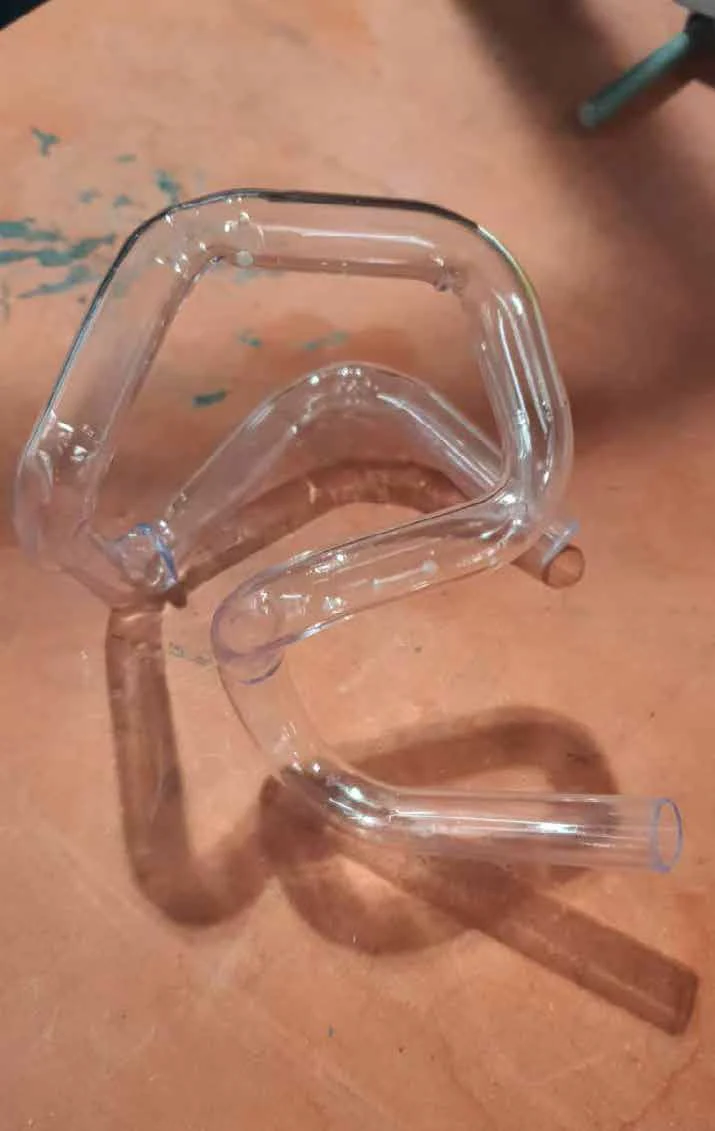
Tubythm model detail: UPVC joint connections and tube terminations, the resolution of the structure at its nodes
Chrono-Suburban Living VoidCraft