B.Arch Studio 2.2 · University of Asia Pacific · 2013
Bishwo
Shahitto Kendro
Bishwo Shahitto Kendro: the World Literature Centre. Founded in Dhaka in 1978 by Abdullah Abu Sayeed, it is less an institution than a movement, a campaign to build aalokito manush, enlightened human beings, by putting books into hands across Bangladesh. Its libraries have always travelled: fleets of mobile vans carrying literature into towns that had none. This studio asked a single question. If the movement settled in Sylhet, in the tea-country hills of the country's northeast, what form would it take?
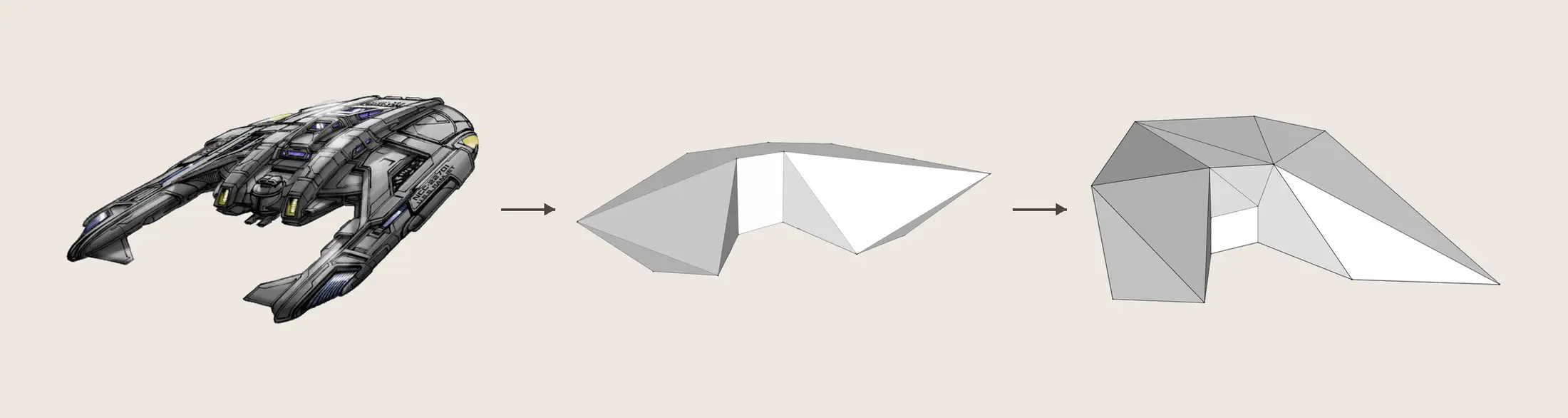
The answer is The Intellectual Vessel. Not a building that merely houses books, but a craft that carries them. The parti begins with the silhouette of a vessel, a hull abstracted into a folded plate geometry, and lands it gently into the slope. Literature is cargo; enlightenment is the voyage. The fold organises programme through structure rather than floorplate convention. It opens compression and release, carves interior light wells, and presents a profile that reads as civic infrastructure from the road below.
Youth and intellectualism are the constituents the building is scaled for. It is sized for encounter, not ceremony: a reading hall under a faceted shell, a library that spills into a gallery, an auditorium for the readings and recitations that are the centre's living tradition. The vessel rests, but it remembers that it was built to move.
The Parti: From Hull to Shell
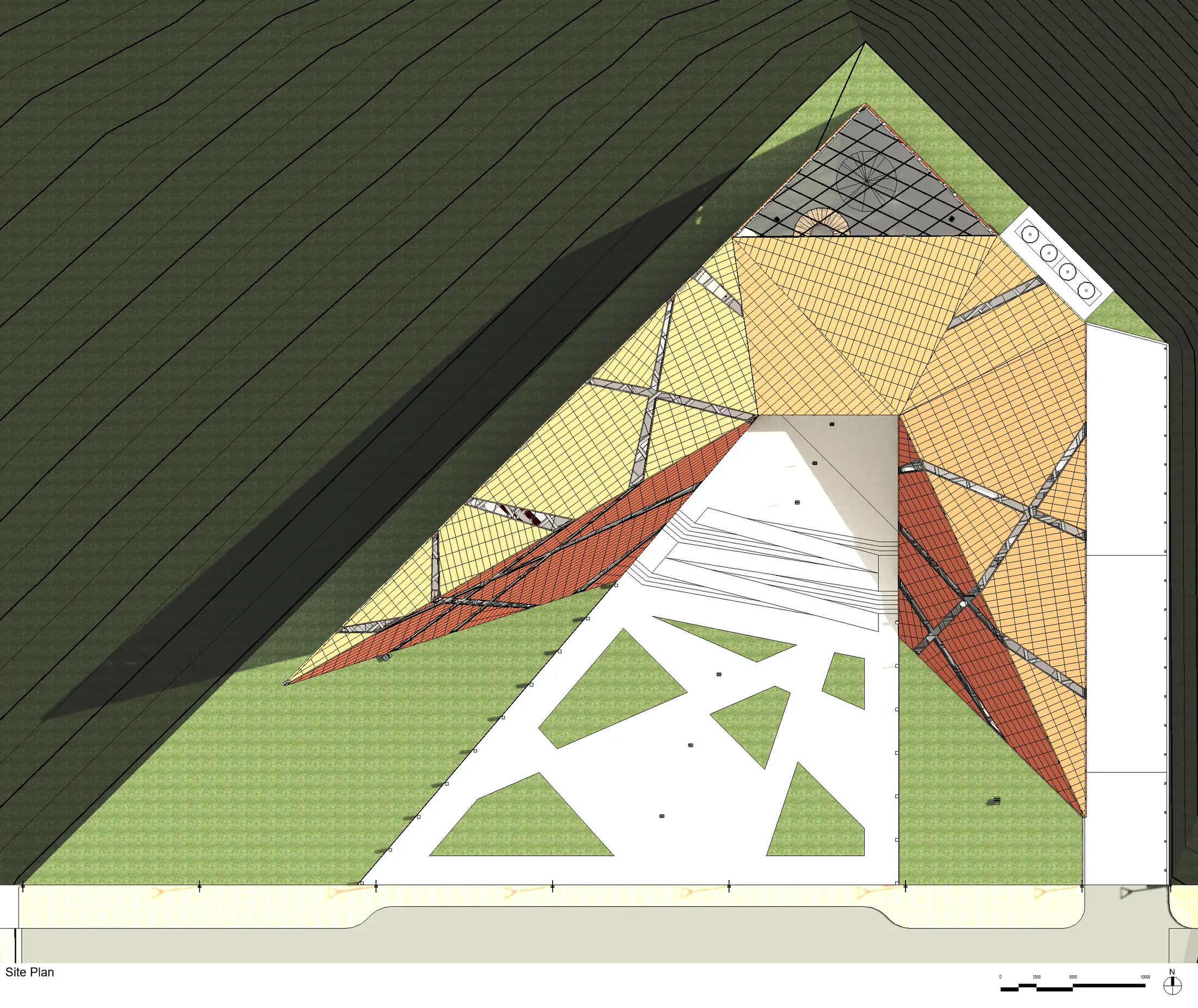
The form is reasoned in three moves. A vessel is taken as the originating image, its hull read not as a watertight skin but as a sequence of faceted plates. The plates are abstracted into a folded geometry, each fold a structural decision. The geometry is then opened and seated into the Sylhet slope, where the folds become roof, wall, clerestory and threshold at once. What arrives is a shell that shelters without columns marching through the reading rooms, and a silhouette that keeps the memory of the ship that generated it.
The faceted language is deliberate. From the outset I asked my studio tutors, Dr. MD. Nawrose Fatemi and Architect Rashed Chowdhury, to let me study deconstructivism through Daniel Libeskind. The angular, crystalline geometry of the vessel takes its cue from Libeskind's Frederic C. Hamilton Building at the Denver Art Museum: a work that refuses the orthogonal box and lets sharp, fractured planes carry both structure and meaning. Here that logic is bent toward literature. The fold is not rupture for its own sake; it is a way of cracking a reading room open to light.
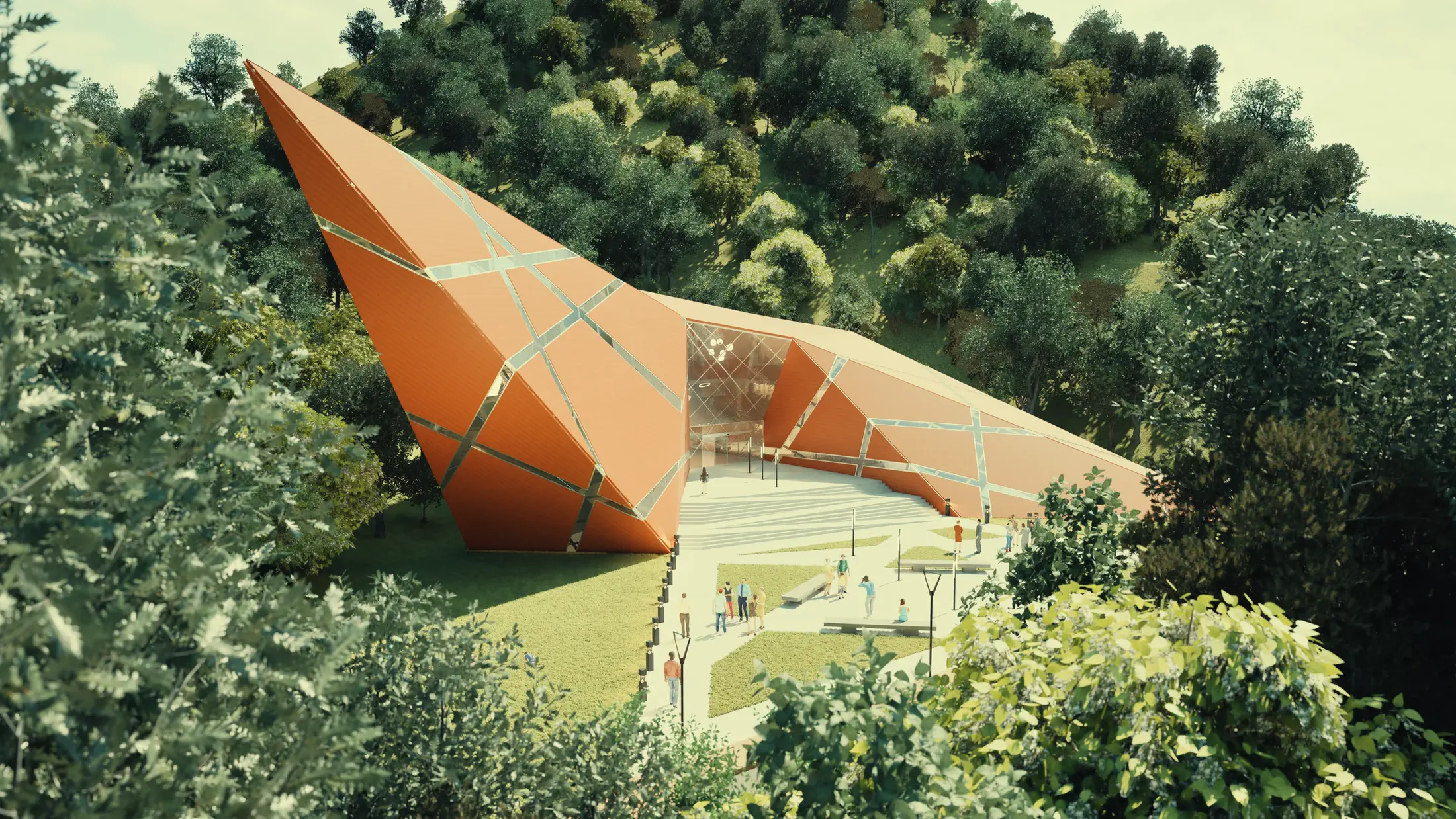 Bird's-Eye · Day · South
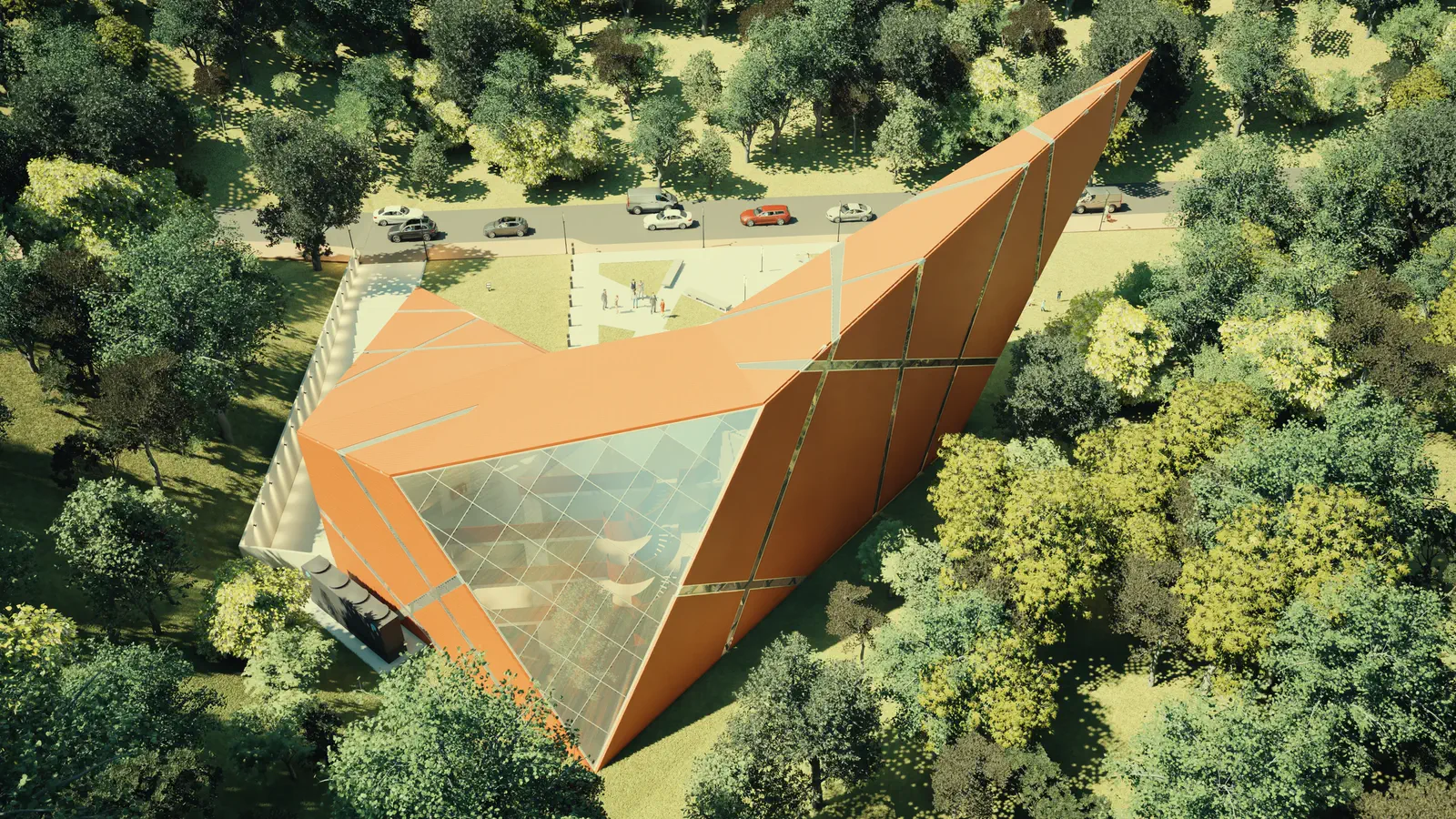 Bird's-Eye · North
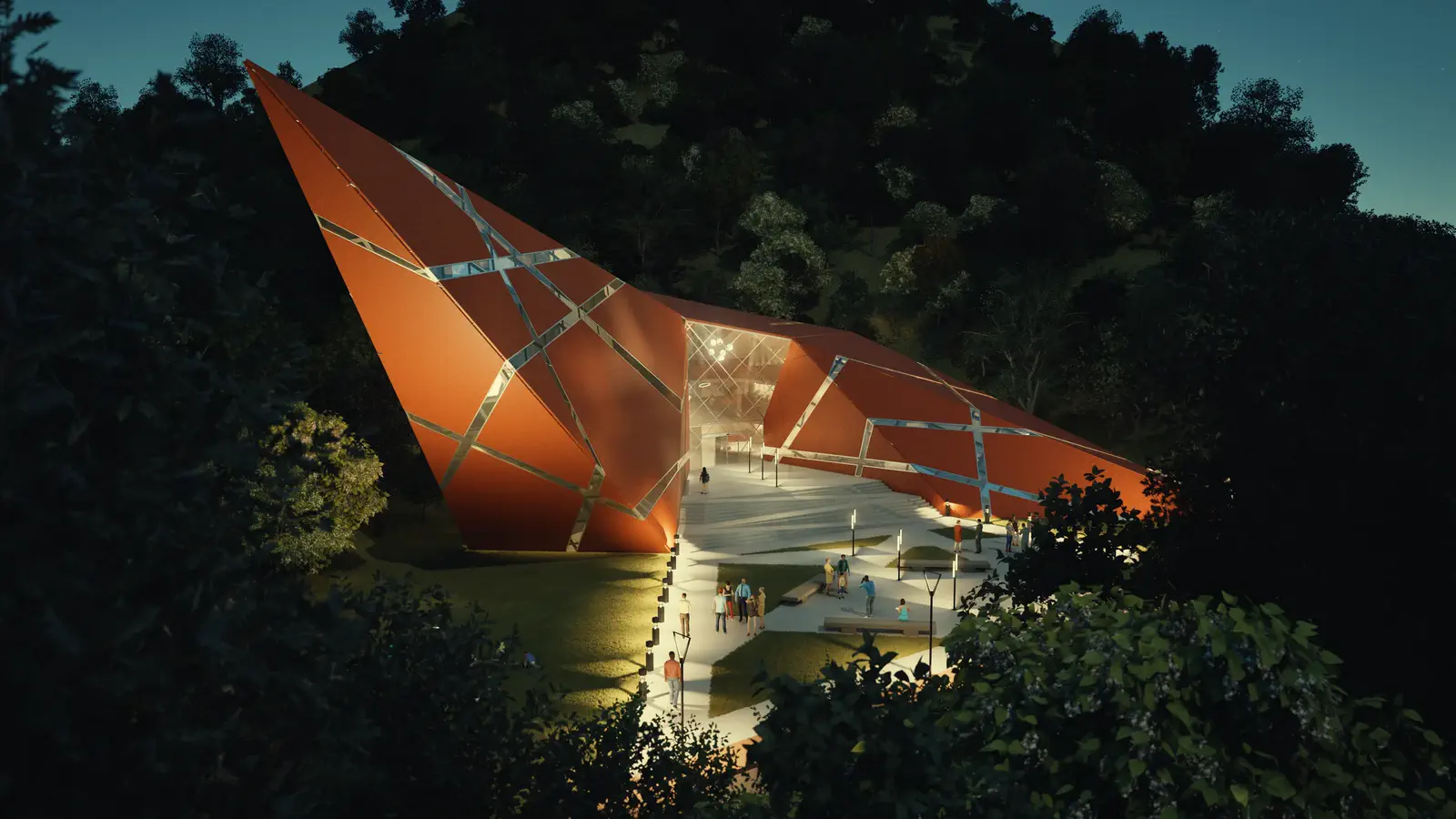 Bird's-Eye · Night · South
A Vessel for Sylhet
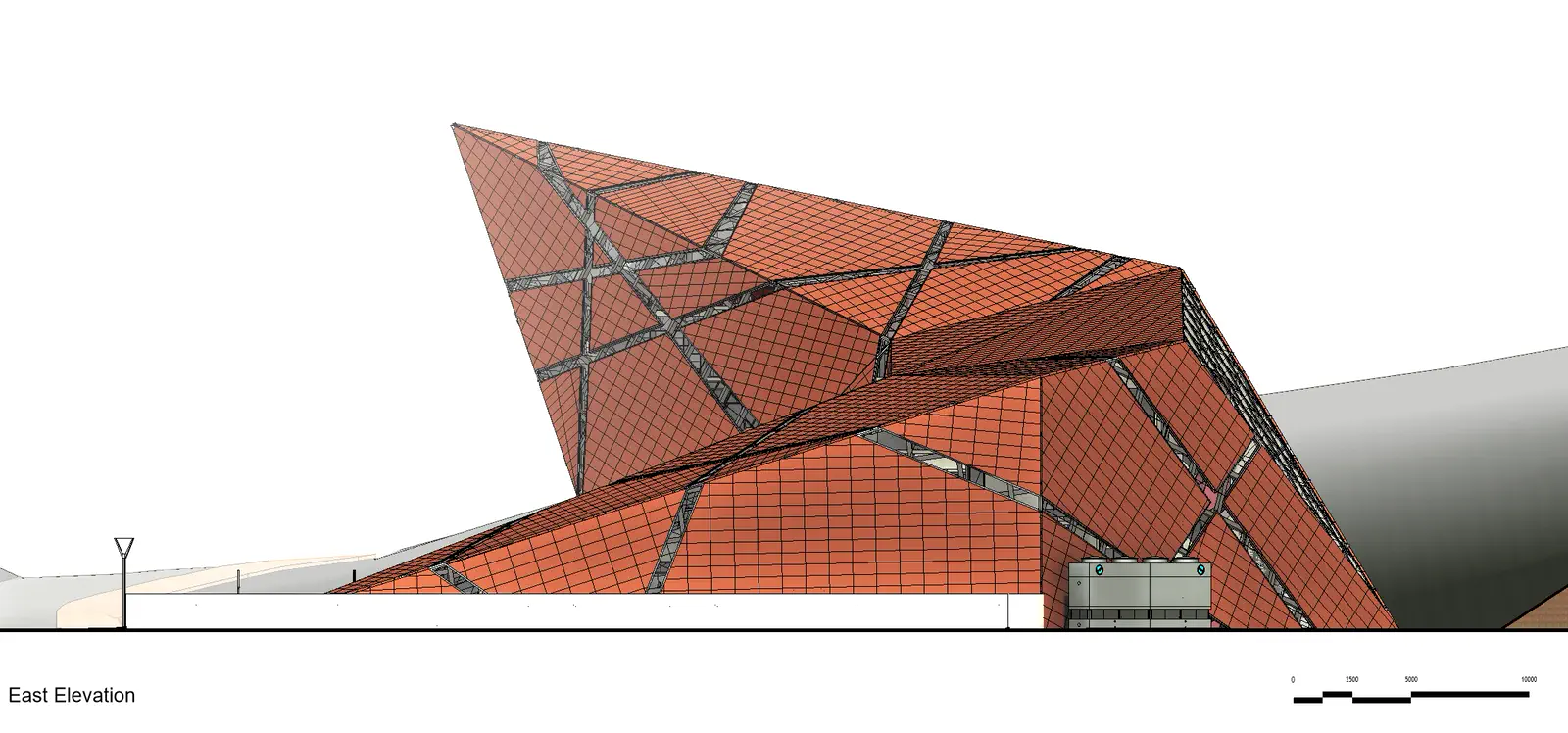
Sylhet is a city of arrivals: of saints and shrines, of tea gardens and terraced hills, of a diaspora that returns. A literature centre here is not an import but a homecoming. The long terracotta flank of the building addresses the approach as a single legible gesture, low and grounded, before the fold lifts overhead to release the reading halls into light. The vessel lands where the land already folds.
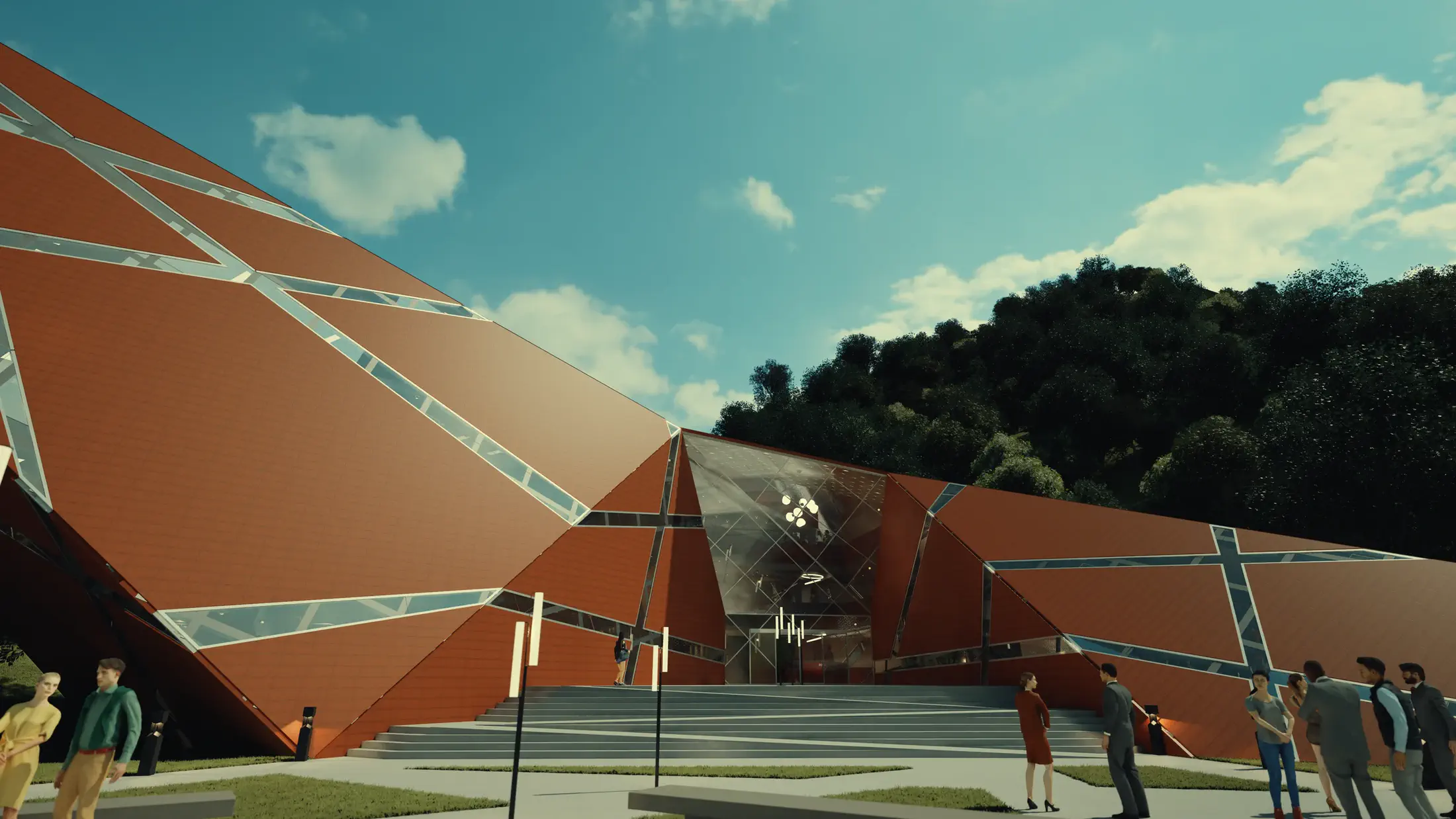 Entry Plaza
Inside the Hull
Within, the fold is everything. The faceted shell becomes a ceiling that tilts and lifts, slotted with angular skylights that rake daylight across the reading hall through the day. Structure and atmosphere are the same decision. The library, the reading halls and the places of gathering spill into one another beneath the continuous geometry, so that moving through the building feels like moving through the interior of a craft built for thinking.
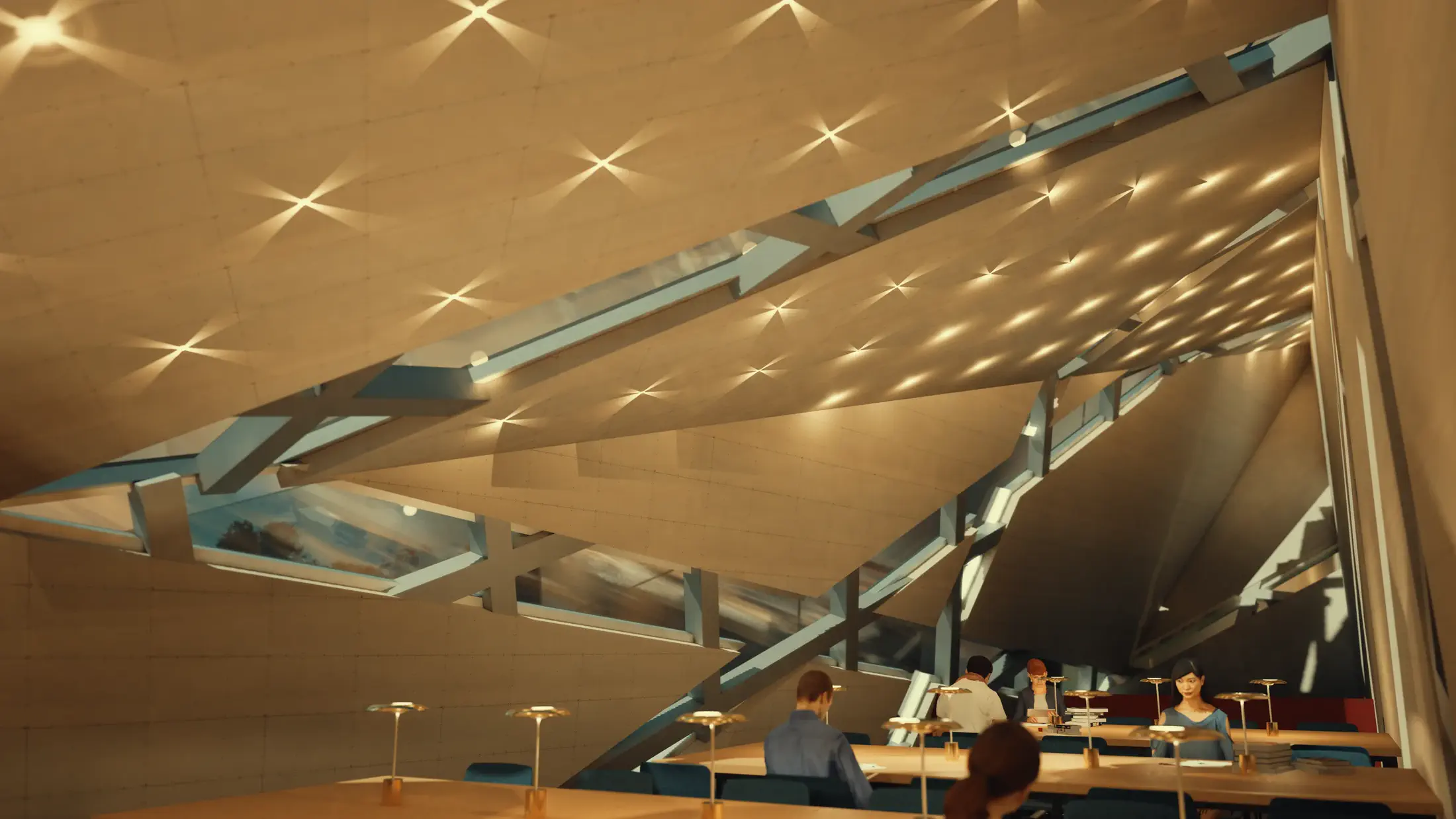 Reading Hall
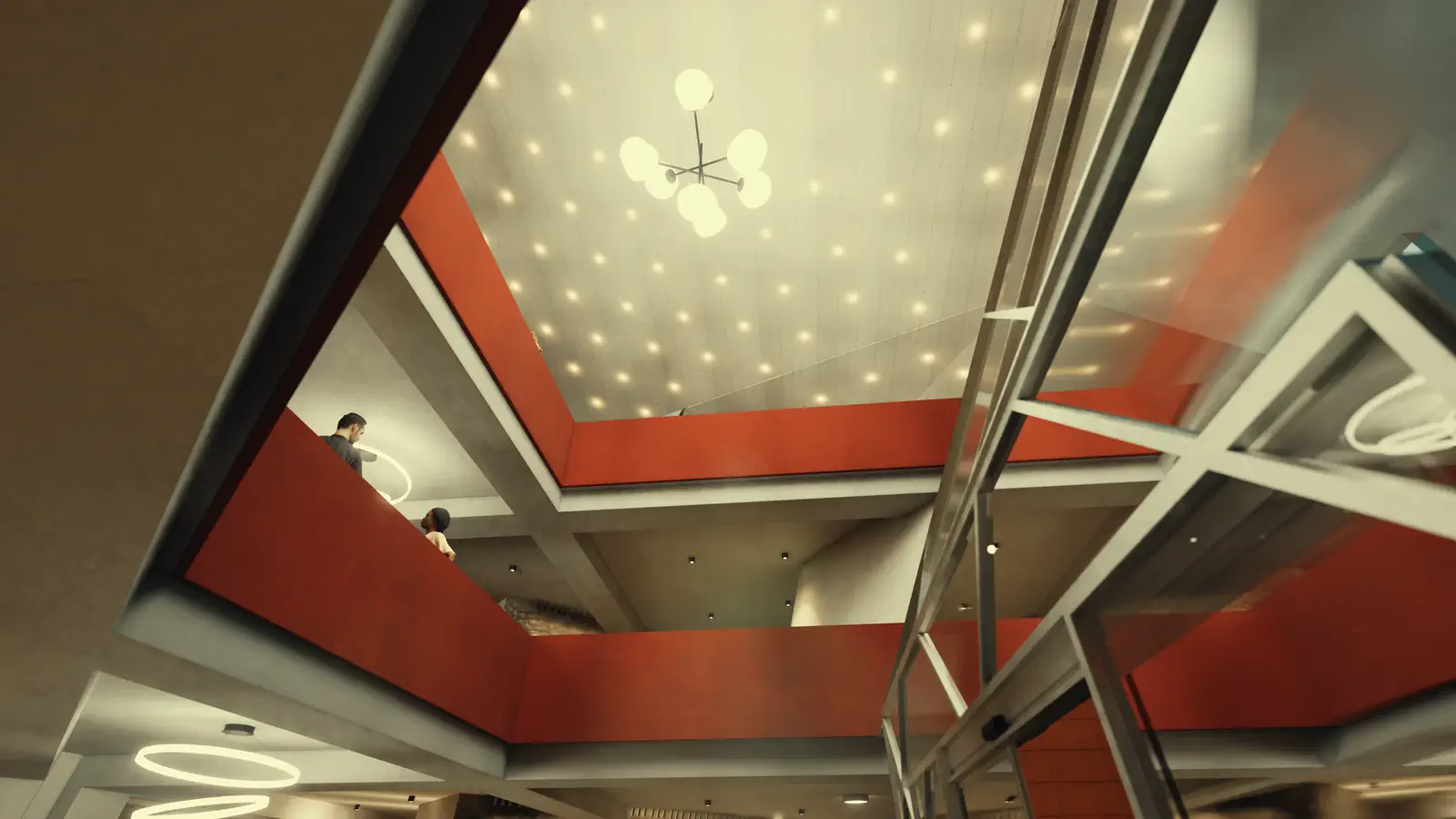 Entry Atrium
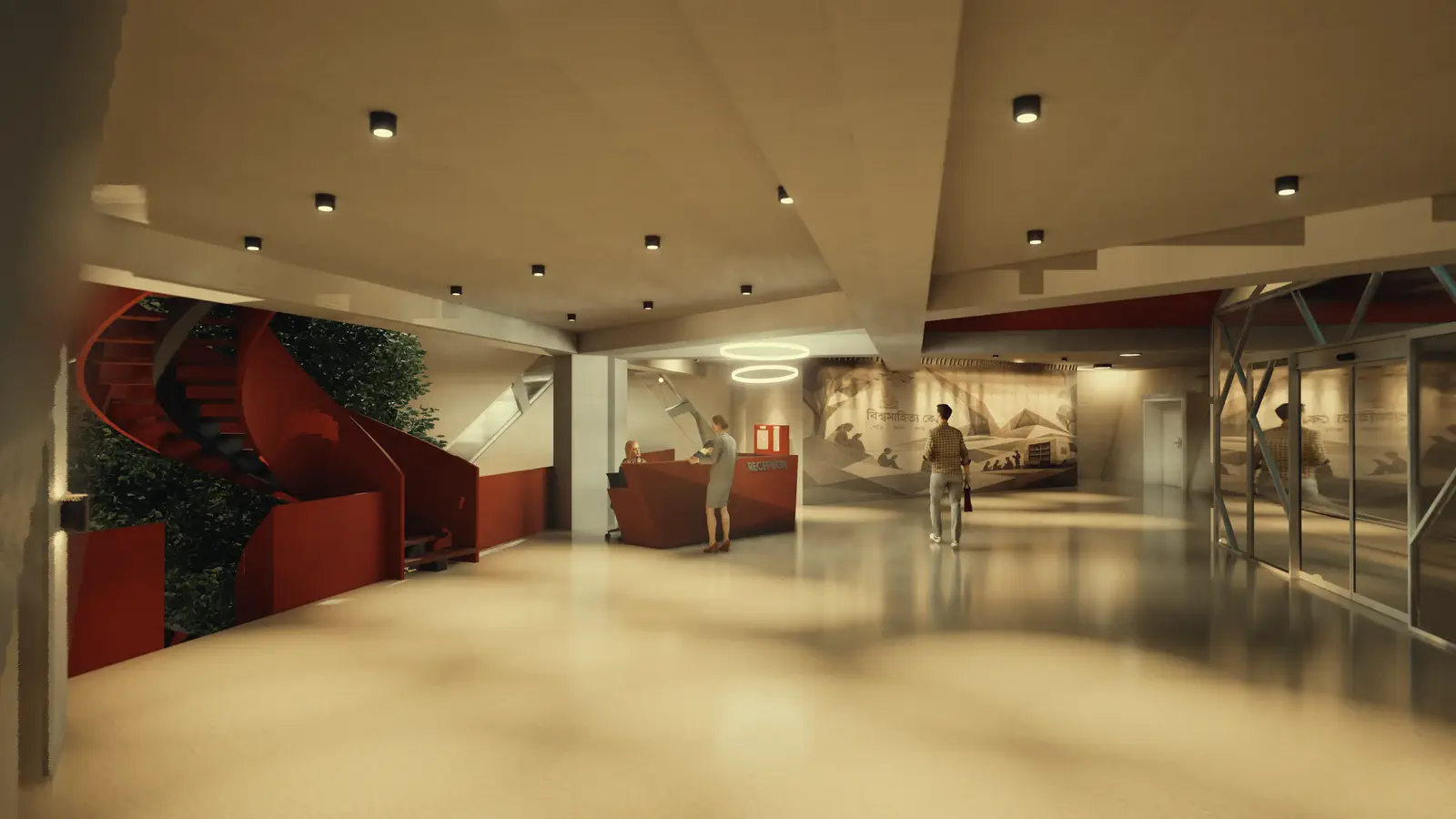 Reception
Programme: Library, Assembly, Teaching
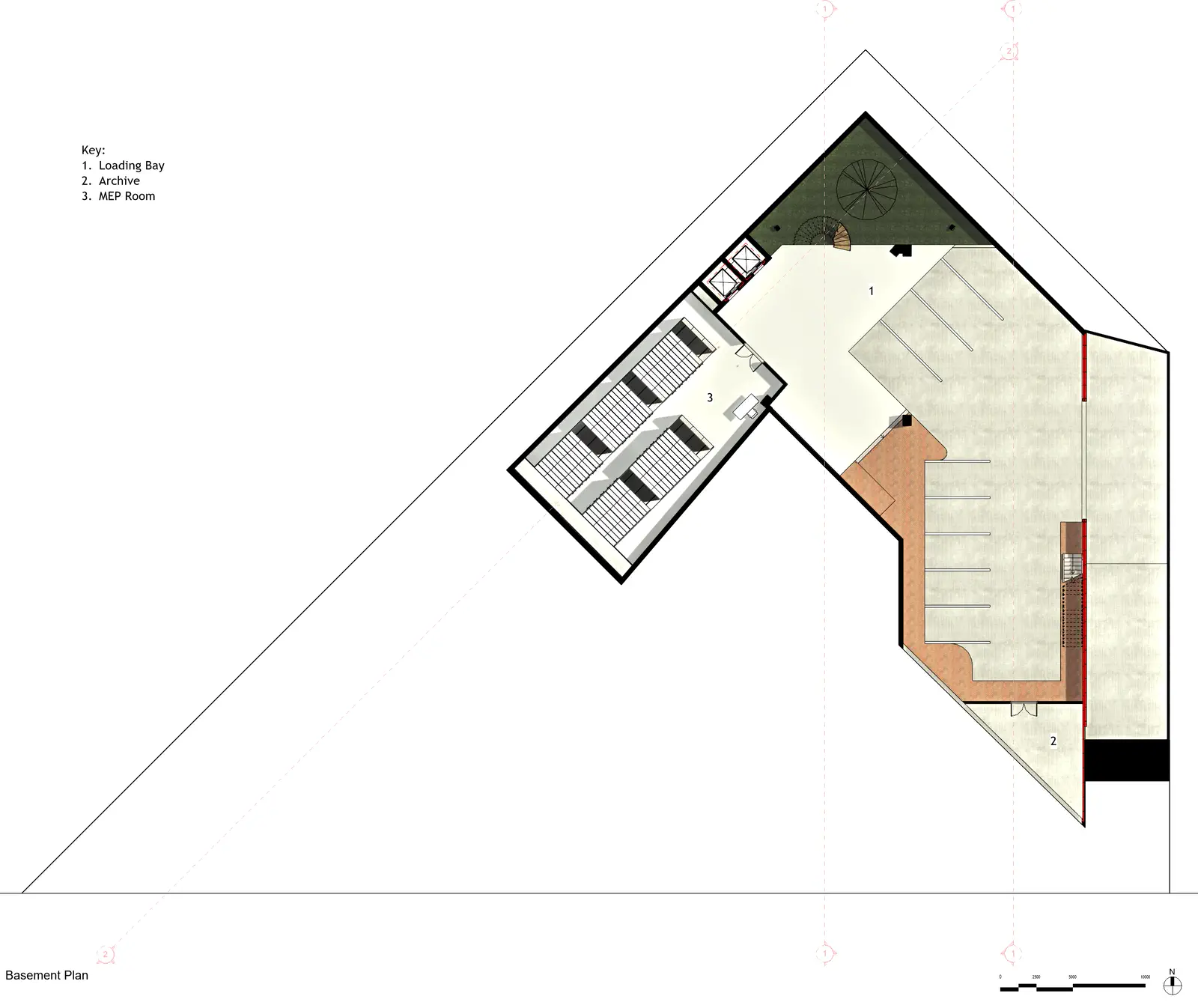
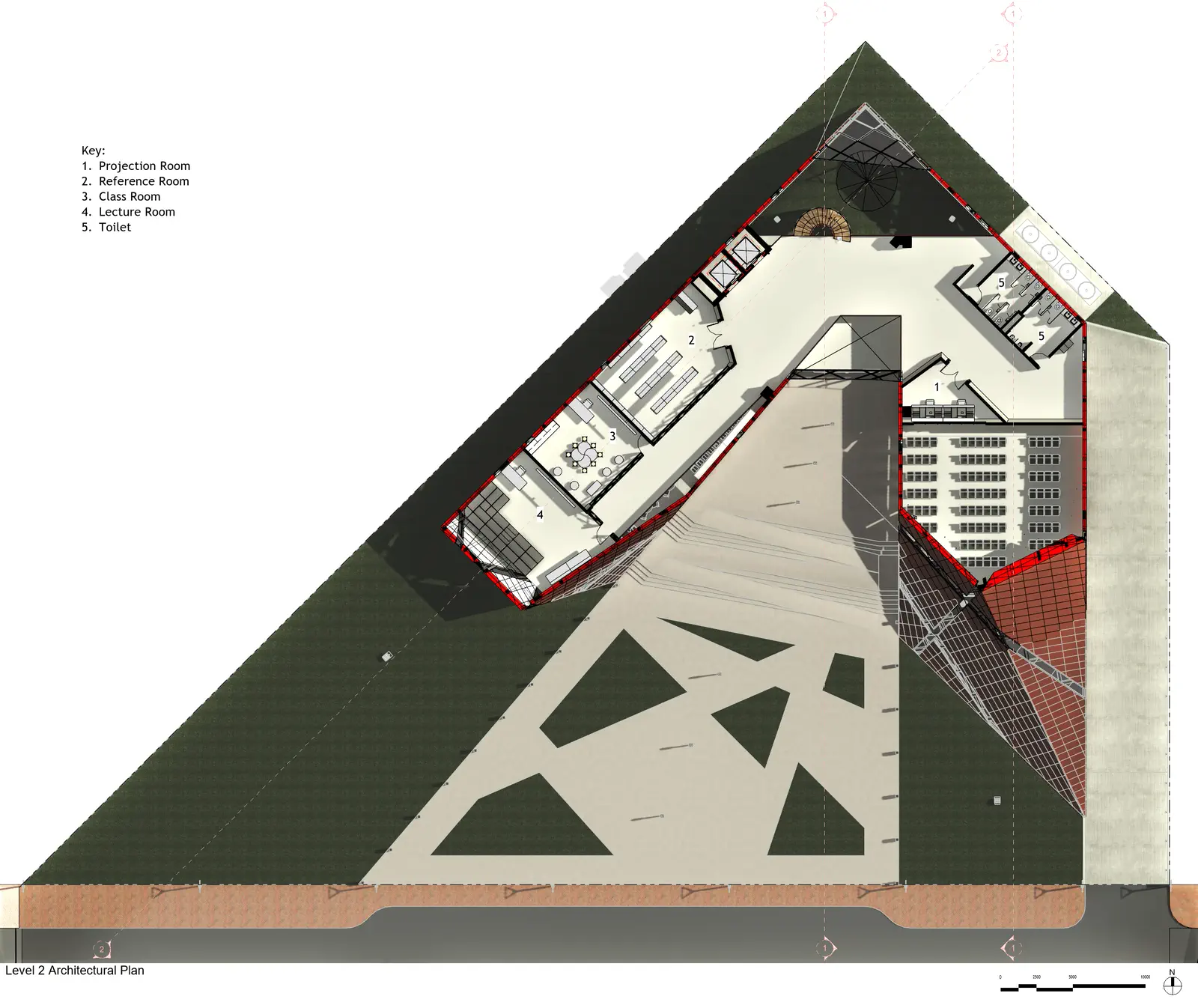
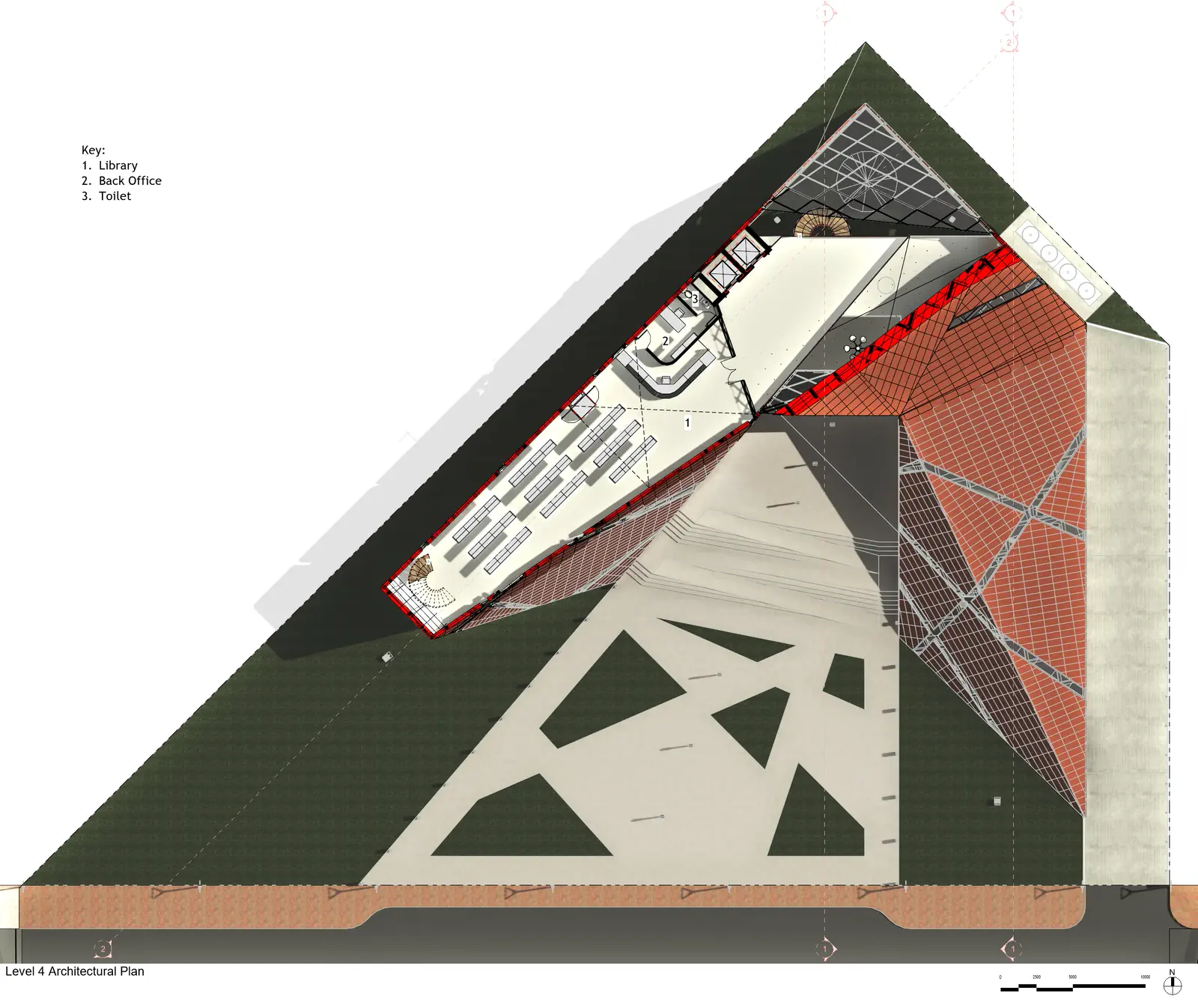
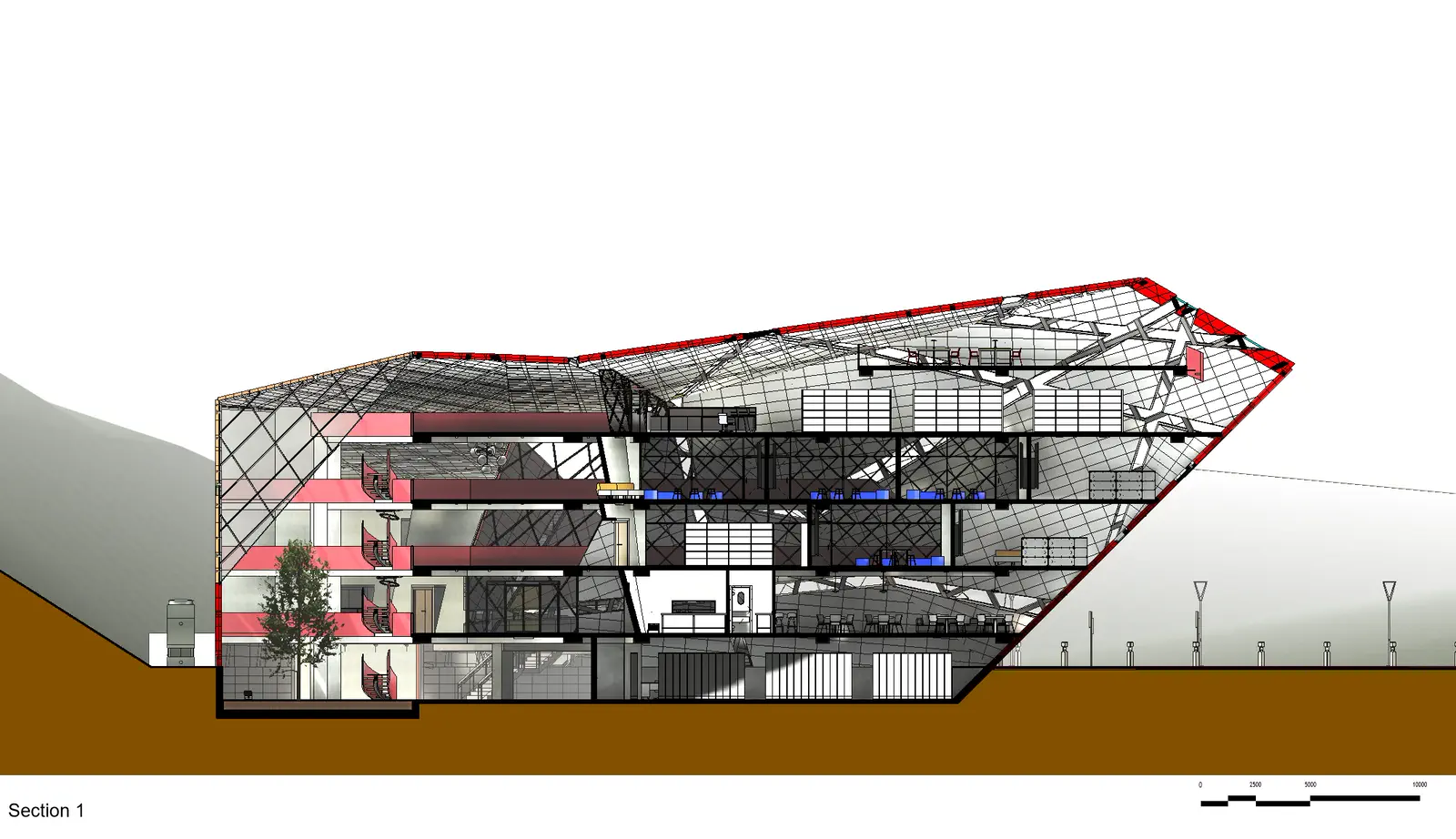
The centre carries the full apparatus of the reading movement: open library stacks and reading halls, an auditorium and a lecture room for recitations and debate, classrooms for the workshops where readers are actually made, a projection room, and a cafe. Circulation is treated as event. A corridor threads between the folds, and the building's spine drops through a tall atrium to a sunken garden at its foot, a single tree held in light beneath the hull.
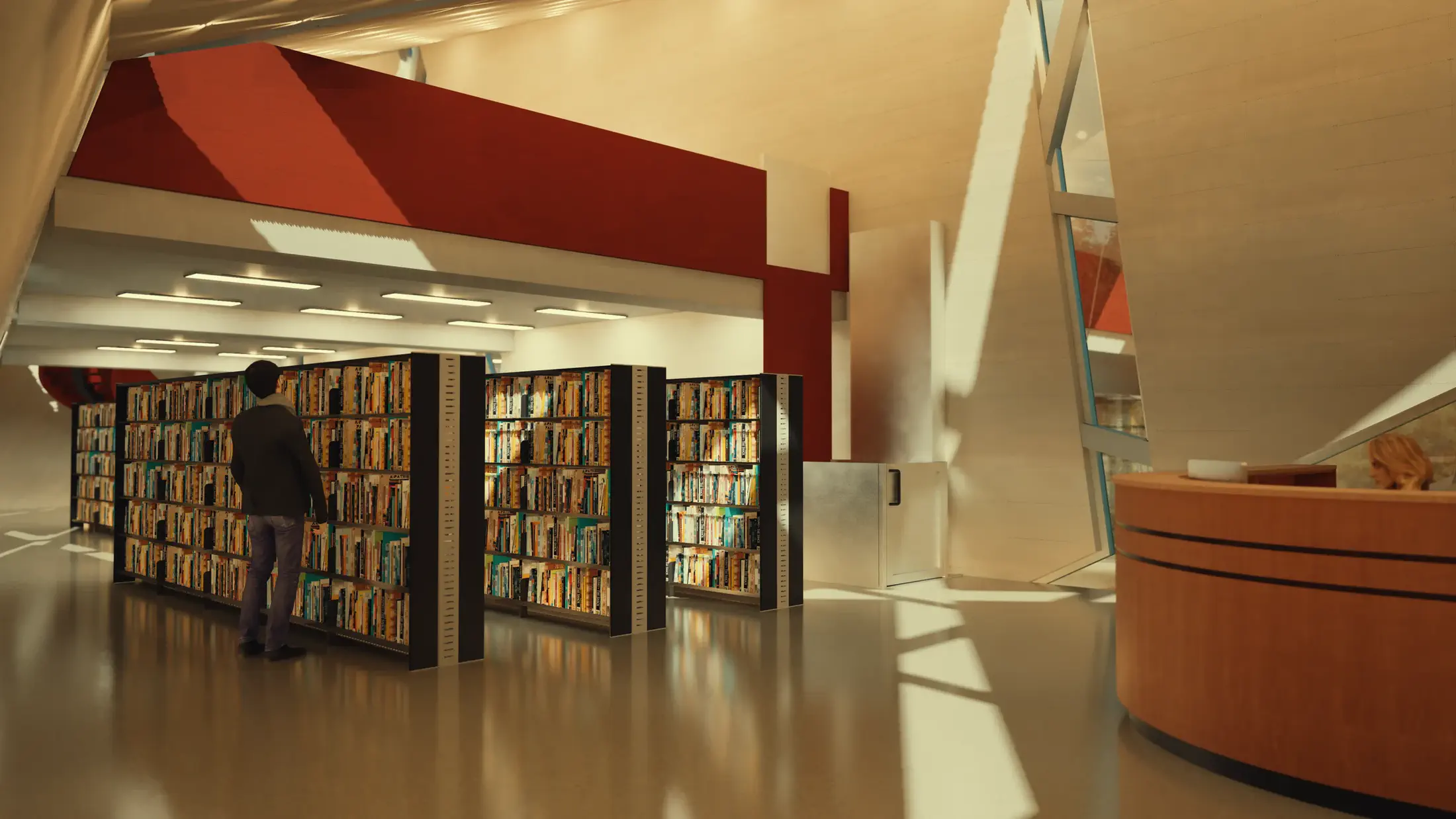 Library
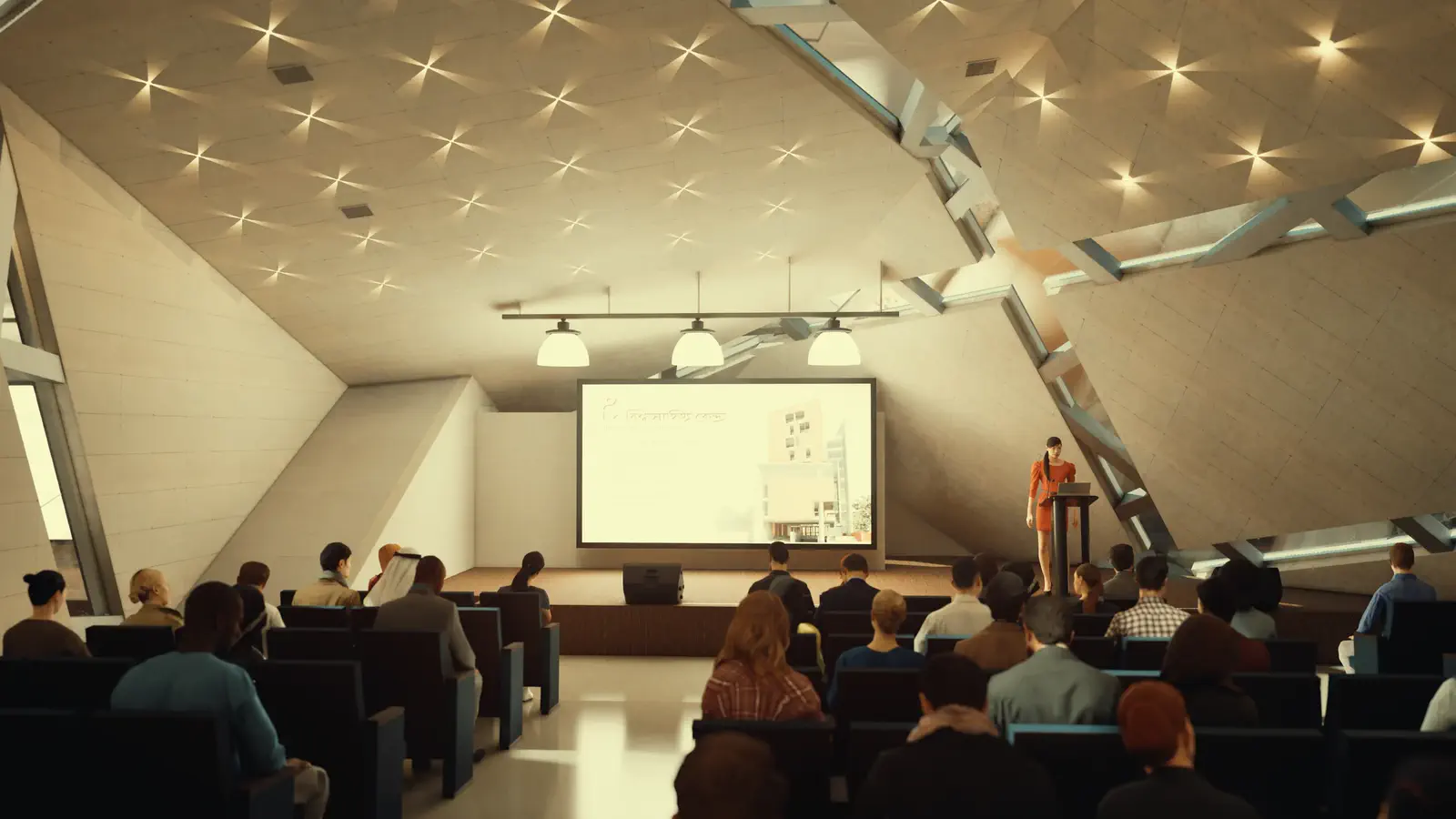 Auditorium
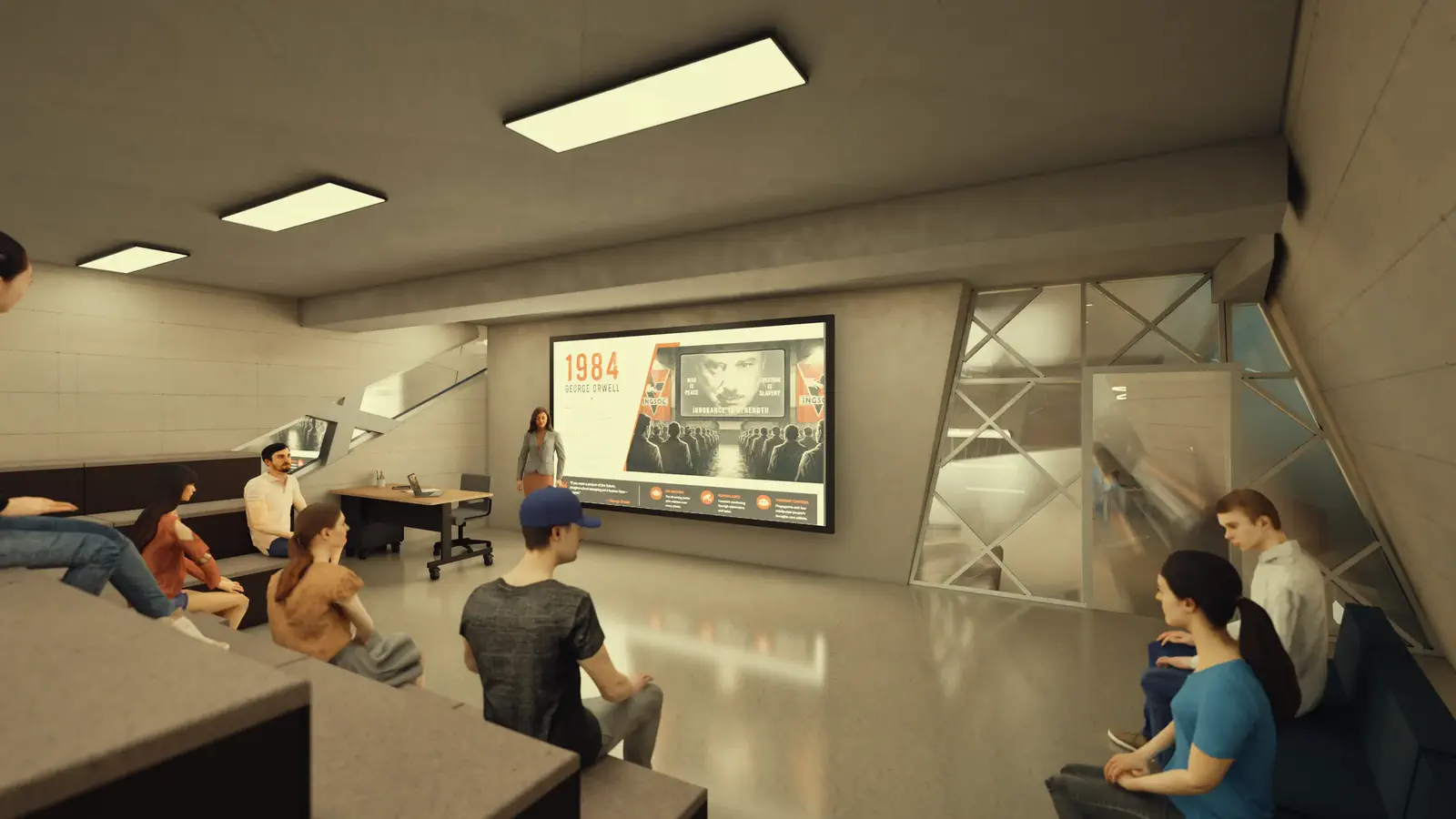 Lecture Room
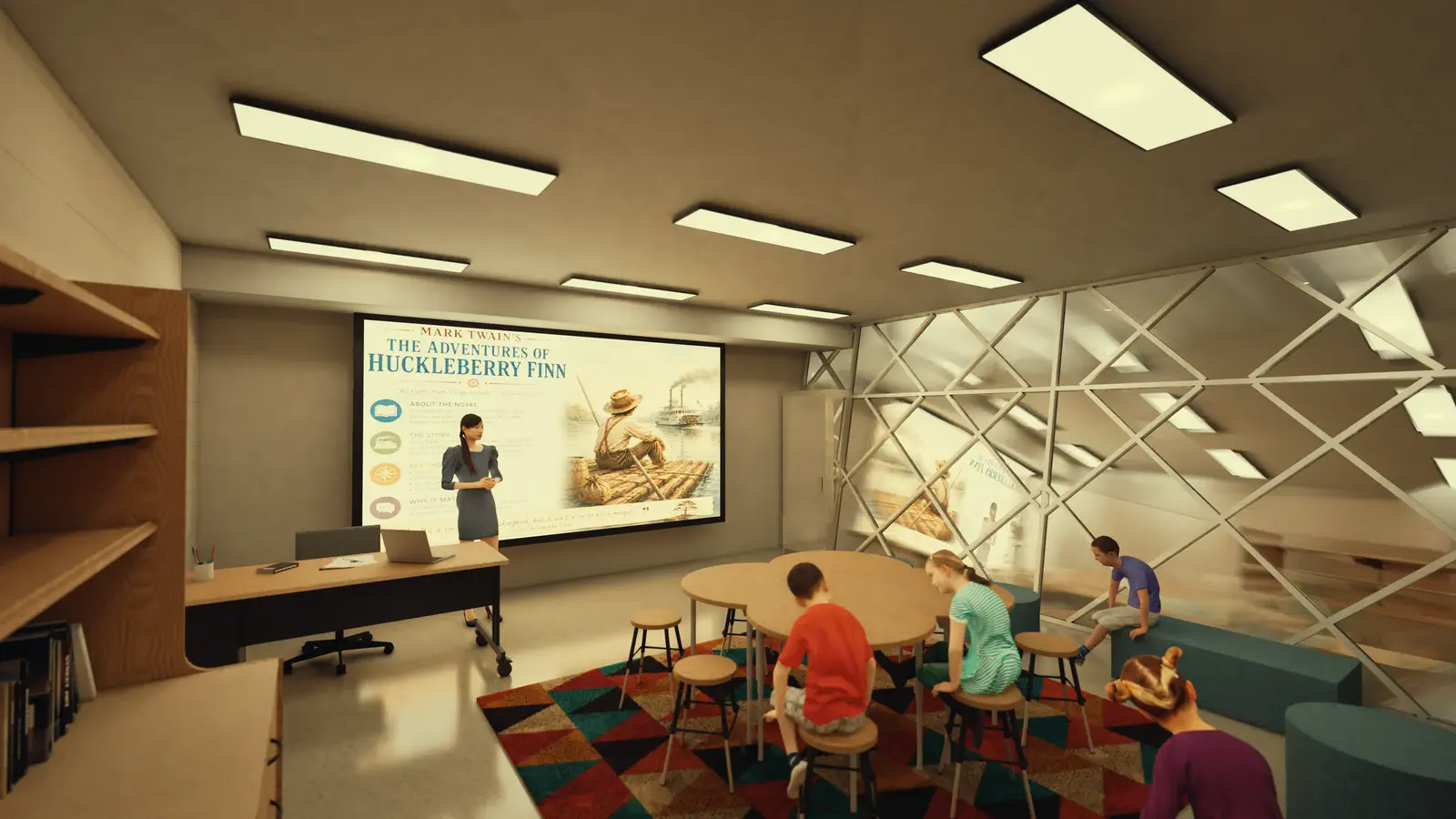 Classroom
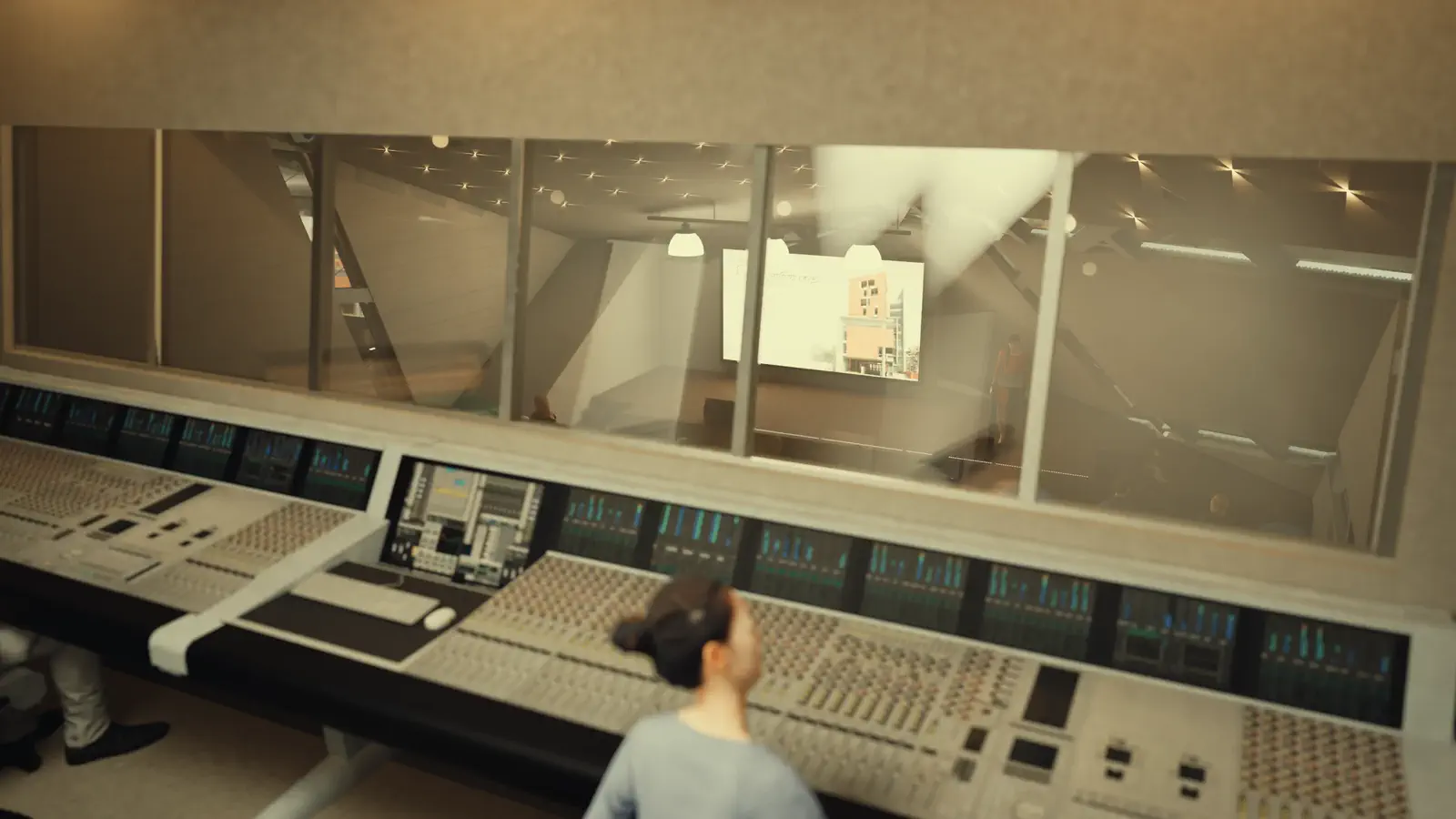 Projection Room
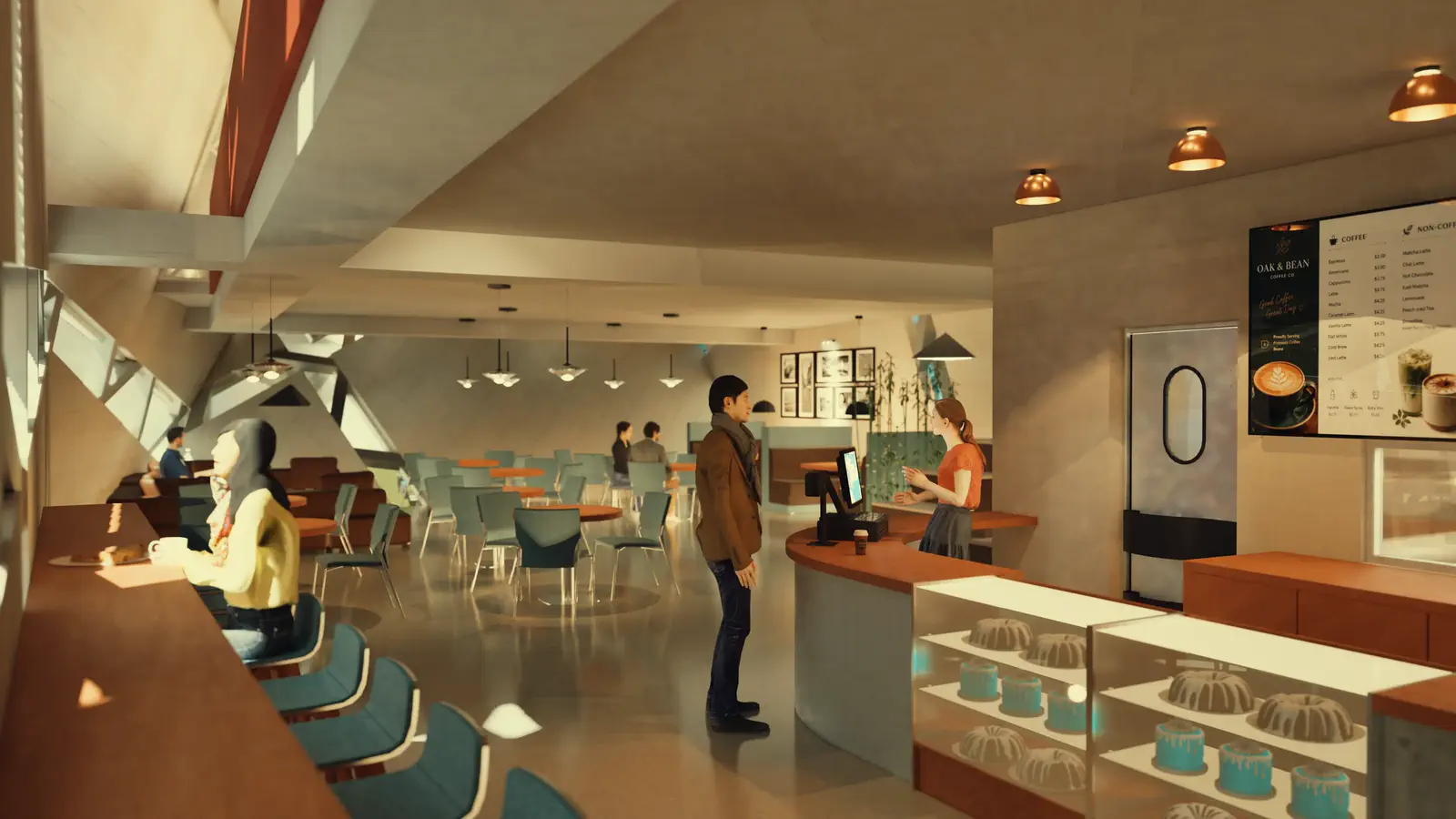 Café
Café
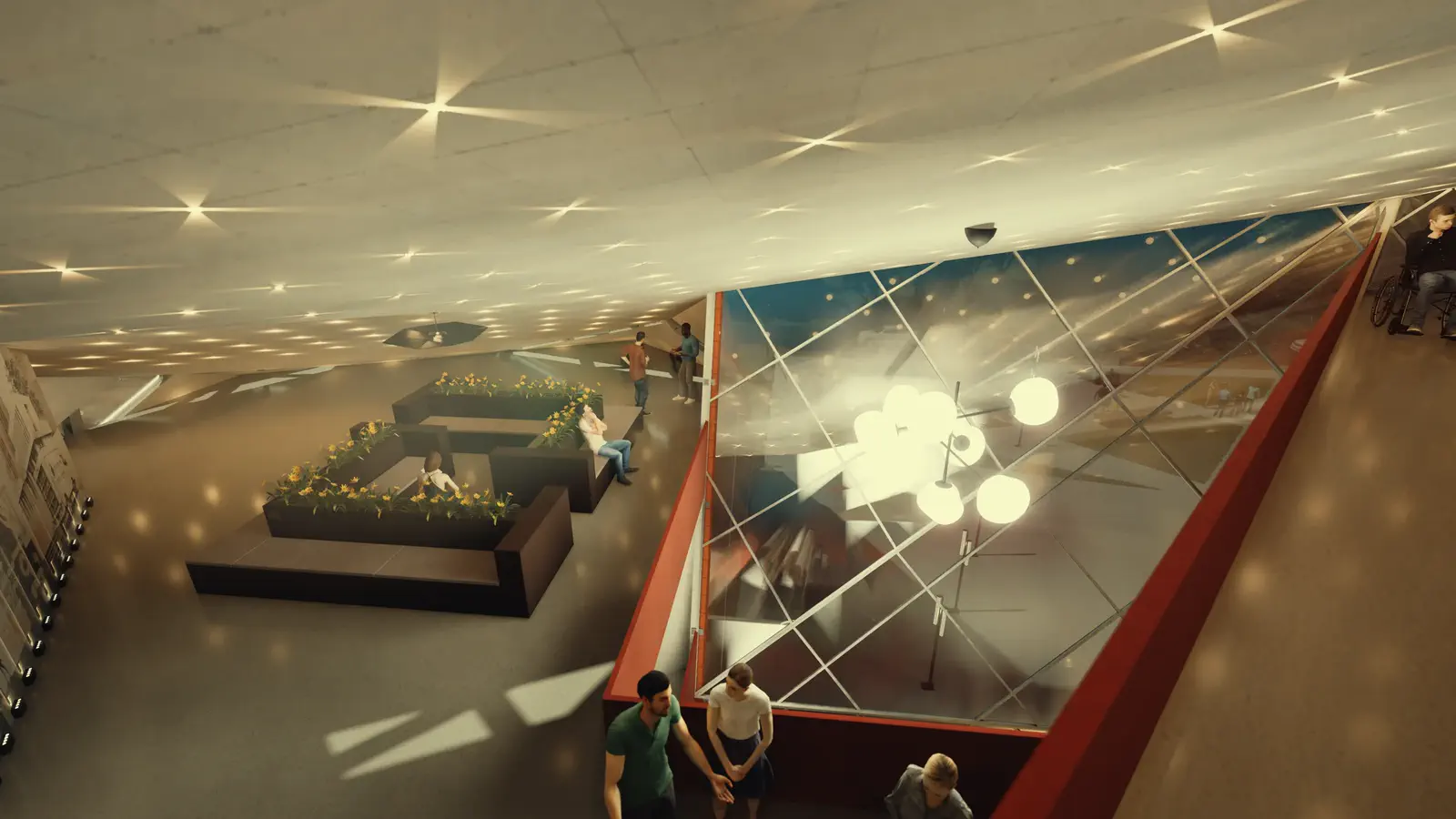 Lounge · Level 3
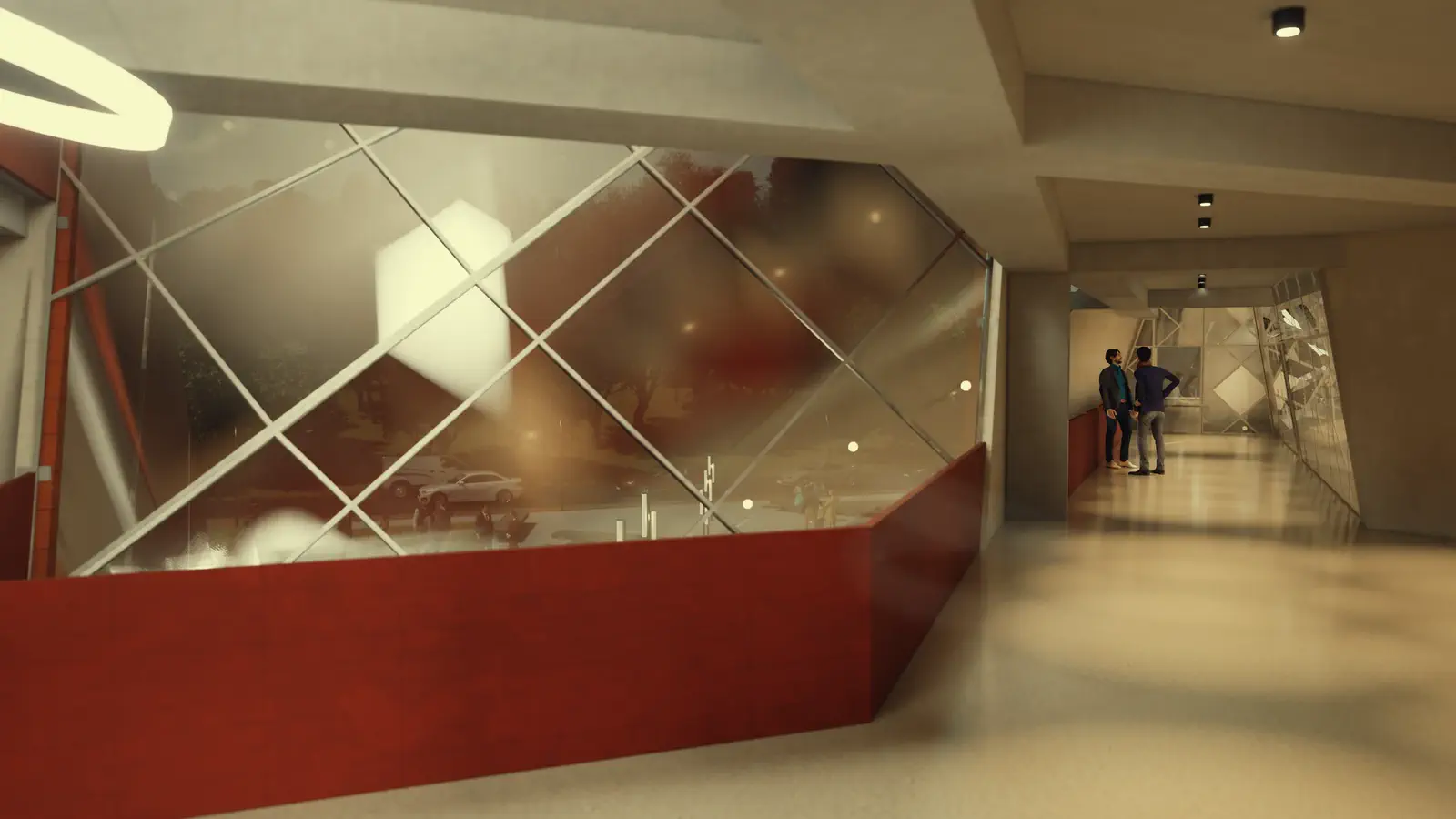 Corridor · Level 2
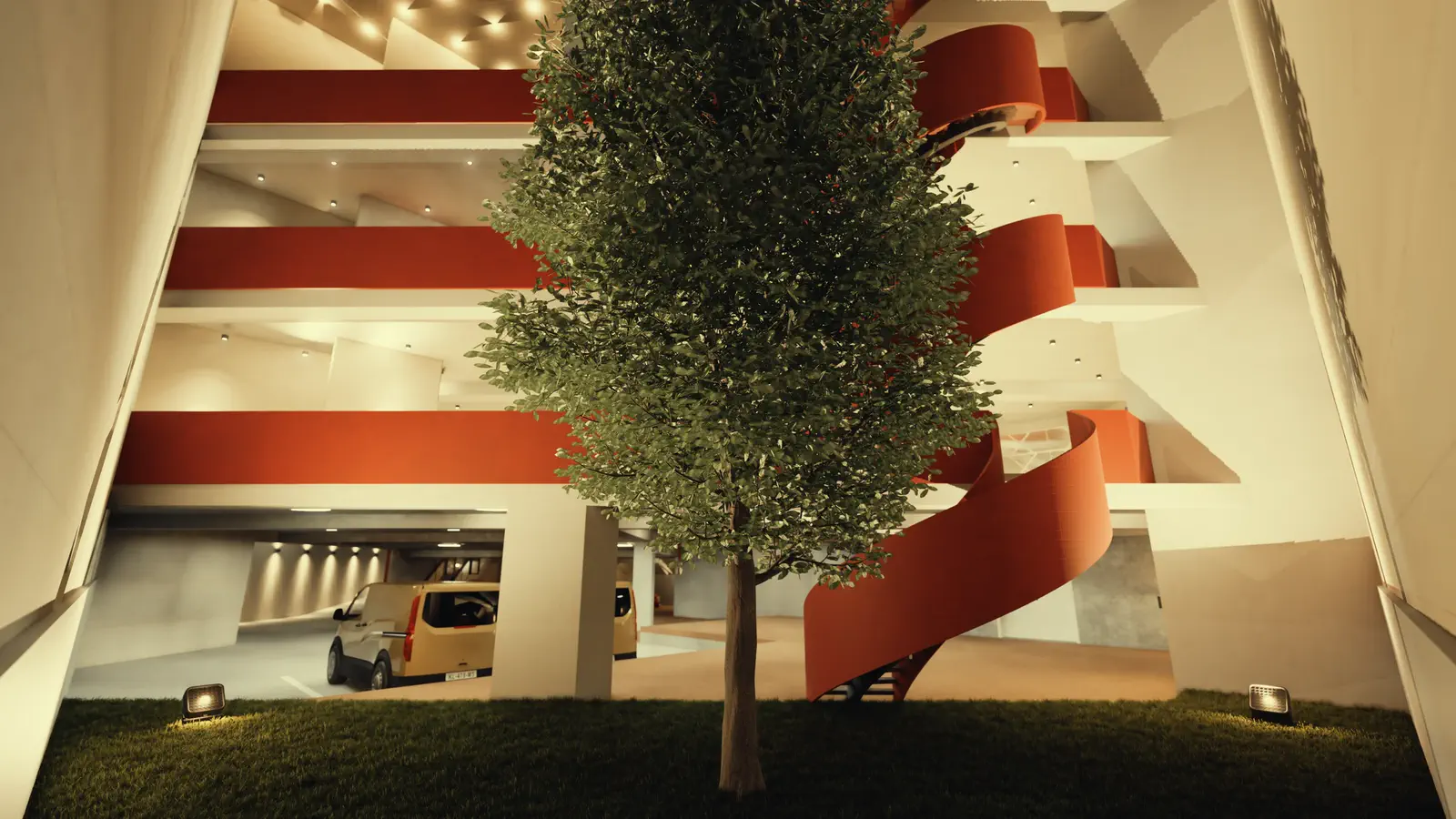 Basement Garden · Circulation Atrium
Drawings
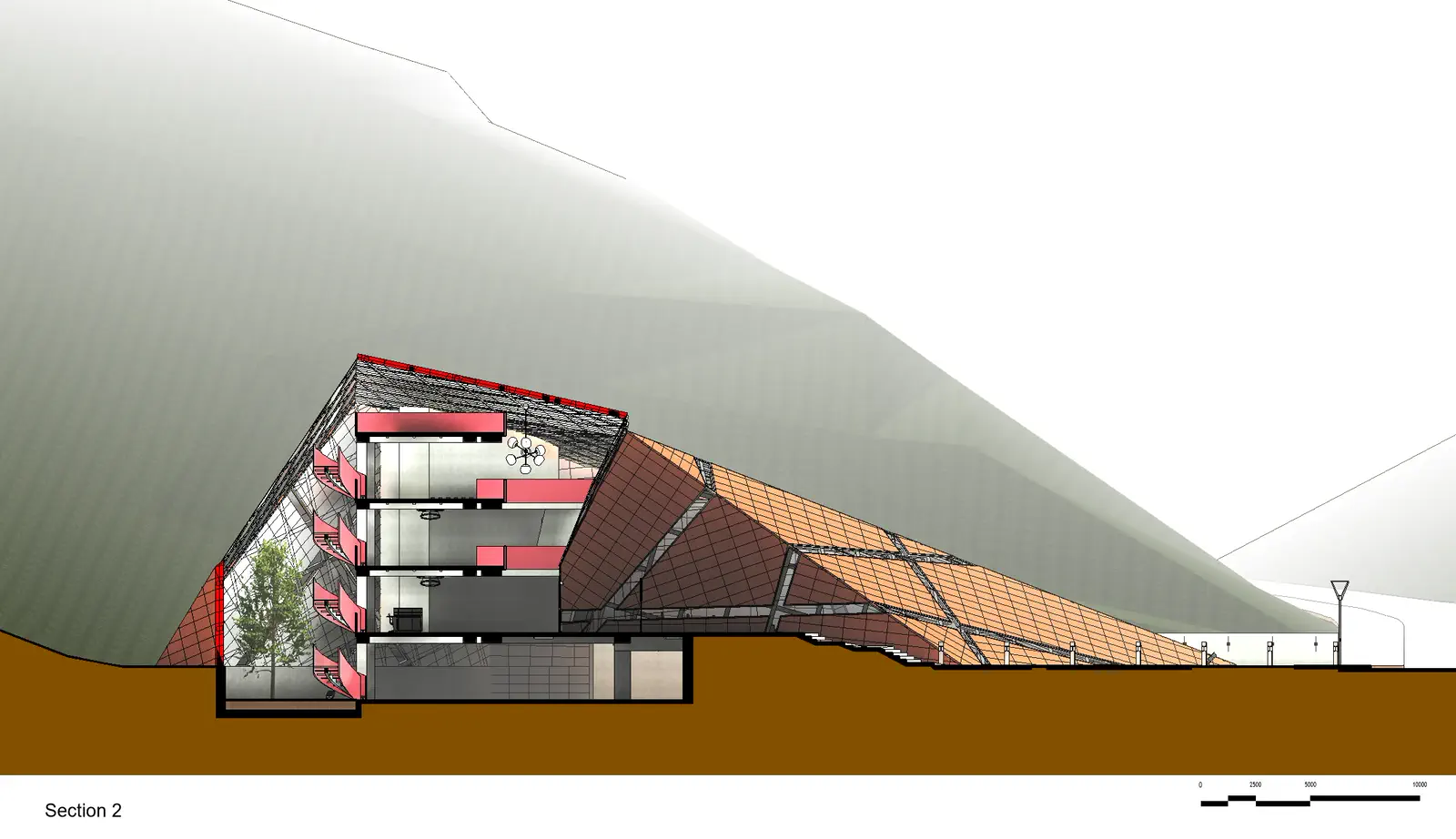
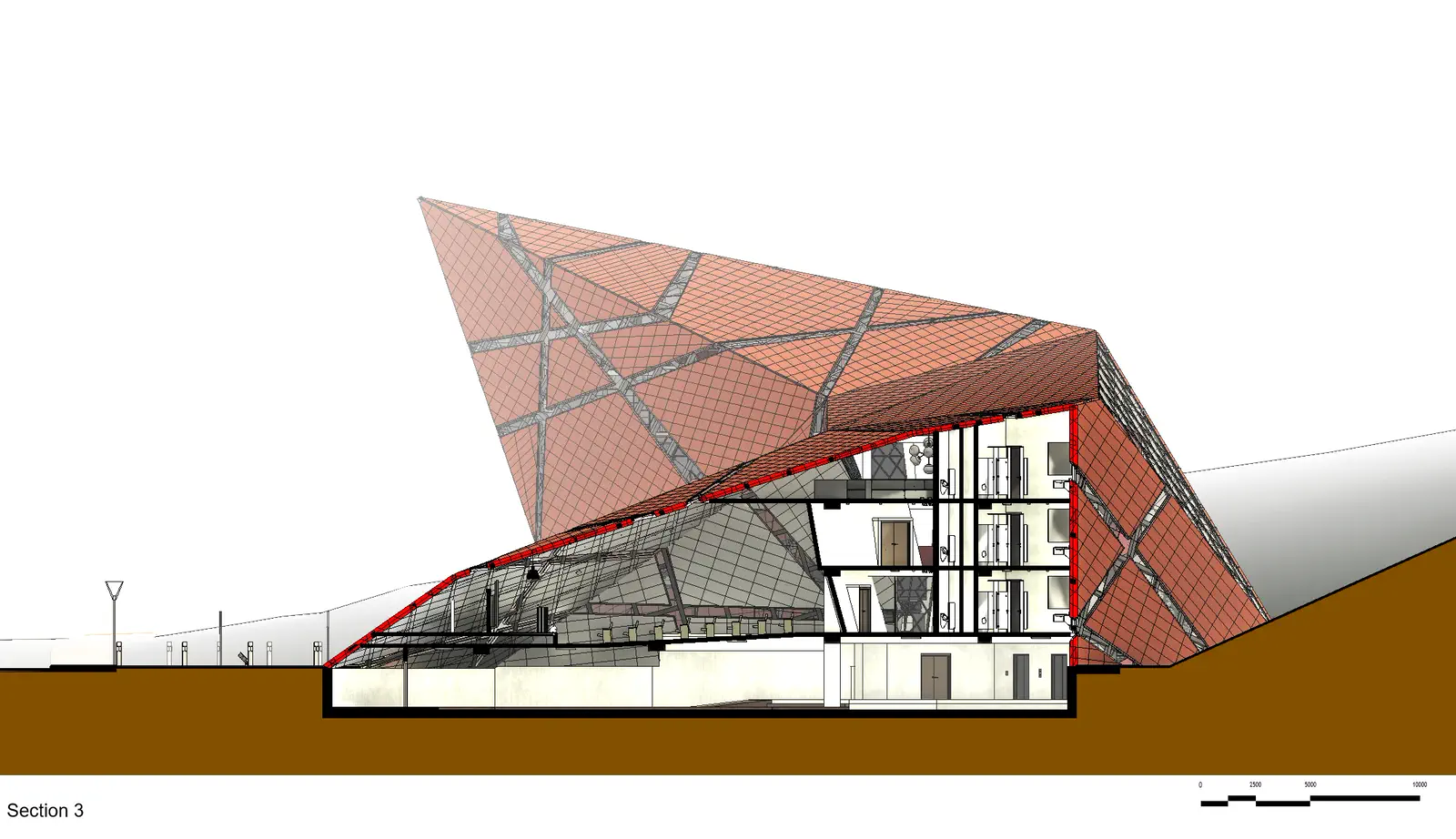
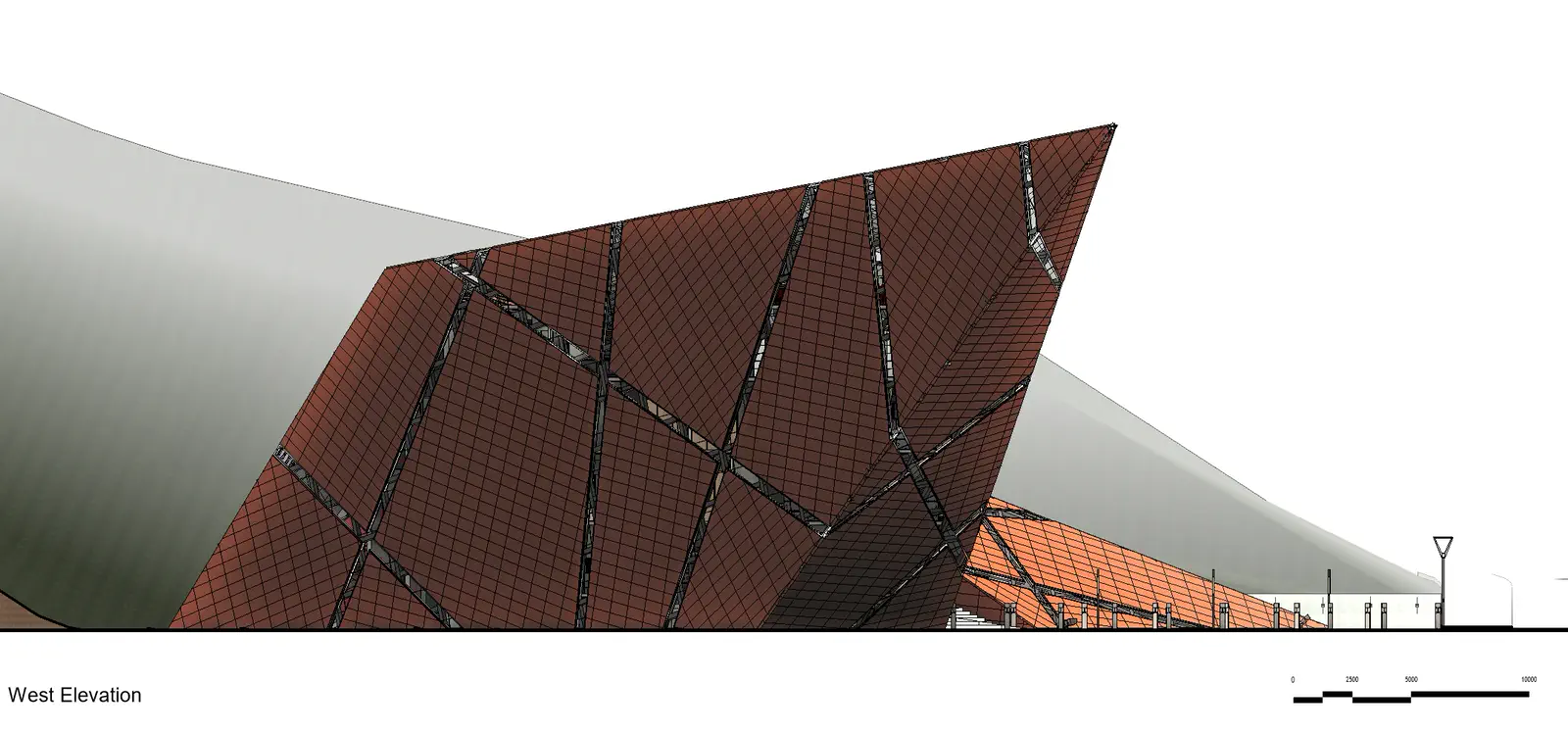
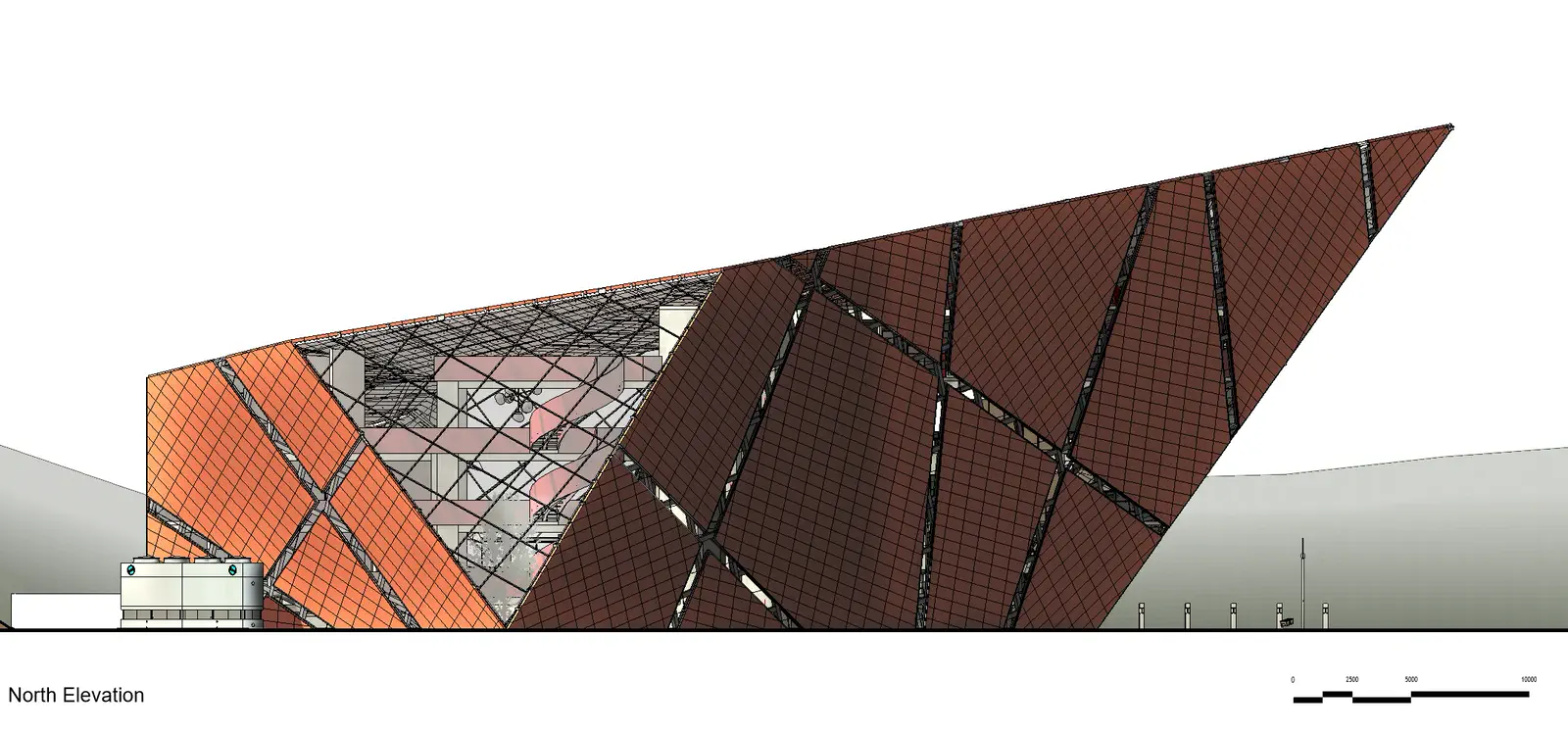
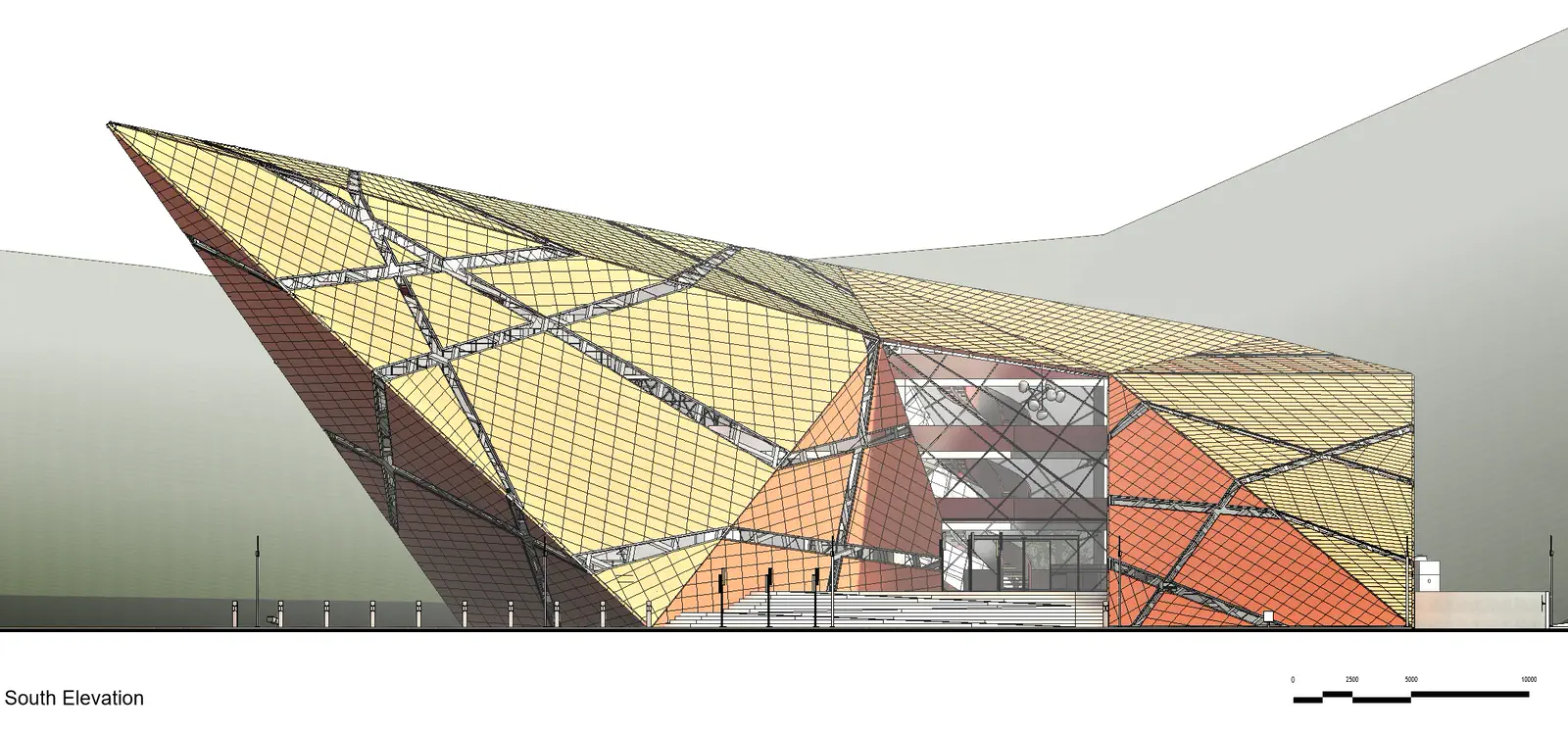
The project was documented in Revit. The plans reveal the triangular vessel footprint and the way programme nests inside the fold; the sections cut through the faceted shell to show how the geometry carries itself; the elevations register the terracotta hull against the hills. The set was re-modelled and re-visualised from the original Studio 2.2 design.