B.Arch Studio 2.2 · UAP · 2013
At the Hearth
of the Real
Mircea Eliade wrote that the home is the place where the chaos of profane space is consecrated into world. The doorsill is not a line on a plan; it is the edge of the ordinary. To dwell is to install a centre. To enter is to cross. The fire at the middle of the dwelling, the hearth, is the axis around which the rest of the cosmos arranges itself.
The studio gave a brief: design a home for an architect. The answer began before any line was drawn, with an X-Ray Study: eight pages of citations and diagrams asking what a home is, ontologically, before asking what one looks like. Eliade on sacred space. Zumthor on the brass door handle of his aunt's house, shaped like the back of a spoon, that taught him architecture before he had a word for it. The Vastu Purusha Mandala mapping the cosmos onto a square of ground. The principles of Feng Shui. Mowla's diagrams of the Bengali bari, its courtyard cradled at the centre, its verandahs negotiating with the monsoon. Each was a way of saying the same thing differently: home is not a programme; it is an orientation.
The project's name is a small substitution. Eliade's phrase is "at the heart of the real". This residence keeps the cadence and changes one letter. The shift from heart to hearth pulls the question out of metaphor and back into matter, where the architect must answer it. Where the heart abstracts, the hearth burns. Where the heart symbolises, the hearth warms. The home becomes the place where the real is not contemplated but kindled.
The site is an 18,800 square foot plot in the Rangamati District of Chittagong Division, on the hillside above the Kaptai Lake. The ground here does not lie flat; it folds toward water. Section drives plan. Five levels step down the slope, the architect descending through their own dwelling before reaching the lake at the bottom and the sky at the top. The building is south-facing: every window opens toward the Kaptai Lake. The arrival is from above; the procession is gravitational. The house obeys the ground rather than negating it.
Threshold
Zumthor remembers a brass door handle before he remembers architecture. The first architectural fact of any house is the moment of crossing: from the world outside to the world the house has decided to be. Here that moment is articulated as a single framed gesture: a double-height vestibule, an exposed brick face, a calligraphic panel washed by a single downlight. The signature is Bengali, the gesture Eliadean. Beyond the foyer the formal living unfolds, orientated south toward the Kaptai Lake.
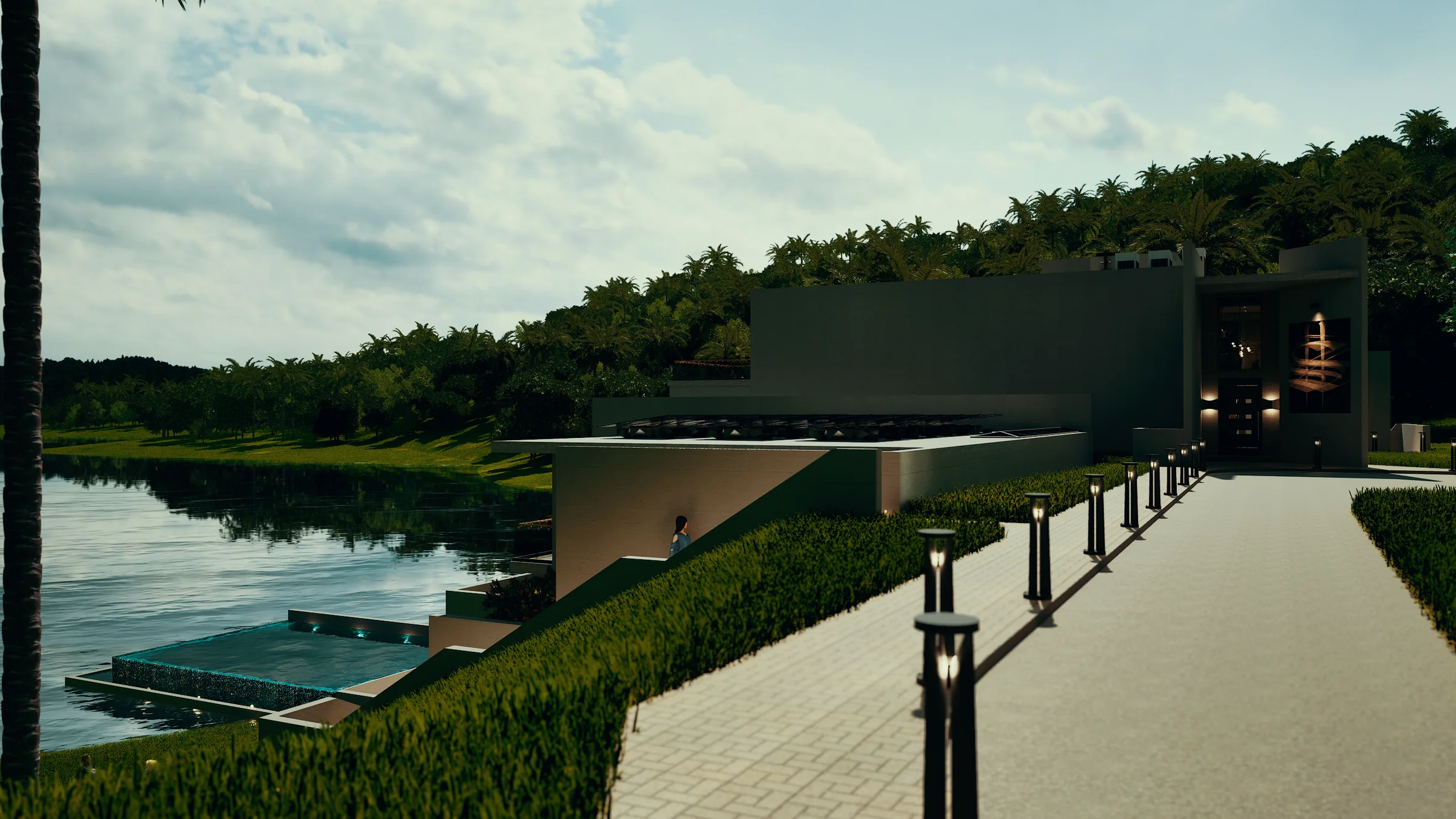 Property Entry
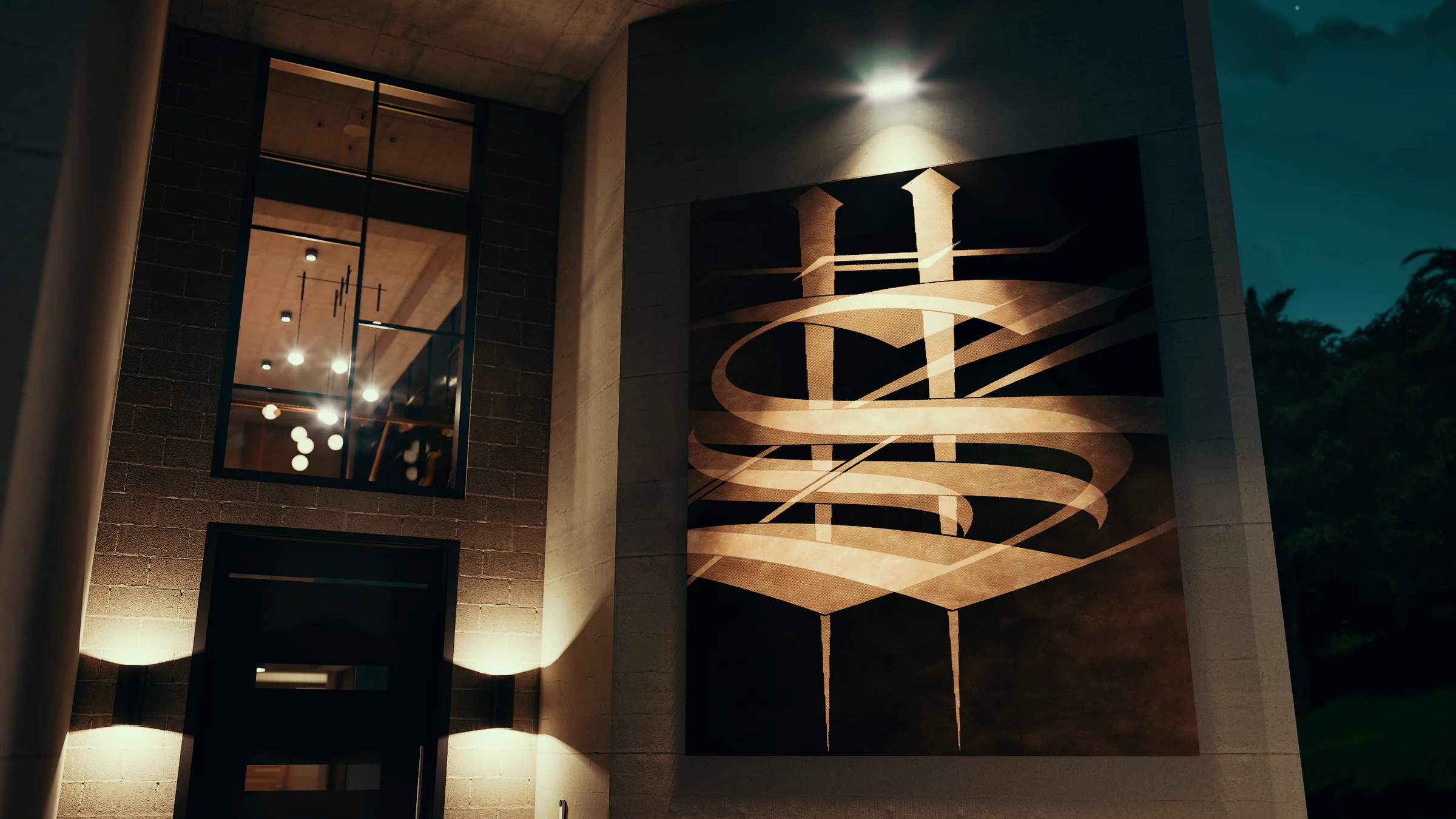 Main Entry · Night
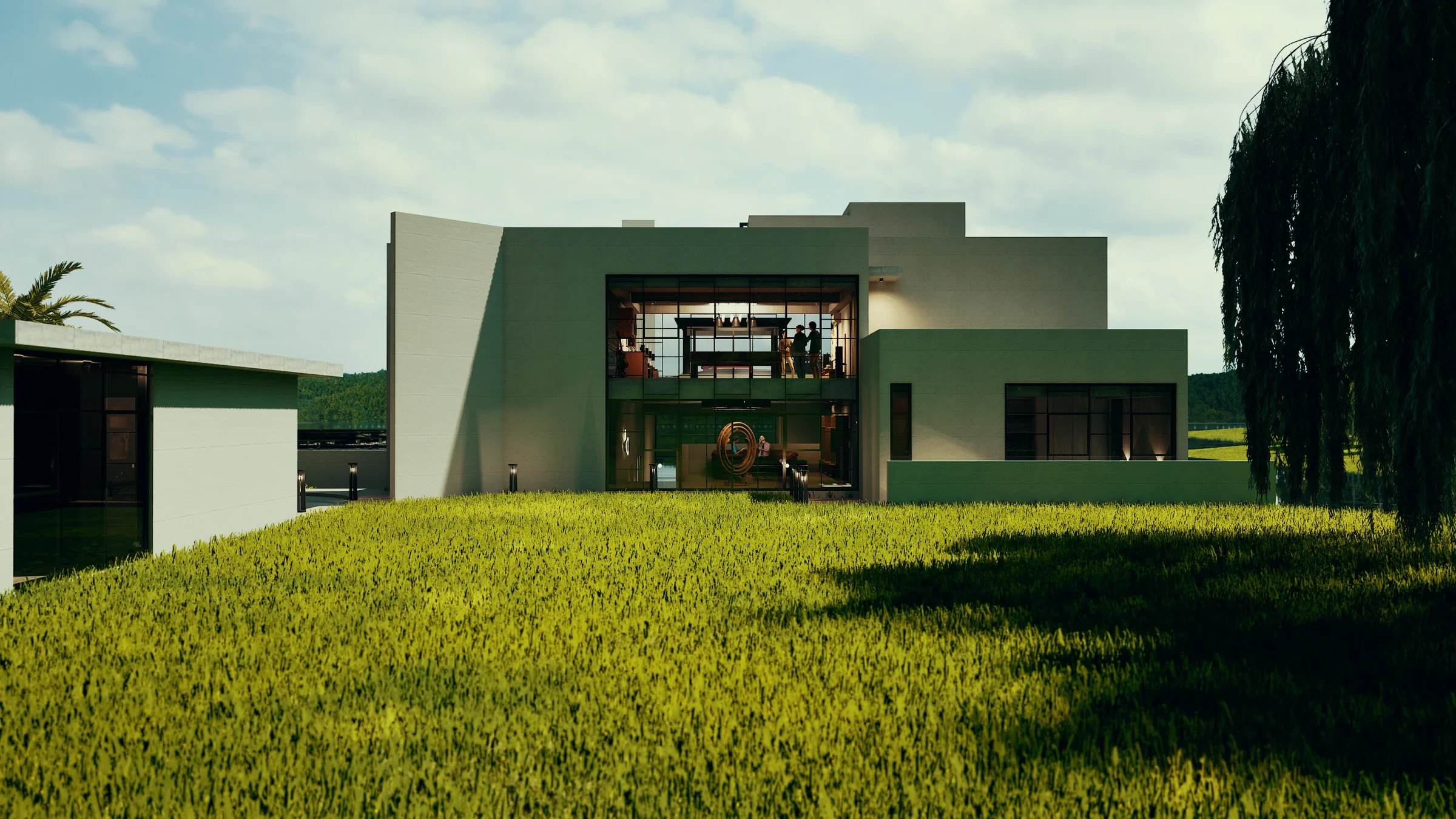 North Façade · Day
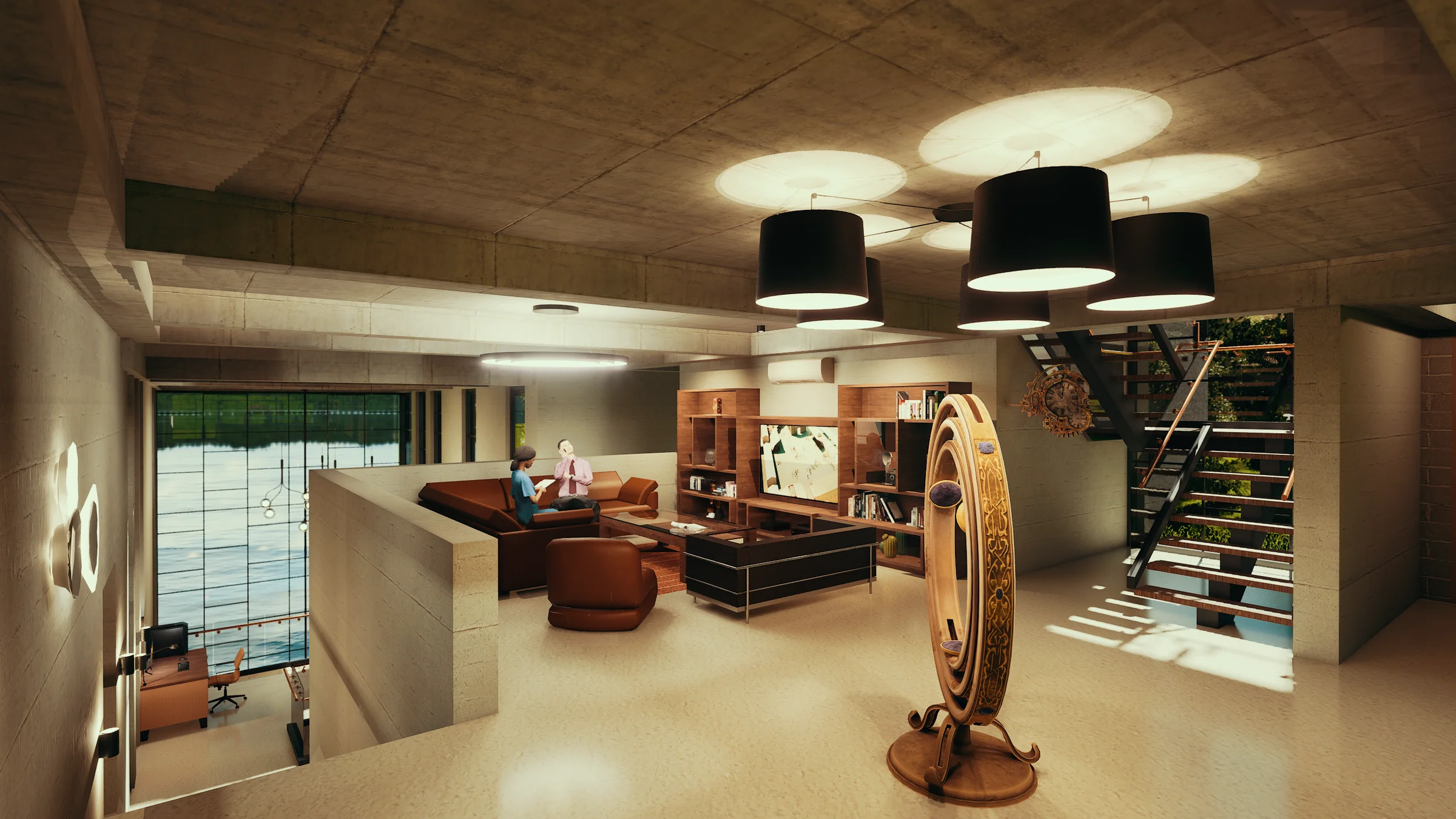 Formal Living from Foyer · Level 4
Section Drives Plan
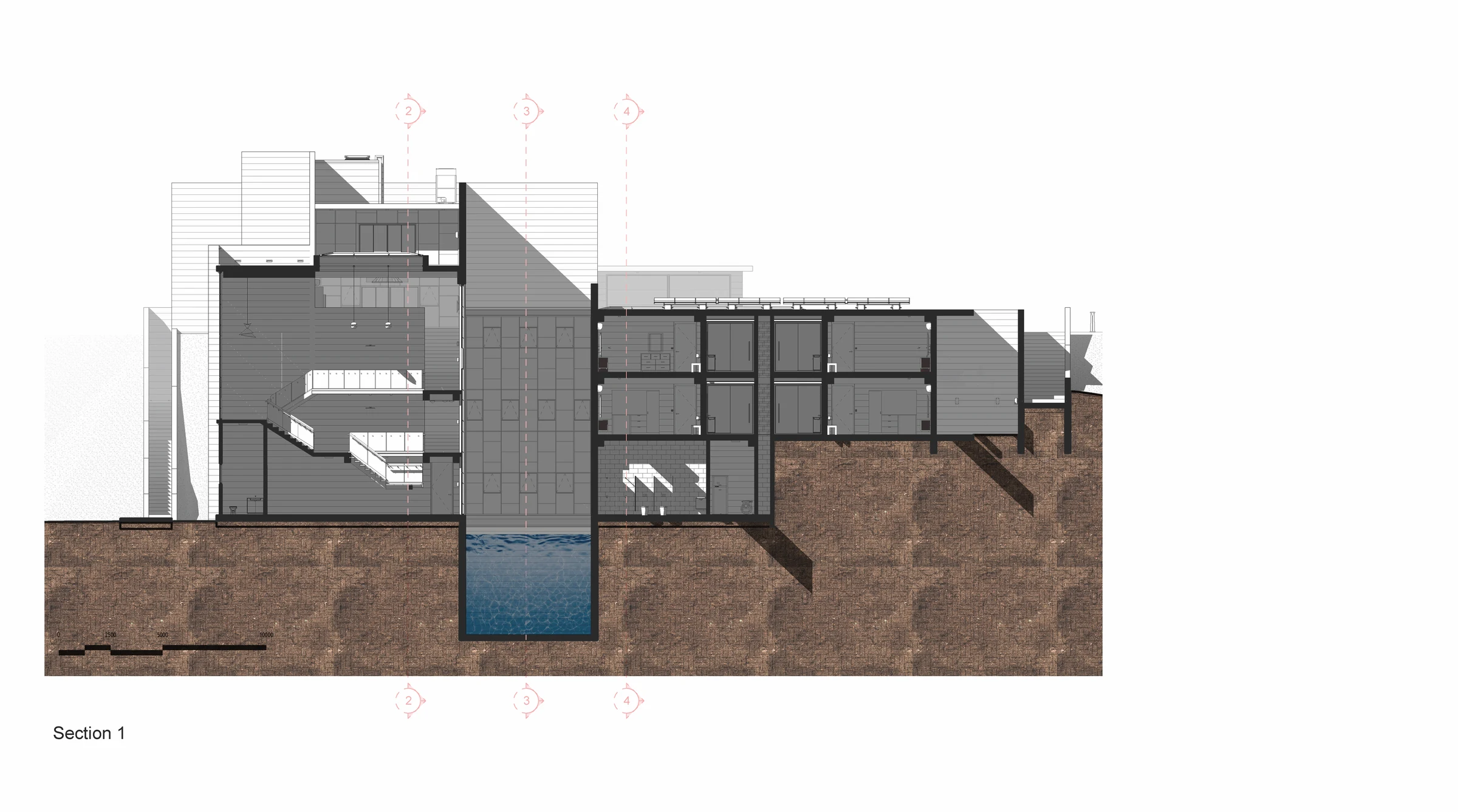
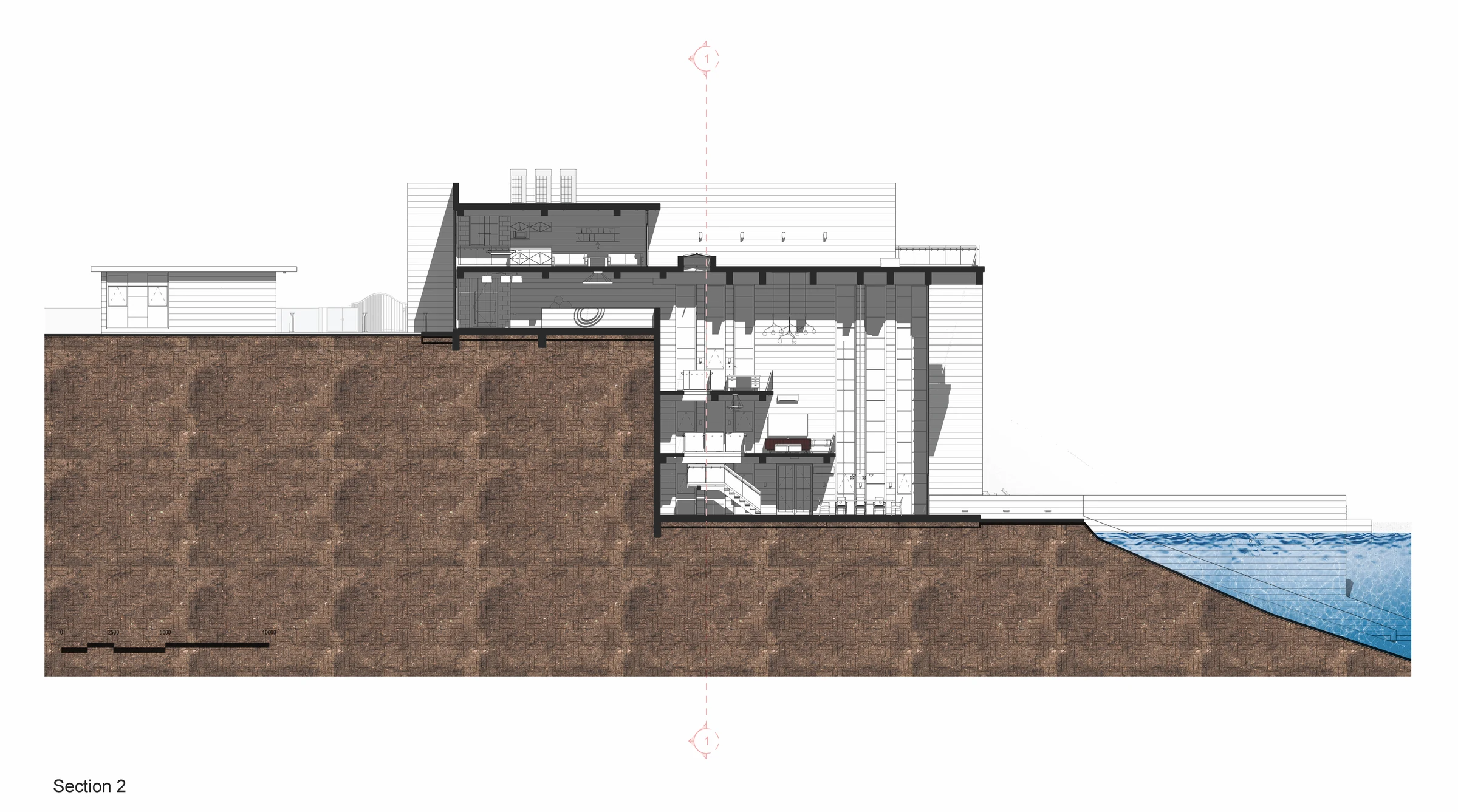
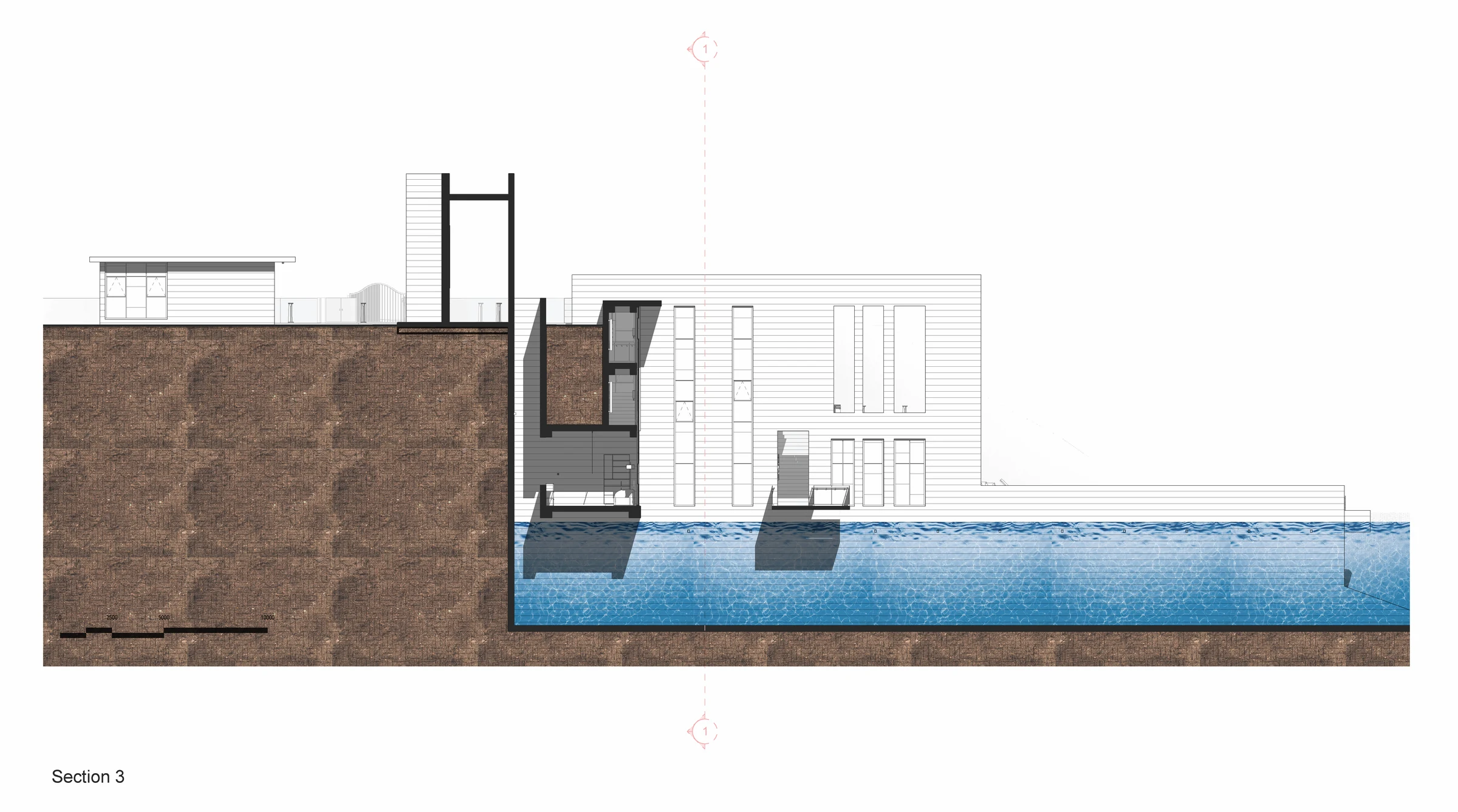
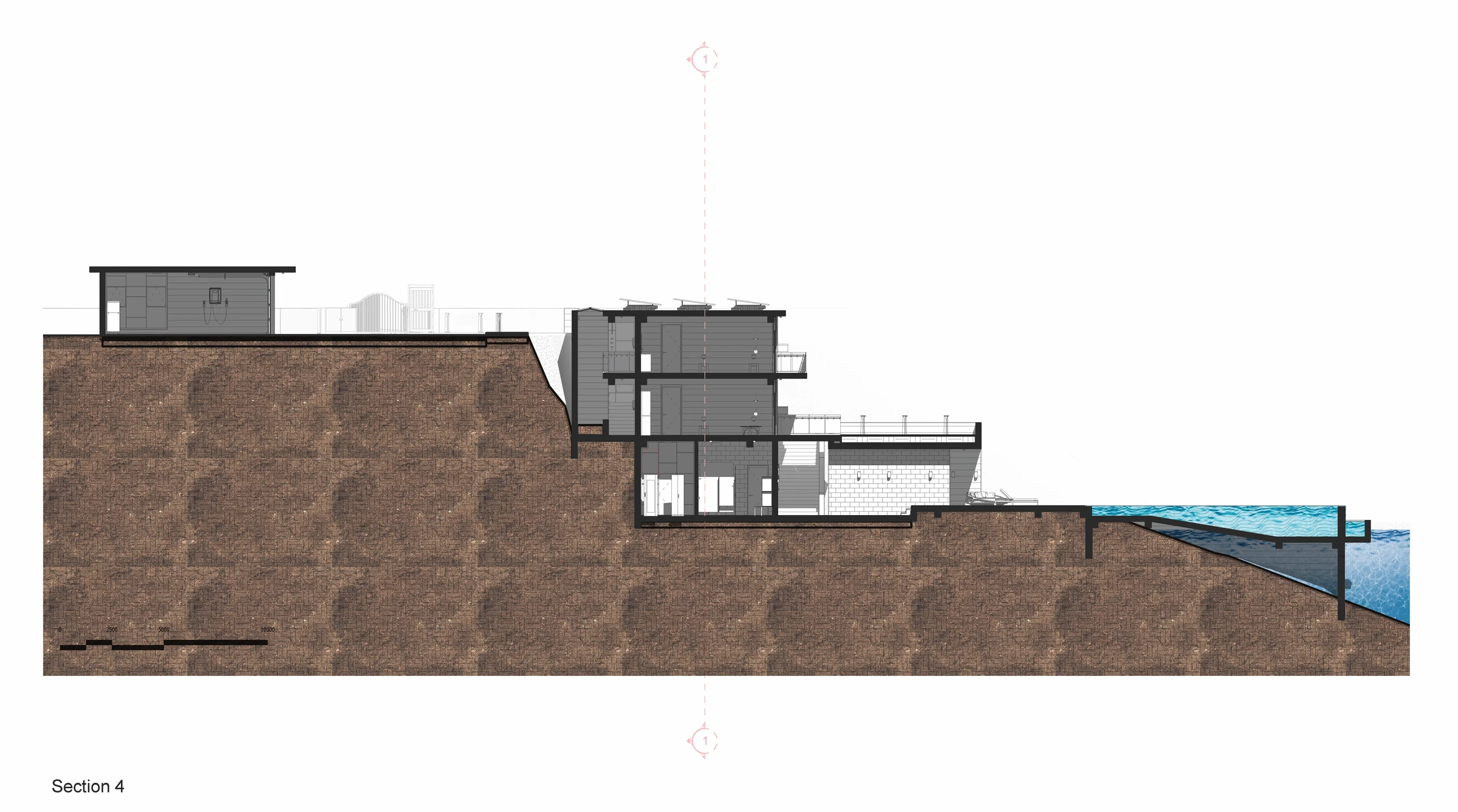
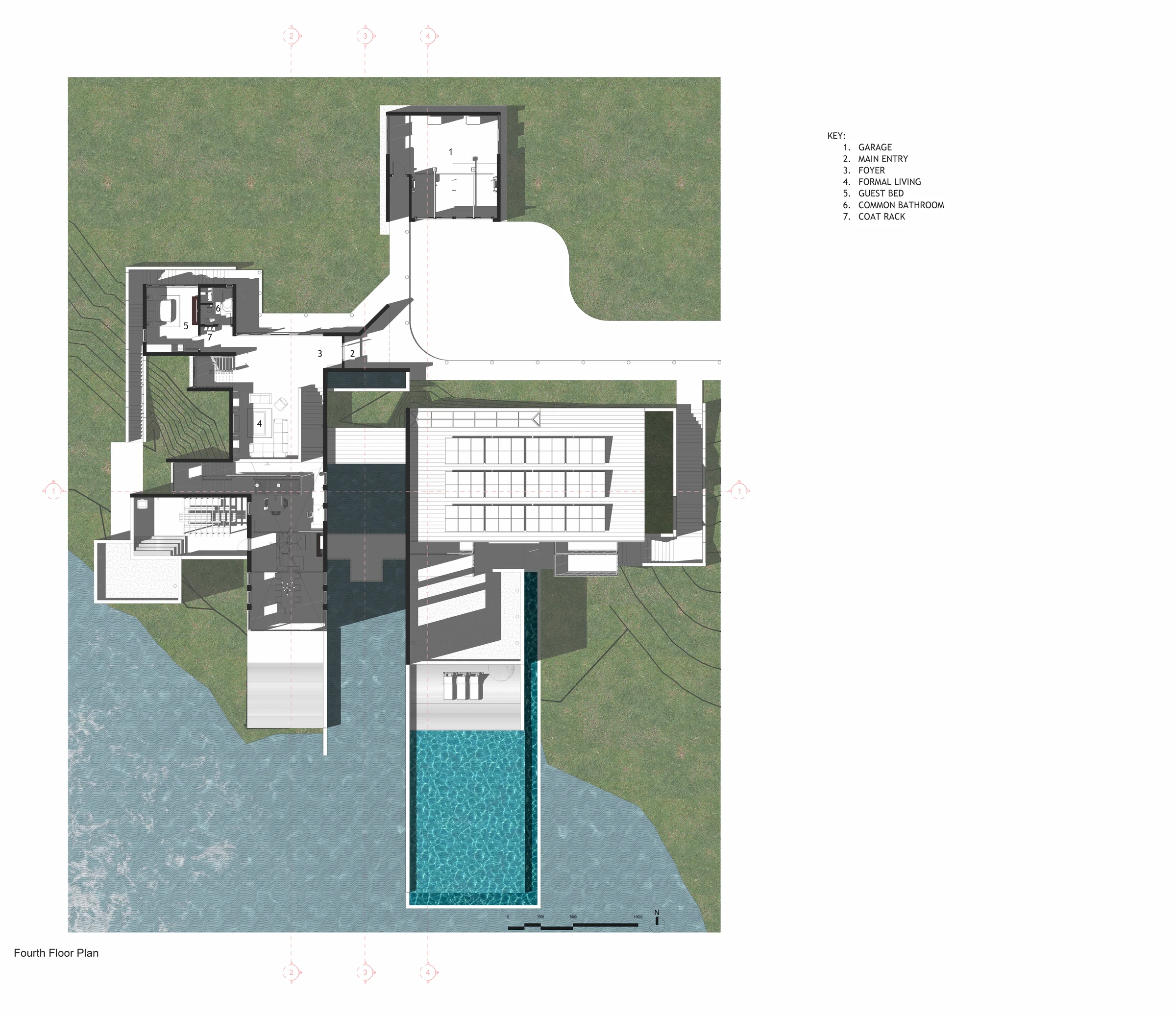
The road meets the upper terrace. The house begins where the ground breaks. From the street, only the topmost level is visible: a garage, a foyer, a formal living, a guest bed. The rest of the dwelling is carved into the slope below. To find the family living room you descend. To find the kitchen, the architect's studio, and the pool you descend further. Only the rooftop climbs back toward sky. The architectural narrative is gravitational: arrival, descent, water; ascent for the view.
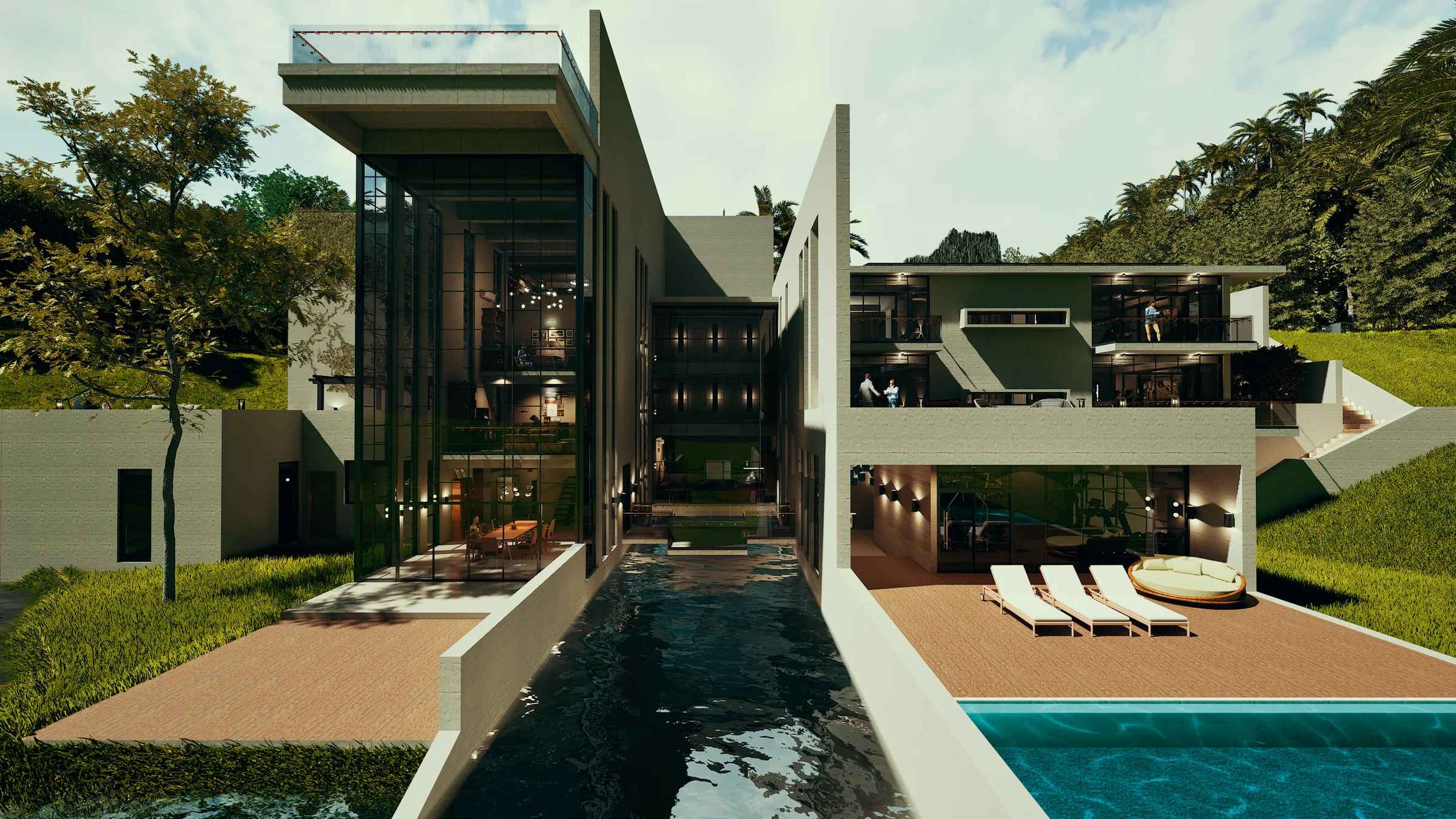 South Elevation from Kaptai Lake
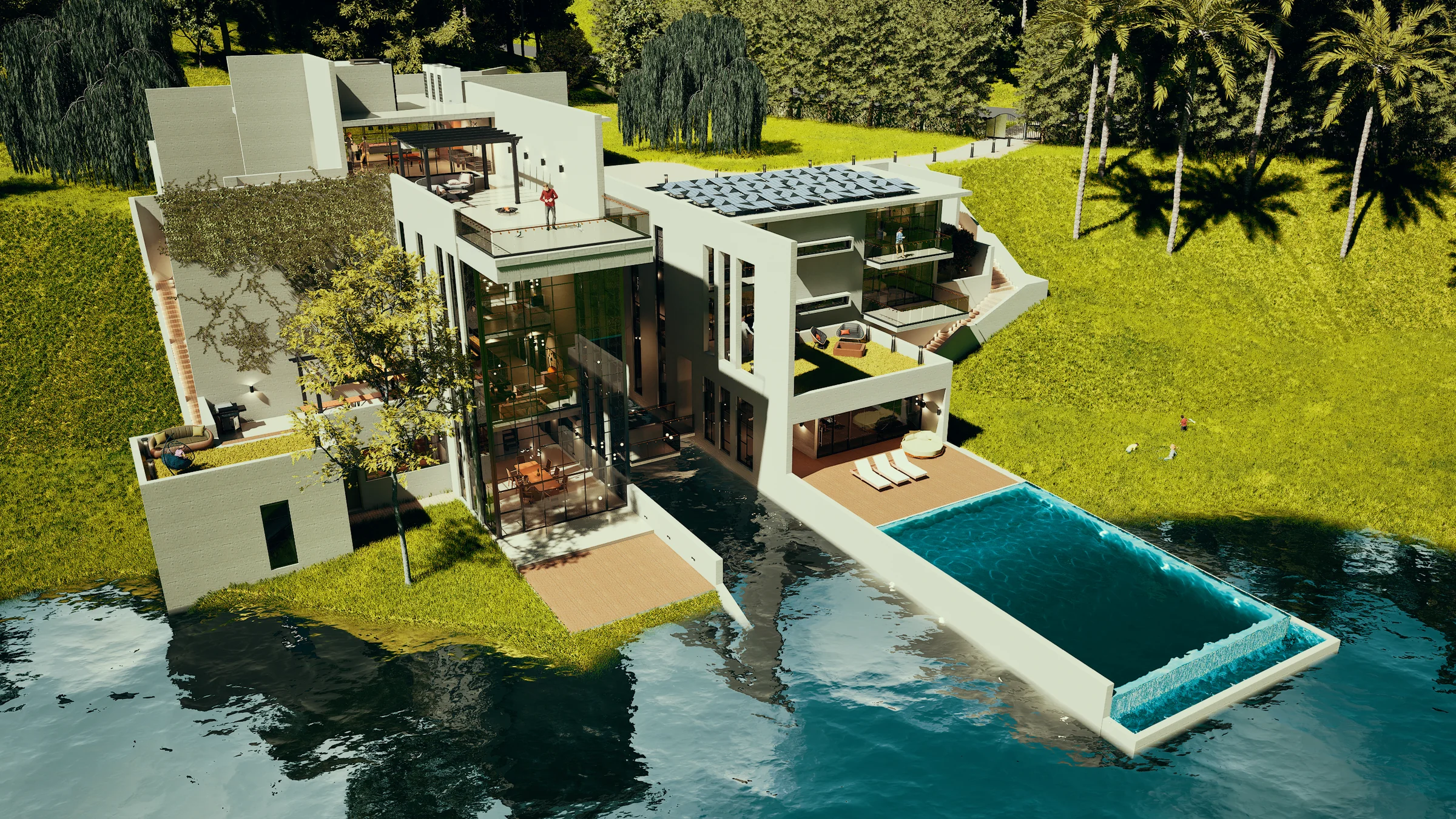 Aerial · Day
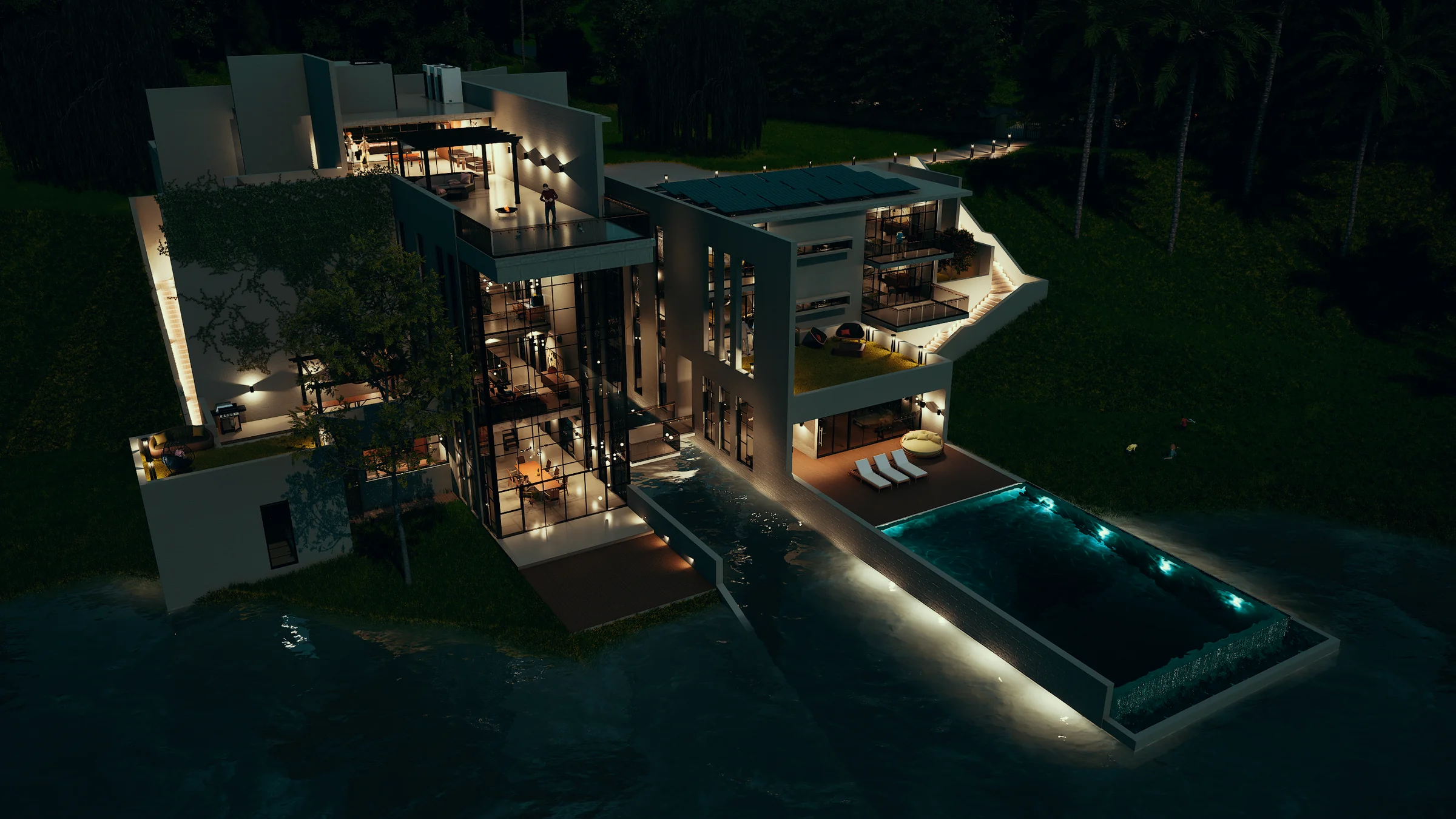 Aerial · Night
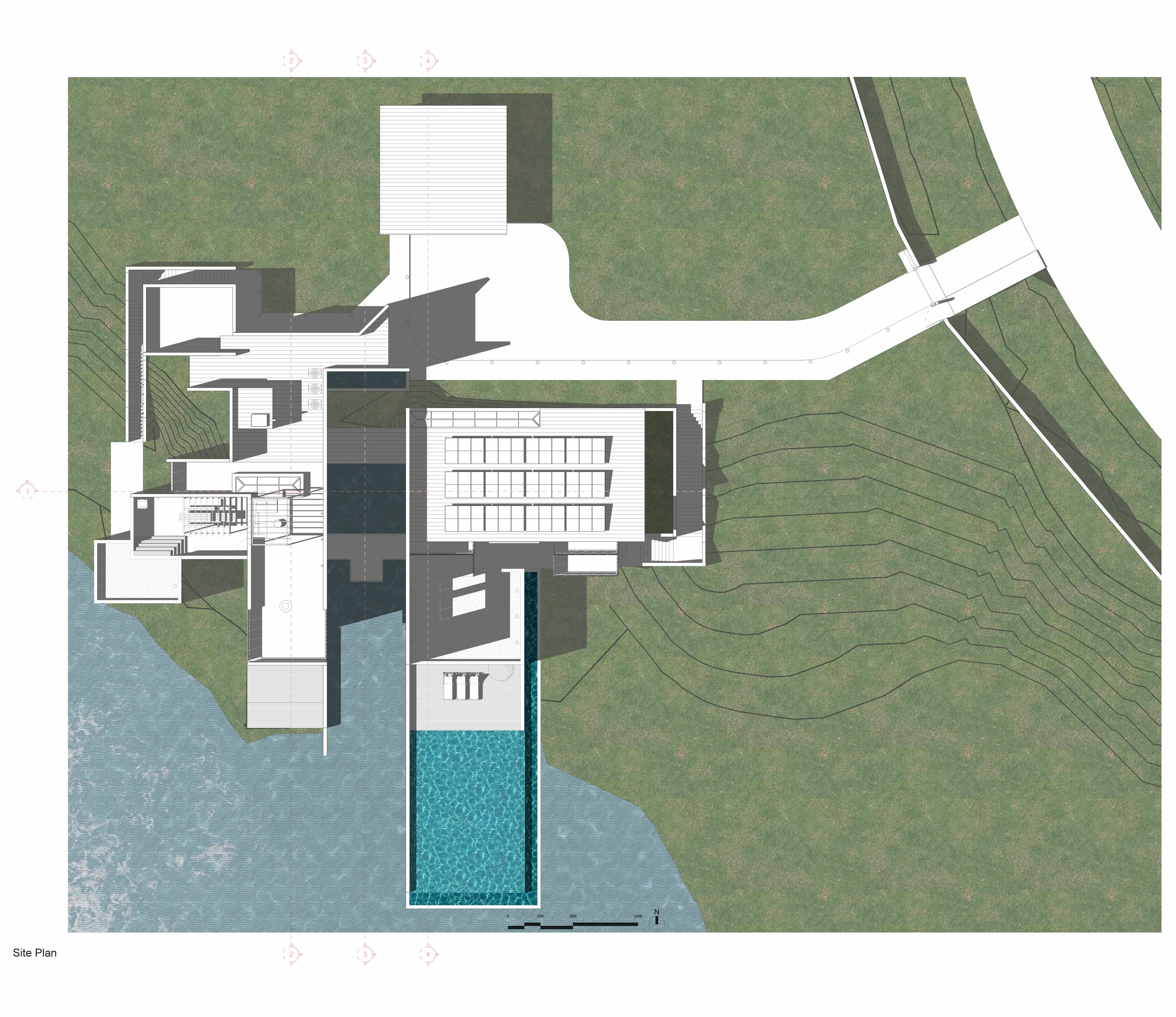
Site, Section
The site plan reads as a single move: a path from the road, sweeping to find the entry, then descending south toward the Kaptai Lake. The four building sections cut at right angles to this descent and document the architectural dialogue with the slope. Each section terminates in either soil or water.
Five Levels
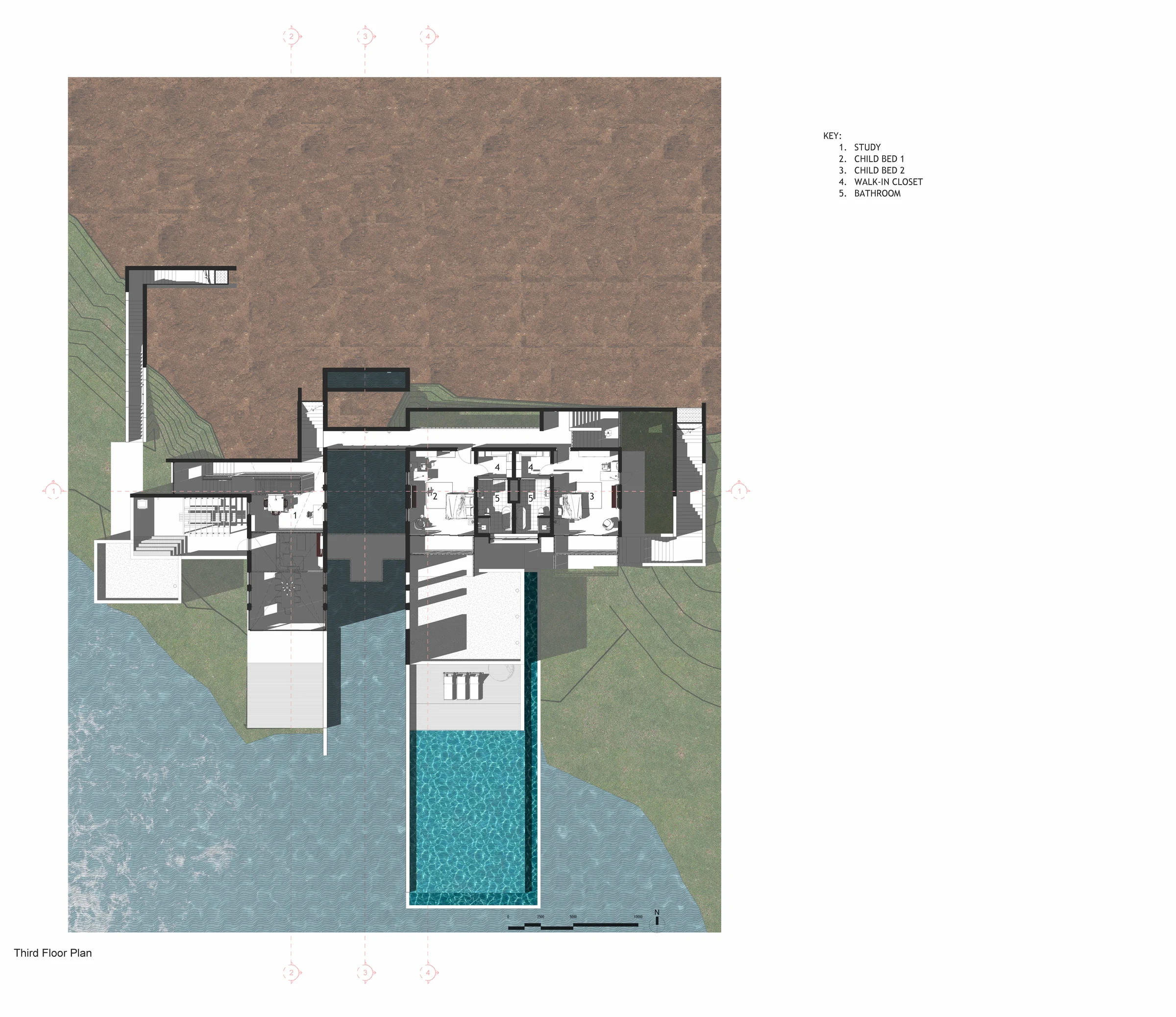
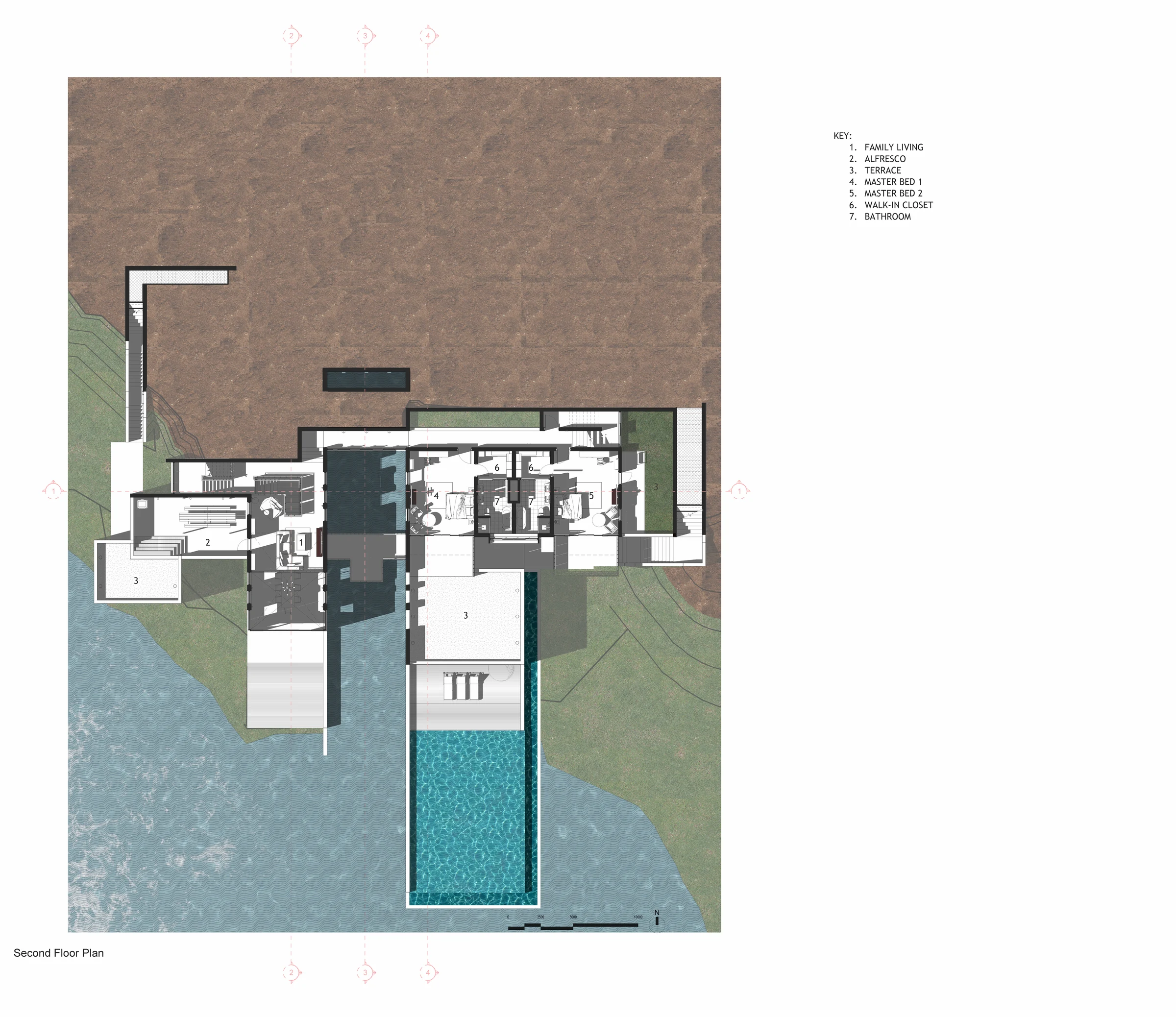
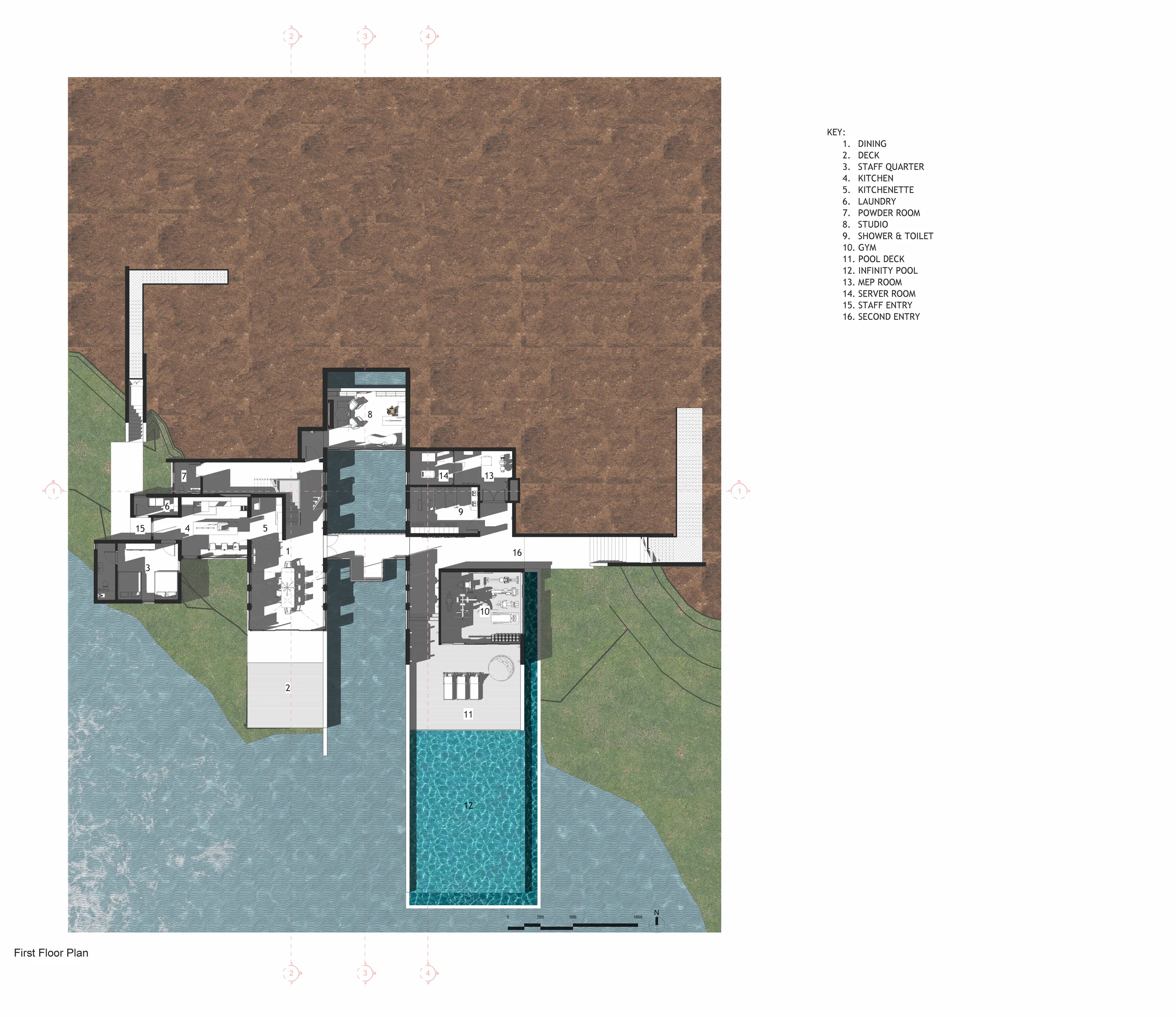
One floor for arrival. One floor for the children's bedrooms and their study. One floor for the family. One floor for the kitchen, the architect's studio, and the water. One floor for the rooftop. The order is the order of the hill, not of the programme. The programme accommodates.
The Public Heart
The shared rooms face south. The four-storey window on the Kaptai Lake is the defining vertical gesture of the project: dining at the bottom, family living above it, children's study above that, formal living at the top. Each level opens onto the same sky and the same water through the same aperture. The atrium between them is a vertical room in its own right, the home's interior threshold.
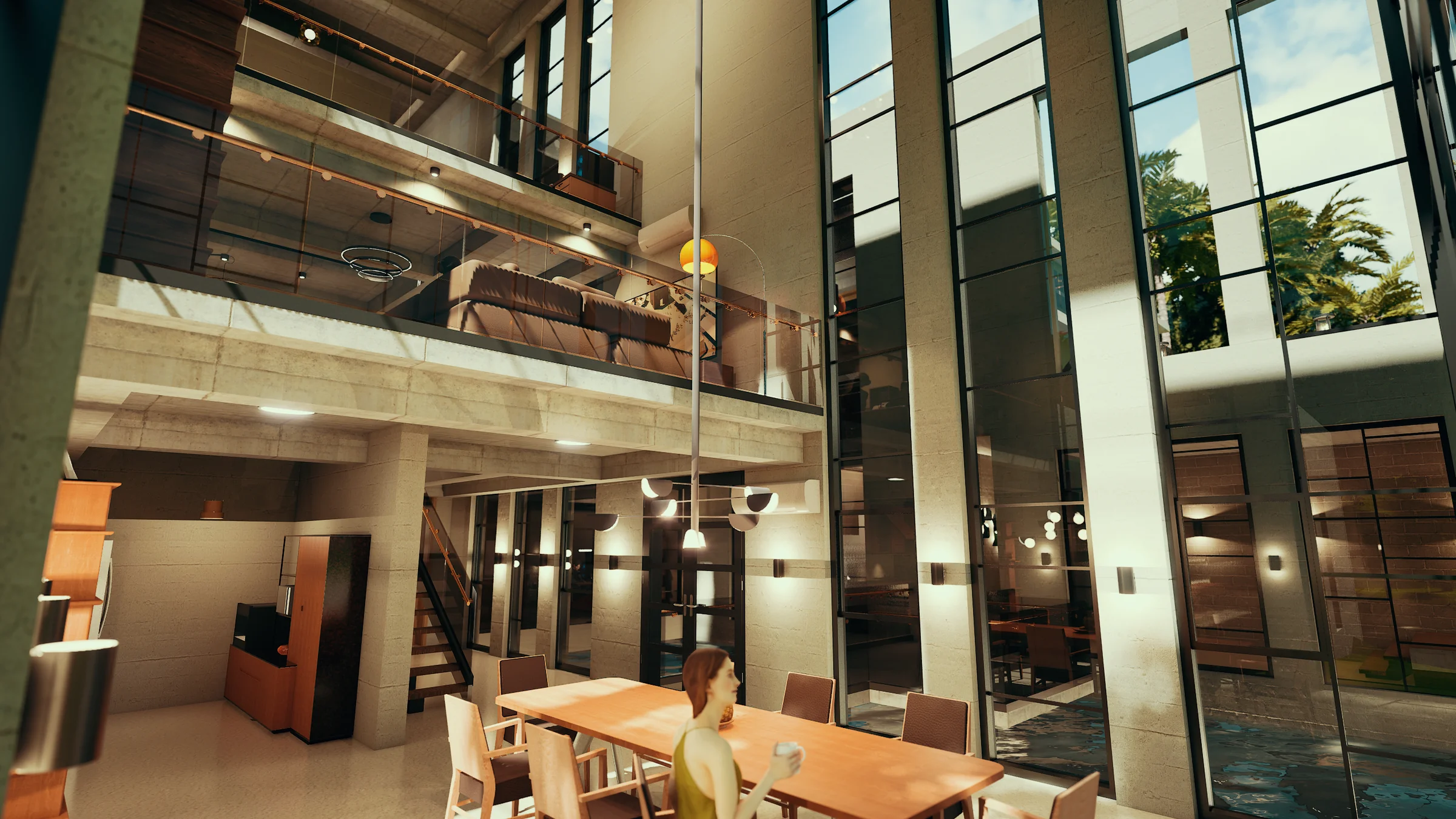 Four-Storey Atrium · Dining to Formal Living
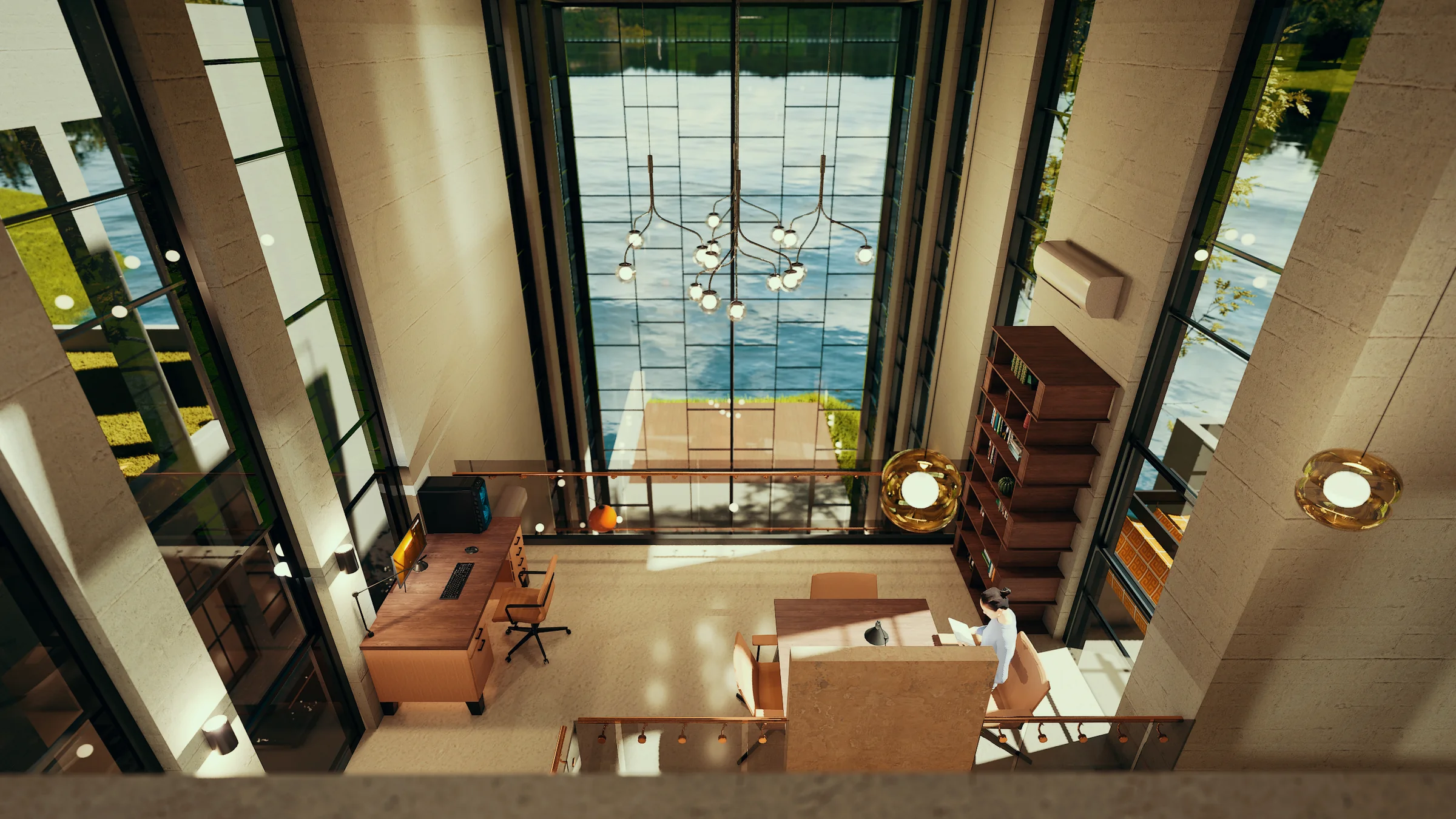 Children's Study · Level 3
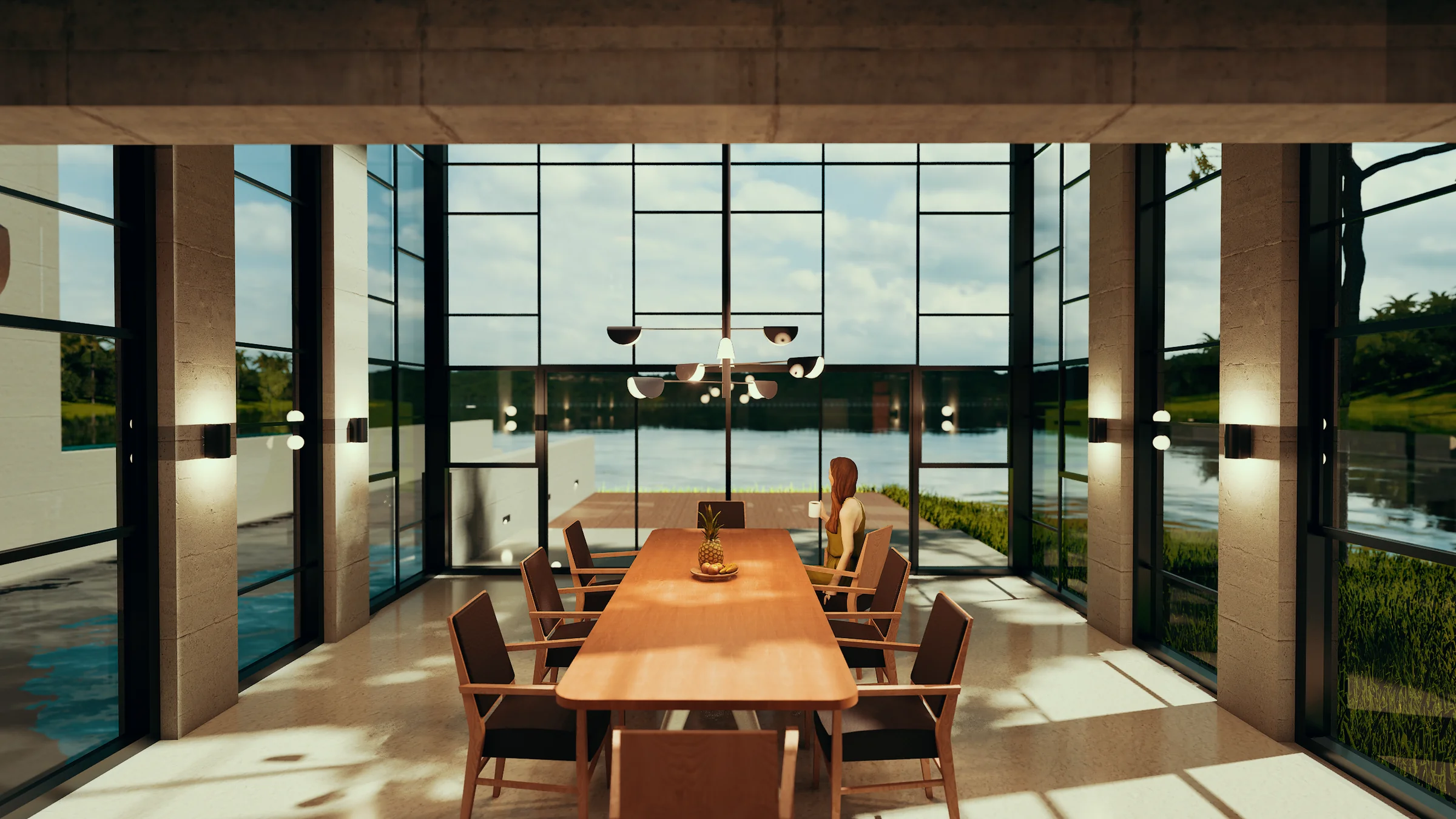 Dining · Level 1
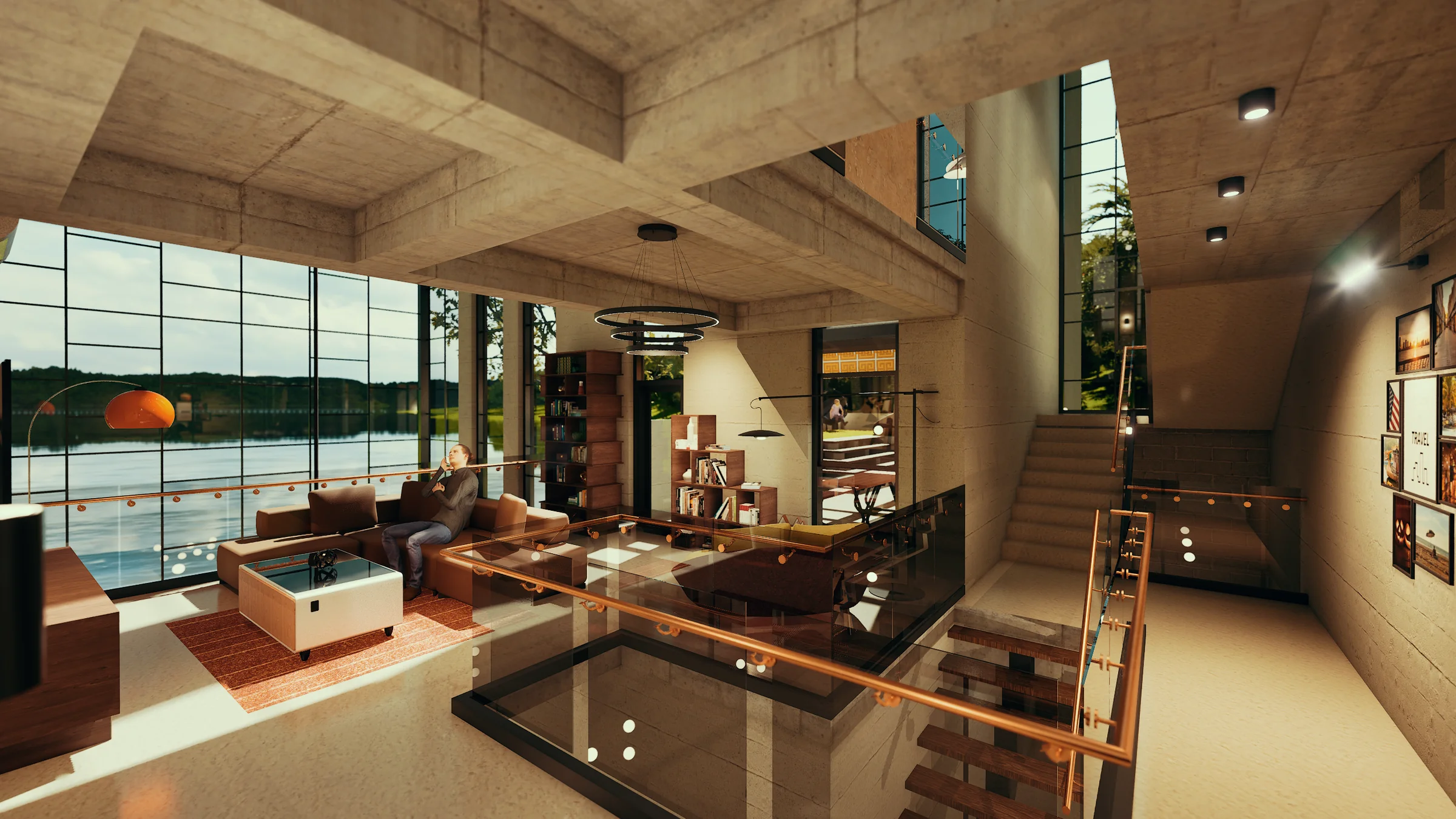 Family Living · Level 2
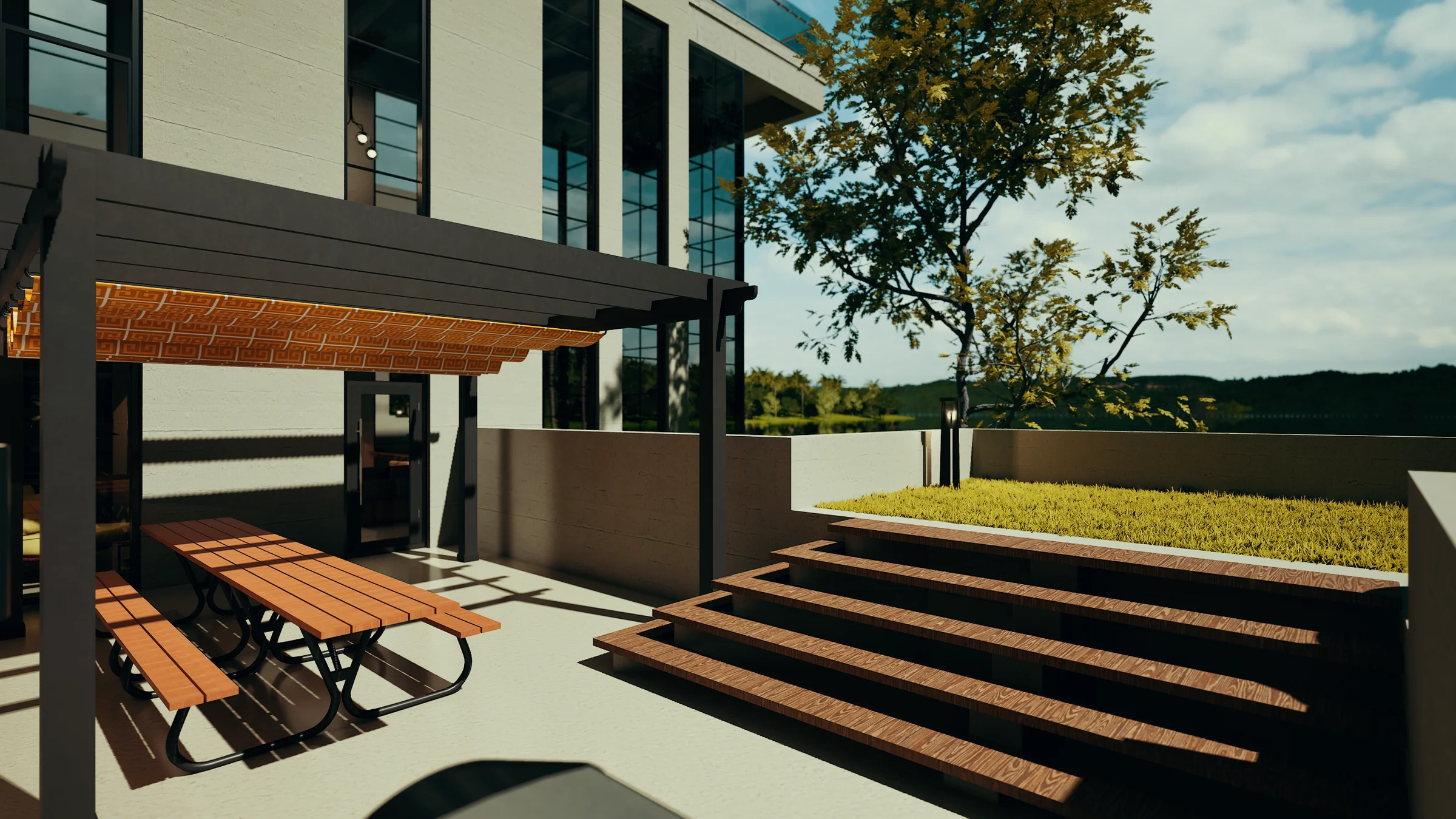 Alfresco · Level 2
The Private Sanctum
The bedrooms turn inward. The two master bed suites sit at Level 2, oriented south. The architect's studio occupies Level 1, a room that floats between the living block and the sleeping block, above the water. The kitchen is the working hearth: counters in stone, light from the south, the family's everyday choreography.
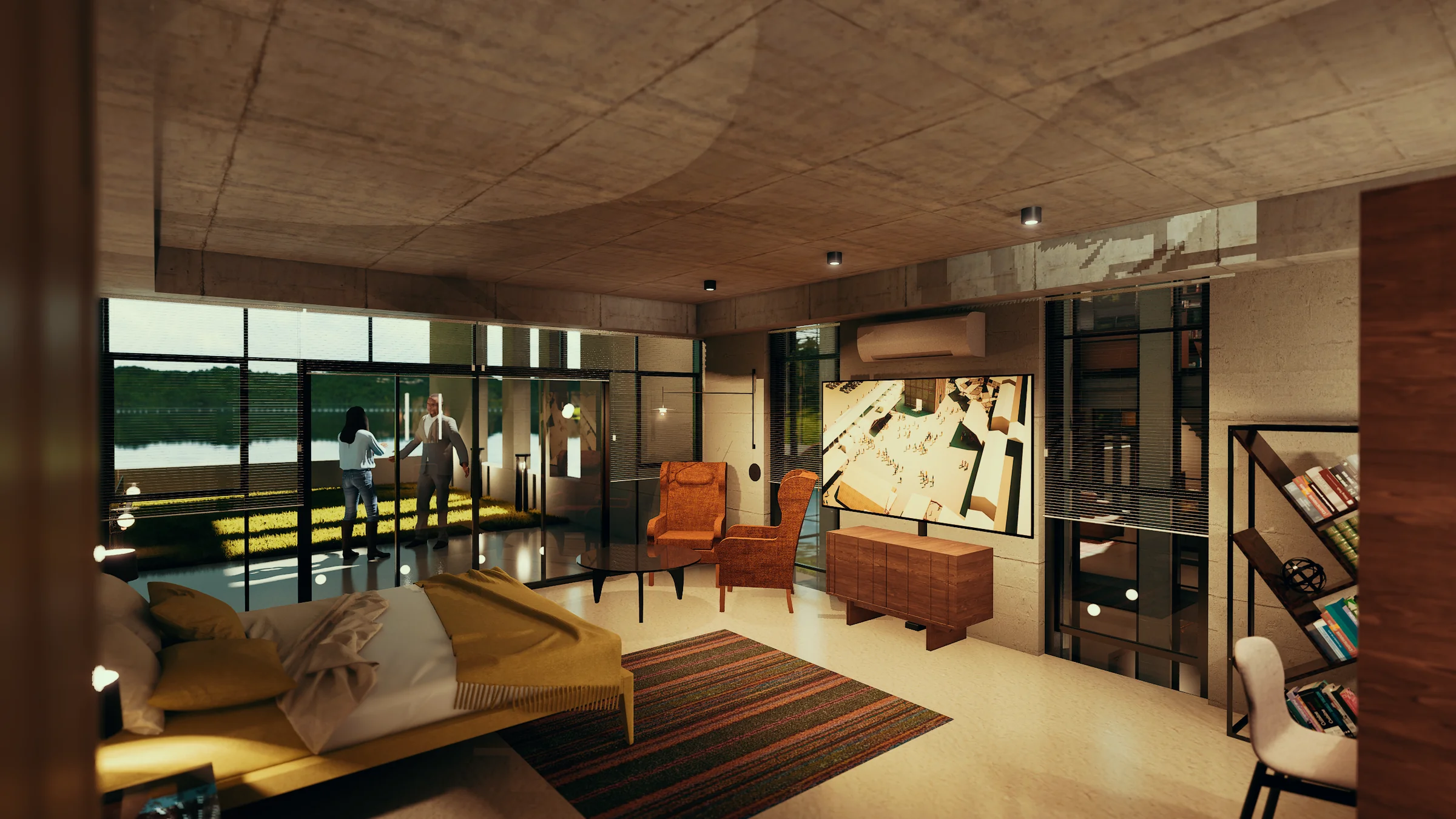 Main Bedroom · Level 2
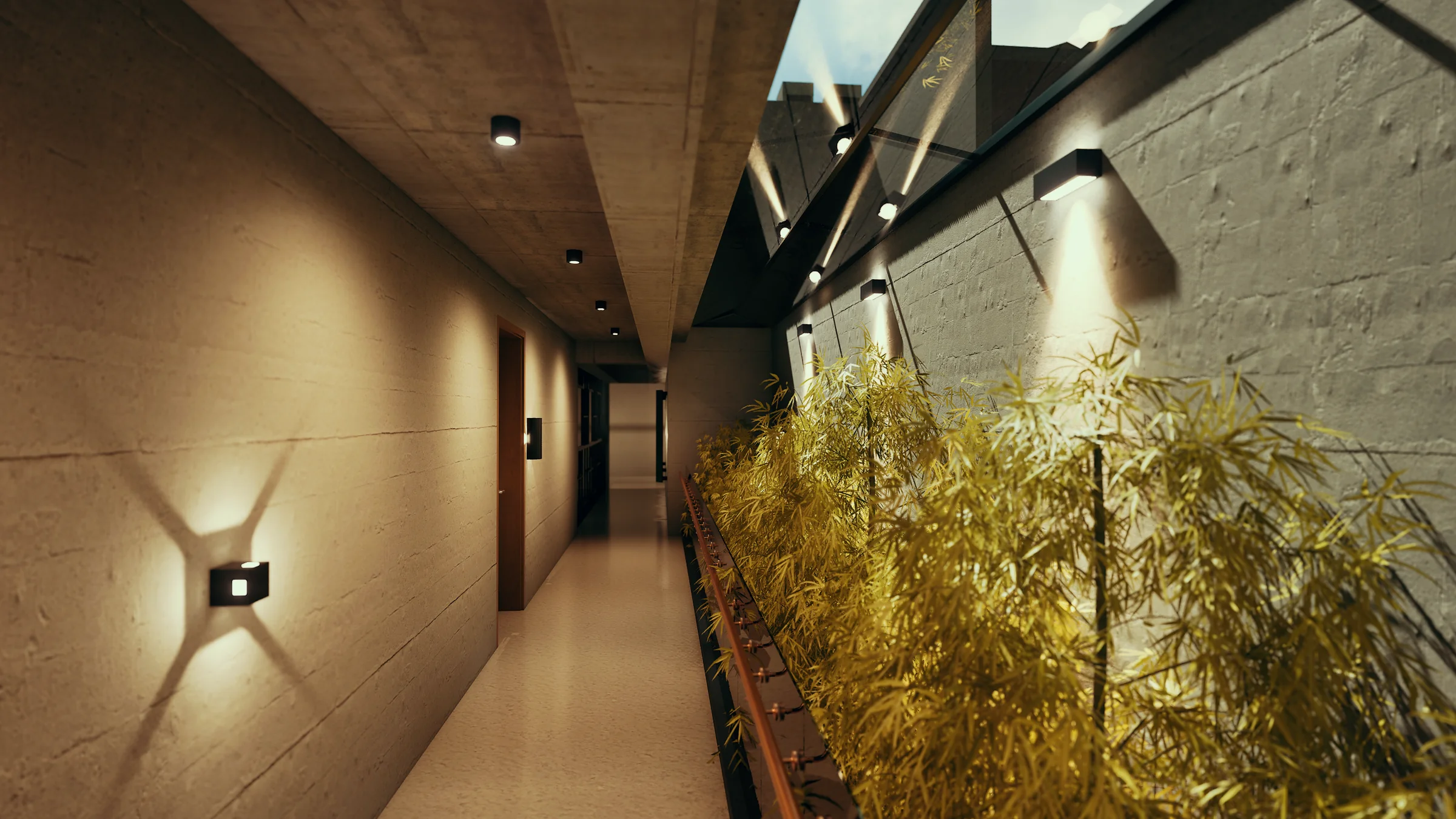 Bedroom Corridor
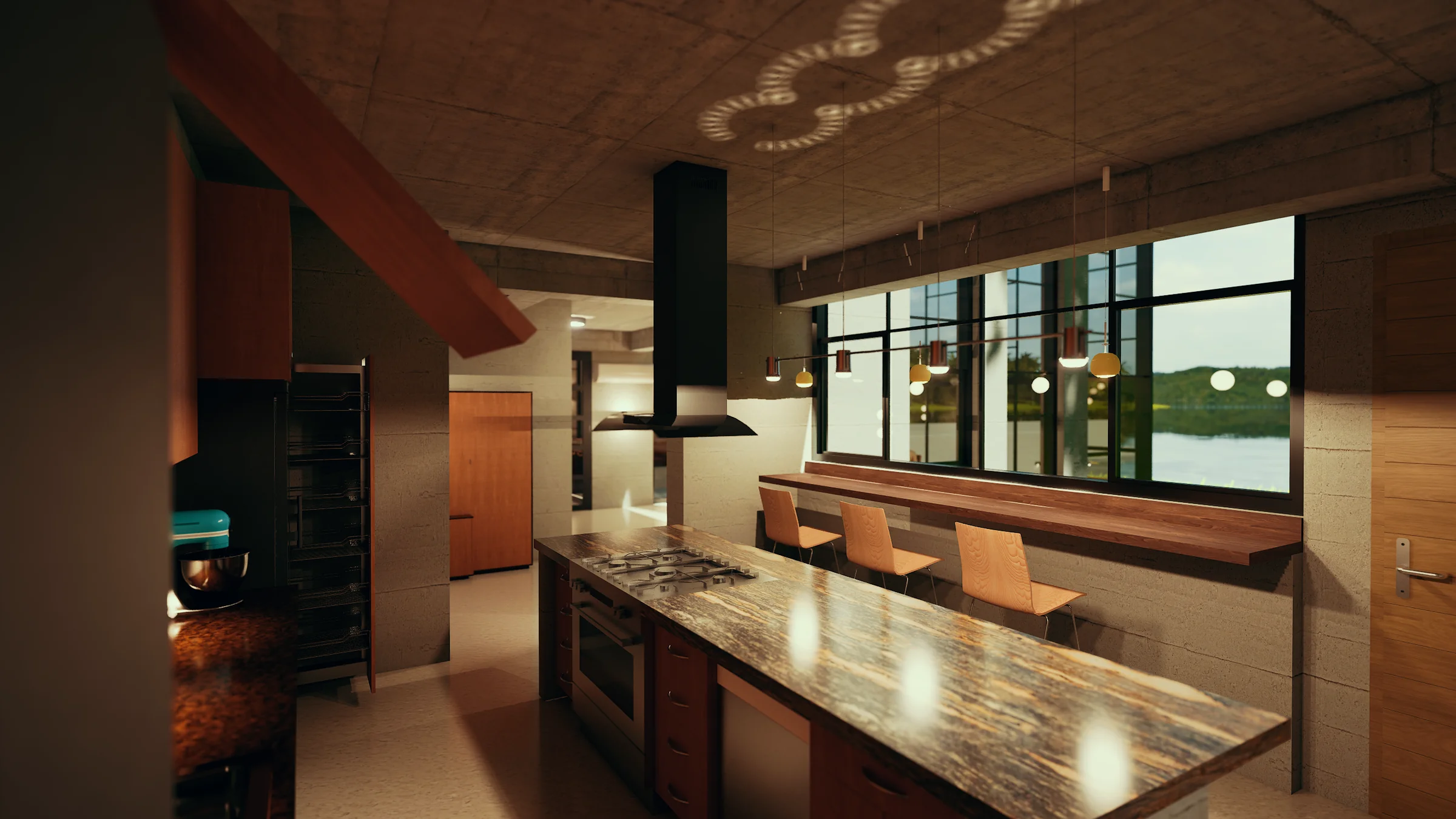 Kitchen · Level 1
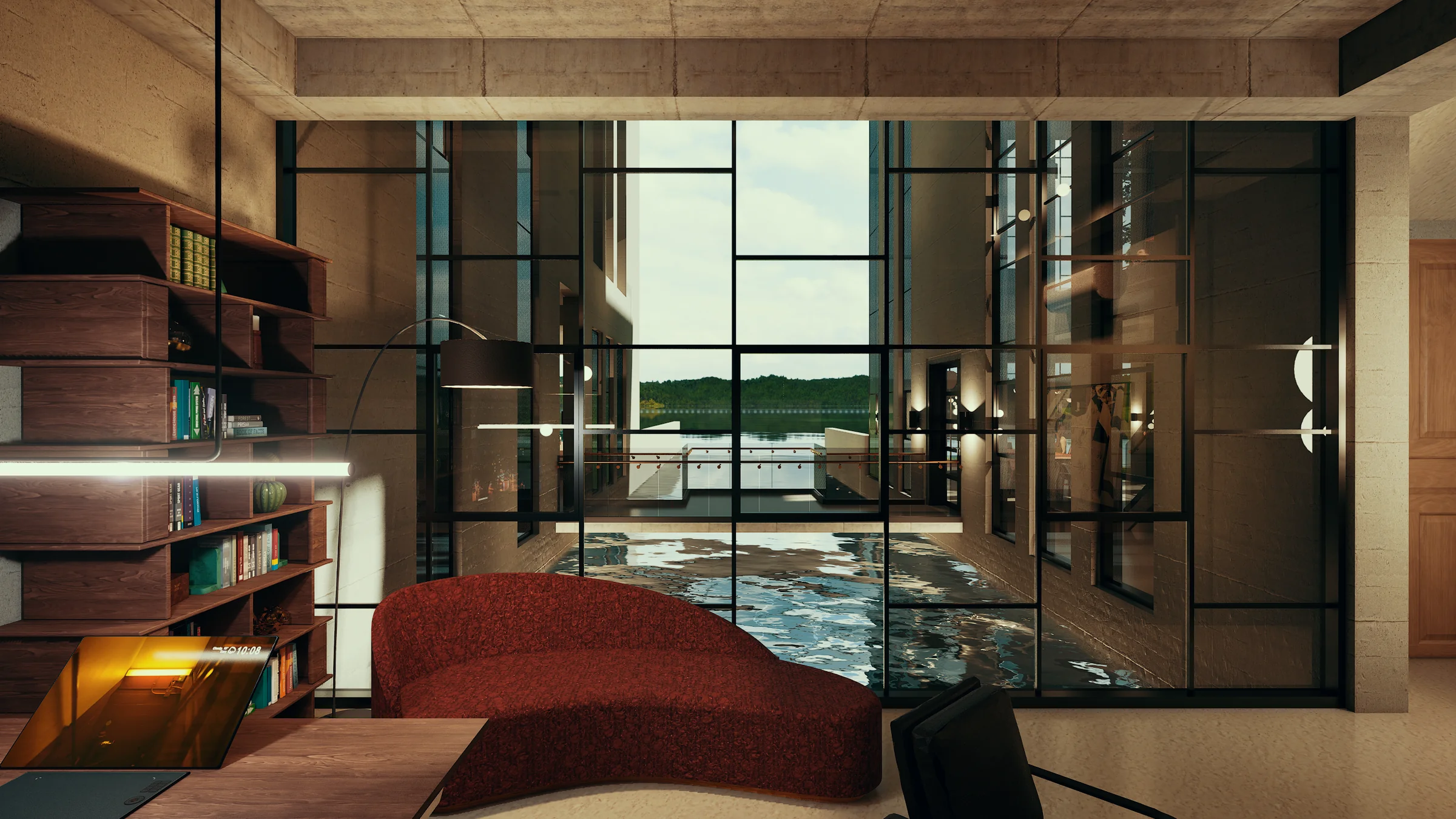 Architect's Studio · Level 1
Sky and Water
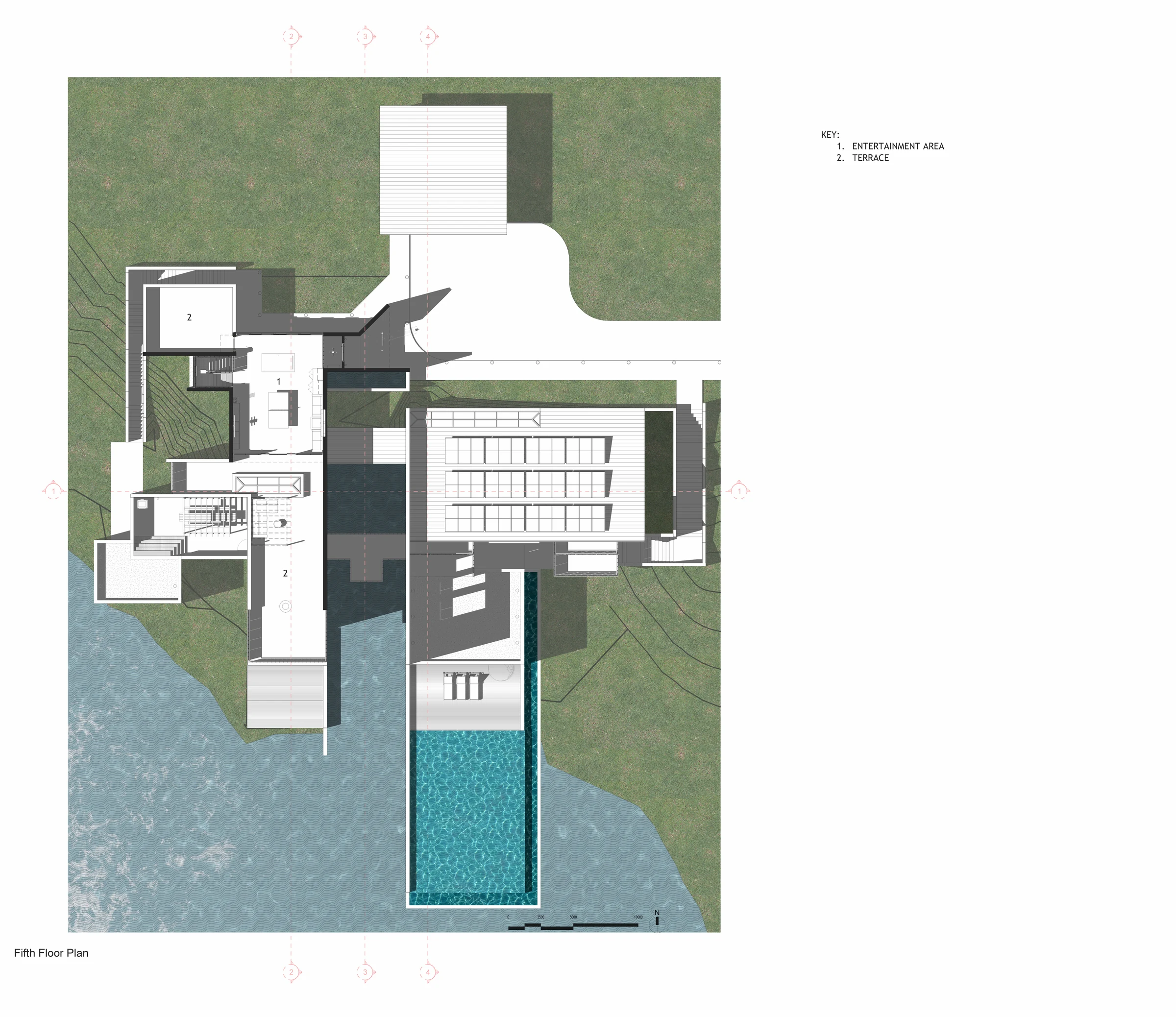
The section terminates in two horizons. At the top, the rooftop returns to sky: an entertainment zone, an open terrace, a pergola and a fire bowl, a skylight cut to read down into the dining room four floors below. At the bottom, the architecture meets the Kaptai Lake without ceremony: a thin slab, a pool deck, a continuation of the floor as a horizontal line into water.
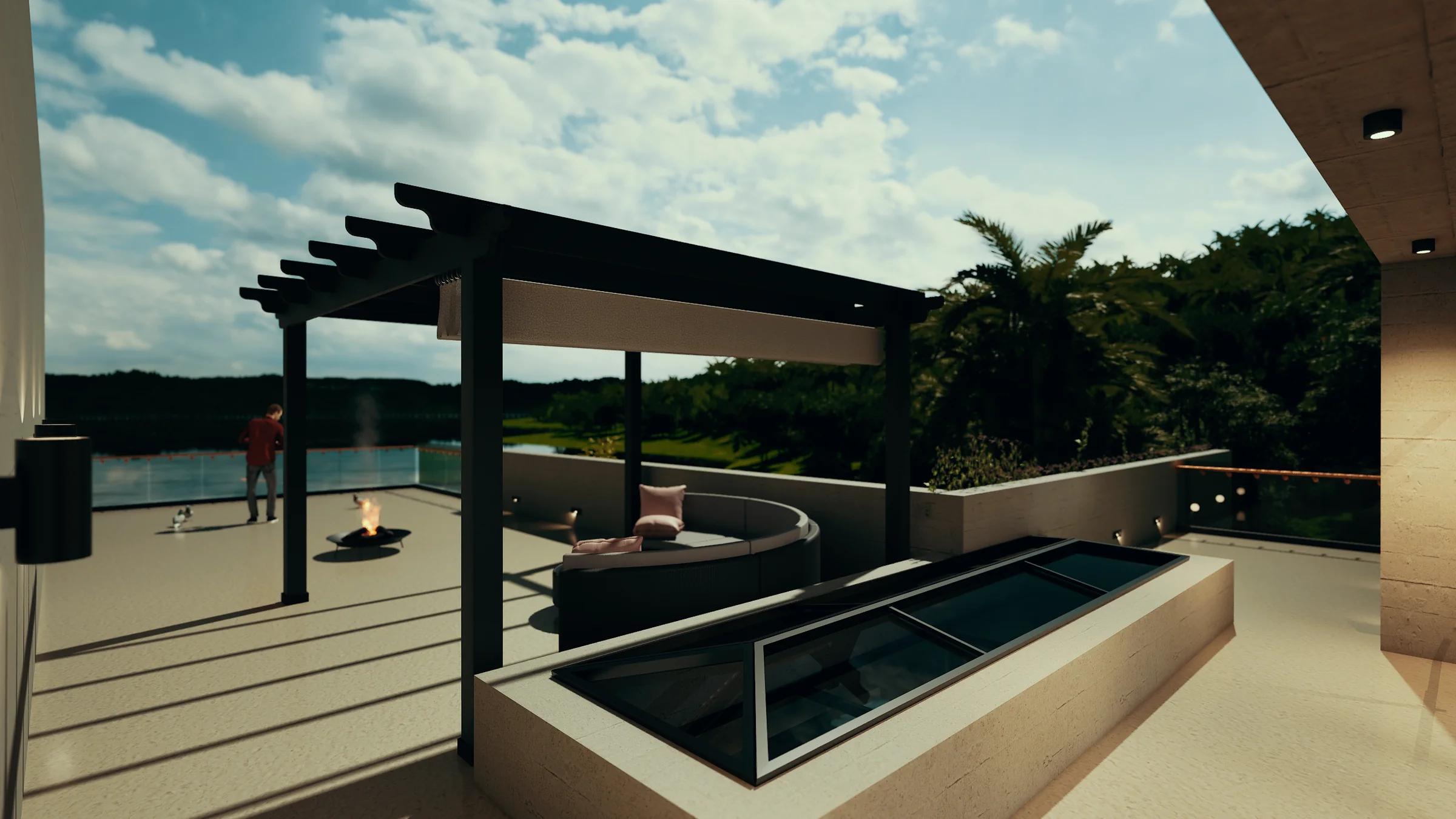 Rooftop Terrace · Level 5
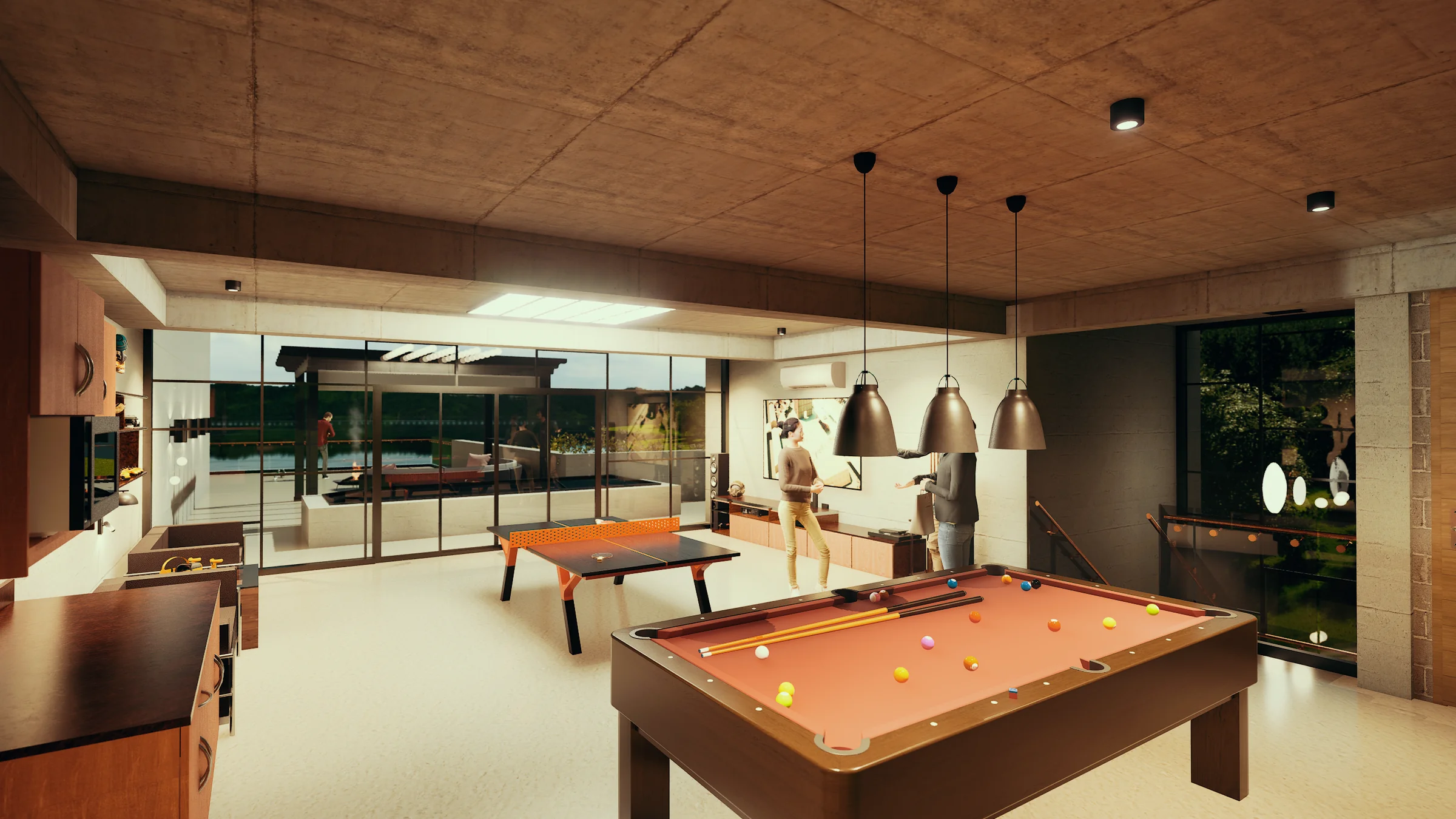 Entertainment Zone · Level 5
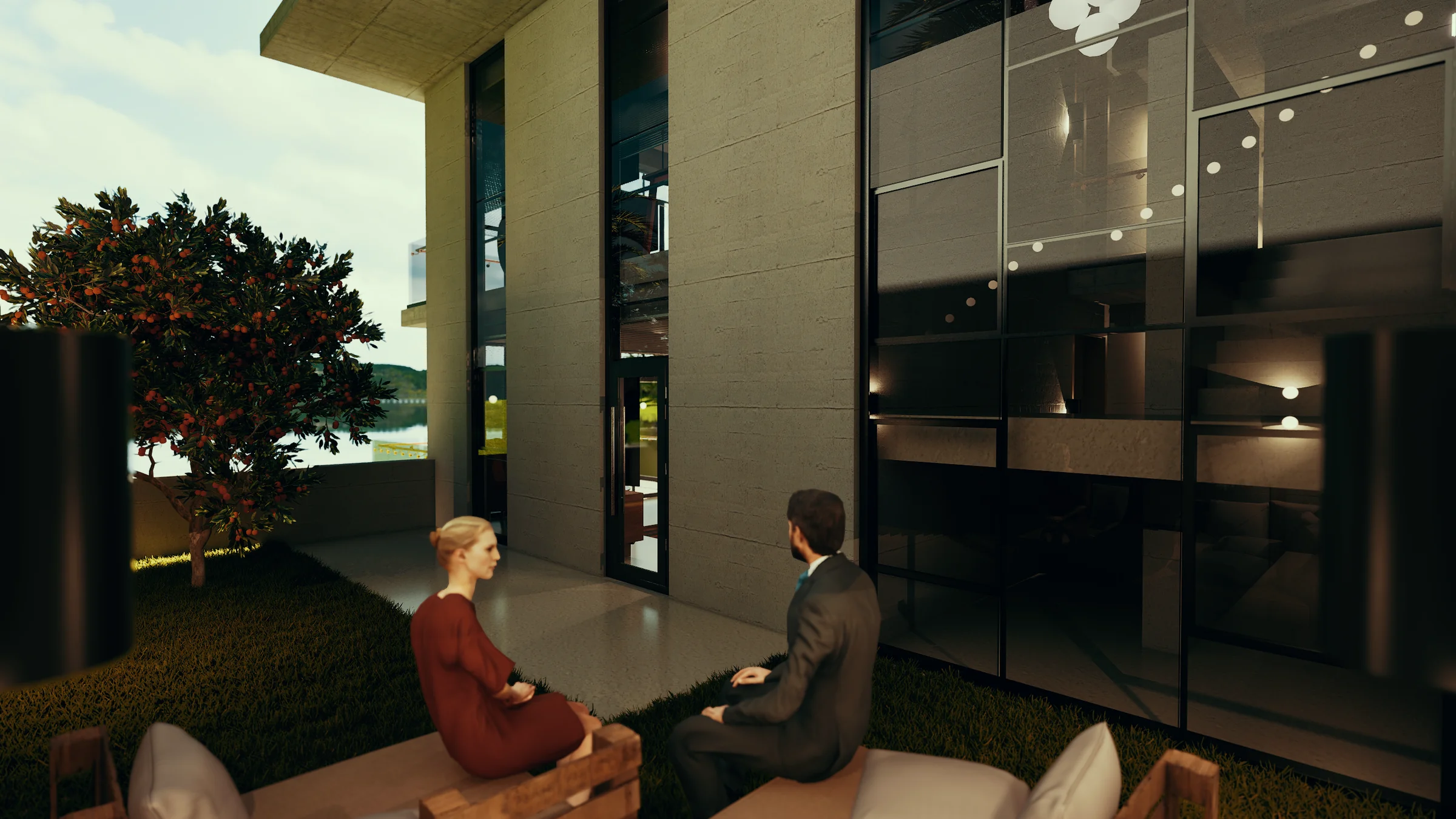 Grandparents' Terrace · Level 2
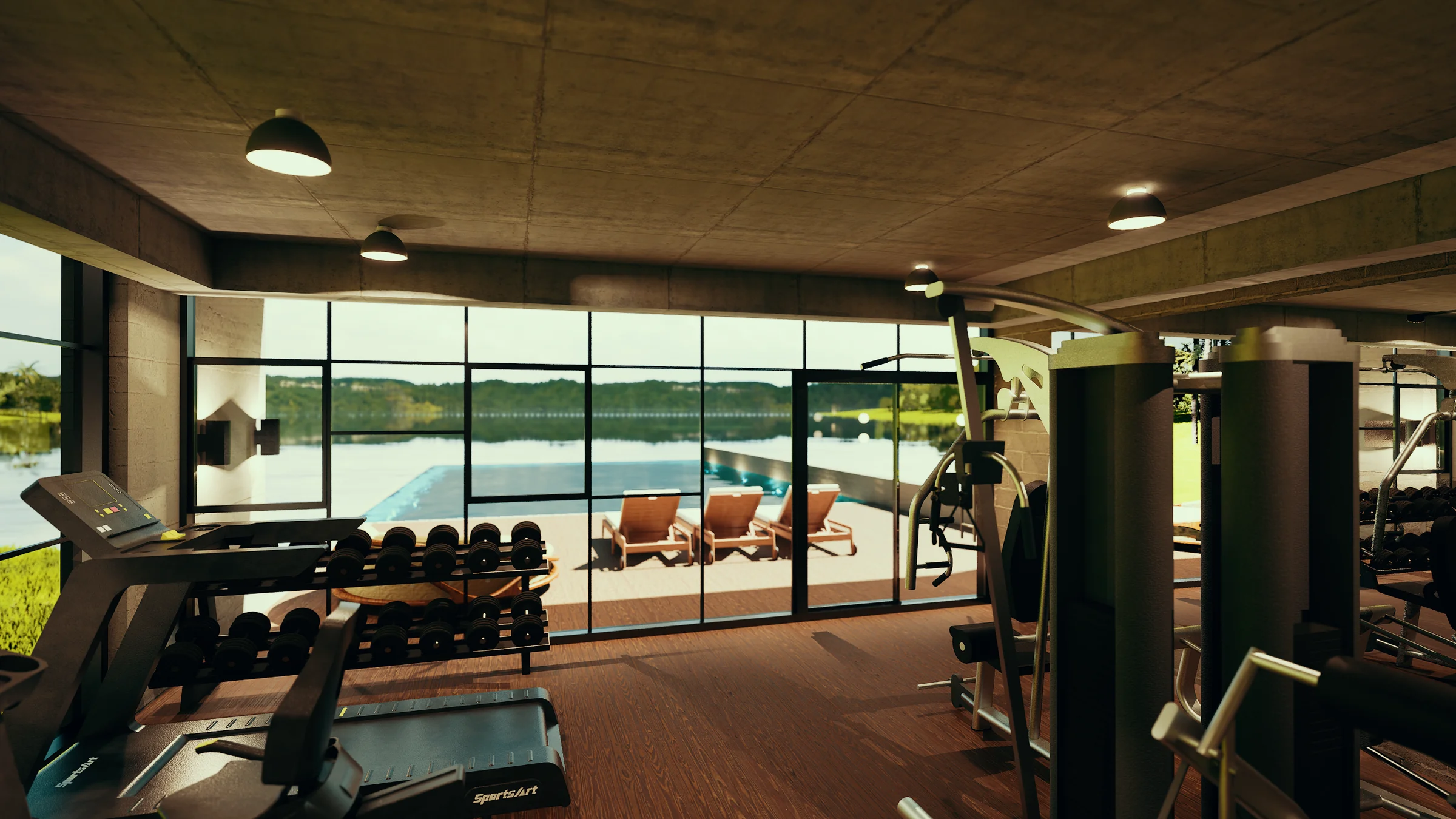 Gym · Level 1
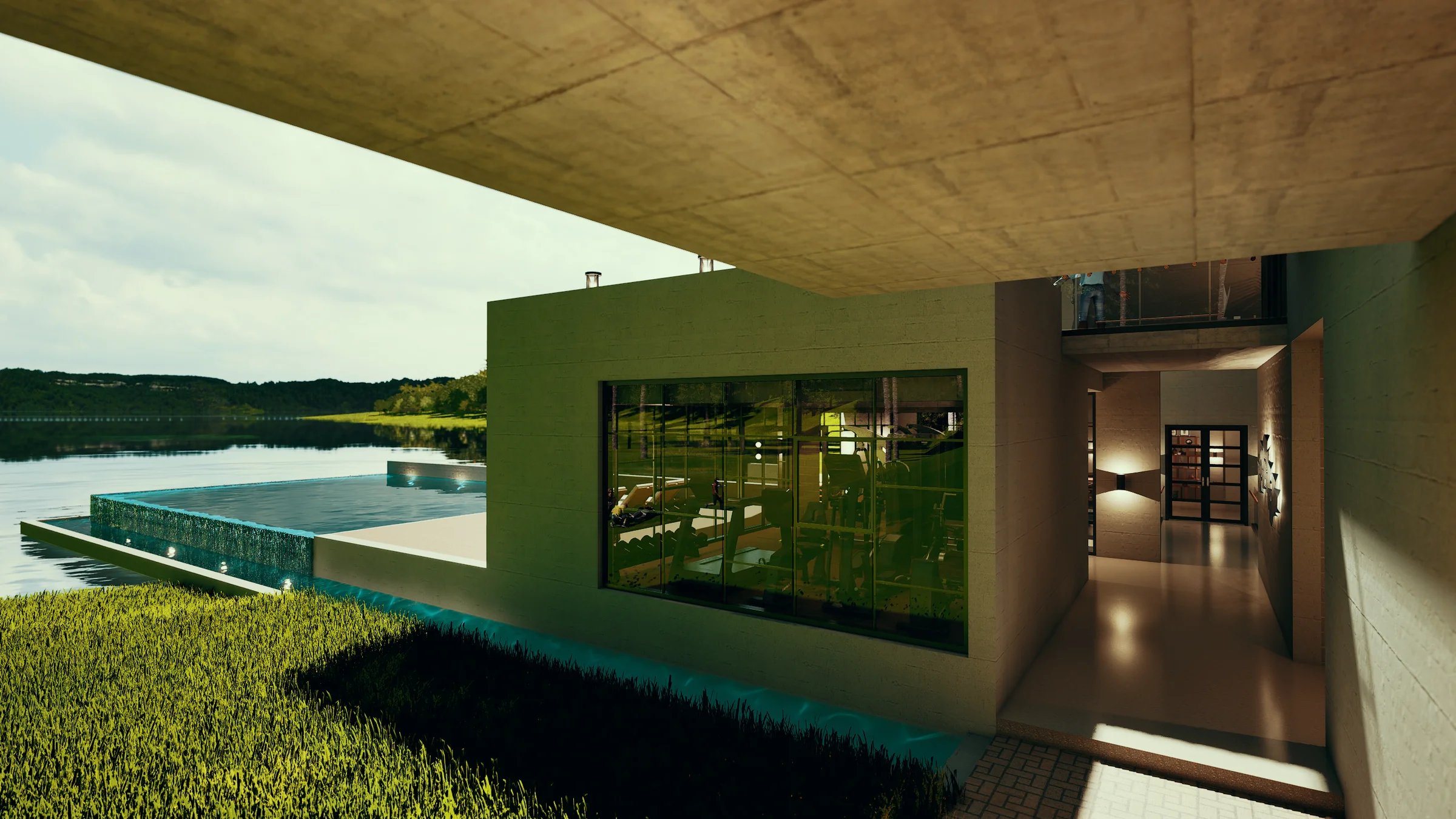 Gym + Infinity Pool · Level 1
The Walk-Through
A short film made in Twinmotion, rehearsing the home as a sequence rather than a composition: arrival from the road, descent through the volumes, the long pause at the lake.