B.Arch Thesis · UAP · 2017
Metamorphosis:
Towards Transit-
Oriented Dhaka
The title is precise, not poetic. Dhaka is a city mid-metamorphosis: not yet what it will become, no longer fully what it was. DMRT Line-6 cuts through Agargaon, and the city's first mass rapid transit line is not an addition to the urban fabric — it is a reorganisation of it. The thesis arrives at exactly this threshold.
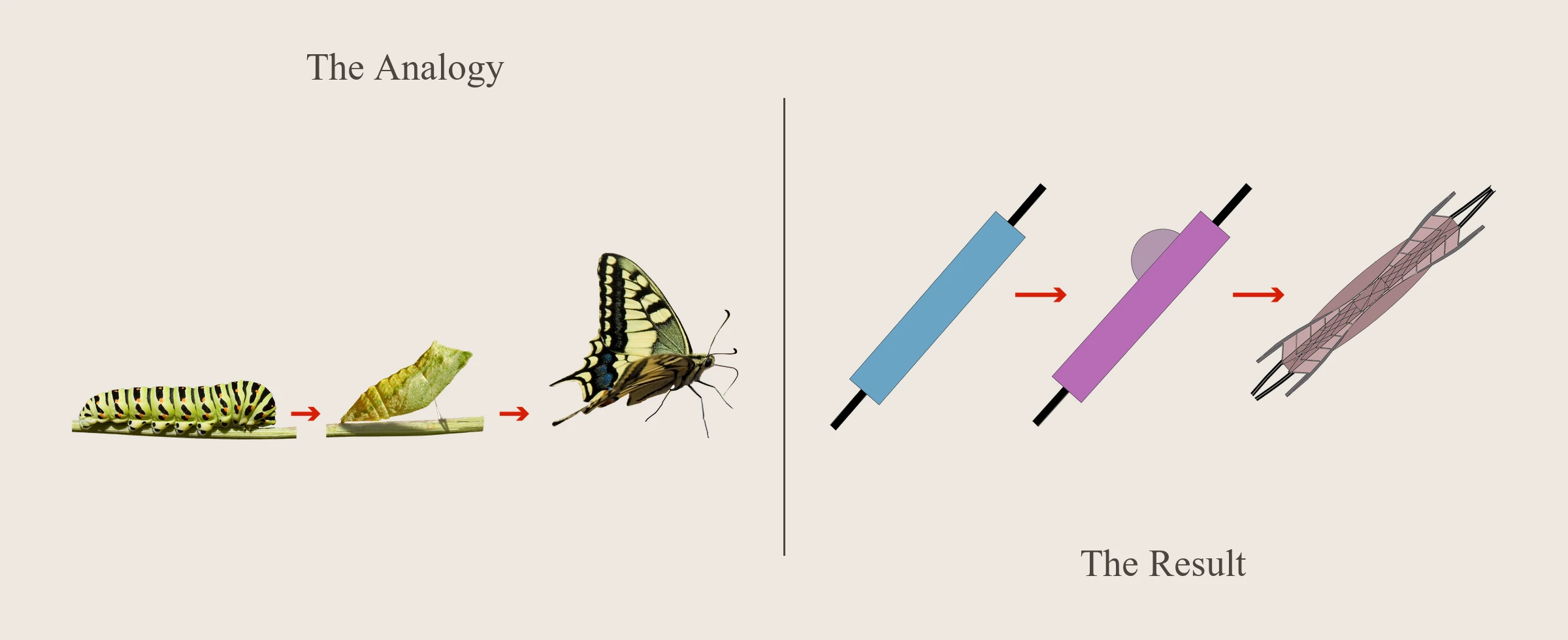
The formal premise is an analogy the thesis names "The Analogy": the caterpillar, the chrysalis, the butterfly. The existing transit node condition is the caterpillar: functional, linear, indifferent to its urban context. The design act is the chrysalis. The butterfly is a station that catalyses rather than merely serves: transit-oriented development above, below, and around the infrastructure, consolidating the bus interchange, activating the ground plane, and making the act of moving through the city a civic rather than merely transactional experience.
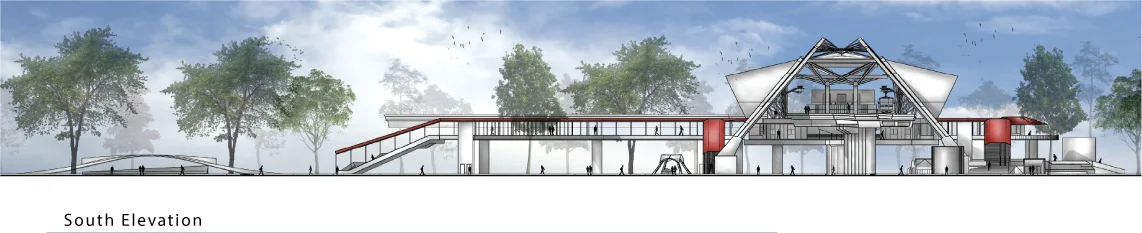
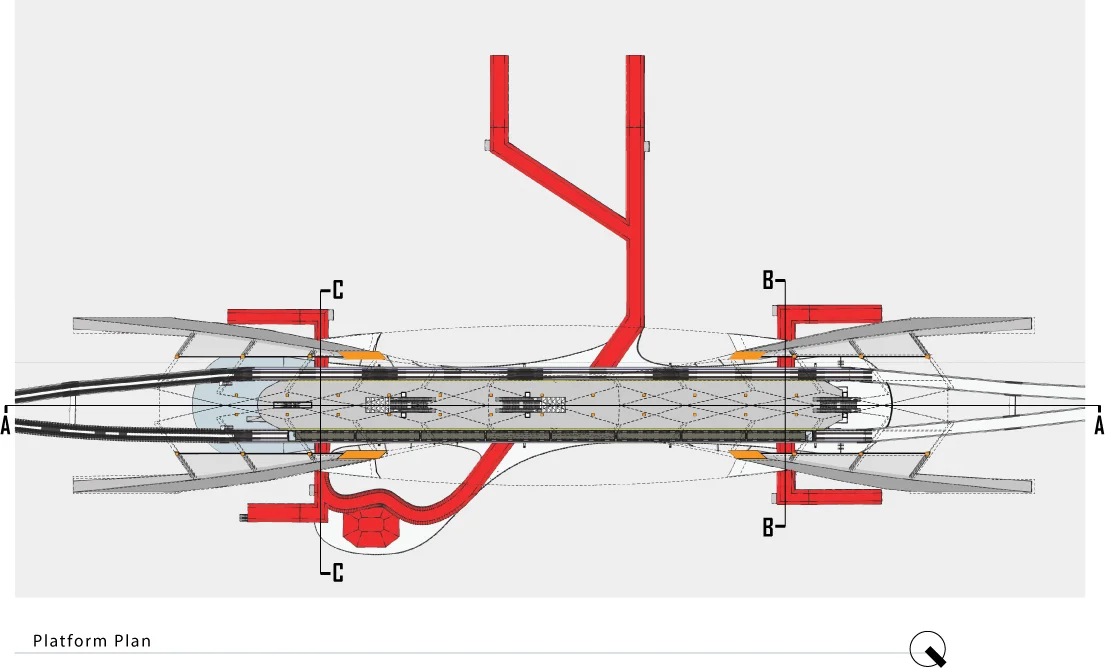
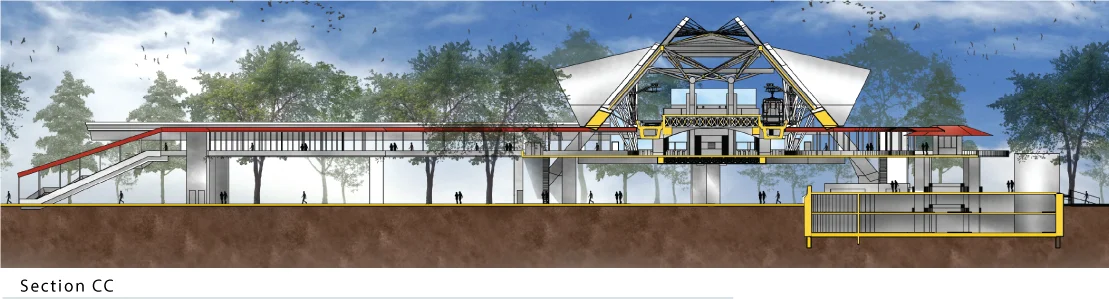
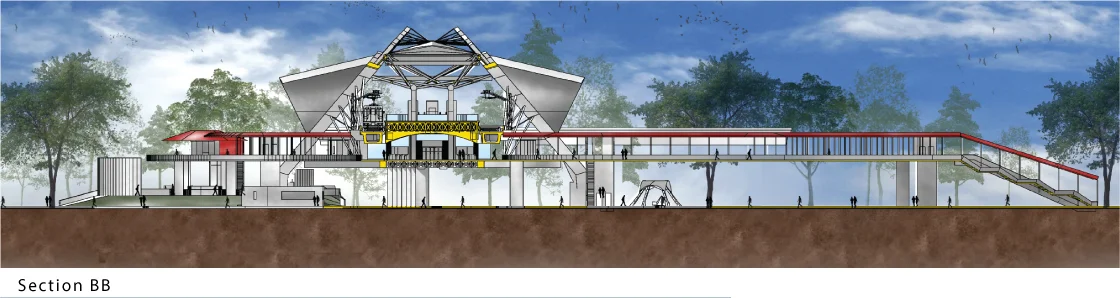
The station operates across three strata. Underground: parking and MEP. The ground plane: a continuous surface consolidating bus interchange, pedestrian priority, and mixed-use retail into a single activated threshold. The elevated body: concourse, platform, and the folded steel canopy that spans the whole as a single civic gesture. The red circulation spine — visible from street level, from aerial, from inside — traces the path from pavement to platform as one continuous legible movement.
The Analogy
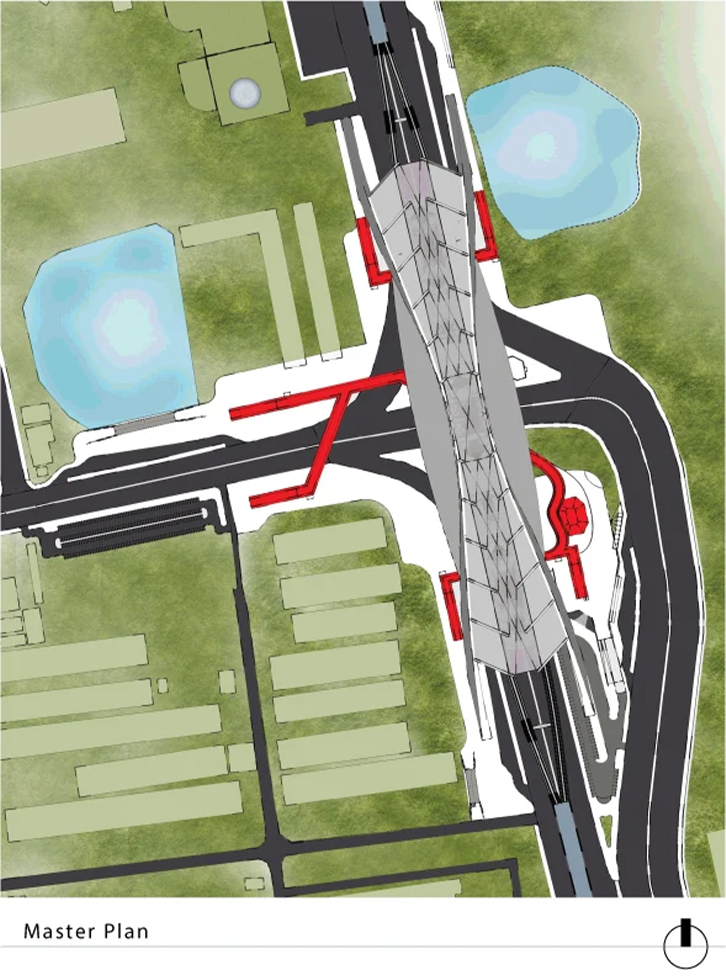
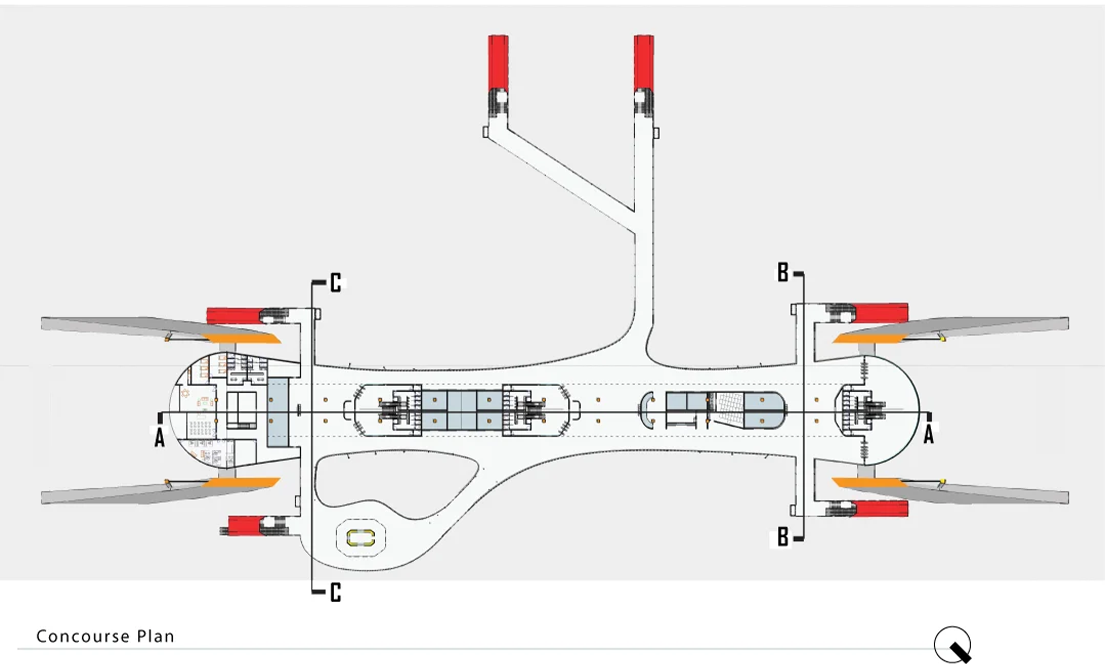
The caterpillar is the station as pure infrastructure: a bar across a track, serviceable, inert, urban only by accident. The chrysalis is the moment of design intervention, where the programme is held in suspension and reorganised. The butterfly is what emerges: the same transit node, now a city-making instrument, its form registering the energy of mass movement and releasing it into the streets around it. The plan reads this transformation directly. Two rounded station-head buildings anchor each end of the platform spine; the whole, seen from above, resolves into the butterfly's silhouette.
Site and Context
Agargaon sits at the administrative edge of Dhaka: government ministry blocks, a technical institute, two ornamental lakes, and the Mirpur Road cutting north. The site plan reads as an intermodal node embedded into this fabric. The station body aligns with the metro track; the bus interchange extends east; pedestrian flows are redistributed across a reworked ground surface that takes the intersection apart and reassembles it around the logic of transit.
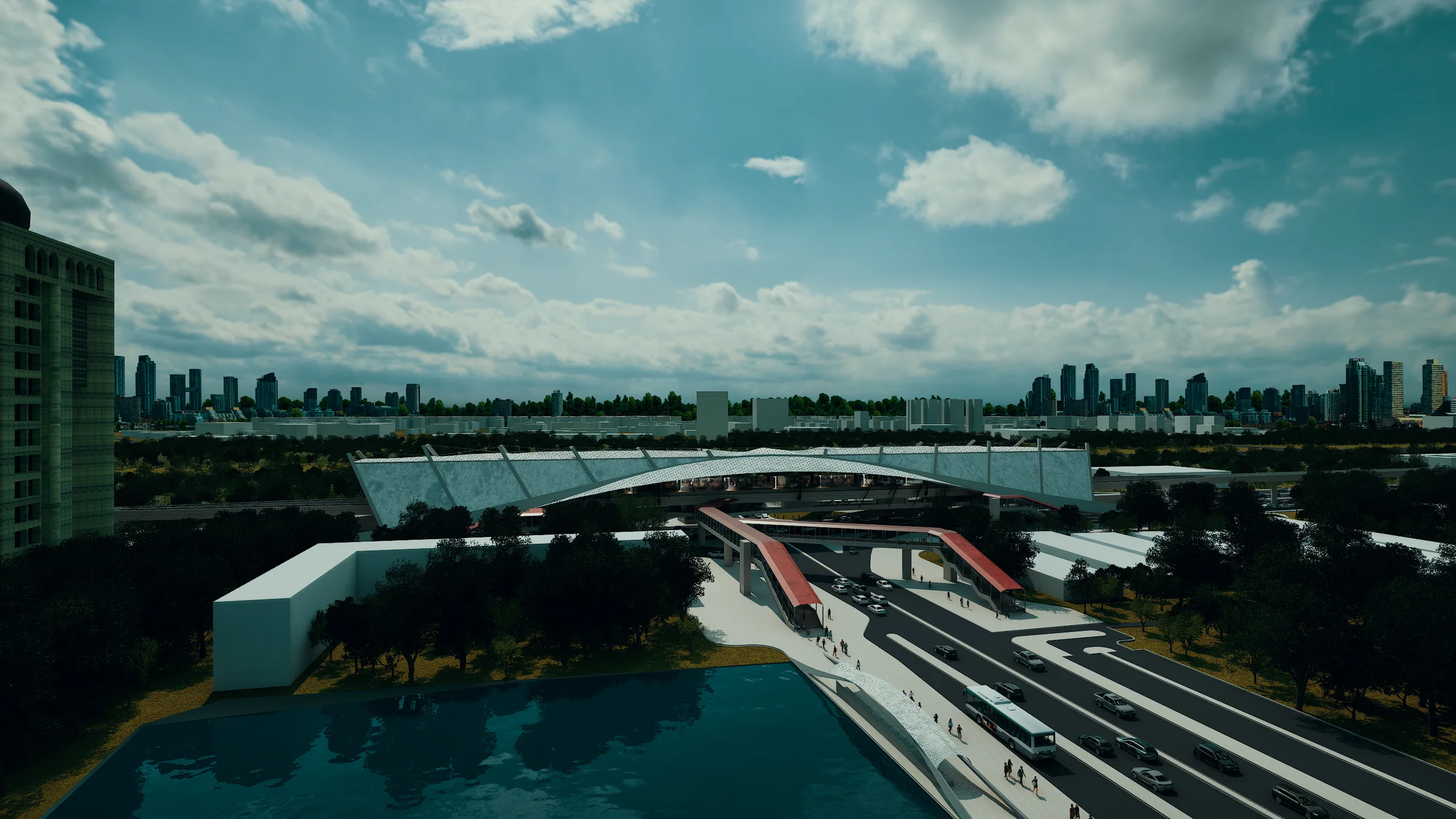 Aerial · Site Context
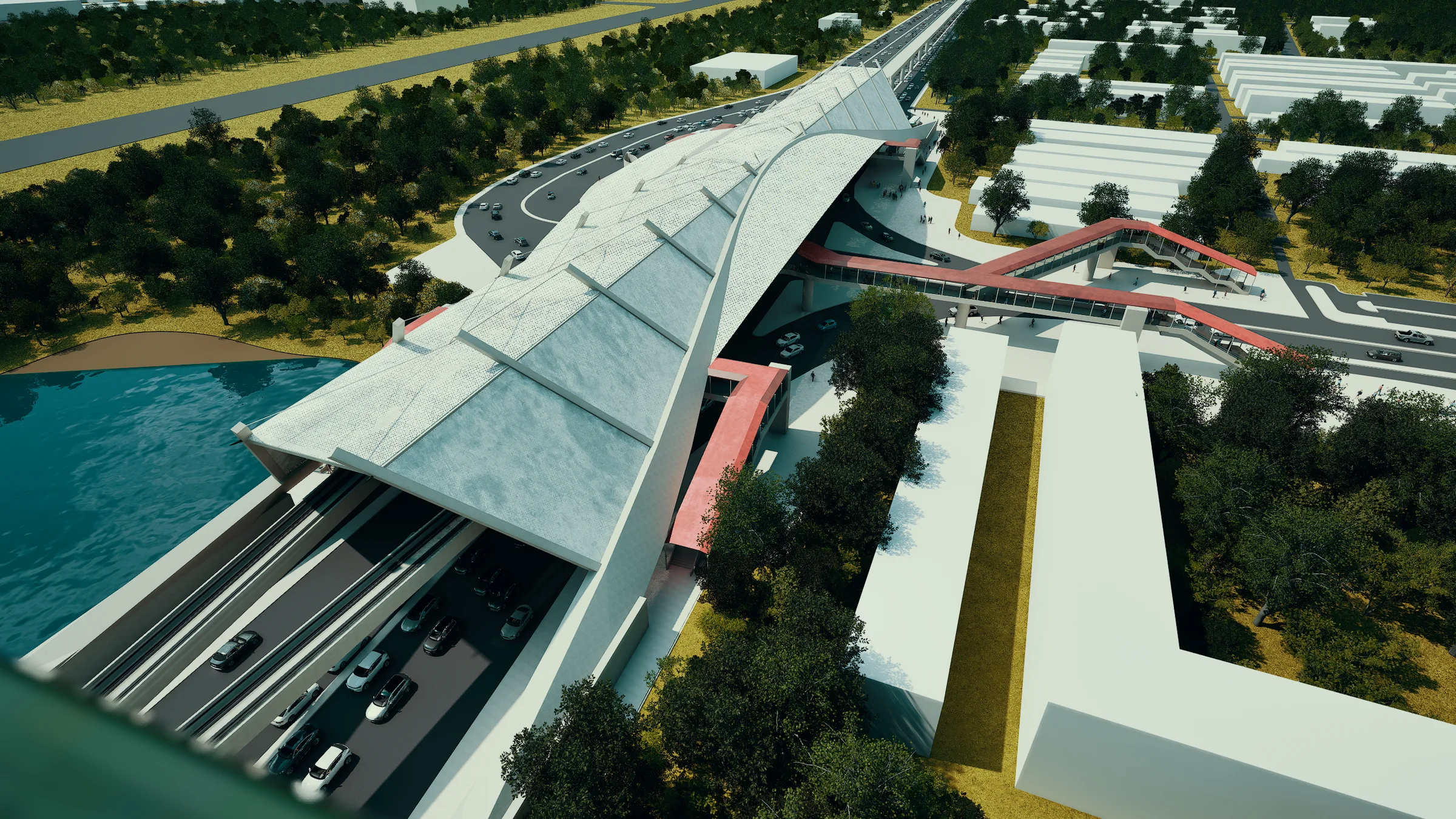 Aerial · Station and Lake
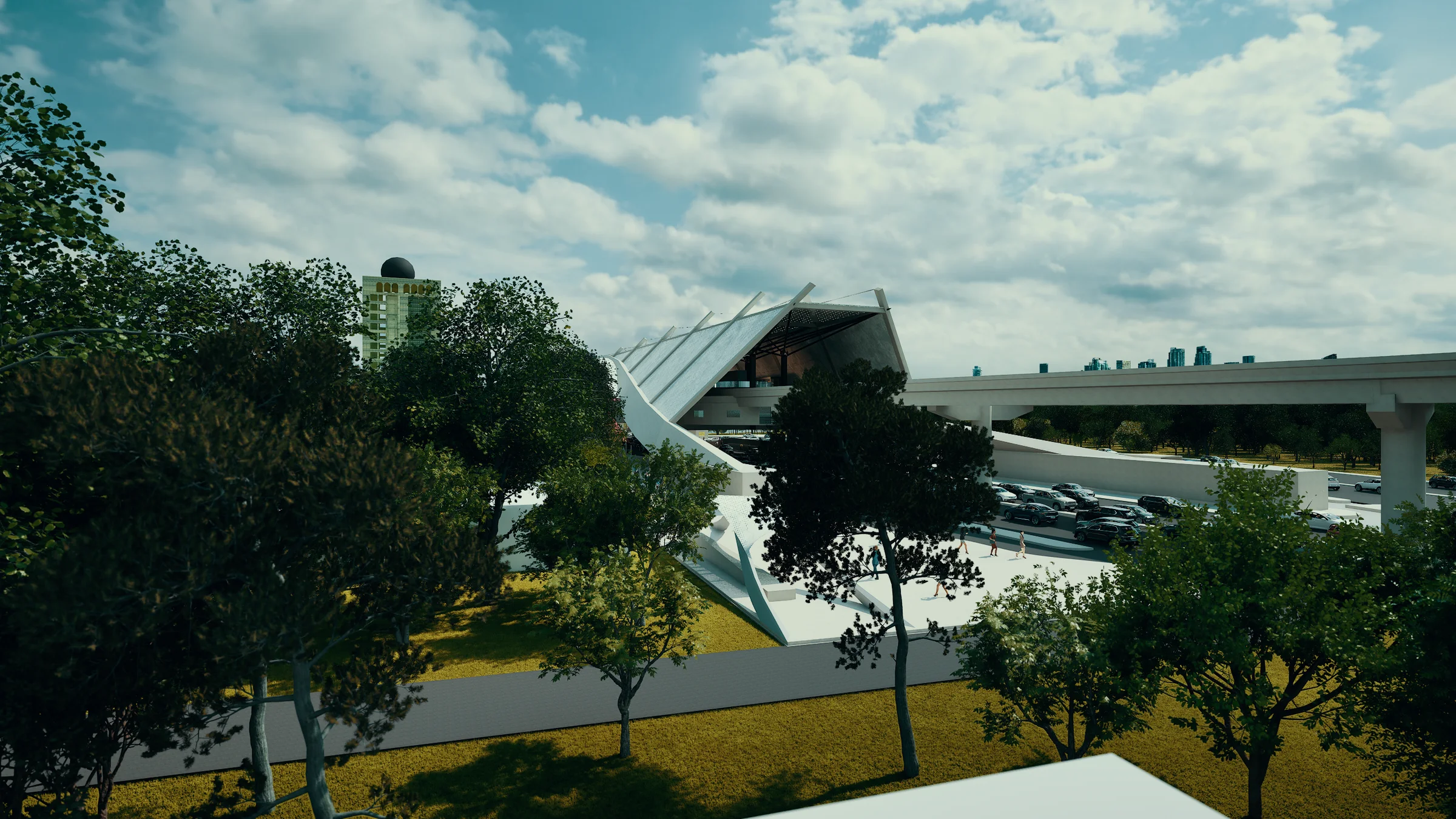 Station Head · Ground Approach
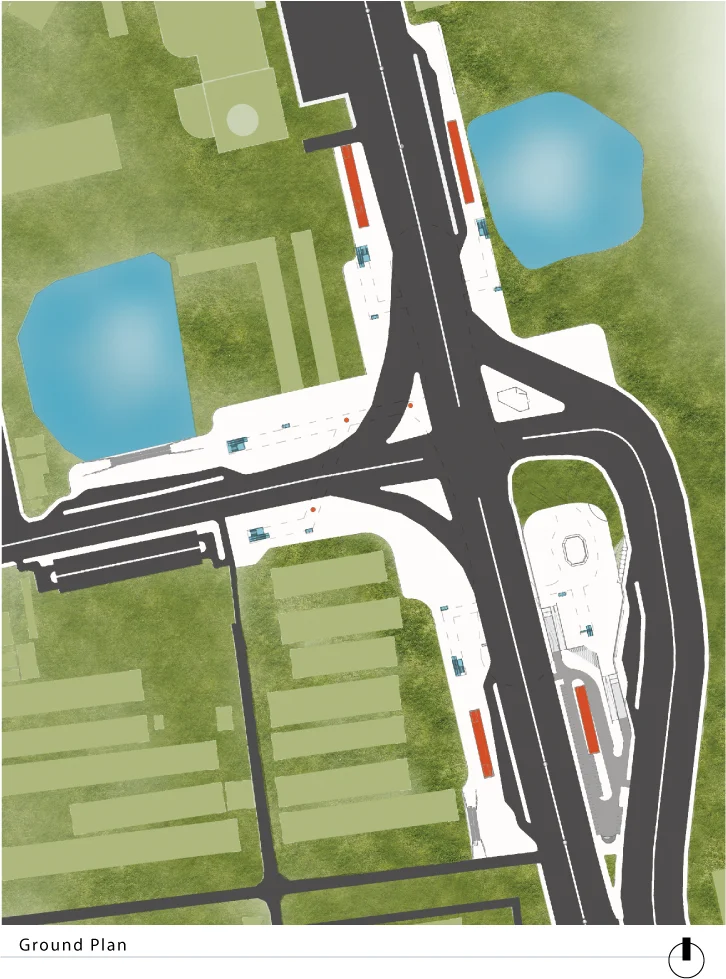
The Ground Plane
The ground is where the transformation is most legible. The station does not sit above the city and ignore it; it reorganises the surface around itself. Bus bays are pulled in from the surrounding streets and consolidated beneath the concourse canopy. Pedestrian flows are separated from vehicle movement and given a continuous shaded surface. TOD retail — food court, pharmacy, departmental store, florist, cyber café, gallery — lines the station perimeter, activating the edges at grade. The folded canopy overhead registers as civic infrastructure from within a car, from the pavement, and from the arriving bus.
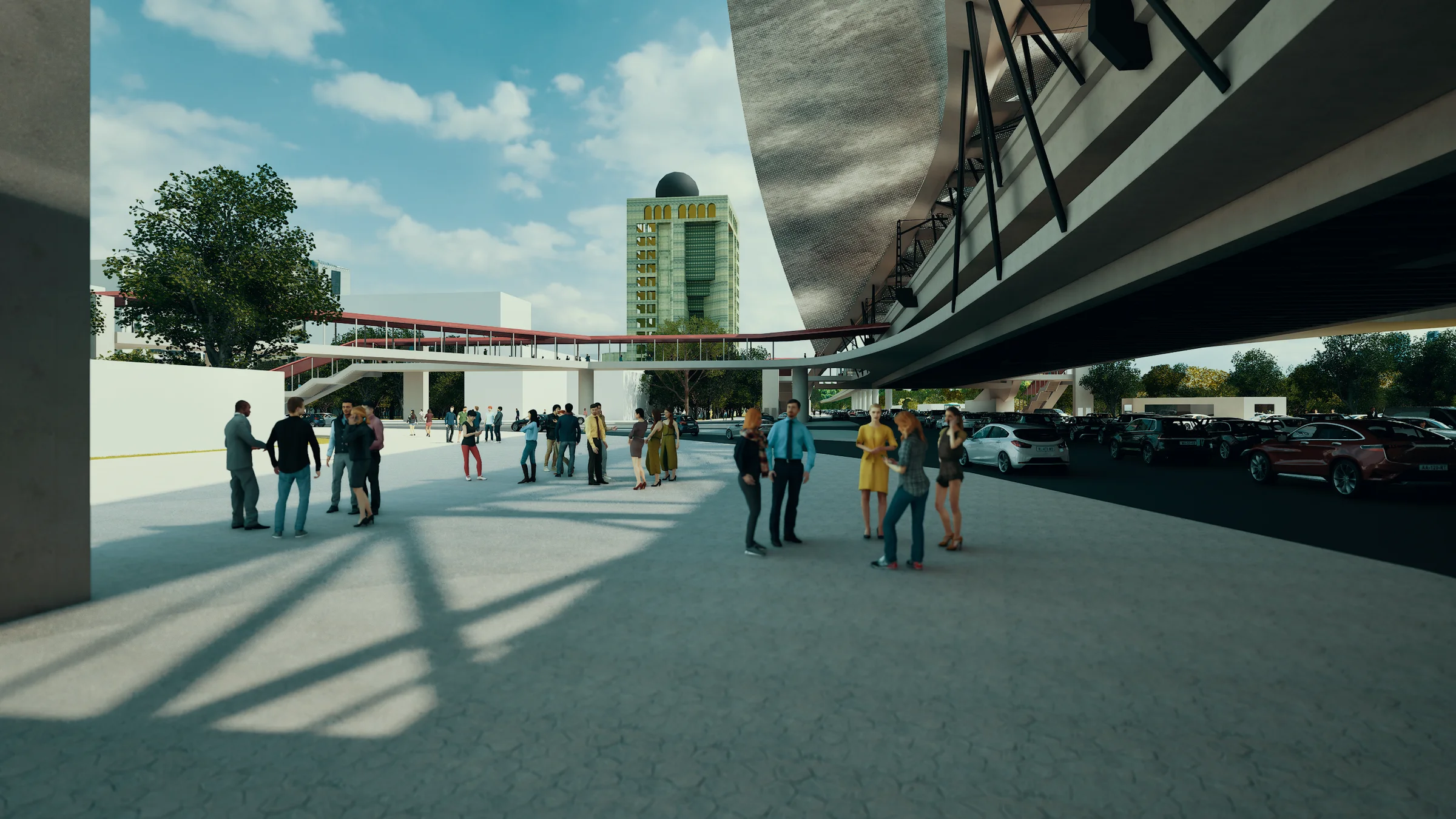 Ground Plaza · TOD Activation
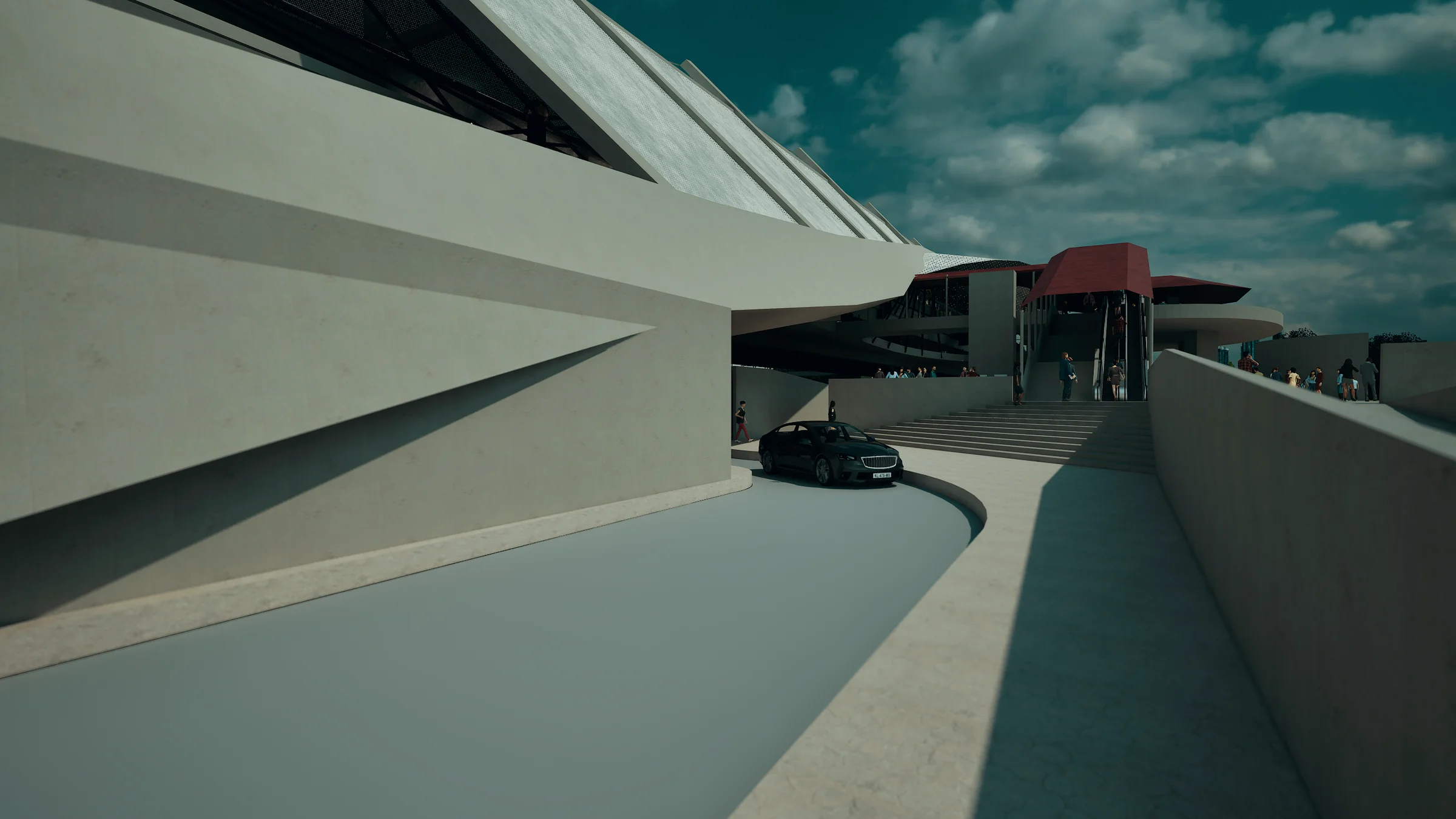 Vehicle Approach · Station Entry
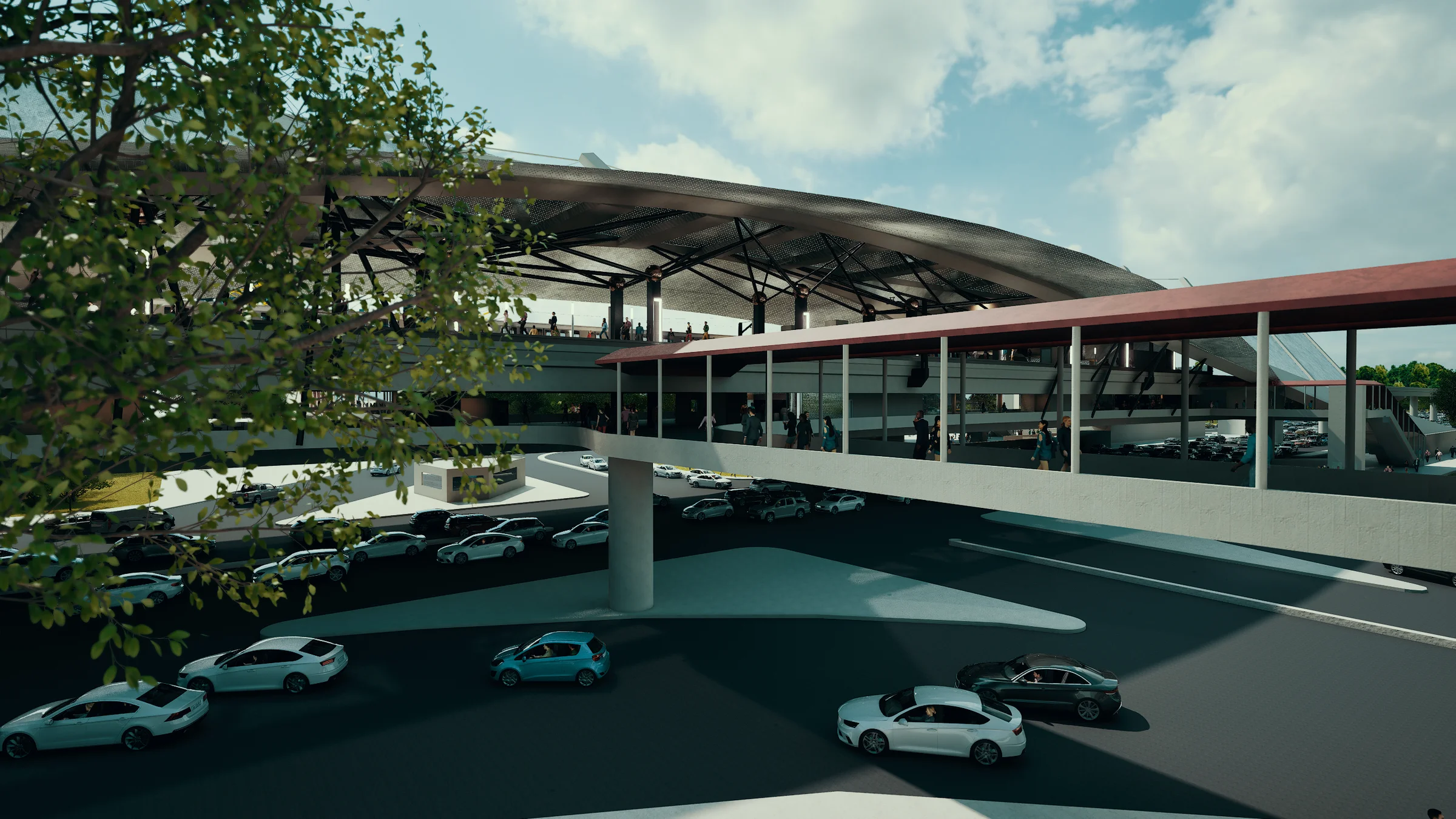 Street Elevation · TOD Context
Interior Circulation
From street level to platform the journey is continuous and spatial rather than merely functional. The station head buildings at each end of the platform spine contain the programme that makes the station more than transit: retail, gallery, entertainment, accommodation. Between them, the concourse is a wide open hall with the red ramp system and escalators as the primary spatial event, routing commuters upward through a sequence of voids and light.
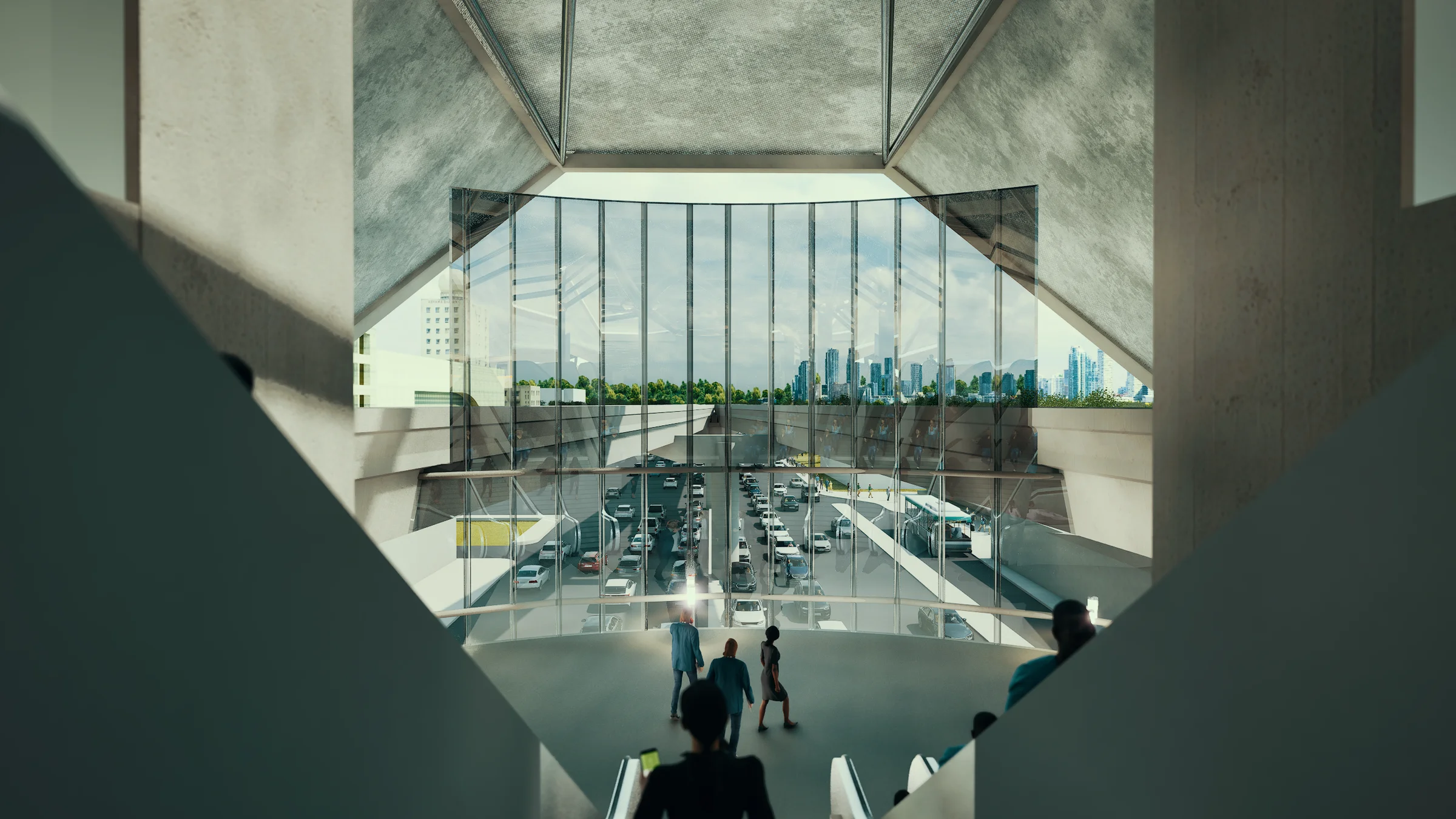 Station Head Interior · City View
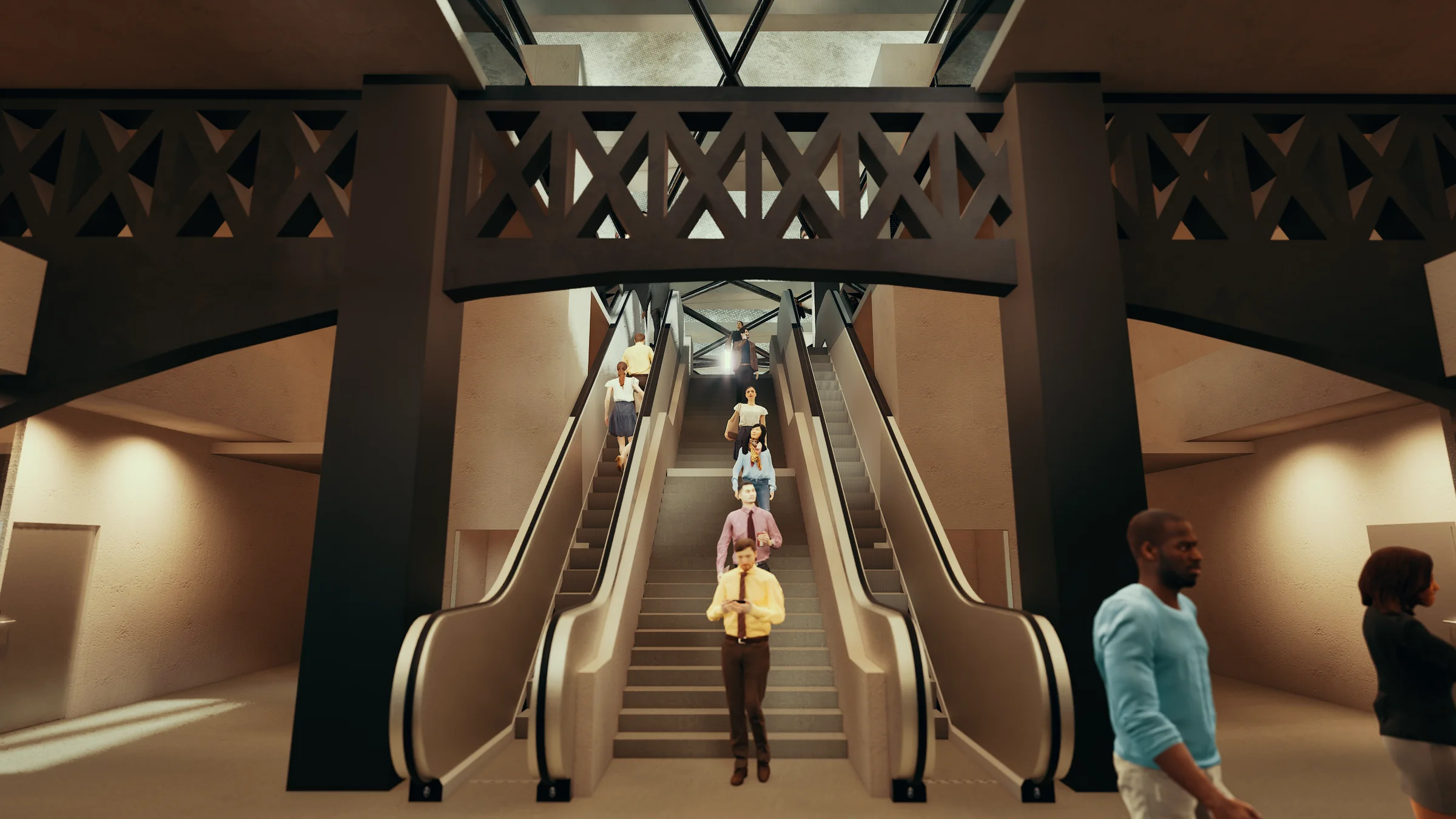 Escalator Hall · Vertical Circulation
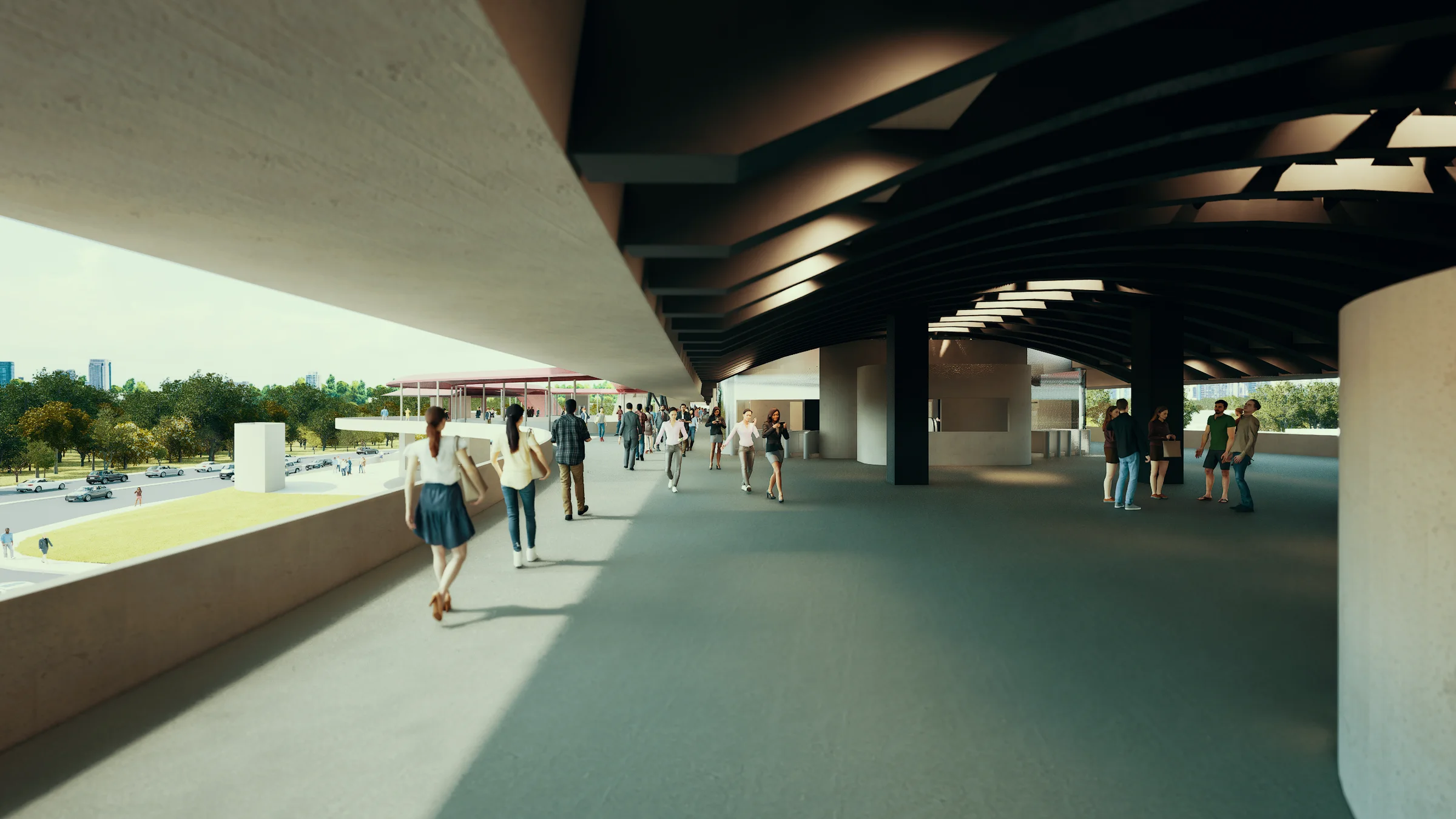 Concourse · Covered Hall
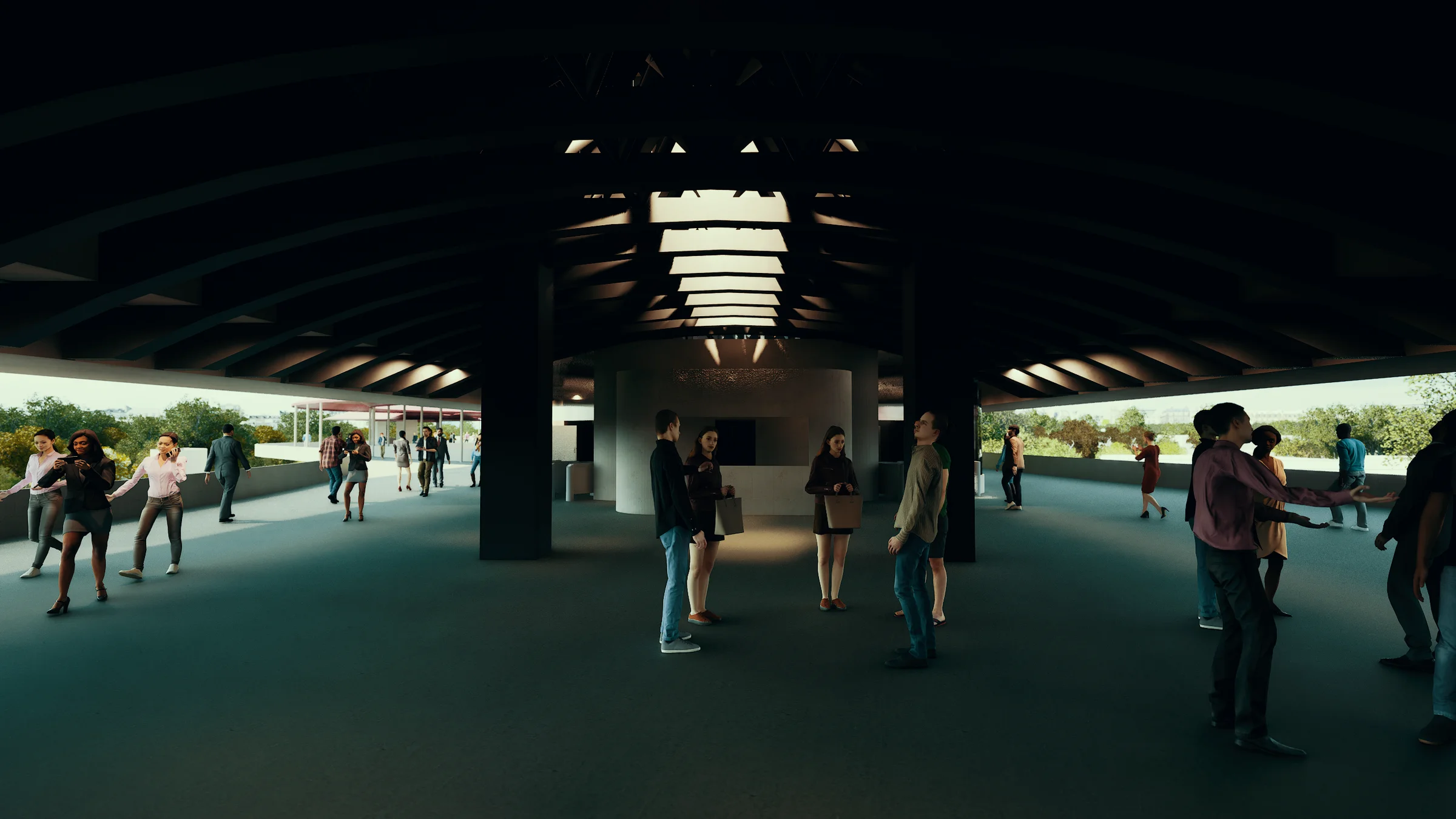 Concourse · Ticket Hall and Fare Gates
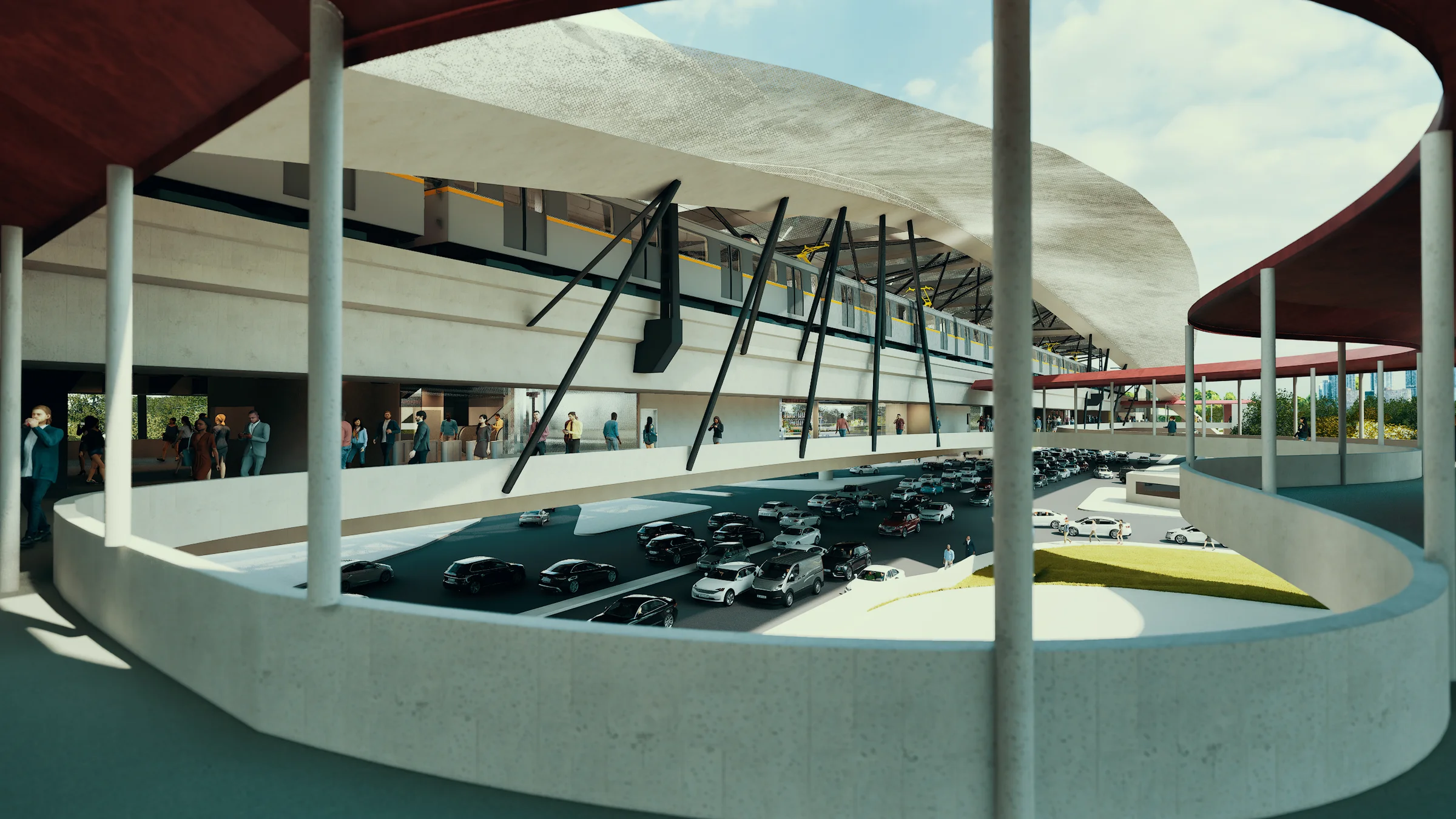 Foot-Over Bridge · Concourse Connection
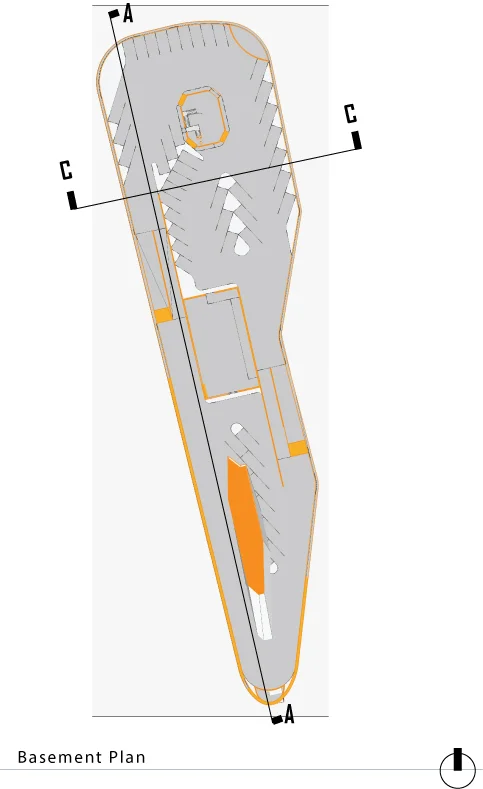
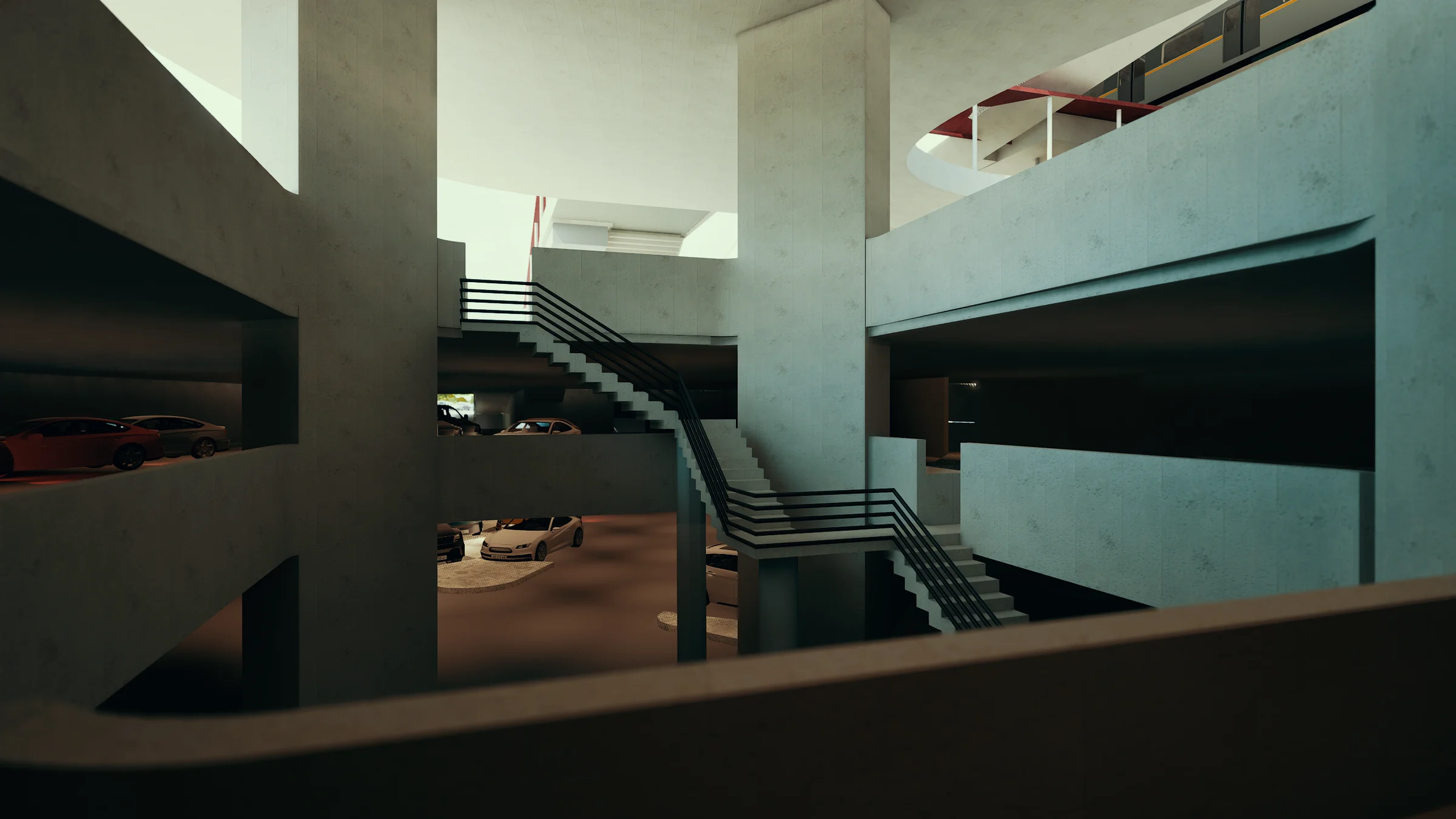 Underground Levels · Parking Plinth
Platform
The platform is the terminus of the civic sequence. The folded steel truss structure overhead resolves the whole building into a single spatial room: open to light from both ends, the two tracks flanking the island platform, the city visible through the glass edges of the canopy. The structural logic that was readable as silhouette from the street becomes, from the platform, an inhabited ceiling.
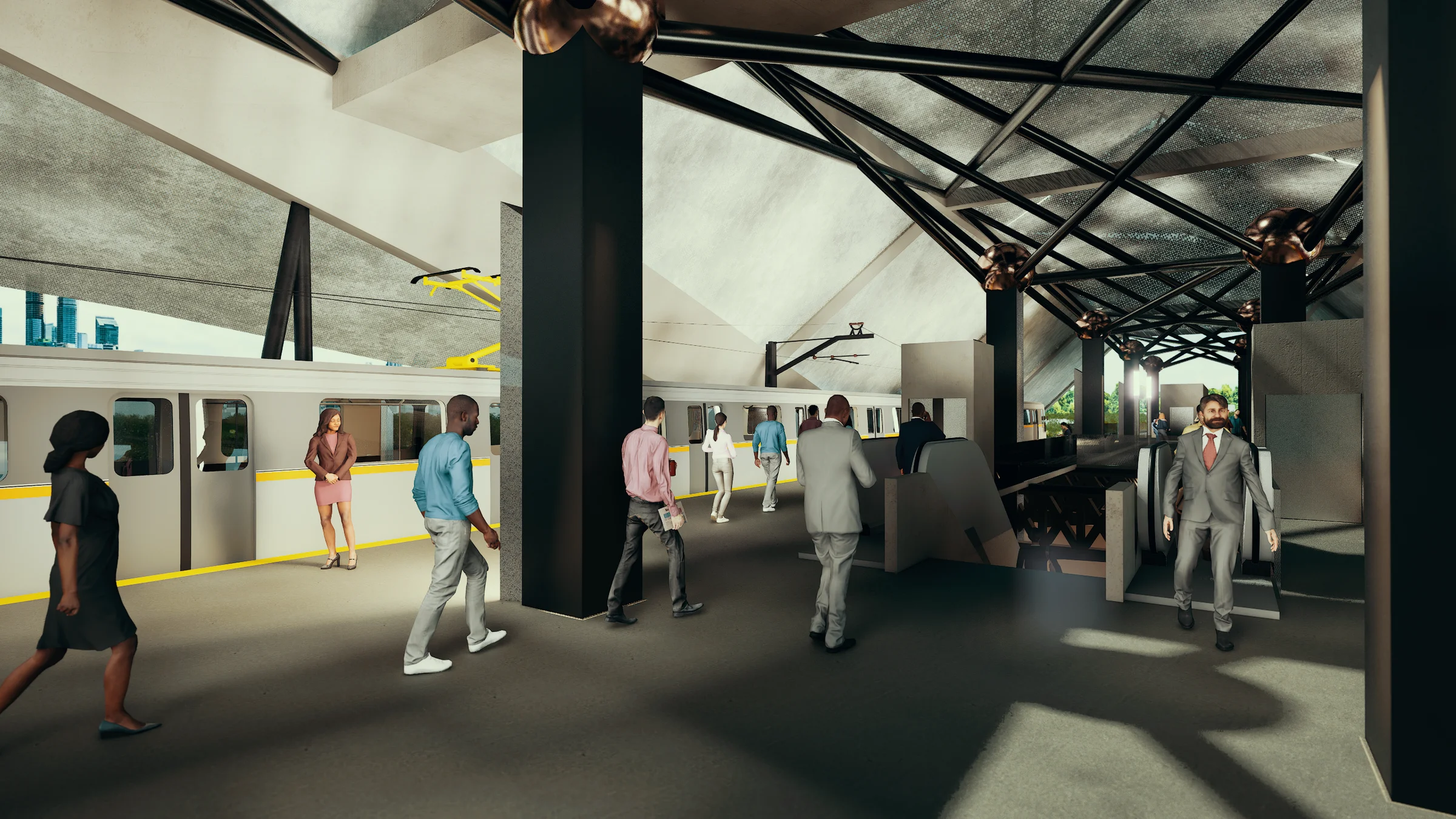 Platform · Train at Station
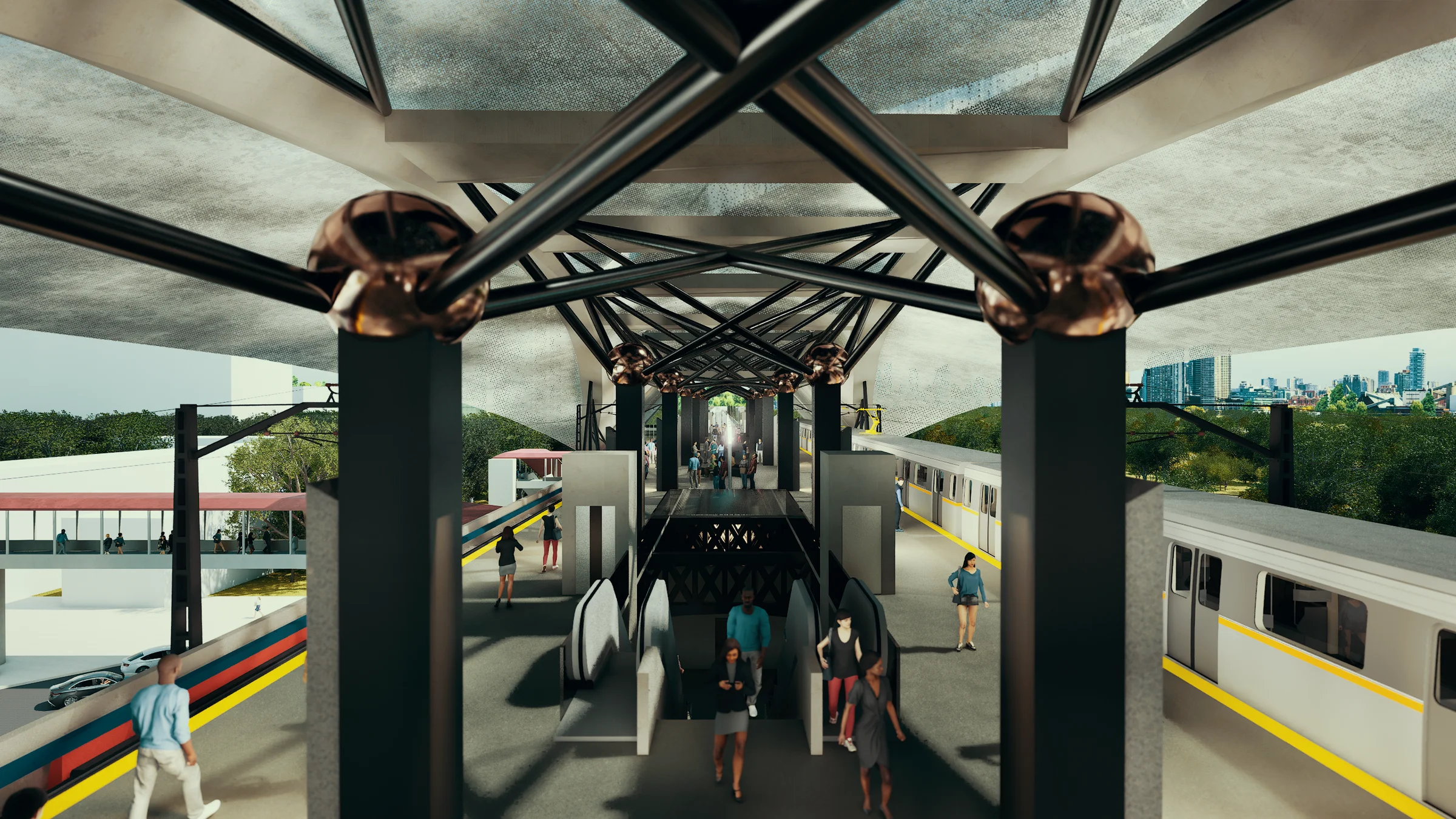 Platform · Island Platform
Sections

Elevations