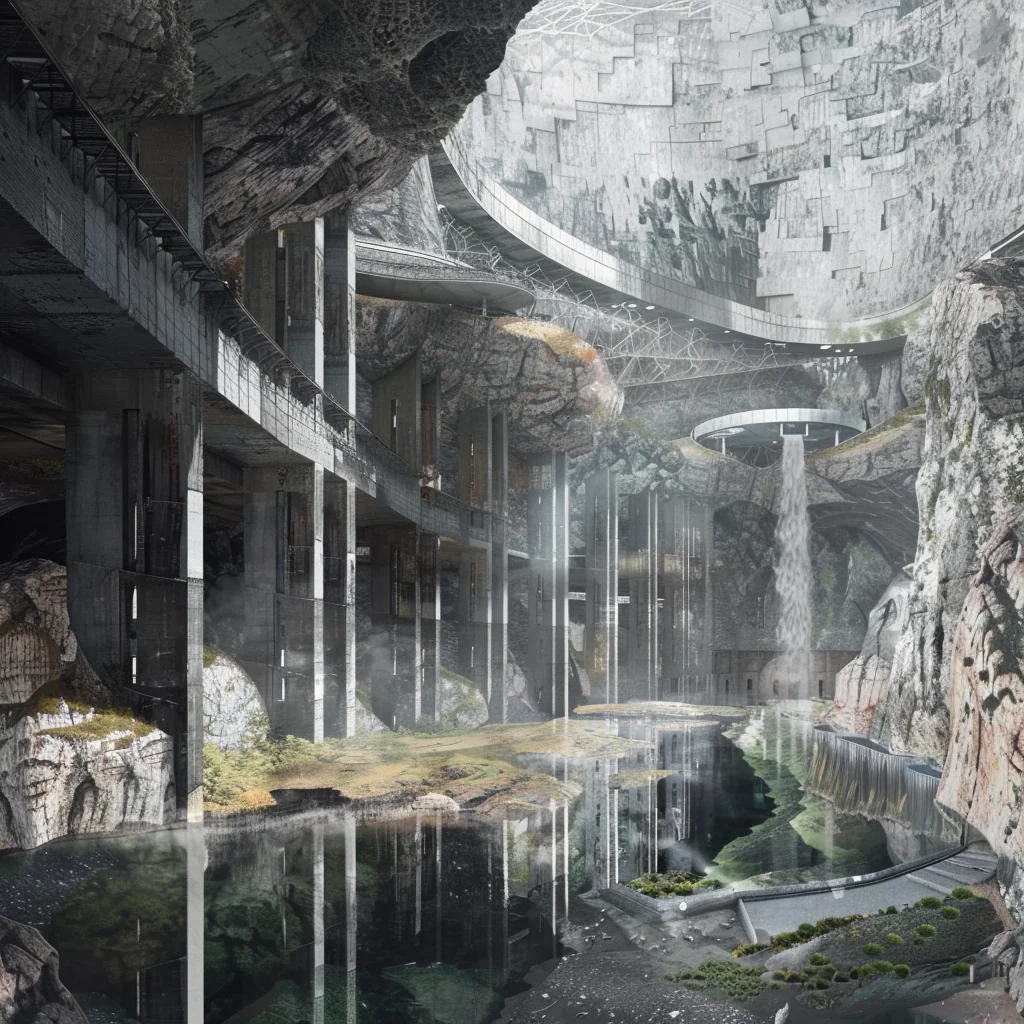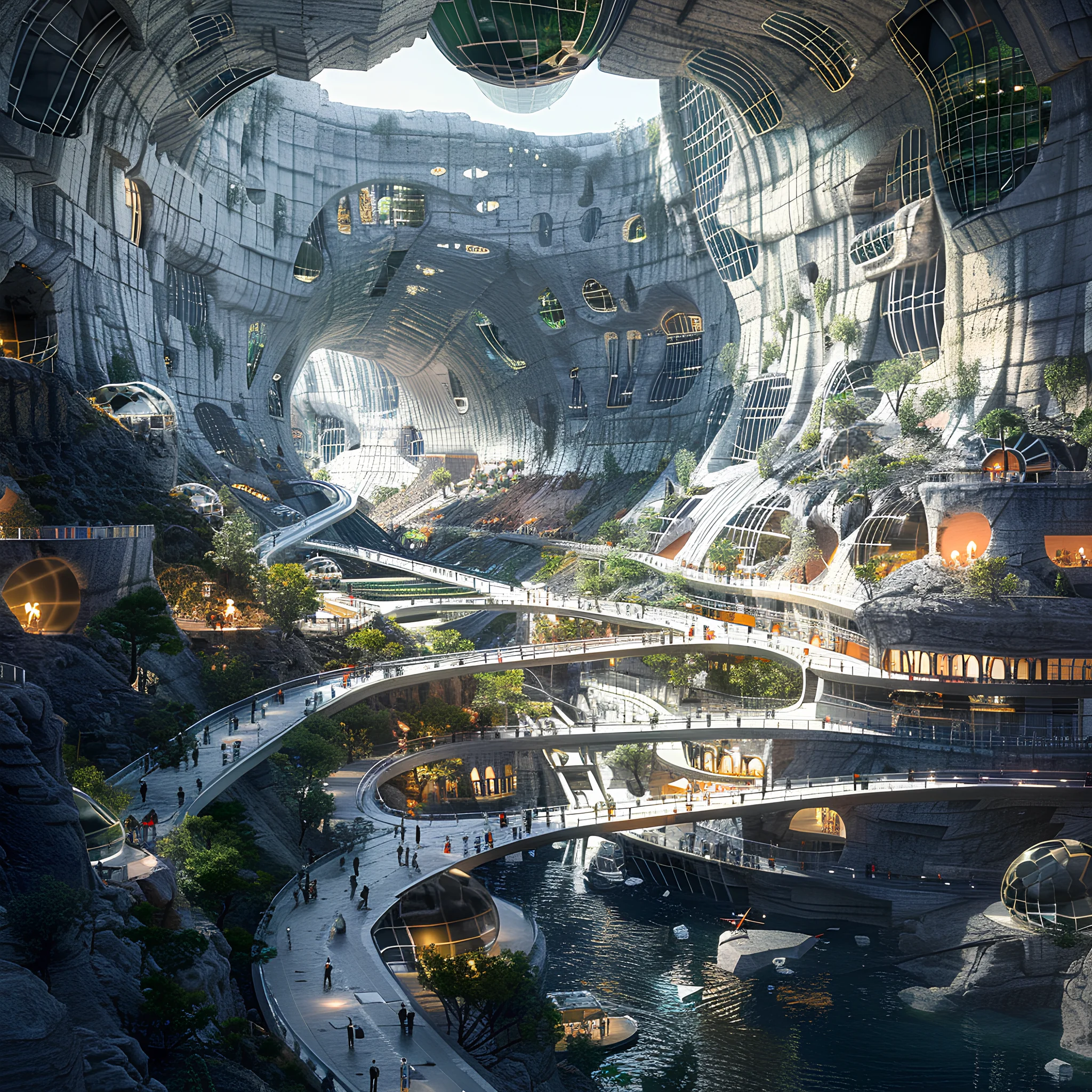
AI Accelerated Architecture · RMIT · Semester 1, 2024
An Agora for Symbiotic
Synthesis of Singularity
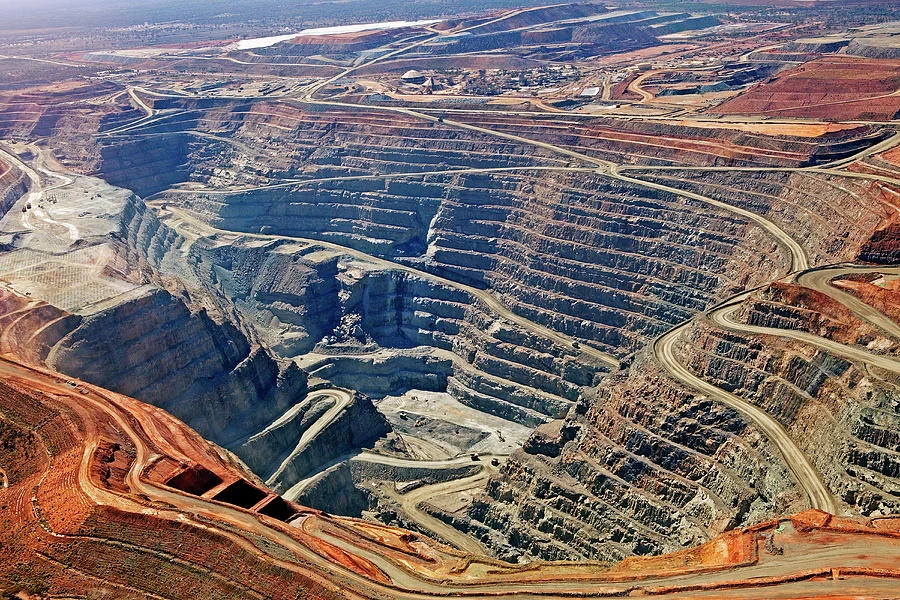
What happens to a gold mine when the gold runs out? Sunrise Dam, Laverton WA: 1.88 square kilometres, open pit begun 1997, 500 metres deep by 2014, underground mining since 2003. The site is a wound in the earth that will outlast its industrial purpose by centuries. This project asks what it becomes next.
The proposal transforms the exhausted mine into a subterranean civic agora: a megacity built into clusters of open mining pits, surrounded by forested landscape. Architectural elements follow the natural topography, creating terraced structures that cascade down the slopes. Eight programme zones descend through the strata, each calibrated to its particular underground condition: light, temperature, structural geology, proximity to the surface above. The formal language oscillates between brutalist mass and organic fluidity, as if the architecture had been carved and grown simultaneously.
AI tools were used not as rendering shortcuts but as design instruments. Each tool introduced a different kind of agency into the process: ChatGPT as programmatic thinker, Midjourney as spatial intuition, DALL-E 3 as architectural translator, ComfyUI as cinematic synthesizer. The question was not which tool to use but how far to trust each one before intervening.
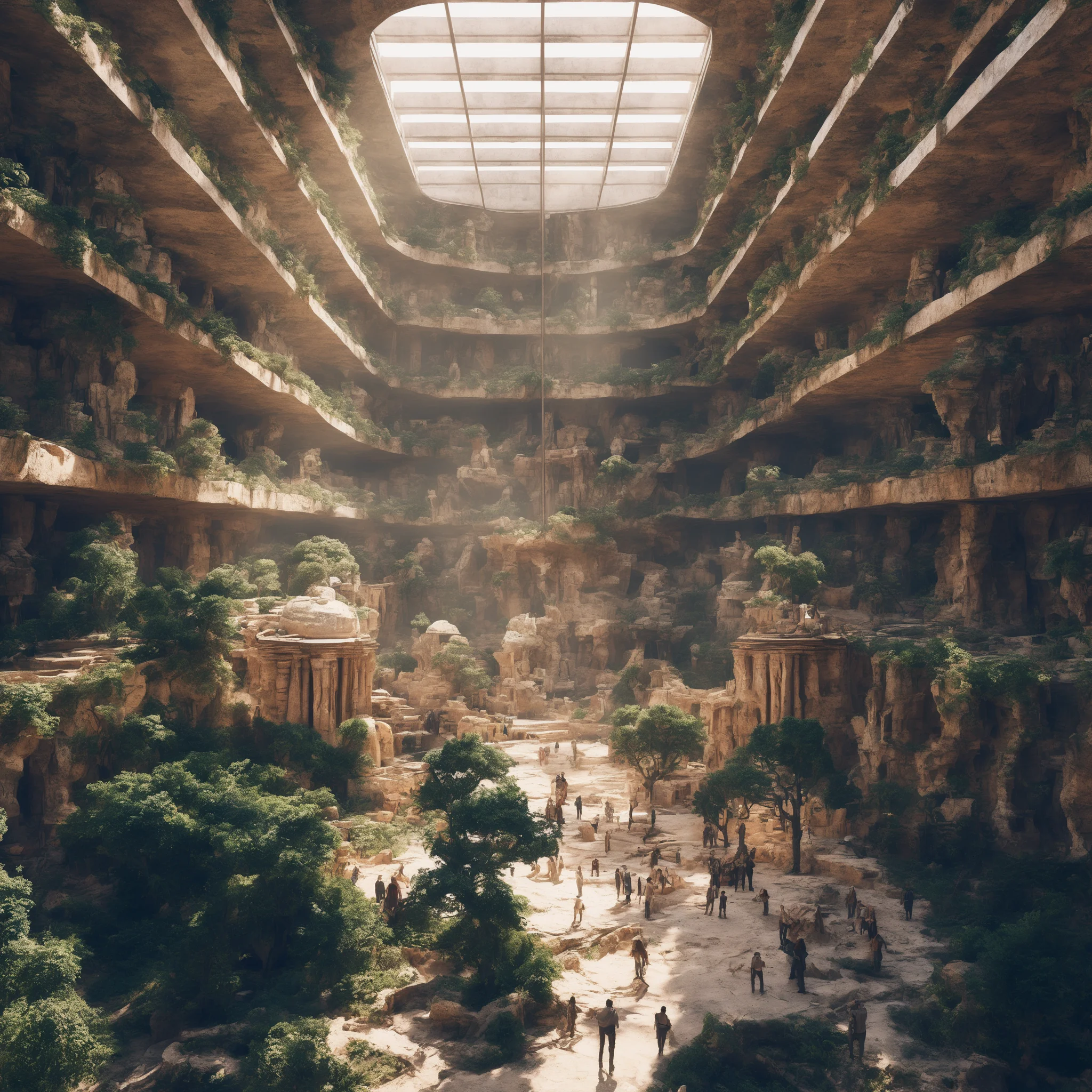 The Agora: central civic space, terraced rock gardens under skylights
The Site
Sunrise Dam Gold Mine sits 55 kilometres south of Laverton in Western Australia's arid interior. AngloGold Ashanti began open-pit operations in 1997. By 2014 the main pit had reached 500 metres below surface. Underground mining via long-hole open stoping and sublevel caving began in 2003 and continues alongside the pit operations. A fine-grind and flotation circuit was added in 2018. Mining at the adjacent Golden Delicious pit ran from 2021 to 2023.
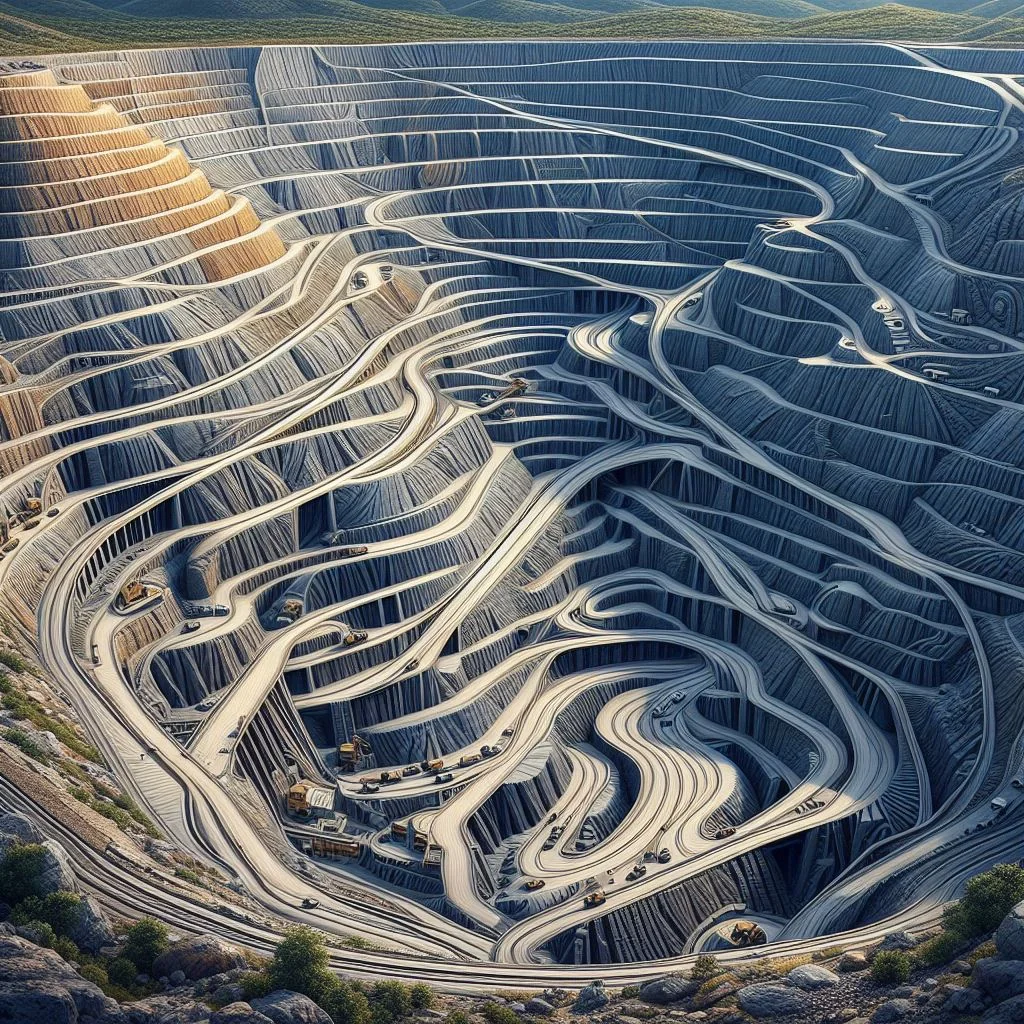
The pit is 1.88 square kilometres at the surface: terraced, spiralling, geological strata exposed in concentric bands of ochre, rust and grey. The void is not a ruin. It is a civic proposition waiting for a brief.
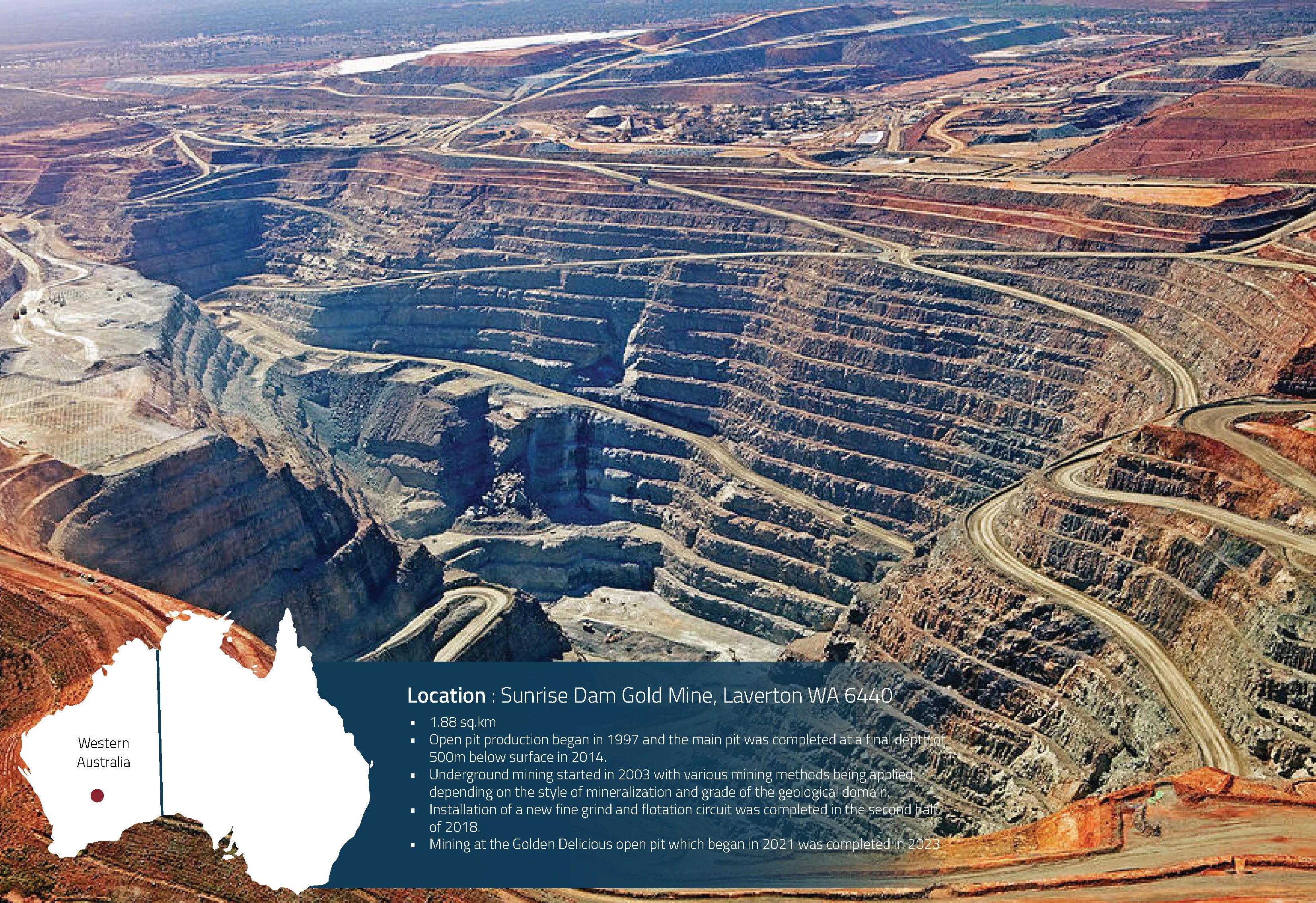 Sunrise Dam Gold Mine, Laverton WA: 1.88 km², 500m depth
Masterplan
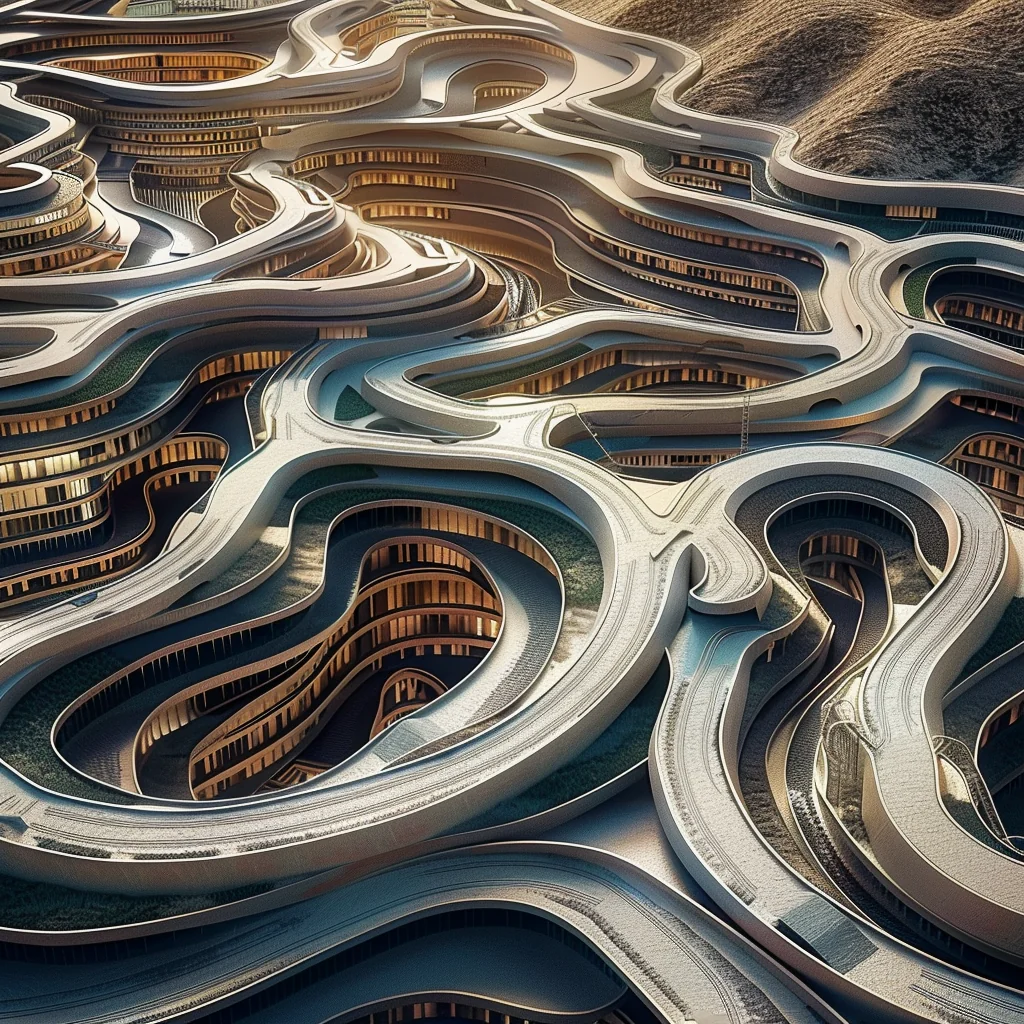
The design reimagines the mine's terraced topography as inhabited infrastructure. Sinuous building forms follow the contour lines of the original pit walls, creating a continuous urban fabric that descends from the forested surface to the deepest underground chambers. Above ground, clusters of terraced structures integrate with the rehabilitated landscape. Below, the strata are carved into distinct programme zones, each responding to its depth, geology, and light condition.
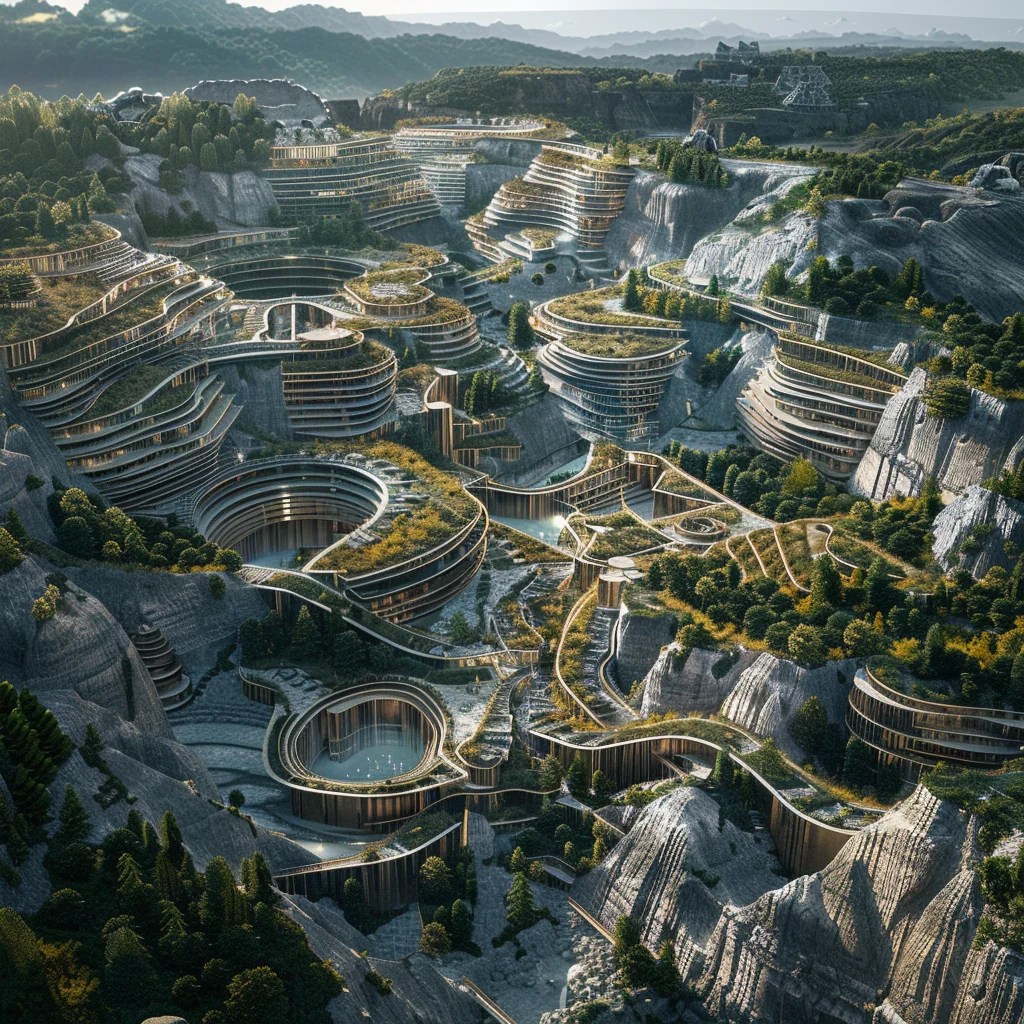 Macro-scale aerial: terraced structures cascading into rehabilitated mine pits
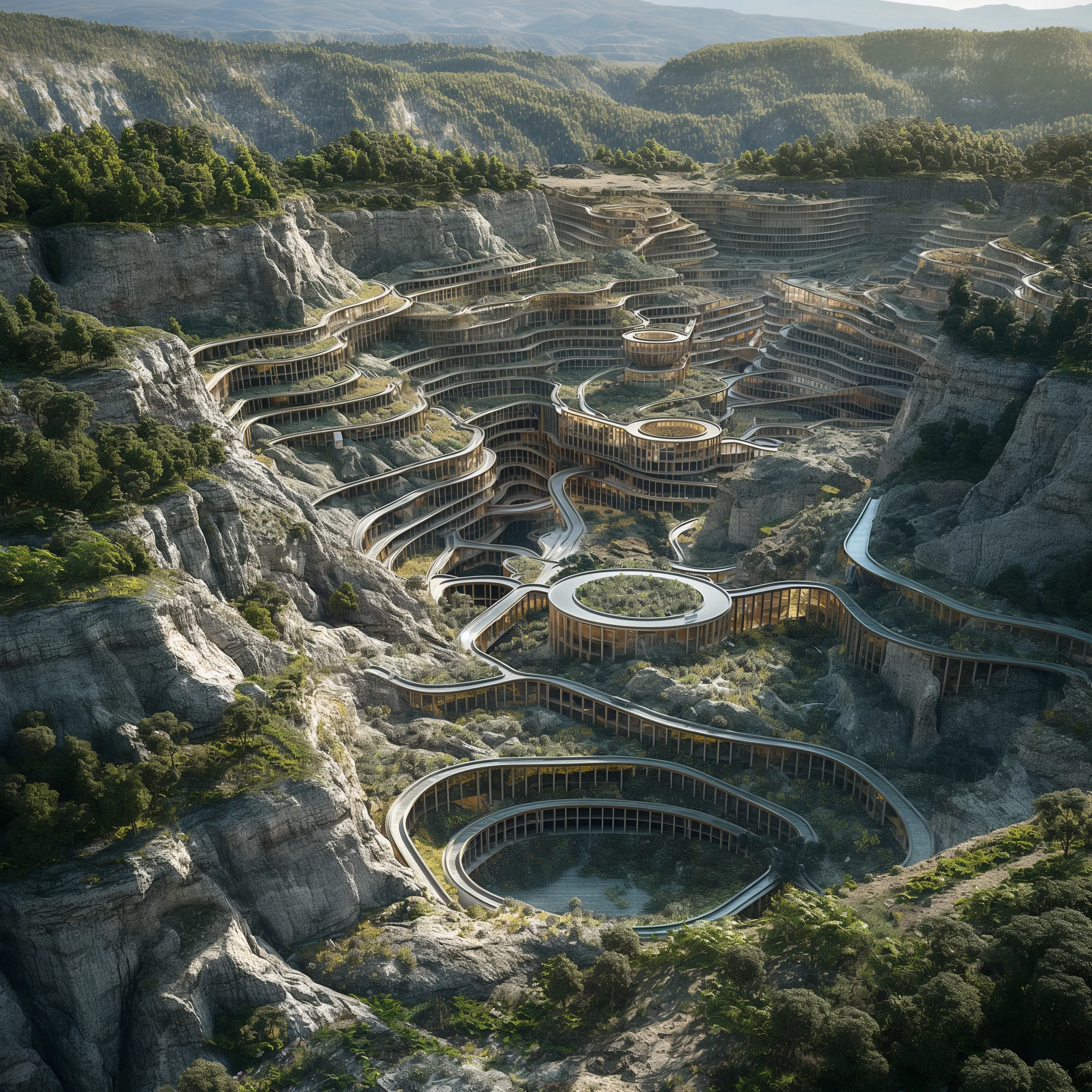 Aerial perspective: inhabited terraces embedded in pit walls
AI Workflow
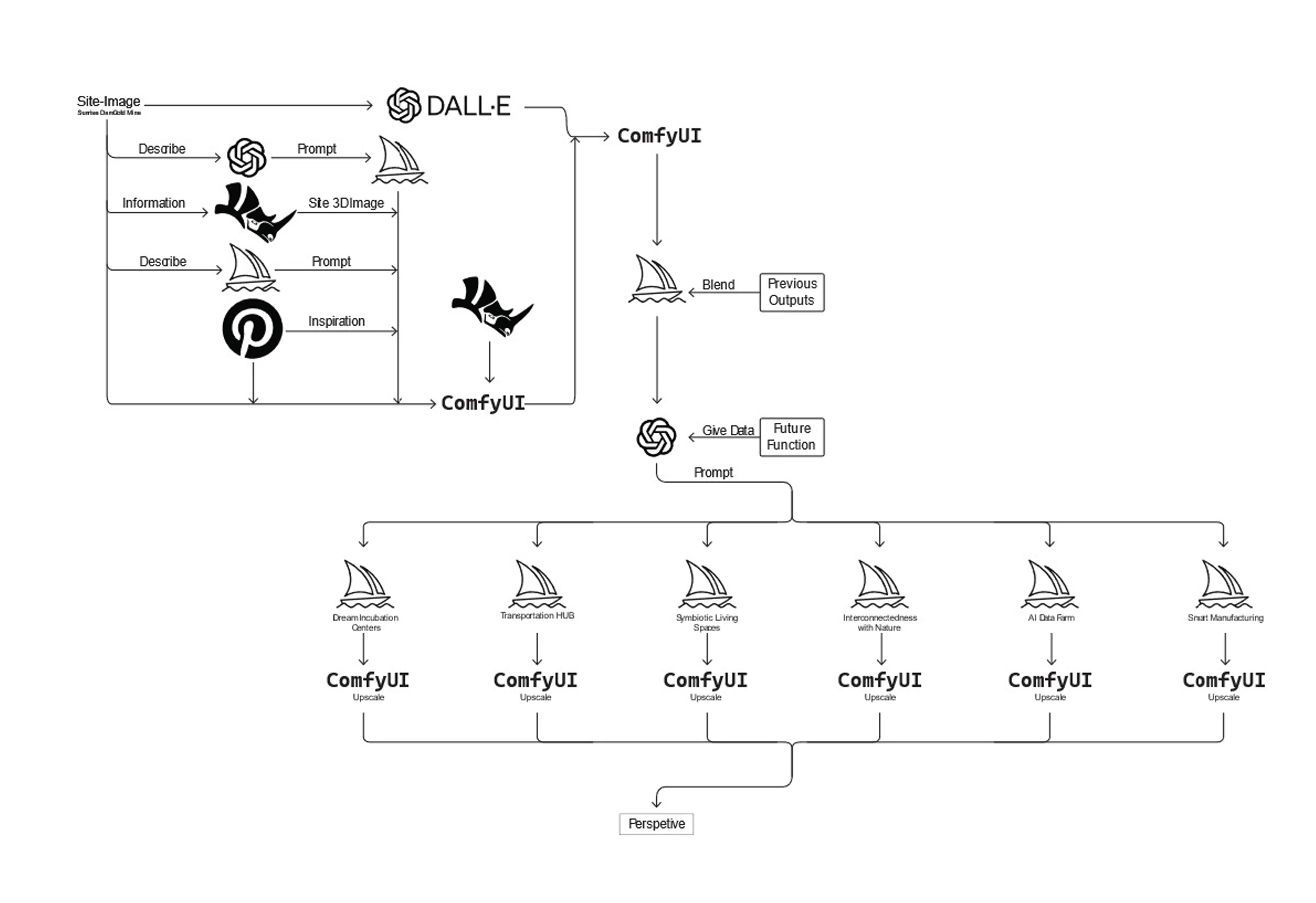
The studio's proposition was that AI is not a tool for finishing architecture but for beginning it. The workflow was built in four deliberate phases, each using a different instrument for a different cognitive task. No phase was skipped. The output of each fed the next.
Phase 1: Research and Briefing. ChatGPT was given Superflux's "Mitigation of Shock" as a conceptual frame and asked to speculate on future functions for an exhausted mine site. It produced detailed programme briefs for each zone, then generated Midjourney-ready prompts for each one. Text as architecture.
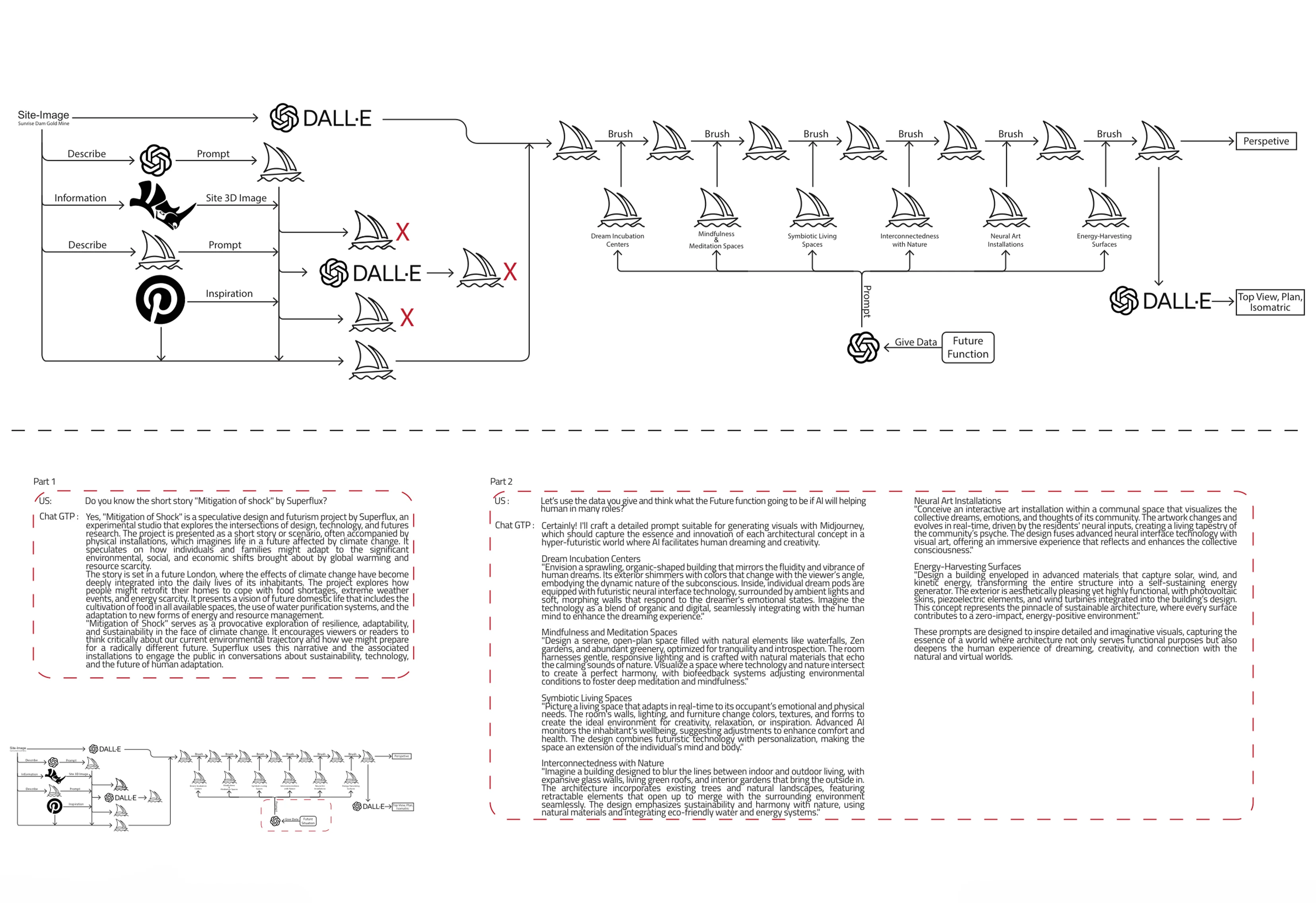 Phase 1 pipeline: ChatGPT briefs → DALL-E + Midjourney Brush
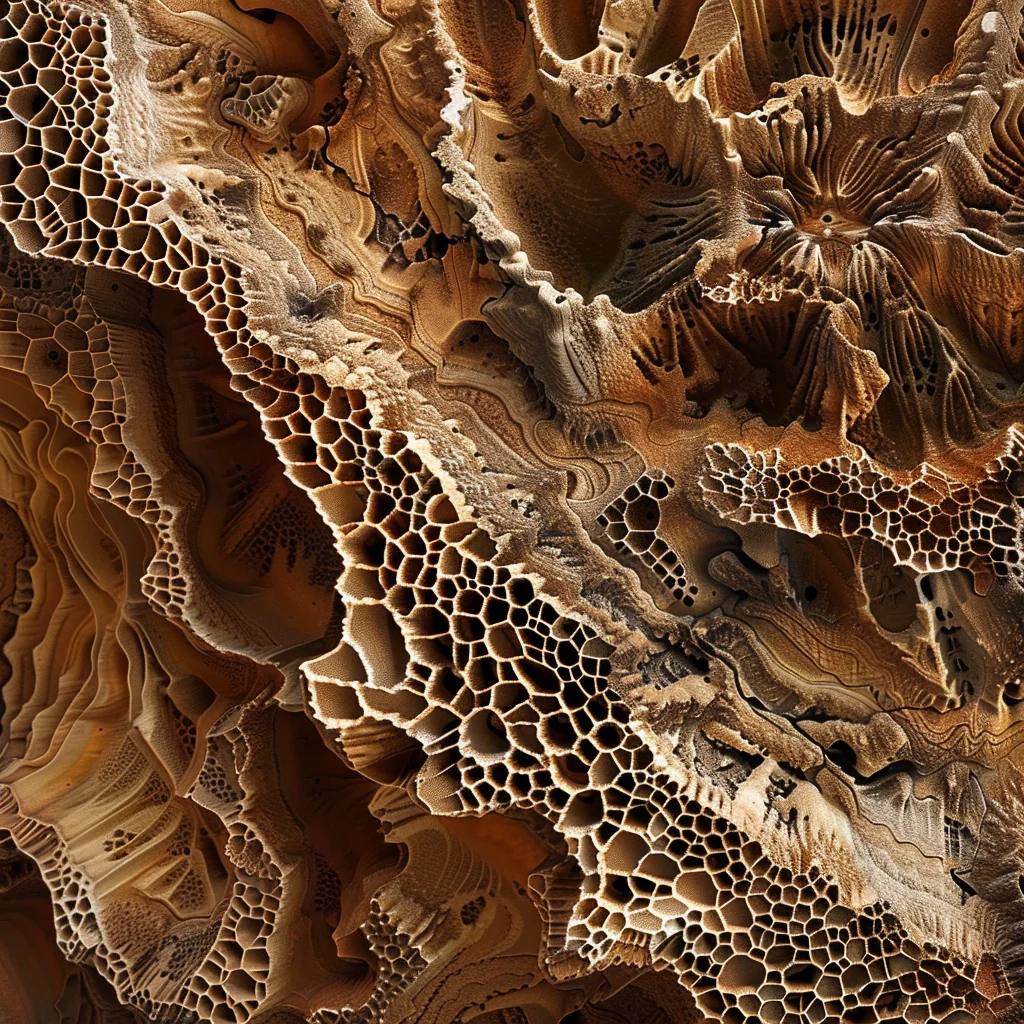
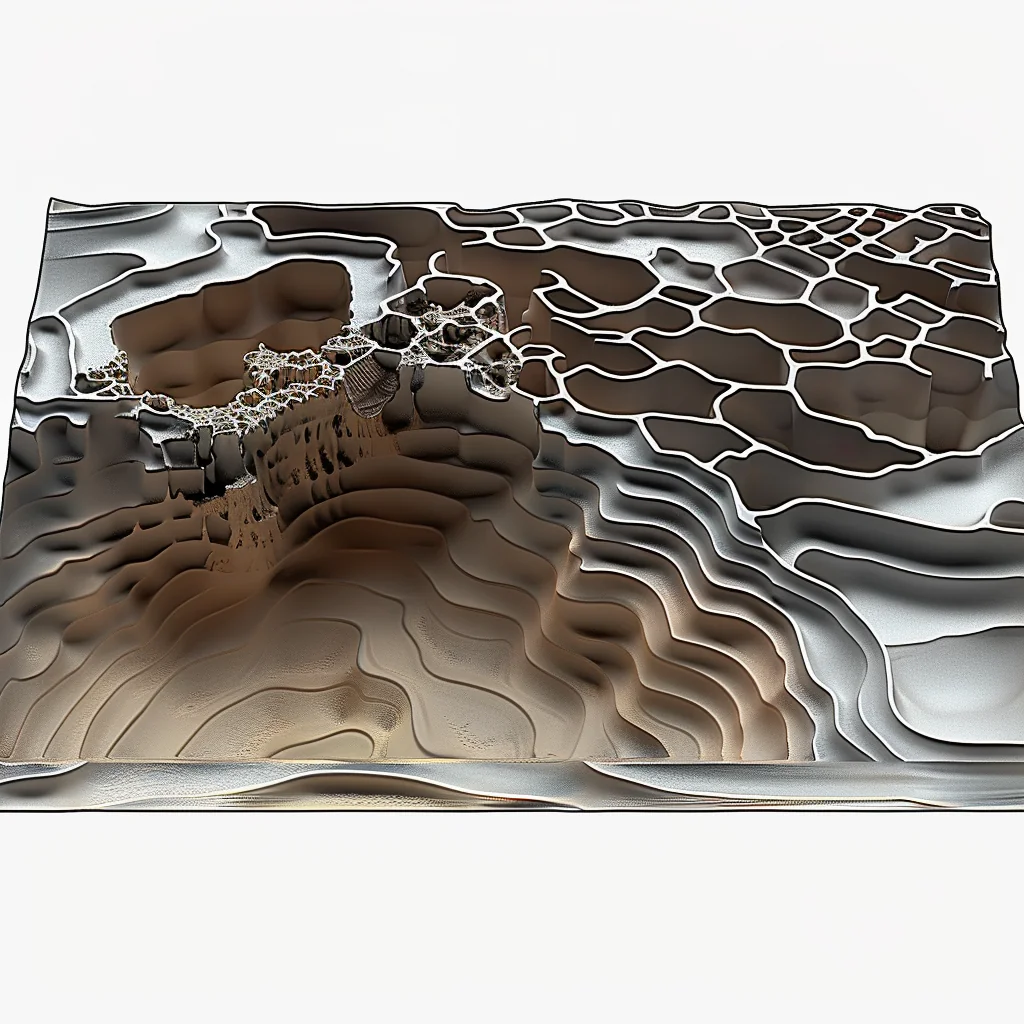
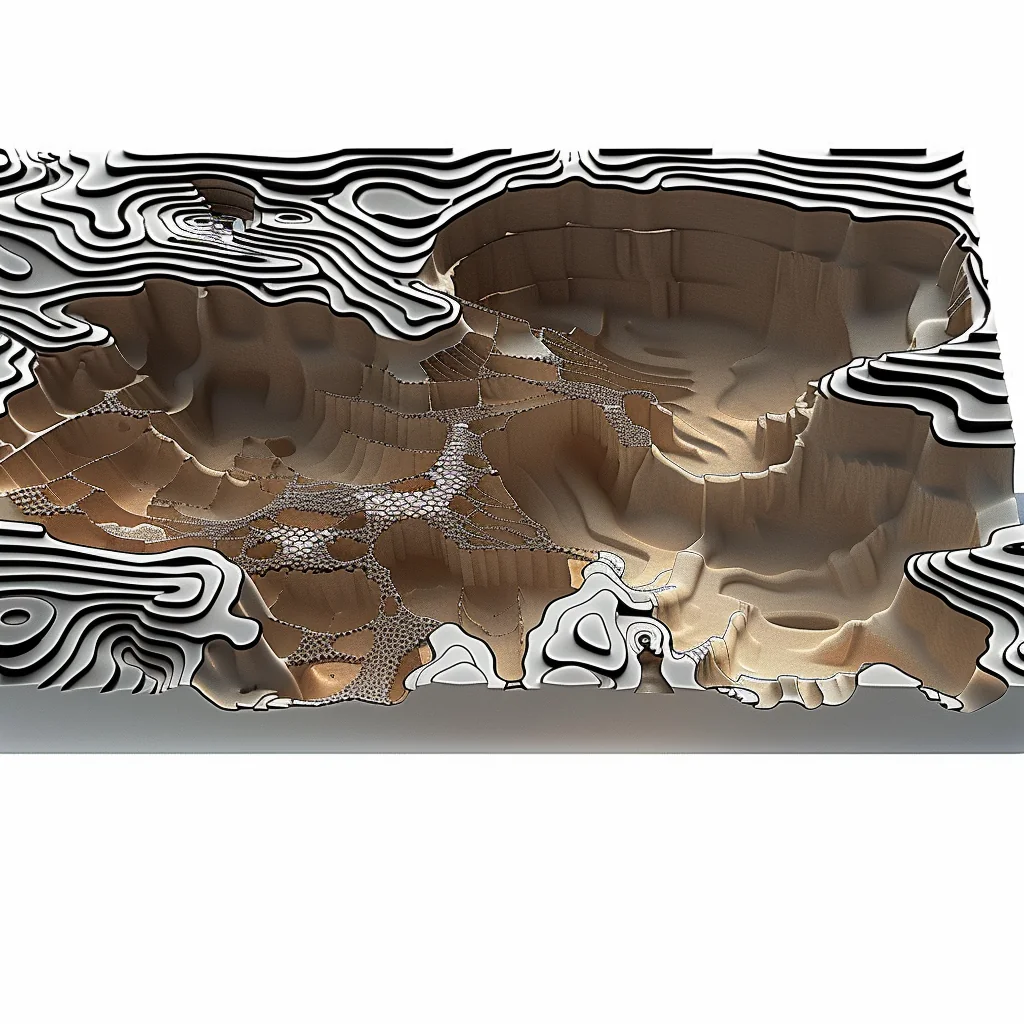
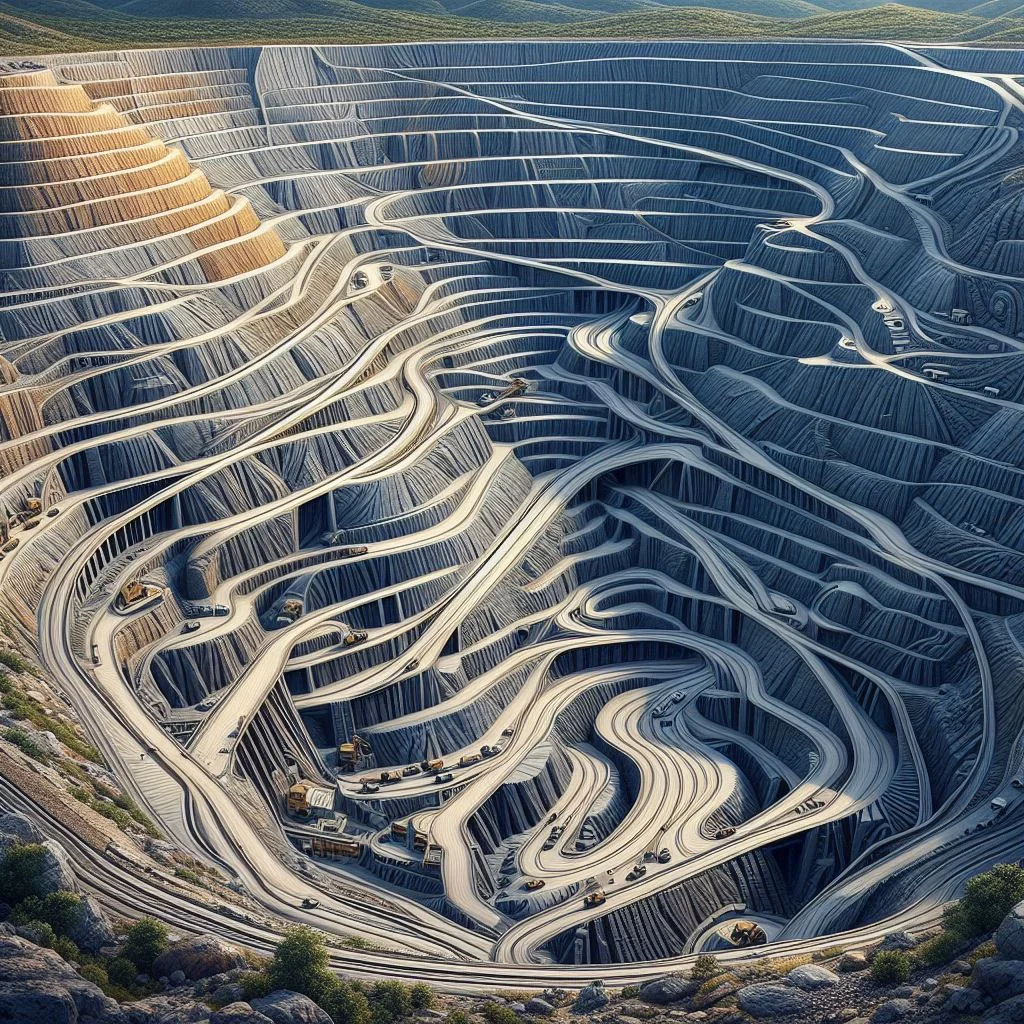
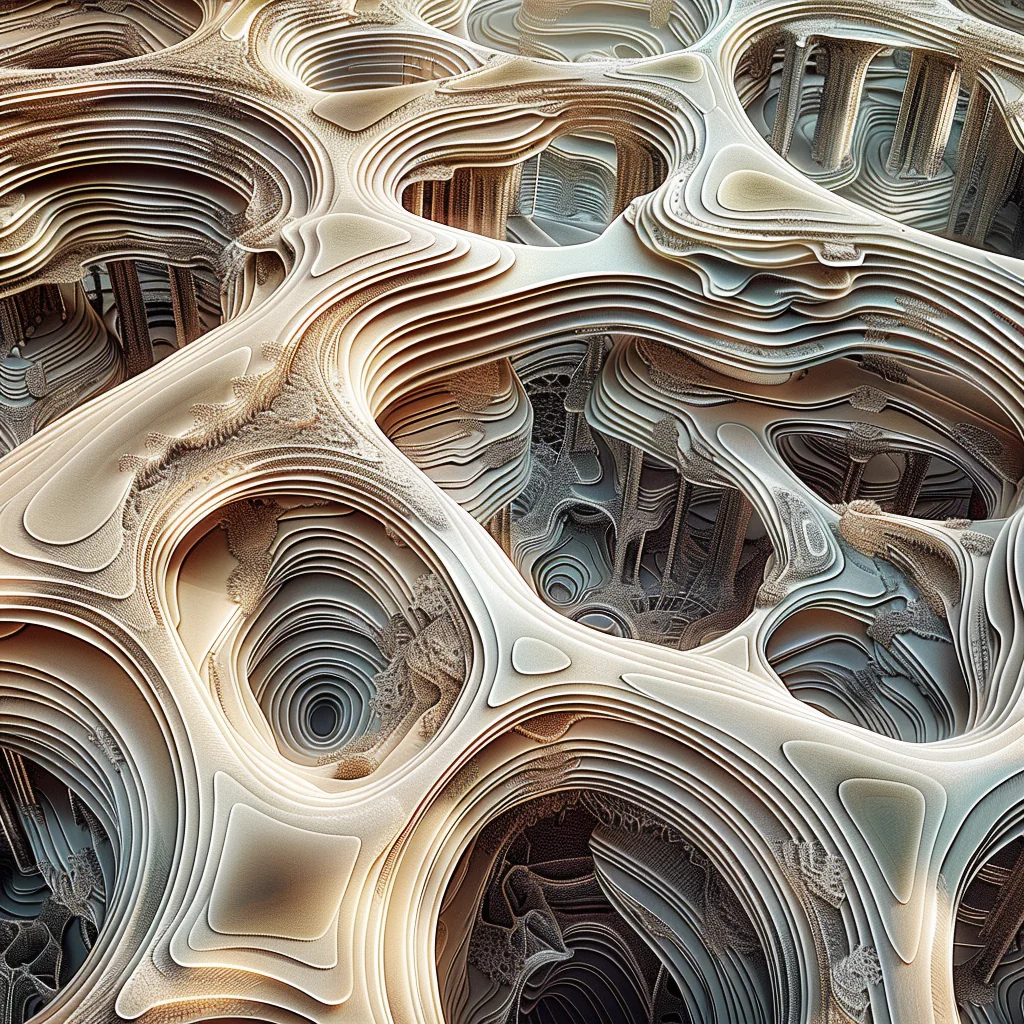
Phase 2: Site Reading. A photograph of Sunrise Dam was fed to ChatGPT, which described the terrain in precise visual language: terraced levels, winding roads, colour striations, geological scale. That description went to DALL-E, which produced abstract architectural reinterpretations. Simultaneously, Midjourney generated close-up geological texture studies from the same description: rock formations, honeycomb voids, lacework stone. A material vocabulary for the project.
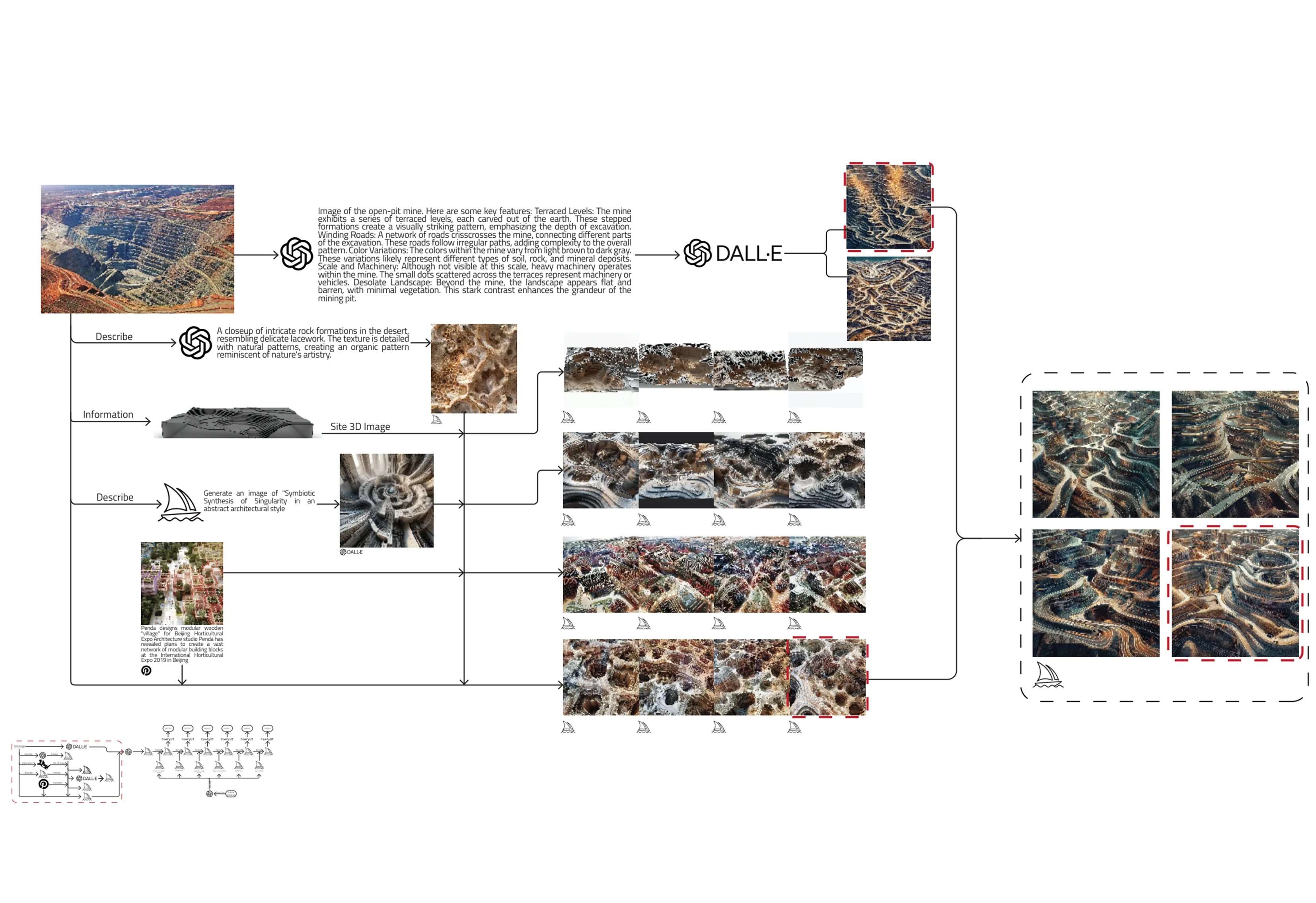 Phase 2 pipeline: Site Image → ChatGPT Describe → DALL-E + Midjourney
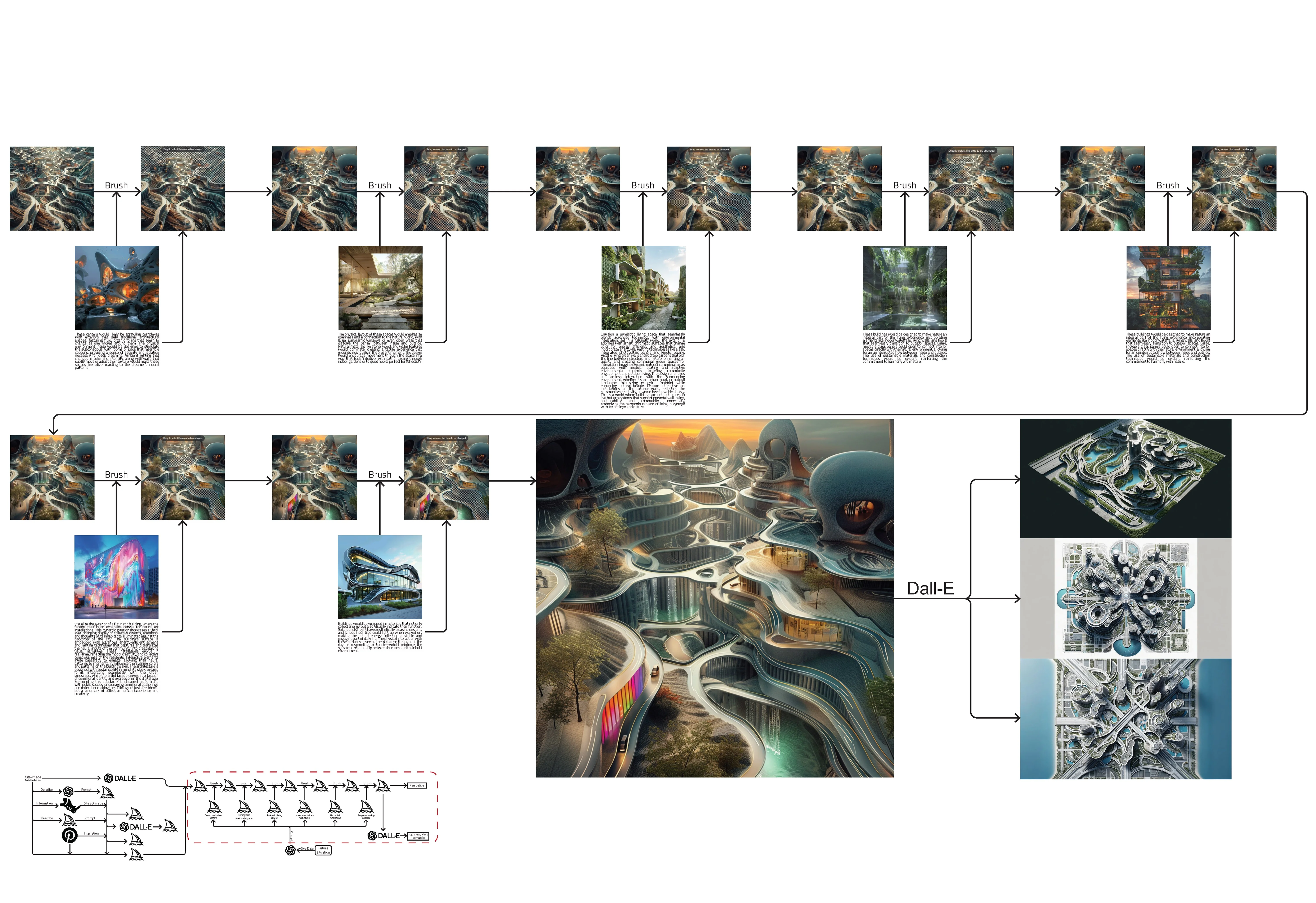 Phase 2 spatial outputs: Brush iterations and architectural reinterpretations
Terraced Levels: The mine exhibits a series of terraced levels, each carved out of the earth. These stepped formations create a visually striking pattern, emphasising the depth of excavation.
Winding Roads: A network of roads crisscrosses the mine, connecting different parts of the excavation. These roads follow irregular paths, adding complexity to the overall pattern.
Colour Variations: The colours within the mine vary from light brown to dark grey, representing different types of soil, rock, and mineral deposits.
Desolate Landscape: Beyond the mine, the landscape appears flat and barren, with minimal vegetation.
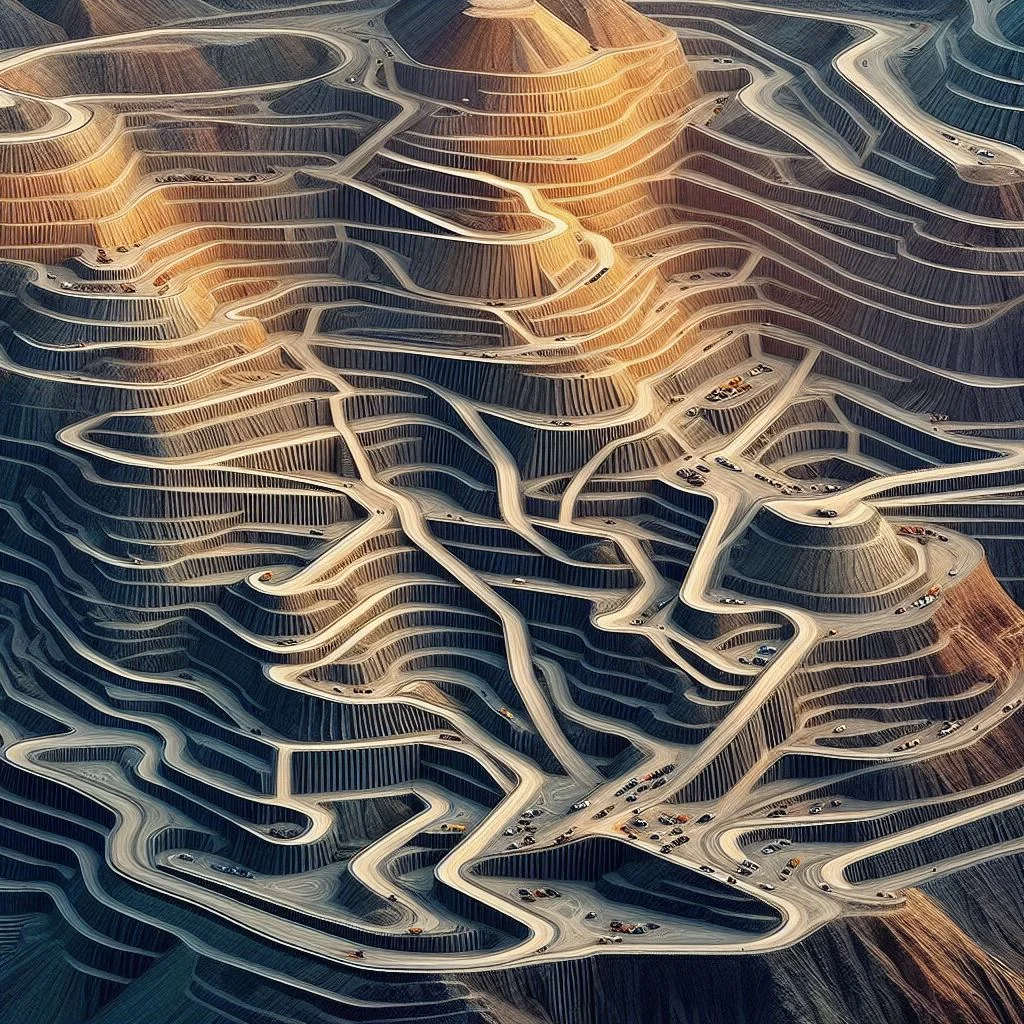
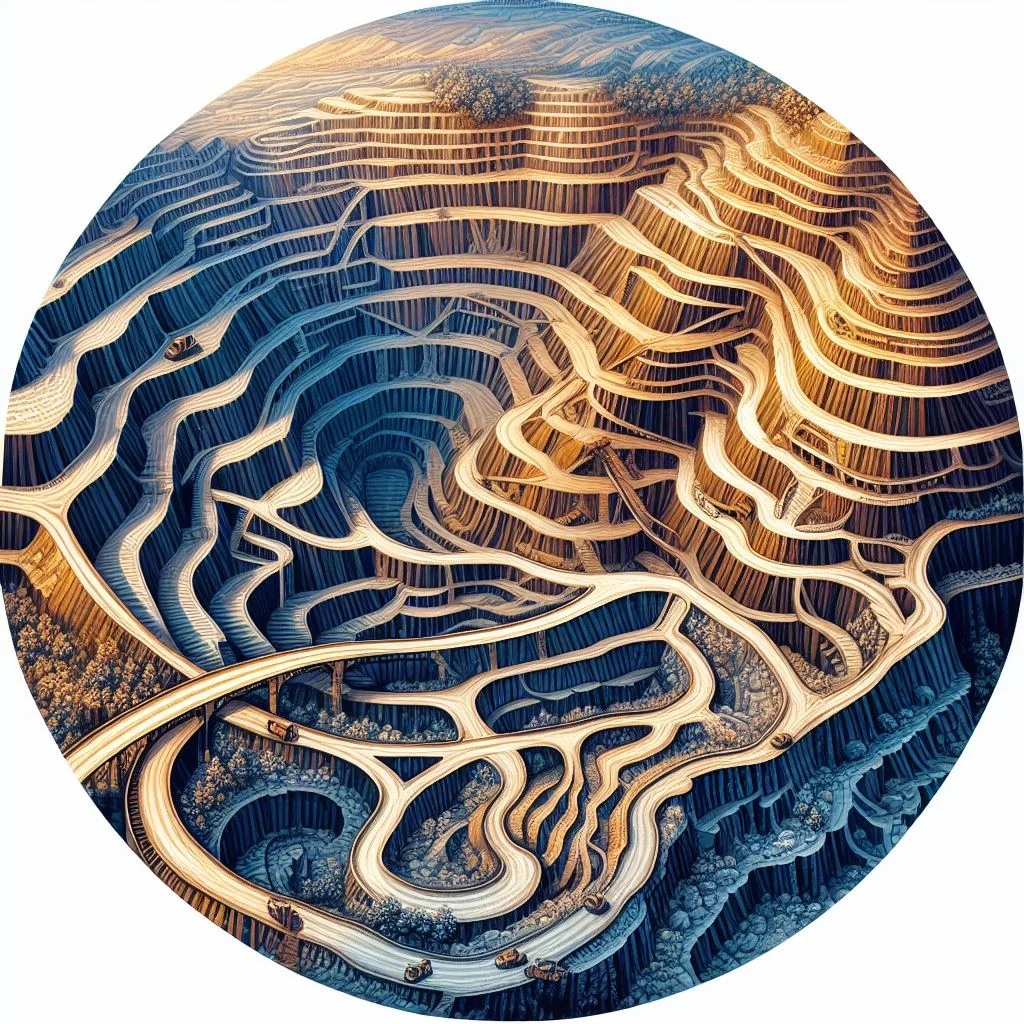
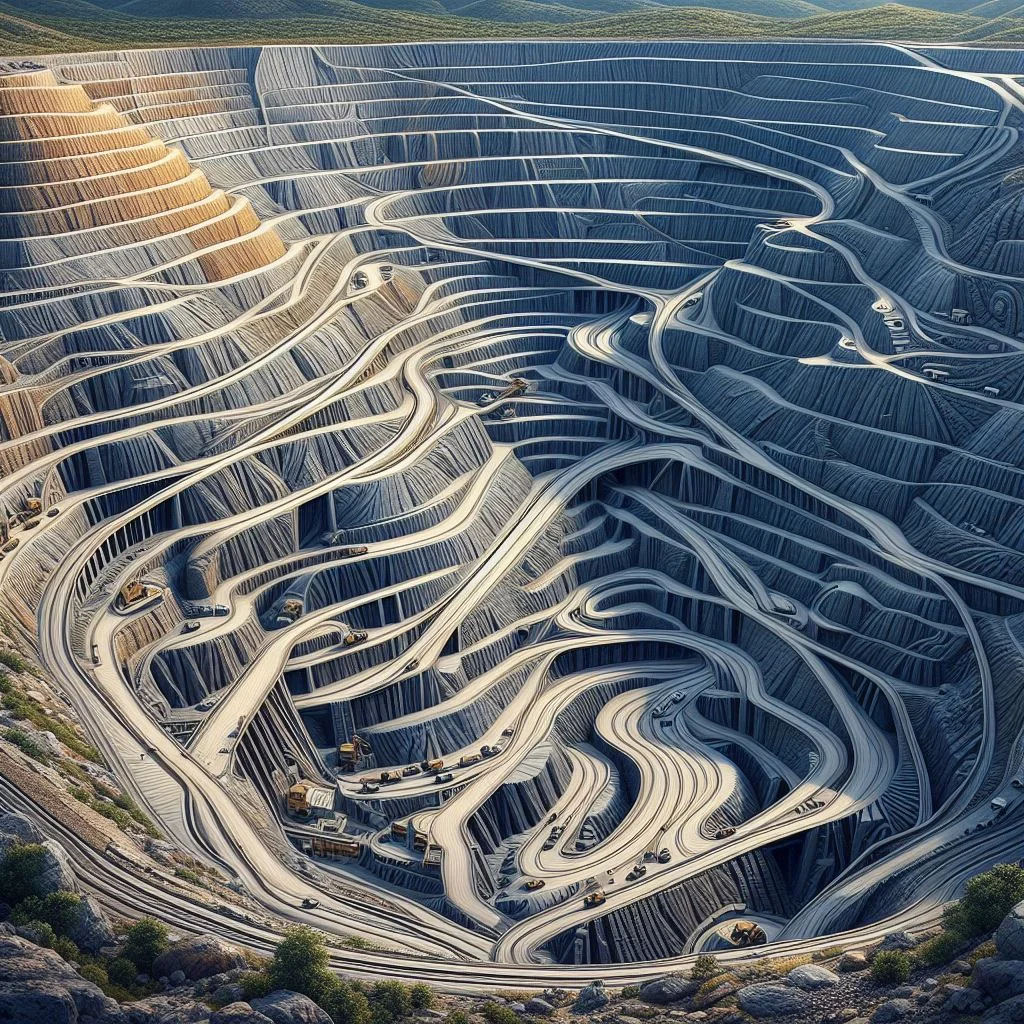
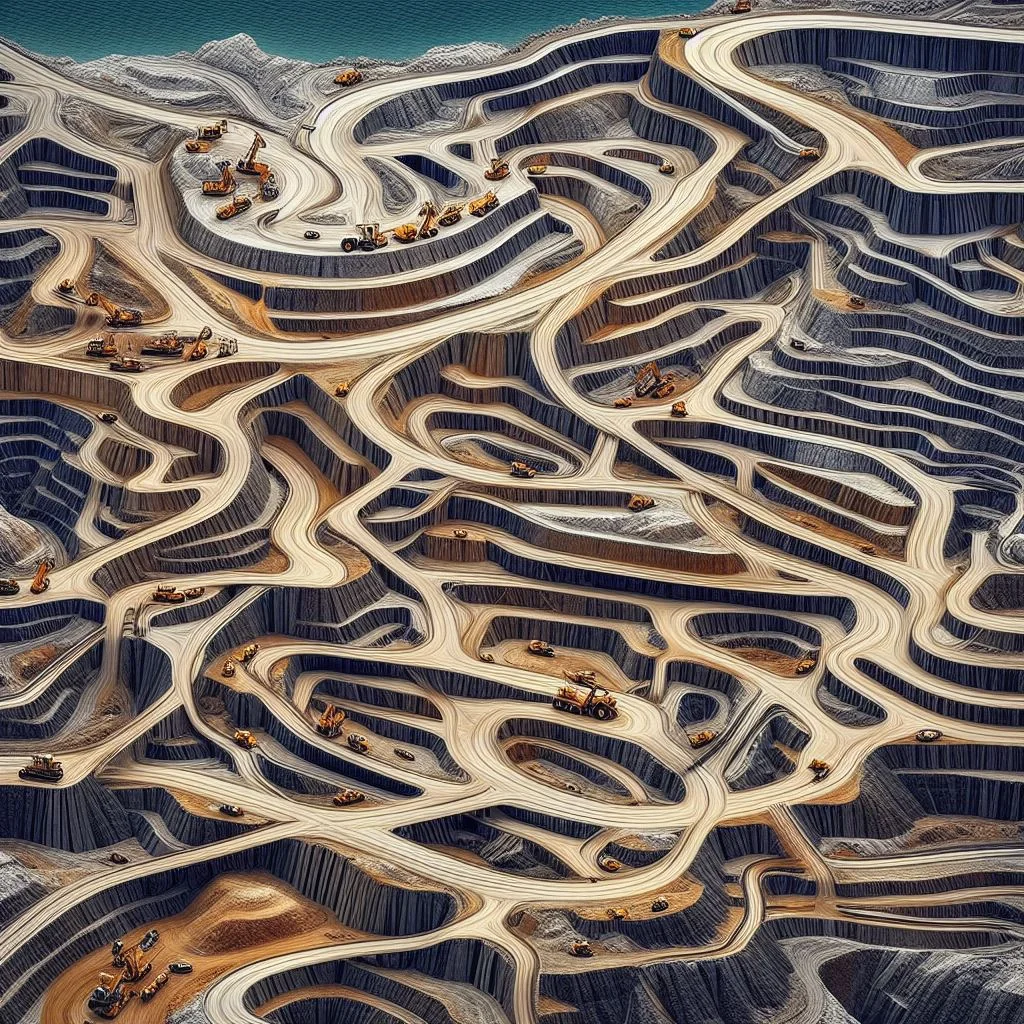
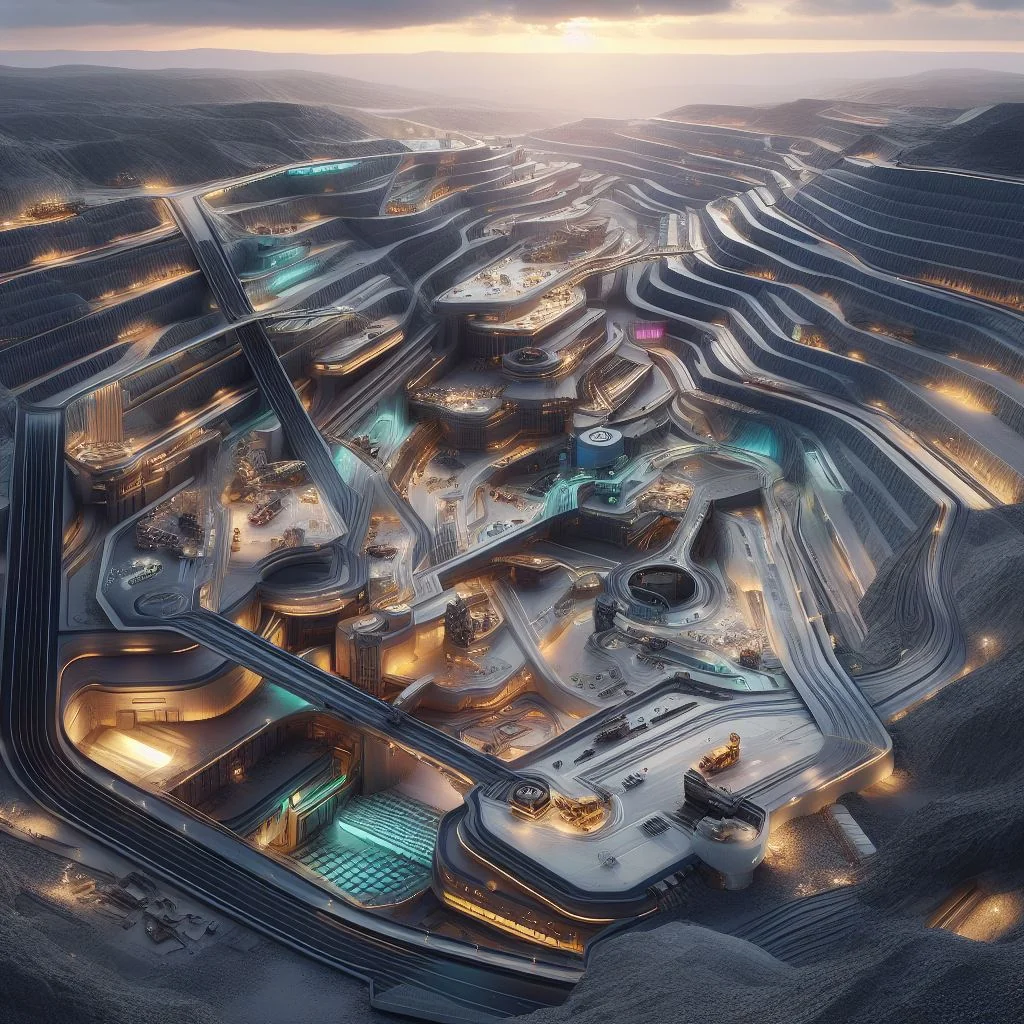
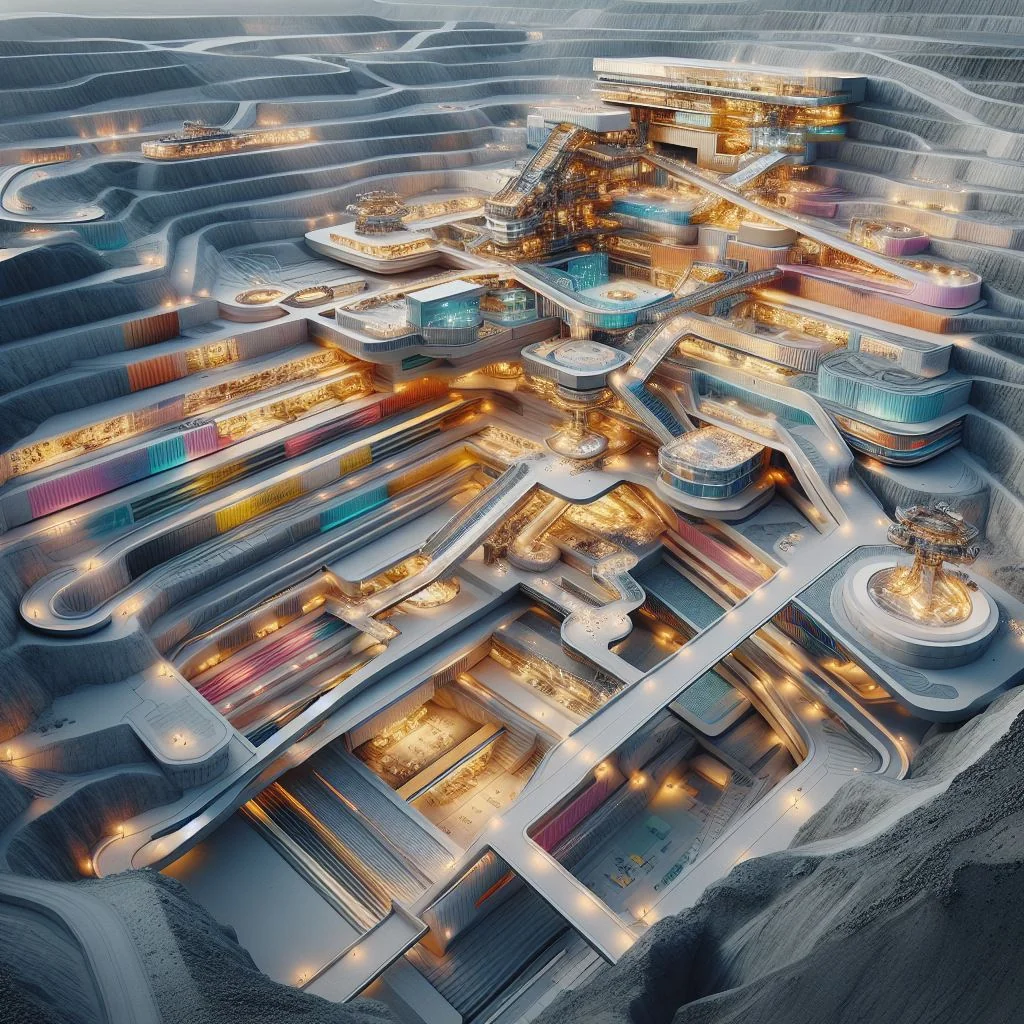
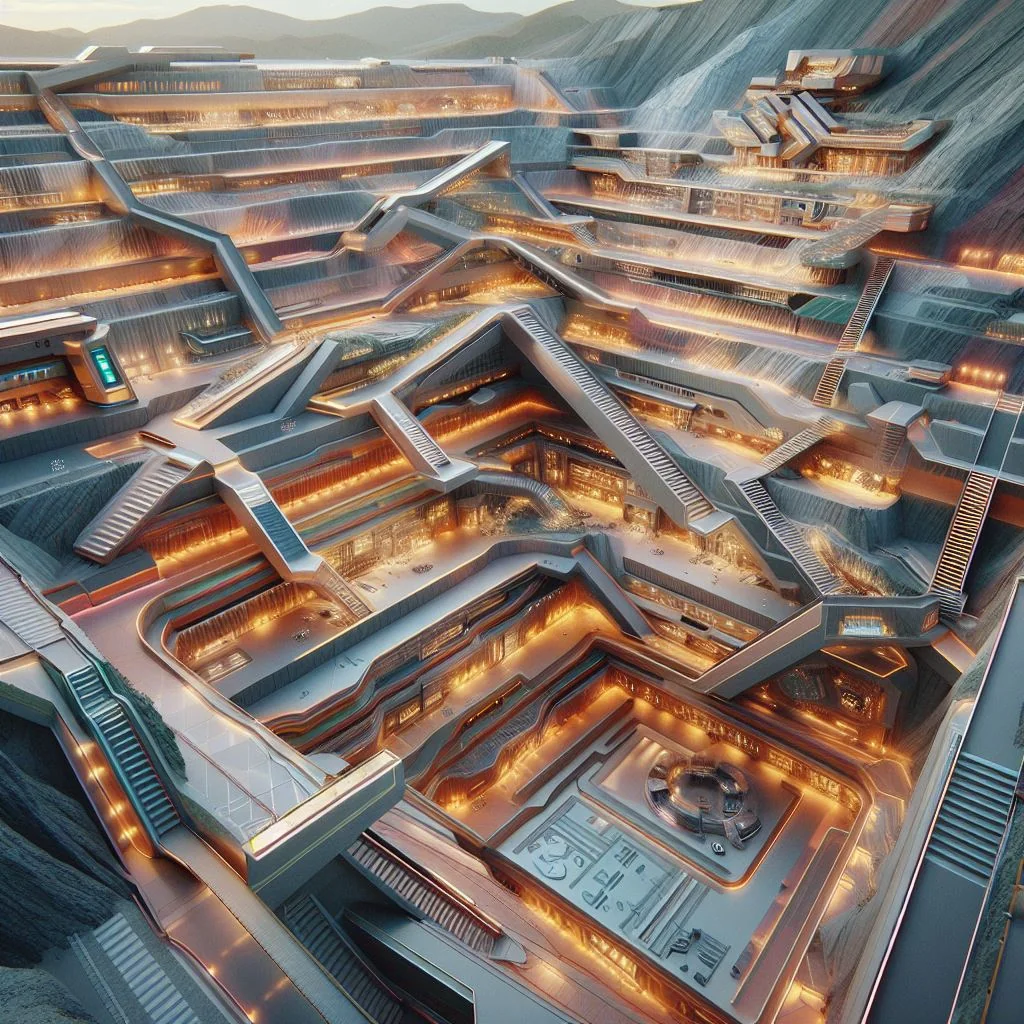
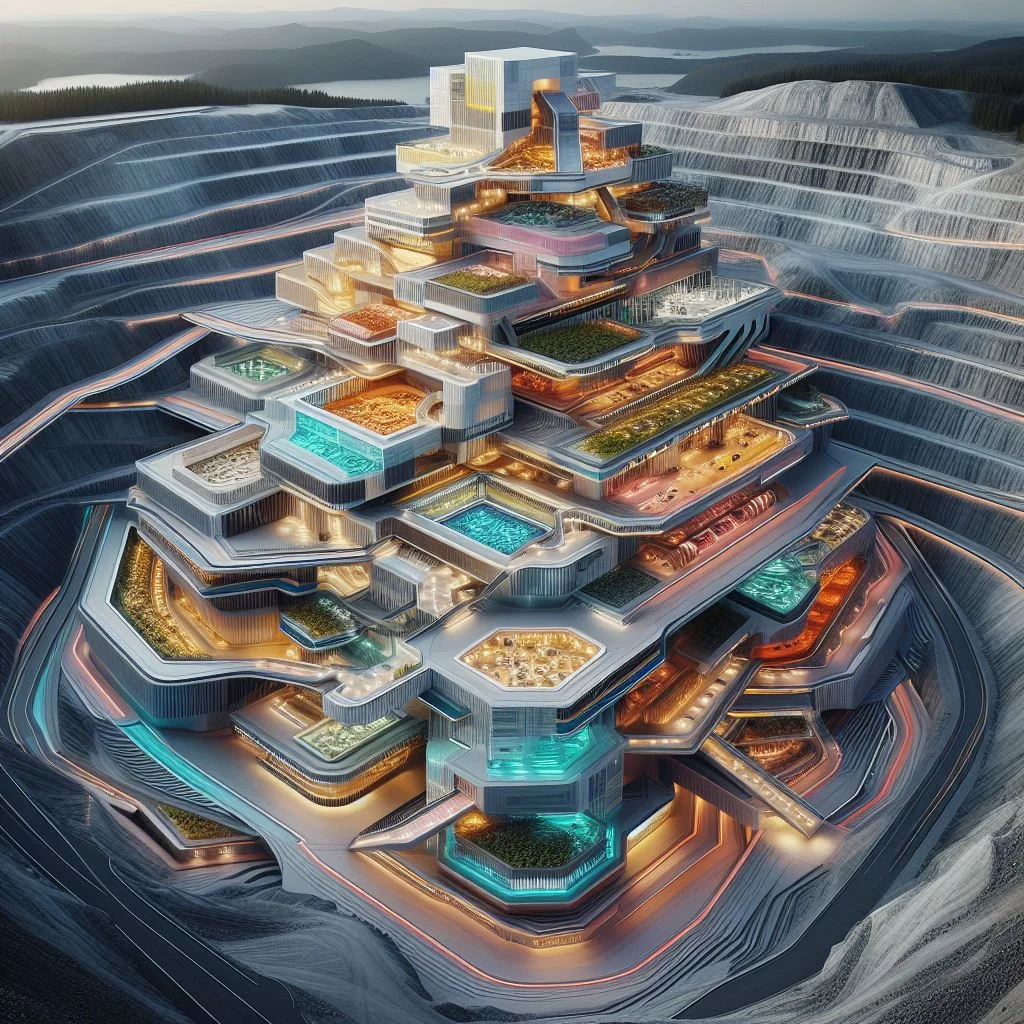
--v 6.0 - Upscaled (Creative) by @Shahriyar (fast)
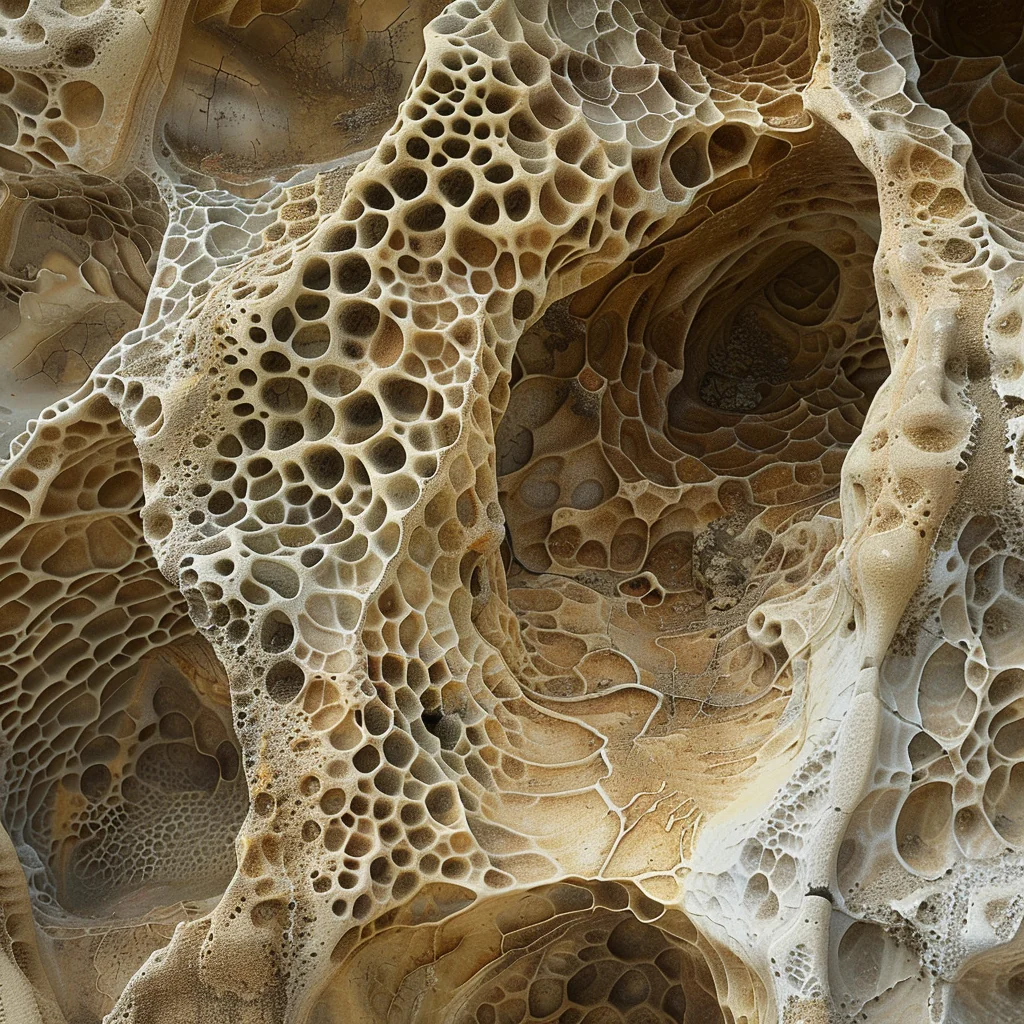
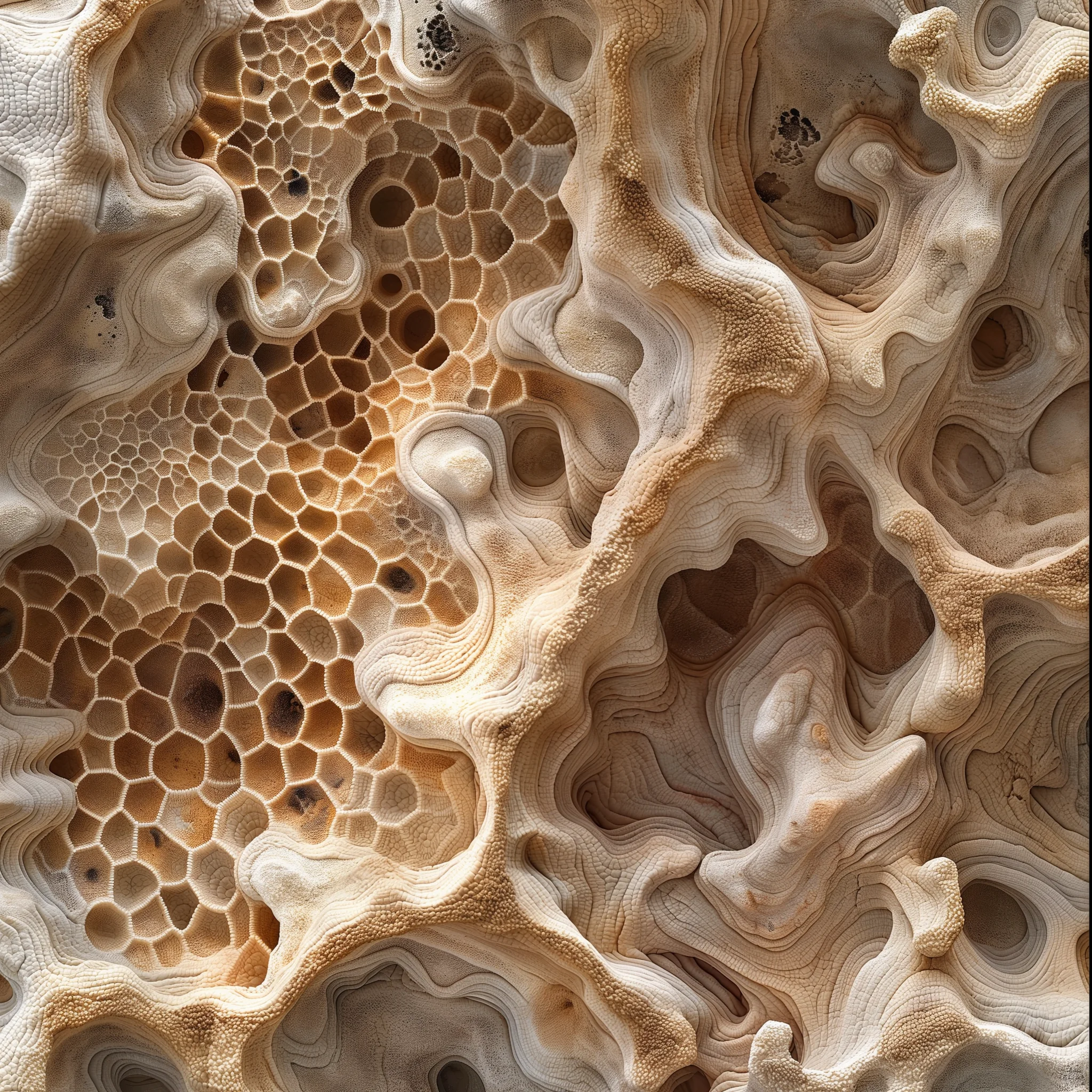
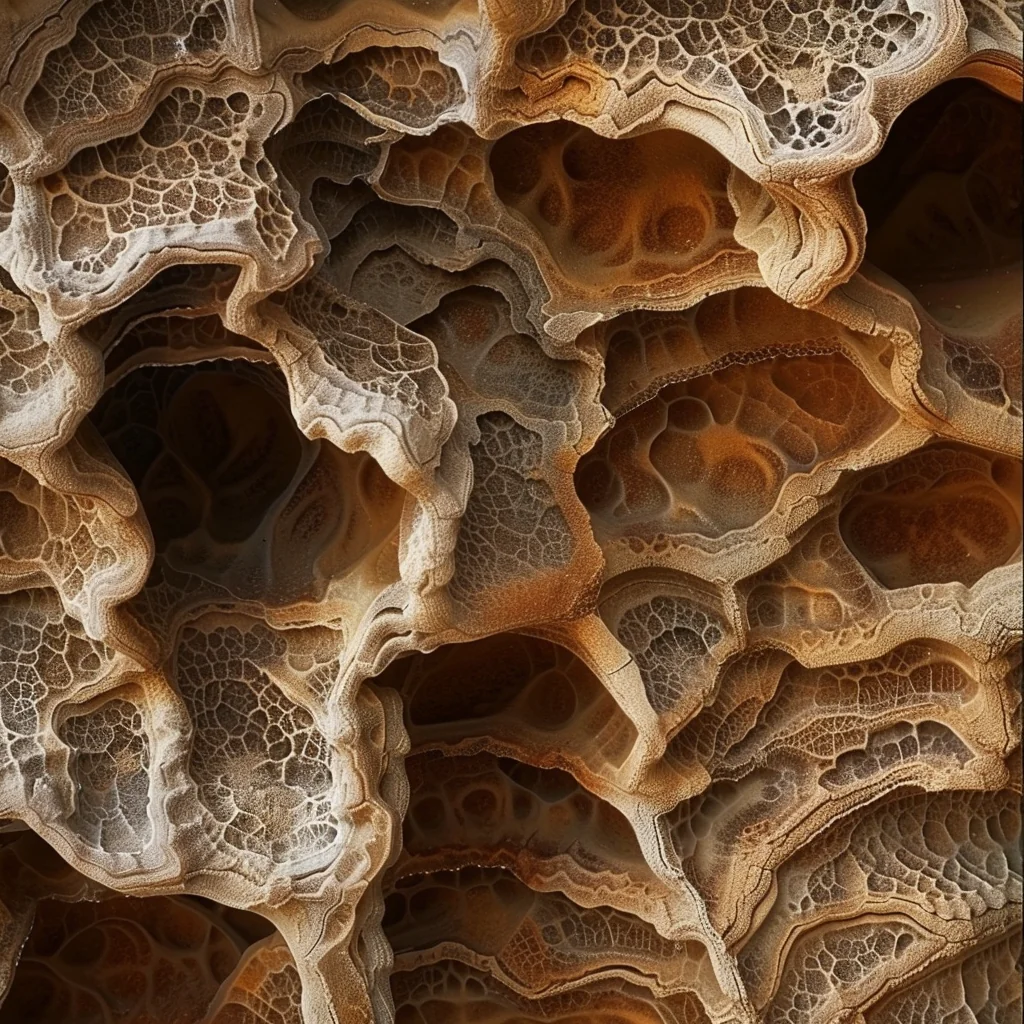
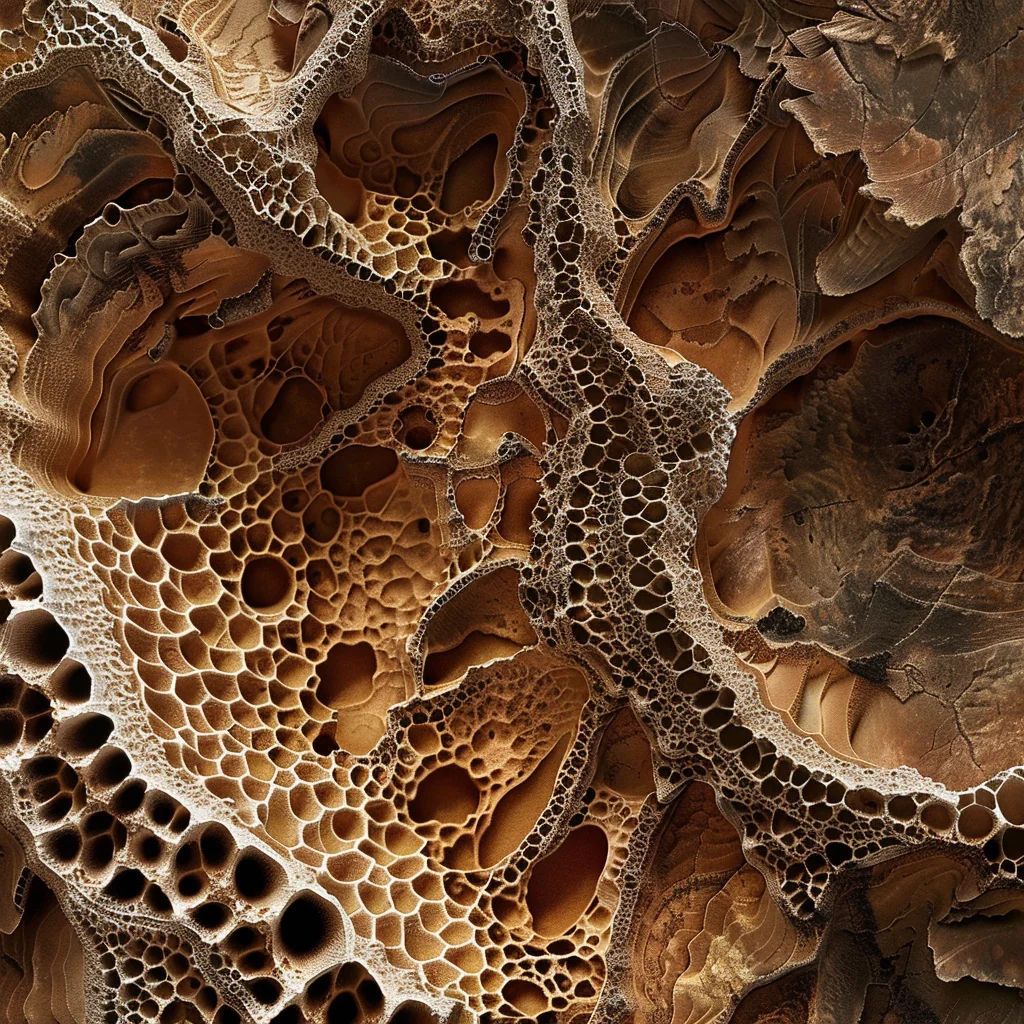
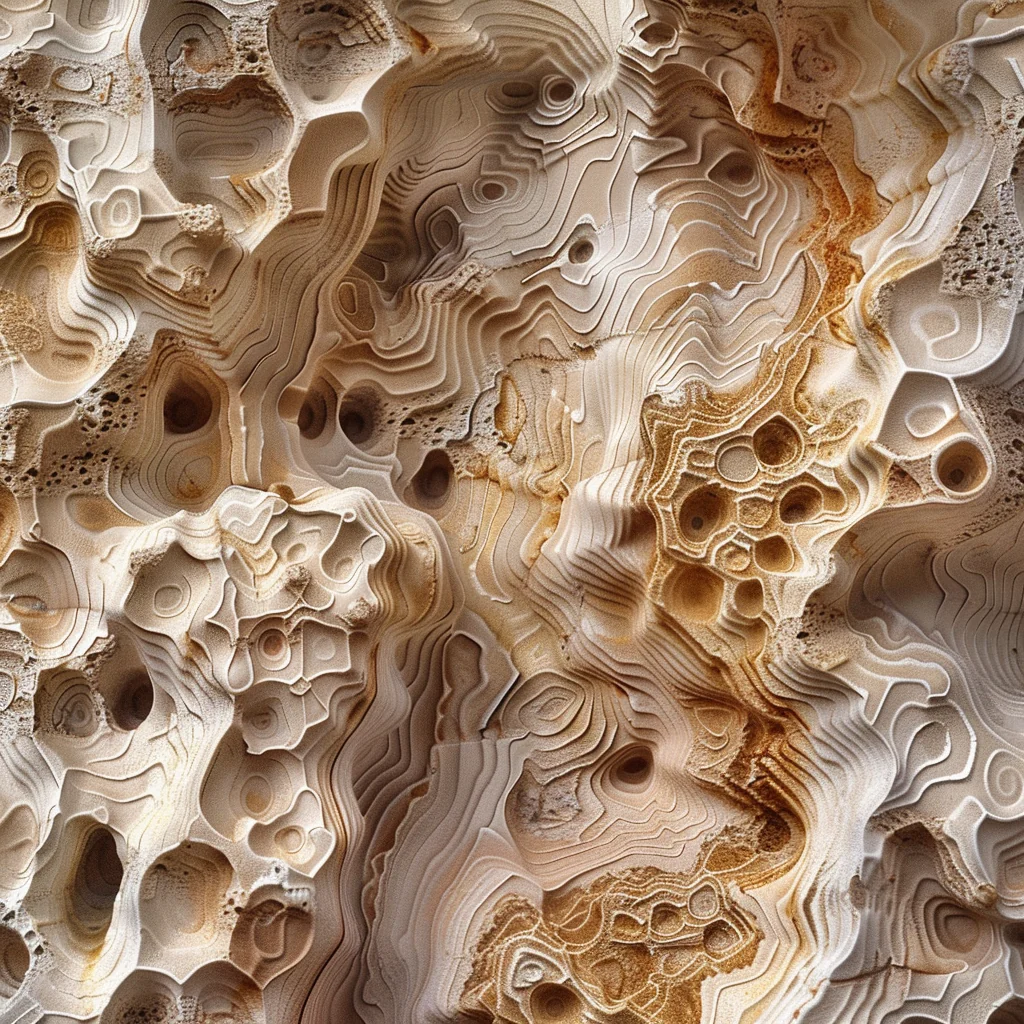
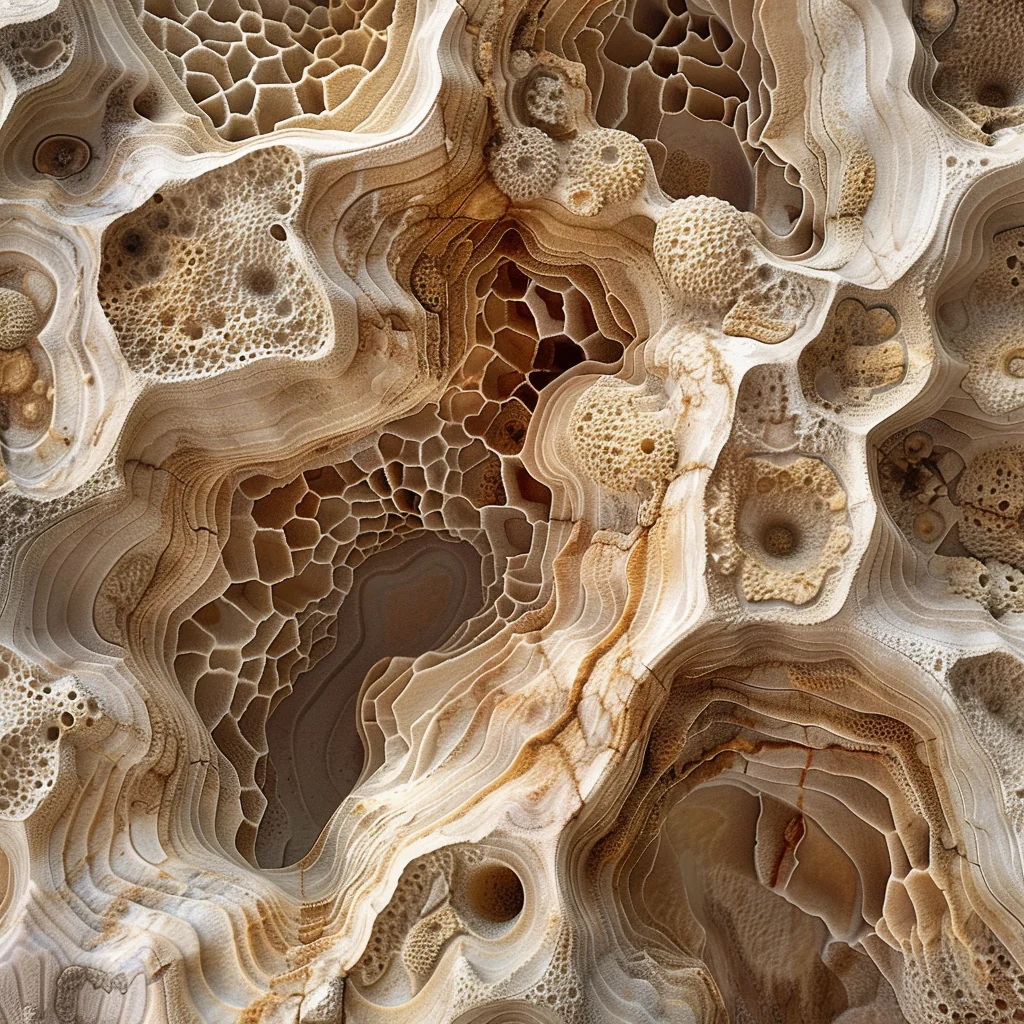
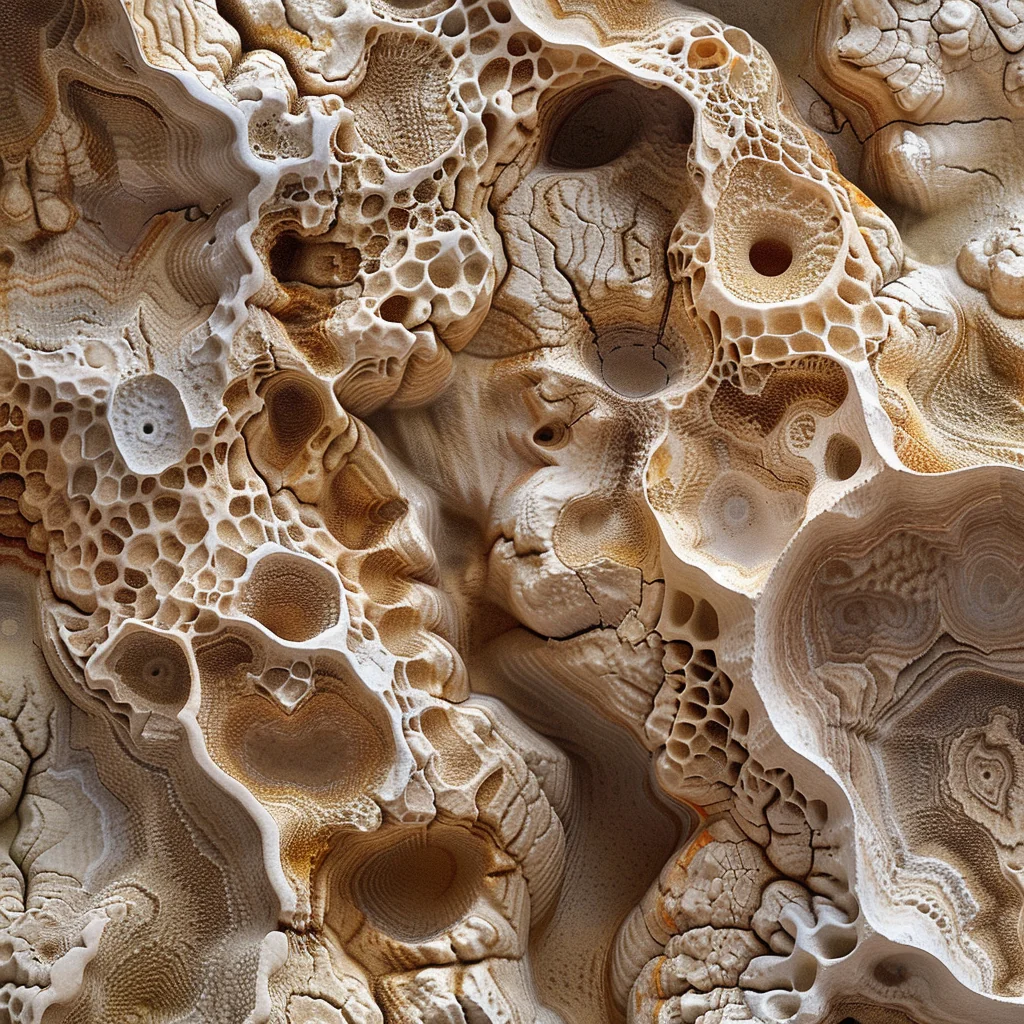
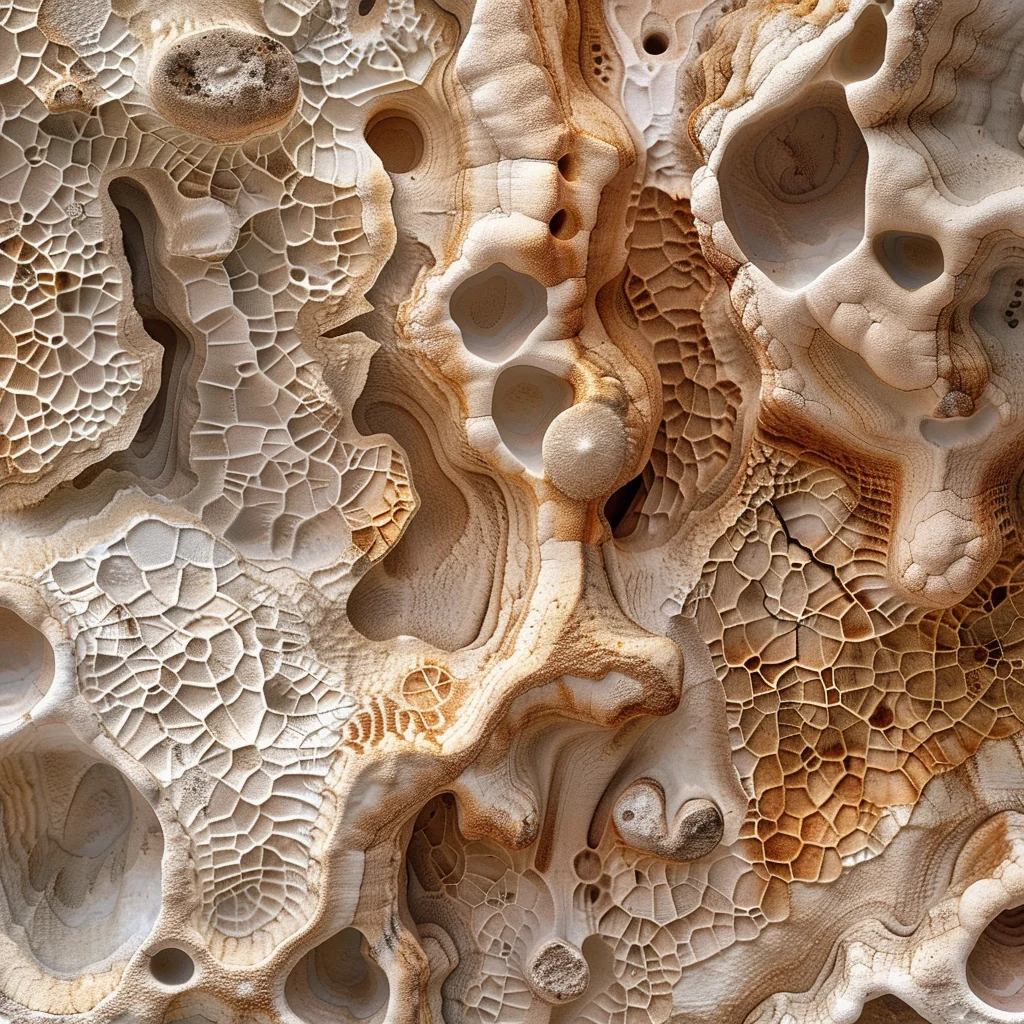
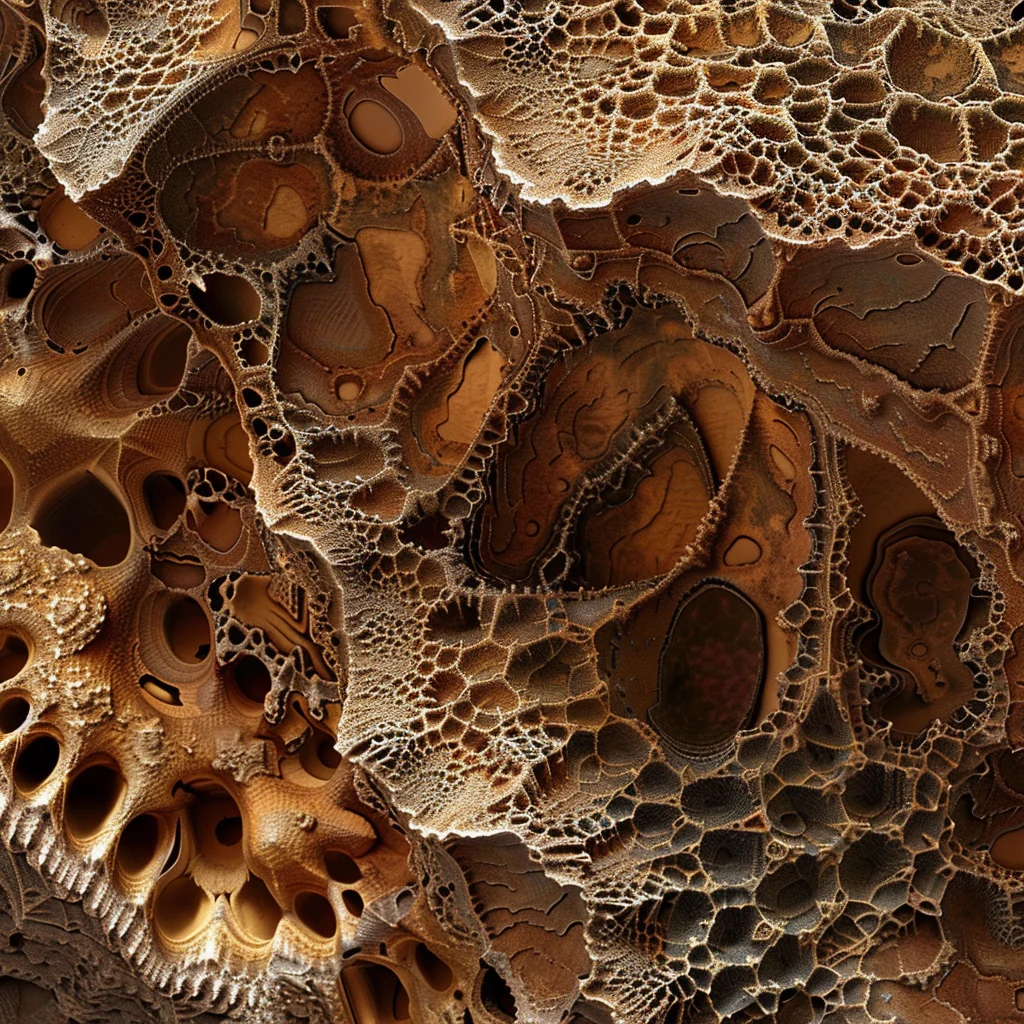
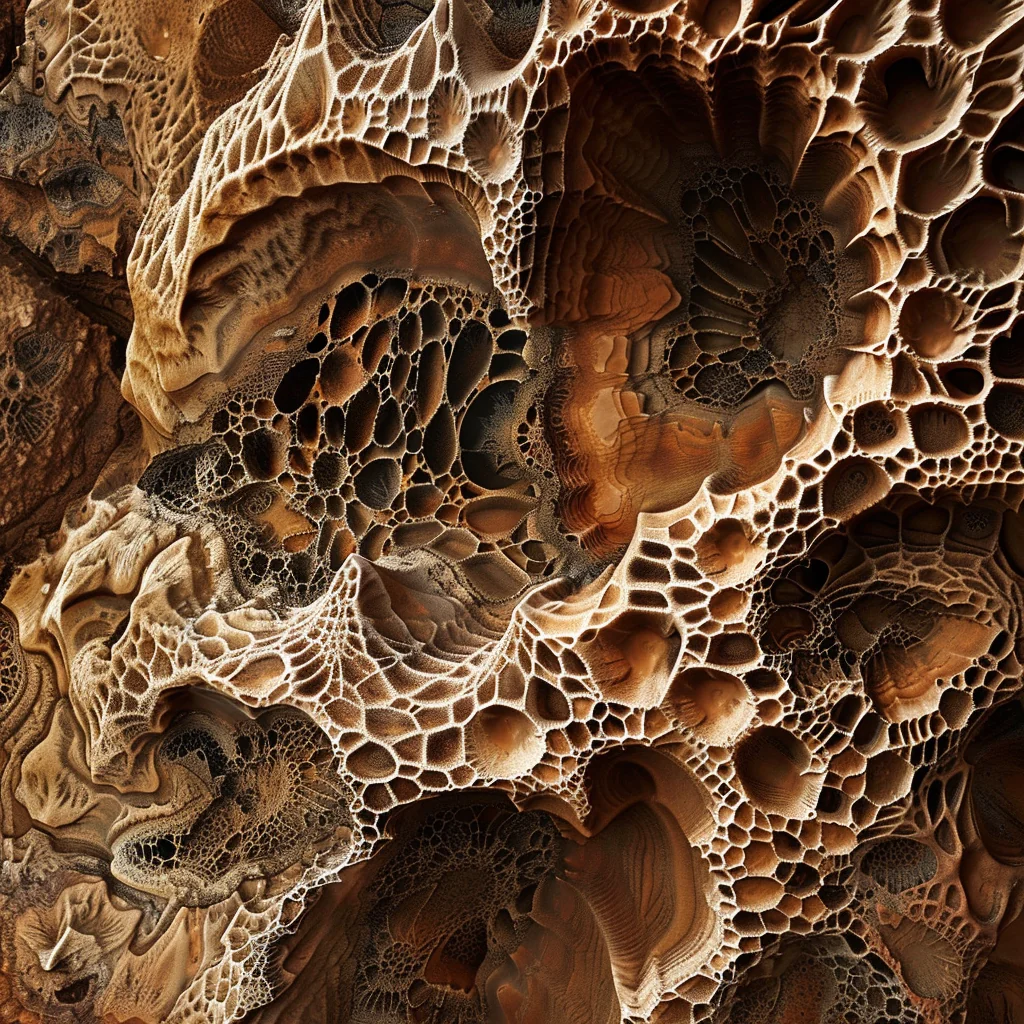
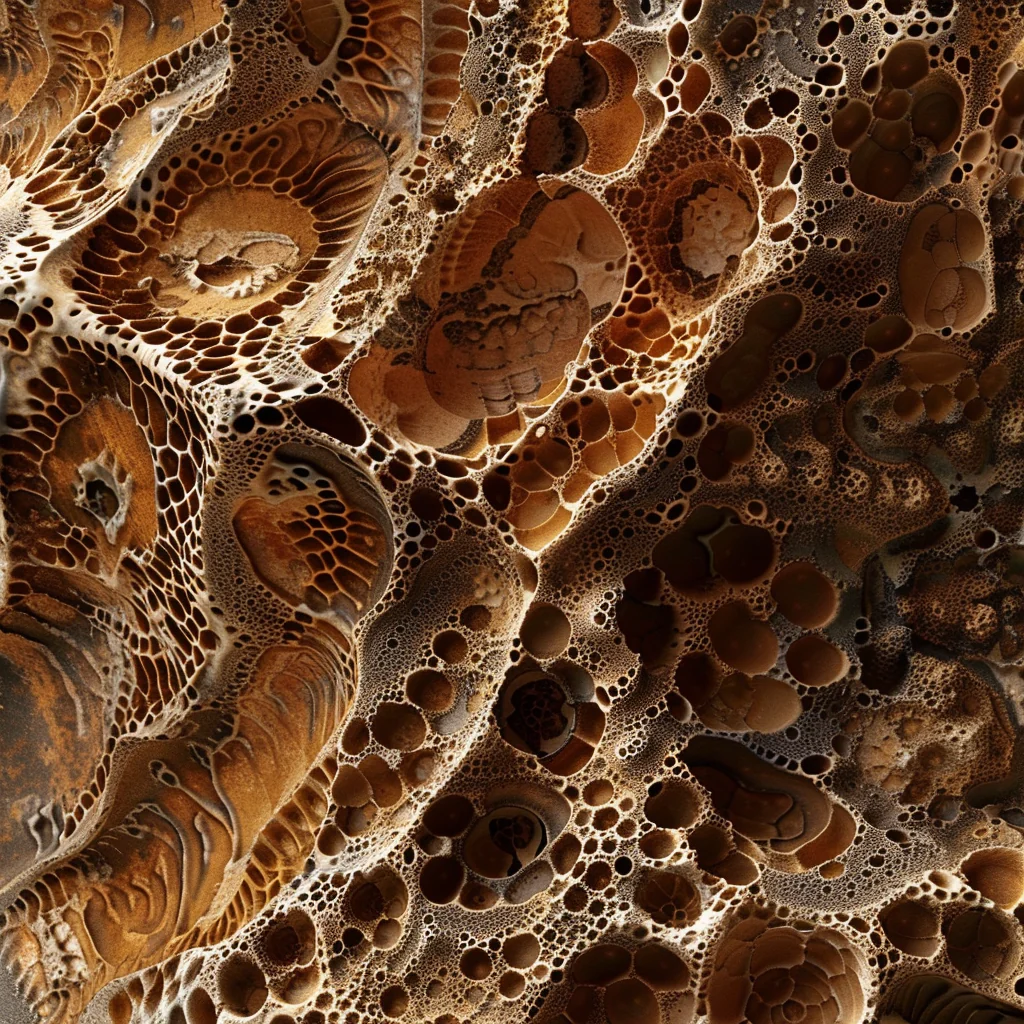
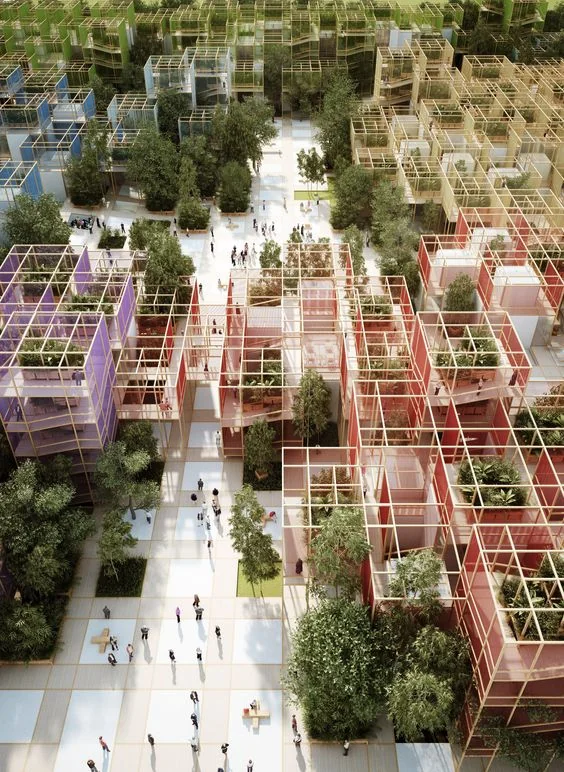 Blend with architectural reference (Pinterest / Penda Beijing Expo)
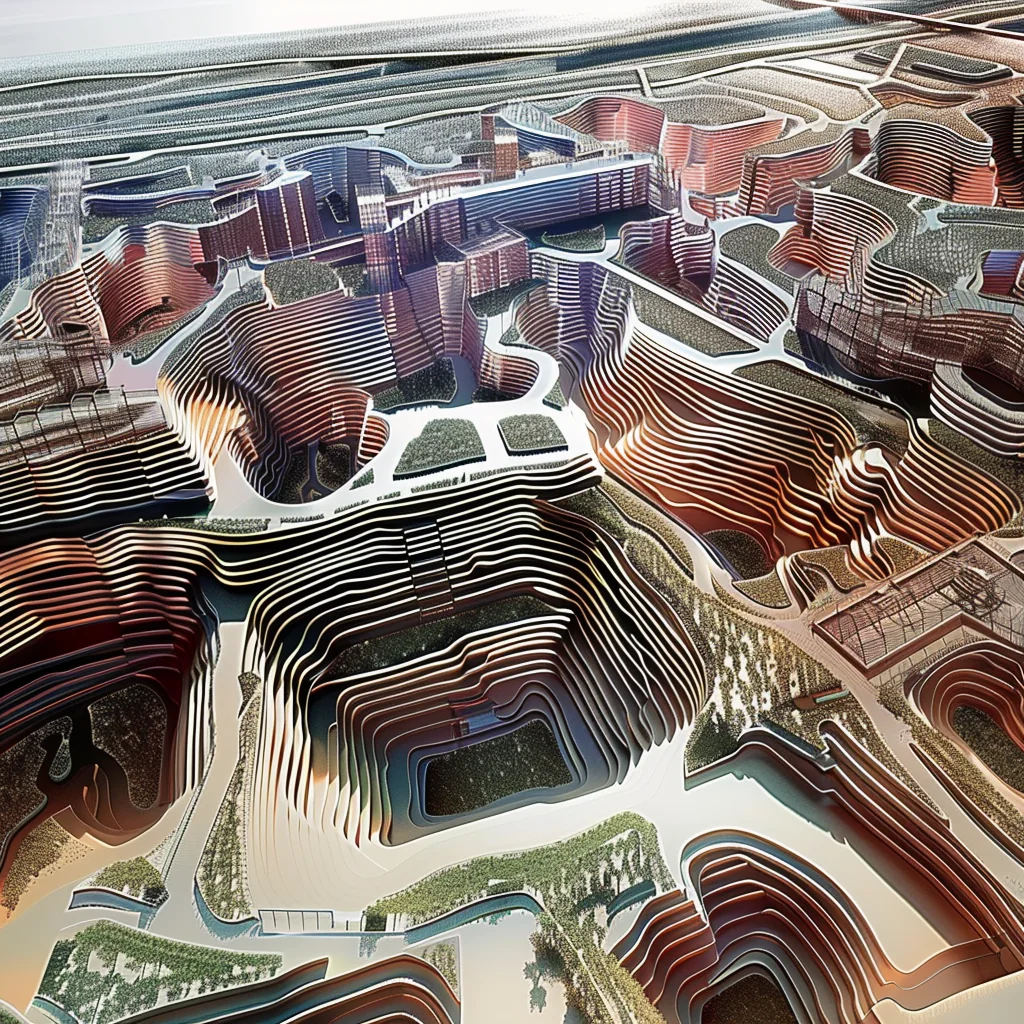
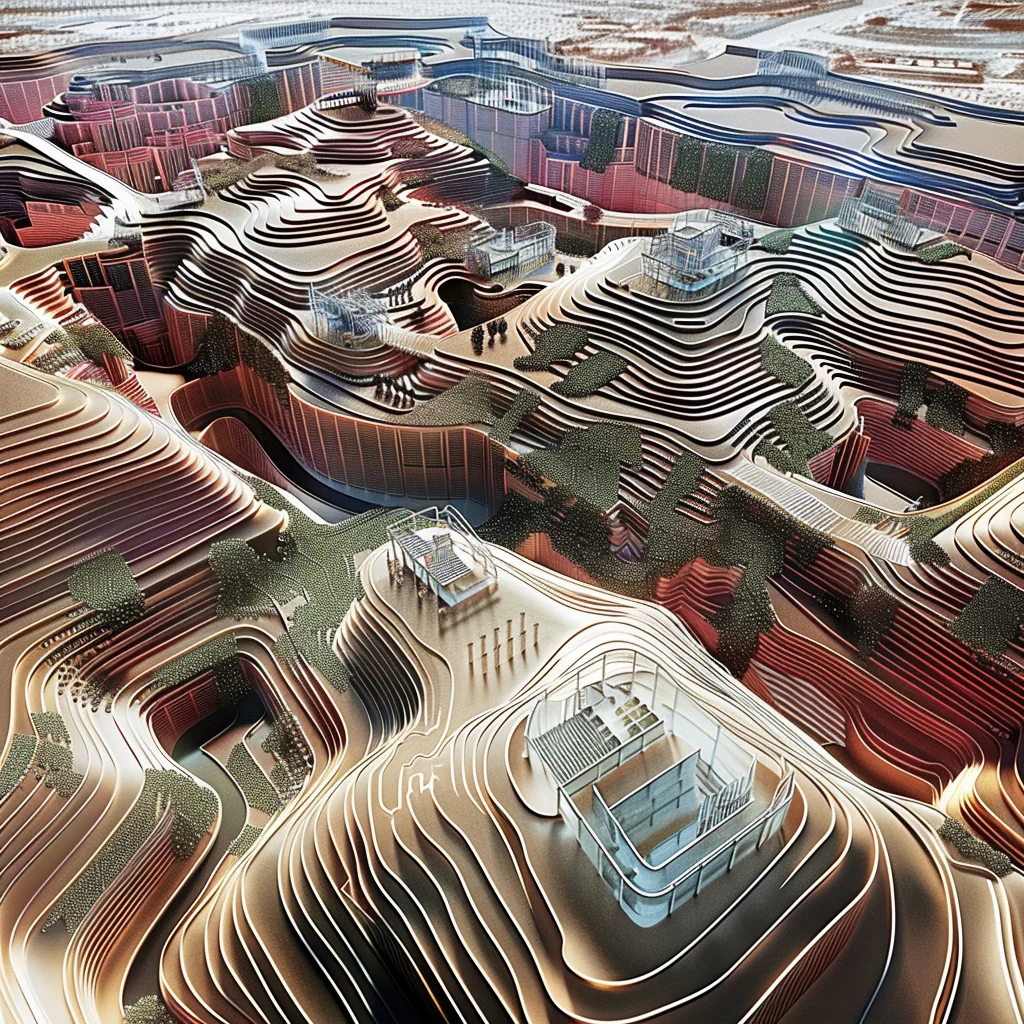
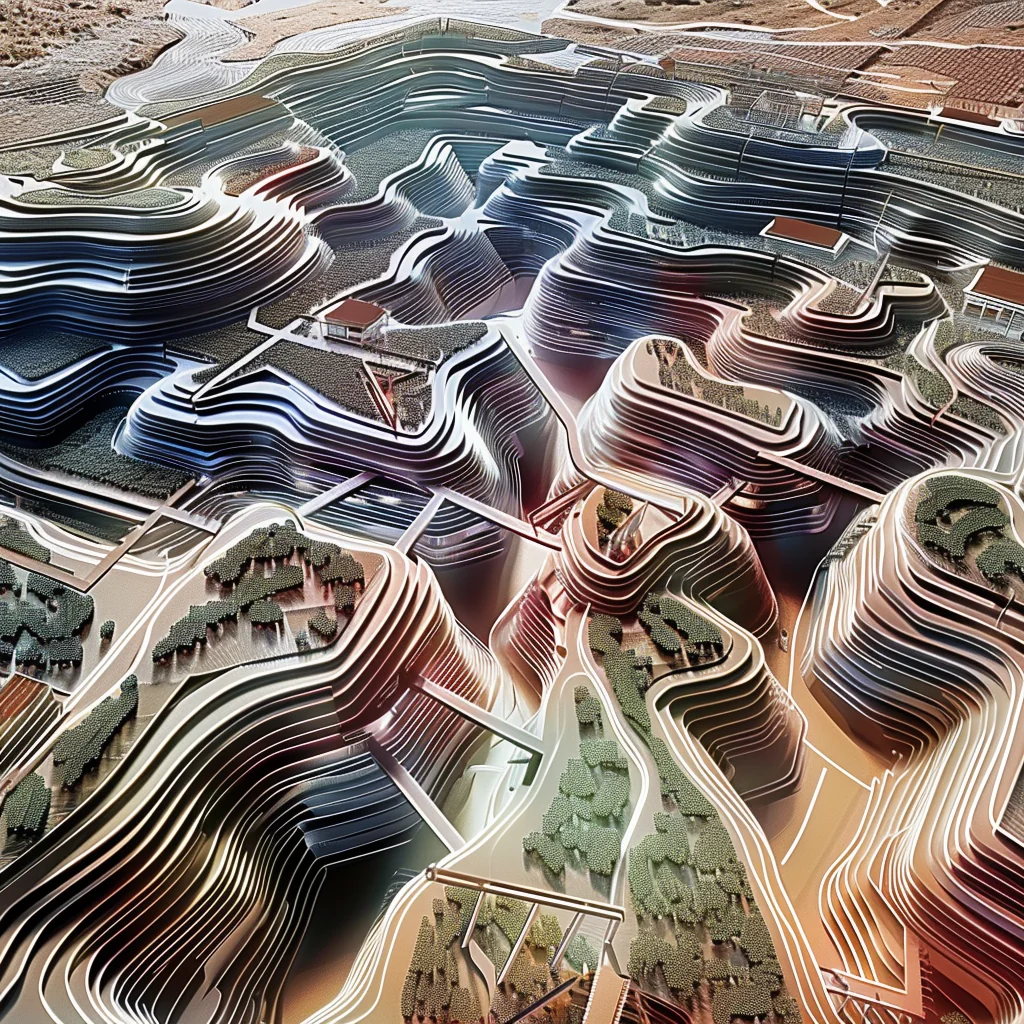
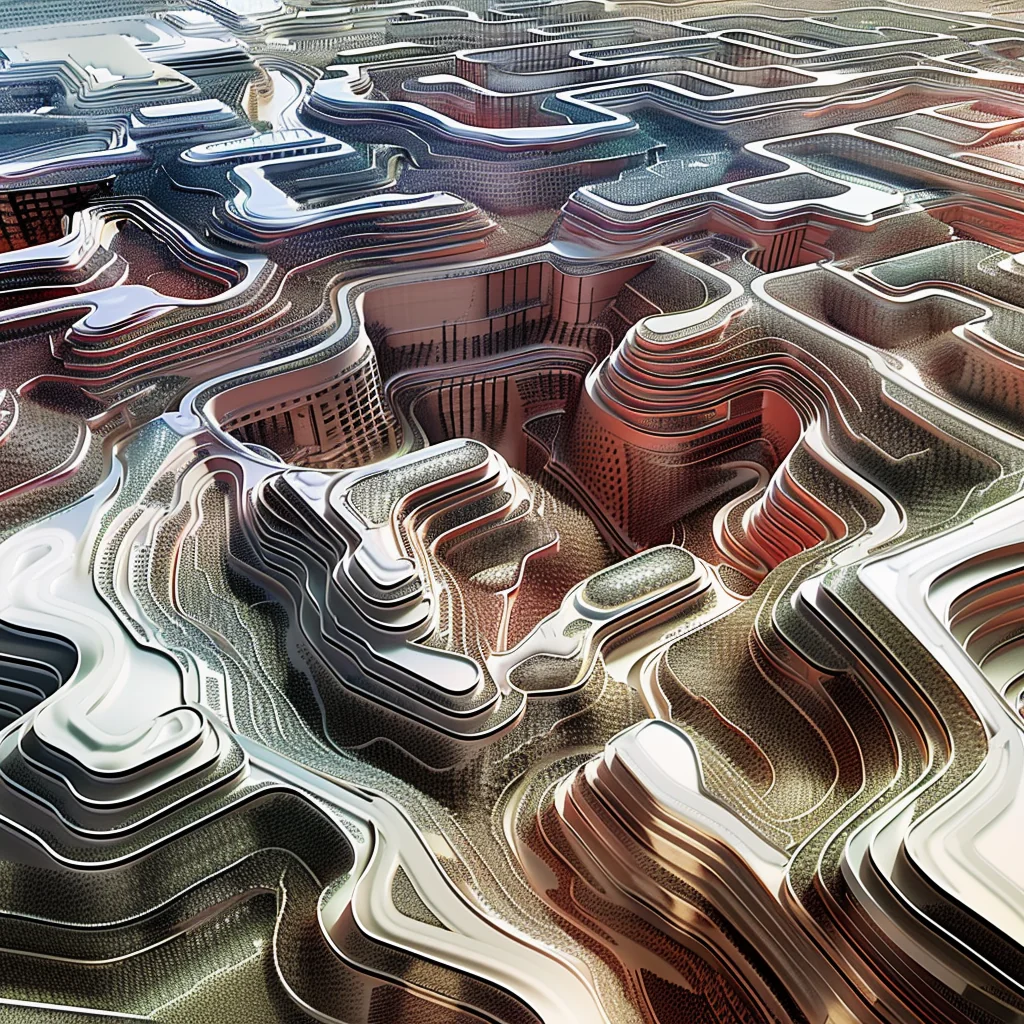
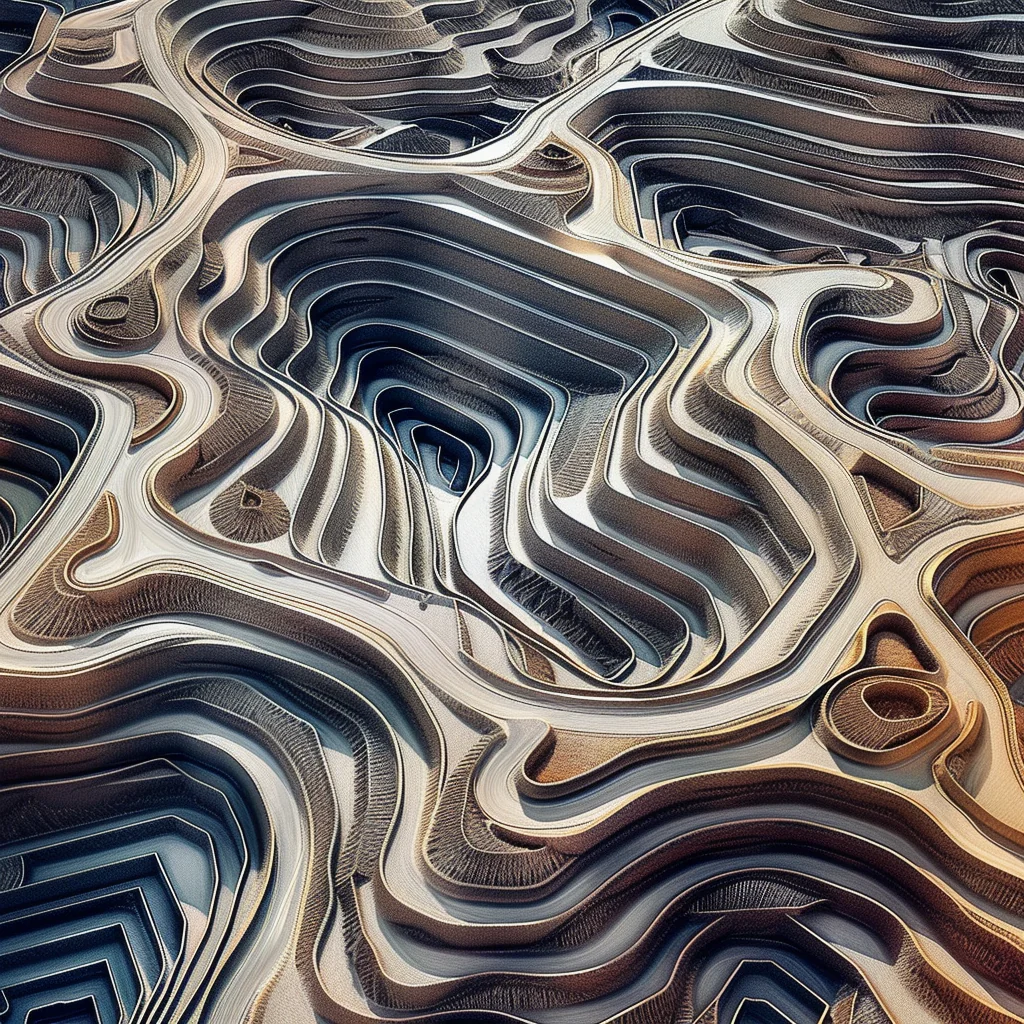
Populate with underground hyper futuristic human habitat with glass facade, populated with humans, hyper futuristic vehicles
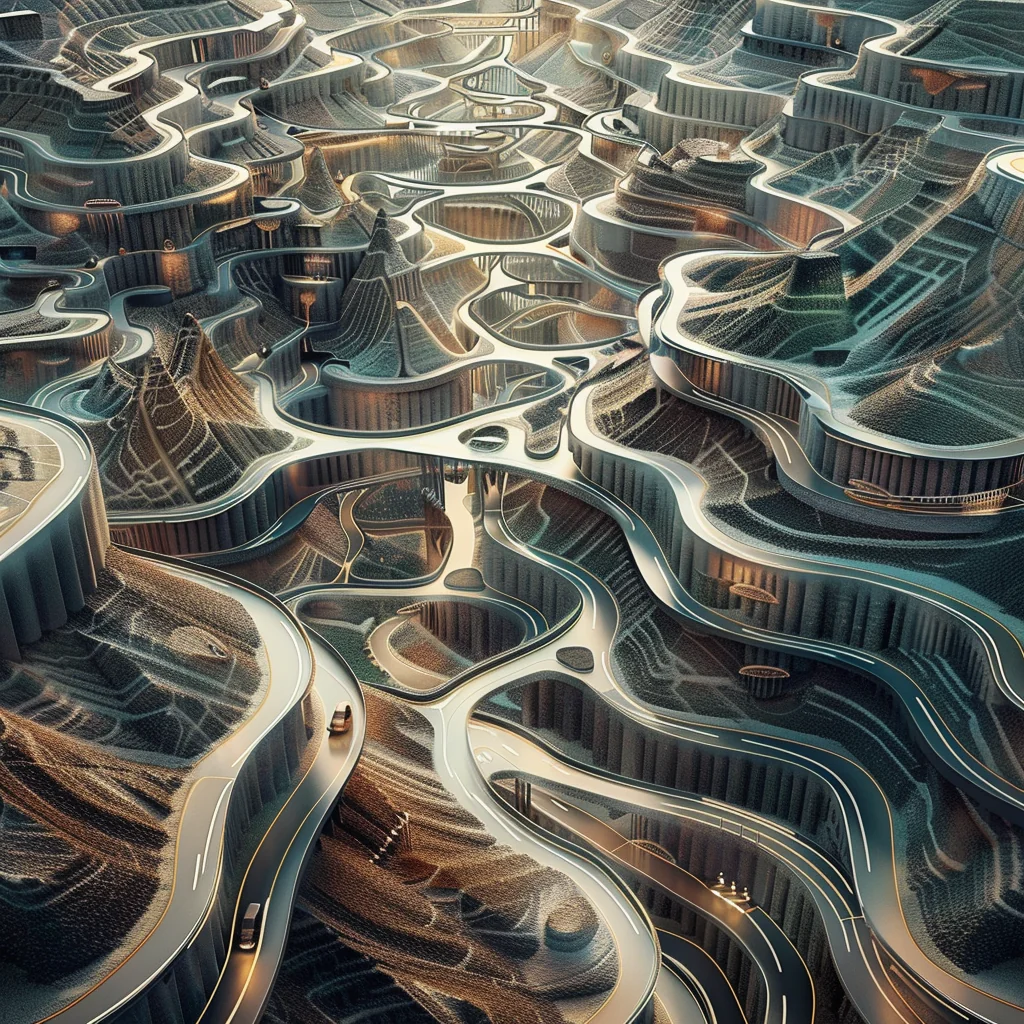
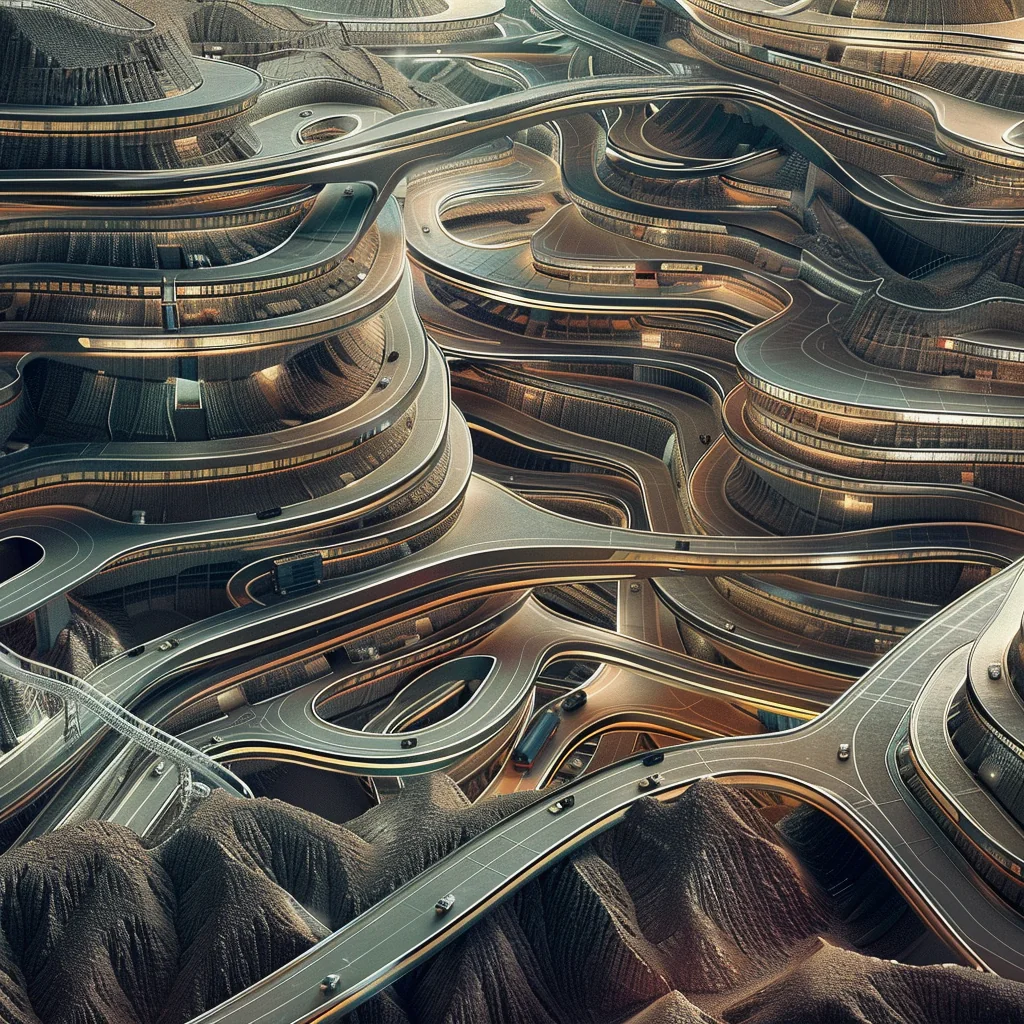
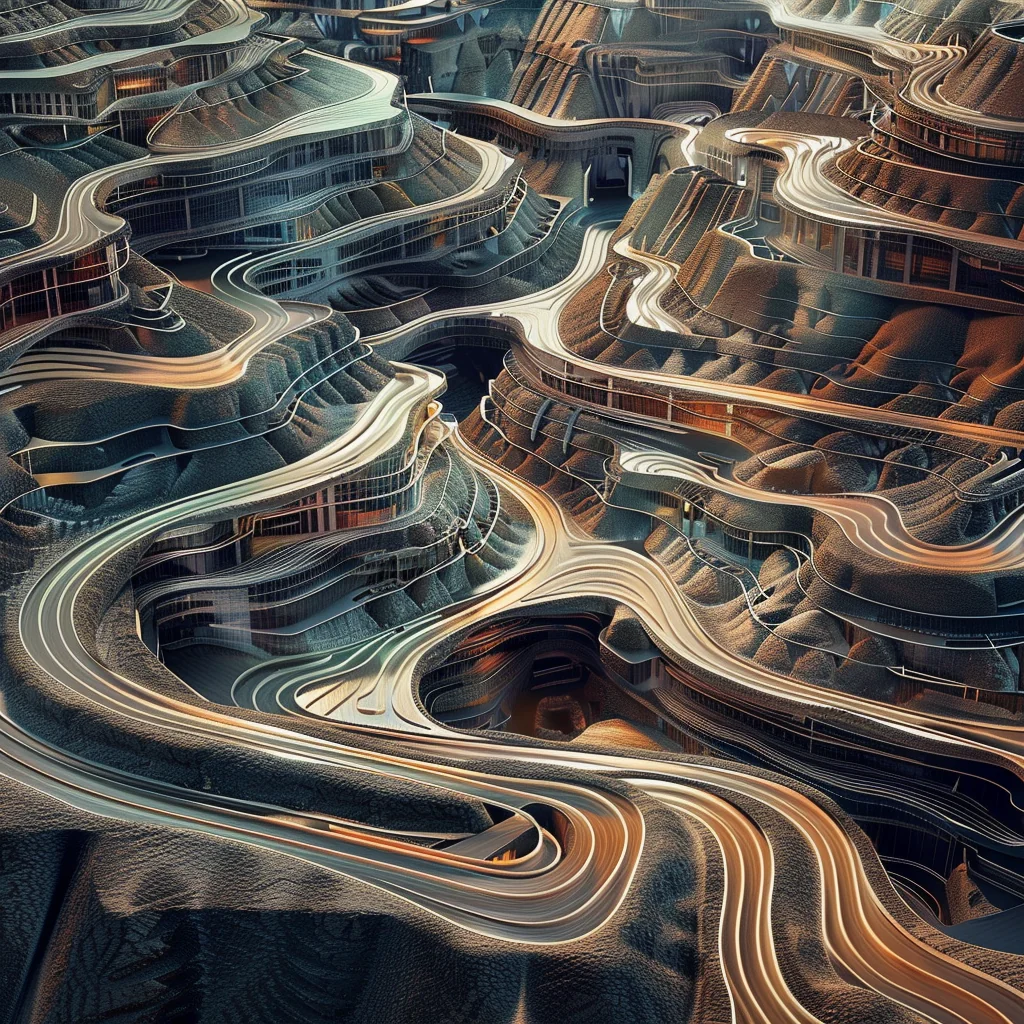
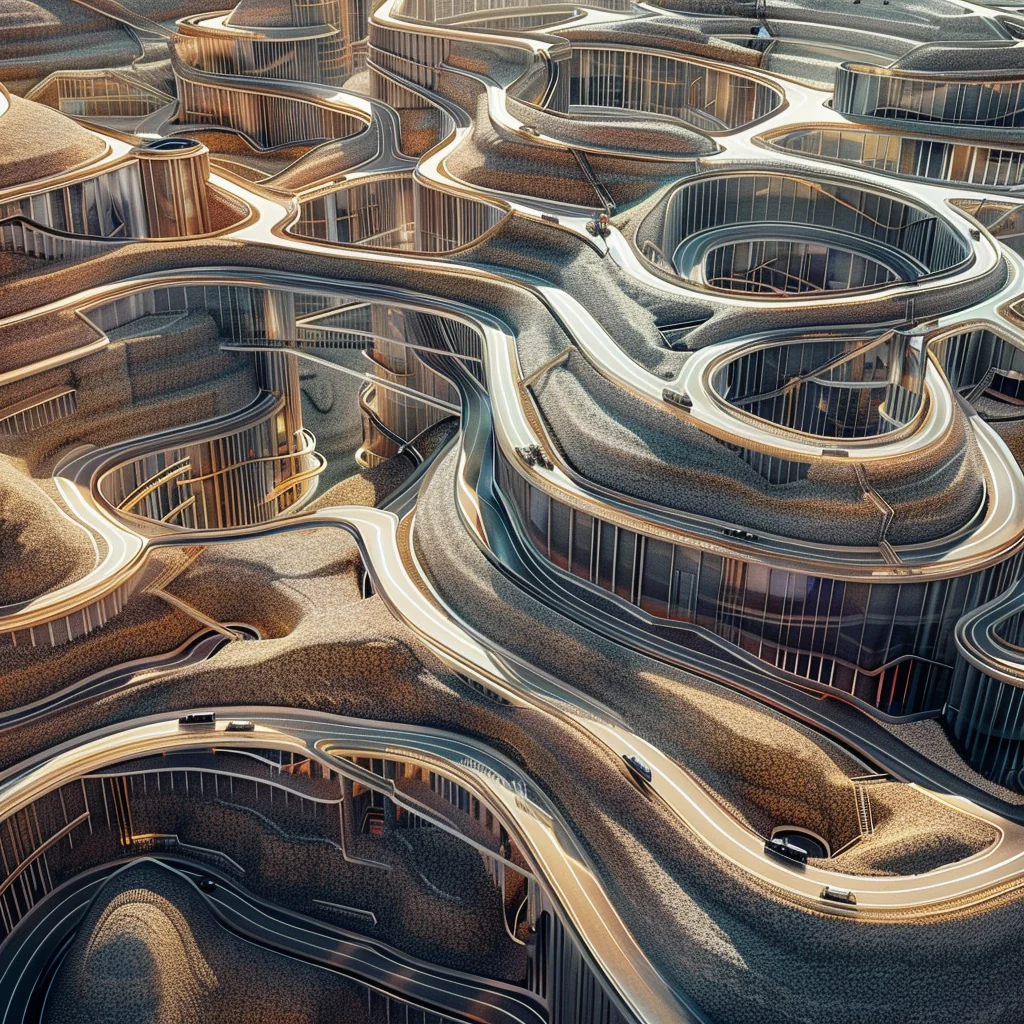
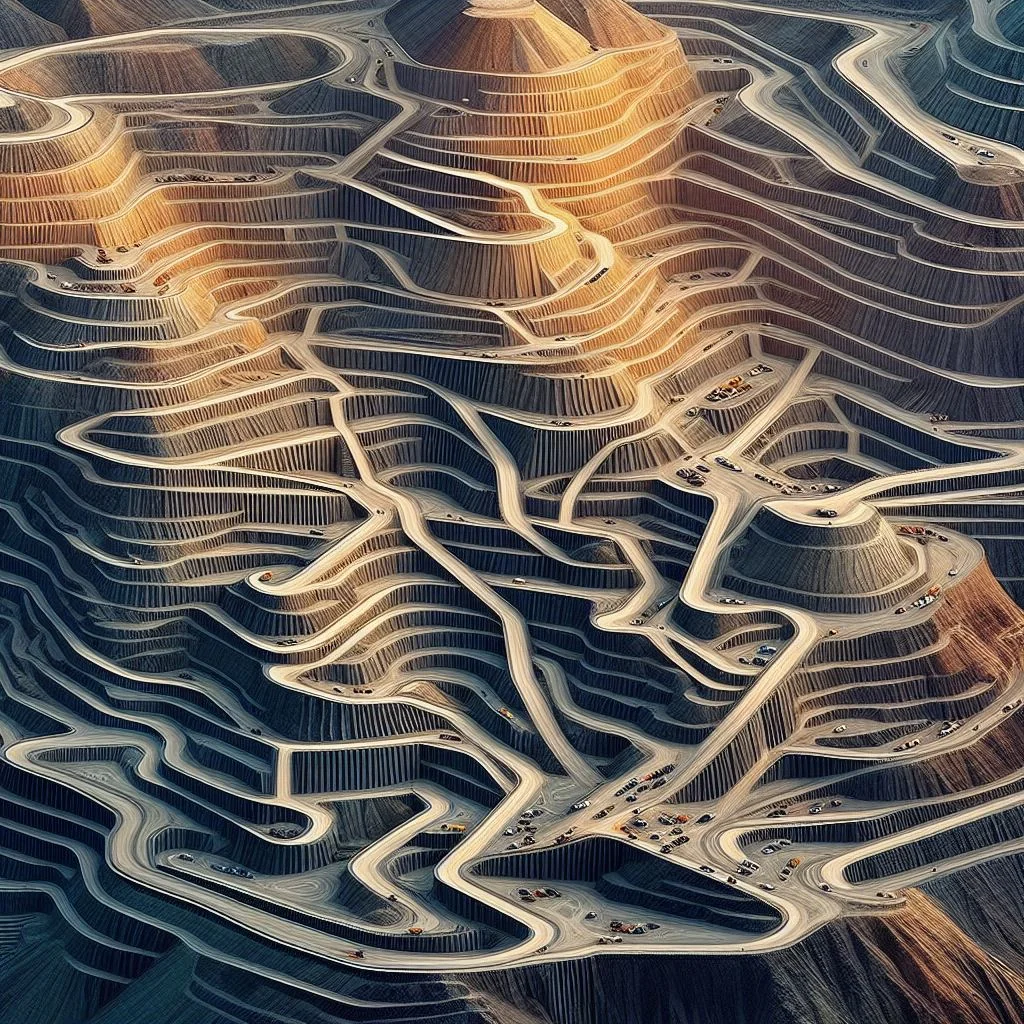
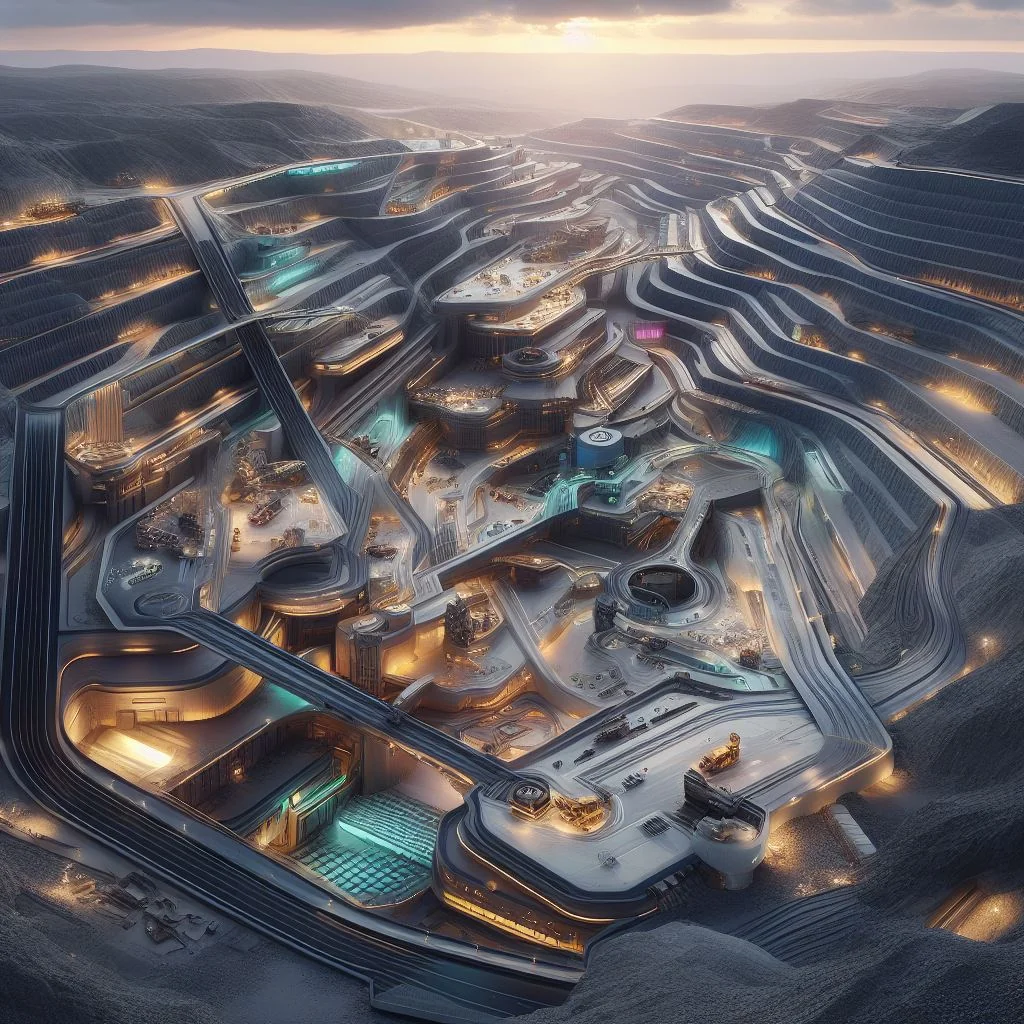
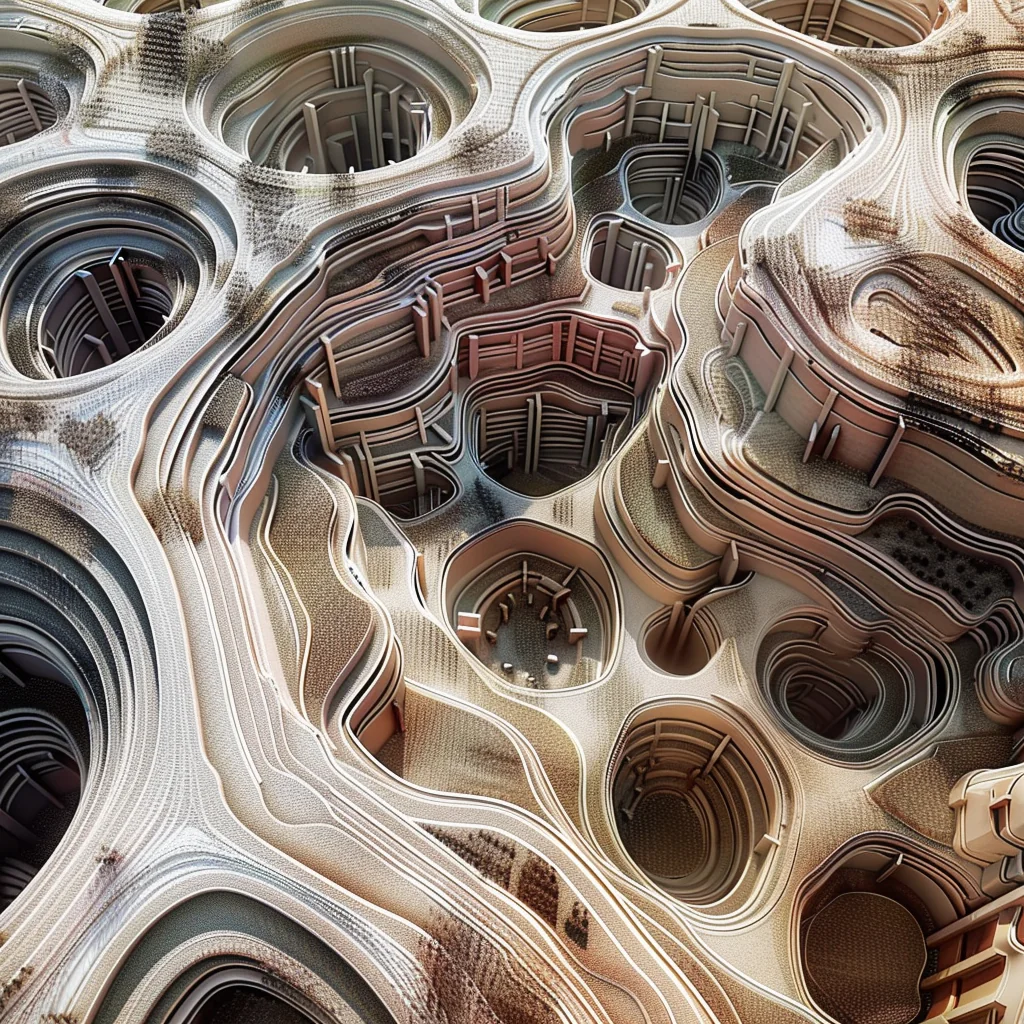
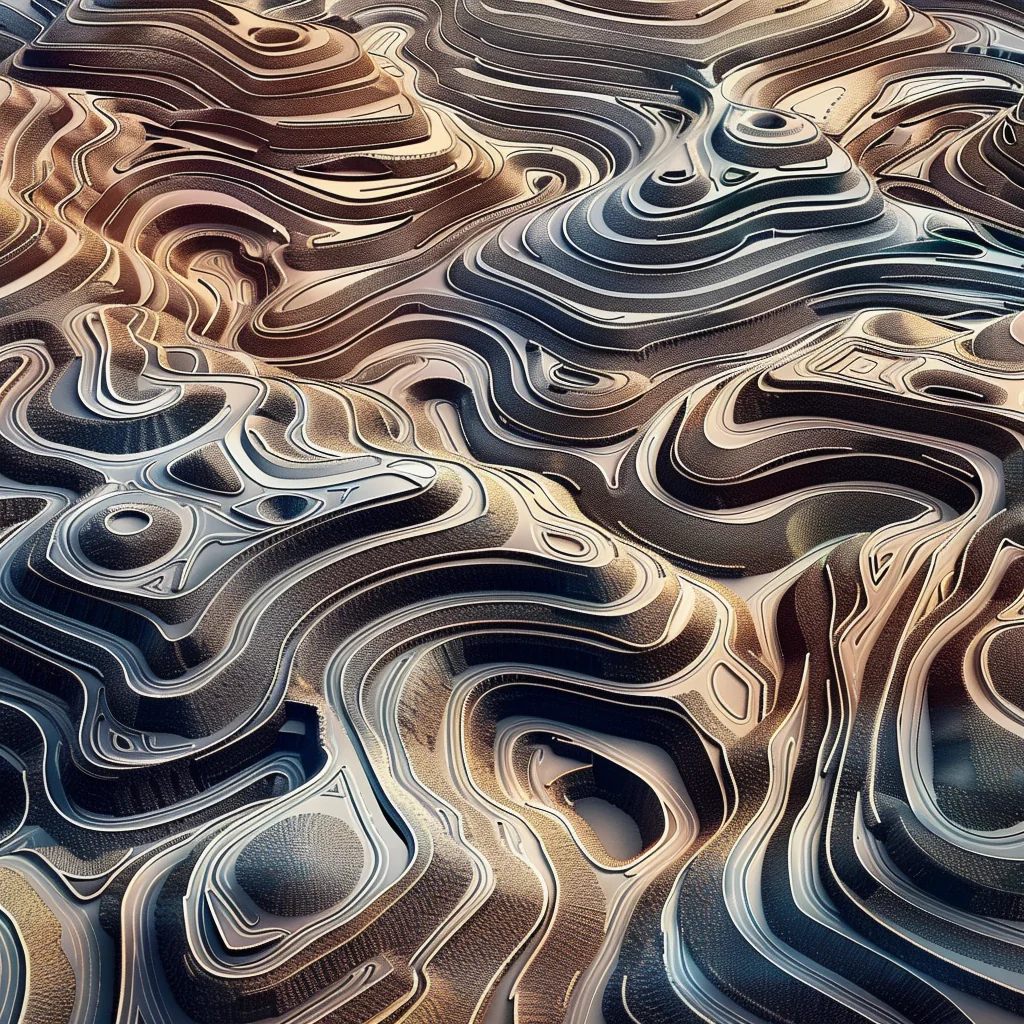
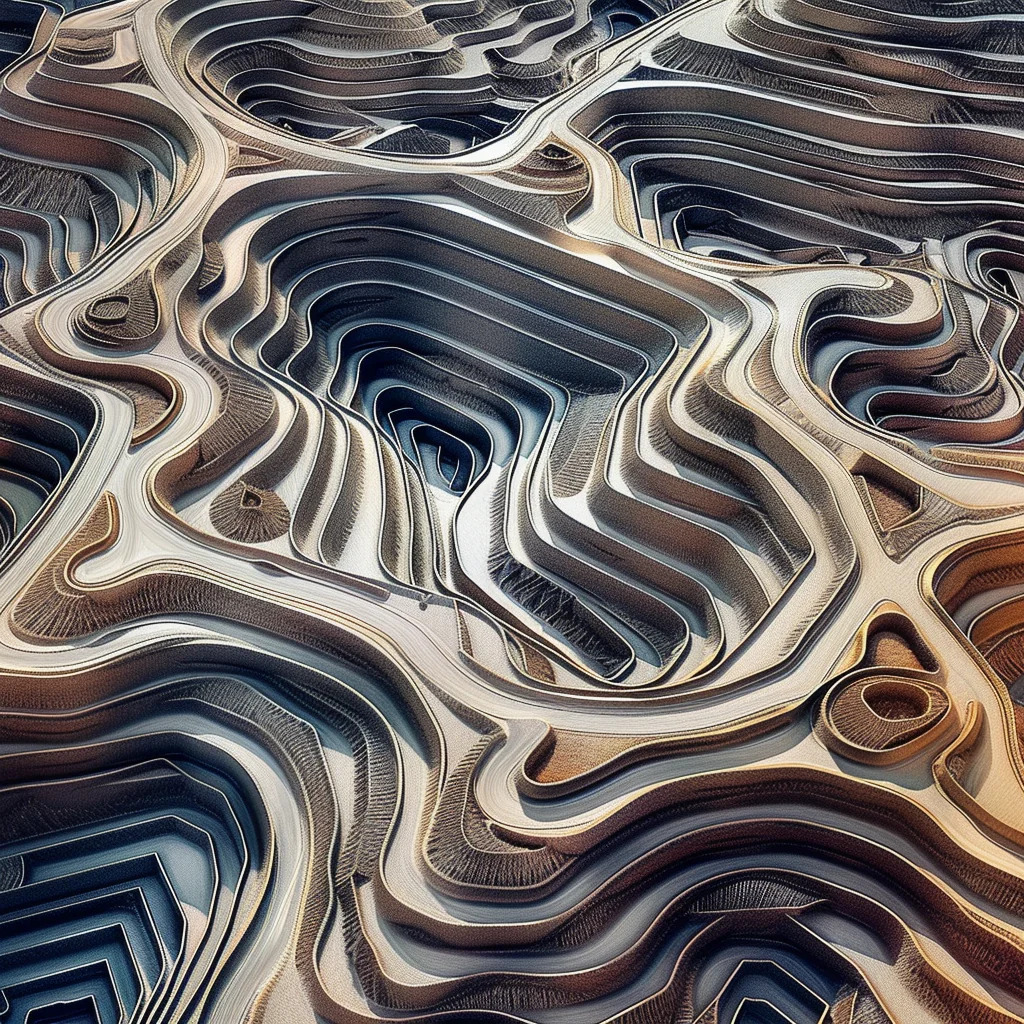
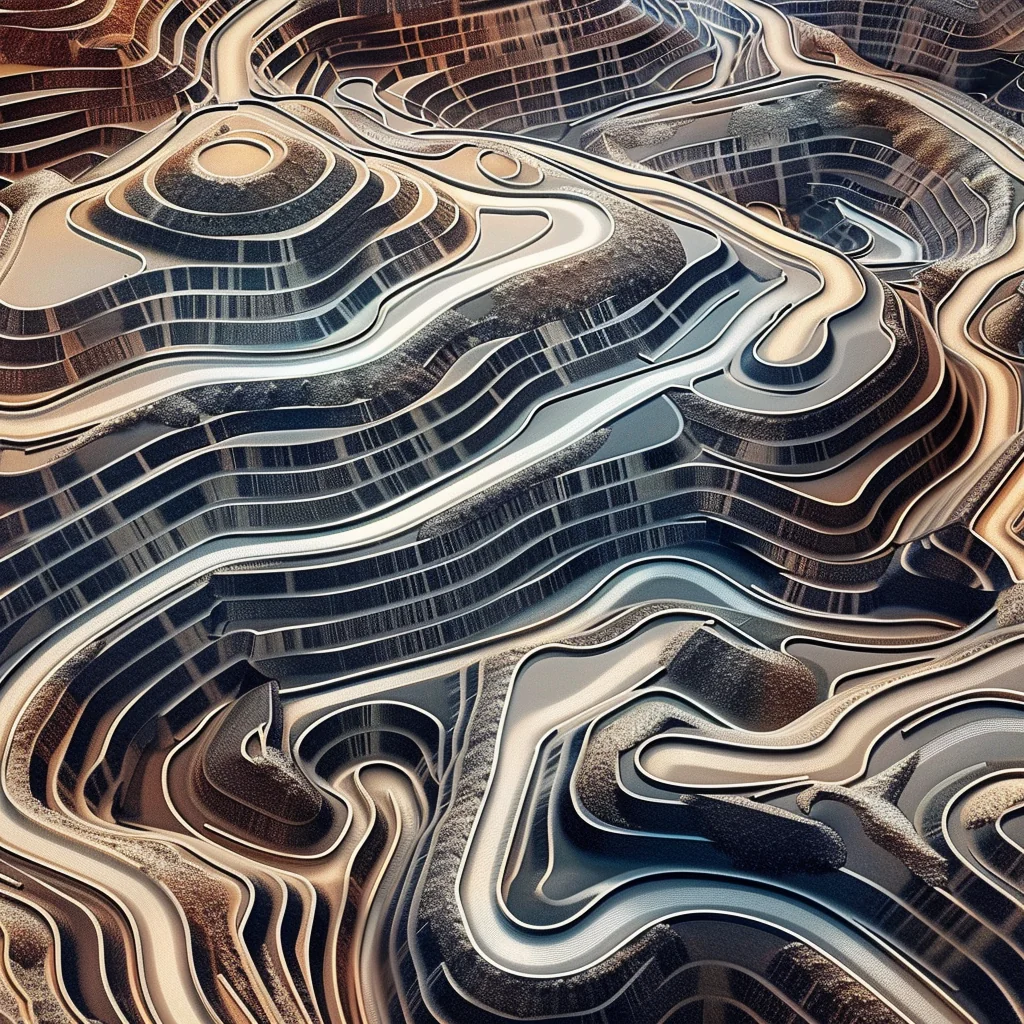
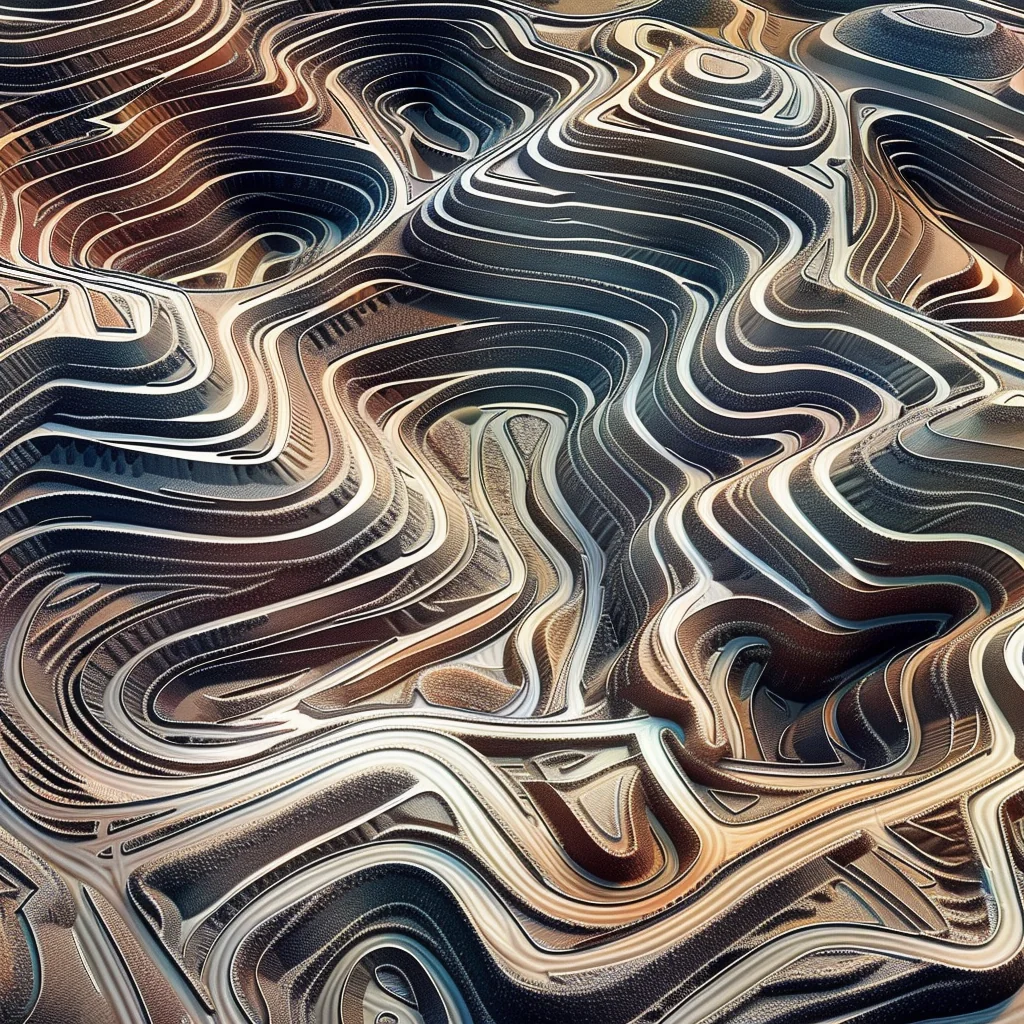
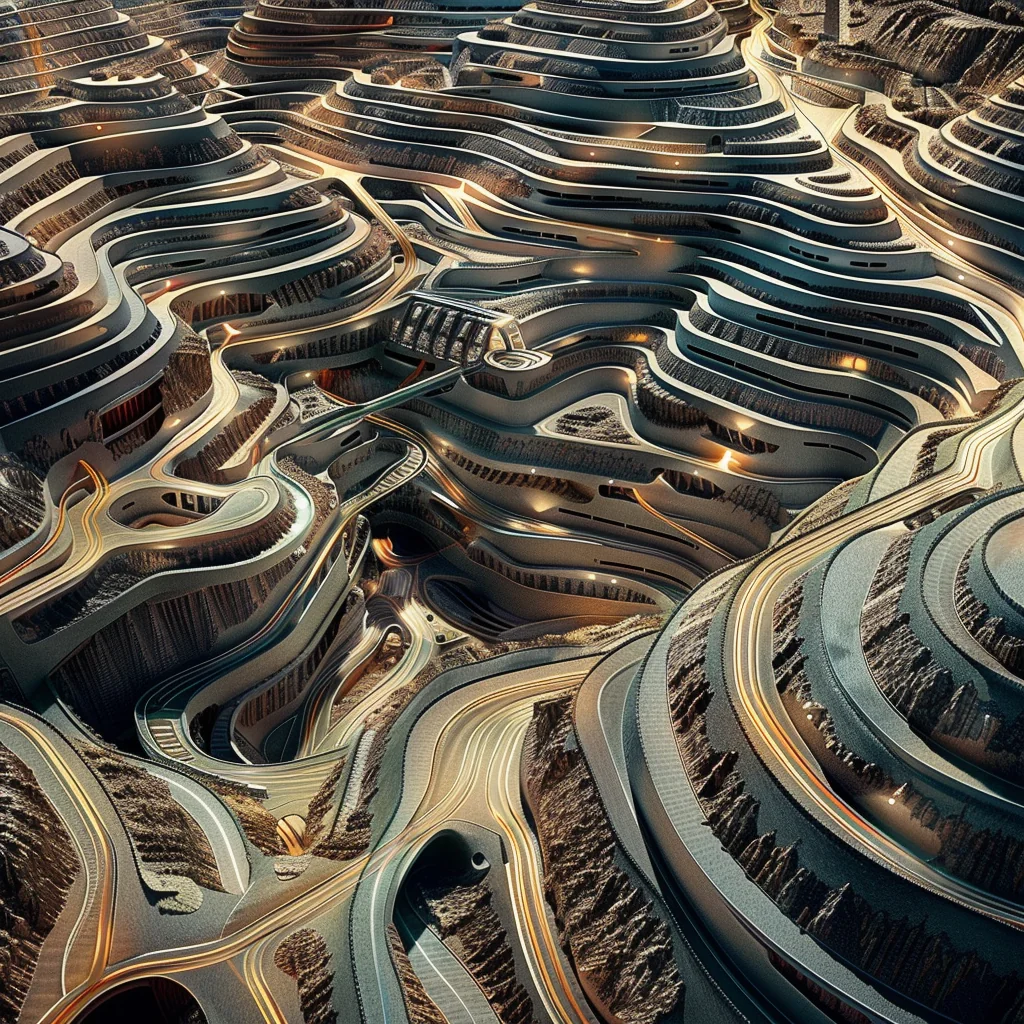
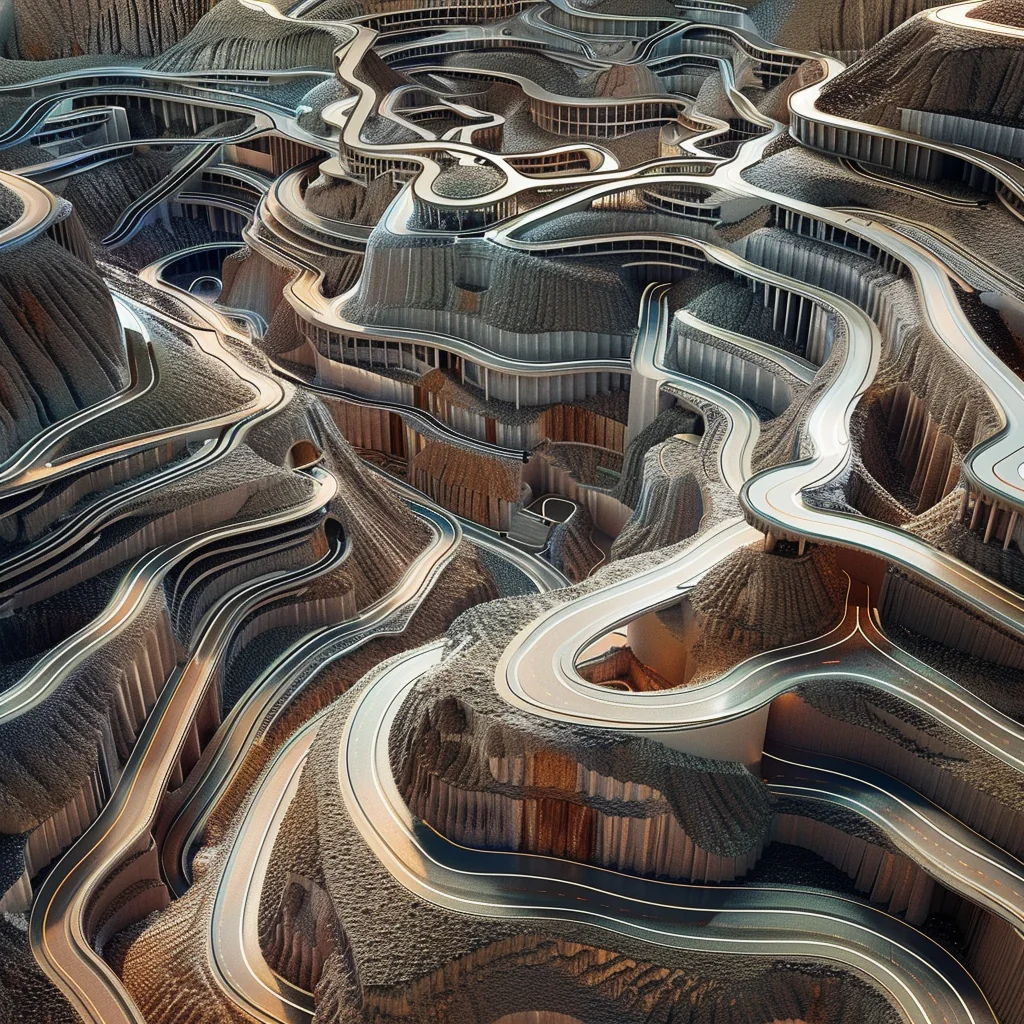
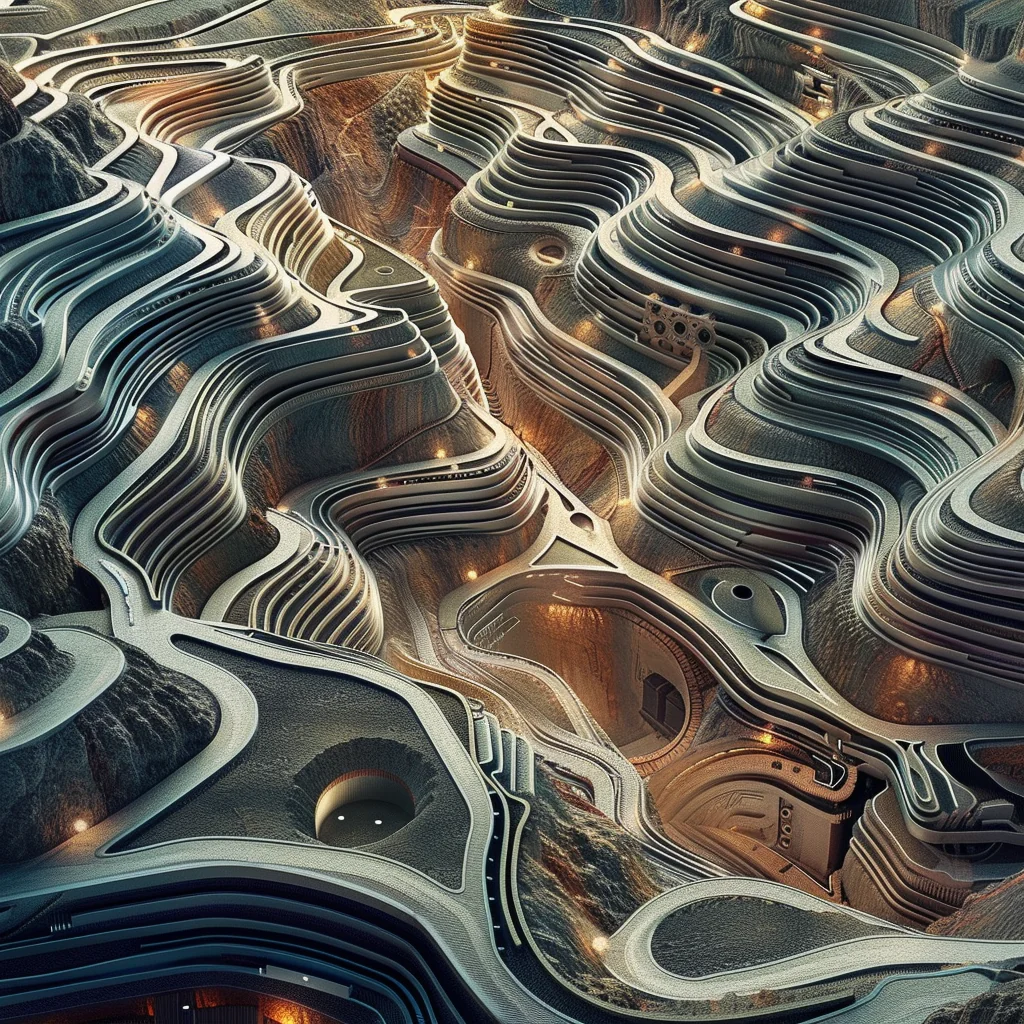
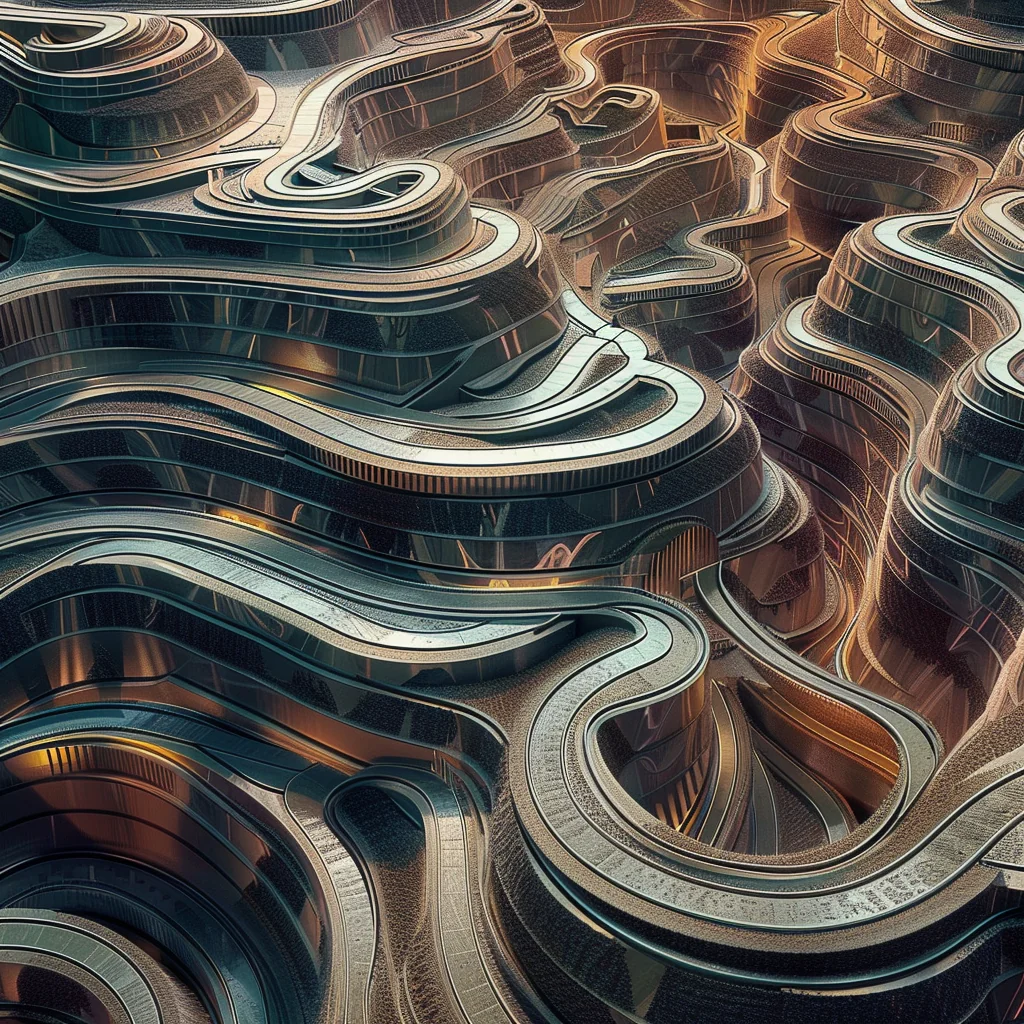
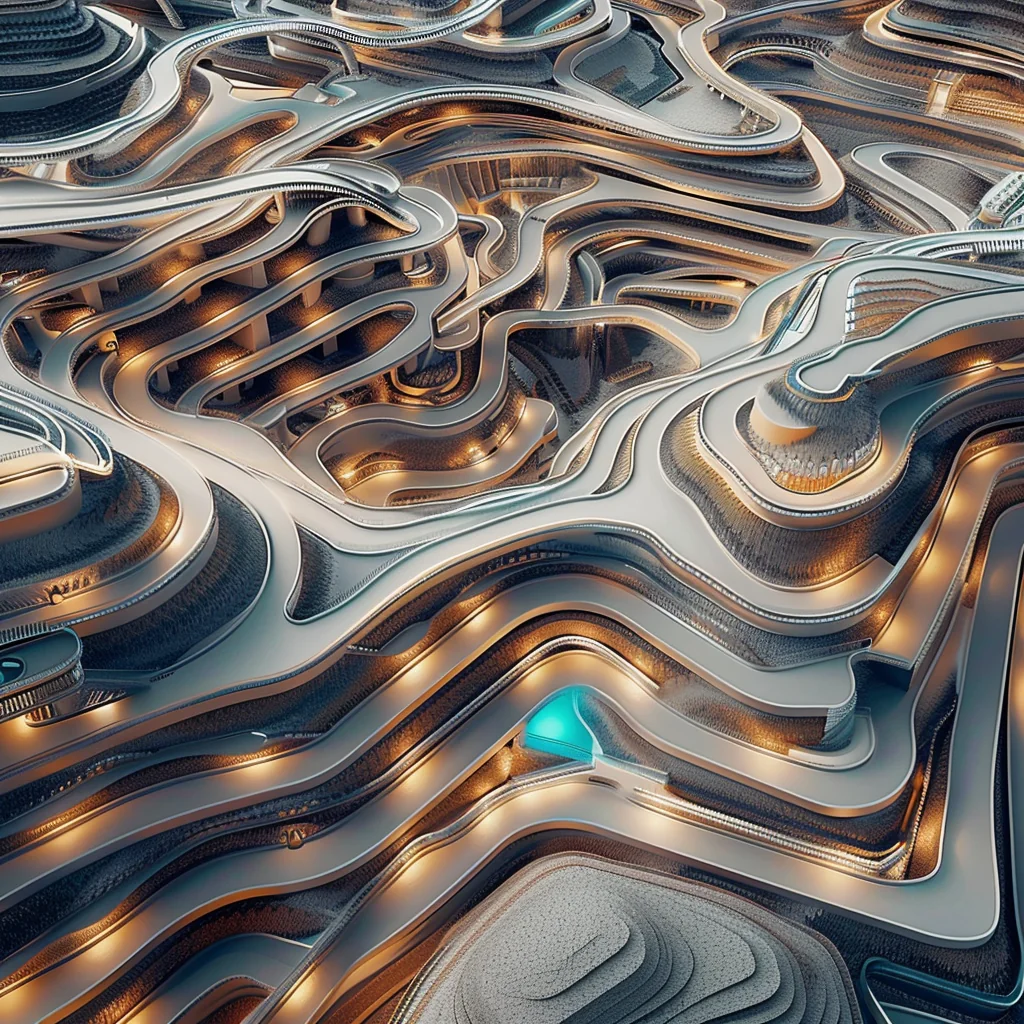
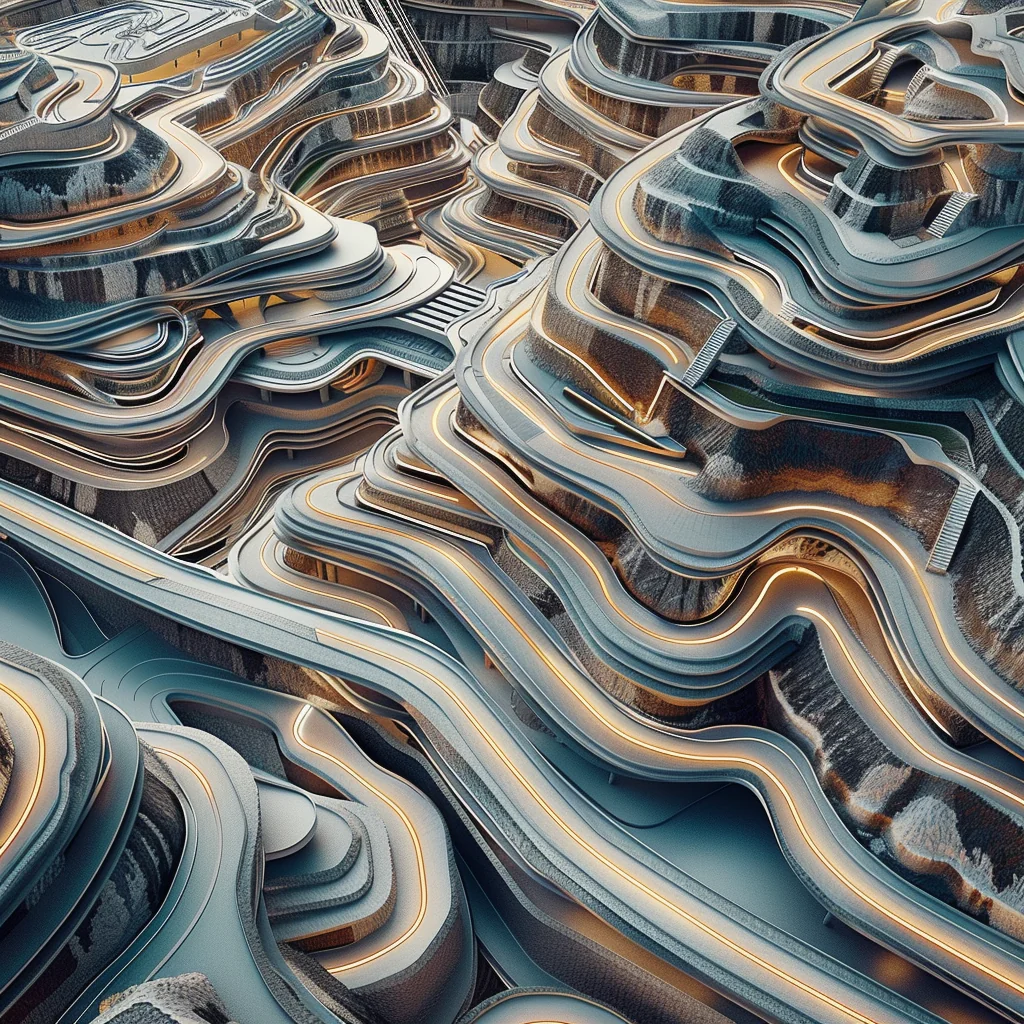
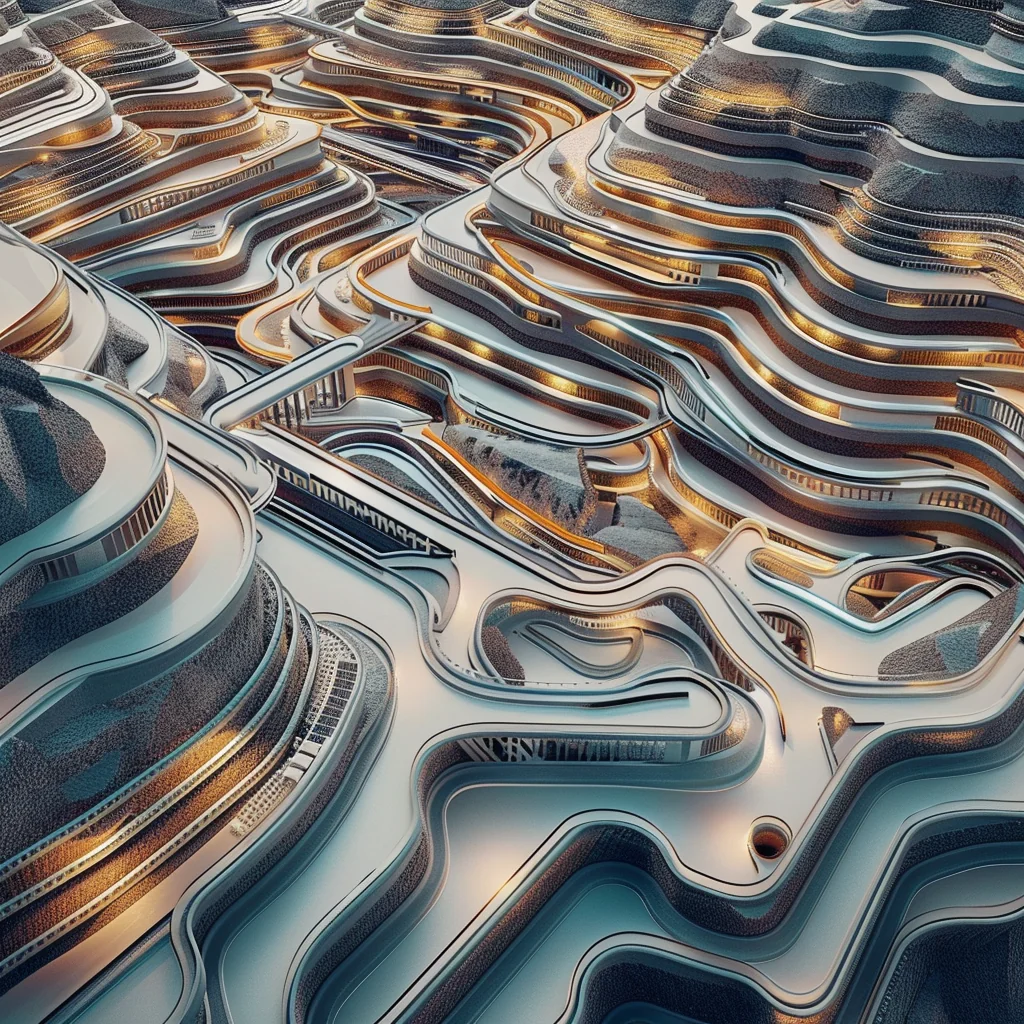
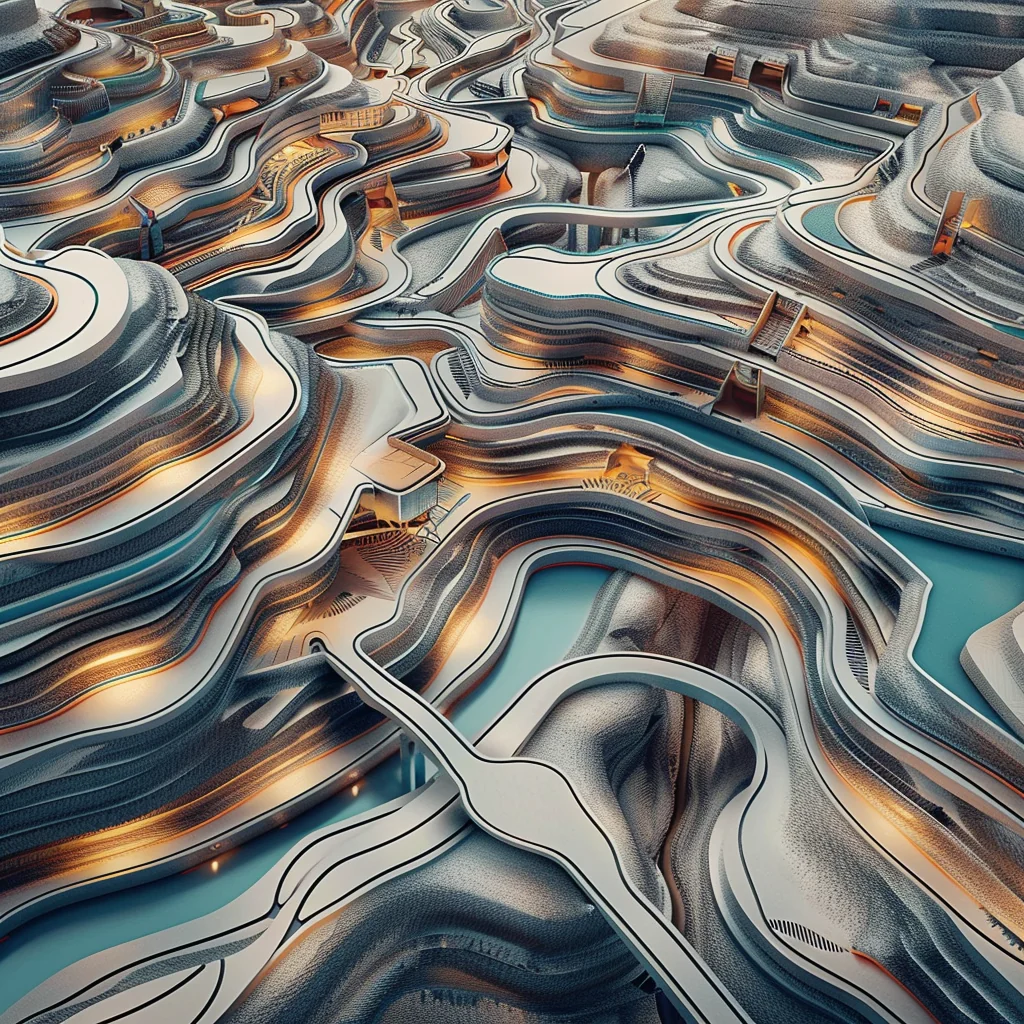
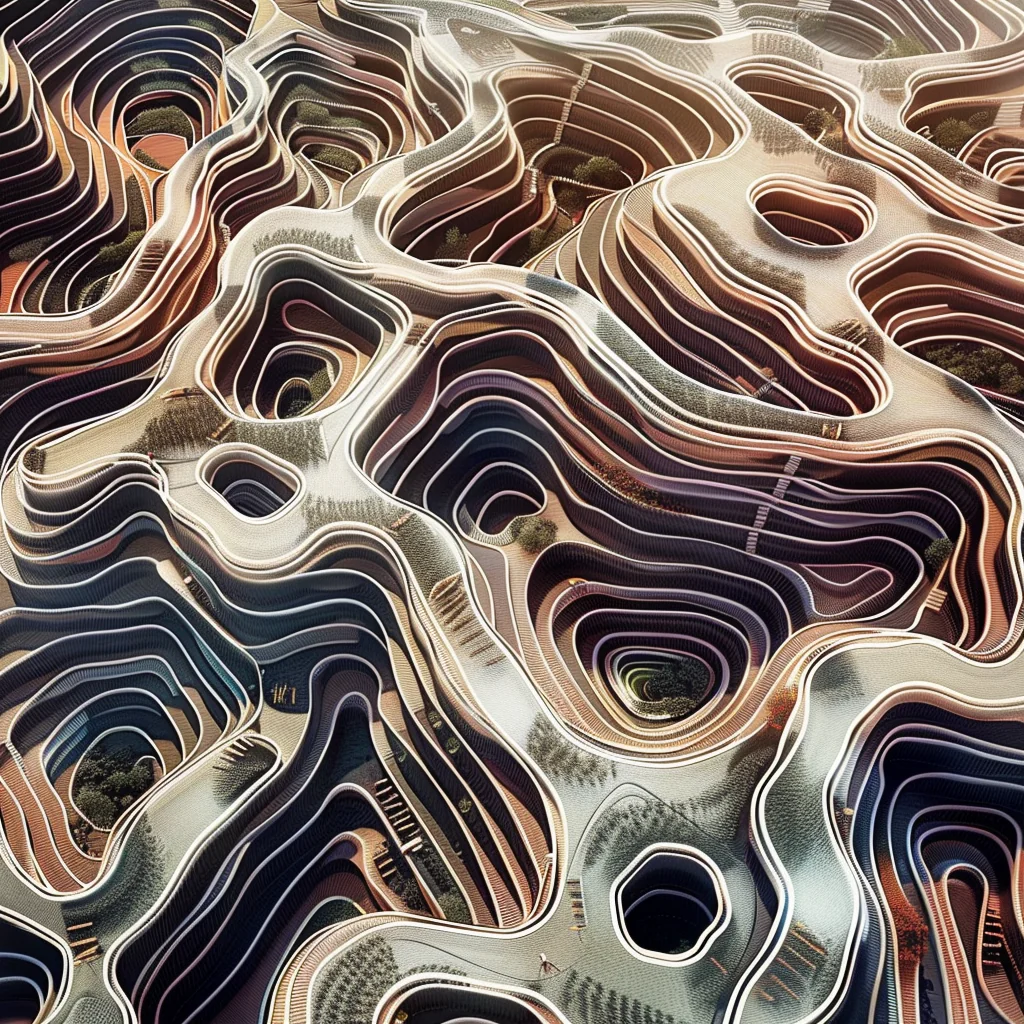
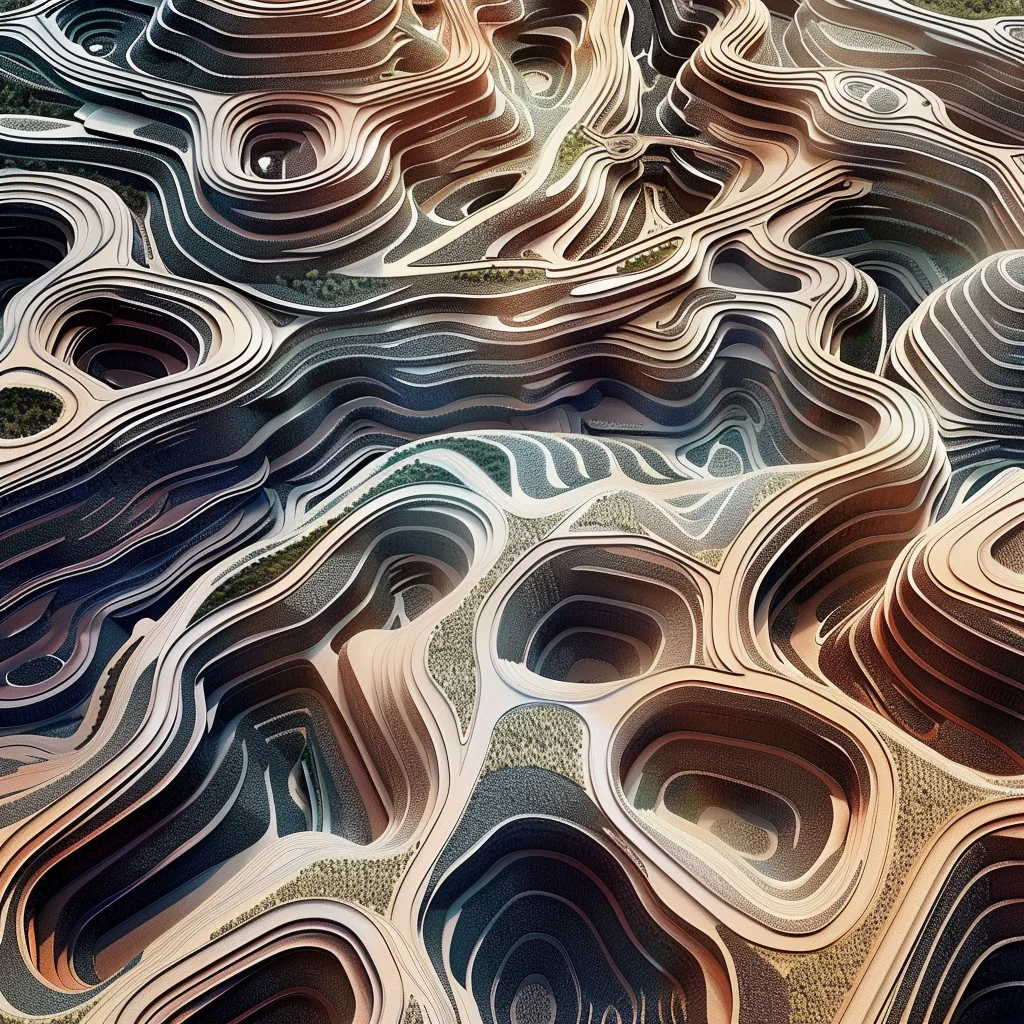
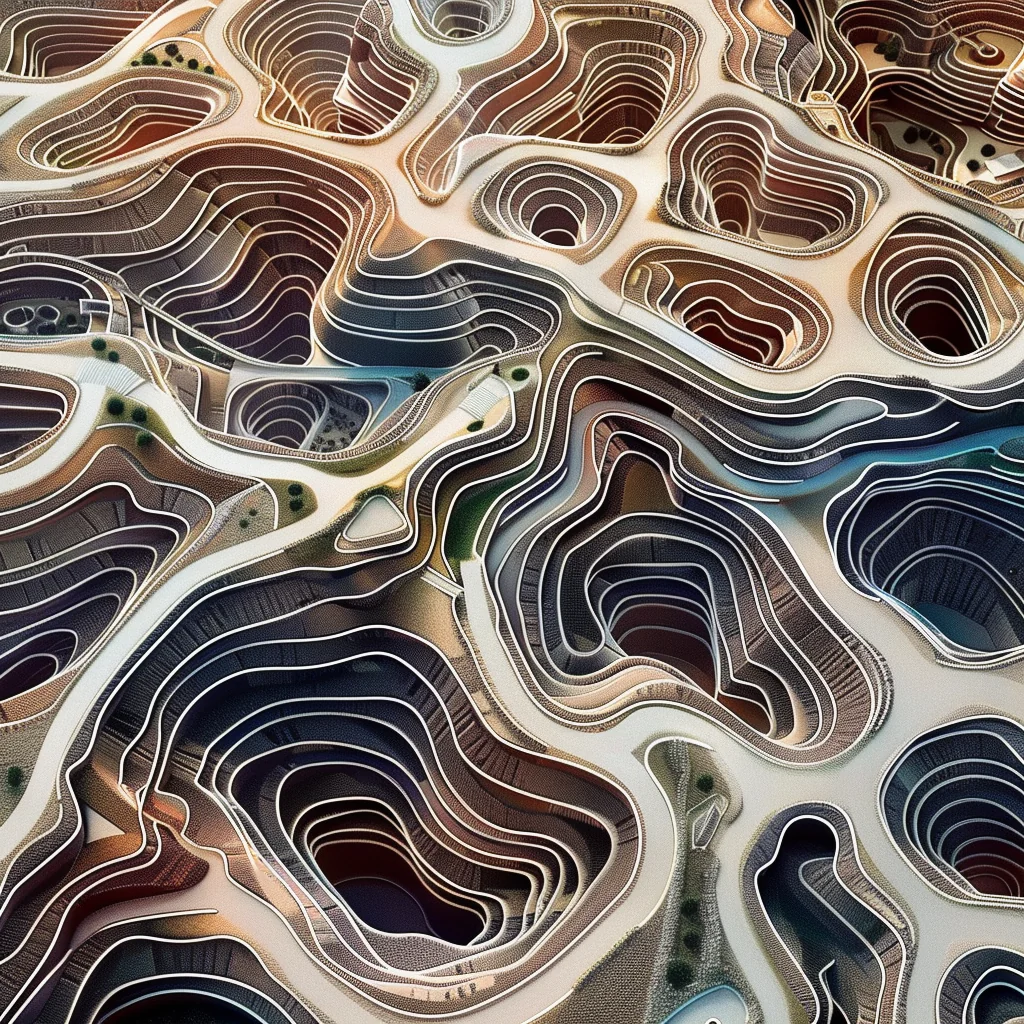
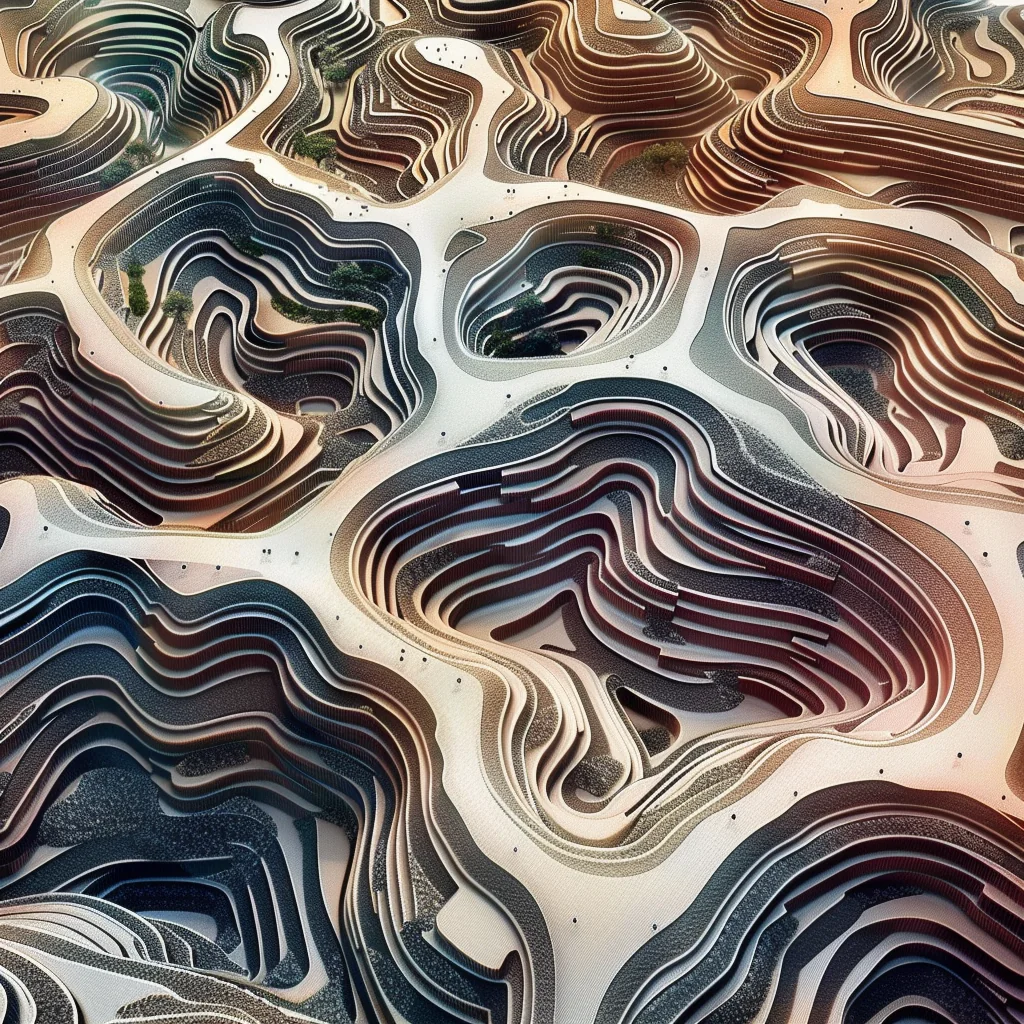
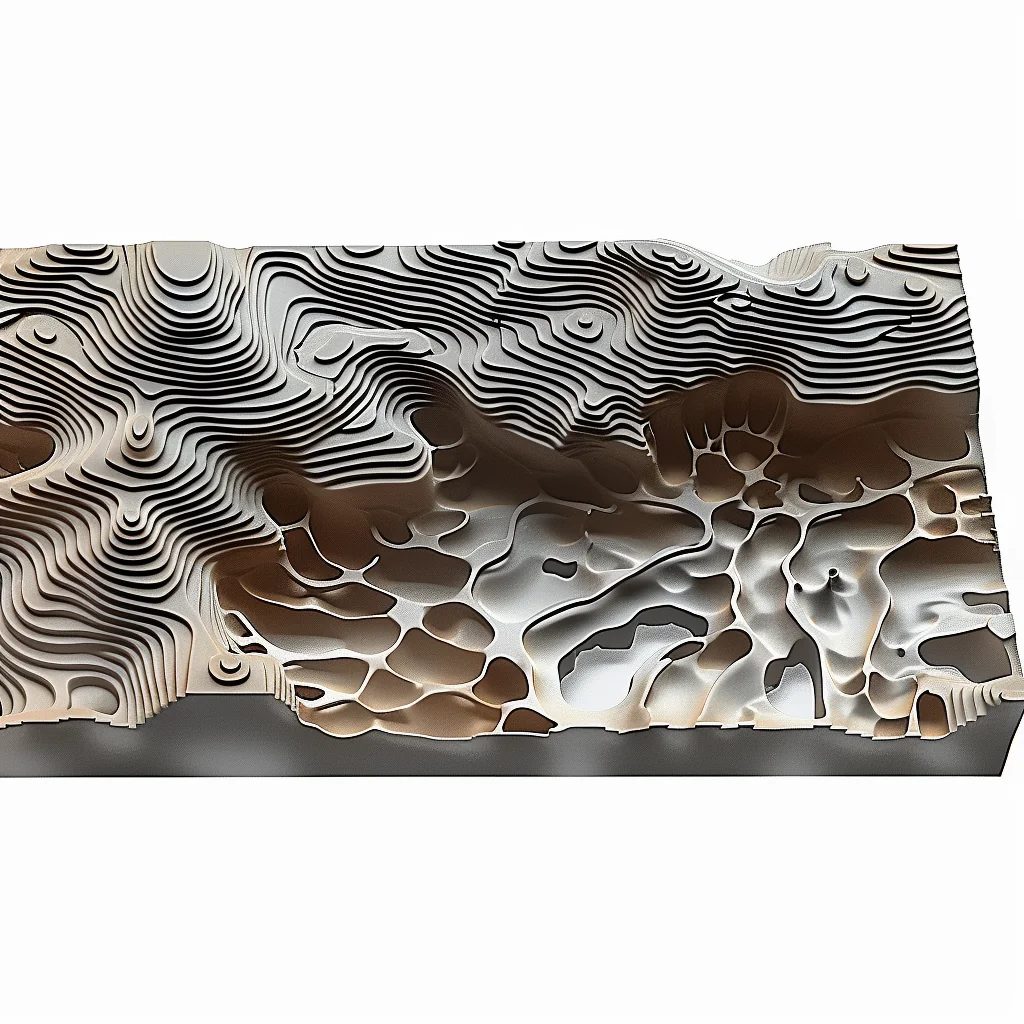
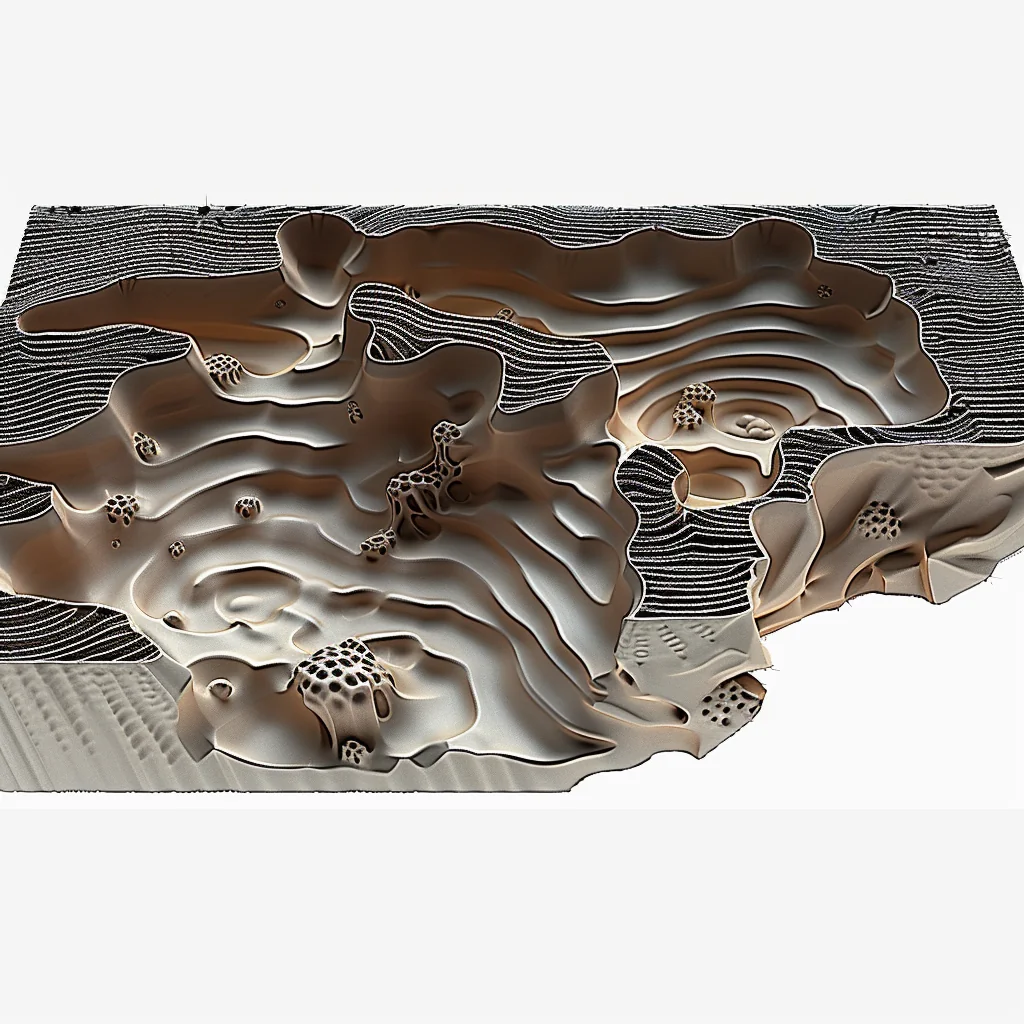
Phase 3: Spatial Iteration. Midjourney's Brush and Blend tools were applied repeatedly to the site imagery and reference material, each pass pushing further from raw photograph toward designed architecture. The mine's ochre terracing became building tiers. The pit's spiral access roads became inhabited promenades. Topographic contour studies emerged as formal genesis for the masterplan.
 Phase 3 outputs: Midjourney Brush and Blend iterations
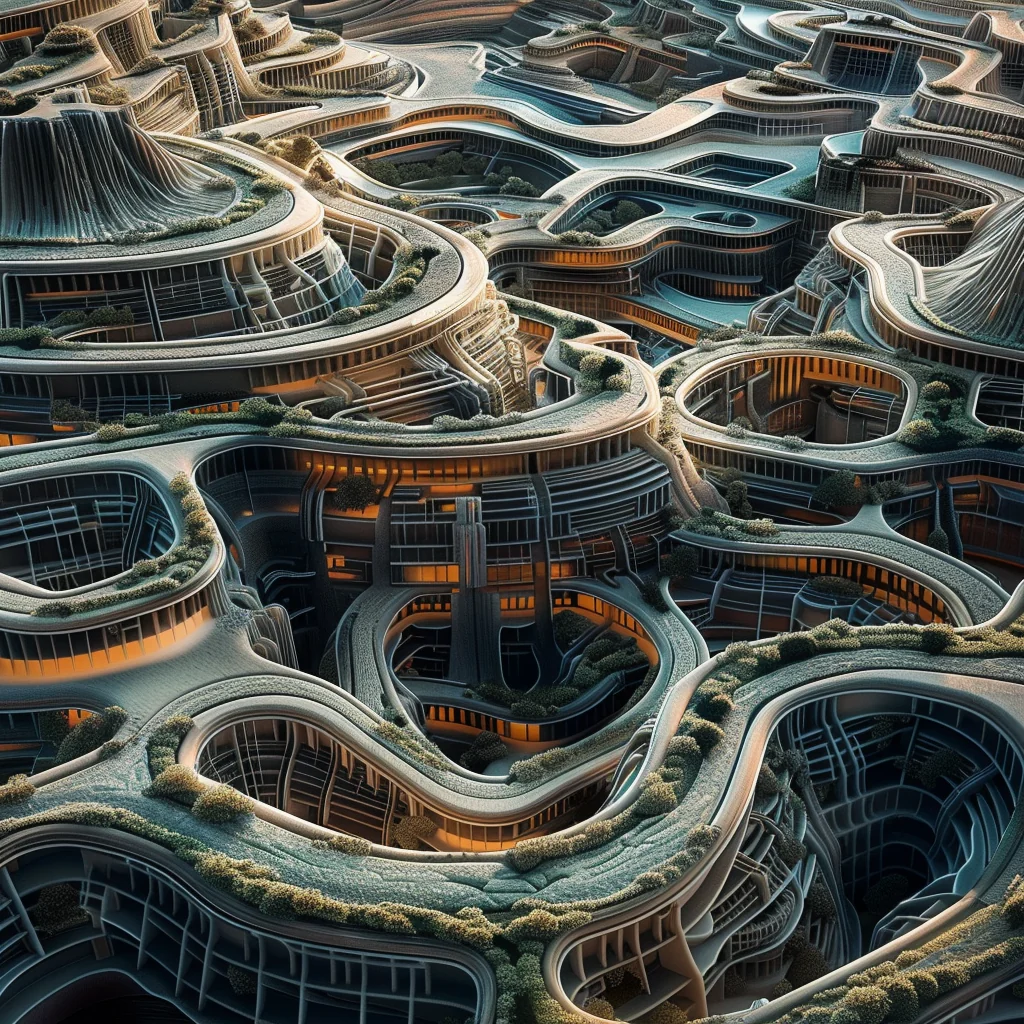
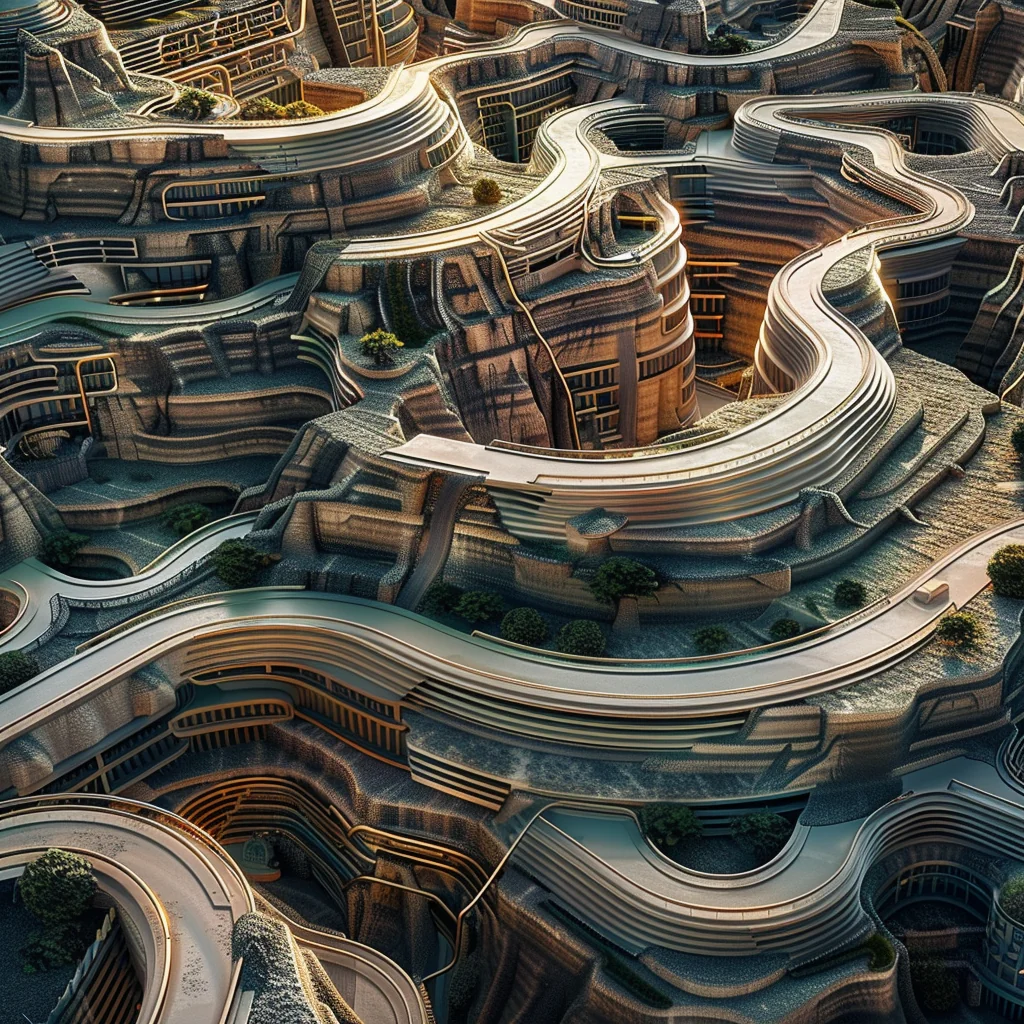
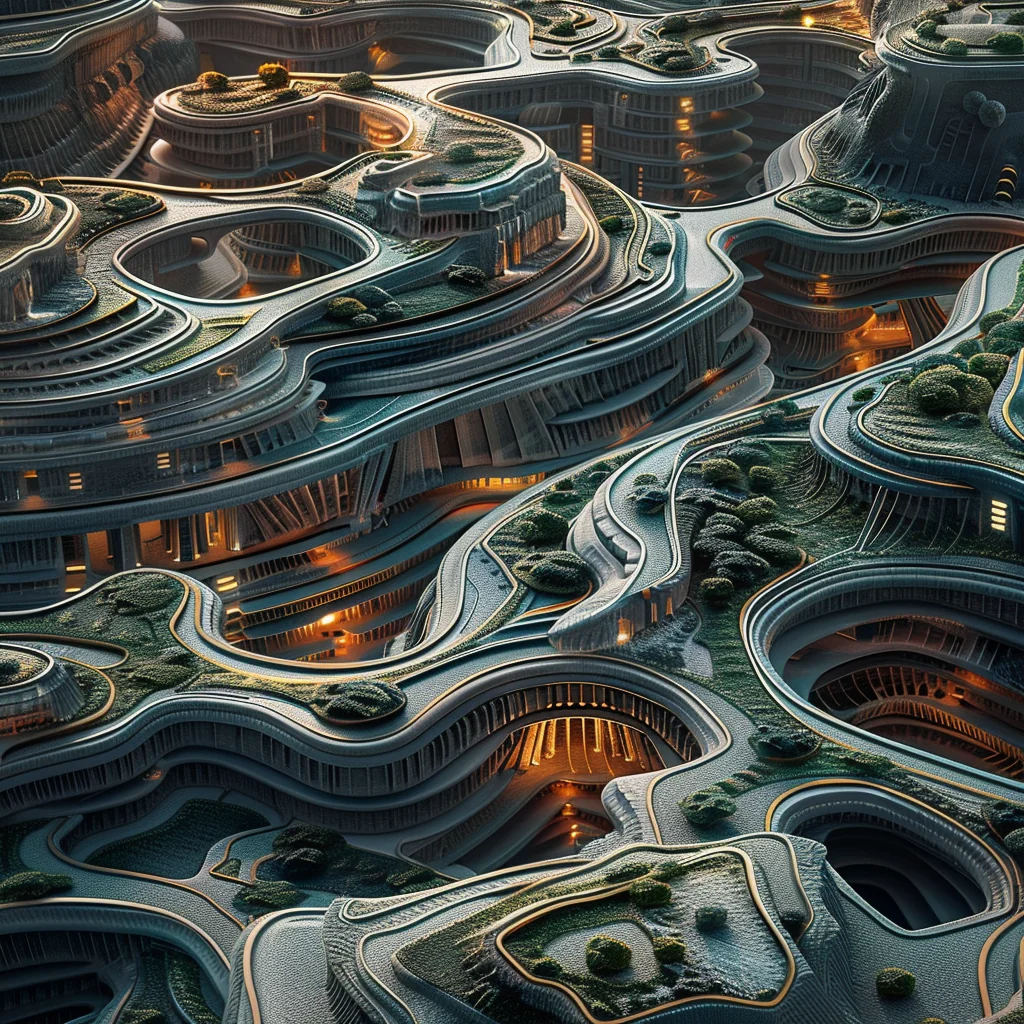
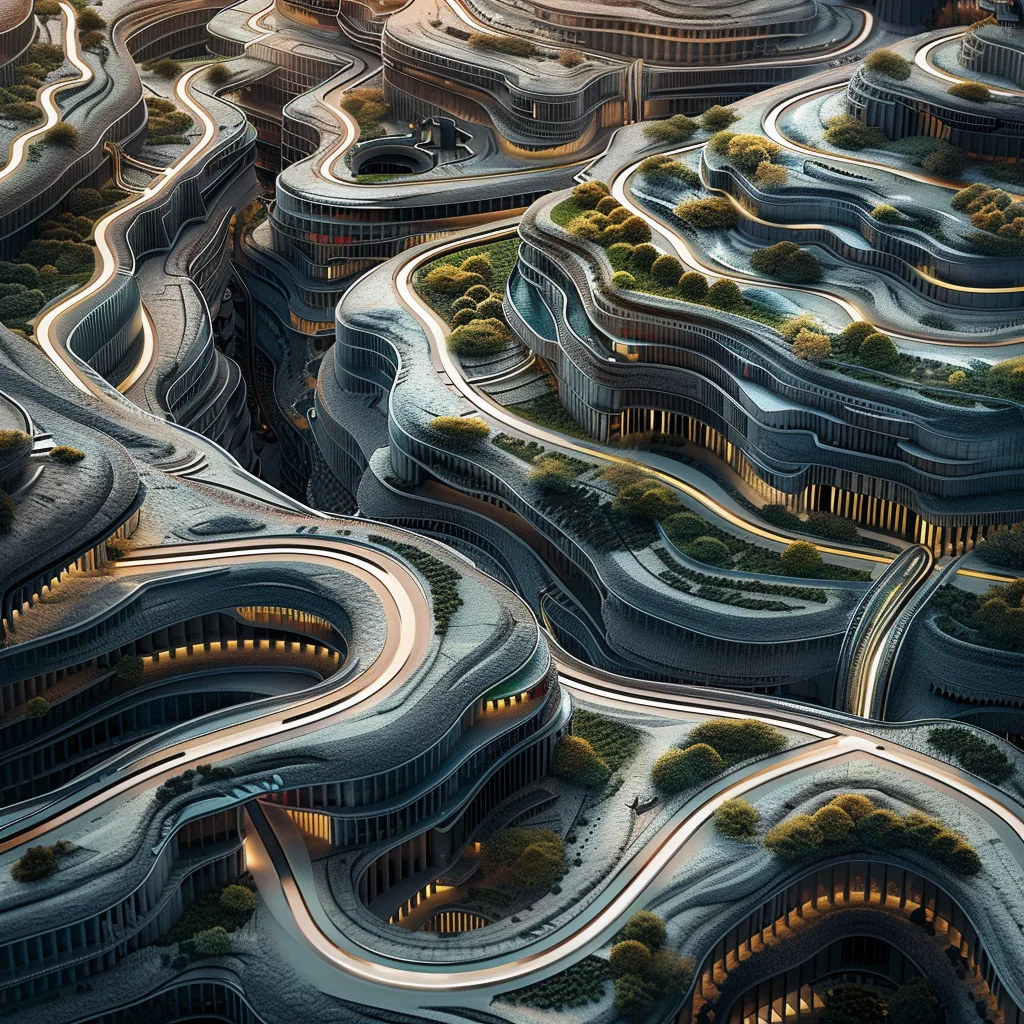
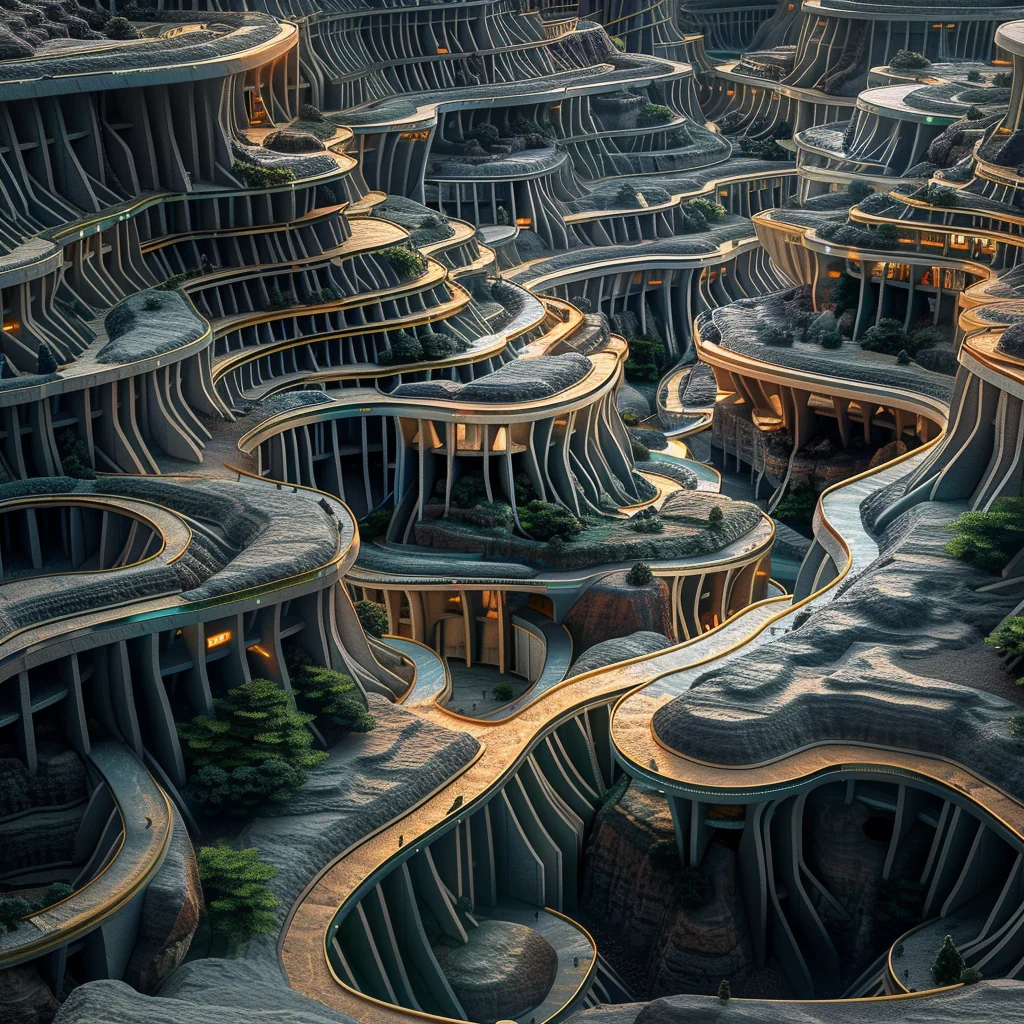
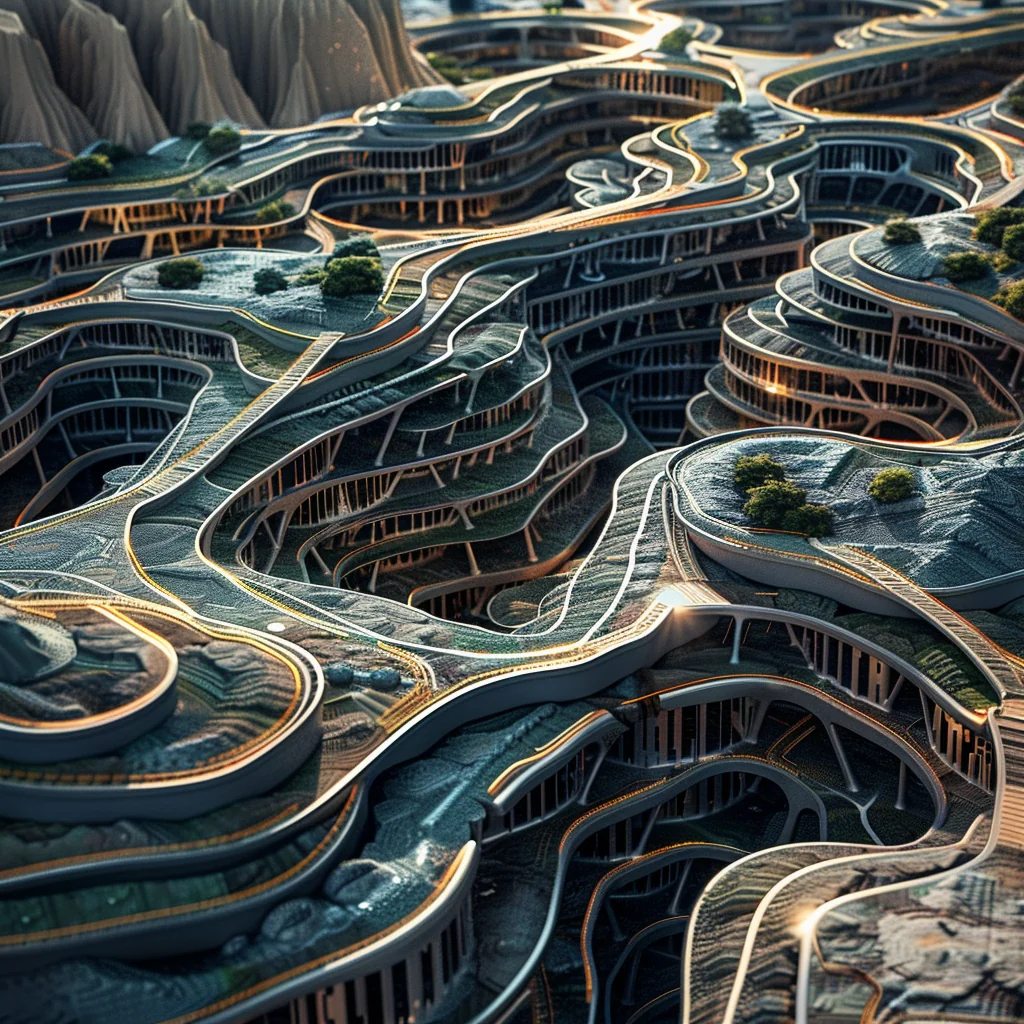
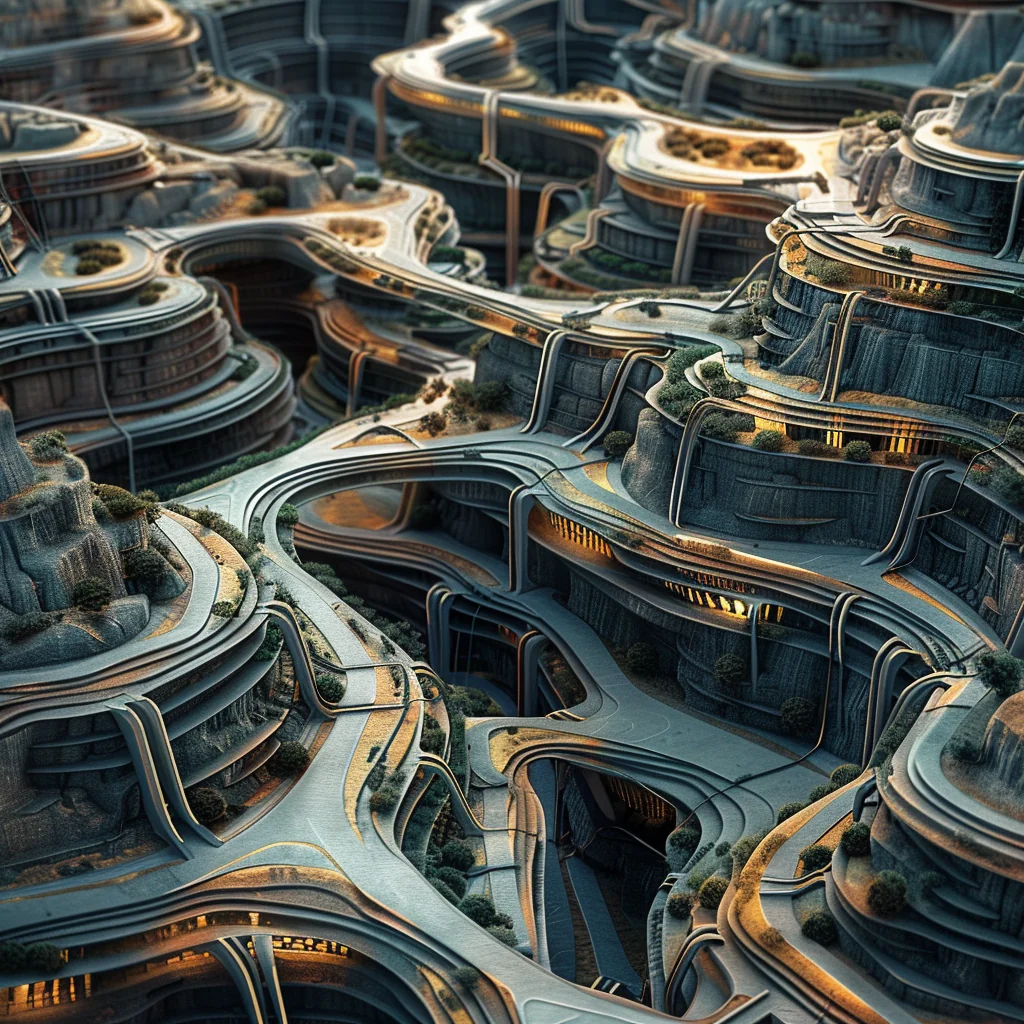
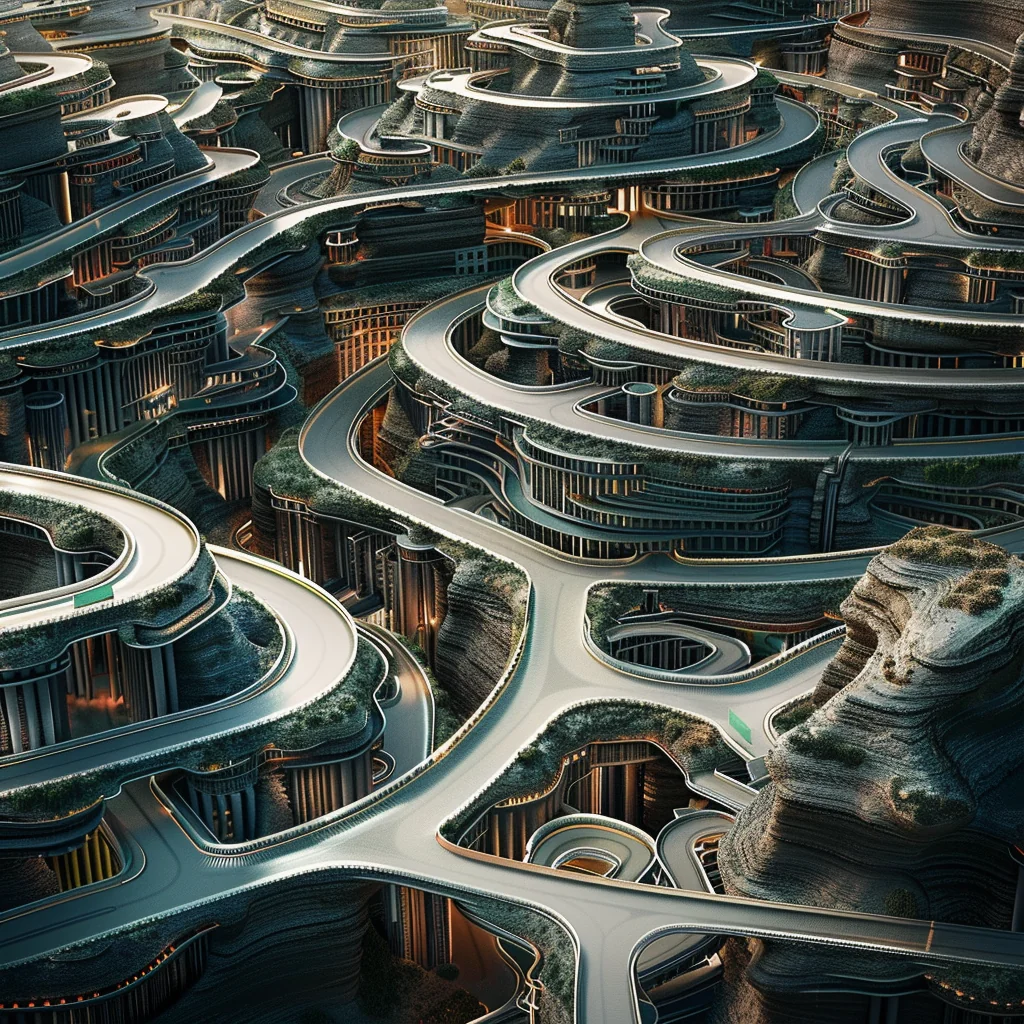
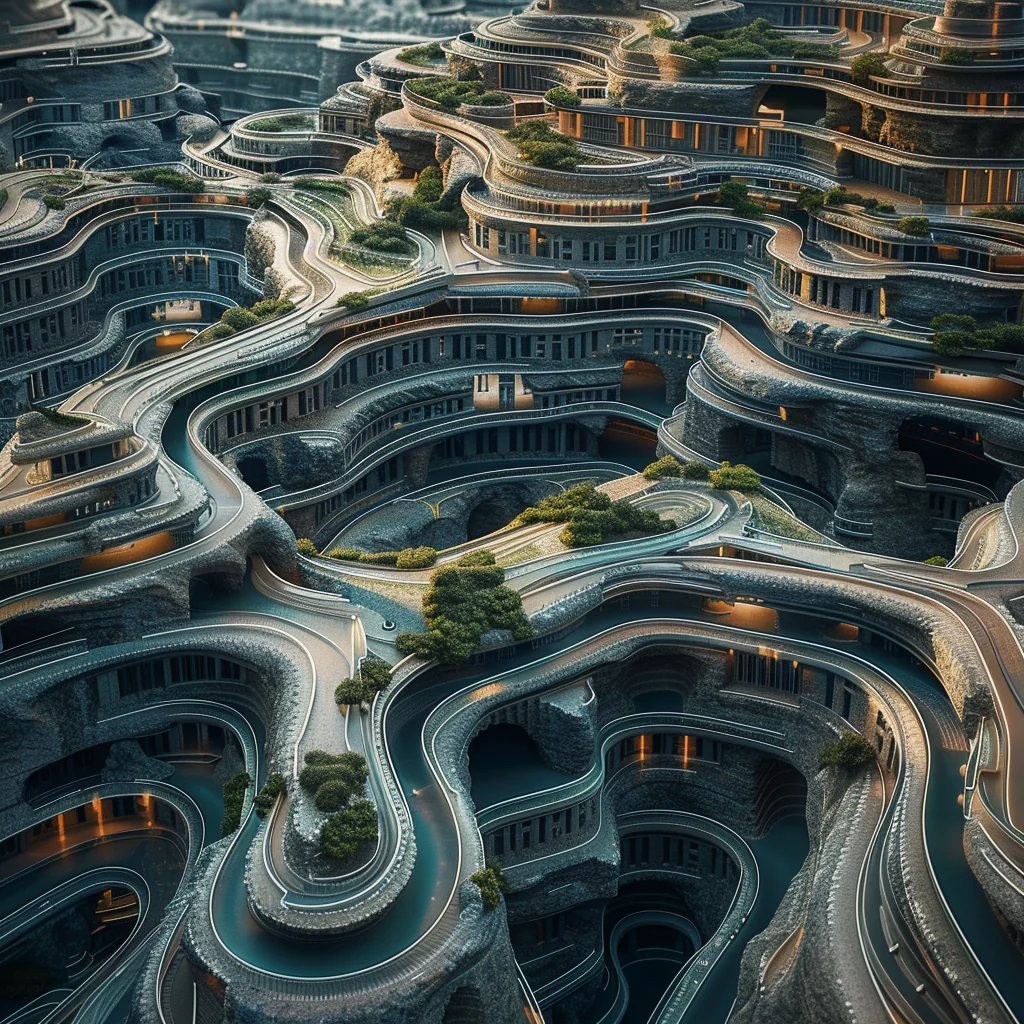
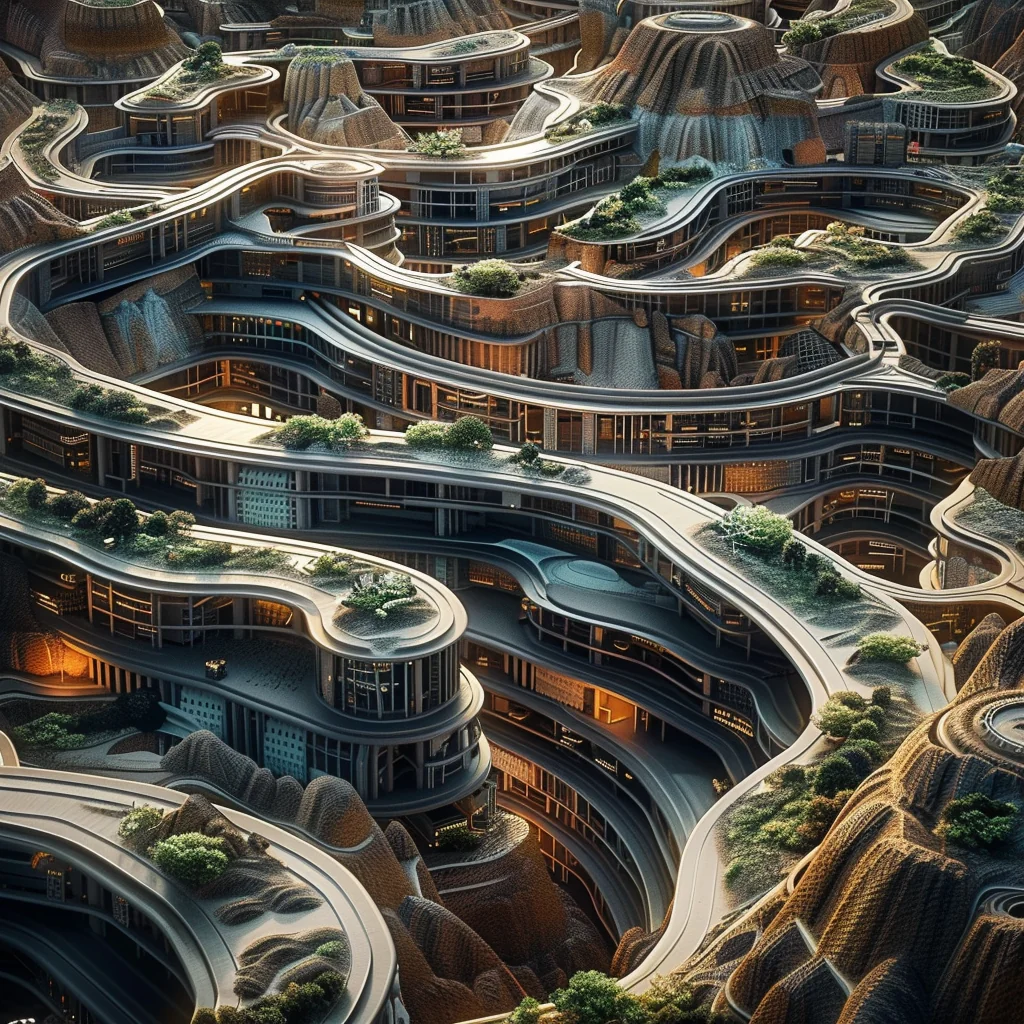
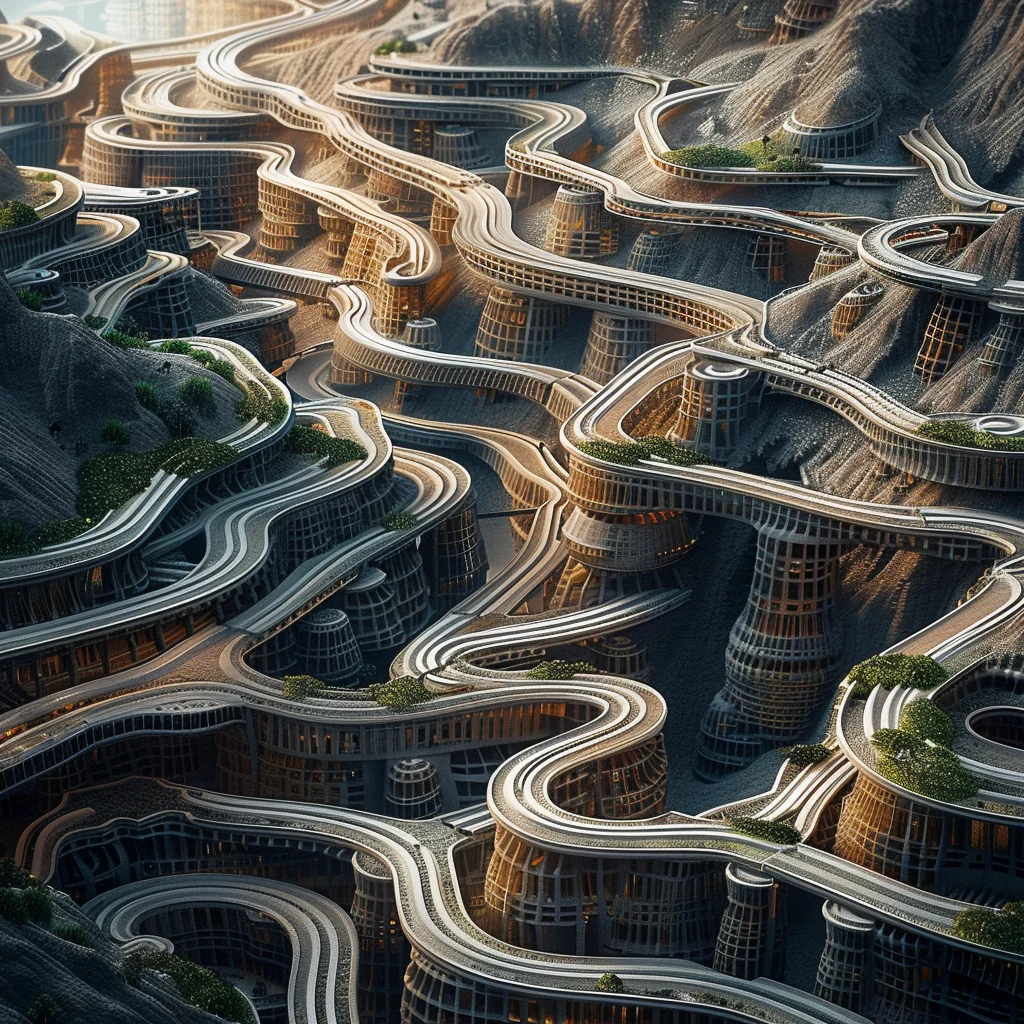
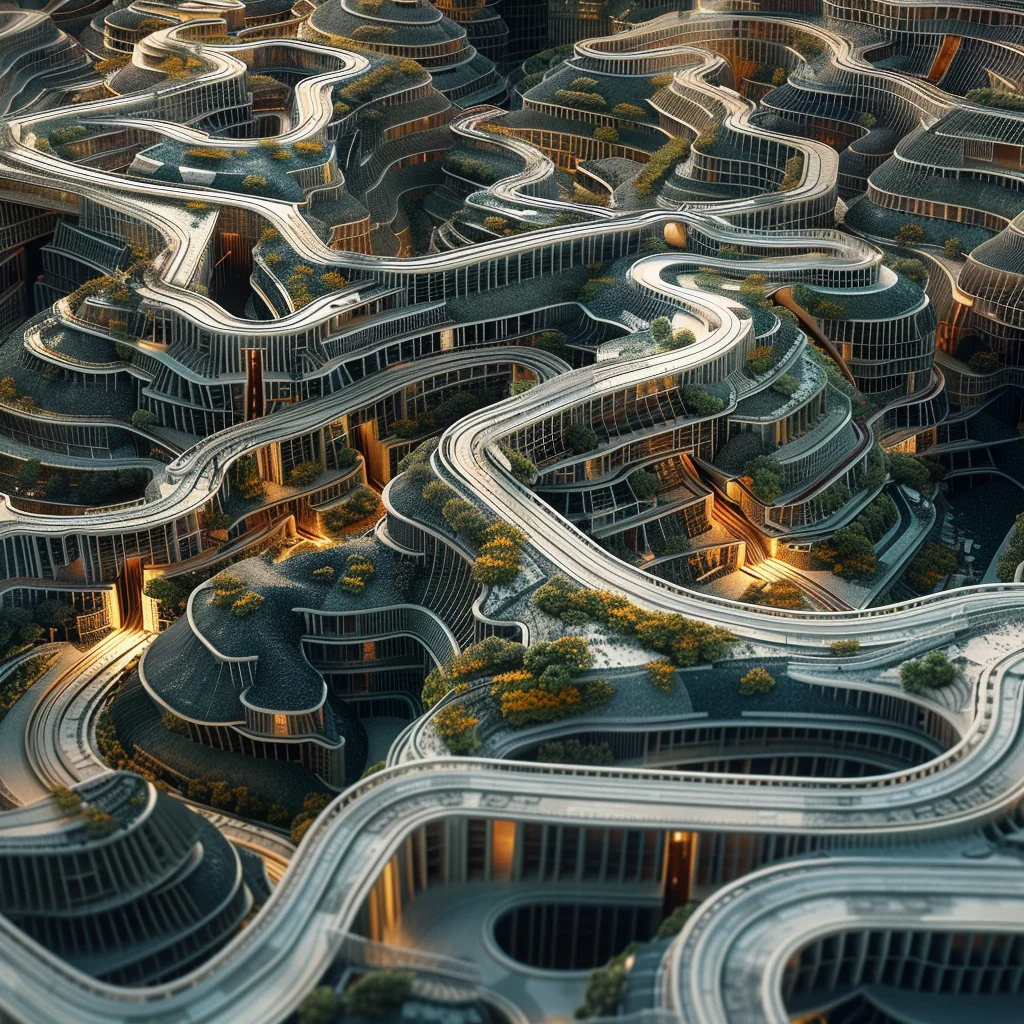
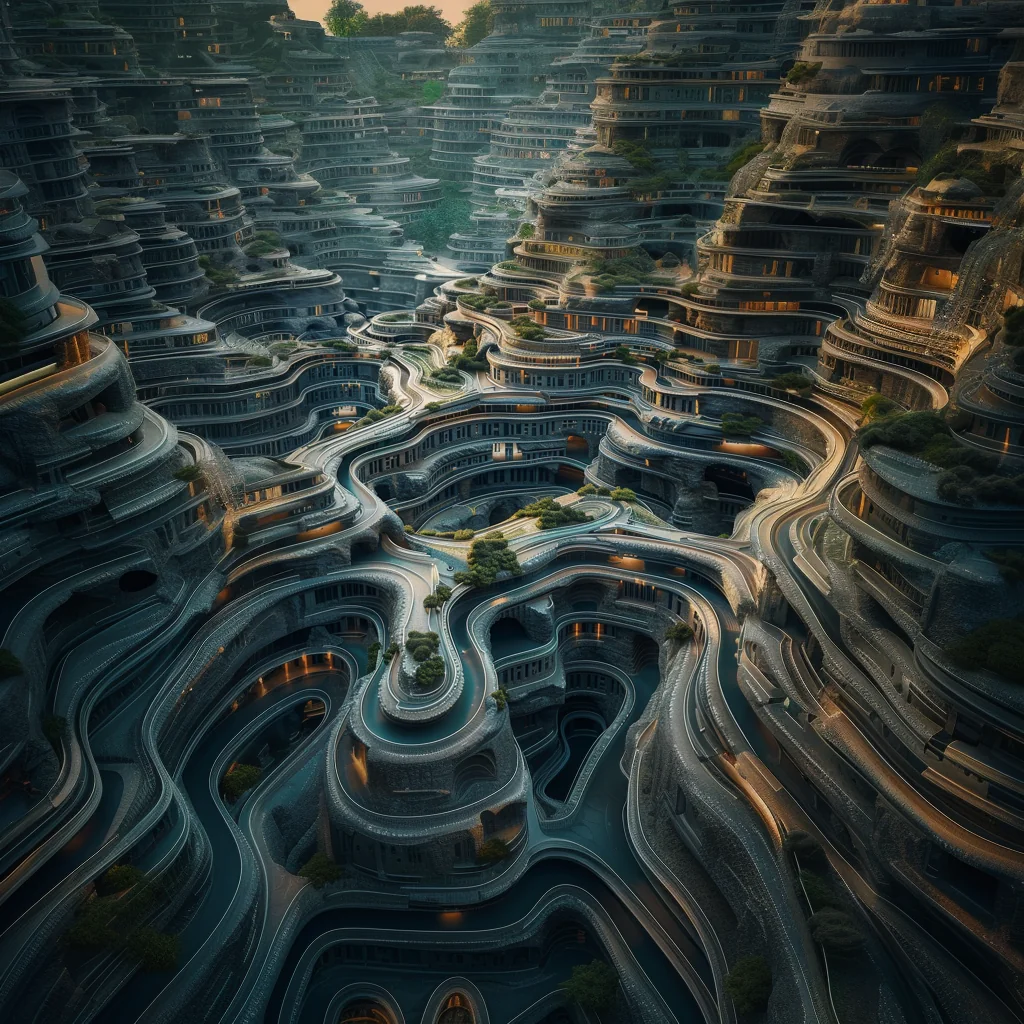
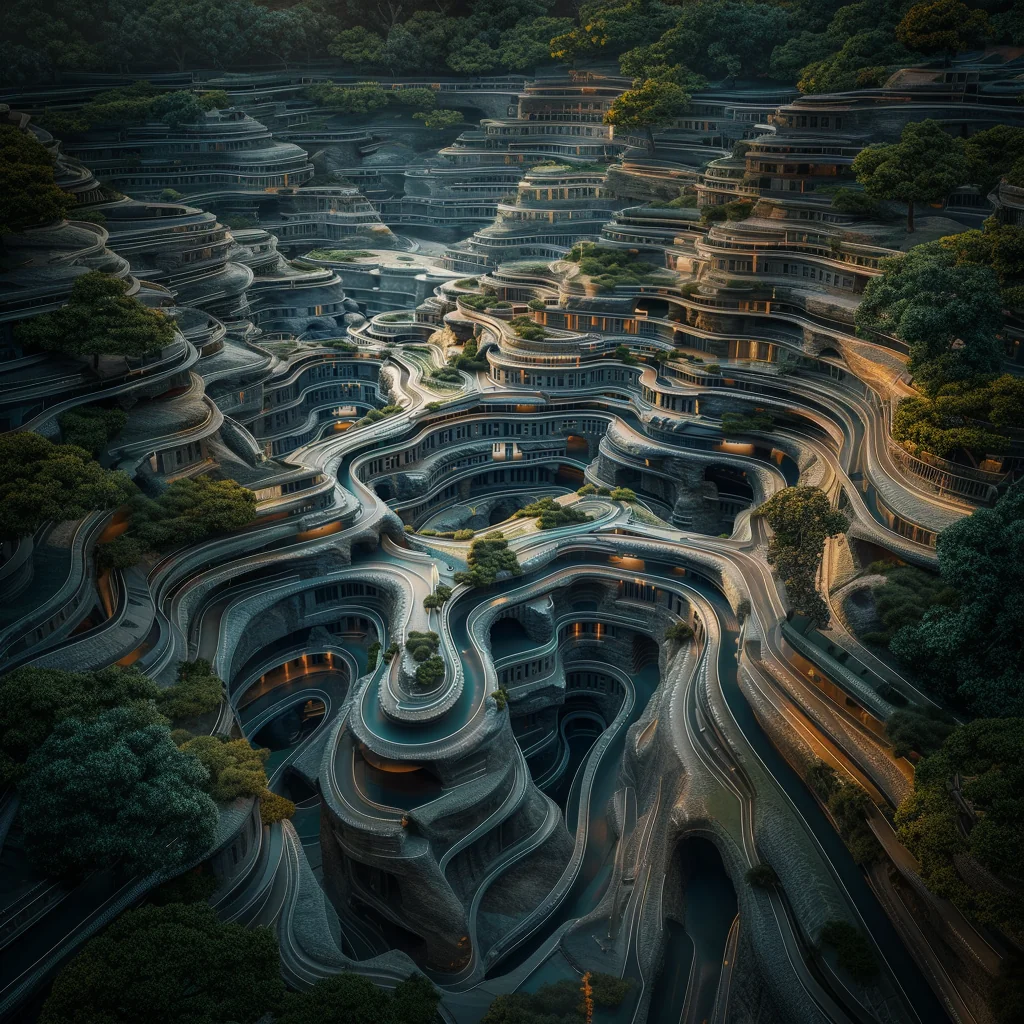
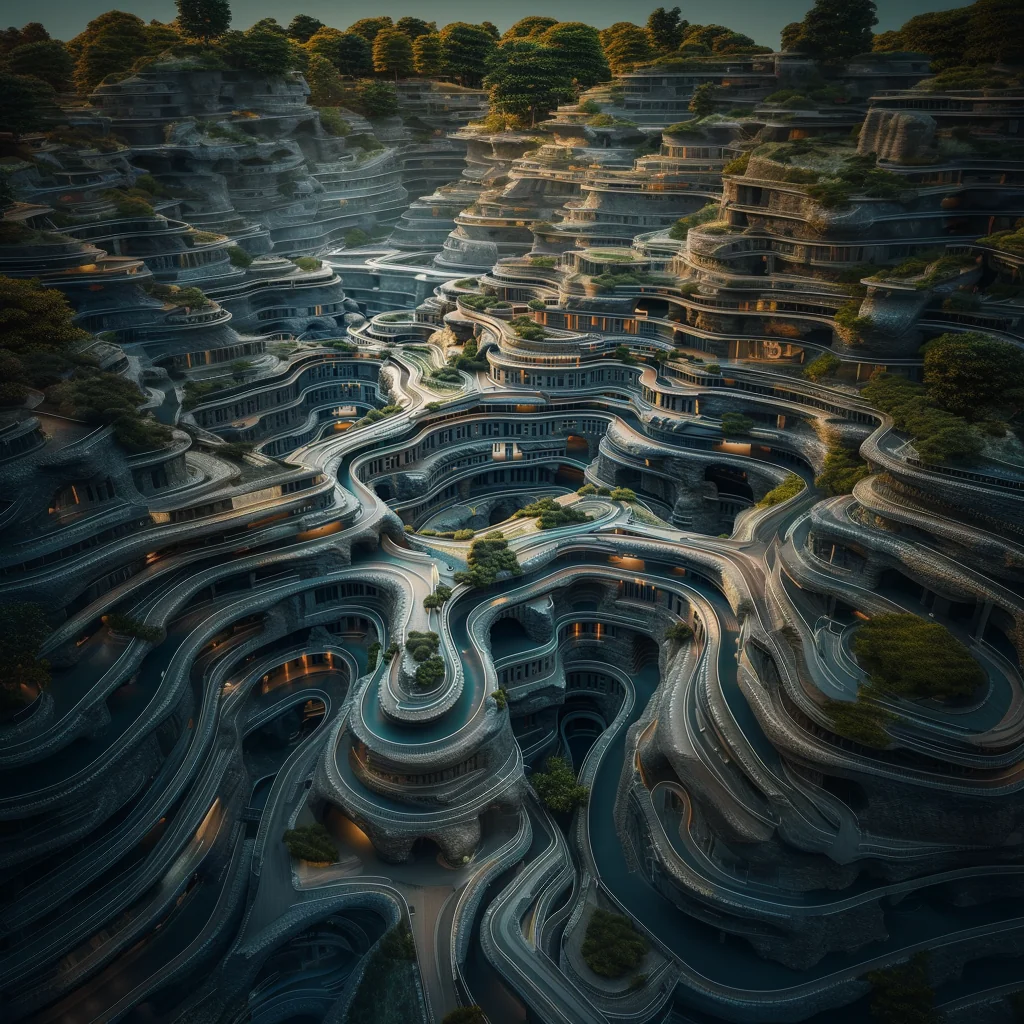
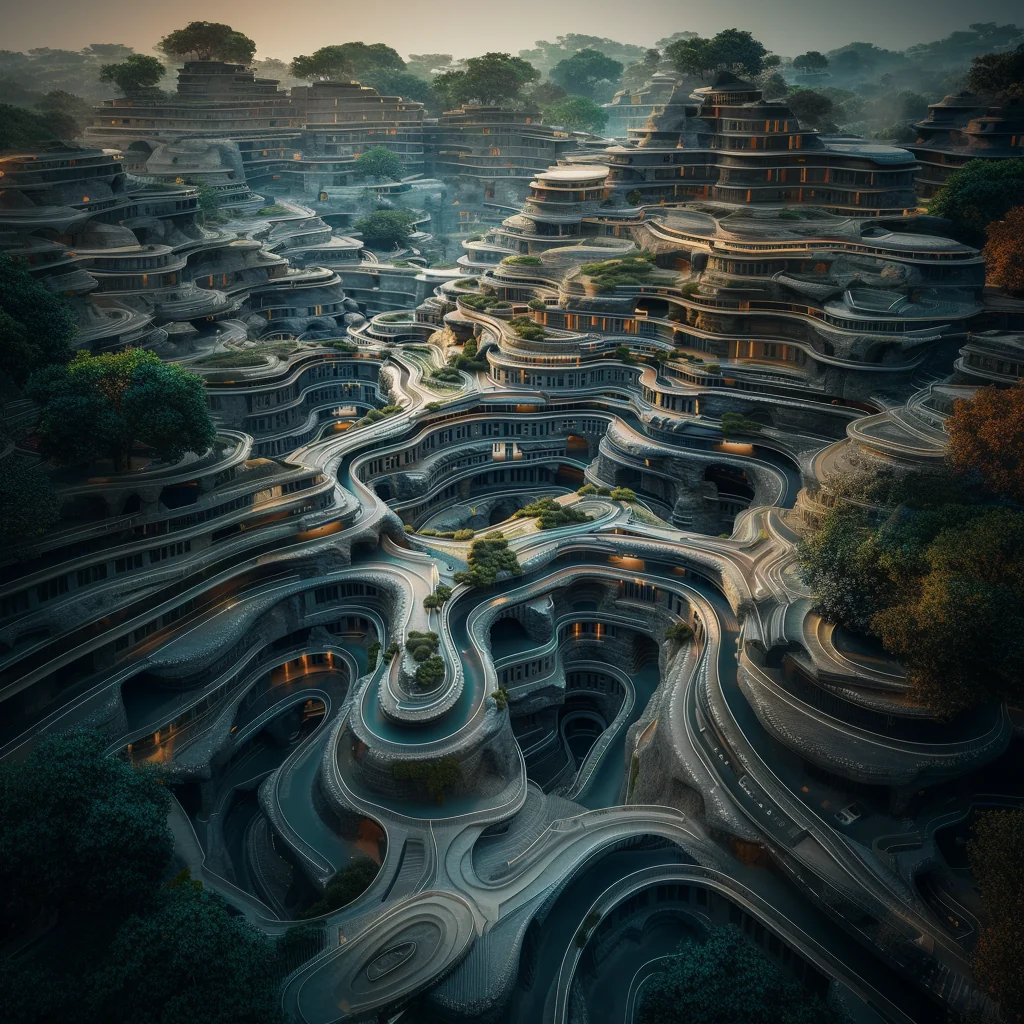
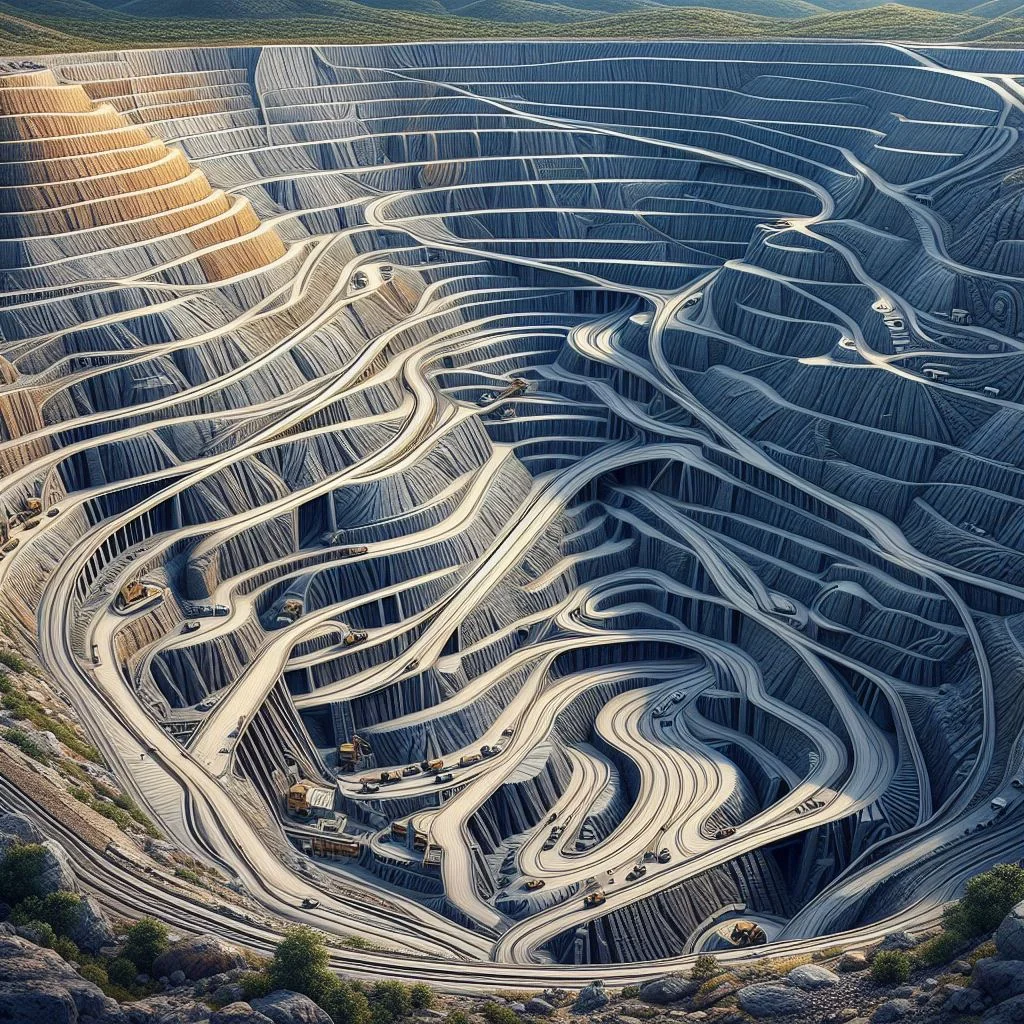
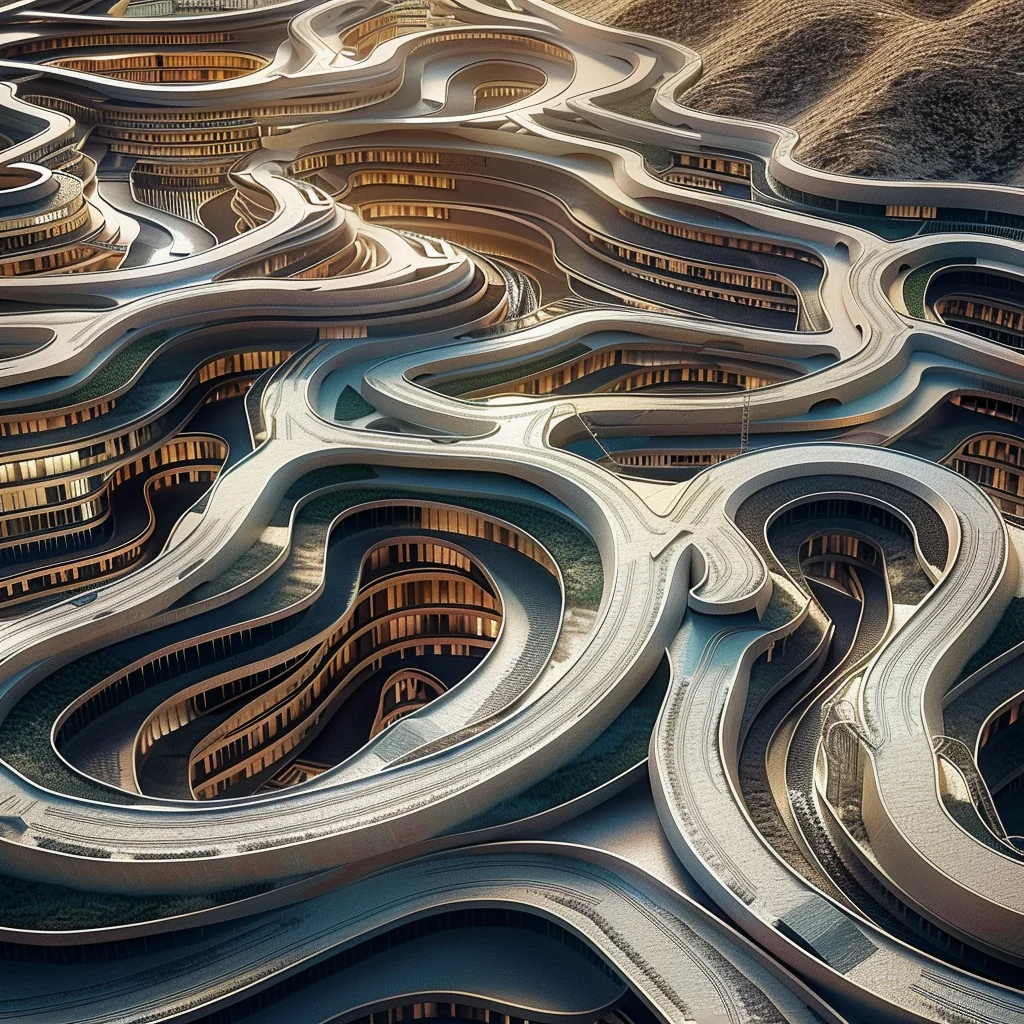
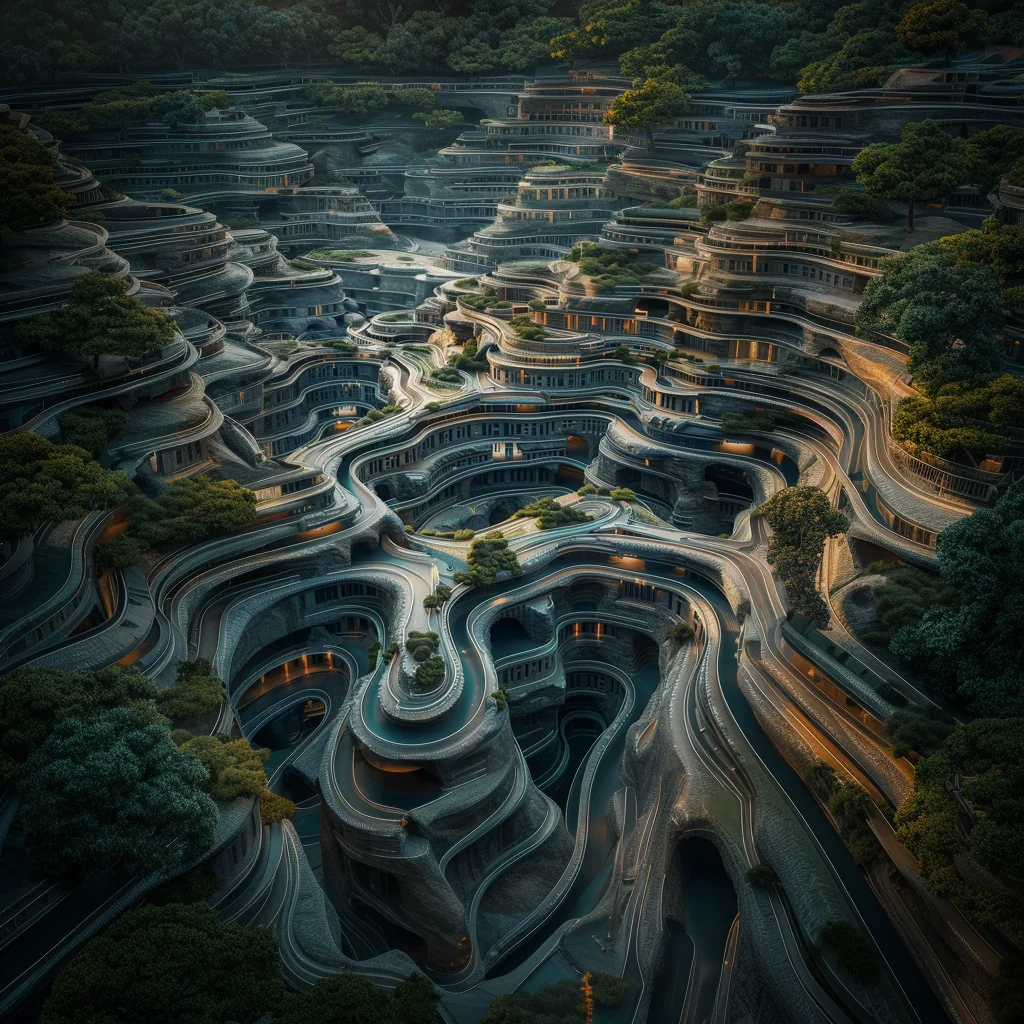
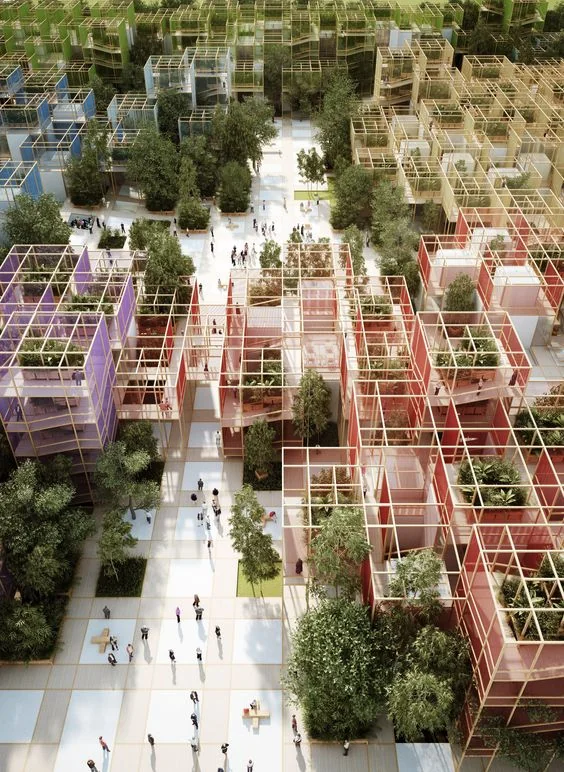
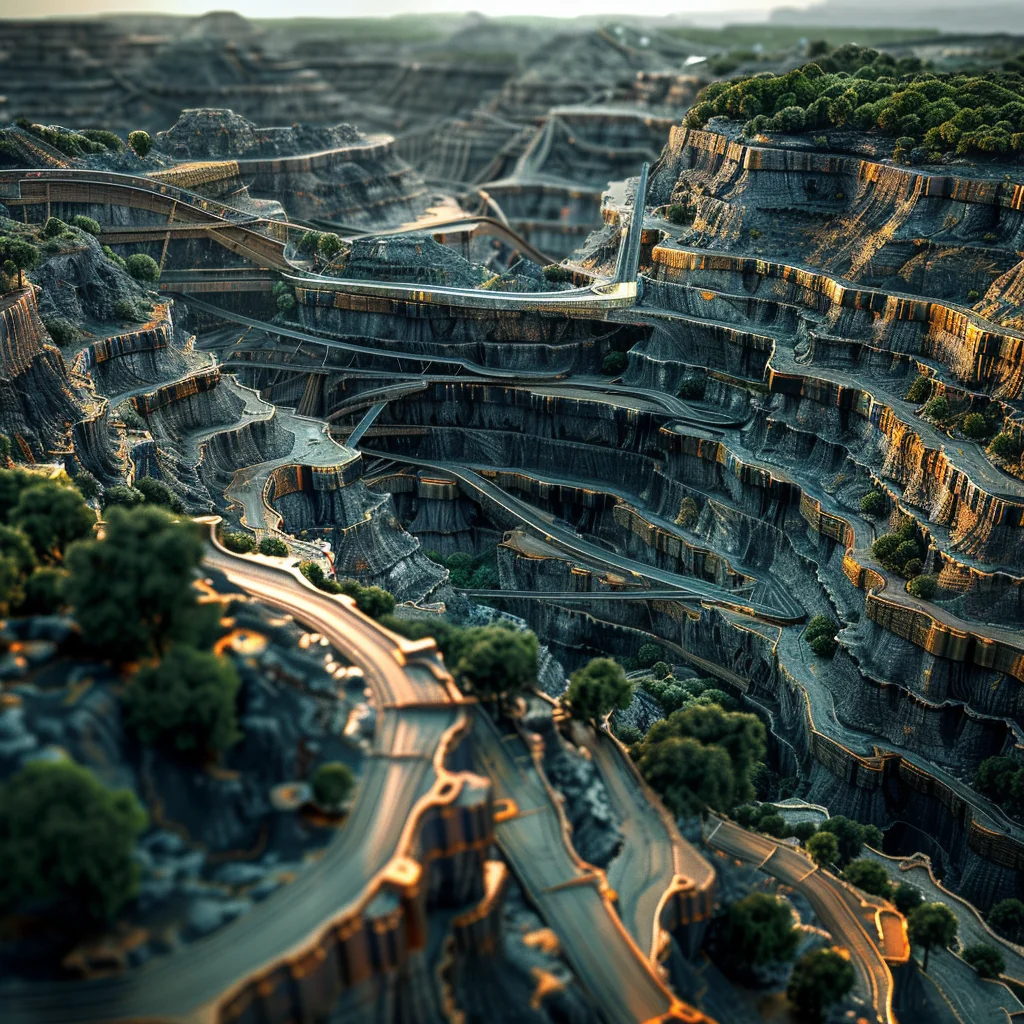
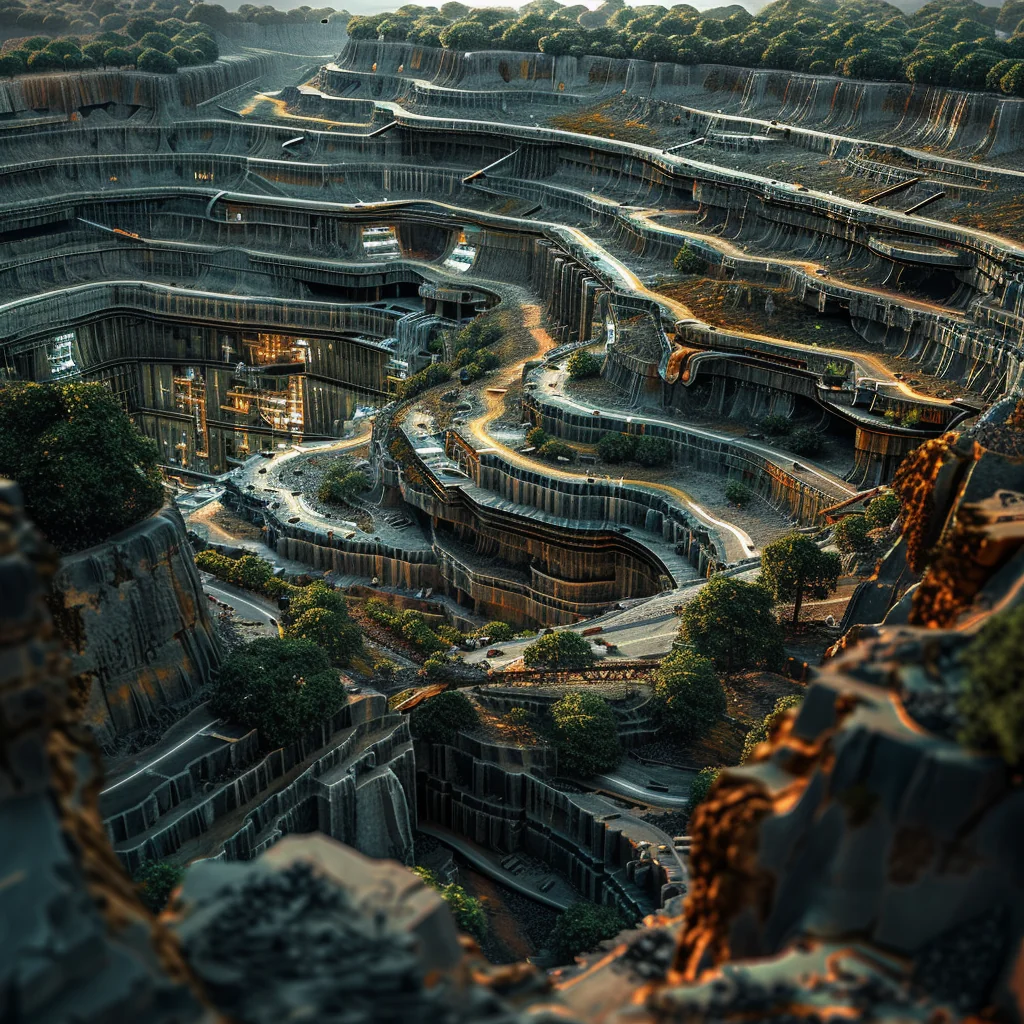
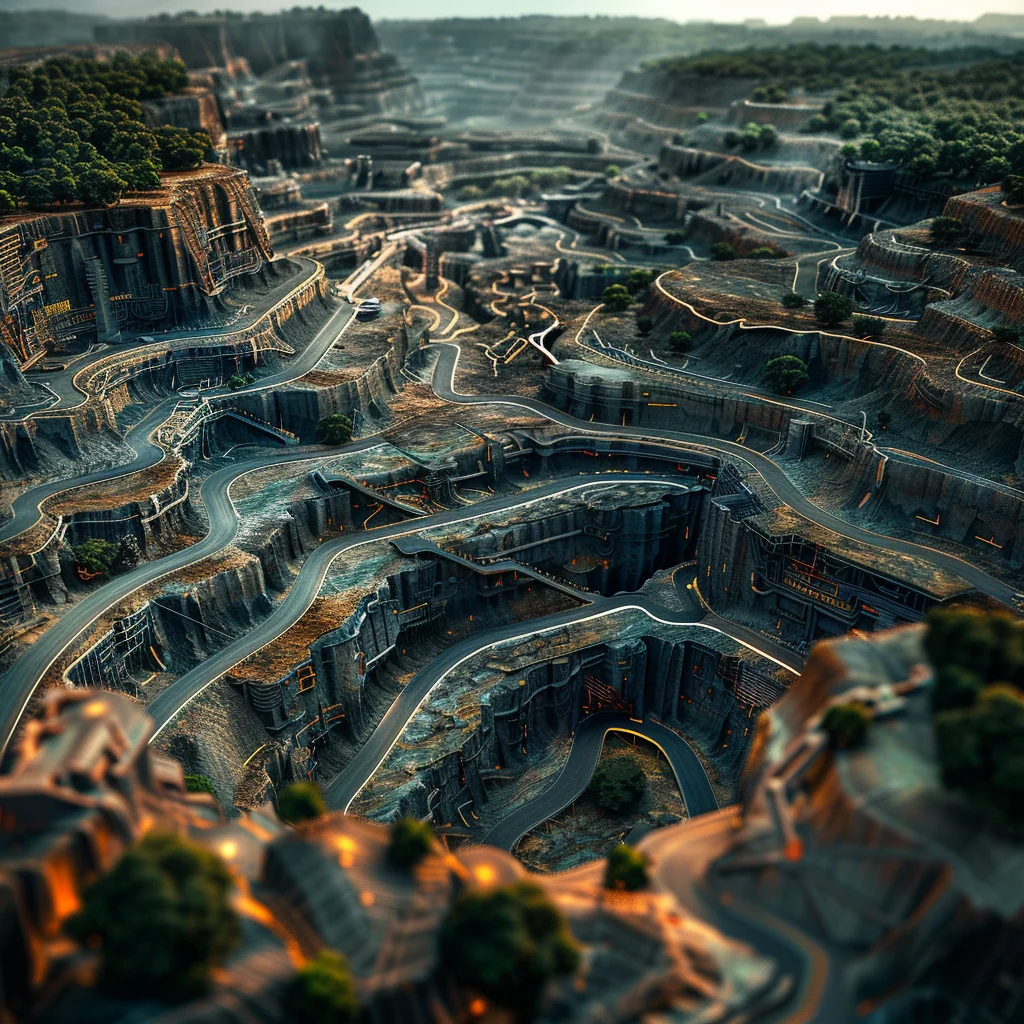
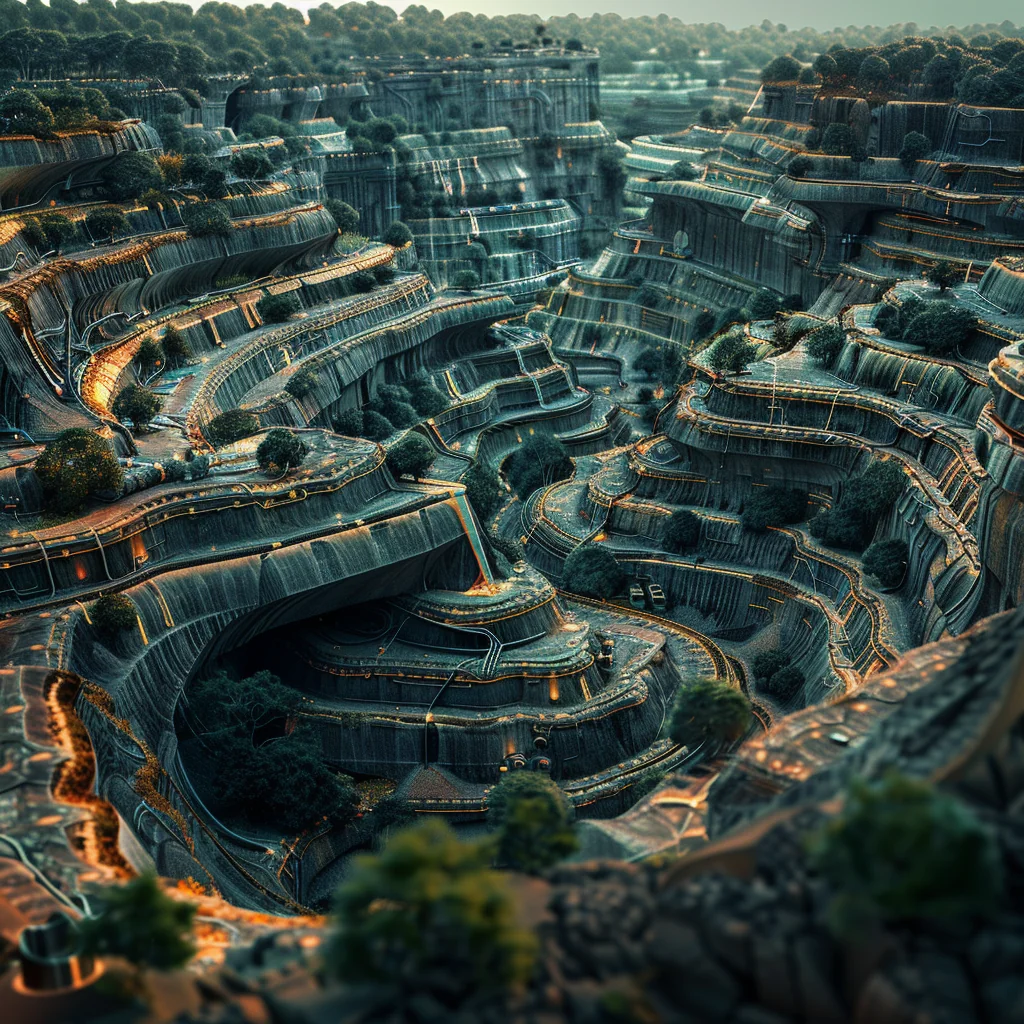
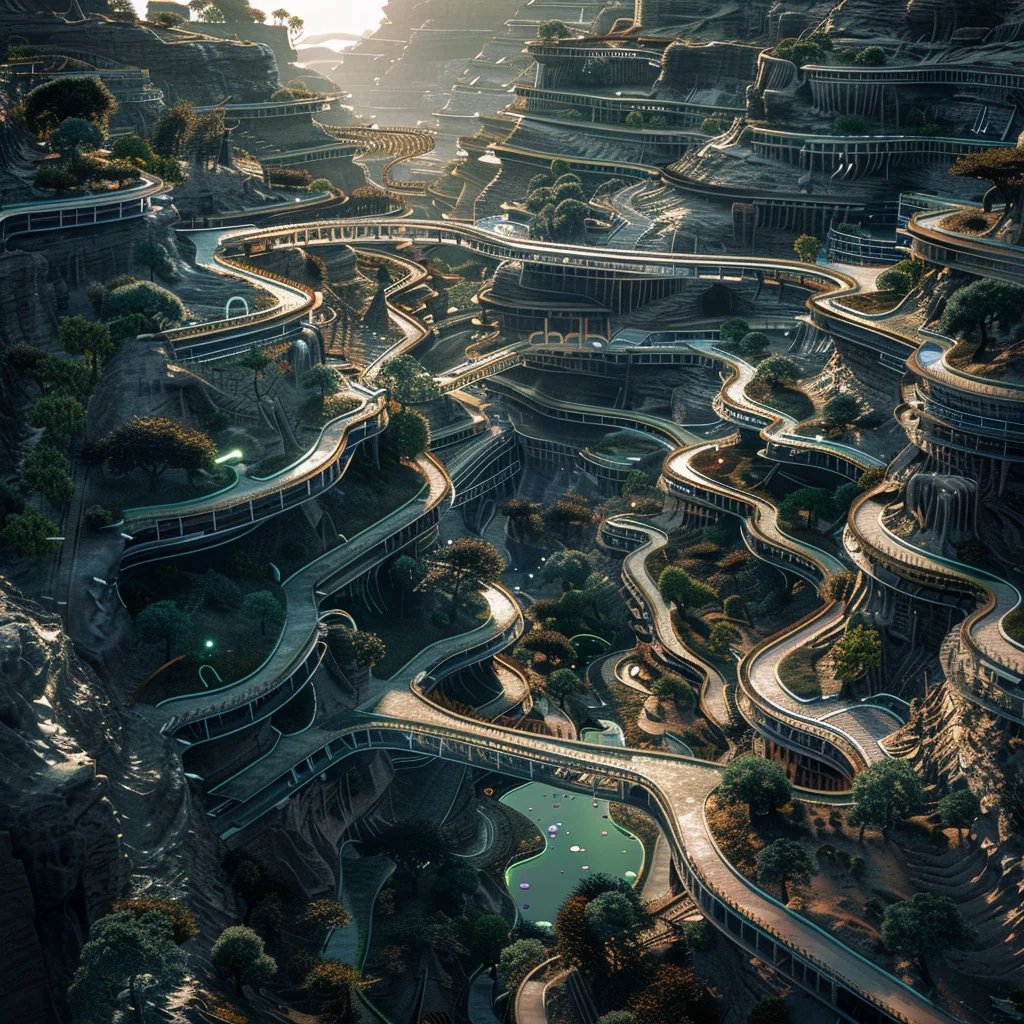
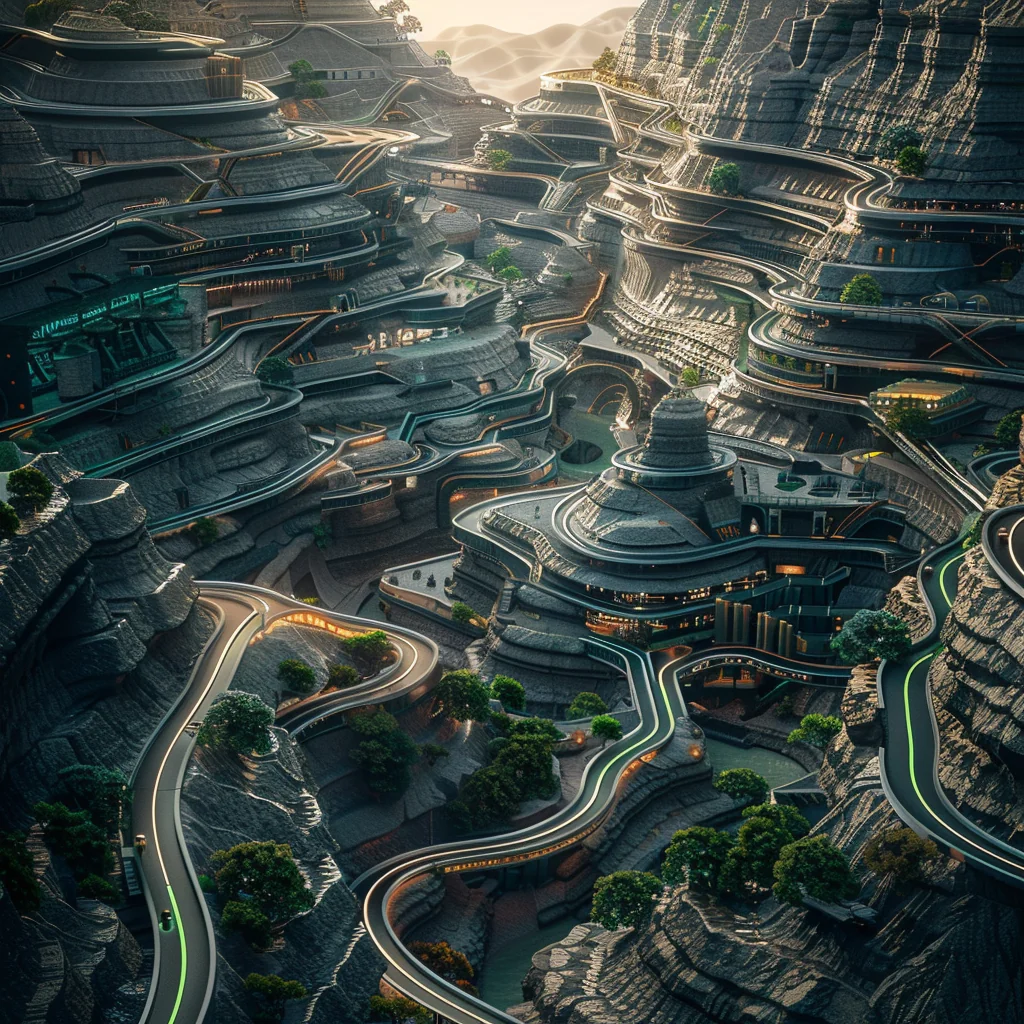
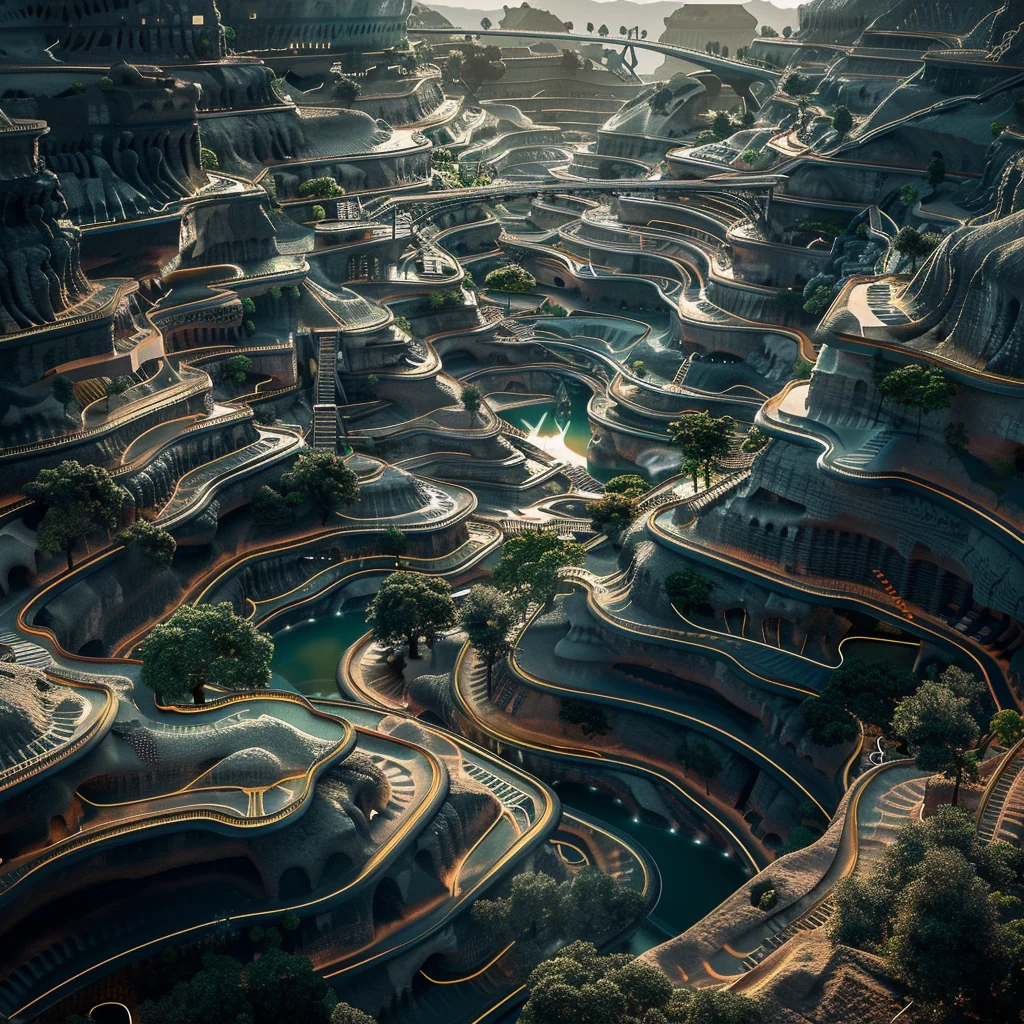
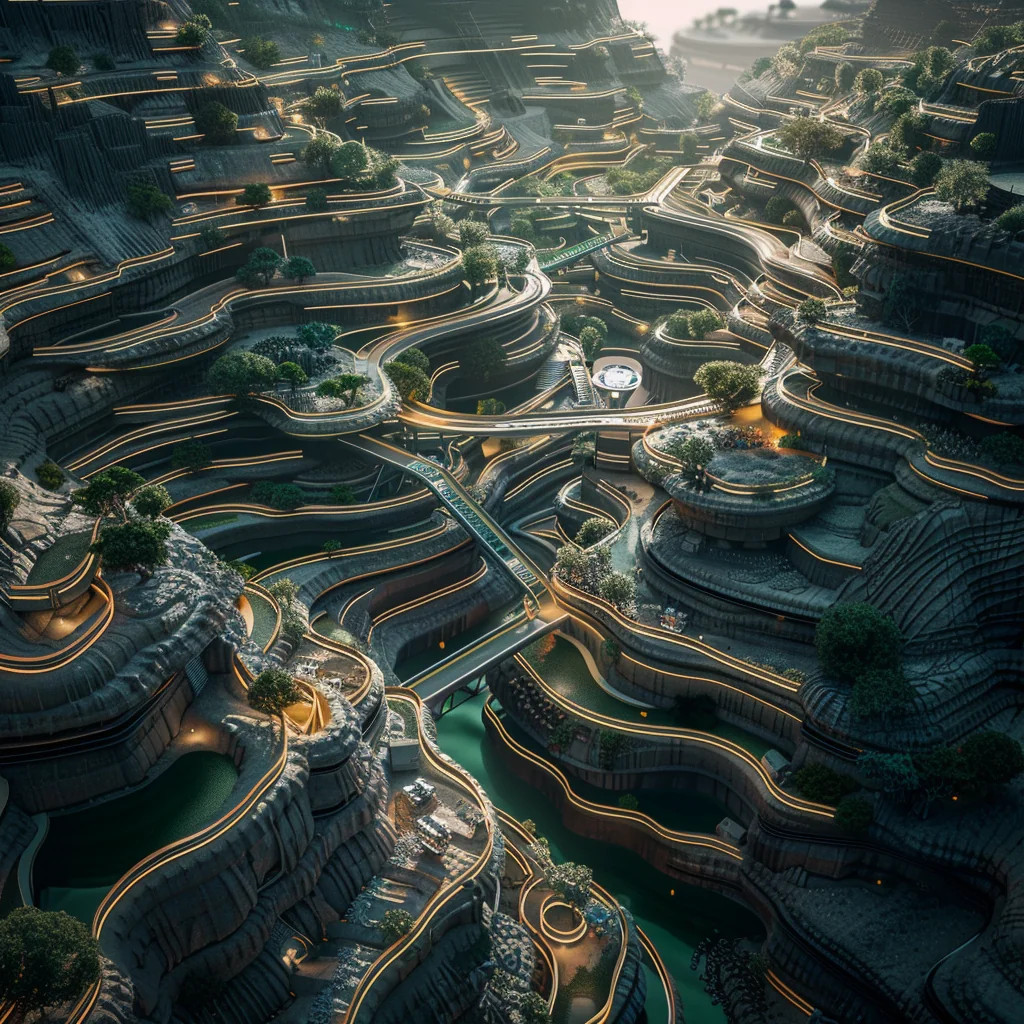
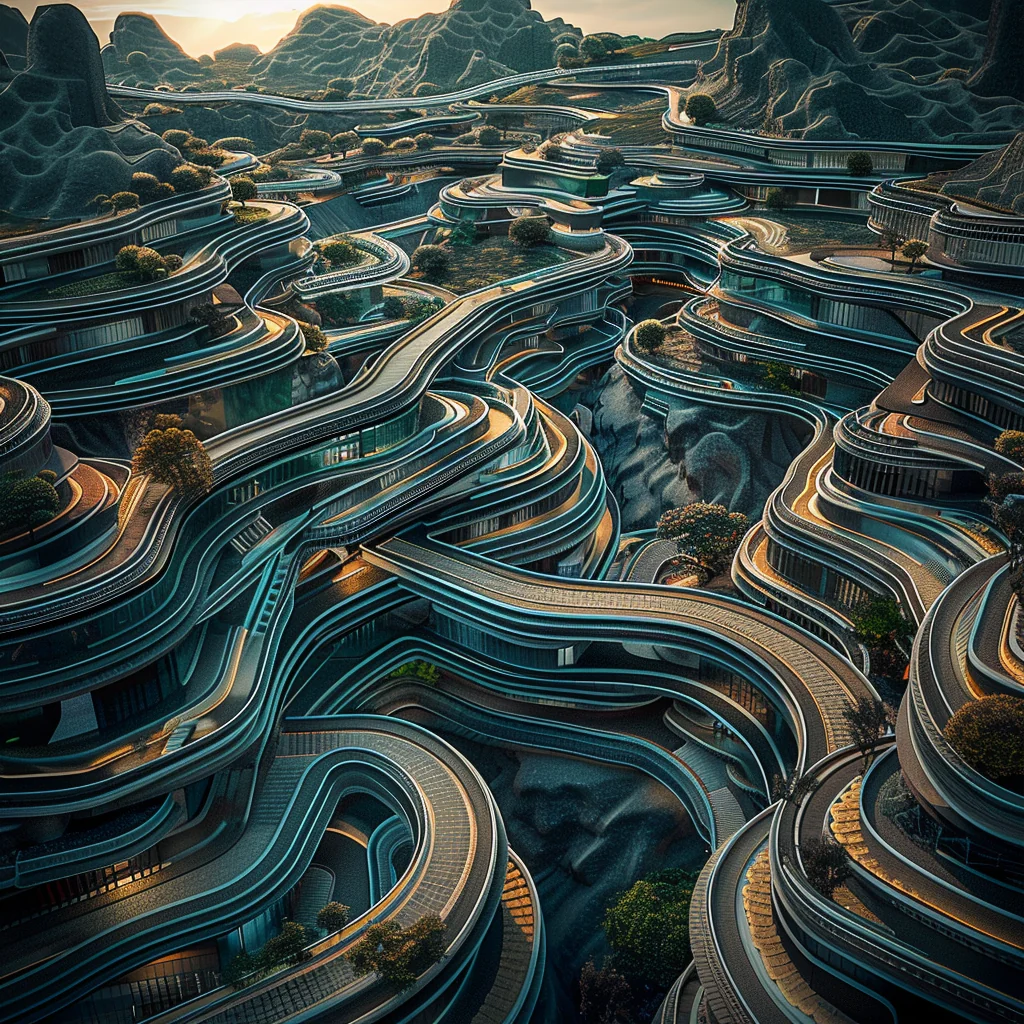
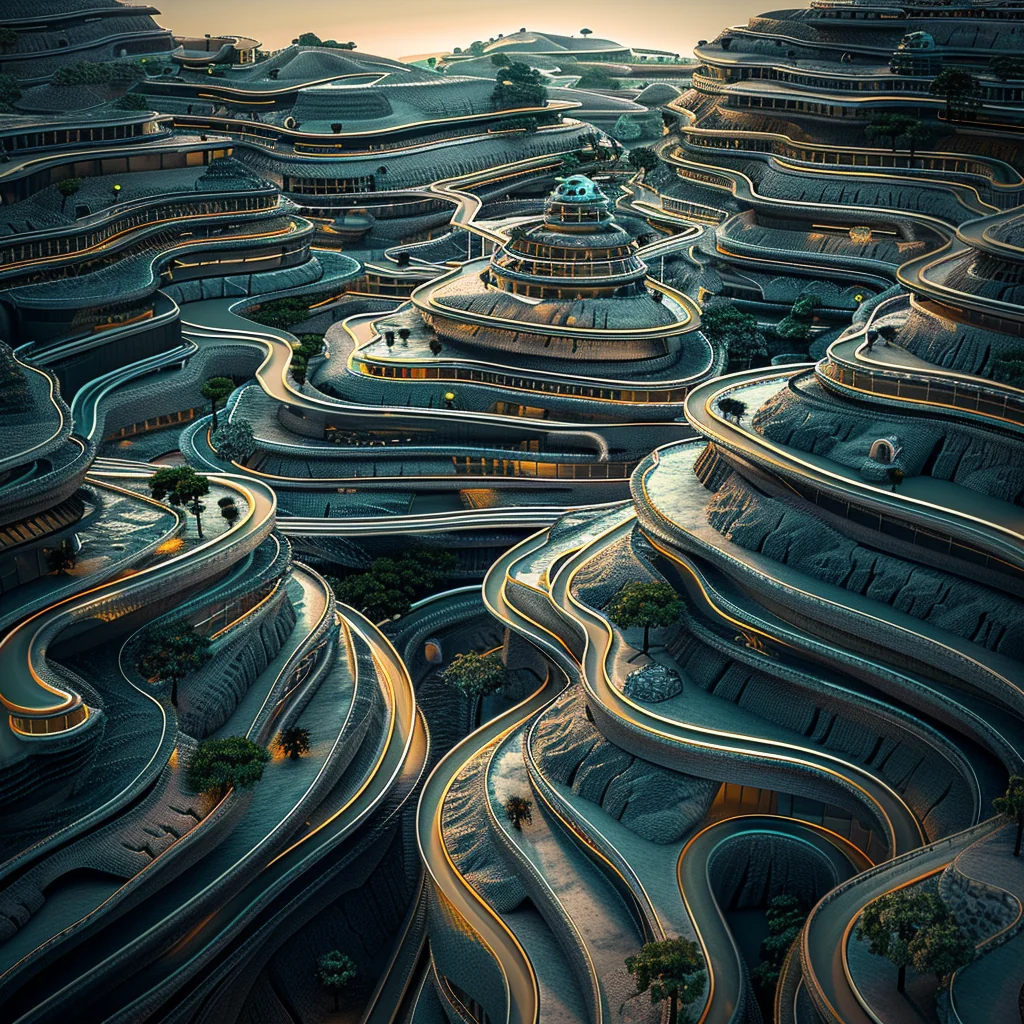
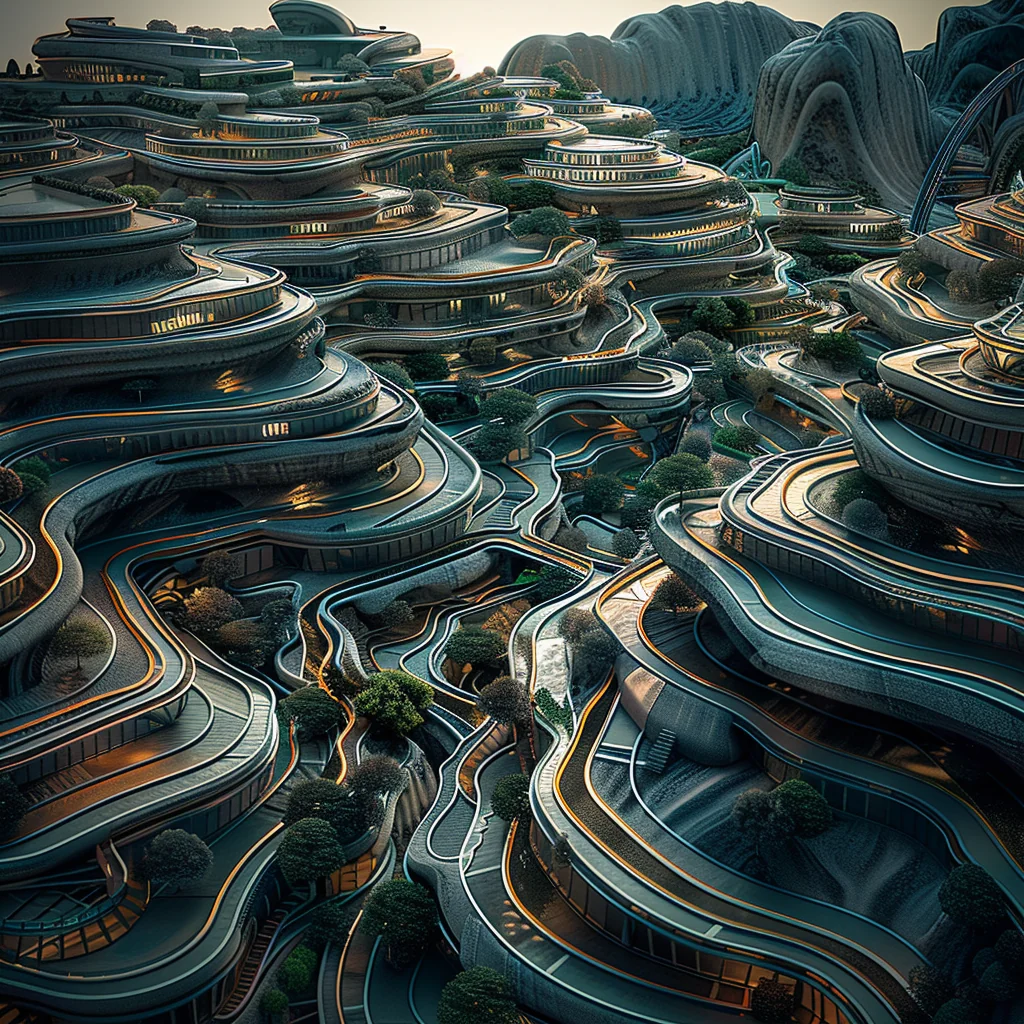
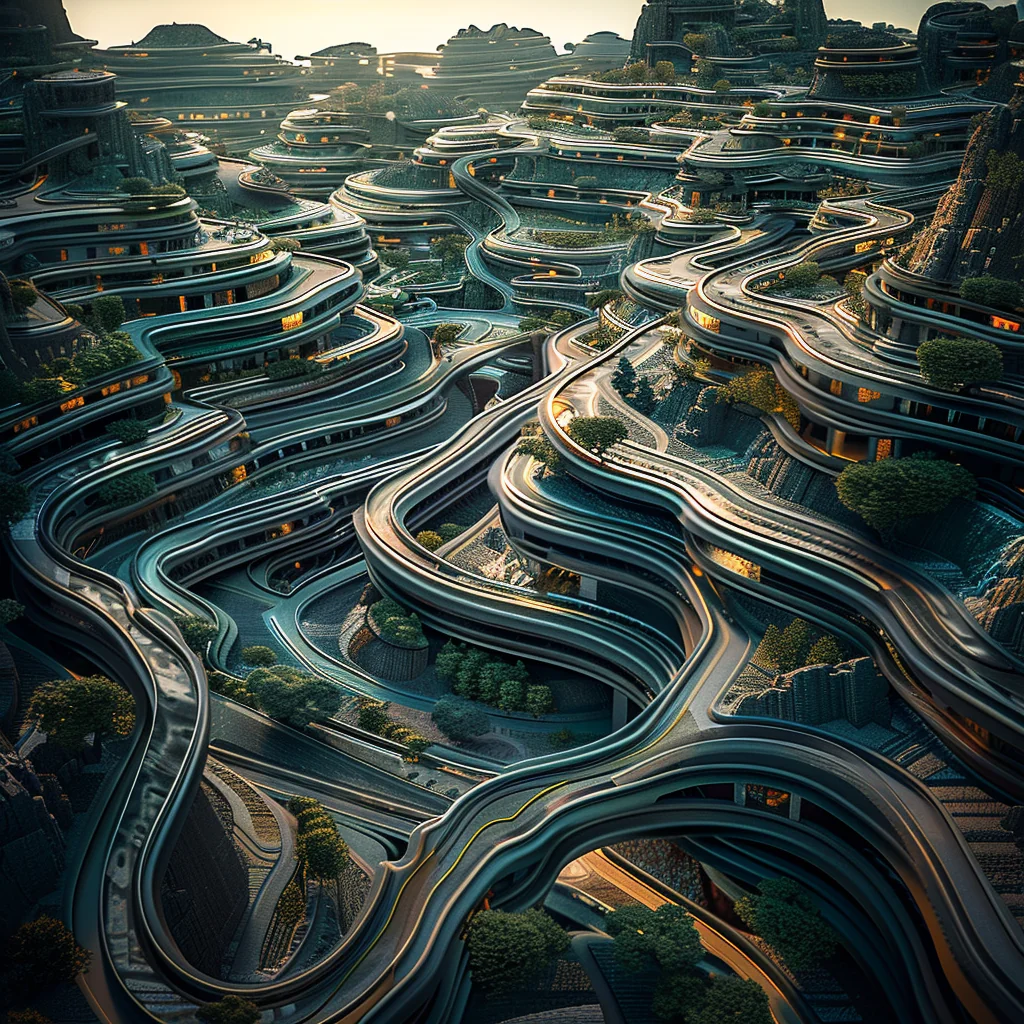
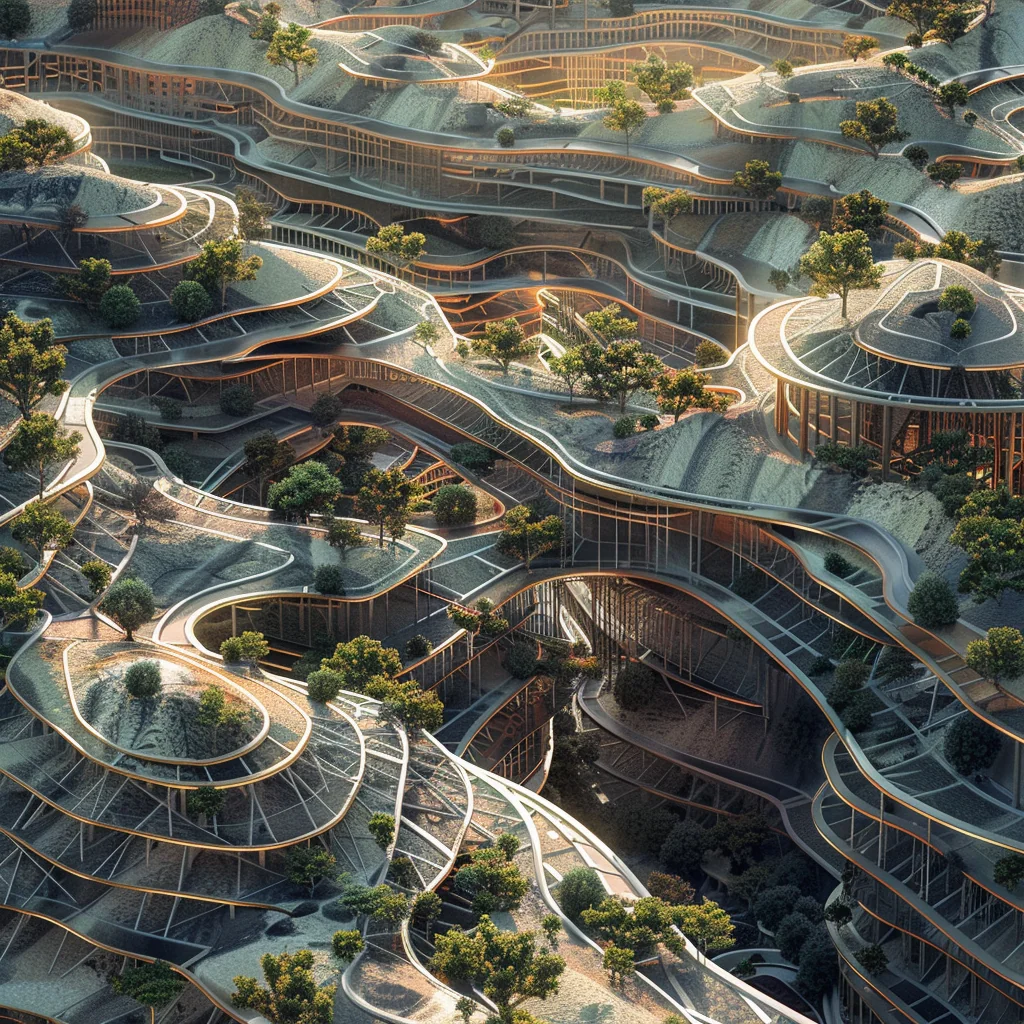
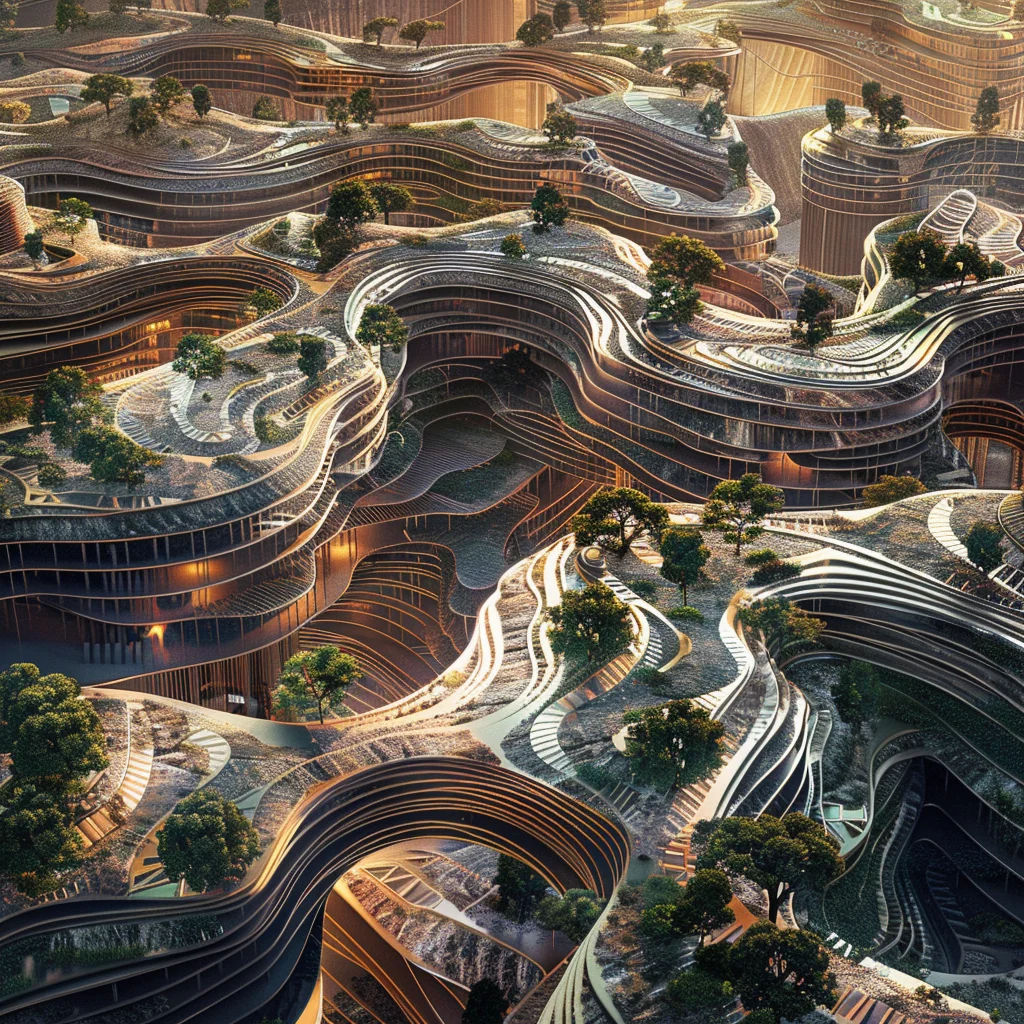
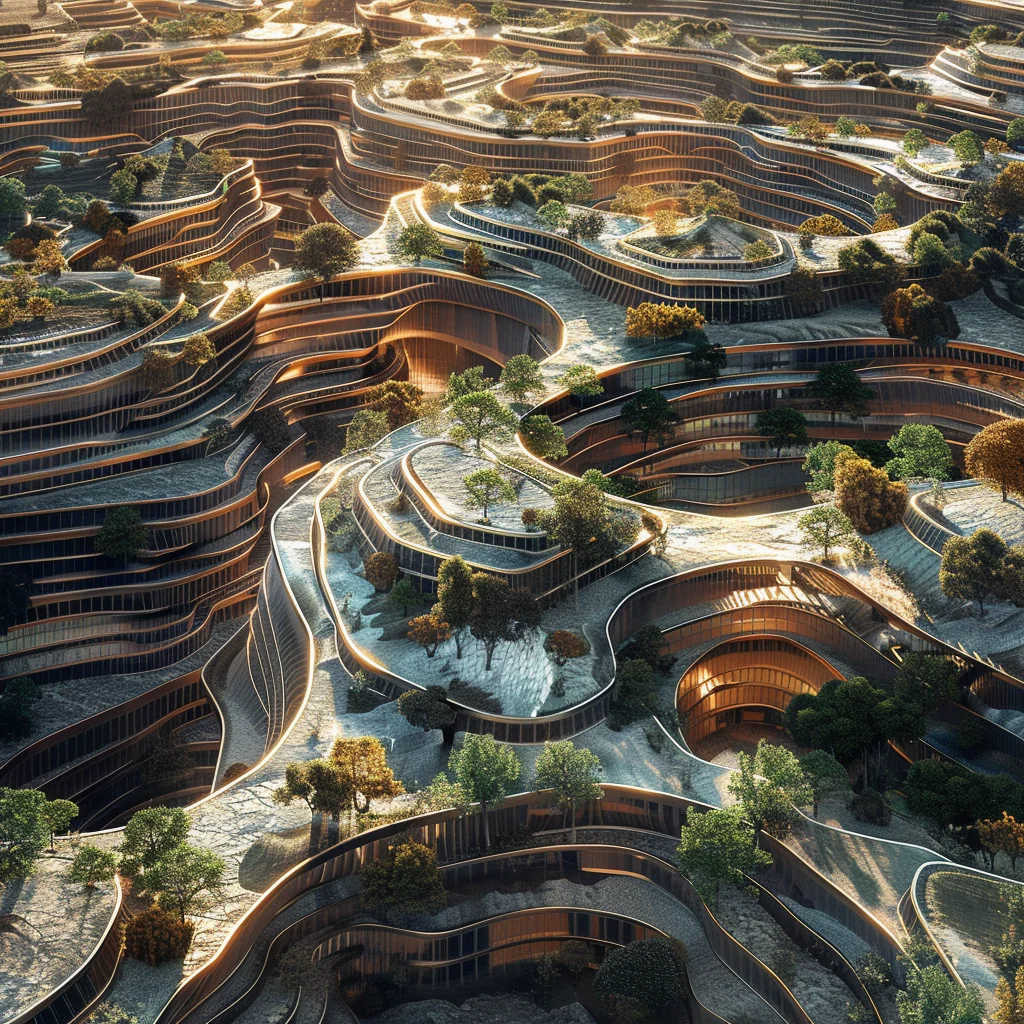
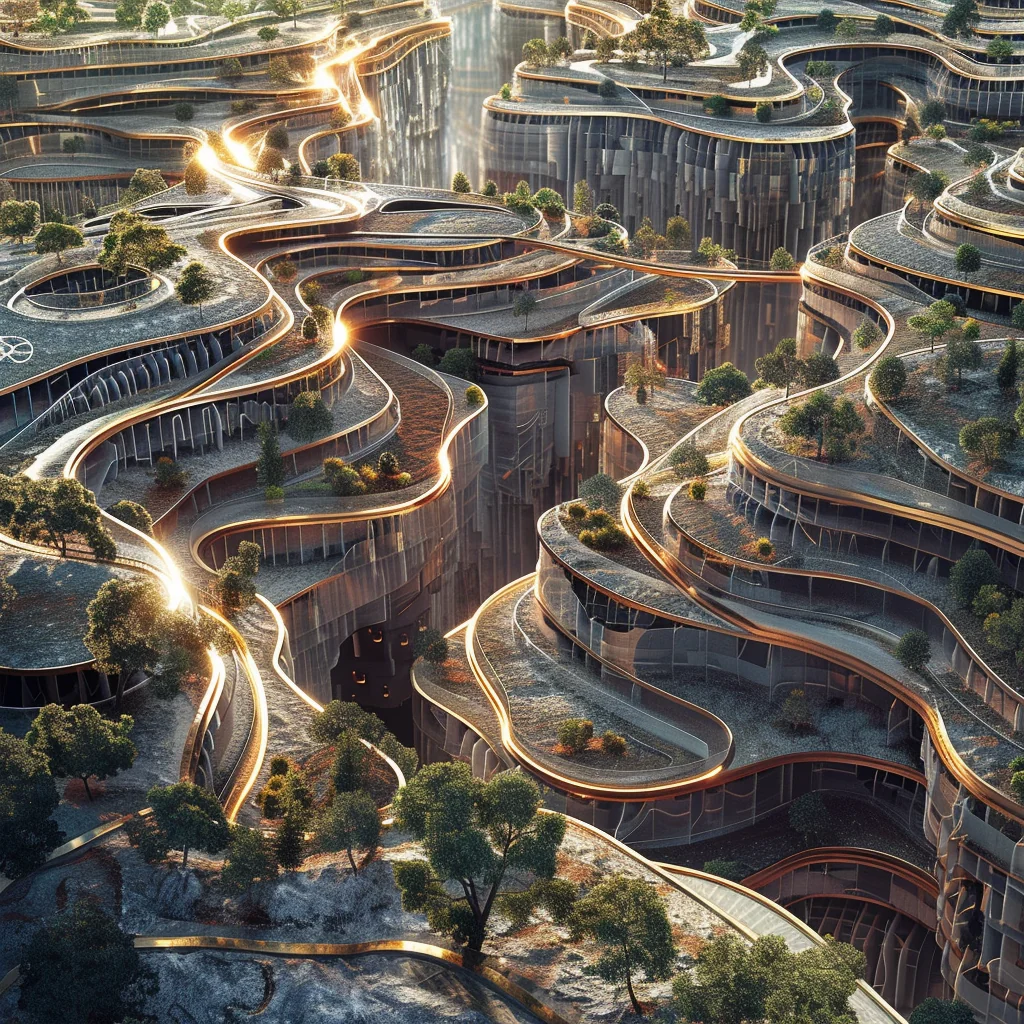
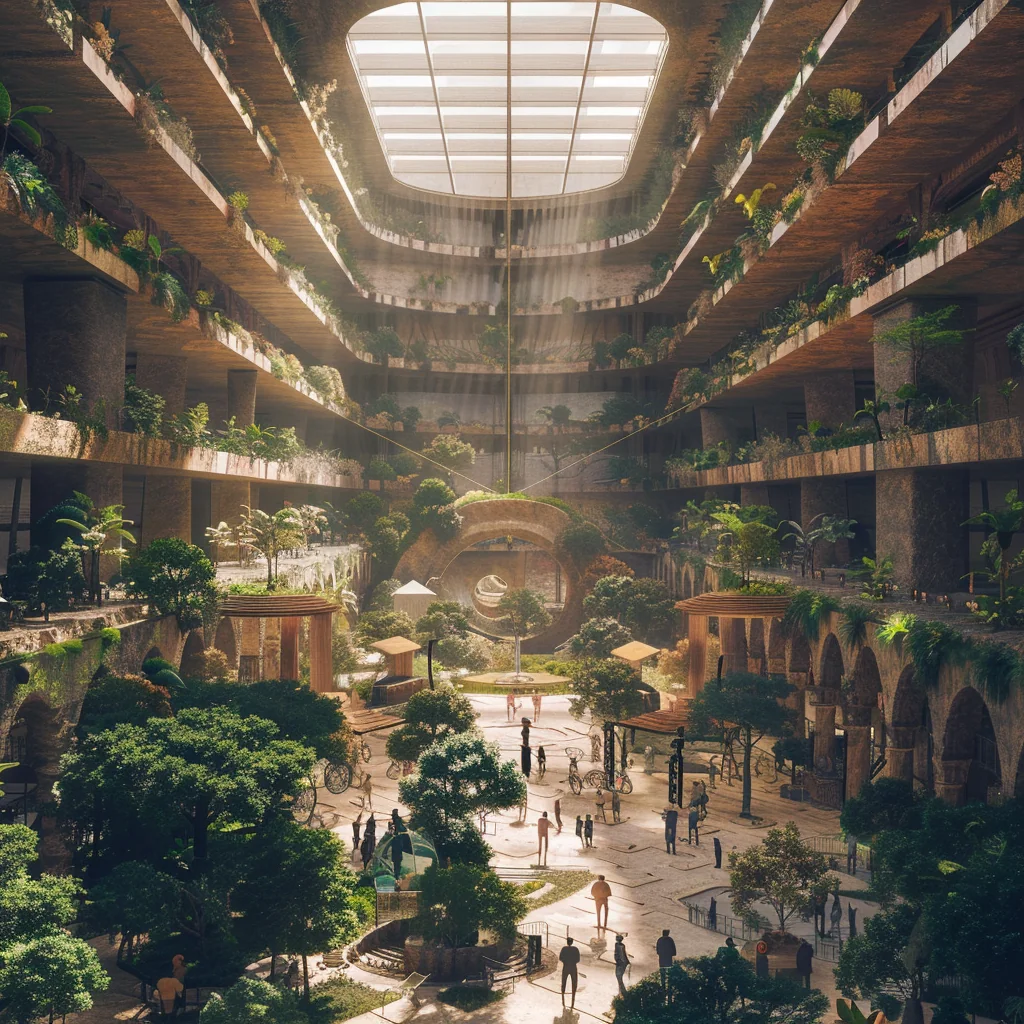
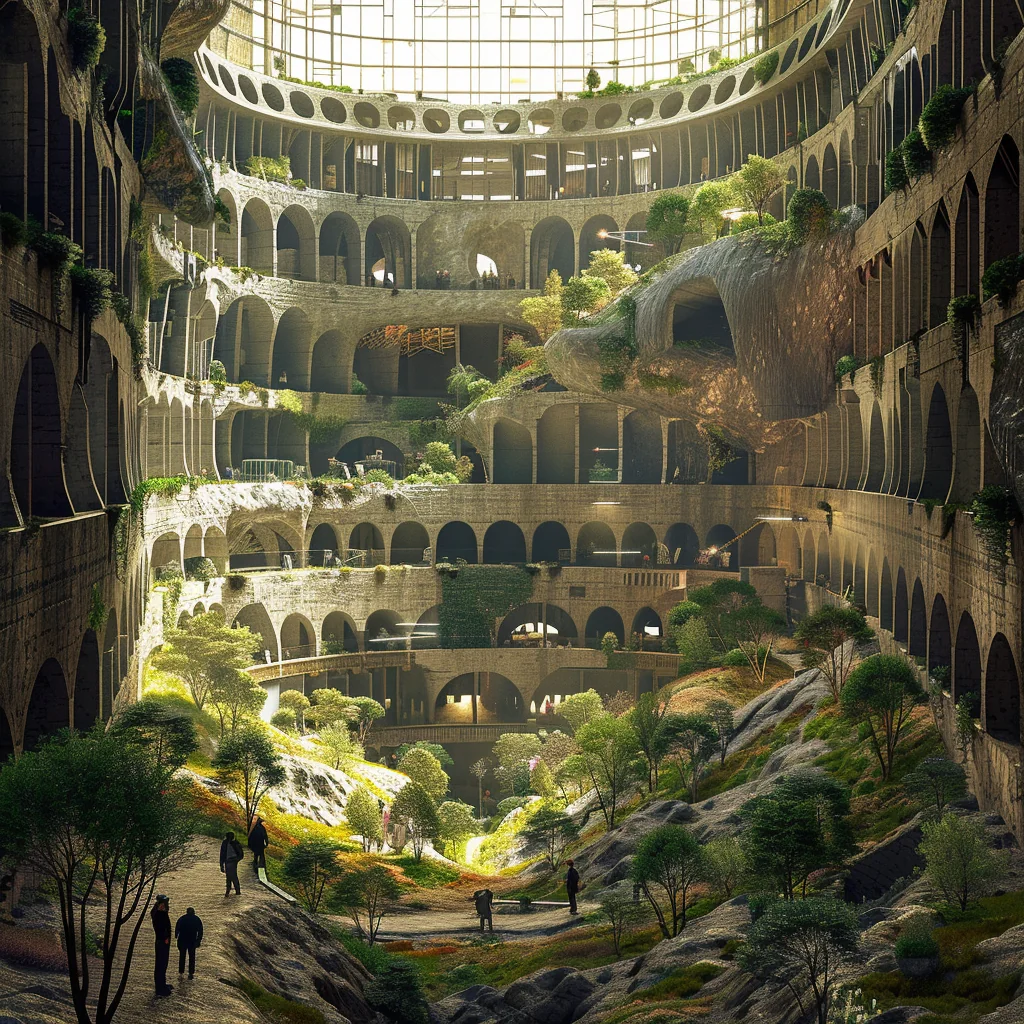
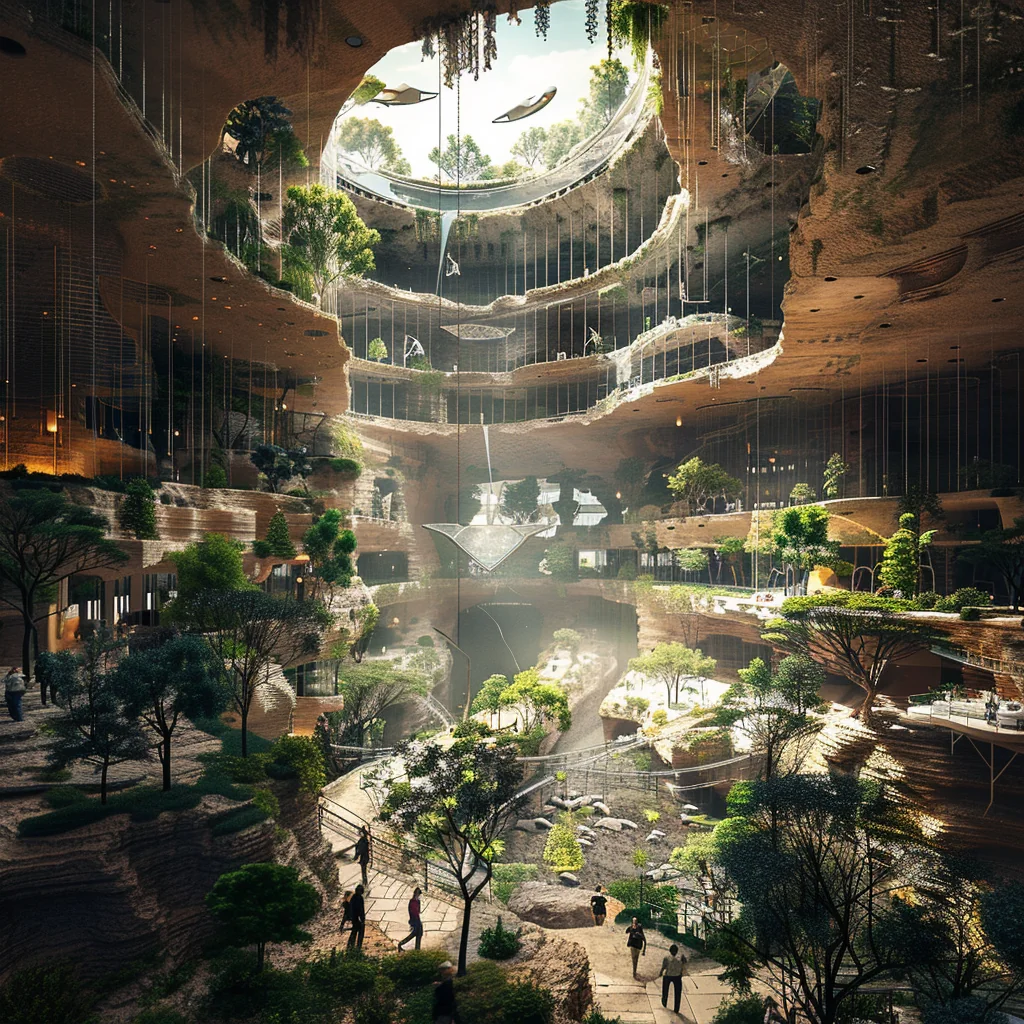
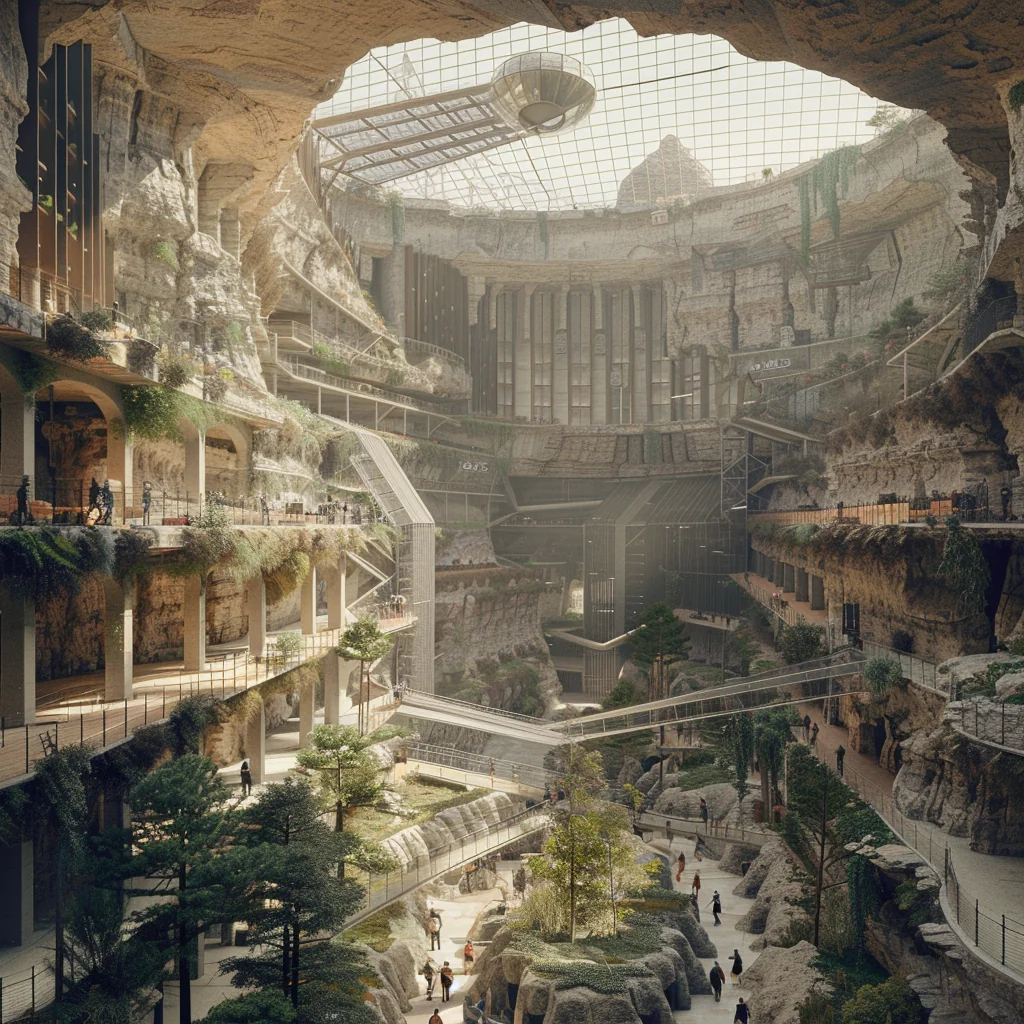
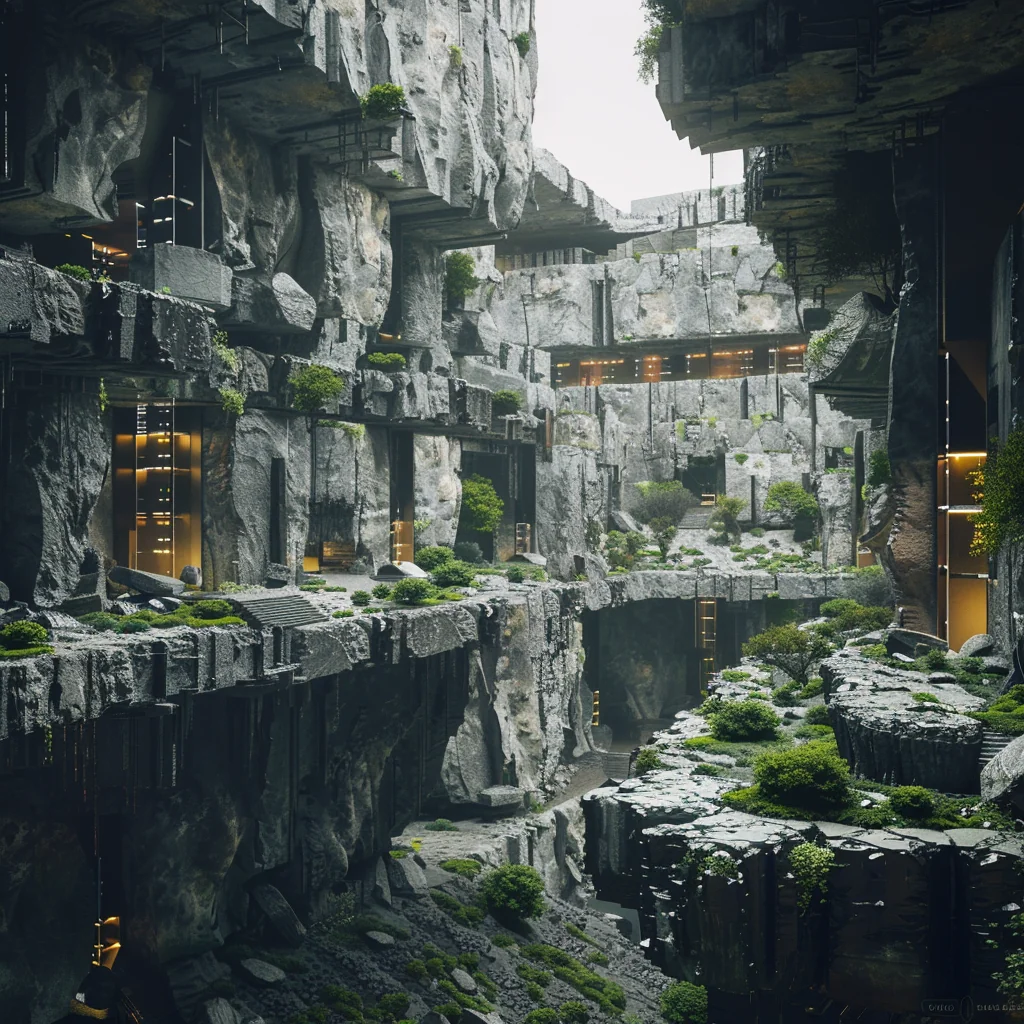
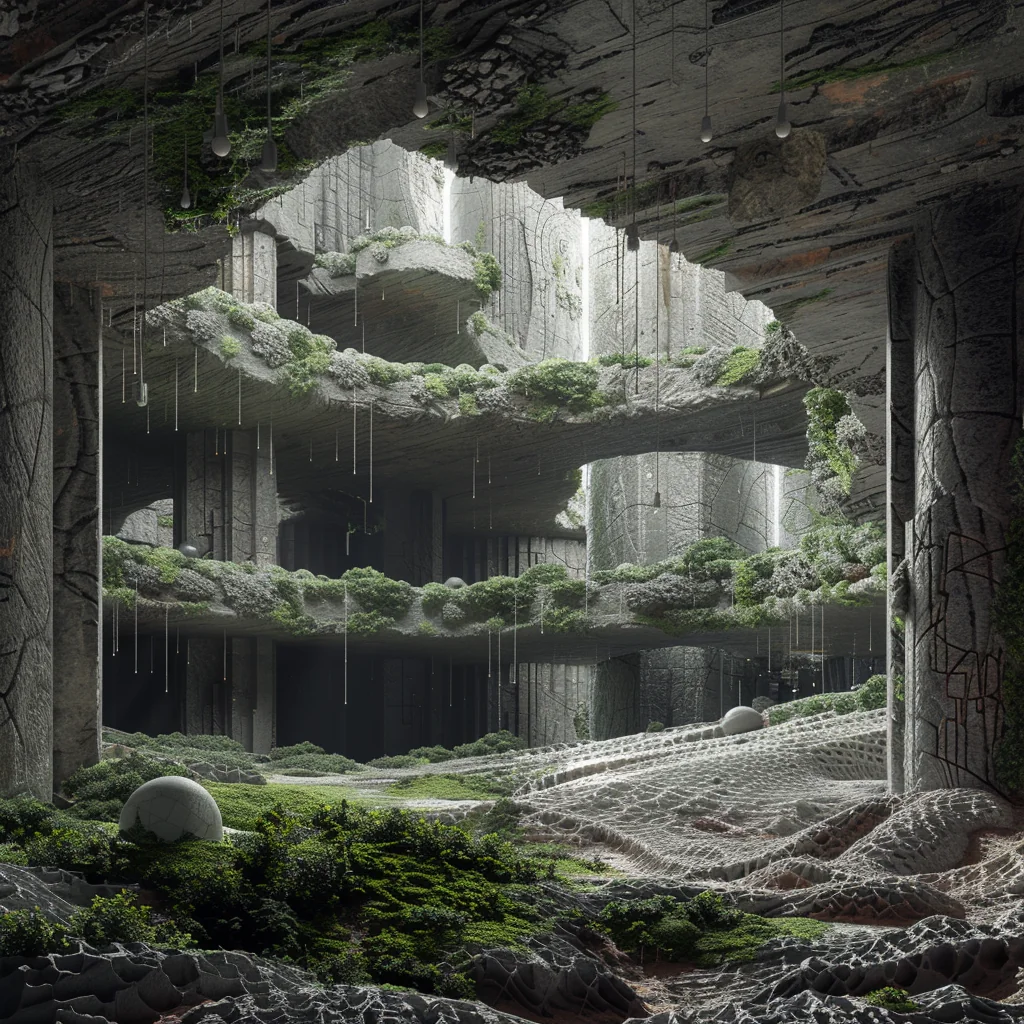
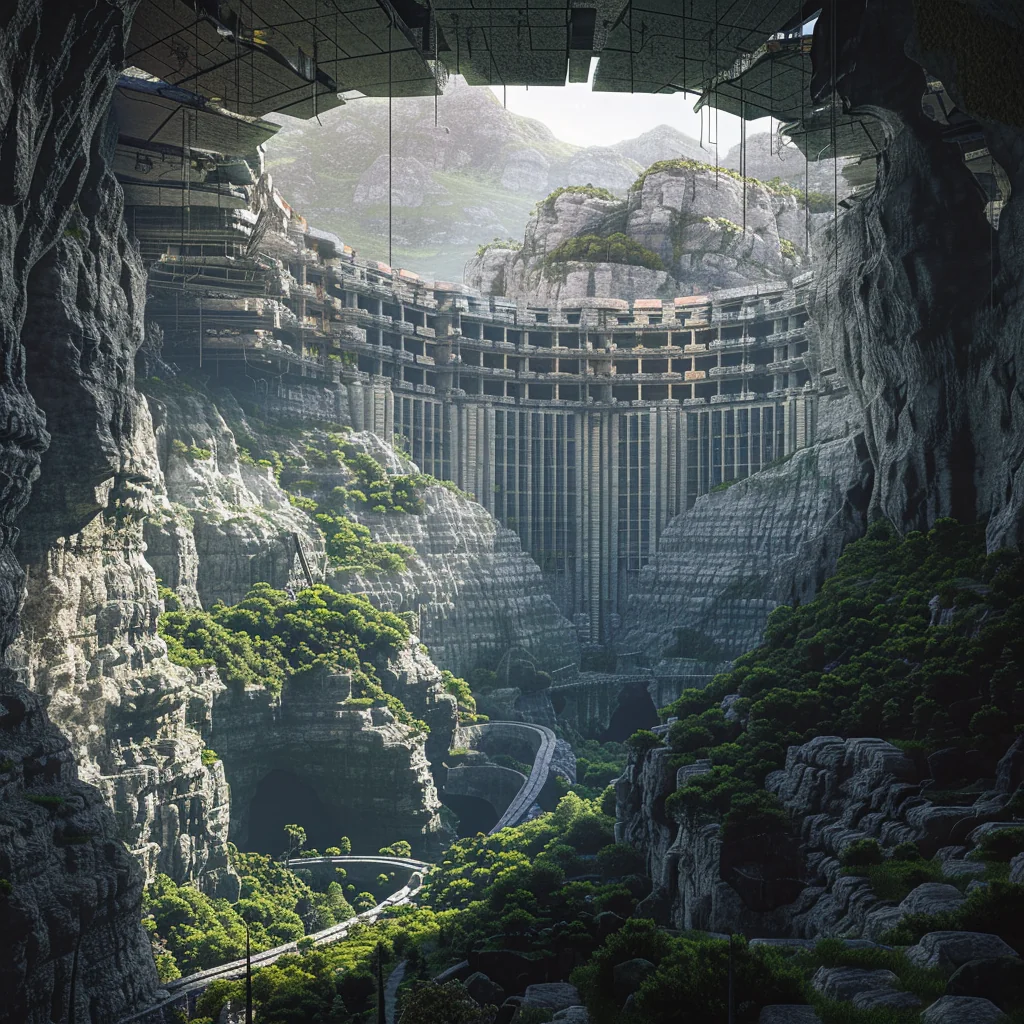
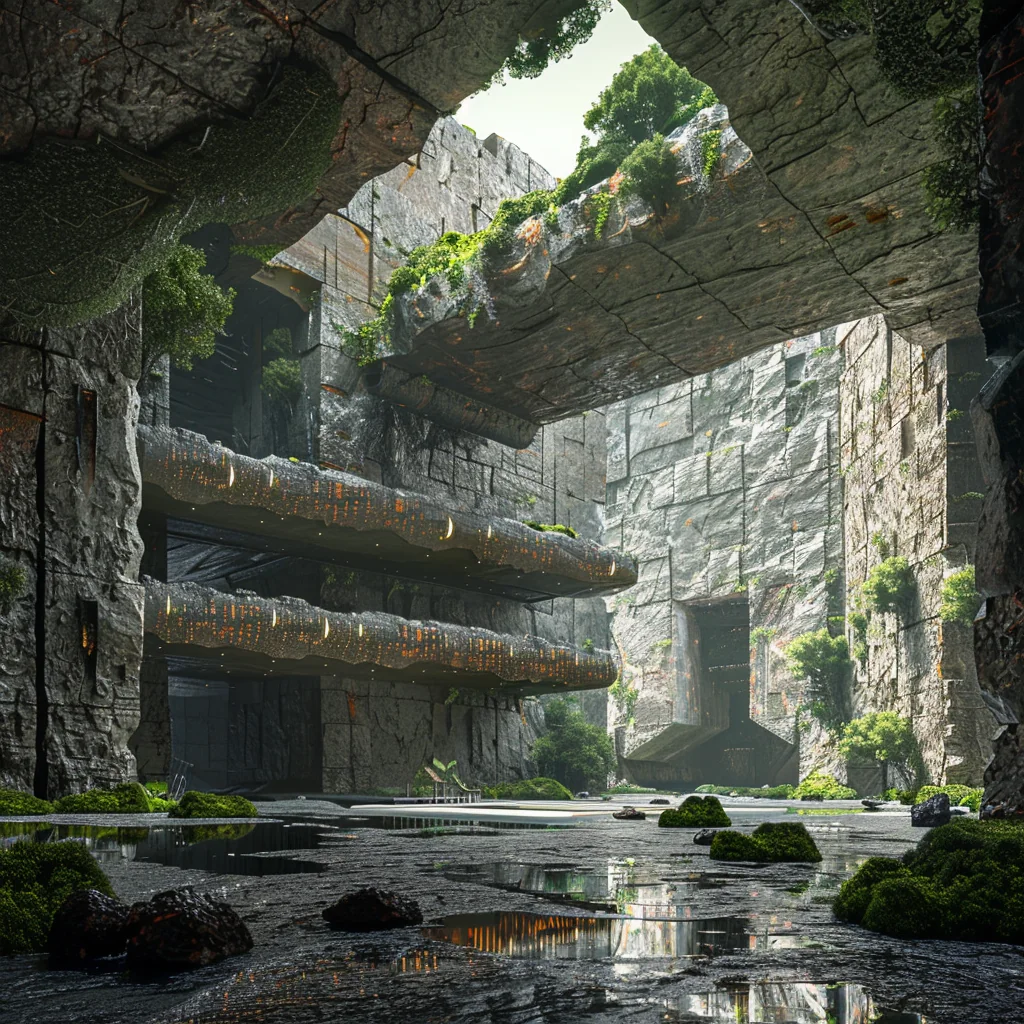
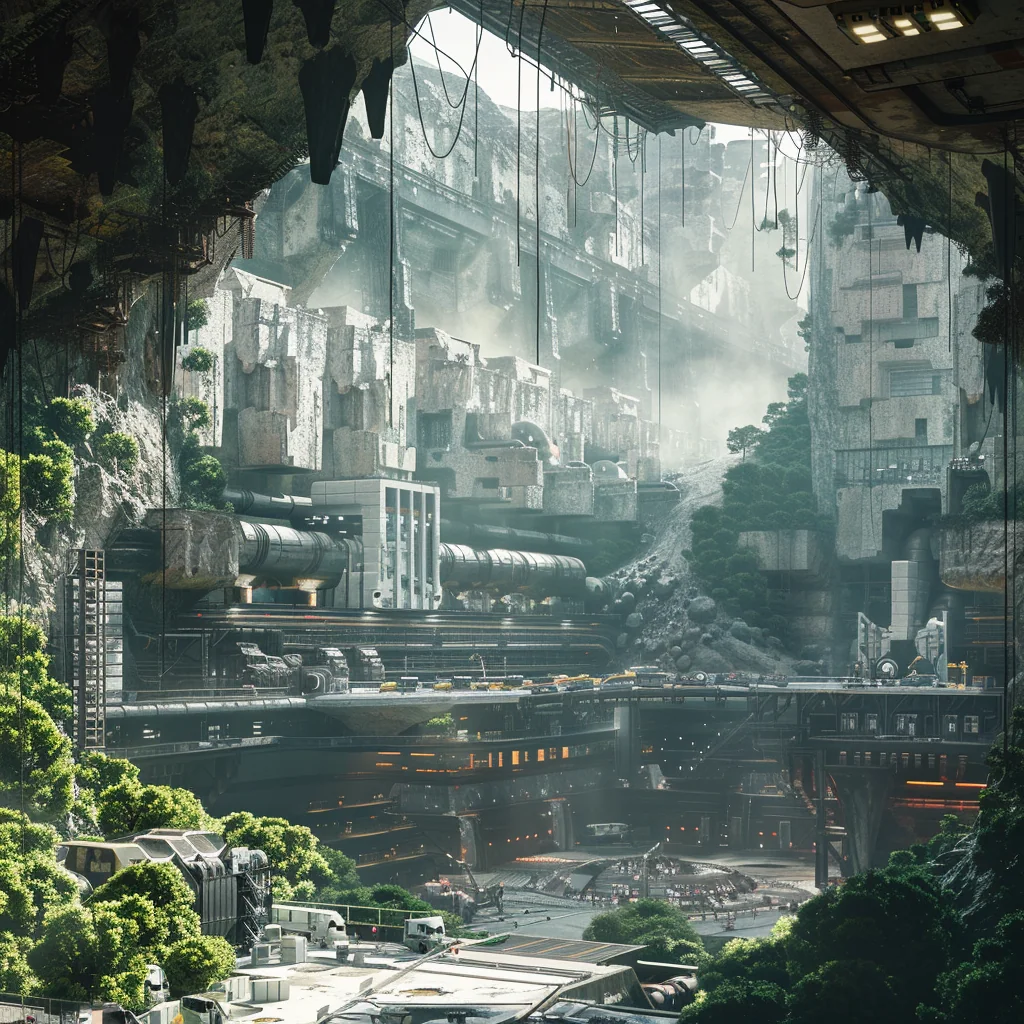
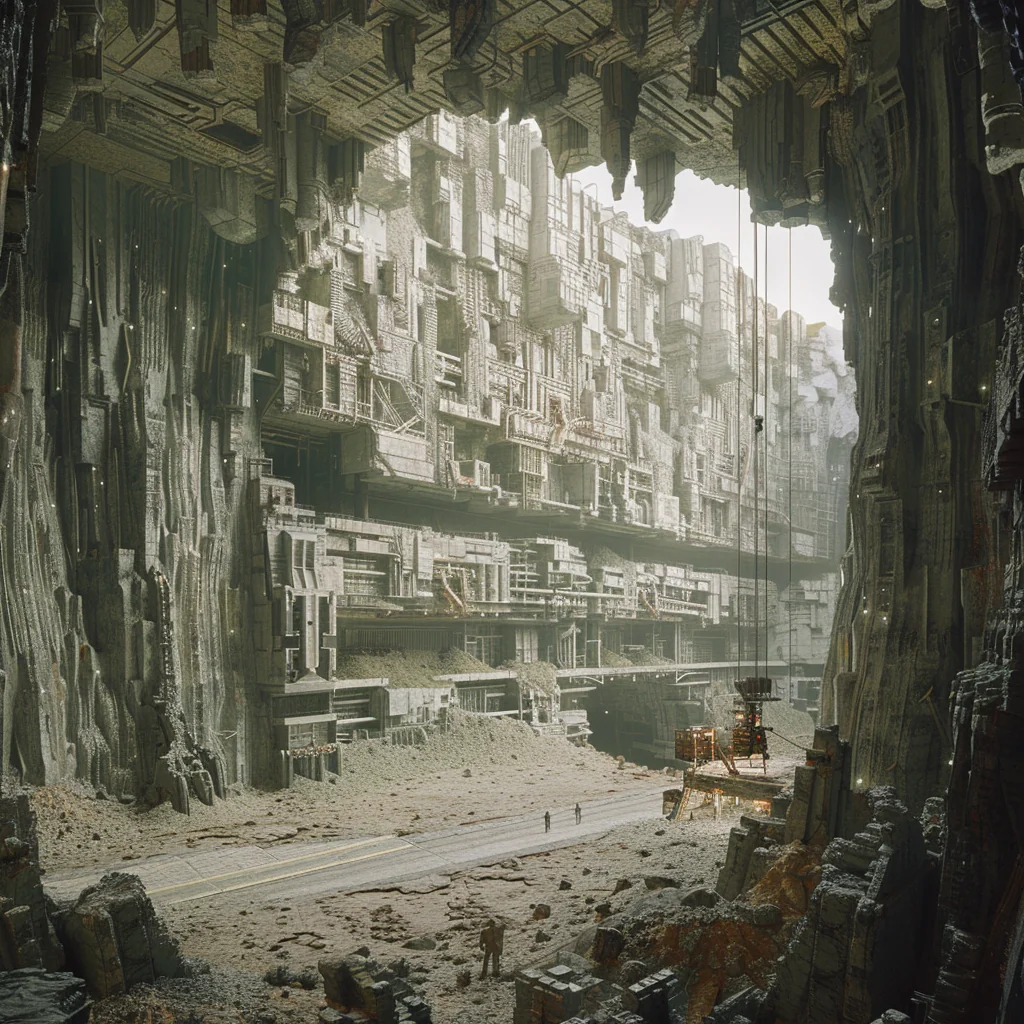
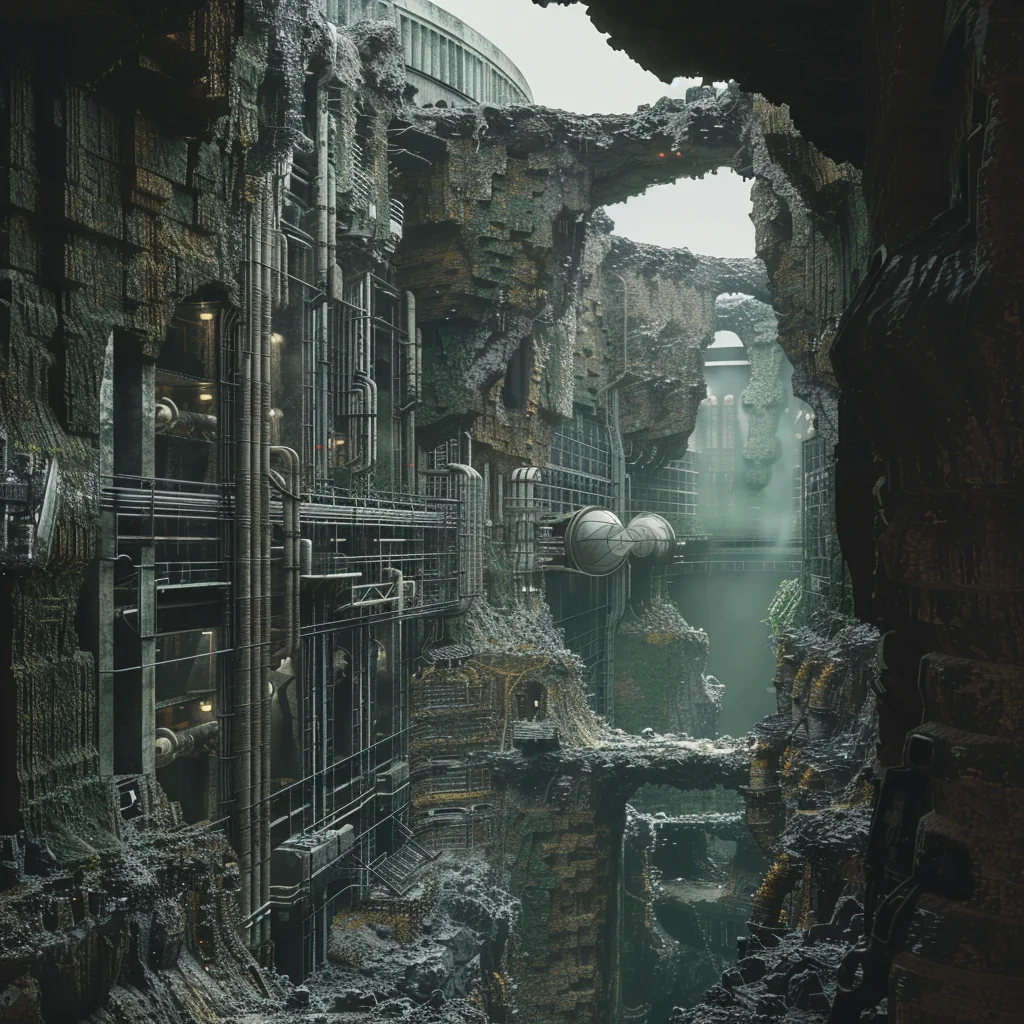
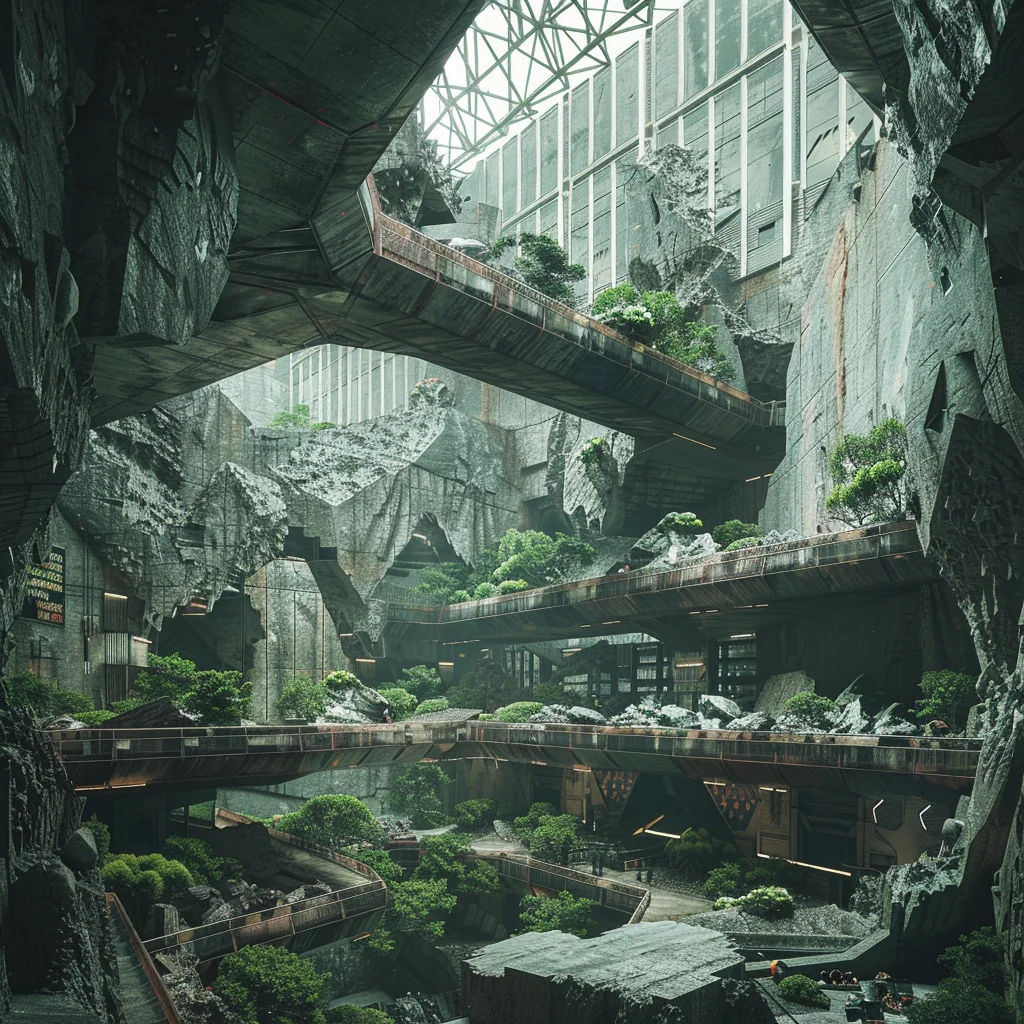
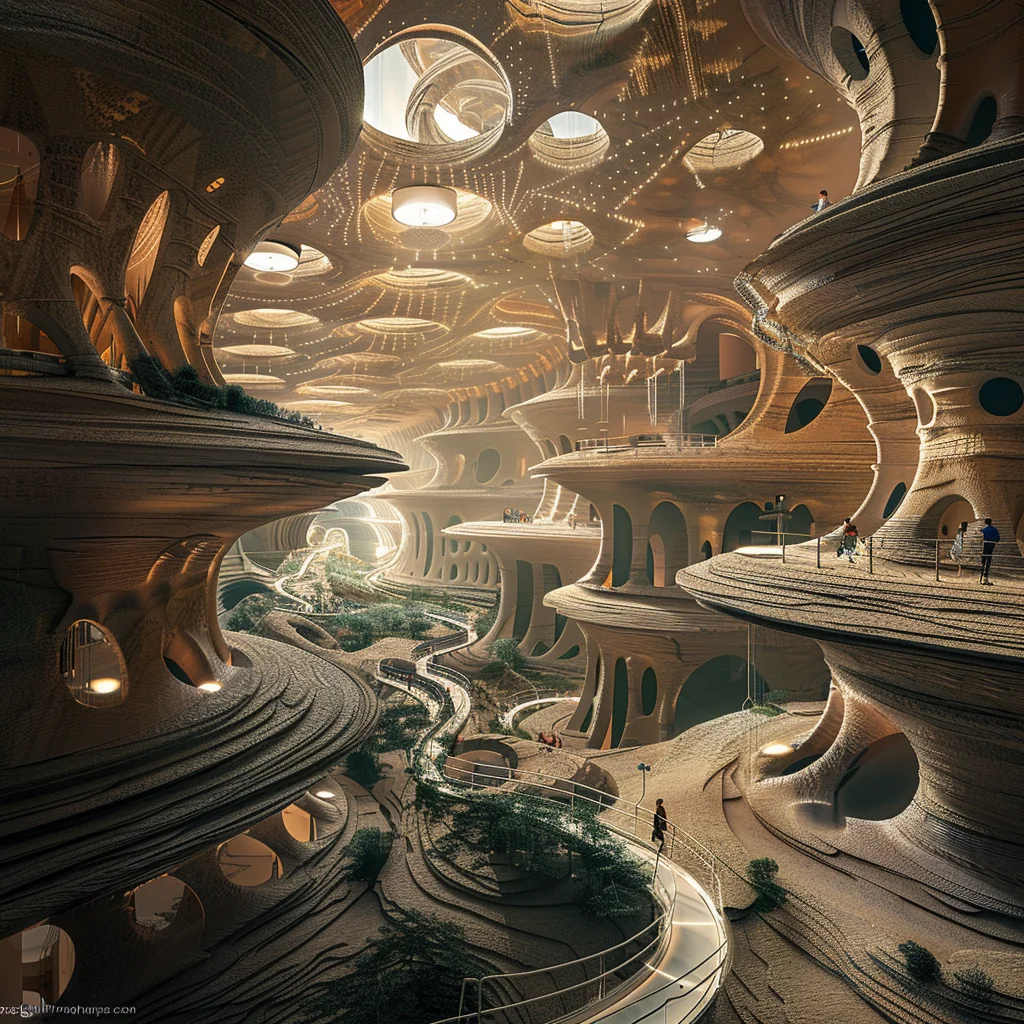
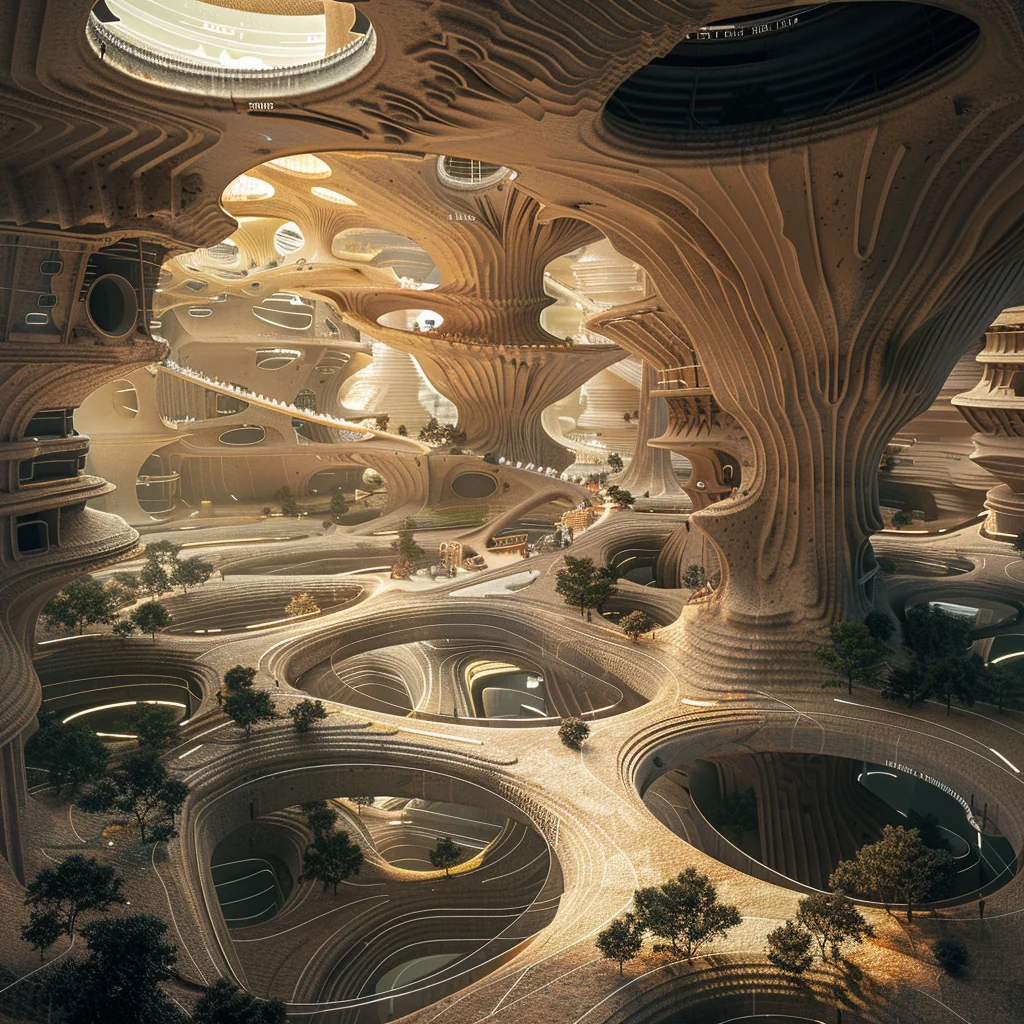
Phase 4: Production. All outputs were fed into ComfyUI with a custom LoRA trained on open-pit mine imagery, grounding the model in the site's specific materiality. ChatGPT briefed the system on future functions per zone. ComfyUI produced zone-specific cinematic perspectives, each upscaled to final resolution. The pipeline moved from site photograph through AI description, AI reinterpretation, and AI synthesis to final architectural image.
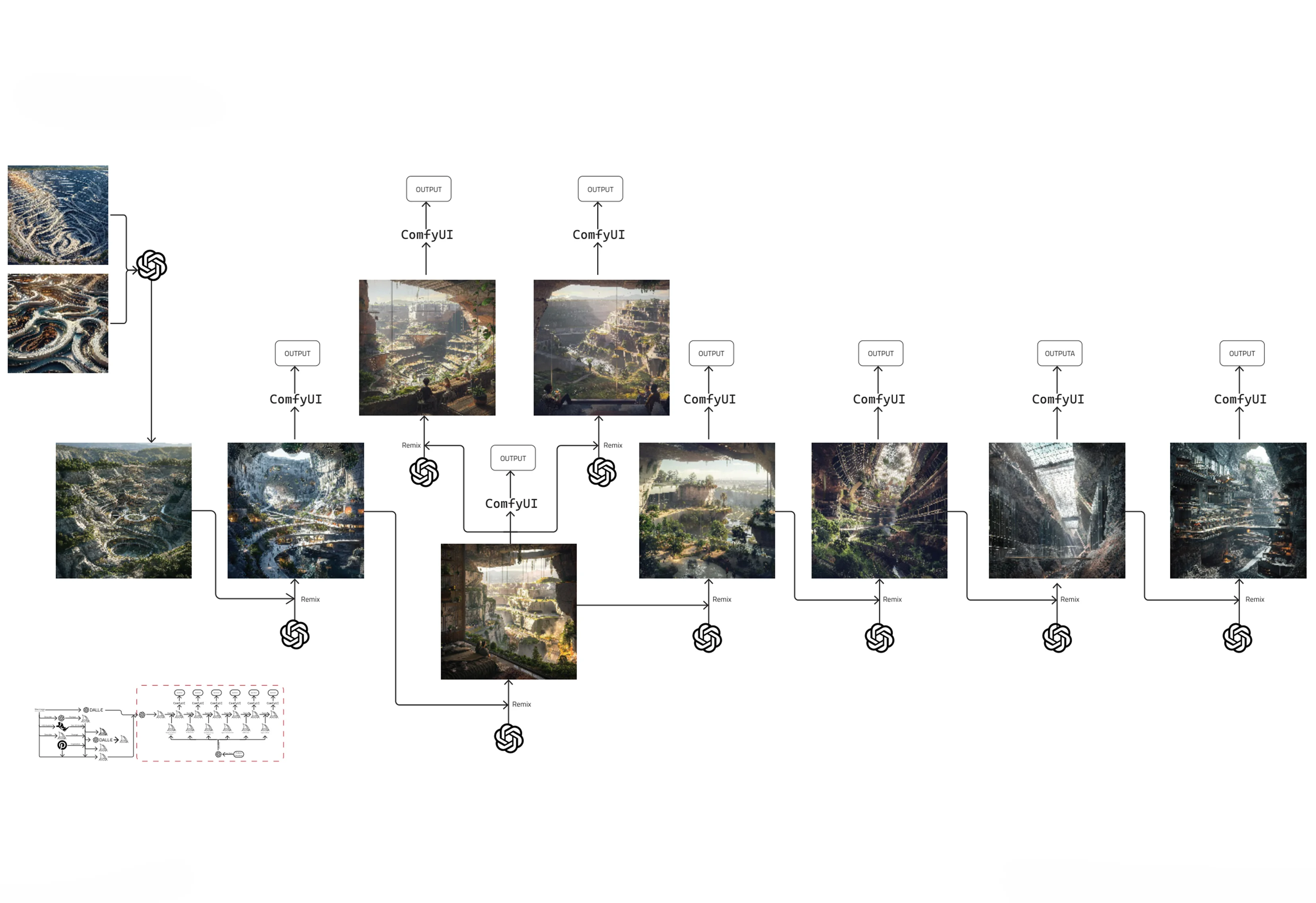 Phase 4 full pipeline: ComfyUI synthesis with ChatGPT zone briefs
Programme
Eight zones distributed across the vertical section of the pit, each responding to the particular condition of its stratum. Surface programmes receive natural light and connect to the rehabilitated landscape above. Deep programmes exploit the mine's thermal mass, geological stability, and isolation from the surface.
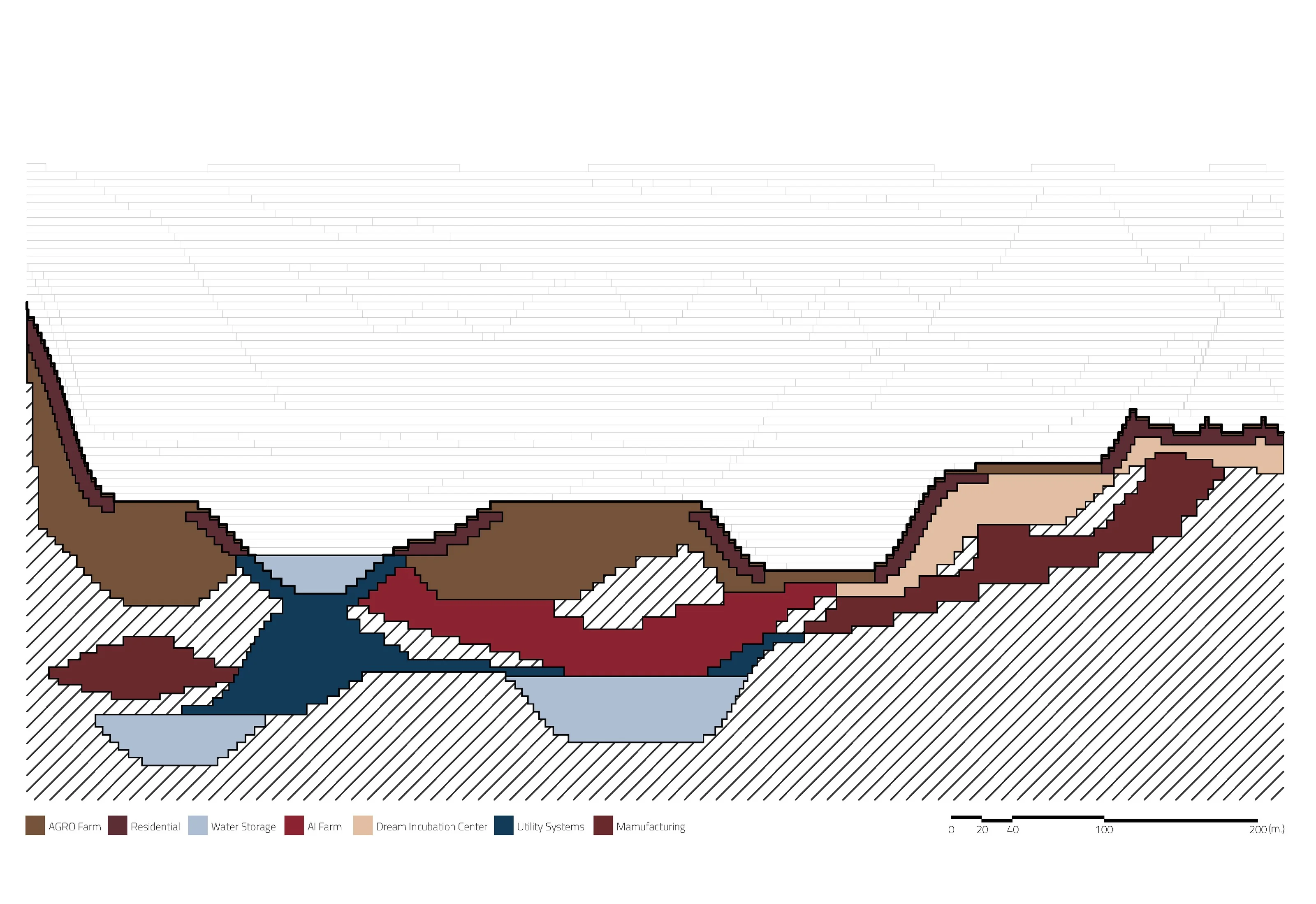 Zoning section: vertical distribution across the pit
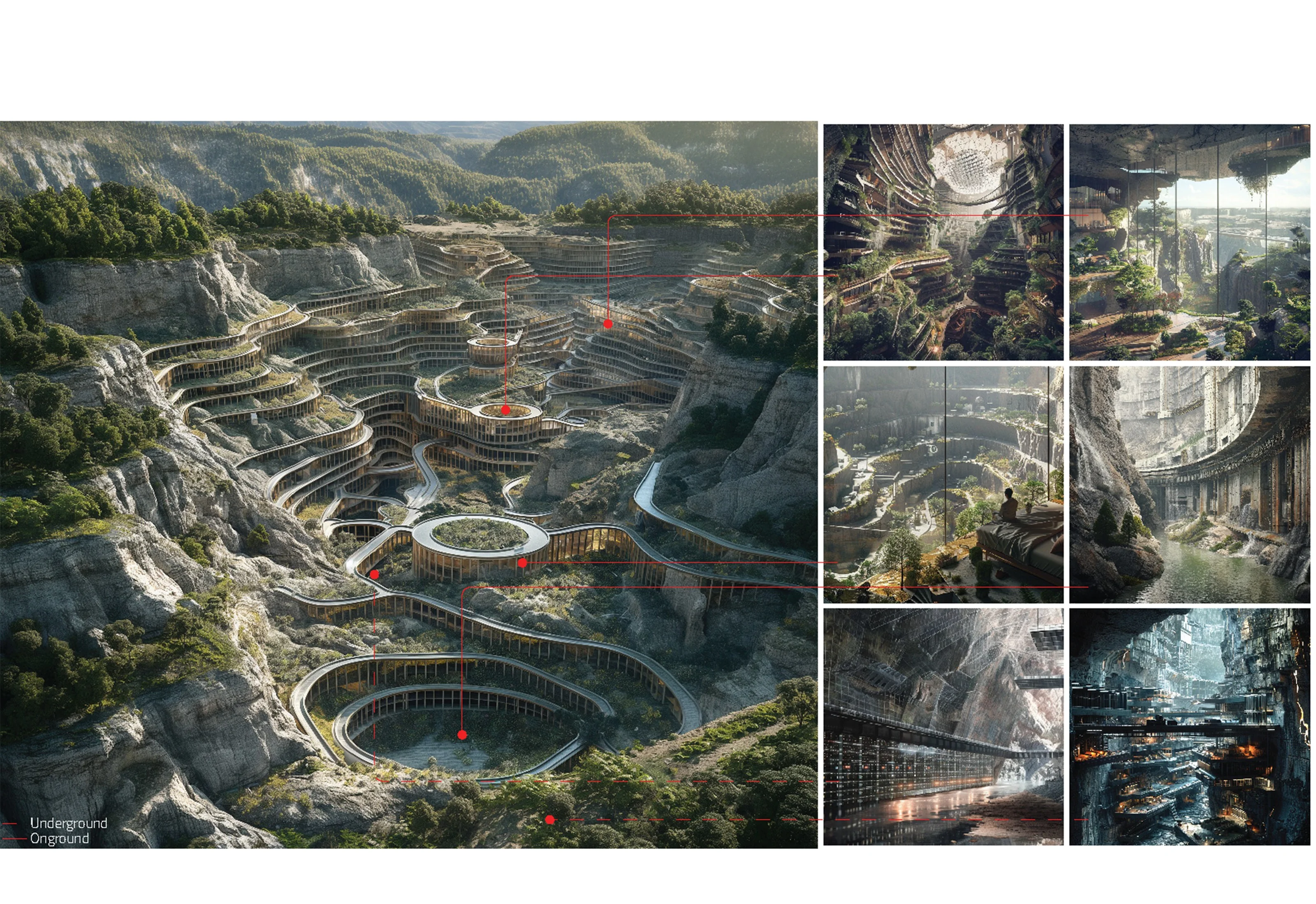 Zoning diagram: programmatic bands in plan
Interior visualisations for each programme were generated with Midjourney and refined through ComfyUI (Variant with Prompt) to explore spatial variants within a consistent material and atmospheric language.
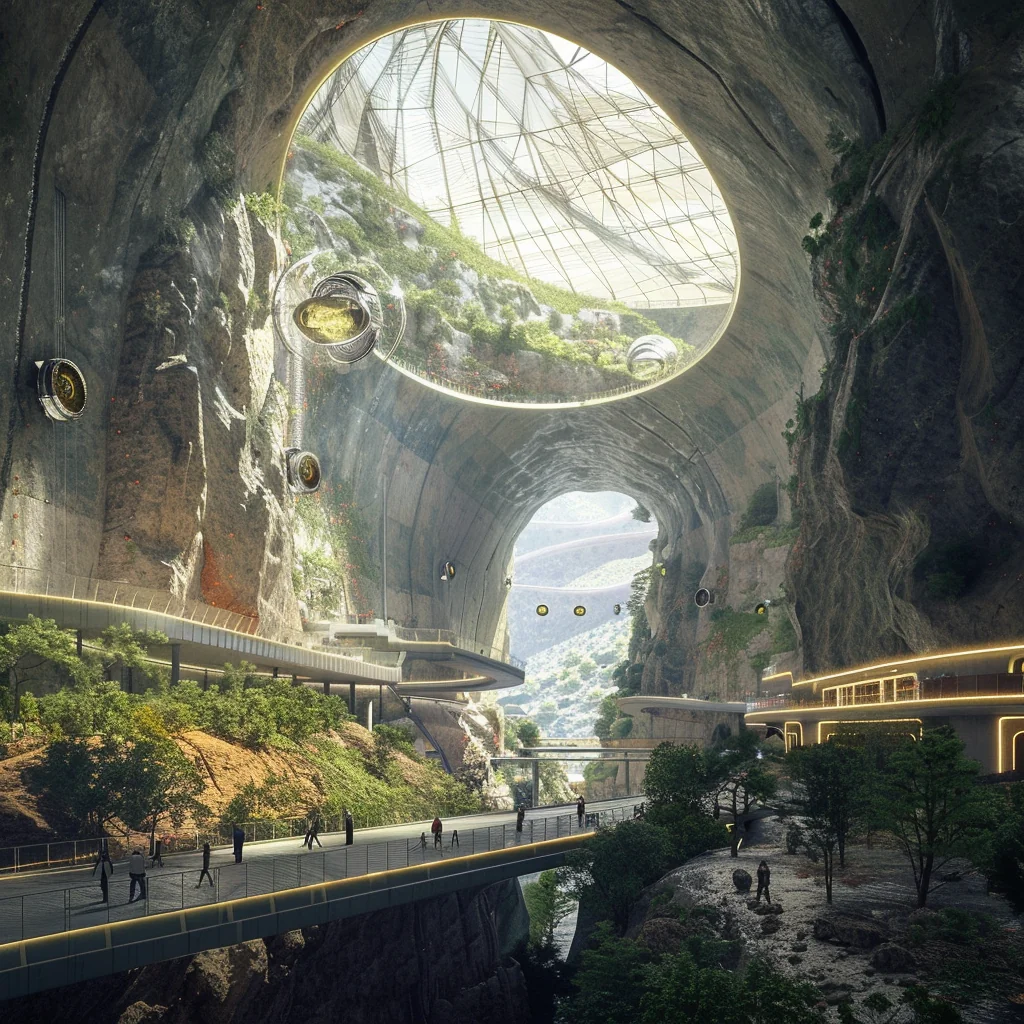
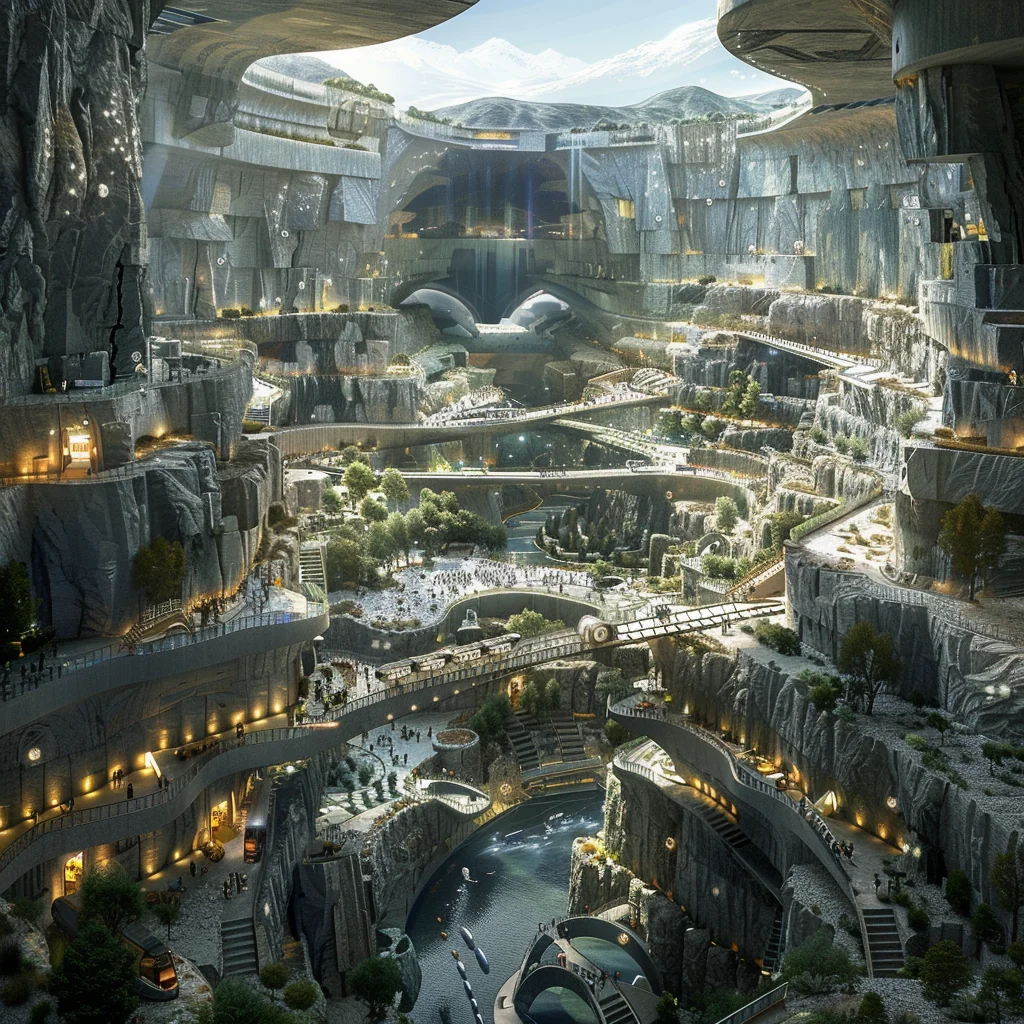
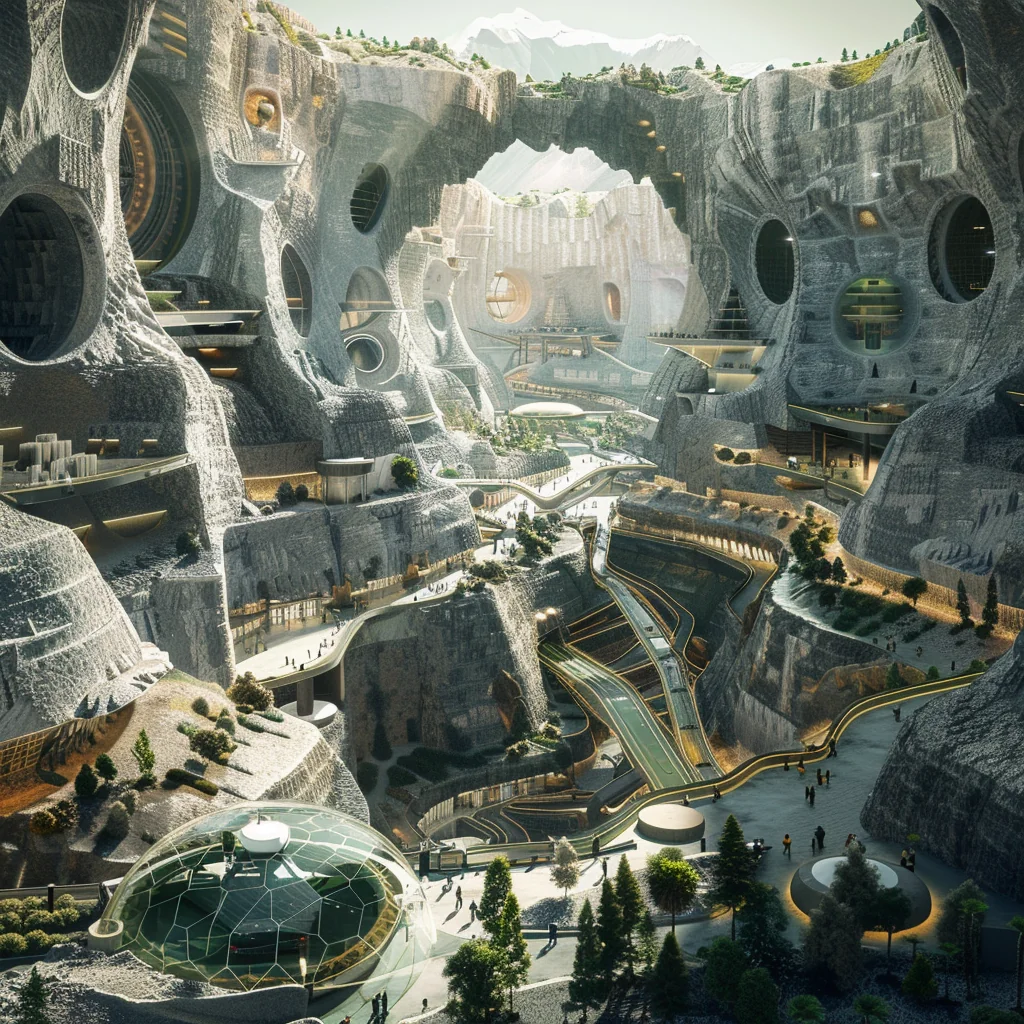
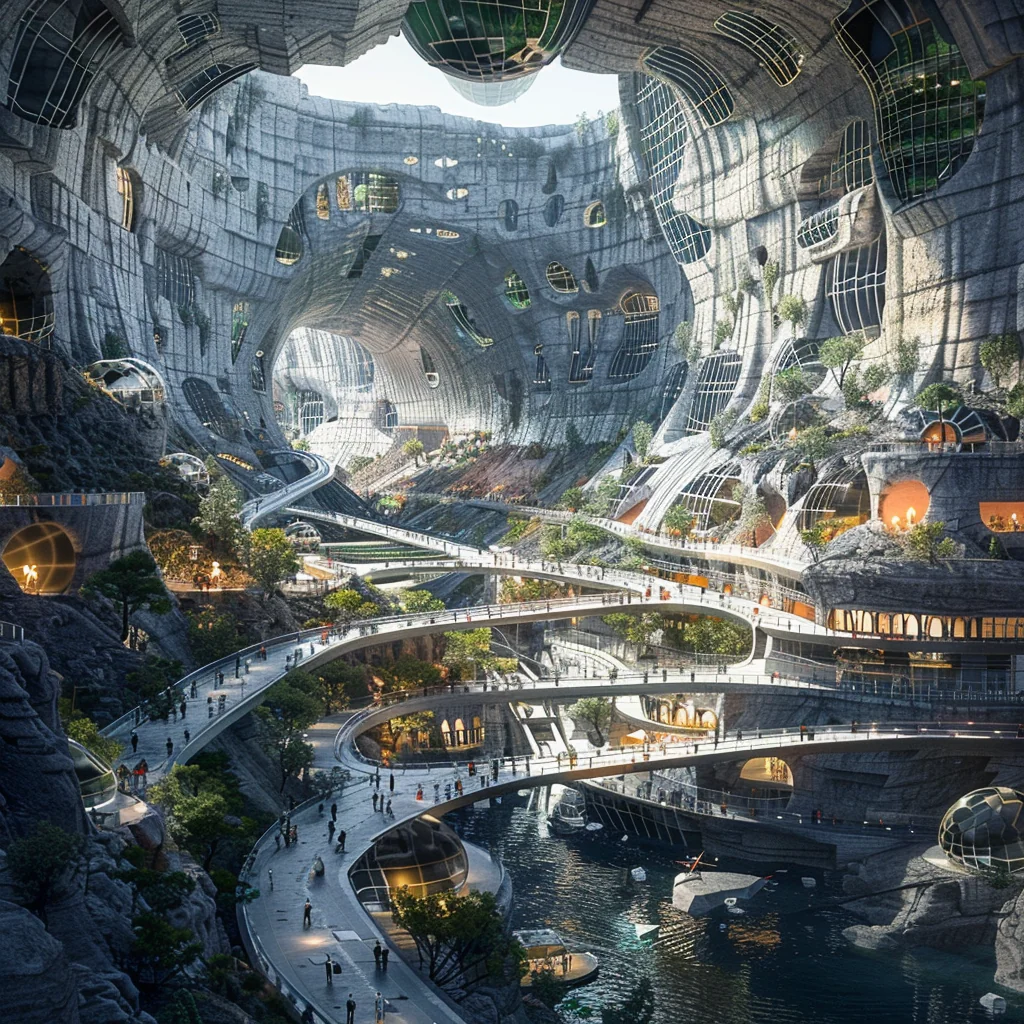
Hyper-transport Hub: Hyperloop station at pit level. Glass pneumatic tubes carry pods of people and machines. Transportation drone platforms, multimodal logistics nodes, and sweeping forms spiral across the landscape. The circulatory system of the agora: no cars, no roads, only the continuous movement of pods, drones, and metro through the carved strata.
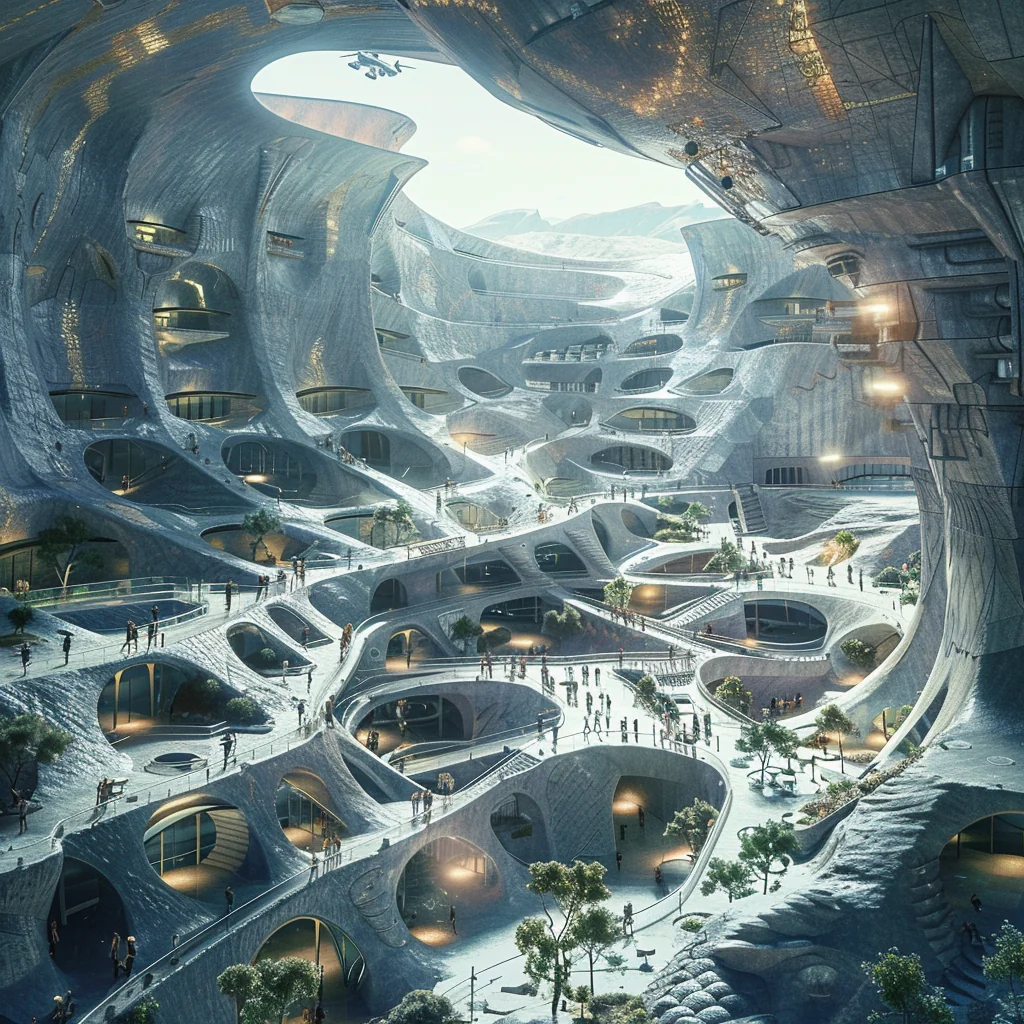 Hyper-transport Hub: variant 1
 Hyper-transport Hub: variant 2
 Hyper-transport Hub: variant 3
 Hyper-transport Hub: variant 4
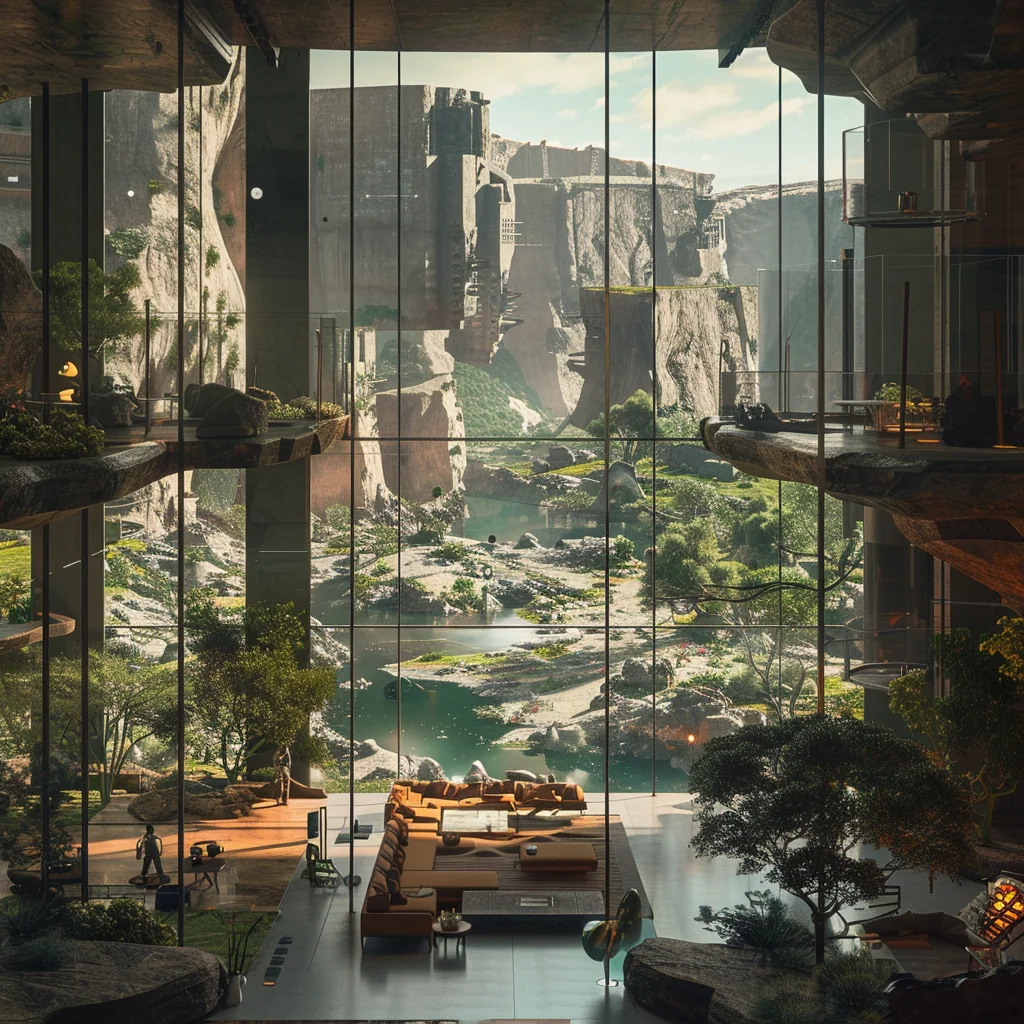
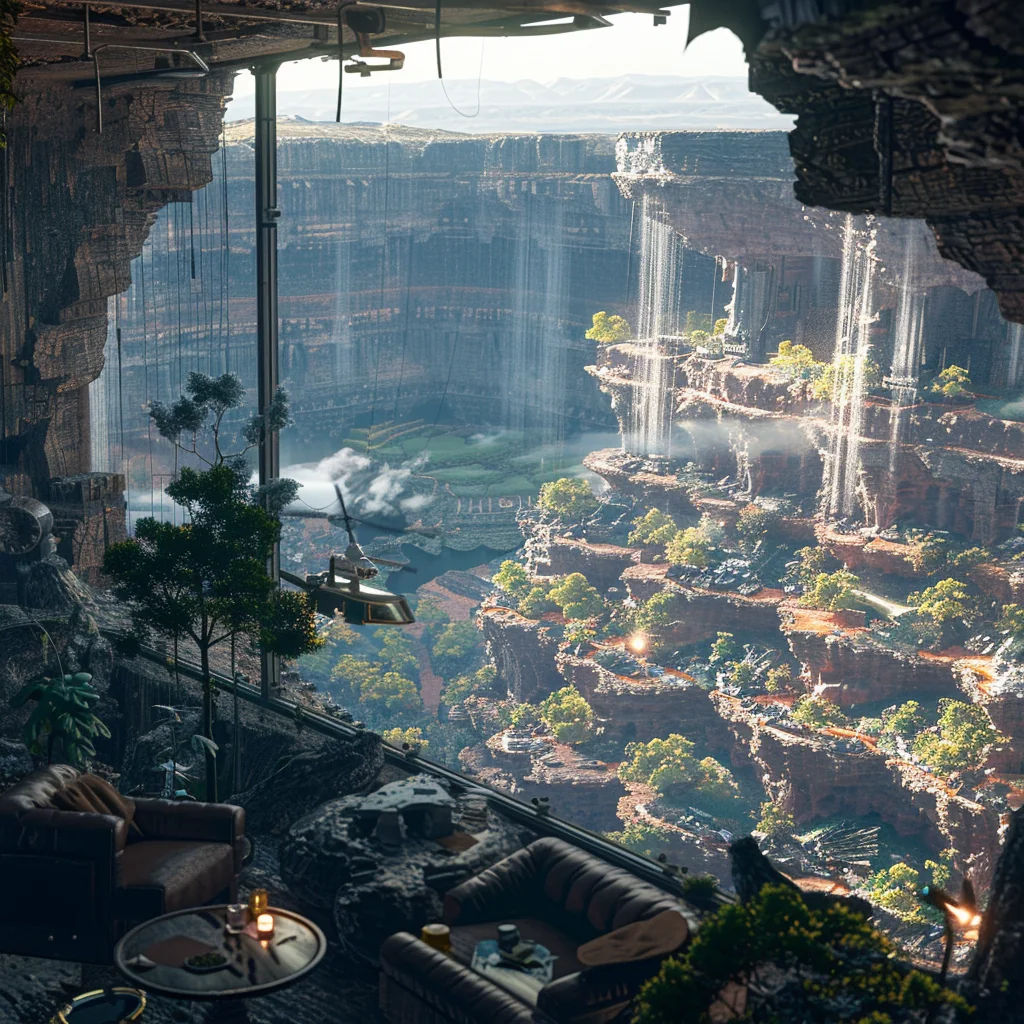
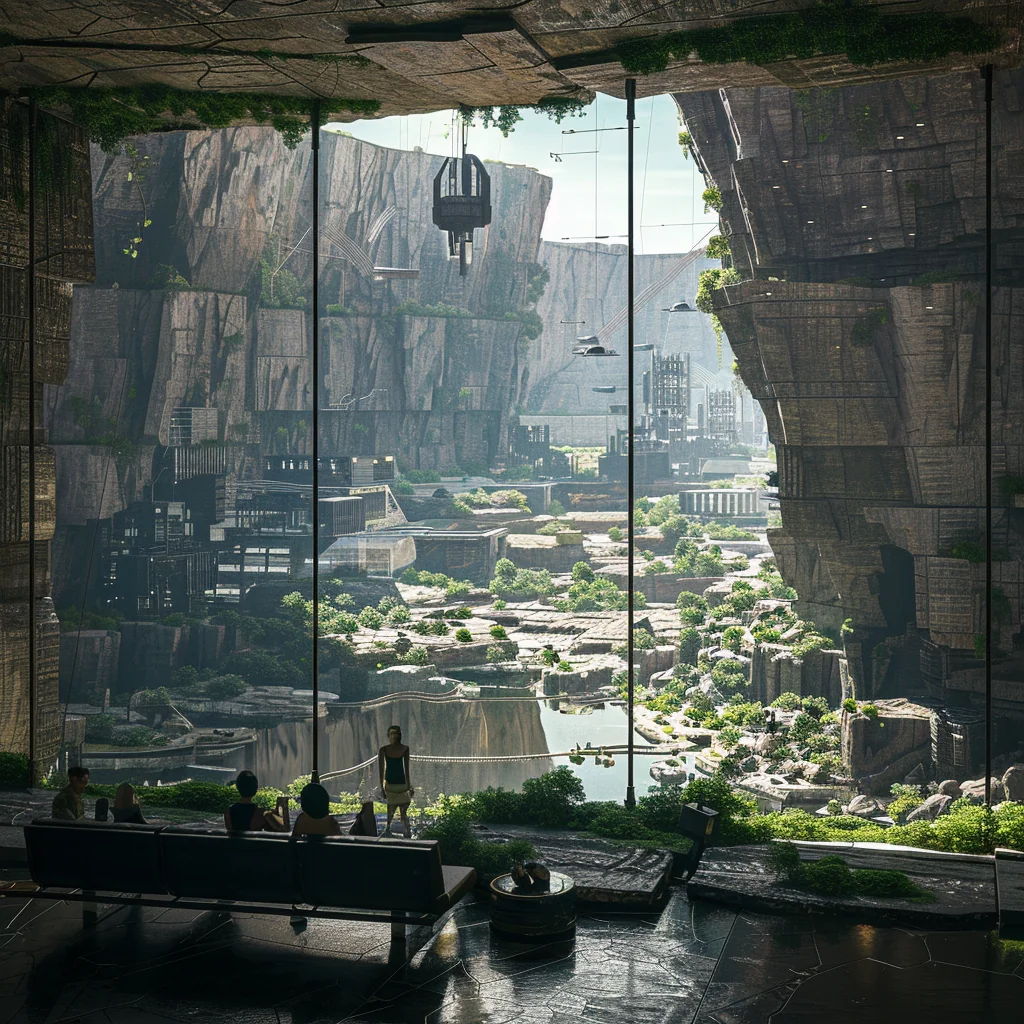
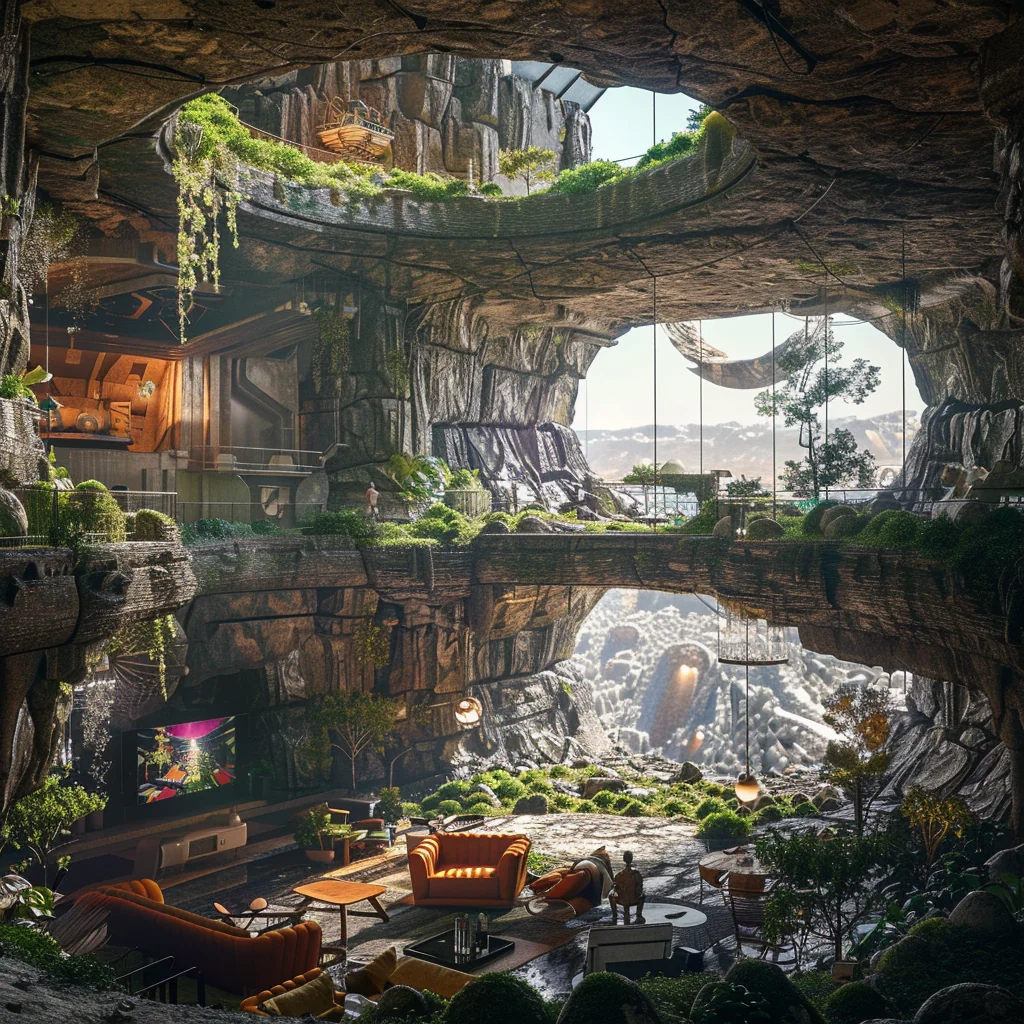
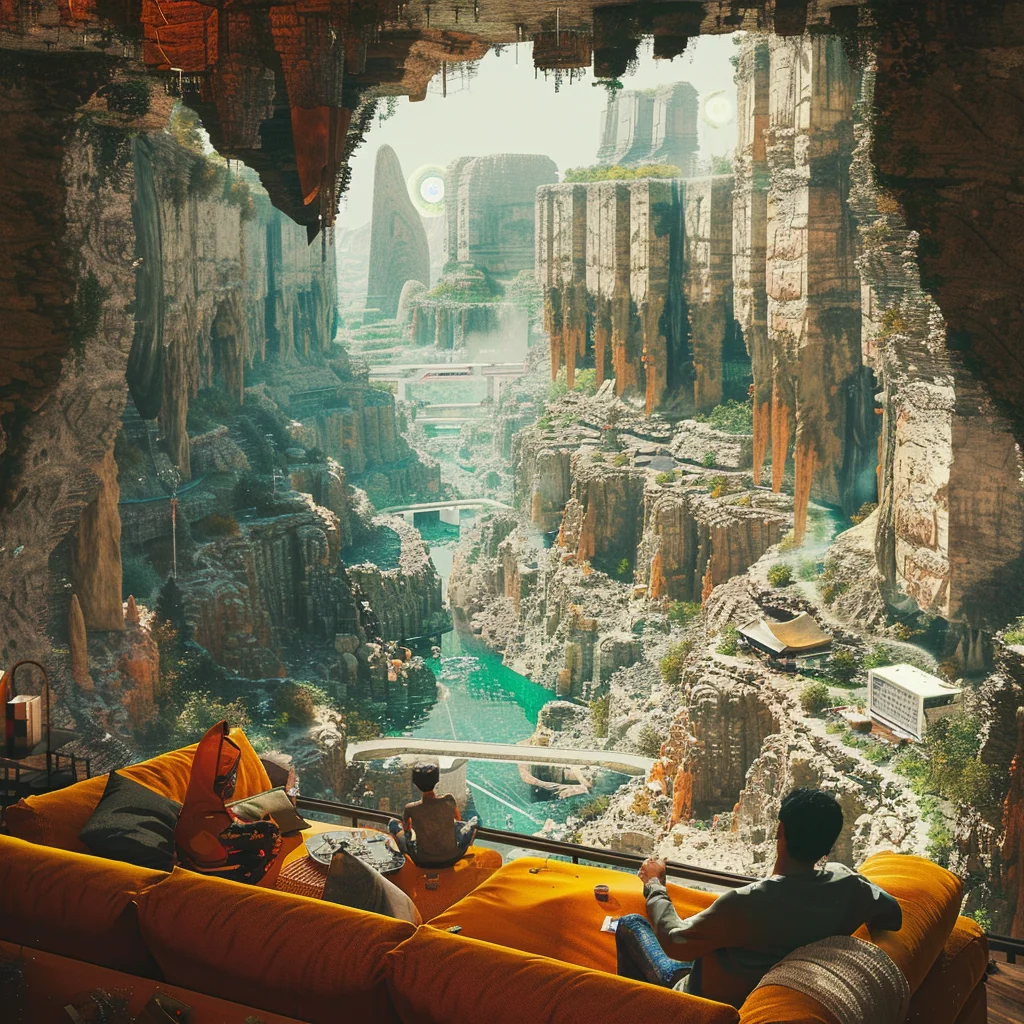
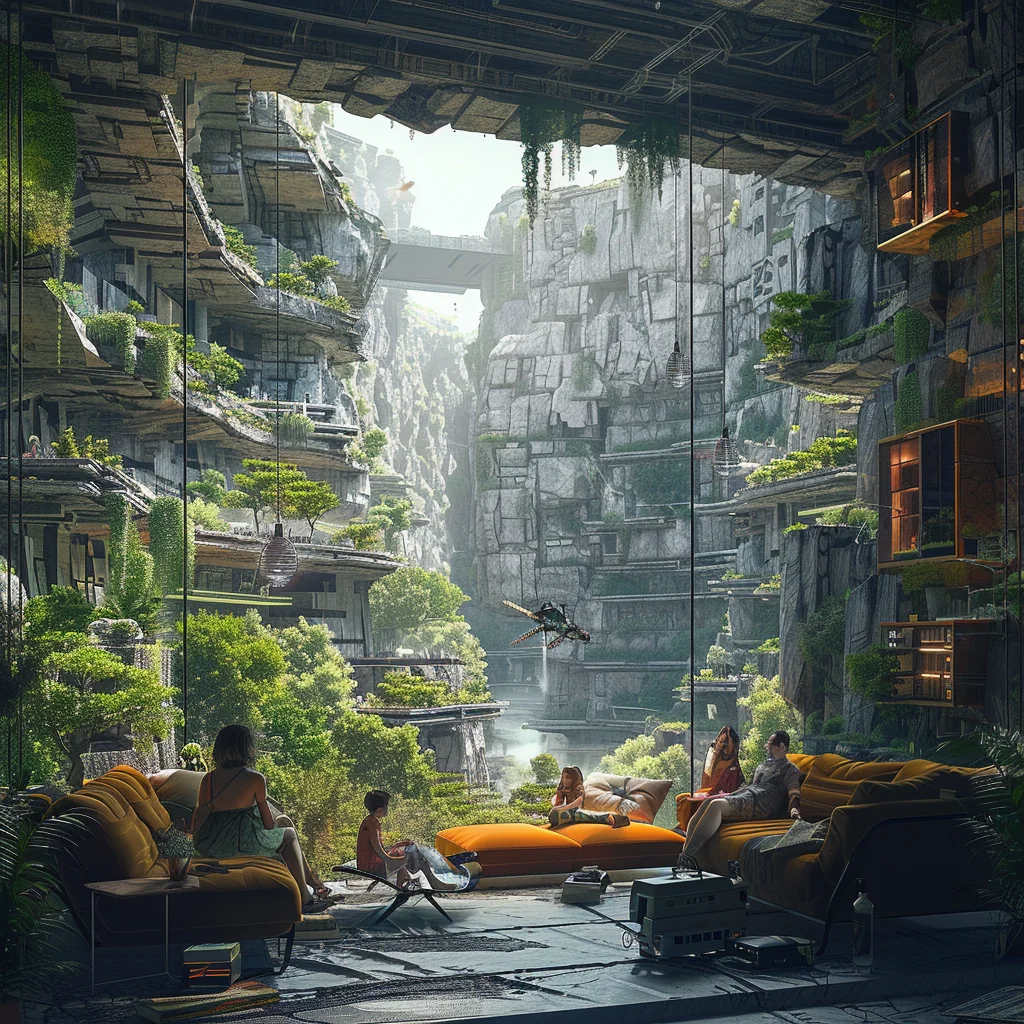
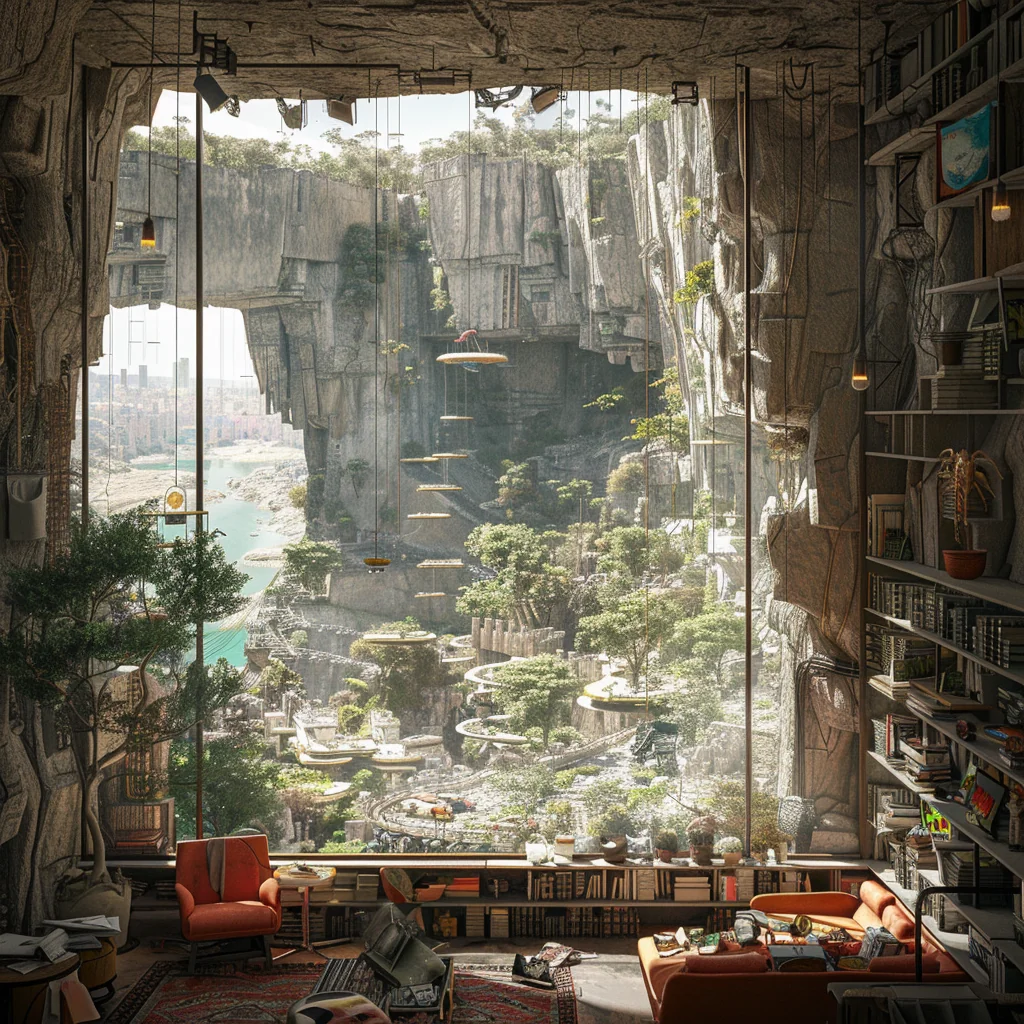
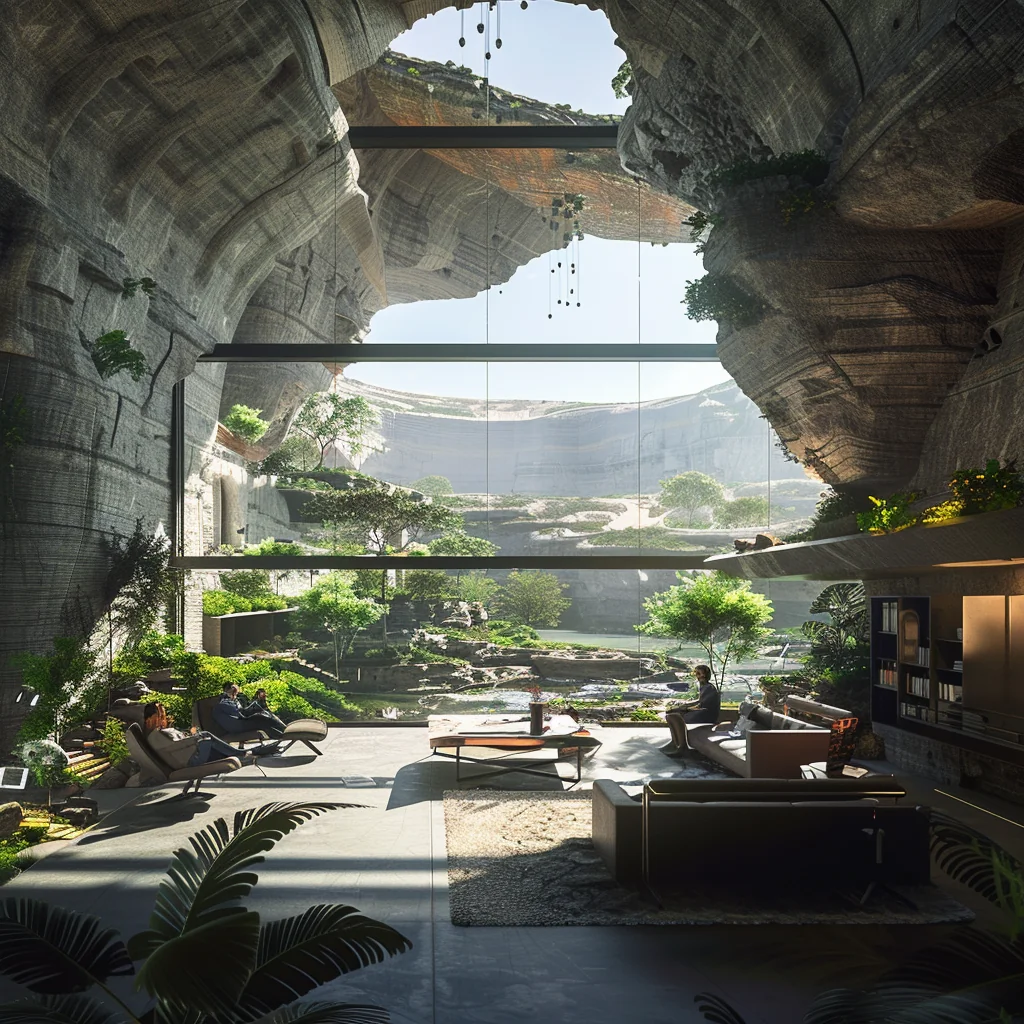
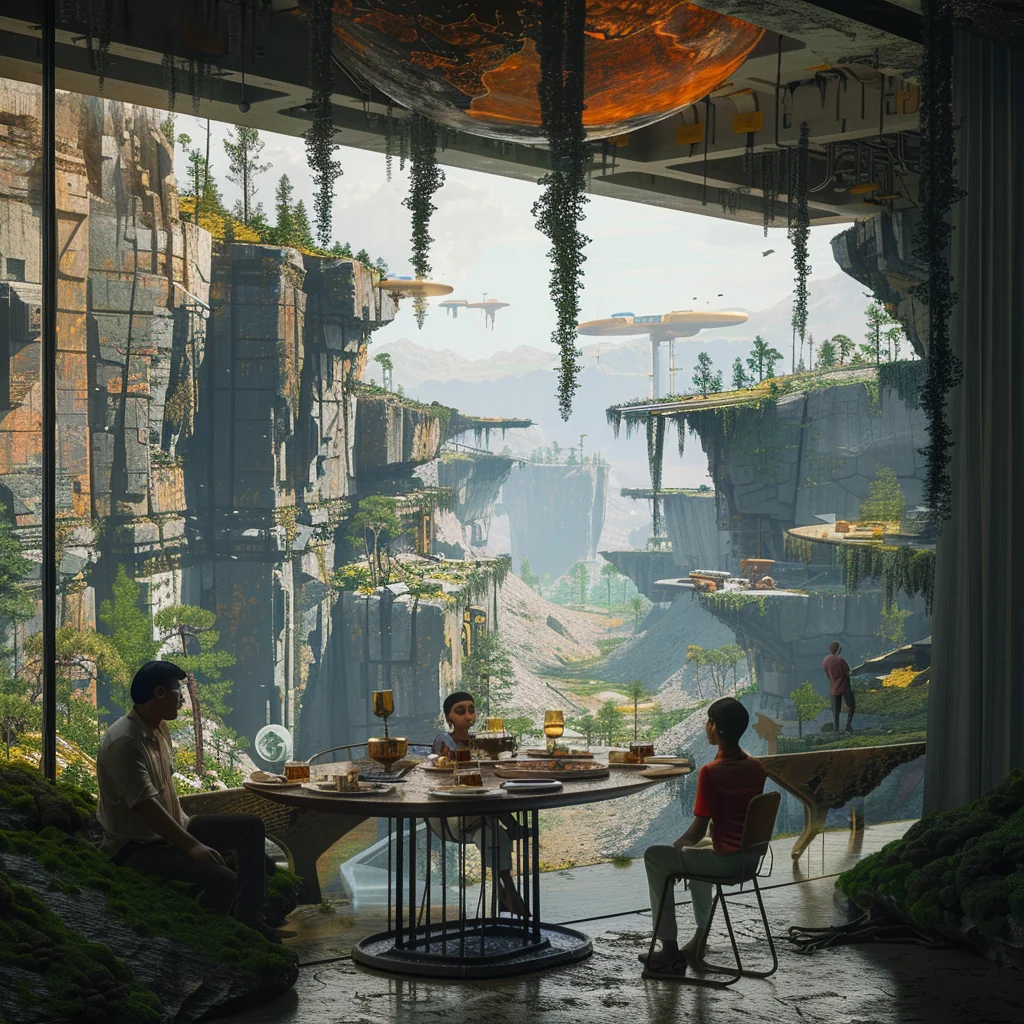
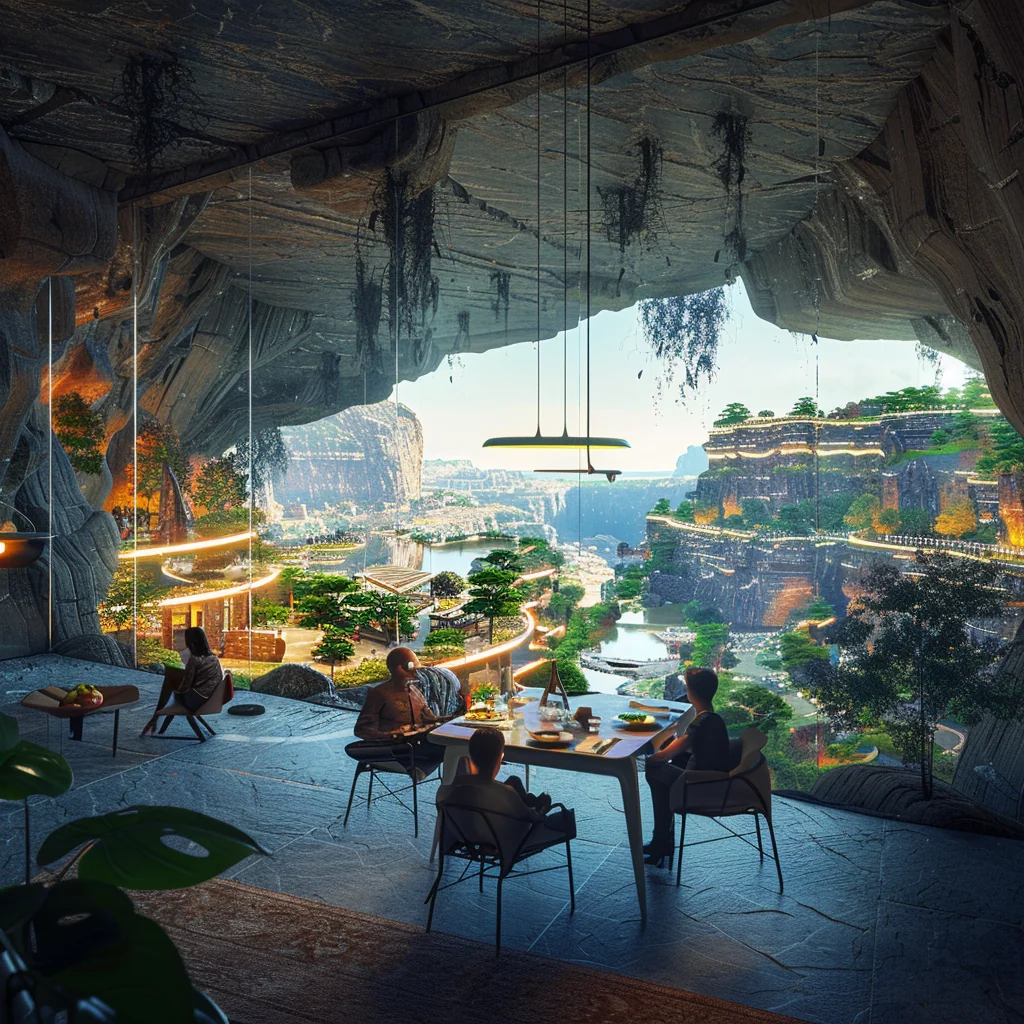
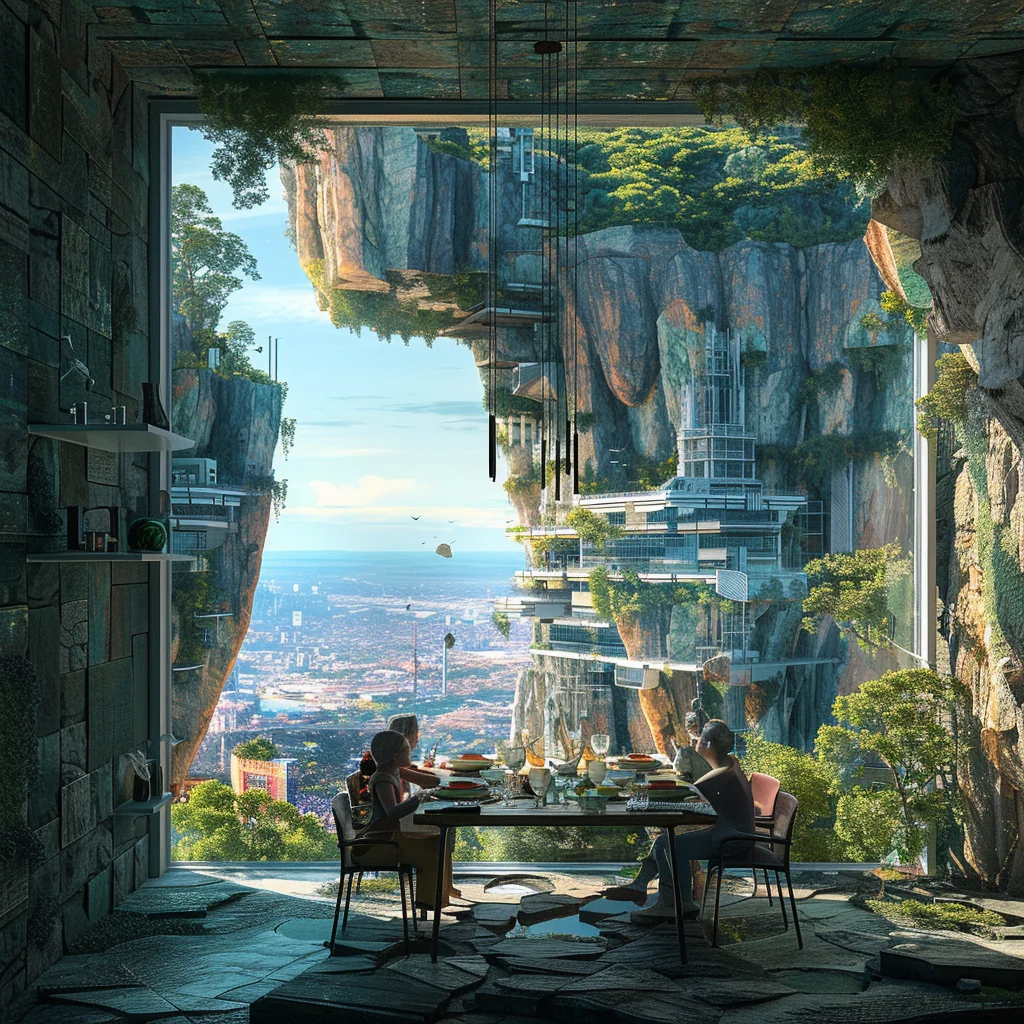
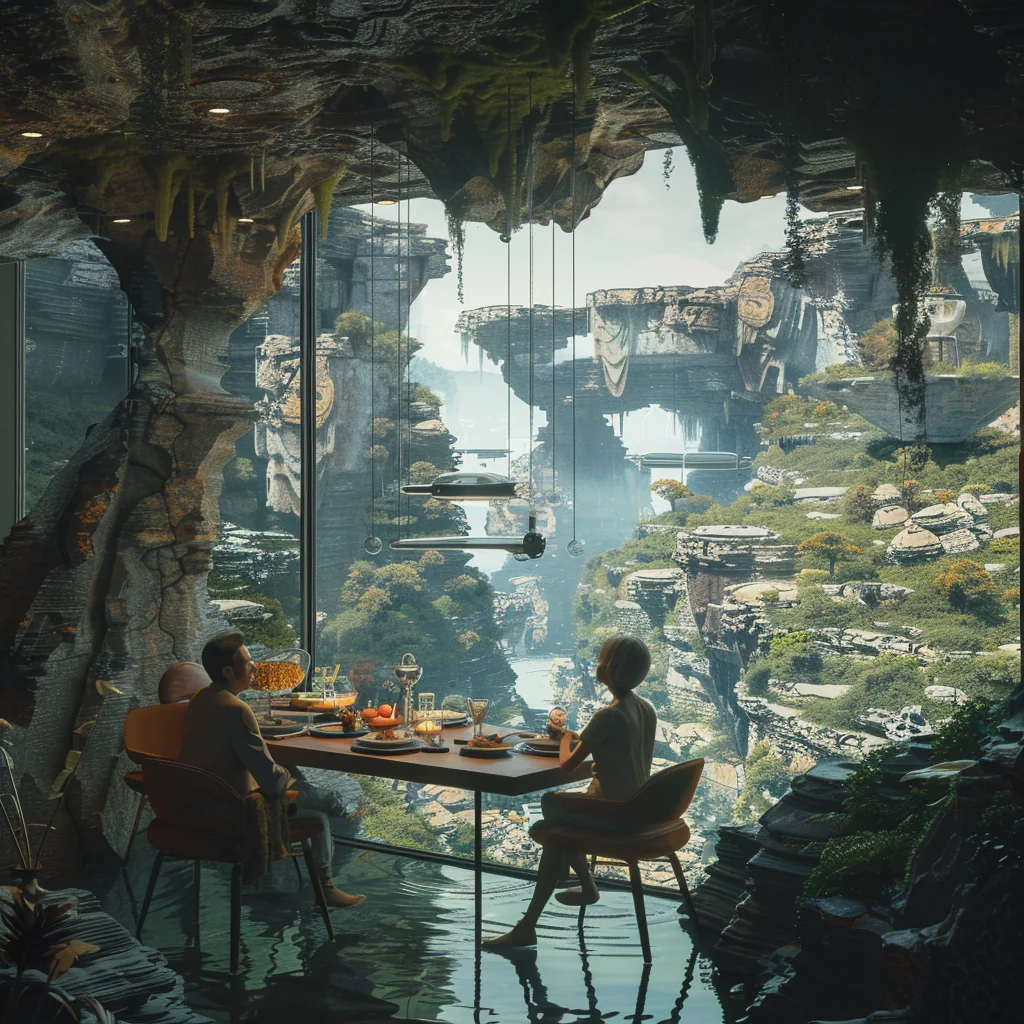
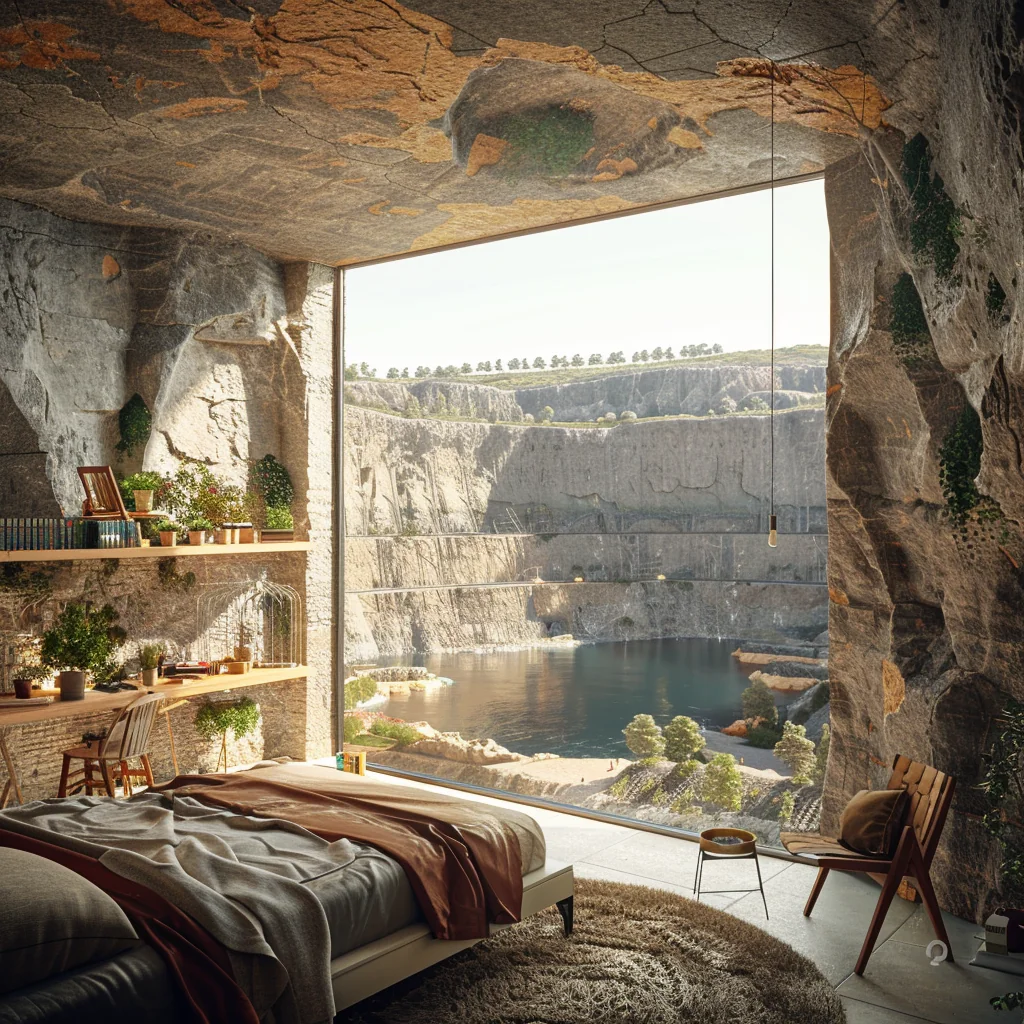
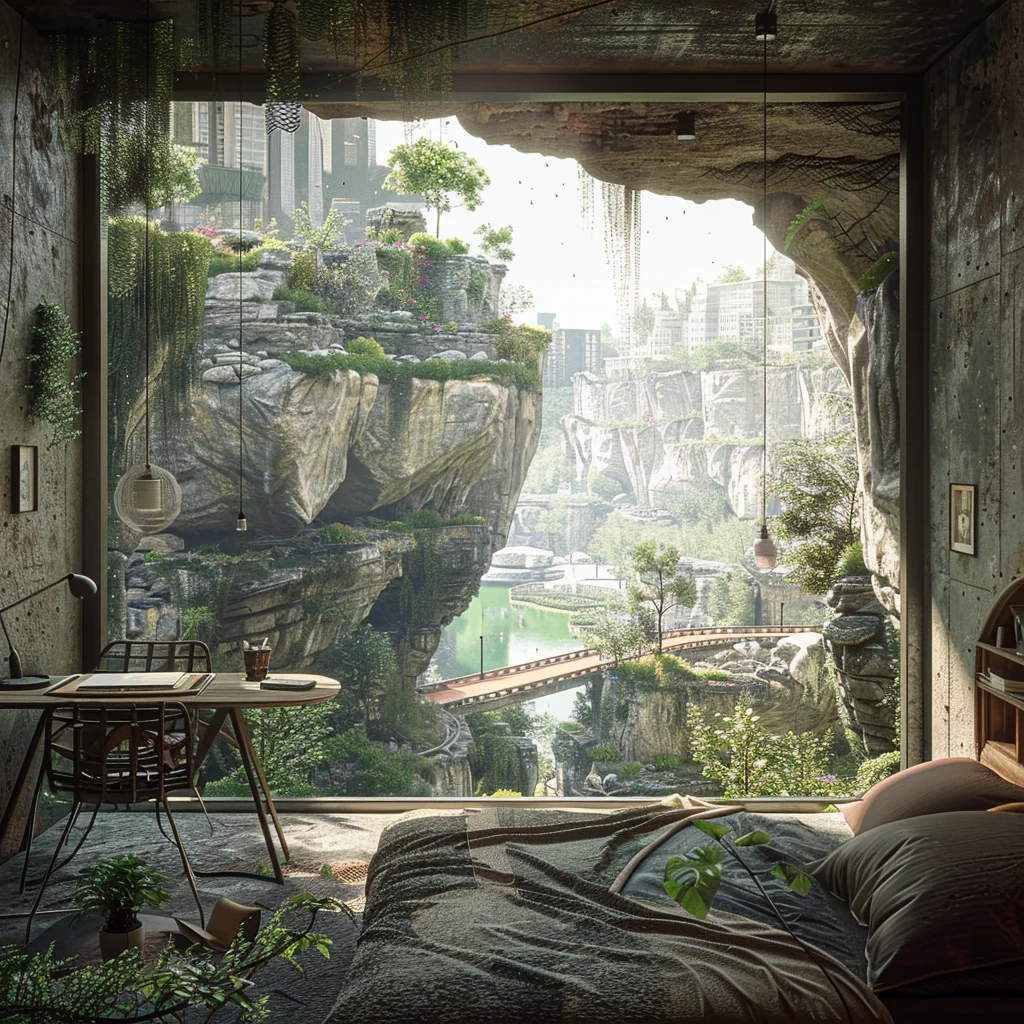
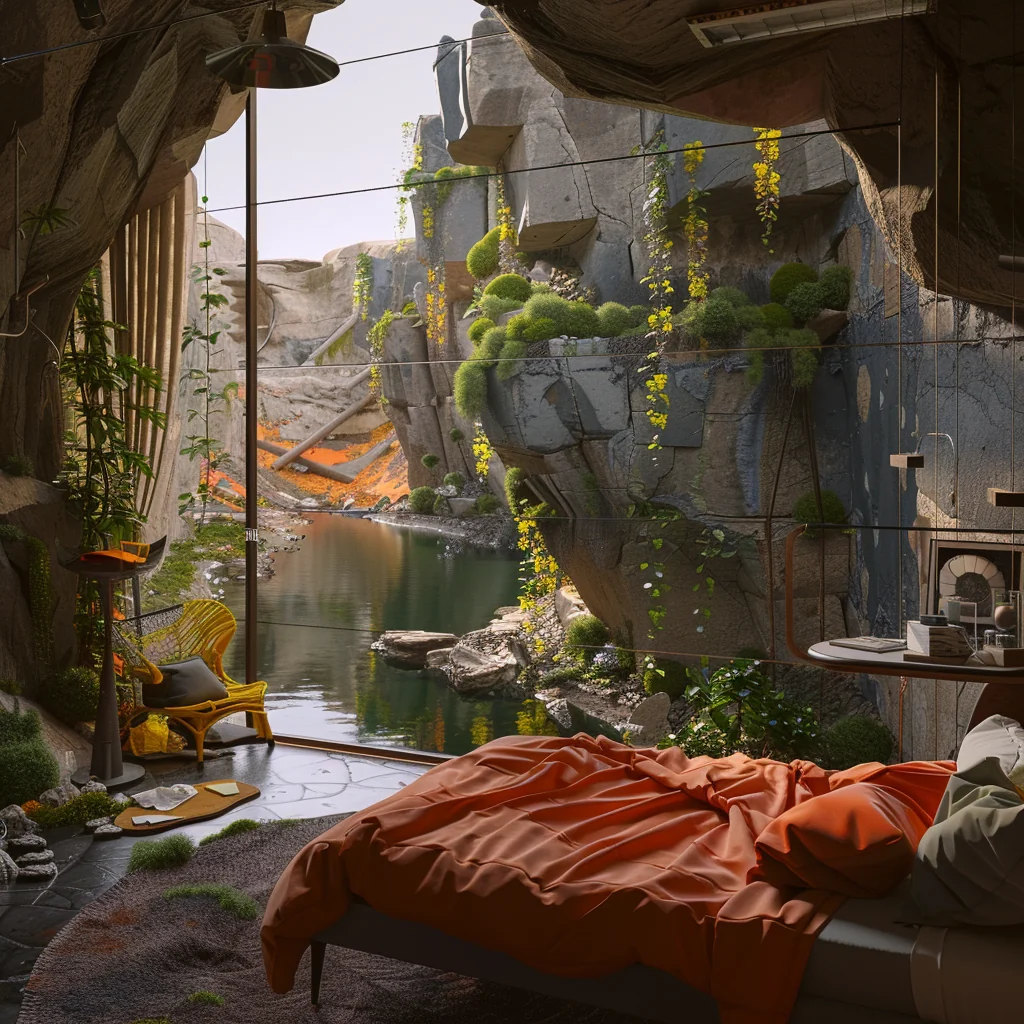
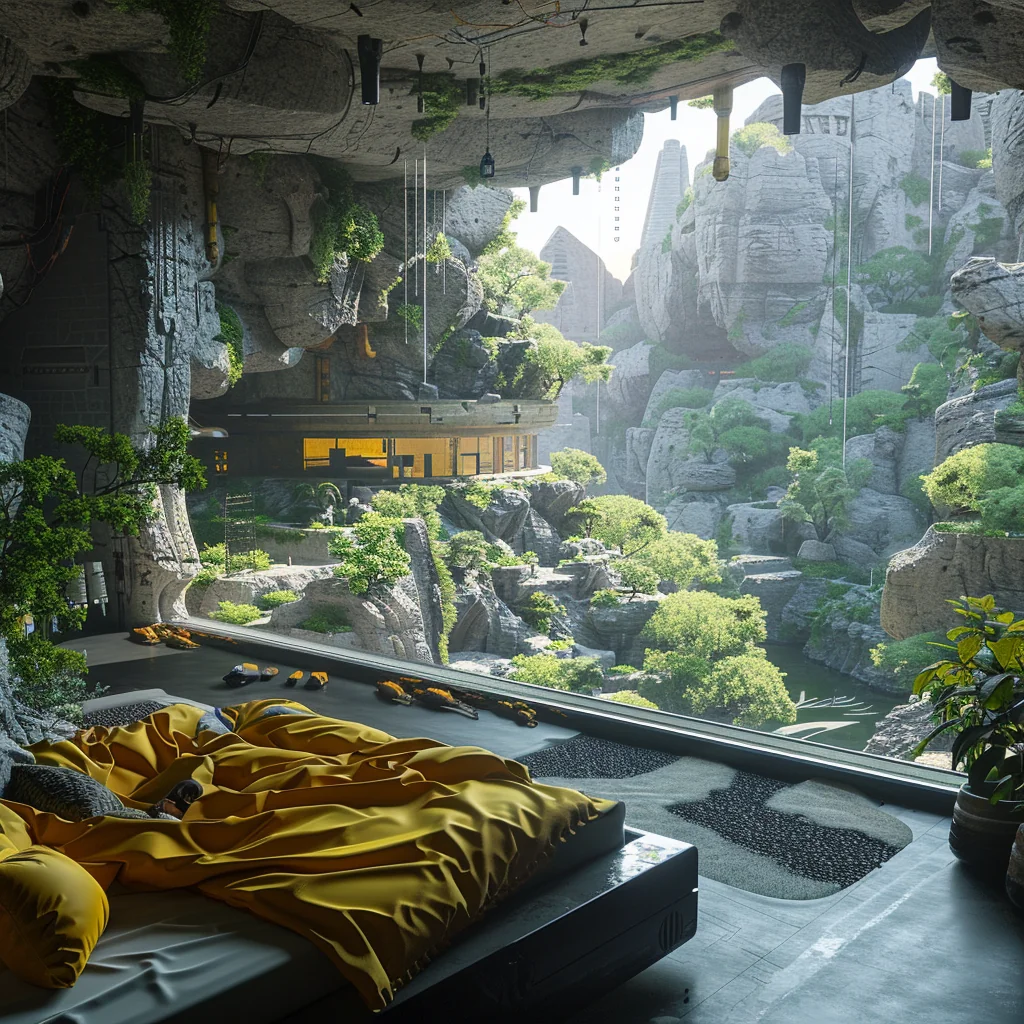
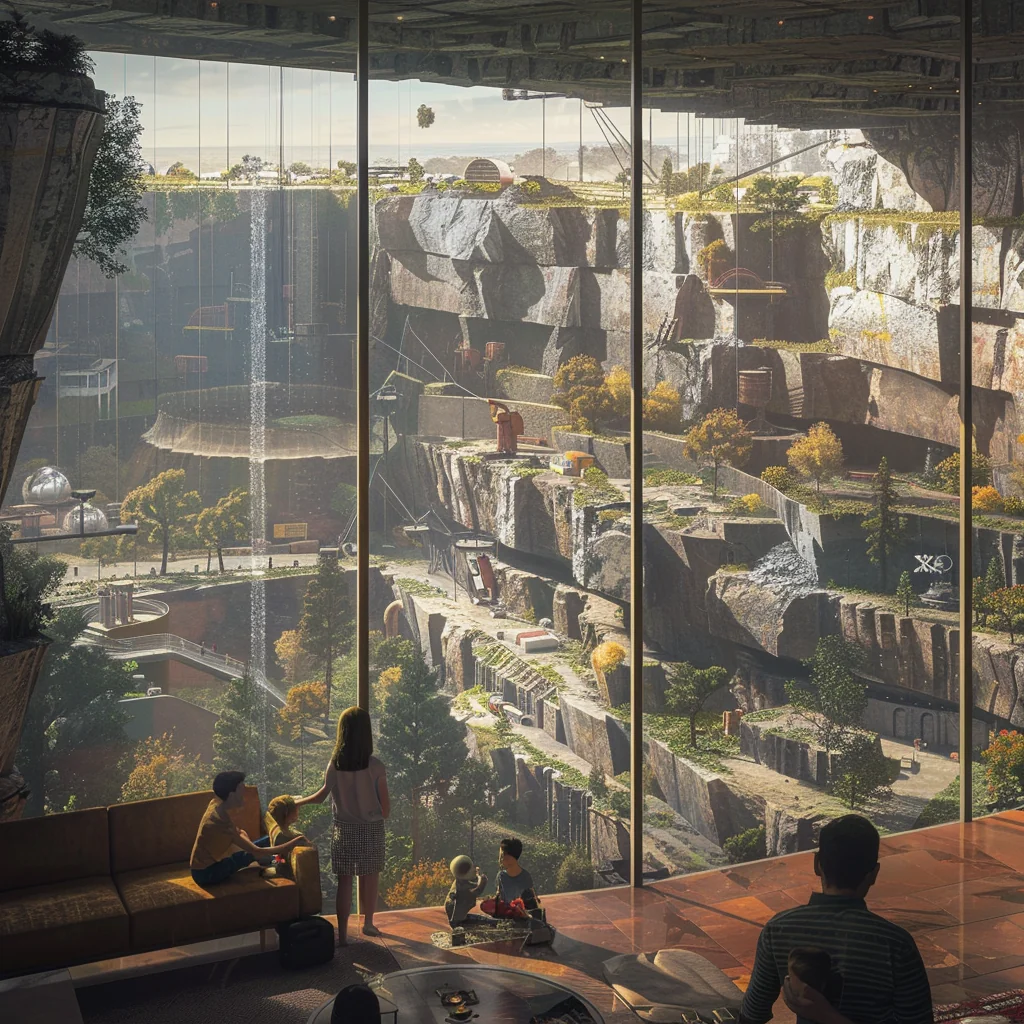
Symbiotic Living Spaces: residential communities carved into the upper pit walls. Cozy family apartments with panoramic windows overlooking the terraced canyon below. Living rooms, dining areas, bedrooms: each with large openings onto green corridors, trees growing through rock ledges, water bodies following the natural topography. The architecture makes nature integral to domestic life, with floors transitioning seamlessly to outdoor terraces.
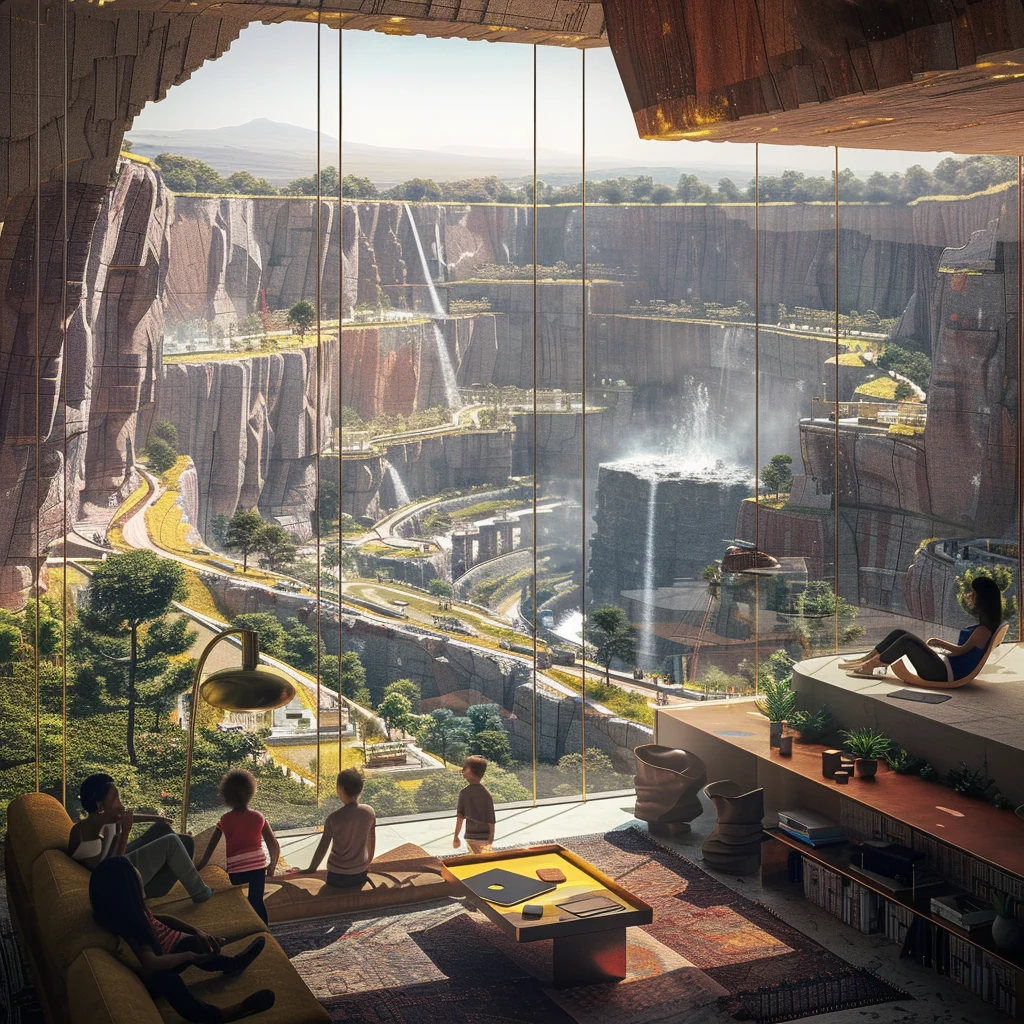 Living room overlooking the canyon
 Living room: light variant
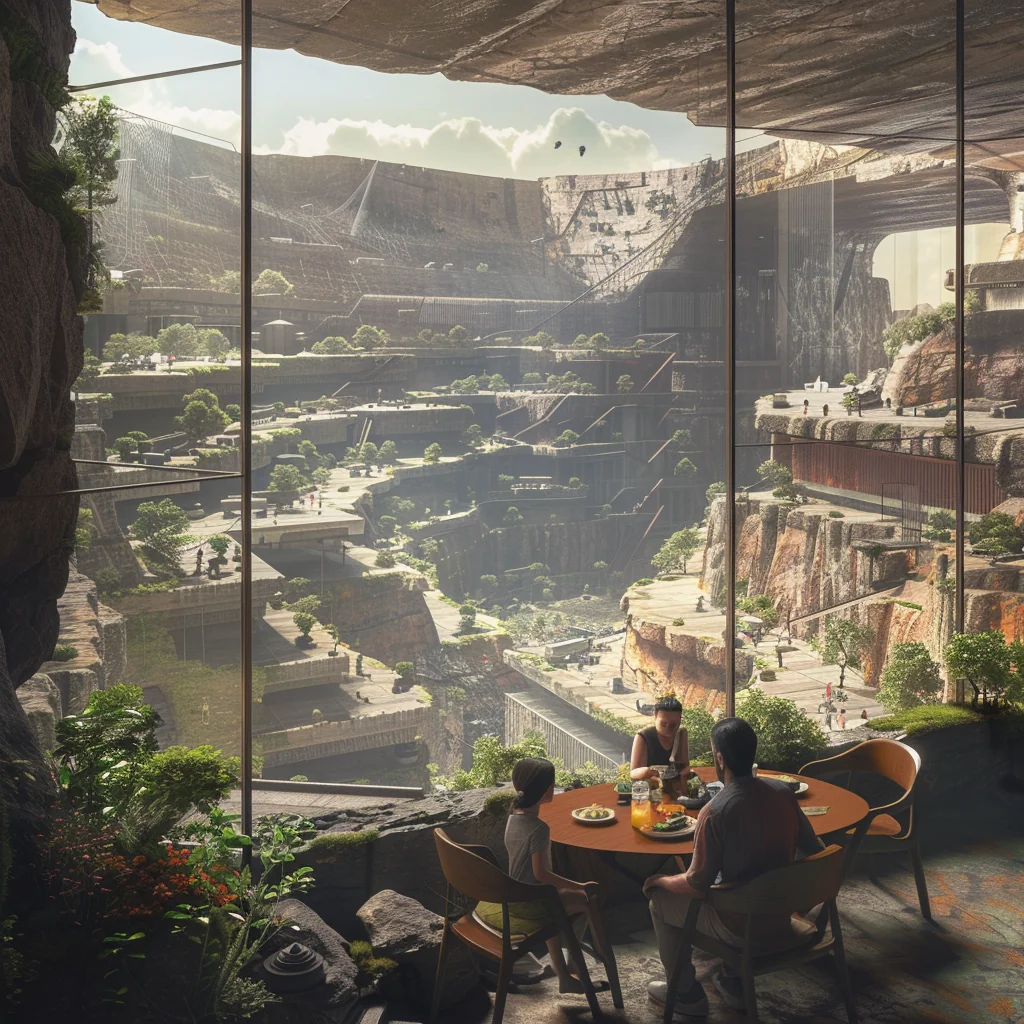 Family dining space
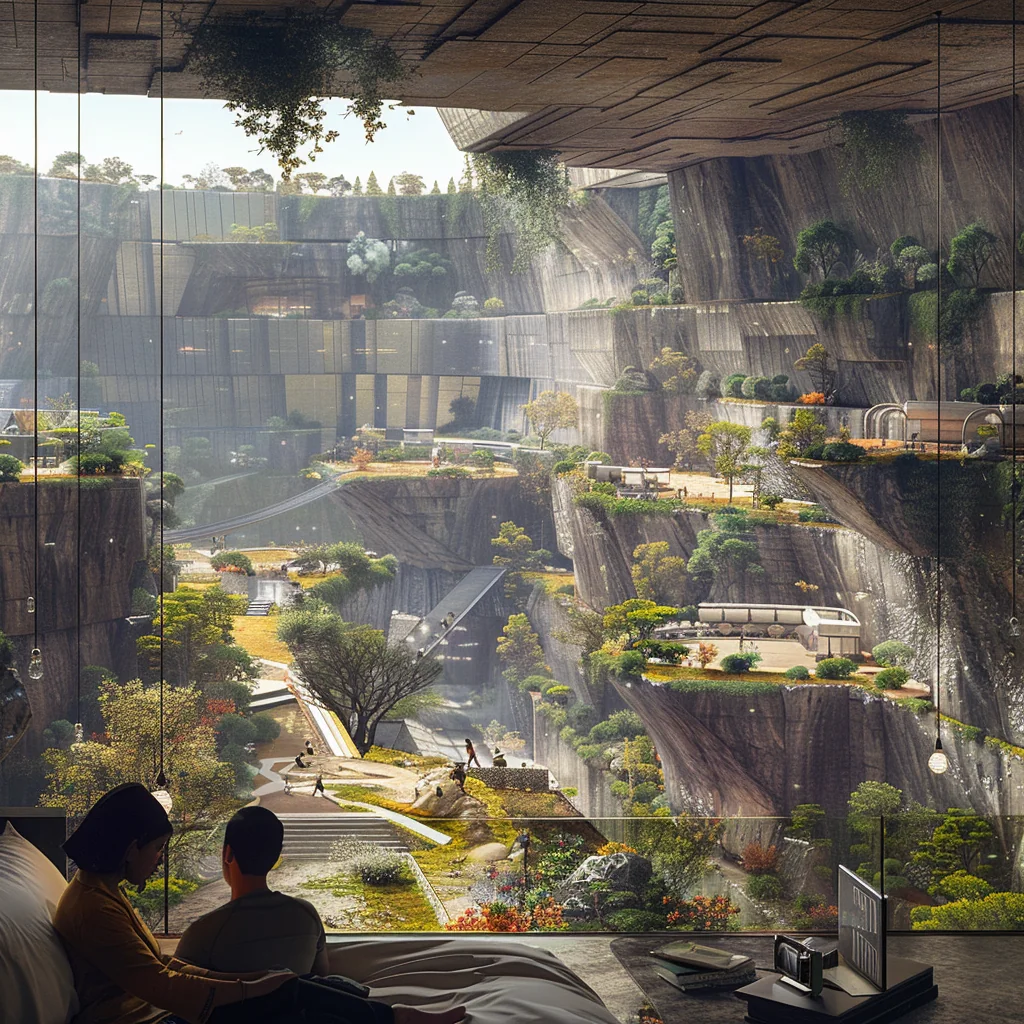 Bedroom at the canyon edge
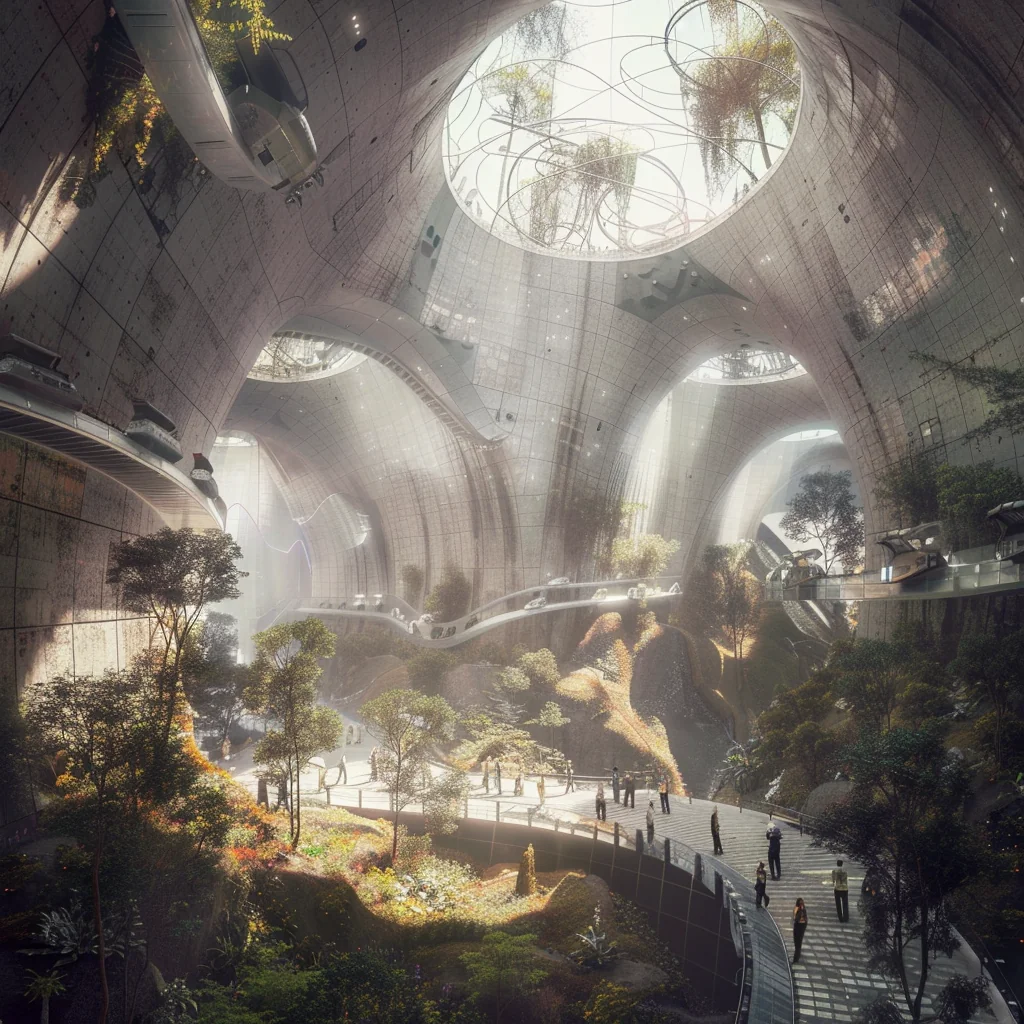
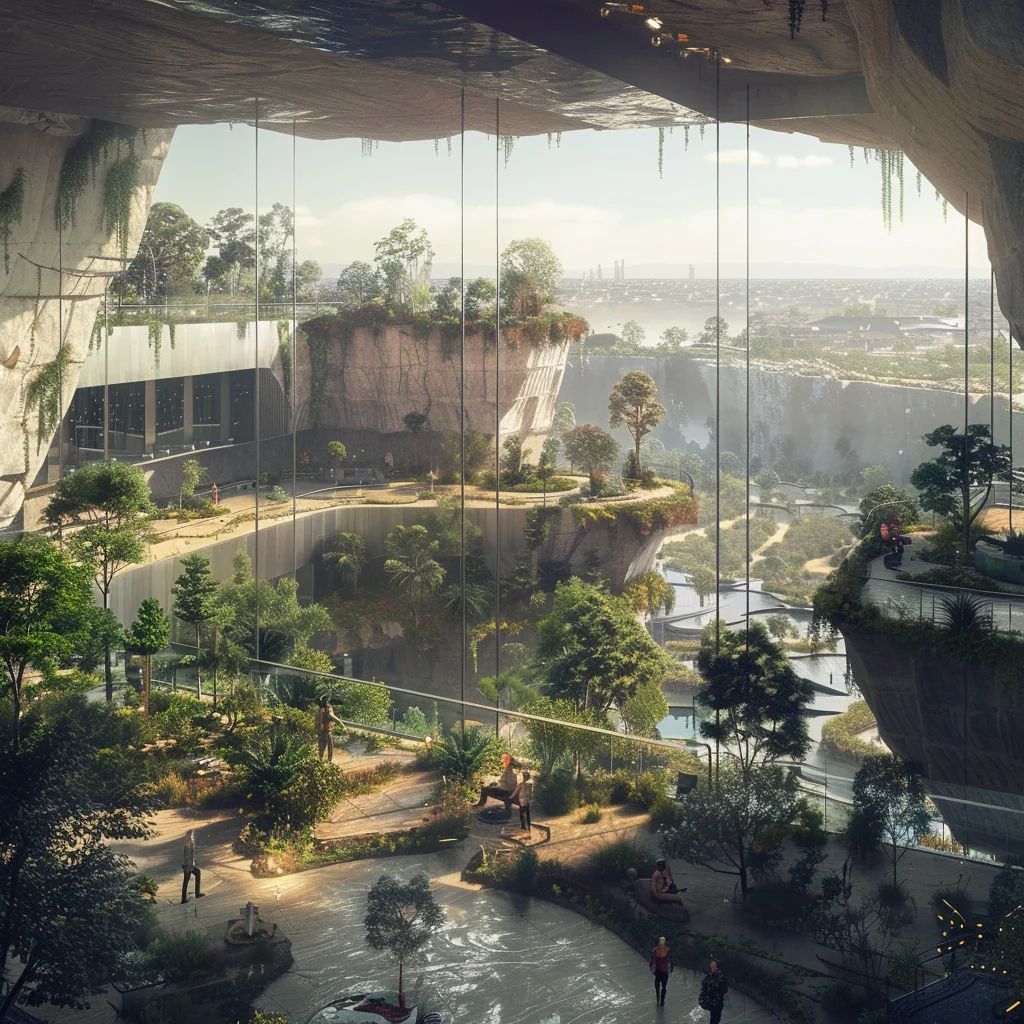
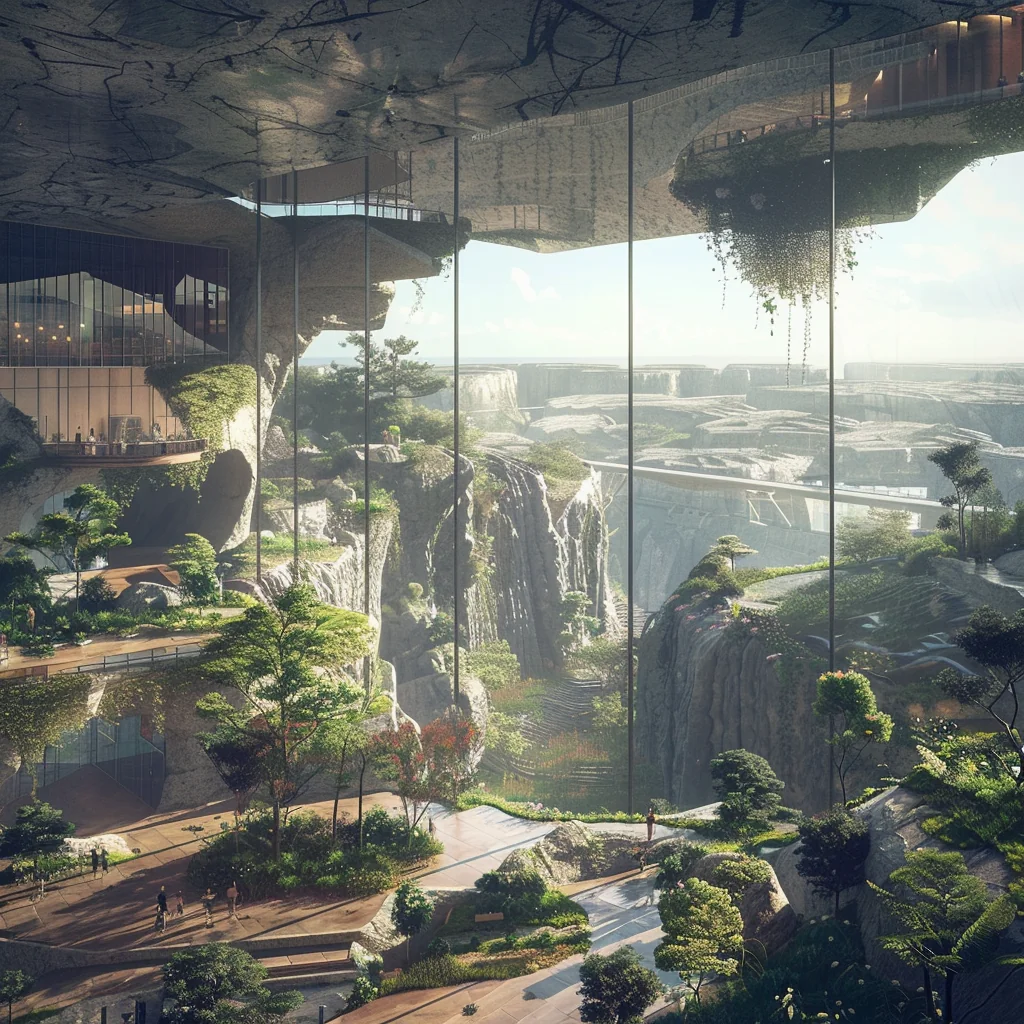
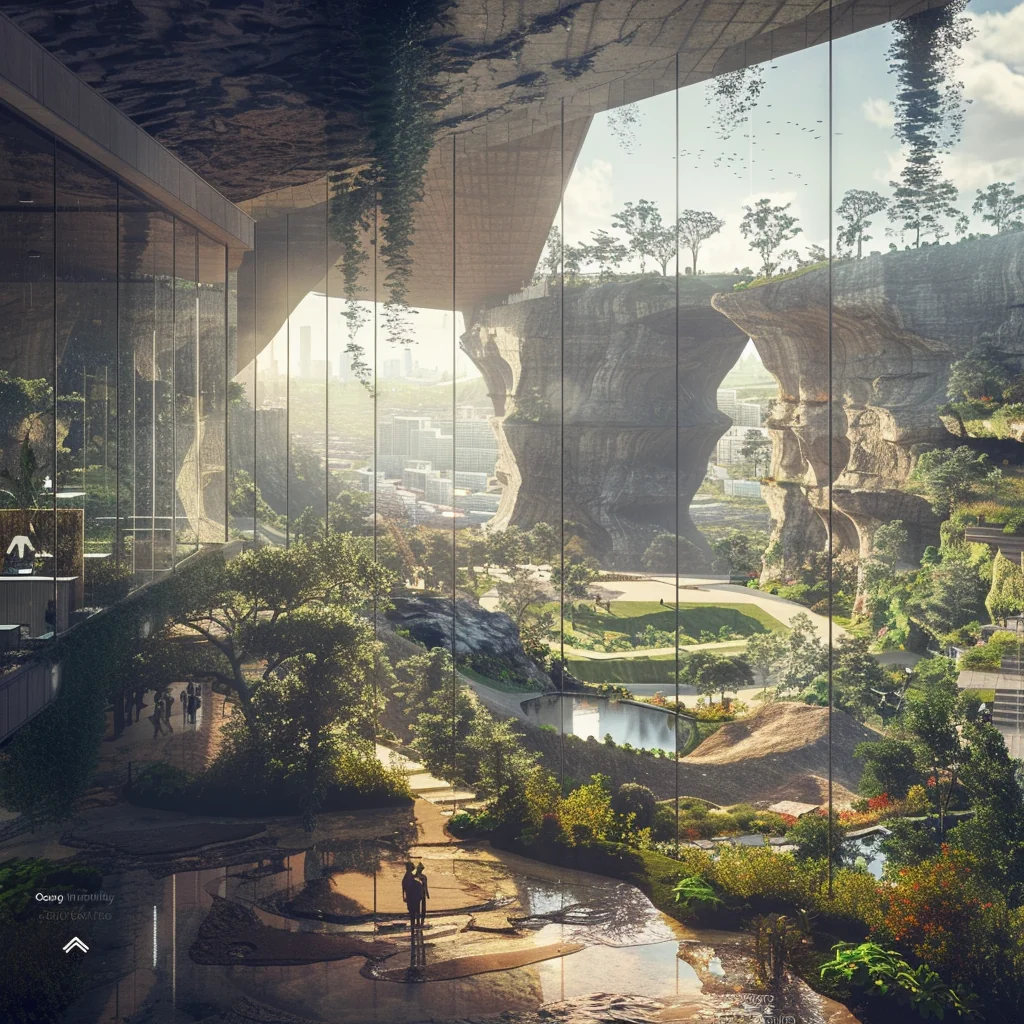
Dream Incubation Centres occupy the upper rim where natural light still penetrates. Smooth curves, reflective glass, lush greenery, and open spaces filled with VR pods, sensory gardens, and communal dreaming areas. Walls subtly adjust texture in response to neural patterns. A research and rest facility for fostering creativity and imagination at the threshold between surface and depth.
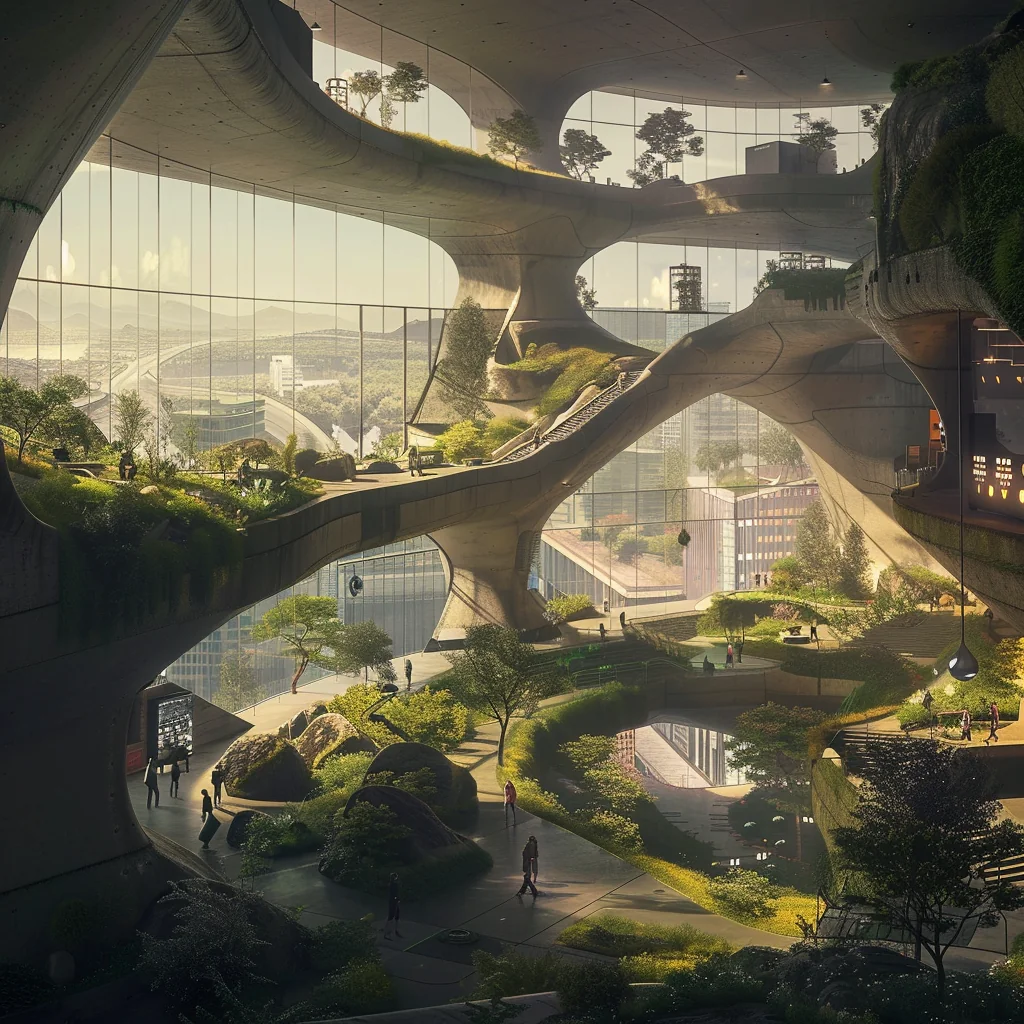 Dream Incubation Centre: variant 1
 Dream Incubation Centre: variant 2
 Dream Incubation Centre: variant 3
 Dream Incubation Centre: variant 4
AGRO Farm: vertical farming towers housed under a supermassive brutalist dome, vegetation growing on concentric tiers. AI-driven hydroponics and aeroponics systems, automated drones for cultivation, renewable energy sources integrated into the structure. Lush jungle canopy, mist, skylights. The mine's controlled environment repurposed for agricultural production at scale.
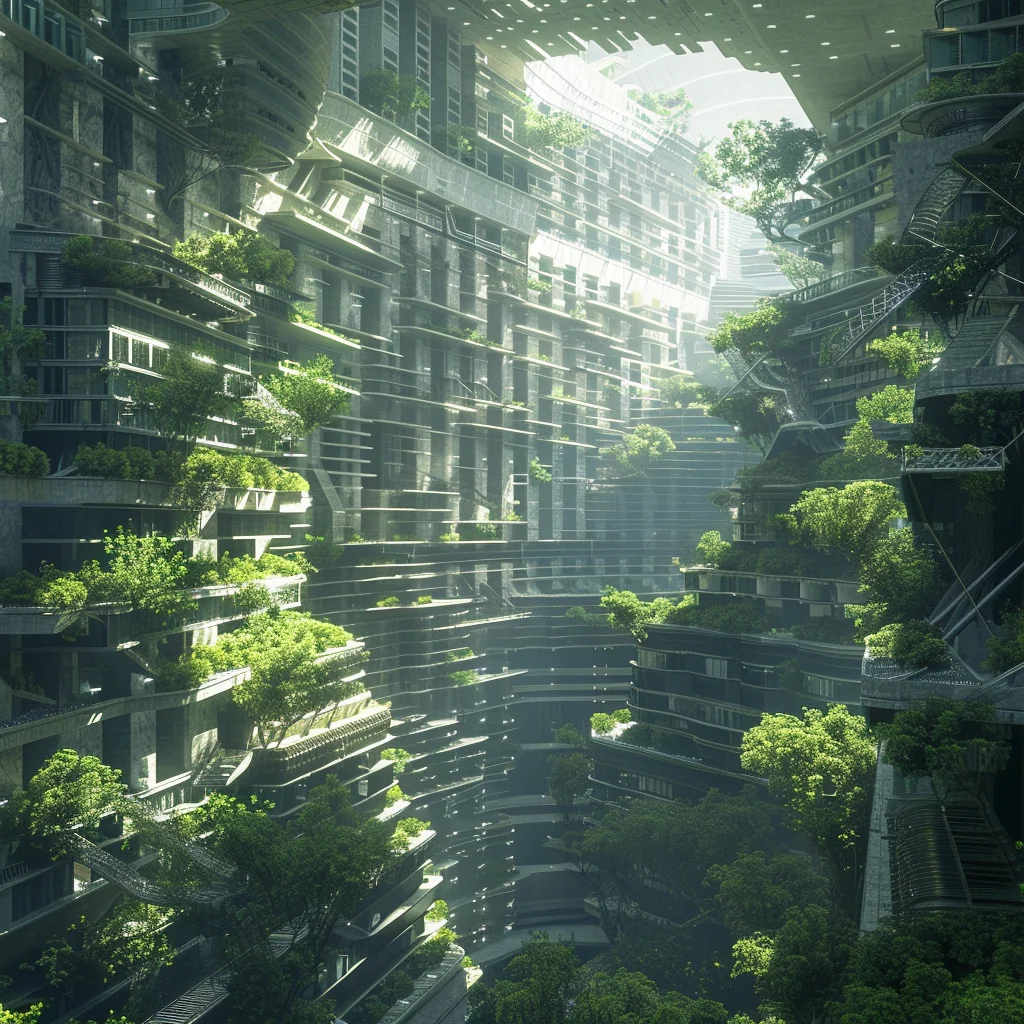 AGRO Farm: variant 1
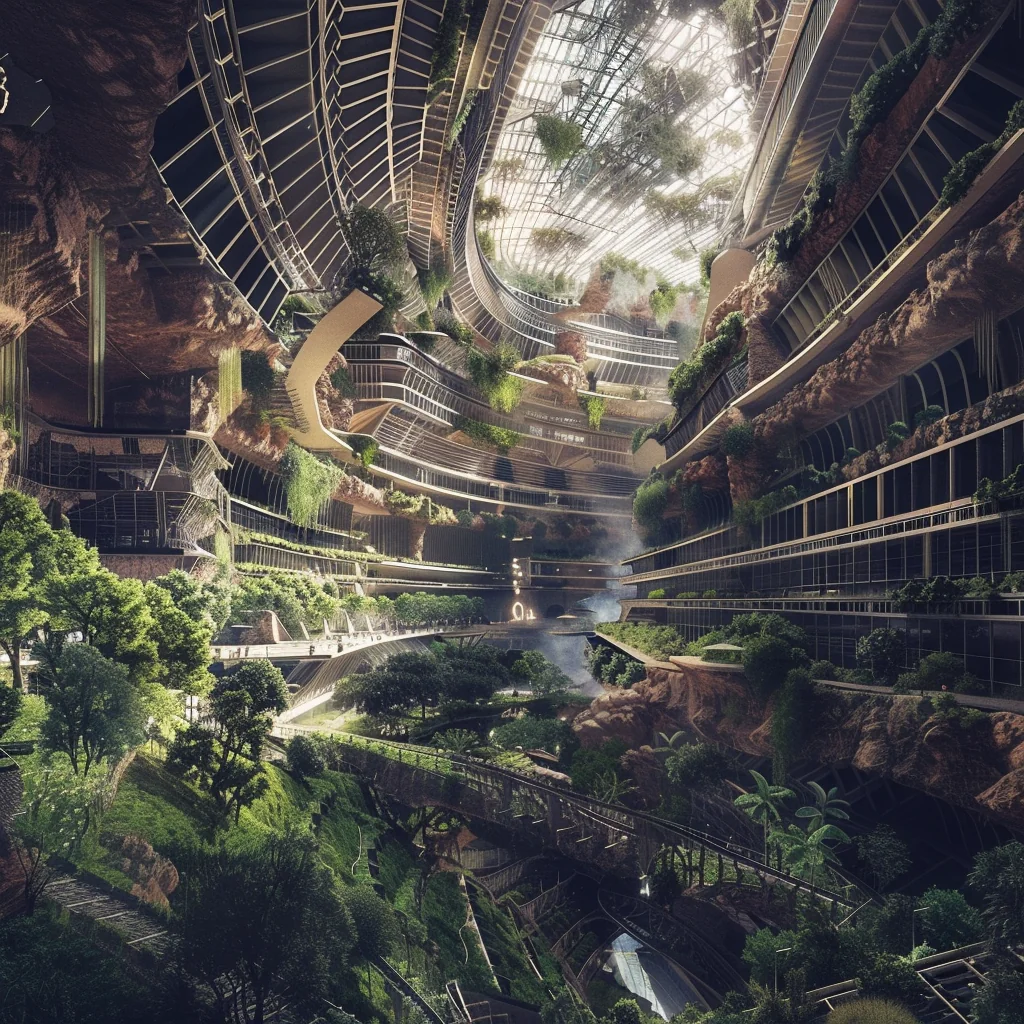 AGRO Farm: variant 2
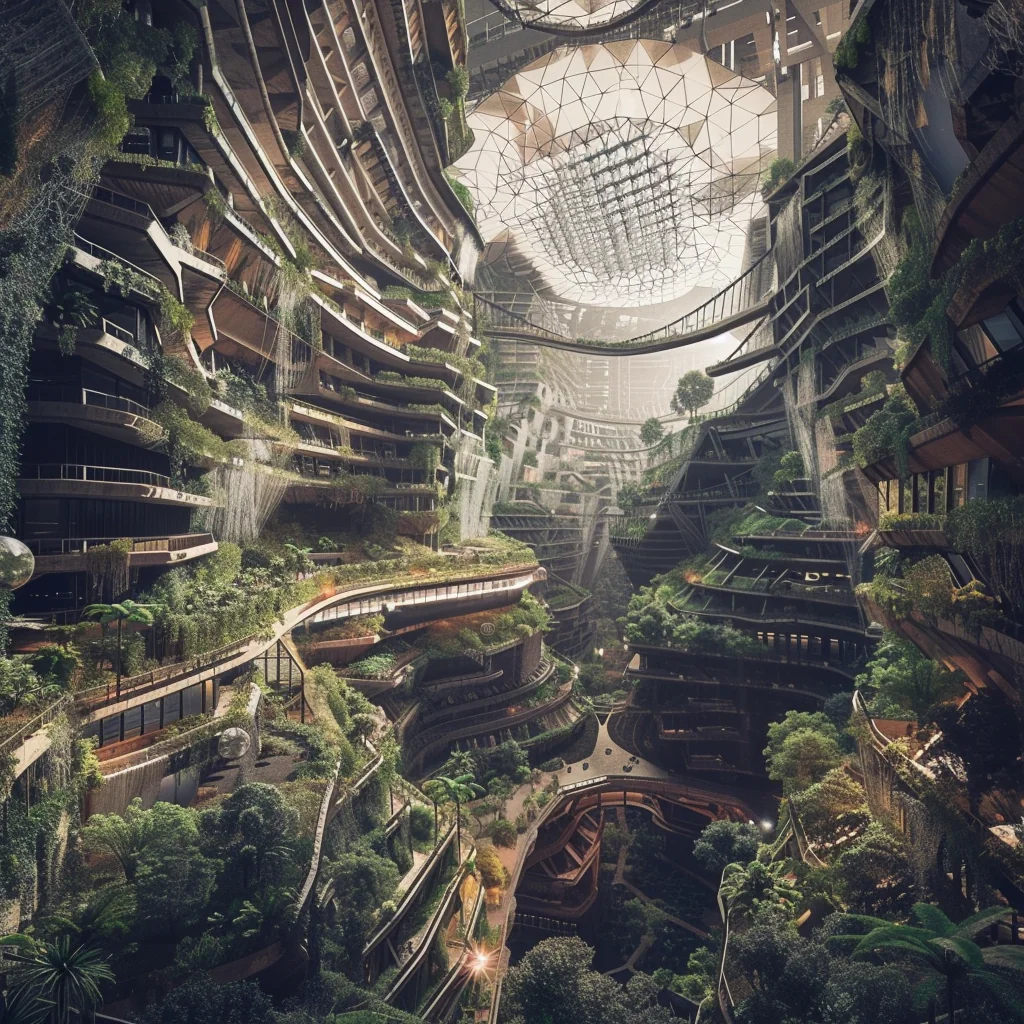 AGRO Farm: variant 3
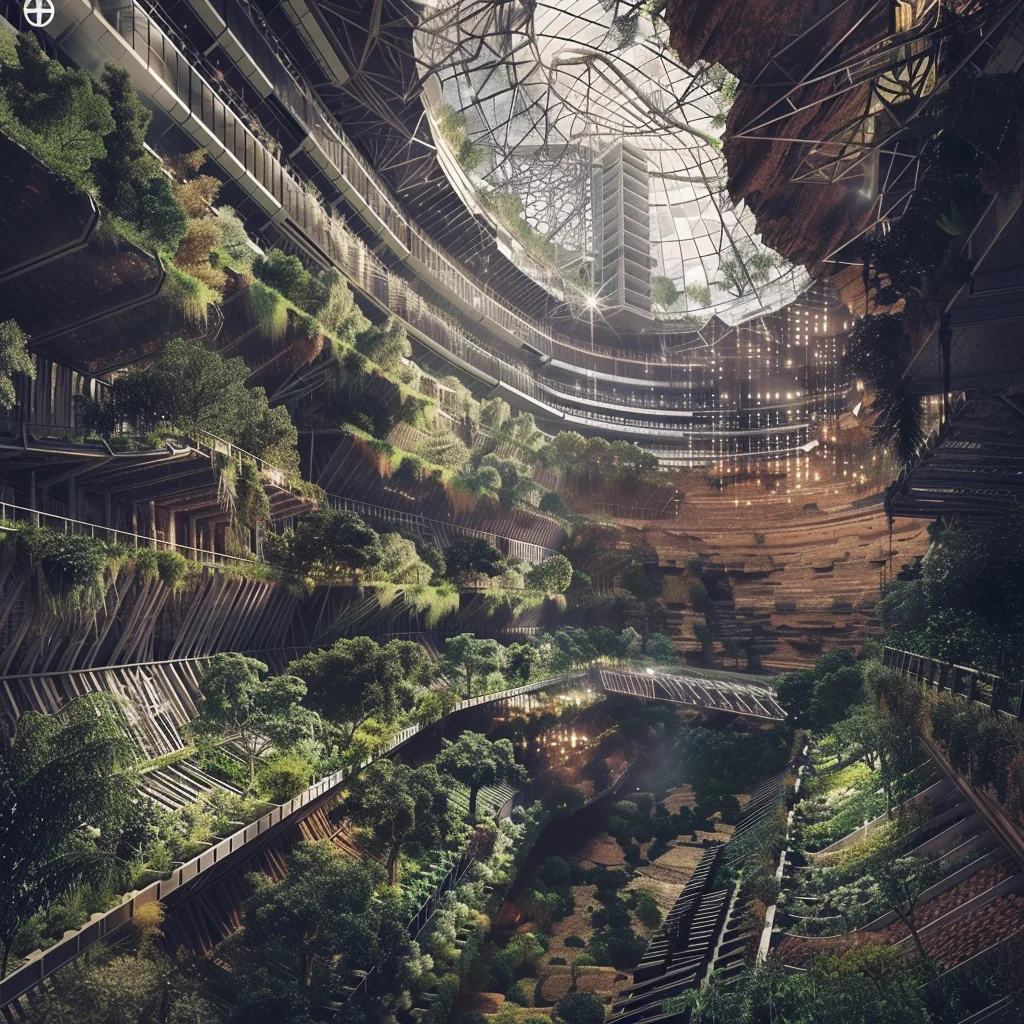 AGRO Farm: variant 4
AI Data Farm: underground facility exploiting the mine's natural cooling. Massive server racks rise along raw rock walls to great heights beneath a glass roof. The mine's thermal mass and depth repurposed as computational infrastructure. The geological strata that once held gold now hold data.
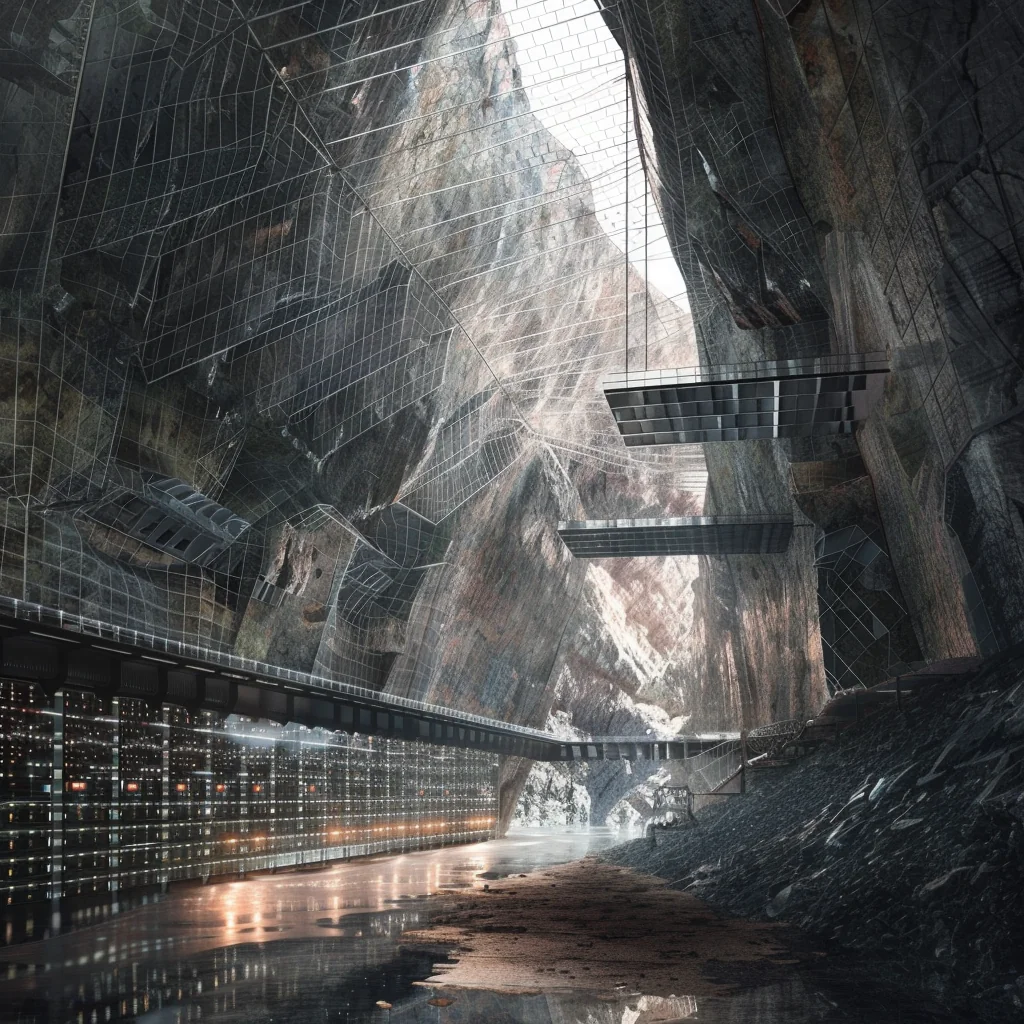 AI Data Farm: variant 1
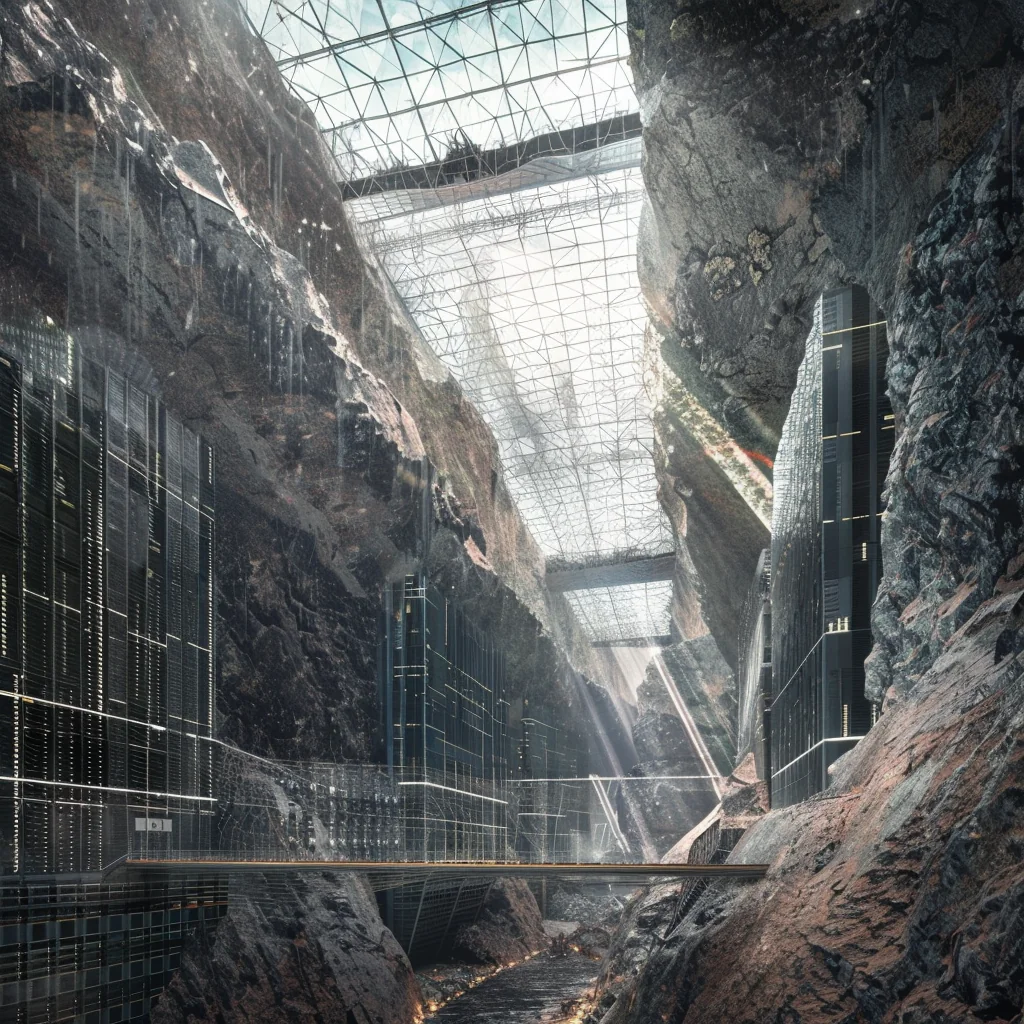 AI Data Farm: variant 2
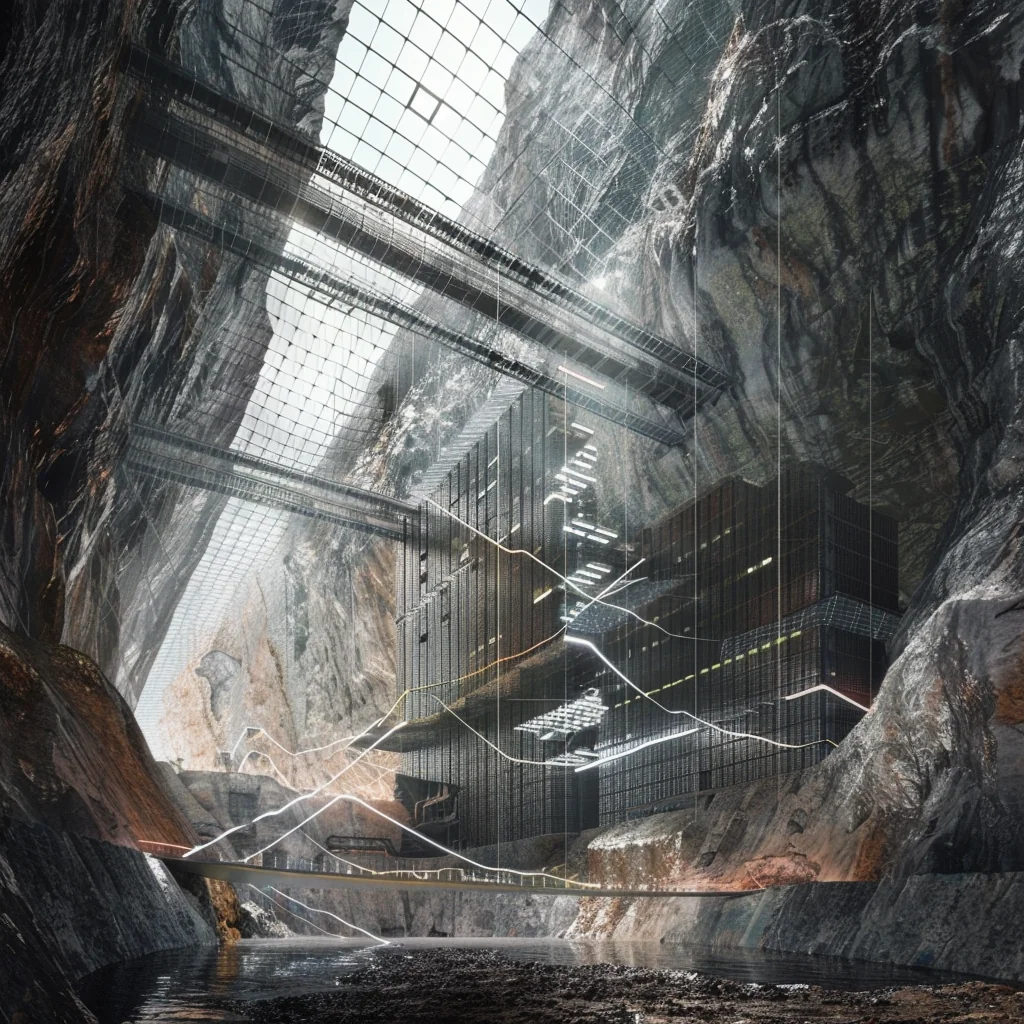 AI Data Farm: variant 3
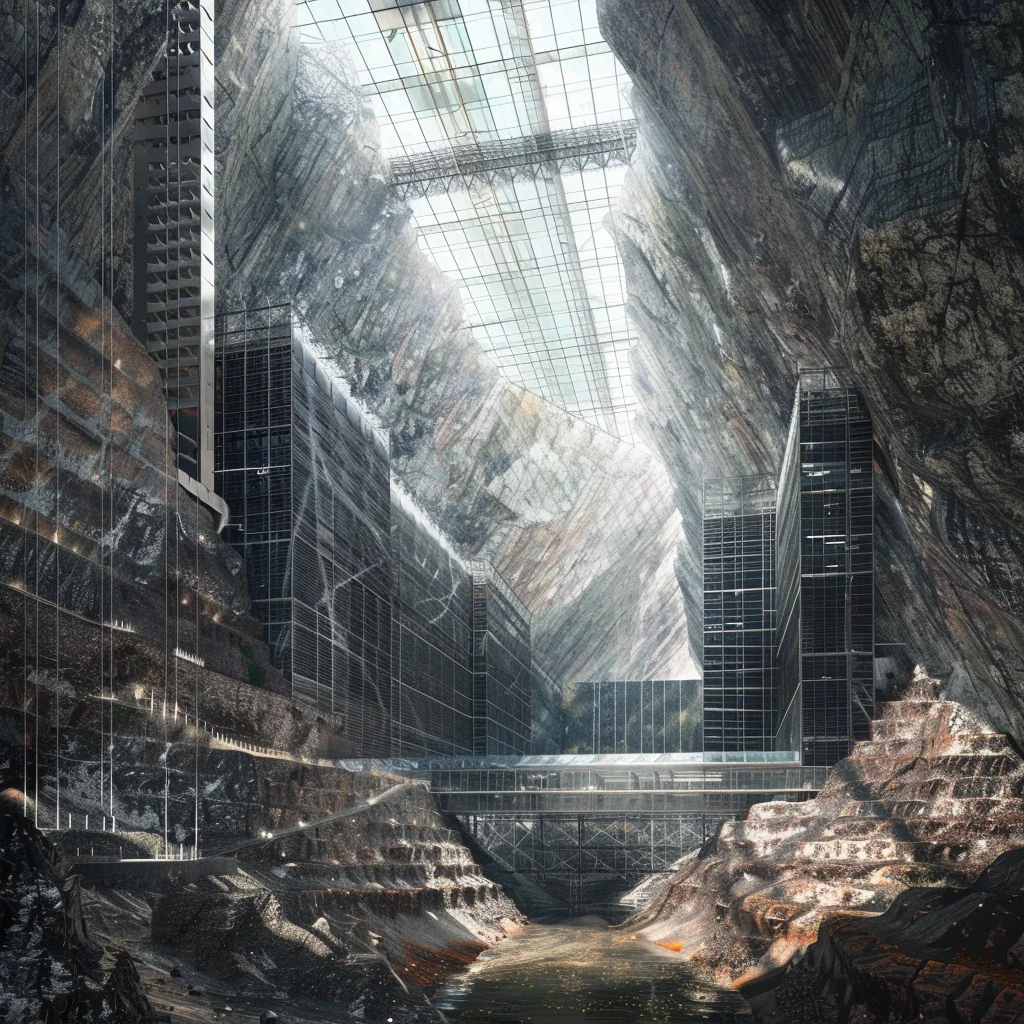 AI Data Farm: variant 4
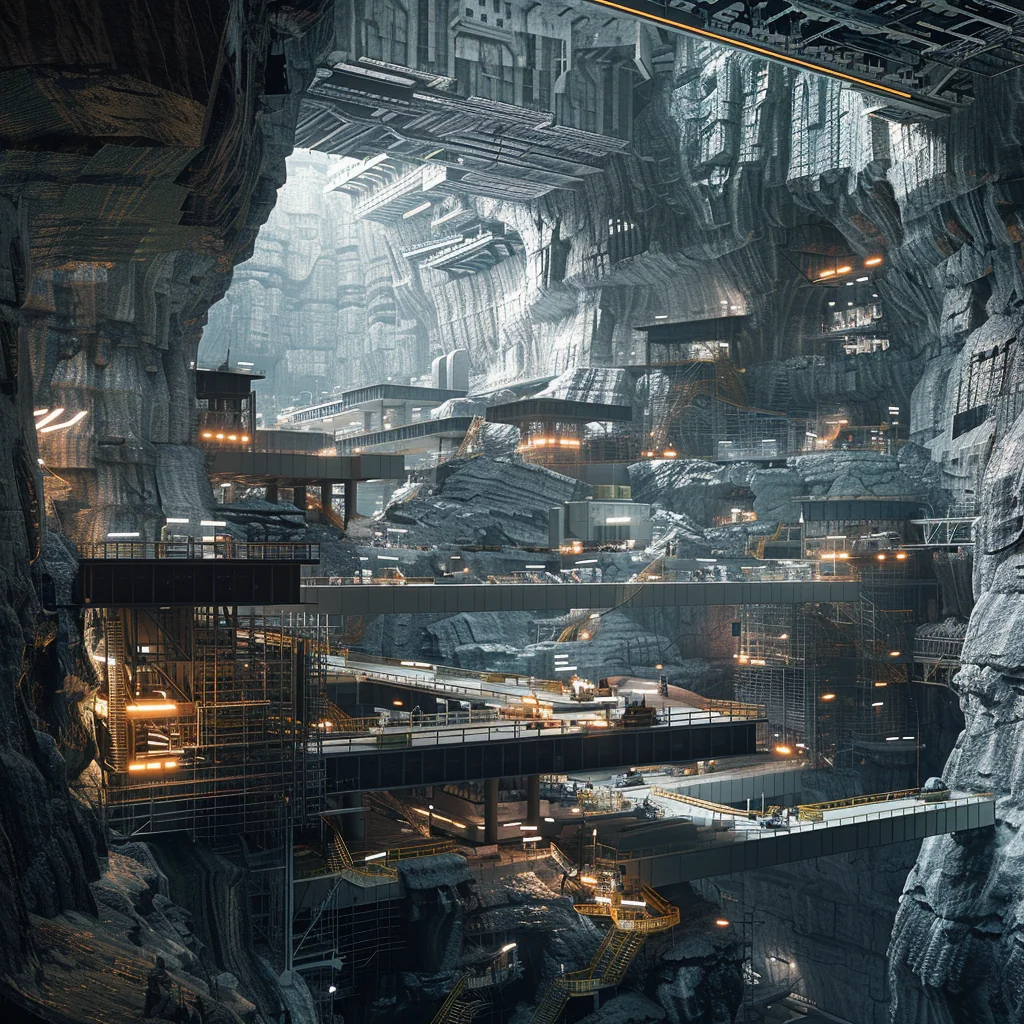
Manufacturing: supermassive underground industrial factories housed in the deepest strata. Autonomous machines maintain the production lines. Multi-level gantries, amber lighting, steel structure carved into living rock. The mine's original purpose, extraction, inverted: now the deep earth is where things are made, not where things are taken from.
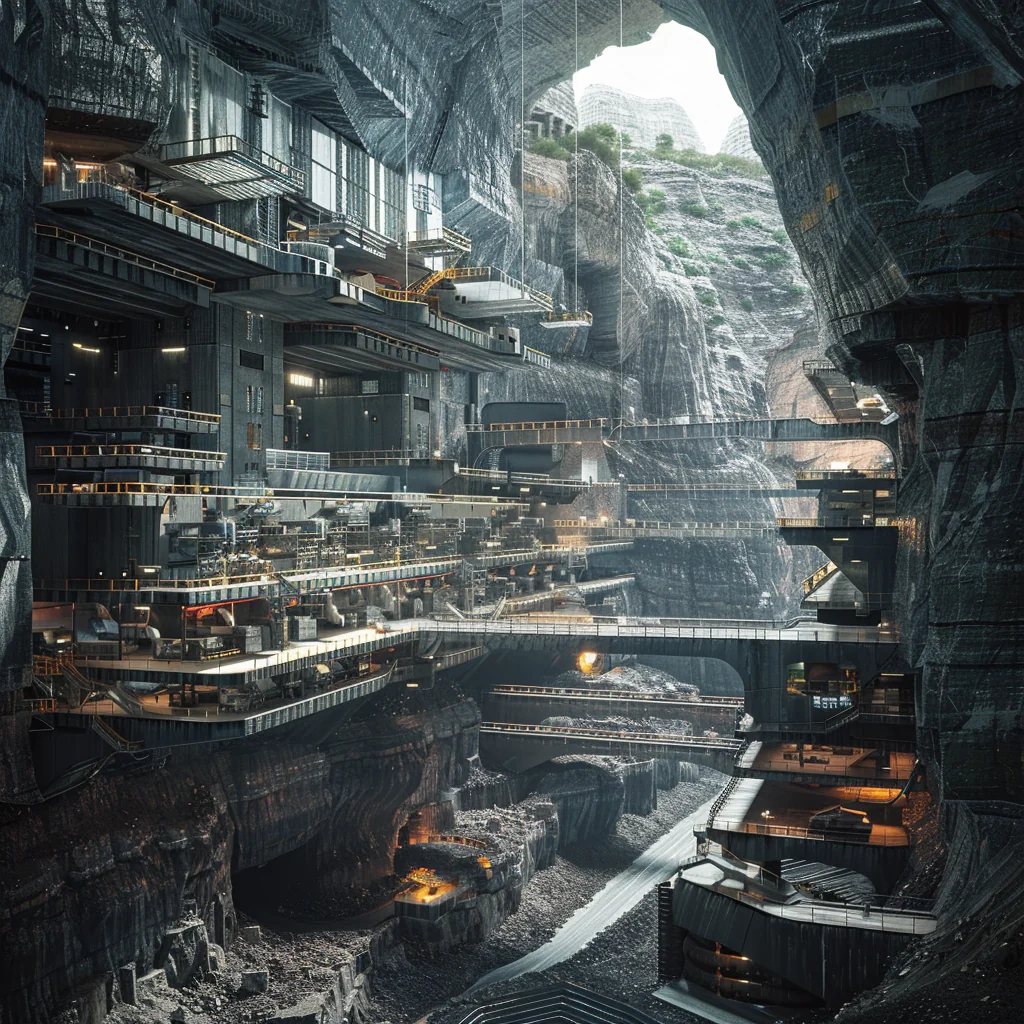 Manufacturing: variant 1
 Manufacturing: variant 2
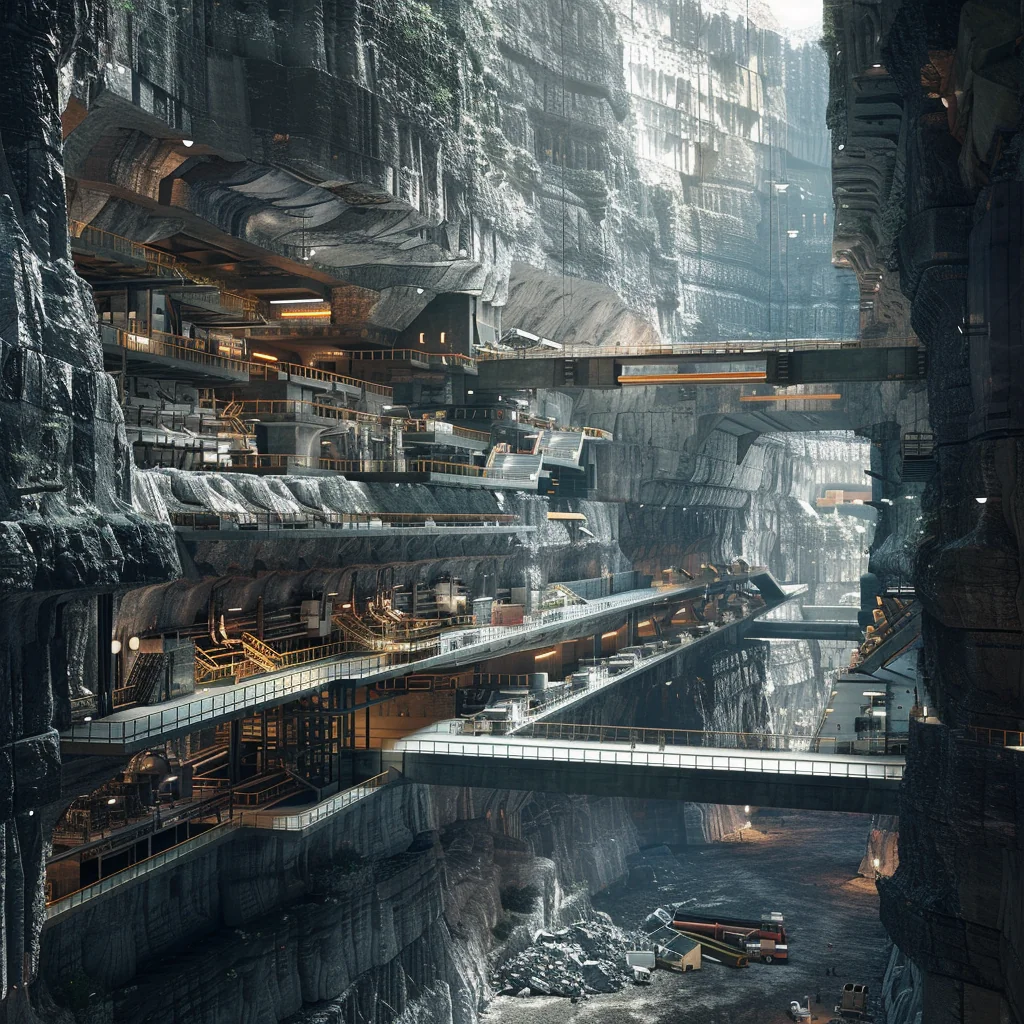 Manufacturing: variant 3
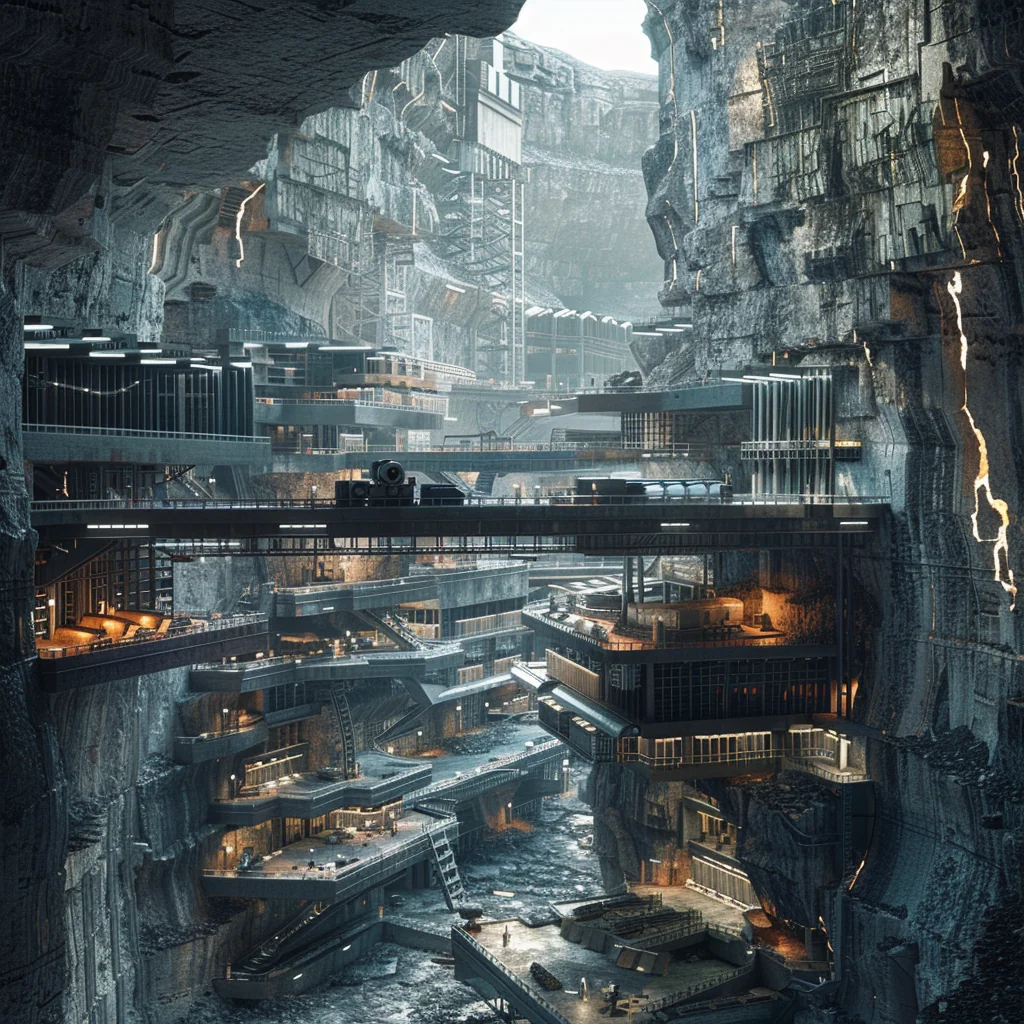 Manufacturing: variant 4
Utilities: massive underground tunnels with pipe galleries running beneath the brutalist structures, following the natural topography. The invisible circulatory infrastructure of the entire settlement, monumental in its own right.
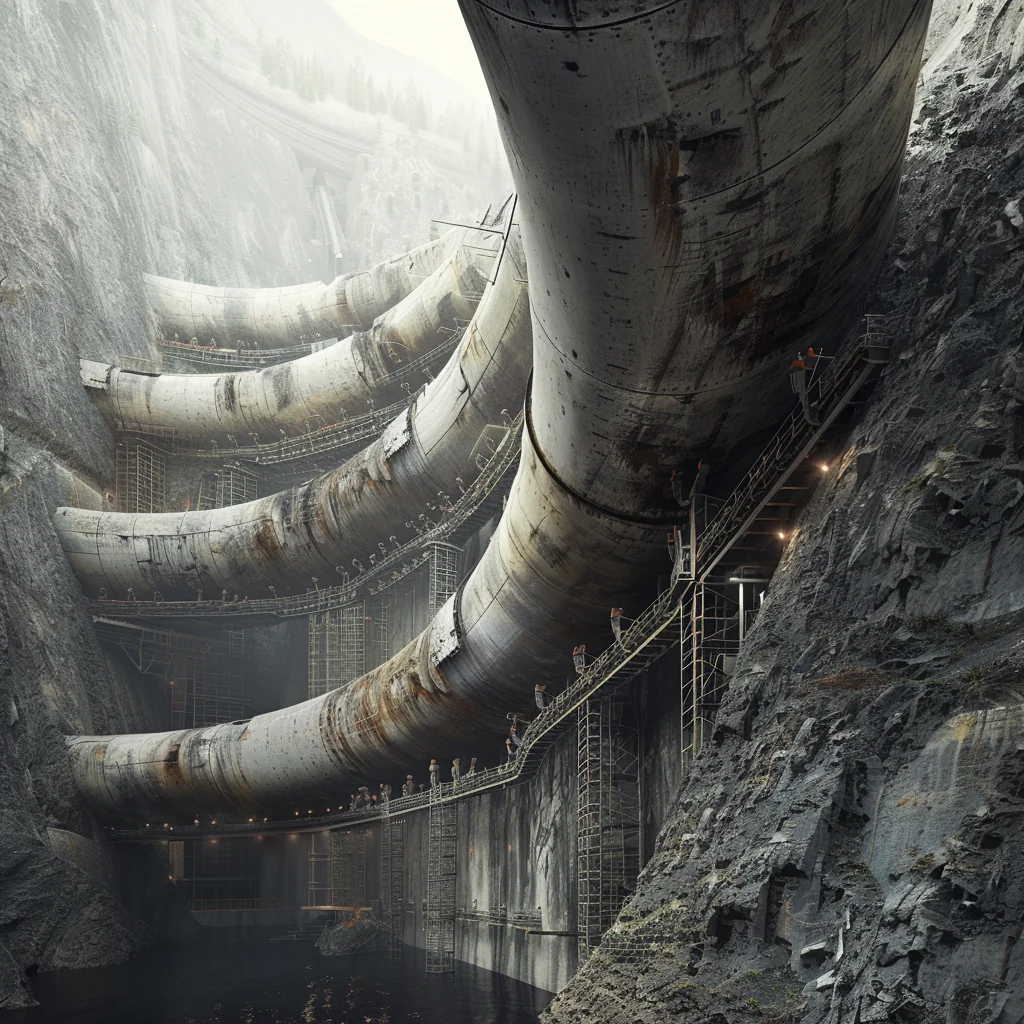 Utility infrastructure: variant 1
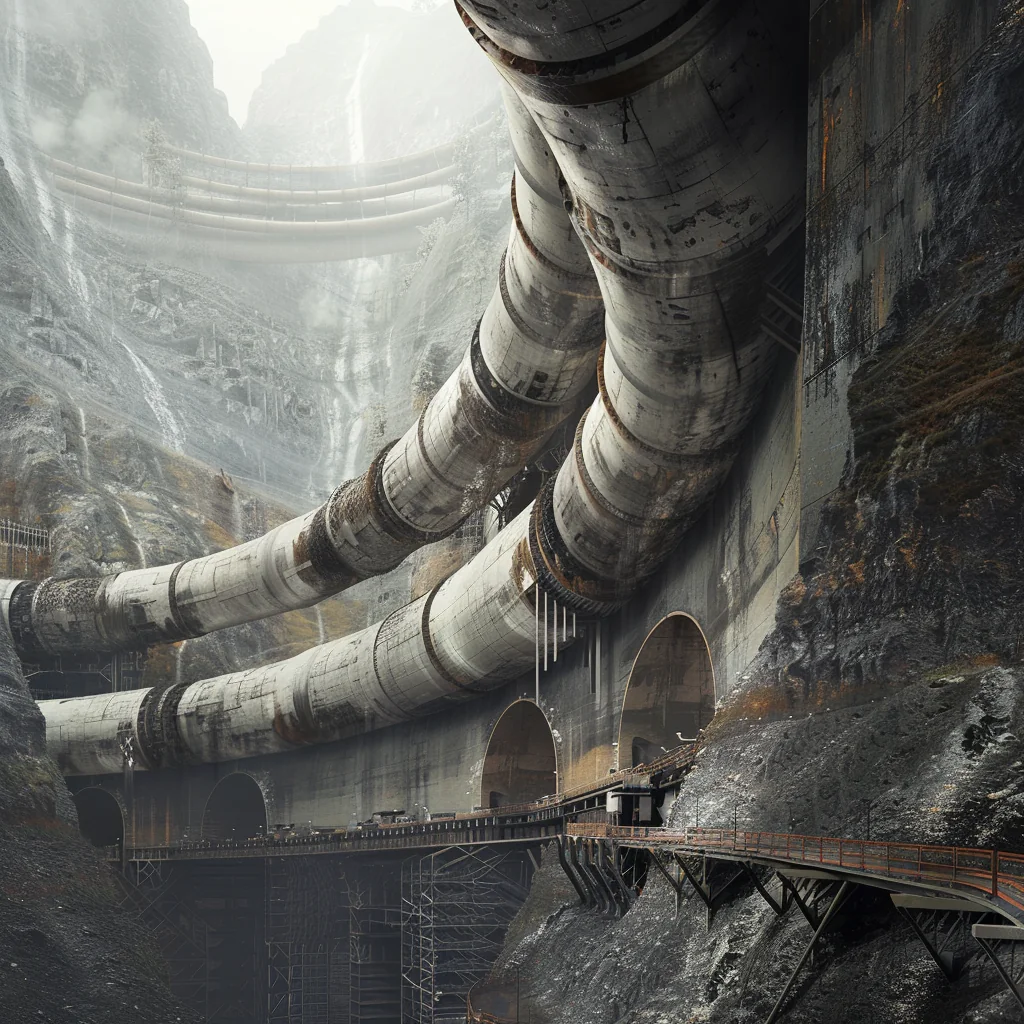 Utility infrastructure: variant 2
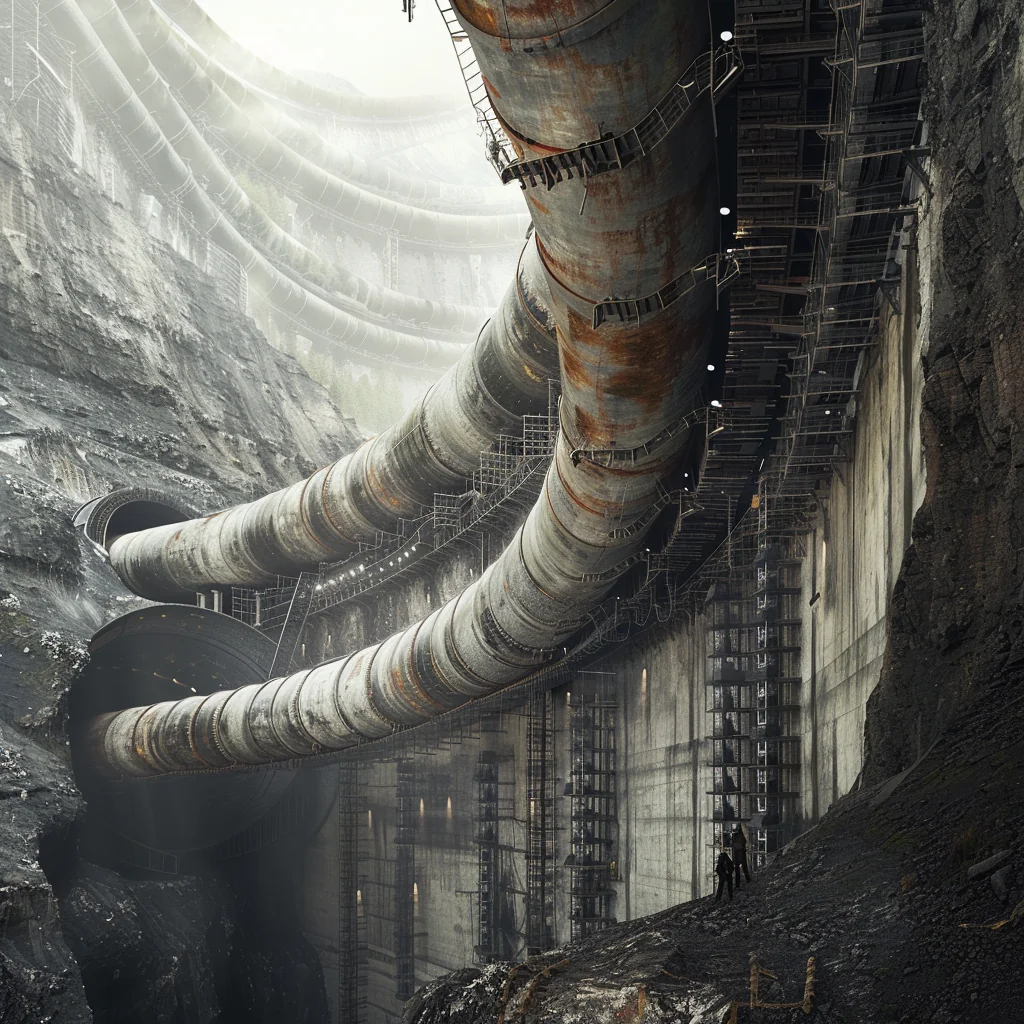 Utility infrastructure: variant 3
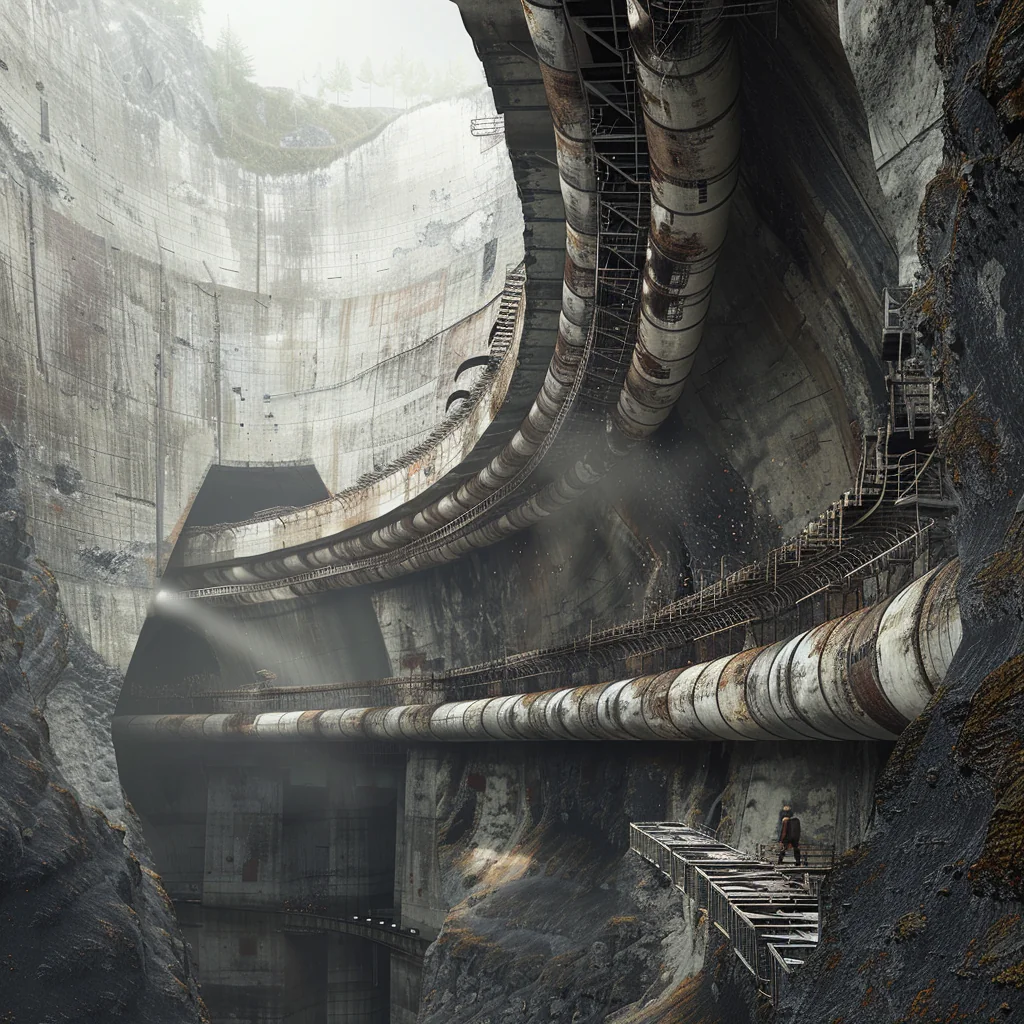 Utility infrastructure: variant 4
Underground Aquifer: water collection and storage in the deepest chambers. Subterranean reservoirs with massive concrete retaining walls, calm reflective channels, pine trees growing on rock ledges. Infrastructure becoming sacred space.
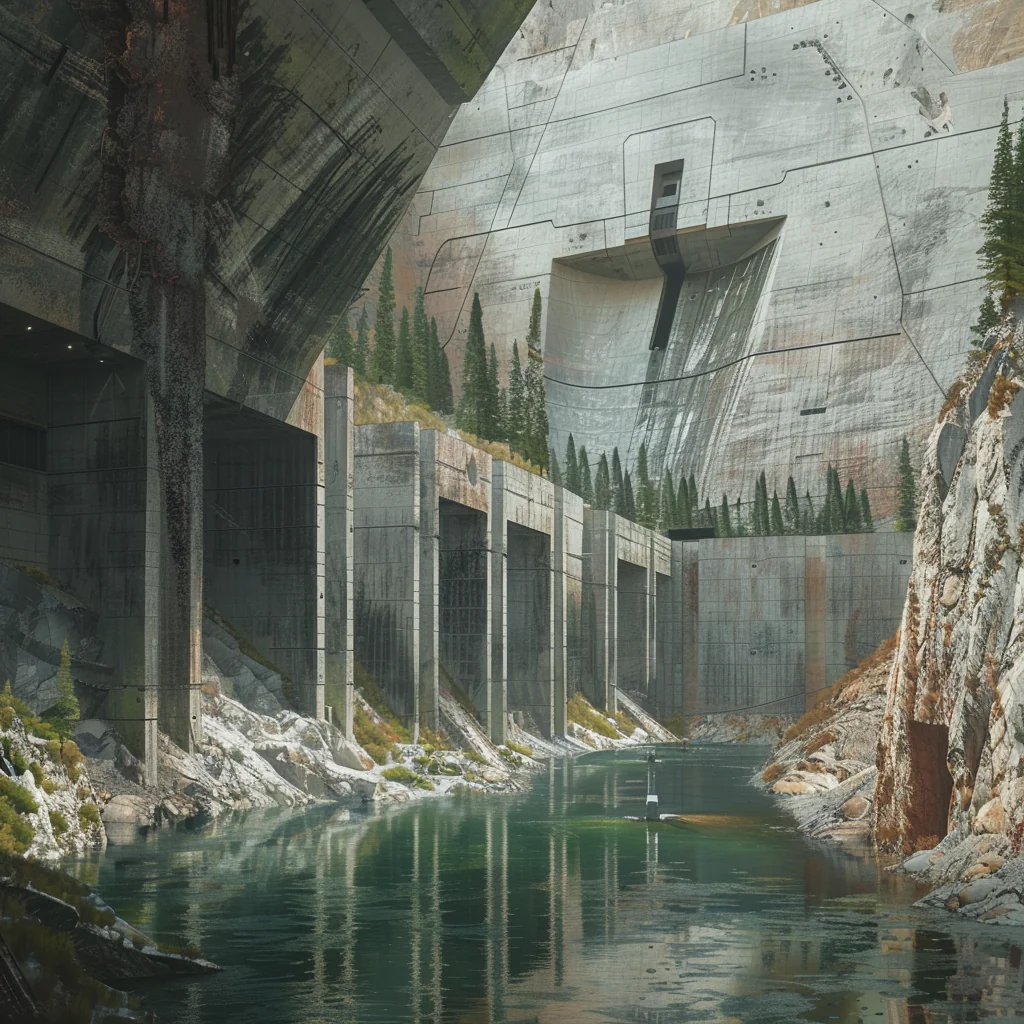 Underground Aquifer: variant 1
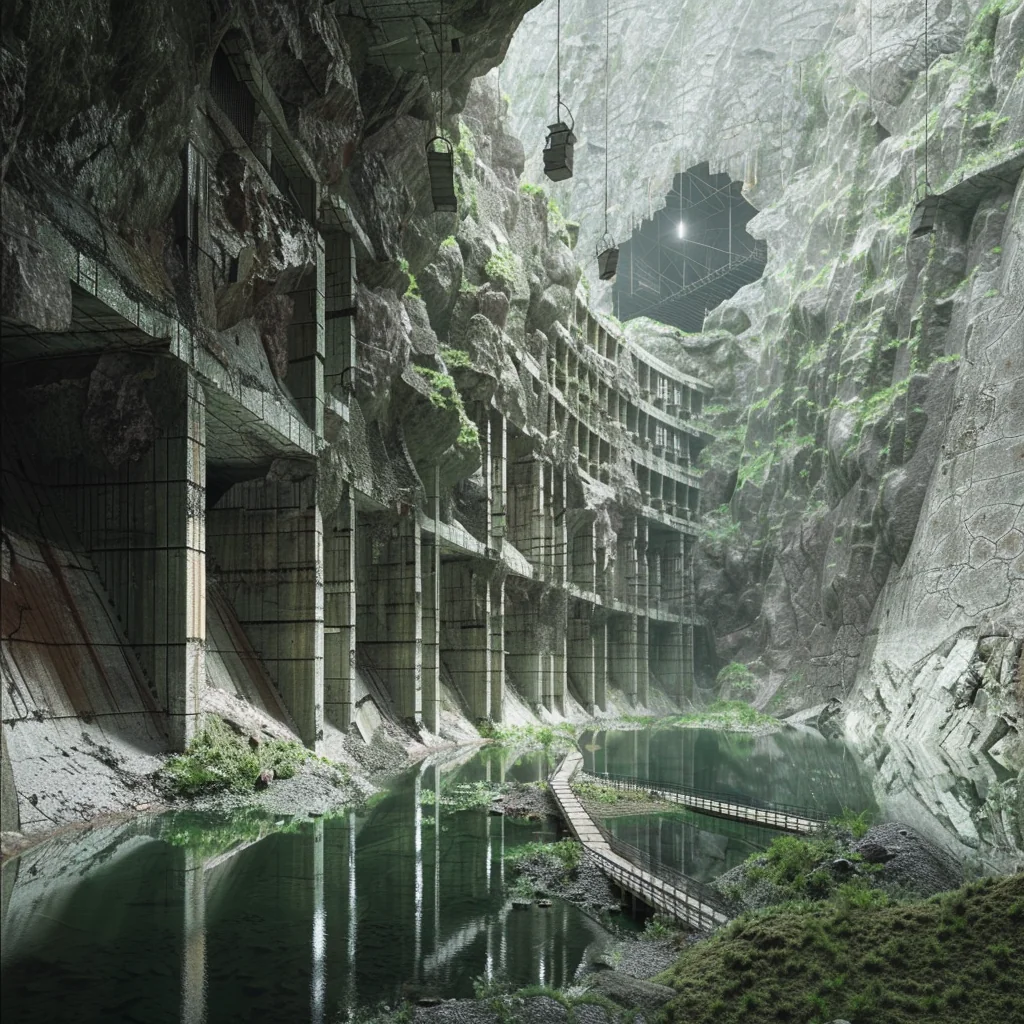 Underground Aquifer: variant 2
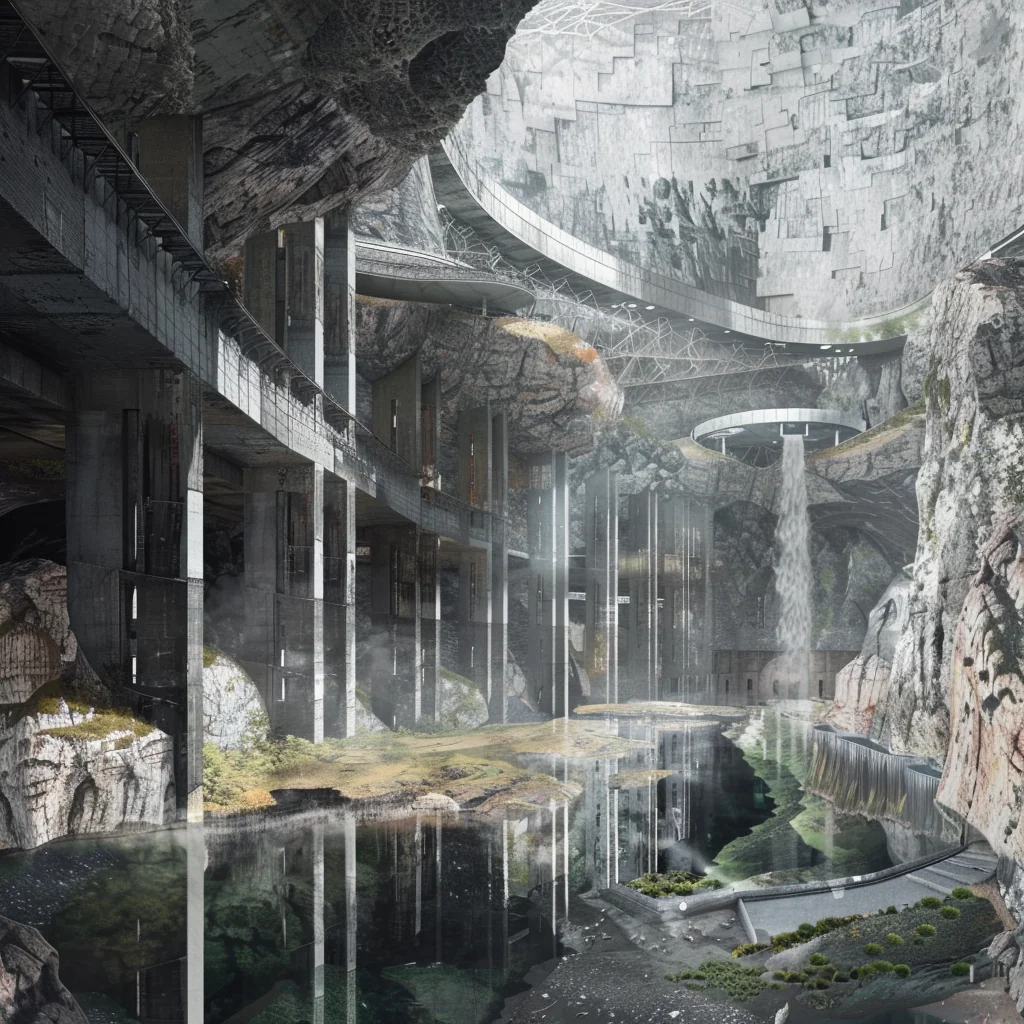 Underground Aquifer: variant 3
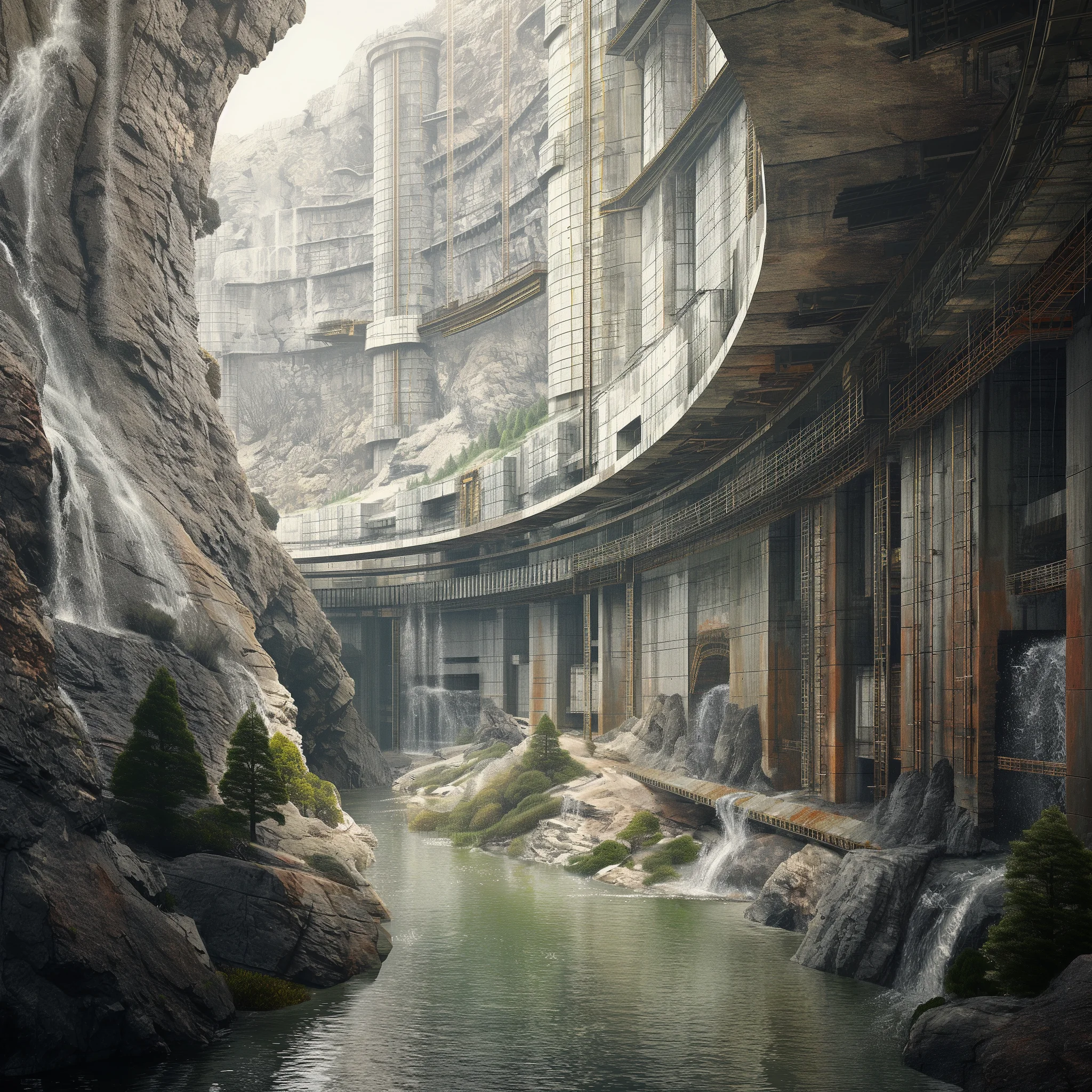 Underground Aquifer: water-level study